Uhu: The Complete Guide to Parrotfish in Hawaiʻi

If you have snorkeled in Hawaiʻi and seen a big, brightly colored fish crunching on the reef with a beak like a parrot, you have met an uhu. Uhu is the Hawaiian name for parrotfish, and these fish are some of the most important animals on Hawaiian coral reefs. They keep reefs healthy by grazing on algae, and the white sand on many Hawaiian beaches exists because parrotfish grind up coral and pass it as sand.
This is the single complete guide to parrotfish in Hawaiʻi. It covers how to identify an uhu, every species found in Hawaiian waters, where to see them while snorkeling, what they eat, how they sleep, the current fishing rules, and answers to the questions visitors ask most. If you have been searching for anything about parrotfish in Hawaiʻi, the answers are all here on this one page.
Parrotfish in Hawaiʻi at a Glance
| Fact | Detail | Why you care |
|---|---|---|
| Hawaiian name | Uhu (pronounced oo-hoo) | The name you will hear on the beach |
| Family | Parrotfish (Scaridae) | Not actually parrots, just the beak |
| Species in Hawaiʻi | 8 species, 3 found only in Hawaiʻi | Endemics make the sighting special |
| Size range | About 12 inches to over 28 inches long | Big, bright, and hard to miss |
| Where they live | Shallow coral reefs, lagoons, and seaward reefs on all main islands | You do not need a boat to find them |
| What they eat | Algae scraped from reef rock and dead coral | That crunching sound while snorkeling? That is them |
| Best time to see them | Year-round, during daylight hours while snorkeling | Any sunny snorkel day works |
| Spawning season | Peak spawning from May through July | Summer snorkelers may catch the show |
| Danger to humans | None; they are shy grazers, not biters | Relax and watch |
| Fishing rules | Daily bag limit of 2 per person, minimum size limits apply | Check the current rules before you fish |
What Is an Uhu? How to Identify a Parrotfish
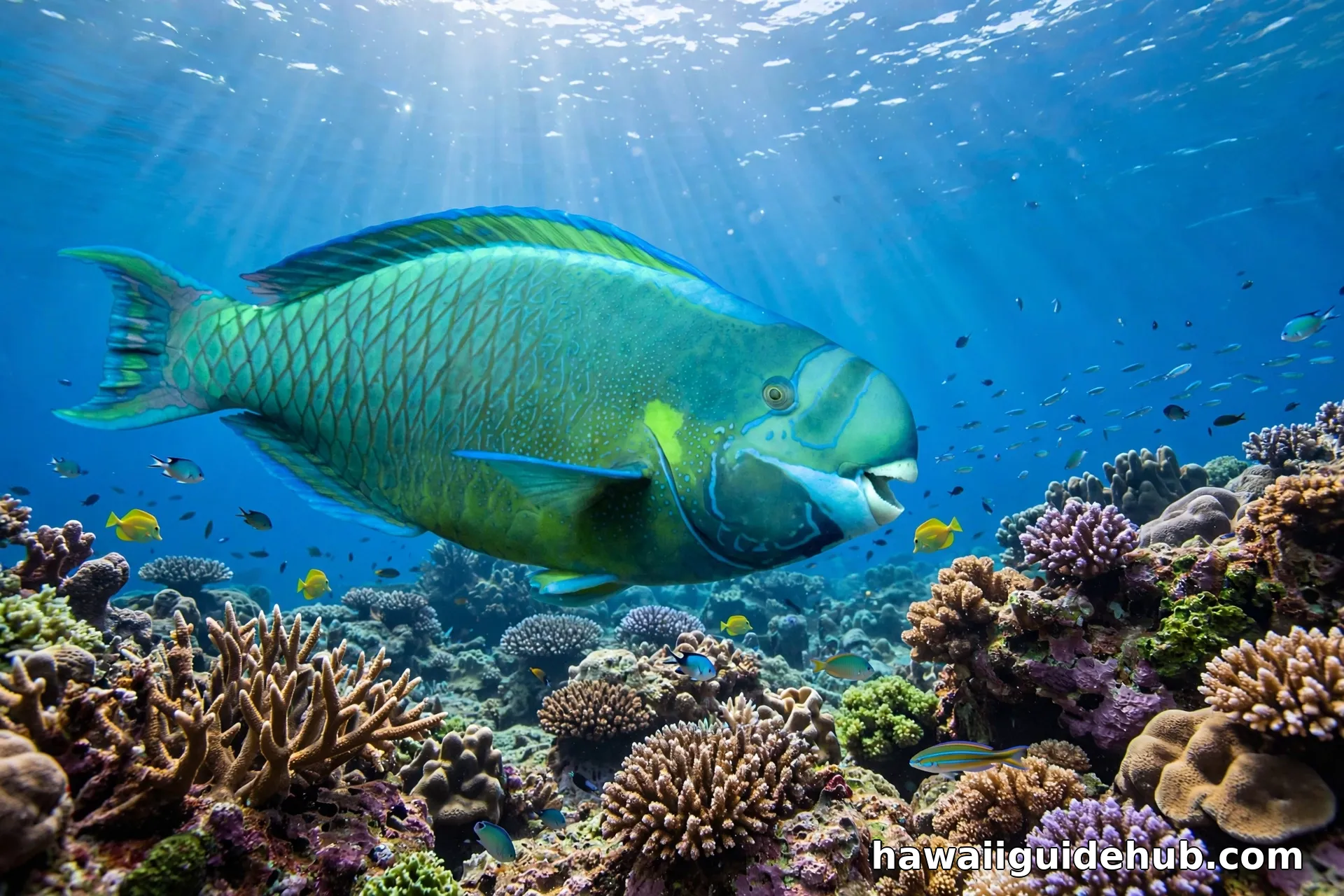
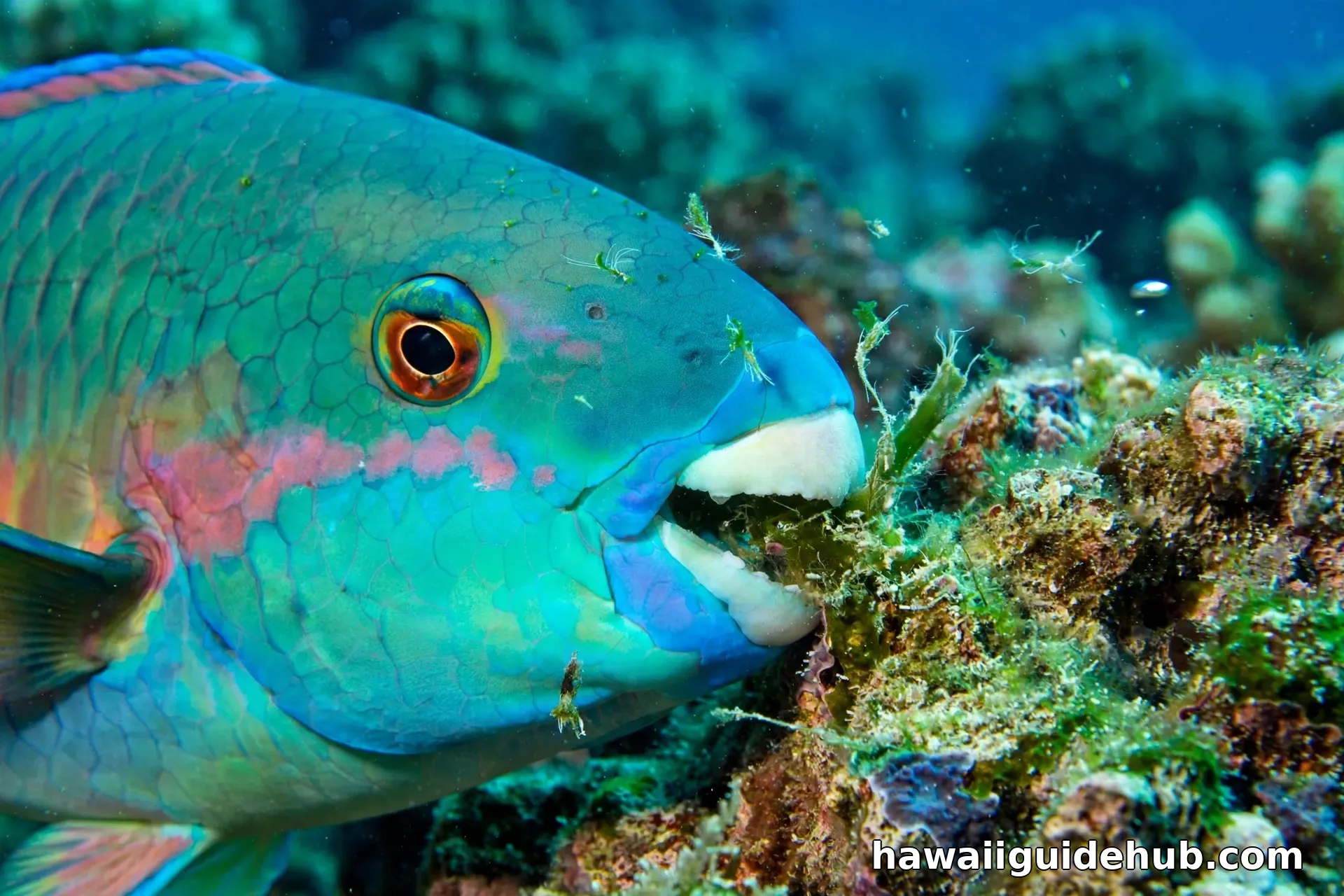
An uhu is easy to recognize once you know what to look for. Parrotfish get their English name from their mouth: their teeth are fused into a hard, beak-like plate that looks like a parrot’s beak. They use this beak to scrape algae off reef rock, and you can often hear a crunching sound when a large uhu bites the reef. Their bodies are deep and oval, with large, obvious scales that give them an almost armored look.
Color is the other giveaway. Many uhu are spectacularly colorful, especially the large males, which can glow turquoise, blue, and green with pink or purple edging on their scales. Females and younger fish are usually duller, often reddish brown or gray. This color difference between the sexes is normal for parrotfish. In fact, most parrotfish begin life as females and later change into males, shifting color as they do. So two uhu that look like completely different fish may be the same species at different life stages.
Size helps with identification too. Hawaiian parrotfish range from about 12 inches long in the smallest species to more than 28 inches in the largest, the redlip uhu. When you see a truly big fish on the reef, broad and heavy with a blunt head, it is very likely a terminal-phase male uhu. Smaller, drabber fish grazing in groups near the reef are often females or juveniles of the same species.
Parrotfish Species in Hawaiʻi
Eight species of uhu live in Hawaiian waters, and three of them live nowhere else on Earth. Hawaiʻi’s isolation in the middle of the Pacific has produced these endemics over millions of years, which makes seeing them here a special experience. The eight species are the spectacled uhu, the yellowbar uhu, the regal uhu, the redlip uhu, the stareye uhu, the bullethead uhu, the spinytooth uhu, and the palenose uhu.
The three endemic species are the ones to learn first. The spectacled parrotfish (uhu uliuli for the male, uhu ʻahuʻula for the female) is found only in Hawaiʻi, living in lagoons and on seaward reefs. Males are mostly blue with thin pink edges on their scales, while females are dark purple-gray with red fins and a white band where the tail meets the body. Young spectacled uhu are brown with white dots and stripes. The yellowbar parrotfish is another Hawaiian endemic, recognizable by the yellow bar behind its pectoral fin. The regal parrotfish completes the endemic trio.
The five other native species have wider Pacific ranges. The redlip uhu (uhu palukaluka, terminal-phase males called ʻeleʻele) is the giant of the group, growing past 28 inches, and it is the most prized as a food fish. The stareye uhu (ponuhunuhu) is another favorite of local fishers. The bullethead uhu, the spinytooth uhu, and the palenose uhu round out the list, with the palenose being the smallest at about a foot long when fully grown.
Where to See Parrotfish in Hawaiʻi
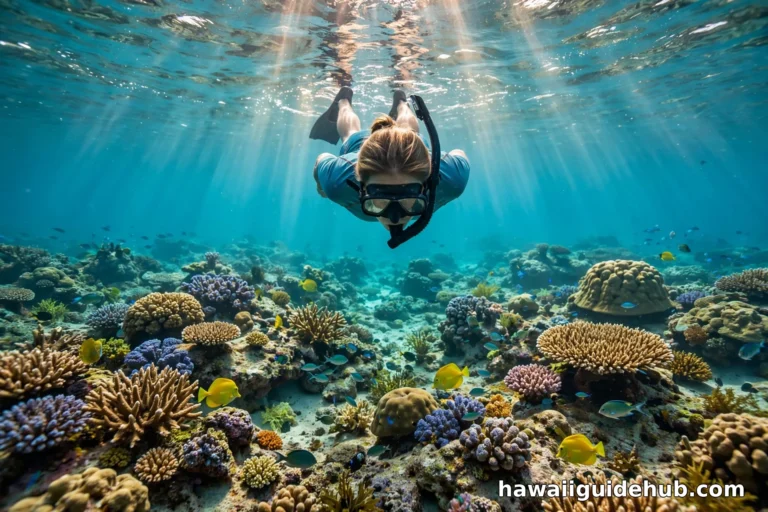
You can see uhu on every one of the main Hawaiian Islands. They live on shallow coral reefs, in calm lagoons, and along seaward reef slopes, which means almost any snorkeling outing over a healthy reef gives you a chance to spot them. They are daytime fish, so plan your snorkeling for the morning or midday hours when they are out grazing. At night they tuck themselves into rock crevices to sleep, and you will rarely see one after dark.
Look for them in the same places you find good coral cover. Uhu graze where algae grows, which is on and around living and dead coral heads, reef flats, and rocky ledges. A large male redlip or spectacled uhu cruising slowly over the reef is hard to miss. Smaller species, like the palenose uhu, often feed in loose groups and are easy to overlook until you train your eye to their shape and steady, deliberate bites.
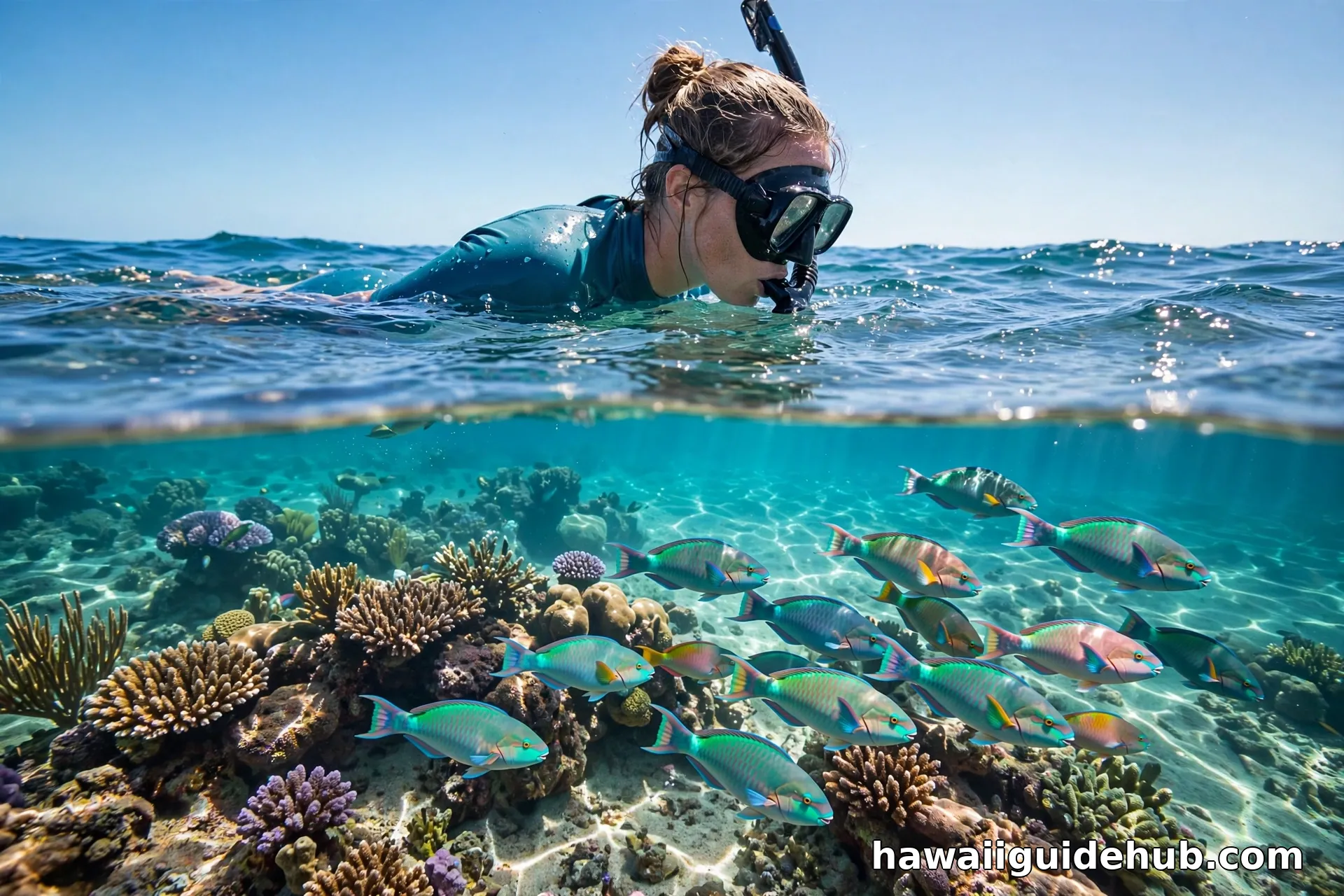
Snorkelers sometimes hear uhu before they see them. The crunching of a big parrotfish biting the reef carries surprisingly well underwater. If you hear steady crunching near a coral head, stay still and watch: the fish will often keep feeding, giving you a long, close look. Give them space and never chase them. Like all reef life, they are protected by the simple rule that you look but do not touch, a point covered in more detail in our guide on how plastic pollution affects marine life and why healthy reefs matter.
What Parrotfish Eat and Why Reefs Need Them
Uhu are herbivores, and their job on the reef is grazing. Using their beak-like mouths, they scrape algae off reef rock and bite chunks from dead coral, grinding everything up with powerful throat teeth. Scientists call them the lawnmowers of the reef, because without grazers like uhu, fast-growing algae would smother slow-growing coral. When coral loses that competition, the whole reef community suffers, since so many other reef animals depend on coral for food and shelter.
The second part of their job is just as remarkable: uhu make sand. When a parrotfish bites dead coral, it digests the living tissue and algae and passes the ground-up coral skeleton as fine white sand. Hawaiʻi lawmakers have formally recognized the uhu as the most prolific contributor of sand production of all Hawaiian reef fishes. Much of the soft white sand on Hawaiian beaches started its journey through a parrotfish. A single large uhu can produce a remarkable amount of sand in a year, which is one more reason these fish are worth protecting.
Uhu Behavior: Harems, Sex Change, and Sleeping in the Reef
Uhu have one of the most interesting social lives on the reef. They generally breed in harems made up of one large terminal-phase male with ten to twelve females, and spawning peaks between May and July. Because most parrotfish start life as females and change into males as they grow, the big, brilliantly colored males you see are the former females that made the switch. Removing the largest males matters more than it might seem, since each harem depends on its single male.
At night, uhu sleep. They wedge themselves into rock crevices and stay motionless until morning, which makes them easy targets for night spearfishing, a practice that has put real pressure on local populations. During the day they are constantly on the move, grazing across the reef in a slow patrol. Watch one for a few minutes and you will see the rhythm: bite, crunch, move a few feet, bite again, all day long.
Uhu Fishing Rules in Hawaiʻi
Uhu are regulated fish in Hawaiʻi, and the rules are stricter than many visitors expect. Under the current rules from the Division of Aquatic Resources, the daily bag limit for uhu is 2 fish total, all species combined, per person per day. For the large uhu species (the redlip/palukaluka/ʻeleʻele and the spectacled/ʻahuʻula/uliuli types), the minimum legal size is 14 inches. All other uhu species have a minimum size of 10 inches. On Maui, taking terminal-phase uhu ʻeleʻele and uhu uliuli is prohibited entirely.
These rules exist because uhu are both heavily fished and ecologically critical. Surveys have shown far fewer and smaller uhu on reefs near populated islands compared with the remote Northwestern Hawaiian Islands, a pattern scientists link directly to fishing pressure. The harem breeding system makes the problem worse: spearing the single large male of a harem disrupts breeding for the whole group. Regulations change from time to time, so always check the current Hawaiʻi fishing regulations from the Division of Aquatic Resources before you fish.
Visitors should also know that commercial sale of uhu is tightly controlled, with special permits, size slot limits, and closed seasons during peak spawning months. If you are not fishing yourself, the simplest way to stay on the right side of the rules is to admire uhu while snorkeling and leave the fishing to those who know the current regulations. Our guide for anglers to deep-sea fishing in Ko Olina, Oʻahu covers the charter side of Hawaiʻi fishing for visitors who want a rod in their hands.
Watching Parrotfish Responsibly
Parrotfish are completely safe to watch. They are shy grazers with no interest in people, and they do not bite swimmers. The main safety note is the usual one for snorkeling: watch the ocean conditions, stay aware of currents, and never stand on coral. Uhu will sometimes let you drift quite close while they feed, but resist the urge to reach out. Touching reef fish removes their protective slime coating and stresses them.
Use reef-safe sunscreen and apply it before you get in the water, since chemicals from ordinary sunscreen wash off and harm coral and the tiny animals that live on it. If you are snorkeling from shore, enter and exit over sand, not over the reef flat where uhu feed. And if you see someone harassing reef life, a calm word goes a long way. Hawaiʻi’s reefs face pressure from many directions, from warming water events like those described in our article on how La Niña affects marine life to the everyday wear of thousands of fins, so every gentle interaction counts.
Uhu in Hawaiian Culture
Uhu have fed the people of Hawaiʻi for centuries and remain a prized food fish today, cherished across many local cultures. The redlip uhu and the stareye uhu are the most sought after for the table, traditionally eaten raw or cooked. The Hawaiian names themselves carry meaning: uhu palukaluka for the redlip, uhu uliuli for the male spectacled parrotfish, uhu ʻahuʻula for the female, and ponuhunuhu for the stareye. Knowing these names connects you to a fishing tradition far older than the state itself.
That cultural importance is exactly why the fishing rules matter so much. A fish that is both a beloved food and the reef’s lawnmower sits at the center of a real tension between harvest and conservation. Modern regulations, from size minimums to the Maui protections on terminal-phase males, are attempts to keep uhu on both the reef and the menu for the long term. For a different window into Hawaiʻi’s underwater world, the Waikīkī submarine dive takes you 100 feet down to watch reef life without getting wet.
Parrotfish in Hawaiʻi: Frequently Asked Questions
Are parrotfish in Hawaiʻi the same as uhu?
Yes. Uhu (pronounced oo-hoo) is simply the Hawaiian name for parrotfish. When local fishers, divers, and scientists in Hawaiʻi say uhu, they mean the same family of beaked, algae-grazing reef fish that English speakers call parrotfish.
Do parrotfish really make sand?
They do. Parrotfish bite dead coral, digest the organic material, and excrete the ground-up coral skeleton as fine sand. Hawaiʻi’s own legislature has recognized uhu as the most prolific sand-producing reef fish in the islands, so the white sand under your beach towel likely passed through a parrotfish.
Can you eat uhu in Hawaiʻi?
Yes, uhu is a traditional and still popular food fish in Hawaiʻi, with the redlip and stareye species most prized. But strict rules apply: a daily bag limit of 2 per person, minimum sizes of 14 inches for the large species and 10 inches for the rest, and a ban on taking terminal-phase males on Maui. Always verify the current regulations before fishing.
Are parrotfish dangerous to snorkelers?
No. Uhu are peaceful grazers that feed on algae, not people. They may startle if you get too close, but they do not chase or bite swimmers. Give them space, do not touch them, and enjoy watching them crunch along the reef.
Why do parrotfish change color?
Most parrotfish change both sex and color during their lives. They typically begin as females with drab, camouflaged coloring, then transform into brightly colored terminal-phase males. That is why a dull brown fish and a brilliant blue-green fish on the same reef can be the same species at different life stages.
Do parrotfish sleep?
Yes. Uhu are daytime fish that sleep at night, wedging themselves into reef crevices and staying still until morning. This habit makes them vulnerable to night spearfishing, which is one reason their populations are carefully regulated.
Uhu are easy to overlook on a first snorkel and impossible to forget once you know their story. They are the grazers that keep coral alive, the grinders that build beaches grain by grain, and living proof of how Hawaiʻi’s isolation creates wildlife found nowhere else. Three of the eight species swimming Hawaiian reefs exist only here. Watch for the crunch of a beak on coral, give them room to feed, and you will be watching one of the hardest-working fish in the Pacific.