Hawaii Reef Etiquette: How to Enjoy Coral Reefs Without Harming Them

Hawaii’s coral reefs are the reason the water here looks the way it does in postcards: clear, turquoise, and full of life. They are also fragile in a way that surprises most first-time snorkelers. Coral looks like rock, but it is a colony of tiny living animals, and a single careless fin kick or a sunscreen-covered hand can damage what took years to grow. This is the single complete guide to Hawaii reef etiquette. It covers the core rules every visitor should follow, the wildlife distances the law expects, Hawaii’s sunscreen ban, and the practical habits that keep reefs healthy while you enjoy them.
Think of reef etiquette as two promises. The first is to the reef itself: look, float, and leave everything exactly as you found it. The second is to the animals that live there: give them space, never feed them, and never chase them. Everything in this guide flows from those two promises, and every rule below is grounded in official guidance from NOAA and Hawaii’s Department of Land and Natural Resources.
Hawaii Reef Etiquette at a Glance
| Wildlife distances: the numbers that matter | |
| Sea turtles (honu) | Stay at least 10 feet (3 meters) away |
| Monk seals | Stay at least 50 feet away; 150 feet from nursing mothers |
| Spinner dolphins | Stay at least 50 yards away; never swim with resting pods |
| Humpback whales | Stay at least 100 yards (300 feet) away |
| Touch nothing, leave nothing | |
| Coral contact | Never touch, stand on, bump, or rest on coral |
| Fins and gear | Stay horizontal, watch your fins, rest only over sand |
| Feeding wildlife | Never feed fish, turtles, seals, or any marine life |
| Sunscreen | Use mineral sunscreen with zinc oxide or titanium dioxide |
| Trash | Pack out everything you bring, and pick up what others left |
Why Coral Deserves Your Care
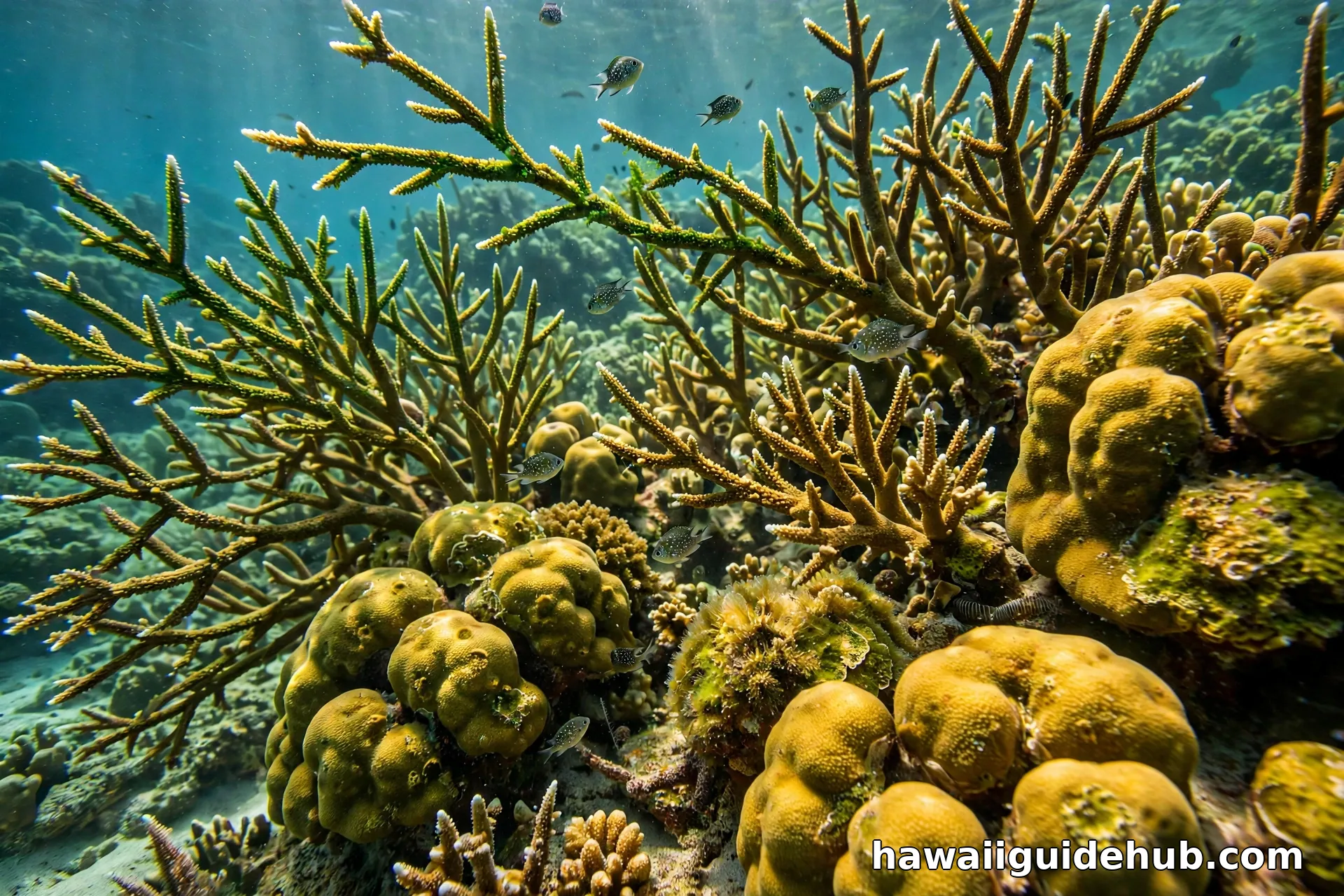
Coral is not a rock, a plant, or decoration. Each coral head is a colony of tiny animals called polyps, and those polyps build the limestone skeleton you see over decades of slow growth. Many corals grow only a few centimeters a year, which means a single footprint can erase years of growth in one second. When you understand that you are swimming over a living animal, the rest of reef etiquette follows naturally.
In Hawaiian tradition, coral holds a special place. The Kumulipo, the great Hawaiian creation chant, identifies koʻa (coral) as the first organism created, the foundation from which other life follows. That cultural view lines up with the science: NOAA reports that about 25 percent of all marine species are found in, on, and around coral reefs, and that healthy reefs can absorb up to 97 percent of a wave’s energy, protecting shorelines from erosion and storms. Reefs also anchor Hawaii’s nearshore food web and the fishing and tourism that depend on it.
The Core Rules of the Reef
Never touch, stand on, or bump coral
This is the number one rule, and it covers more than it sounds like. Touching coral with your hands strips the thin layer of mucus that protects polyps from disease. Standing on it crushes the living tissue outright. Even bumping it with a knee while adjusting your mask can snap off branches that took a decade to grow. If you need to stop and rest, float on the surface or find a sandy patch with no coral, and stand there. In shallow water, swim horizontally and keep your body high so your fins stay clear of the reef below you.
Watch your fins and control your buoyancy
Most reef damage from snorkelers is accidental, and fins do most of it. Long fin blades swing in a wide arc that snorkelers cannot feel, so they clip coral heads behind and below. Before you swim over a shallow reef, practice floating flat with slow, short kicks. Keep your kicks small and your body level. If you feel tired, do not drop your legs and stand on whatever is below: roll onto your back and float, or swim back out over sand. Divers call this buoyancy control, and it is the single most reef-friendly skill you can bring into the water.
Never feed fish or other marine life
Feeding fish changes their natural behavior, makes them aggressive toward swimmers, and gives them food their bodies were not built to digest. At busy snorkeling spots, fish that expect handouts will swarm and nip at people, which ruins the experience for everyone after you. Some marine parks prohibit feeding outright, and anywhere in Hawaii it is poor practice. The same goes for turtles and eels: a turtle that learns to associate people with food loses its healthy wariness, and that puts it at risk.
Use only reef-safe sunscreen
Hawaii made this a matter of law, not just suggestion. Since January 1, 2021, state law has prohibited the sale, offer for sale, or distribution of sunscreens containing oxybenzone or octinoxate without a prescription, because research by the Department of Land and Natural Resources links these chemicals to coral bleaching, damage to coral DNA, and harm to coral larvae. The law applies to the sale of the product in Hawaii, so check the ingredient label on whatever you brought from home. Look for mineral sunscreens made with non-nano zinc oxide or titanium dioxide, and do not trust the words “reef friendly” on the front of the bottle without reading the back. Better still, wear a rash guard or swim shirt and use less sunscreen in the water at all. Apply sunscreen well before you enter the ocean so the unabsorbed lotion does not wash straight off your skin into the reef.
Take your trash, and pick up what others left
Plastic bags drift like jellyfish, and sea turtles eat them. Fishing line tangles around fins, flippers, and coral heads. Take a small mesh bag in your pocket on every swim and pull out any line, plastic, or cans you find. If you see a snagged piece of monofilament, remove it gently and bin it on shore. Reefs near popular beaches collect the most debris, so the places you snorkel most are exactly the places where five minutes of cleanup makes the biggest difference.
Wildlife Distances: How Far to Stay Back
Hawaii’s most loved marine animals are protected by federal and state law, and the viewing distances below come from NOAA guidance. These are minimums, not targets. If an animal changes its behavior because of you, such as a turtle swimming away or a seal lifting its head to watch you, you are already too close, so back away calmly.
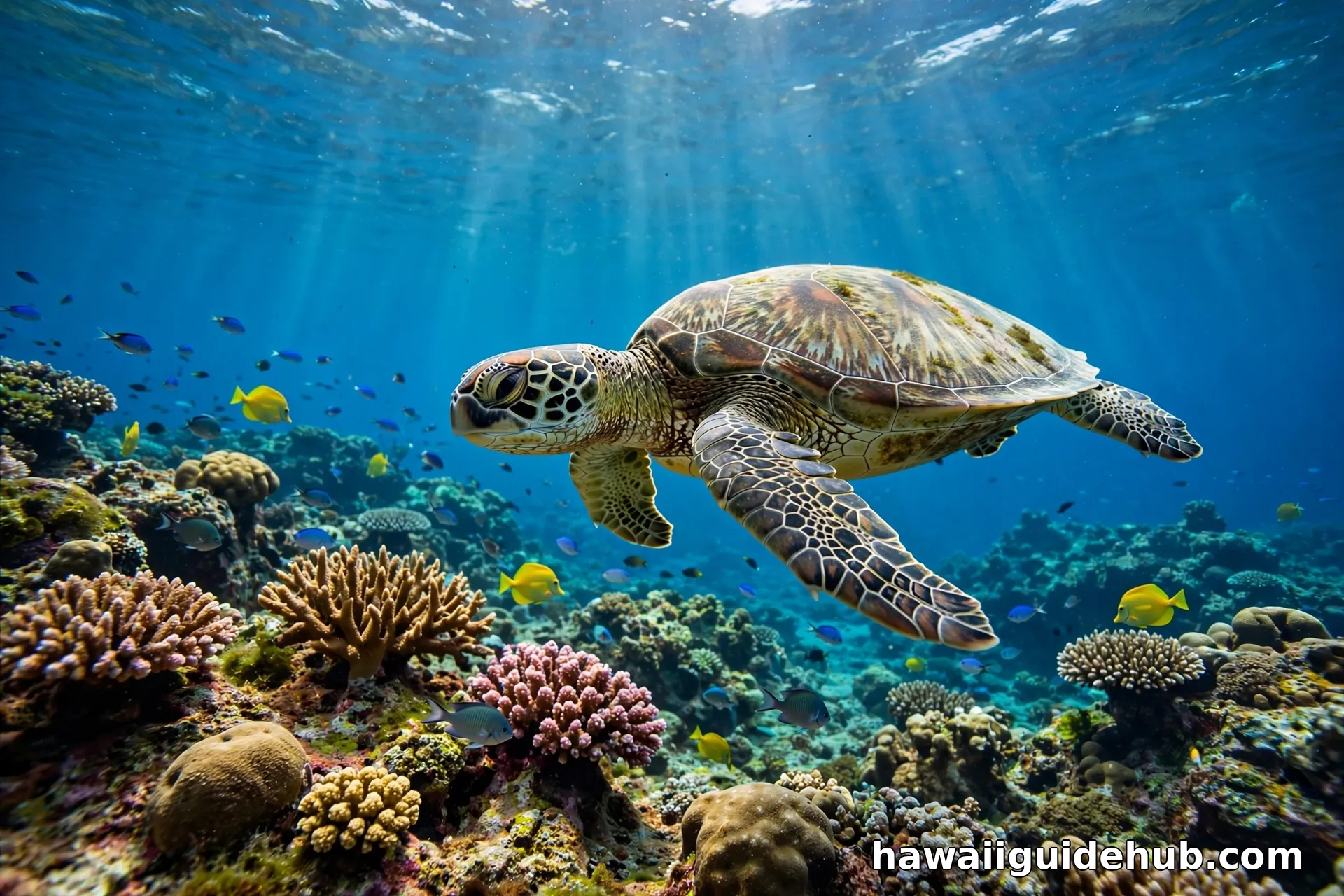
Hawaiian green sea turtle (honu): 10 feet
Stay at least 10 feet (3 meters) from honu on the sand and in the water. Never touch, ride, chase, or block a turtle’s path to the surface, since it must come up to breathe. Basking turtles on the beach are resting, not sunbathing for your photos, so keep your distance and keep dogs and children away. Green sea turtles in Hawaii are protected under the federal Endangered Species Act and state law, and harassing one can bring serious fines. If a turtle swims toward you, stay still and let it pass; it is choosing the distance, not you.
Hawaiian monk seal: 50 feet (150 feet when nursing)
Monk seals are among the most endangered marine mammals on earth, and Hawaii is their only home. NOAA recommends staying at least 50 feet (15 meters) away. When a mother is nursing a pup, officials set the distance at 150 feet, and you will often see a roped perimeter with a sign. Do not cross it. Seals haul out on beaches to rest, and a disturbed seal burns energy it needs to survive. Give sleeping seals a wide berth, keep noise down, and never get between a mother and her pup. Poʻipū on Kauaʻi is one of the best-known places to see monk seals hauled out, and our complete guide to Poʻipū covers where to look responsibly.
Spinner dolphins: 50 yards
Federal rules prohibit swimming with, approaching, or lingering within 50 yards (45 meters) of spinner dolphins in Hawaii’s nearshore waters, where pods rest during the day after feeding offshore at night. A “swim with dolphins” encounter that chases a resting pod is illegal, no matter what a social media post suggests. If dolphins approach your boat or swim group on their own, enjoy the moment, but do not pursue them when they move away.
Humpback whales: 100 yards
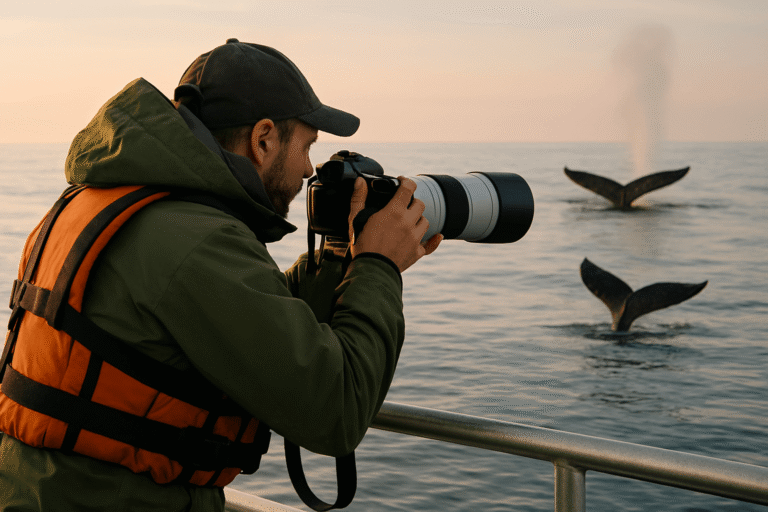
During whale season, roughly December through May, every vessel, paddleboard, kayak, and swimmer must stay at least 100 yards (300 feet) from humpback whales in Hawaiian waters. Mothers with calves are especially sensitive to disturbance. If you are on the water and a whale surfaces near you, put your engine in neutral and wait until it moves away rather than motoring off through its path. For guidance on watching whales the right way, see our eco-friendly whale watching guide.
What the Law Actually Says
Hawaii’s reef and wildlife rules are enforced, not decorative. State rules administered by the Department of Land and Natural Resources prohibit taking or damaging coral and live rock, and officers from the Division of Conservation and Resources Enforcement patrol beaches and reefs. Sea turtles and monk seals are protected under the federal Endangered Species Act, and monk seals, dolphins, and whales are additionally covered by the Marine Mammal Protection Act, which makes harassment, including chasing, touching, or disturbing resting animals, a federal offense with fines that can reach into the tens of thousands of dollars.
The sunscreen law works the same way other product bans do: it targets the sale and distribution of products with oxybenzone or octinoxate, so compliant products are what you will find on store shelves in Hawaii. There is no checkpoint inspecting your beach bag, but the law reflects the science, so following it is the right call wherever you swim. If you see someone clearly harassing a turtle or seal, or taking coral, report it to DLNR enforcement rather than confronting them yourself.
Snorkeling the Reef-Friendly Way
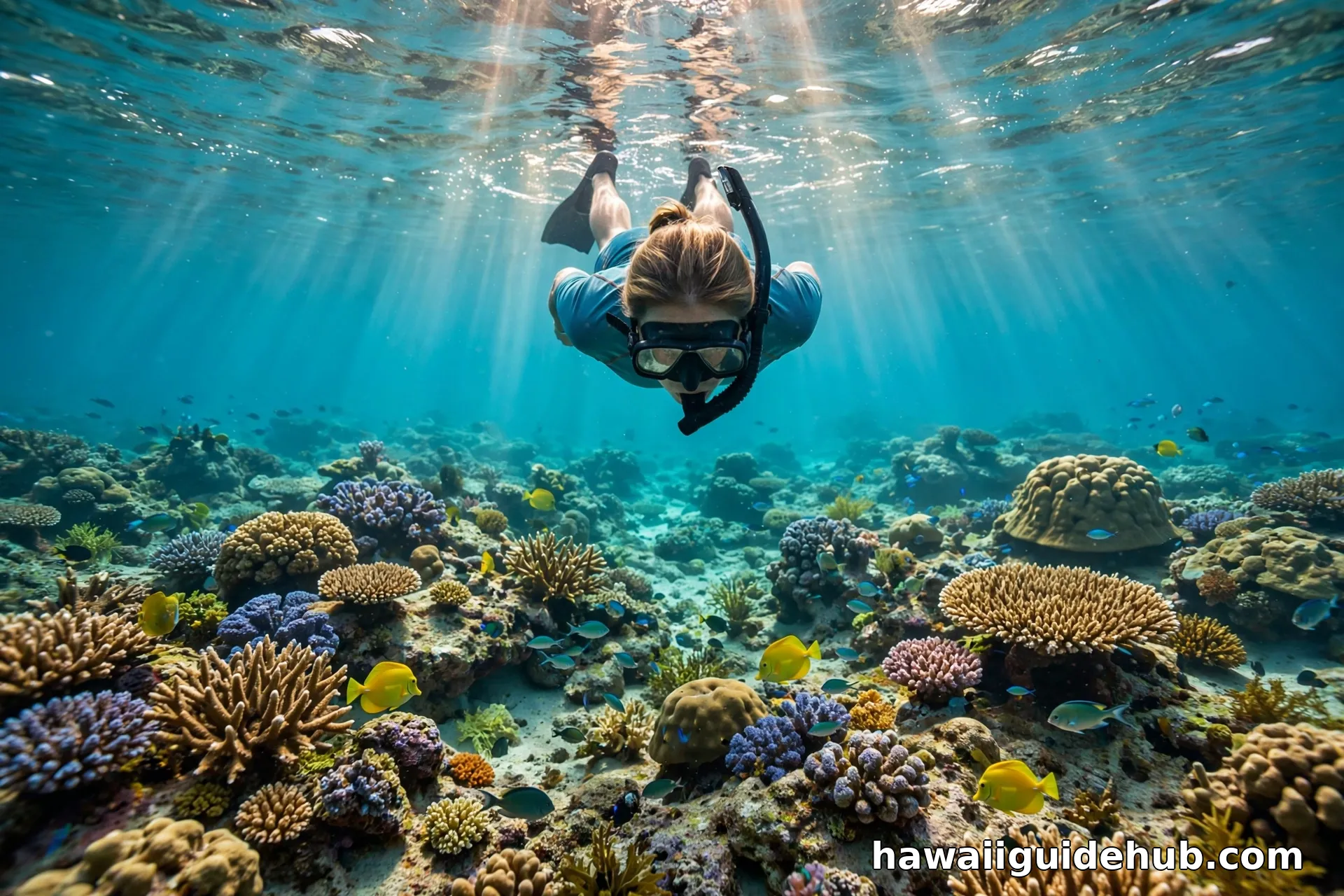
Good technique protects the reef and gives you a better swim. Enter the water over sand, not over coral, and swim out before you put your face down. Spit-and-rinse or a drop of baby shampoo keeps your mask clear without the reef-harming chemicals in some commercial defoggers. A rash guard cuts your sunscreen needs in half and protects you from sunburn during long surface swims. Skip the gloves: they encourage touching, and many marine areas discourage them for exactly that reason. Finally, check conditions before you go. Rough water pushes snorkelers into the reef, so choose calm mornings and skip the swim when surge is up. If you want a beginner-friendly spot to practice, Shark’s Cove on Oʻahu’s North Shore is a favorite, and calm Kihei mornings are another easy start, as covered in our Charley Young Beach guide.
Mistakes Visitors Make Without Realizing
Standing up to adjust your mask is the most common one. You are in waist-deep water over a reef, your mask fogs, and your feet go down on instinct. Build the habit instead: tread water, or back-float while you fix the strap. Chasing a turtle for a photo is another: the turtle sees a predator, burns energy fleeing, and the encounter stresses an animal you came to admire. Let wildlife come to you. Collecting shells and coral pieces as souvenirs is a third. Even dead-looking coral rubble is habitat for small reef creatures, and buying coral jewelry supports harvest that damages reefs elsewhere. Take photos, not shells. Last, do not assume a “reef safe” label means the sunscreen meets Hawaii’s law. The term is not regulated, so read the ingredient list every time.
Reef Etiquette FAQs
Can I stand on coral if it looks dead?
No. What looks like dead rock is often live coral, algae-covered coral skeleton that still anchors the reef, or habitat for tiny reef creatures. The rule is simple and has no exceptions: stand only on sand.
Is it okay to touch a sea turtle if it swims up to me?
No. Even if a turtle approaches you, do not reach out. Touching can transfer bacteria and oils to the turtle, and it counts as harassment under the law. Stay still, keep your hands to yourself, and let the turtle pass.
What sunscreen can I legally buy in Hawaii?
Any sunscreen sold in Hawaii must be free of oxybenzone and octinoxate, unless it is a prescription product. Mineral sunscreens with zinc oxide or titanium dioxide are the standard reef-conscious choice, and a rash guard reduces how much you need.
What should I do if I see someone standing on coral or chasing a turtle?
A calm, friendly word works with most people, since many simply do not know the rules. For deliberate or serious harassment, such as chasing wildlife or breaking coral, report it to the DLNR Division of Conservation and Resources Enforcement rather than escalating a confrontation yourself.
Do these rules apply on boat tours too?
Yes. The coral, wildlife distance, feeding, and sunscreen rules apply whether you swam in from the beach or arrived by boat. Reputable operators brief their guests on reef etiquette before anyone enters the water, and a good briefing is a sign of a responsible operator.
Watch: Coral Reef Rules Explained
Hawaii’s reefs have survived for thousands of years, and they can keep thriving alongside millions of visitors if each swimmer follows the same simple rules. Look closely, float gently, keep your distance from wildlife, and leave the reef exactly as you found it. The reef you protect on your trip is the same reef waiting for the next visitor, and for the generations of islanders and travelers who will come after you.