Hawaii Amakihi

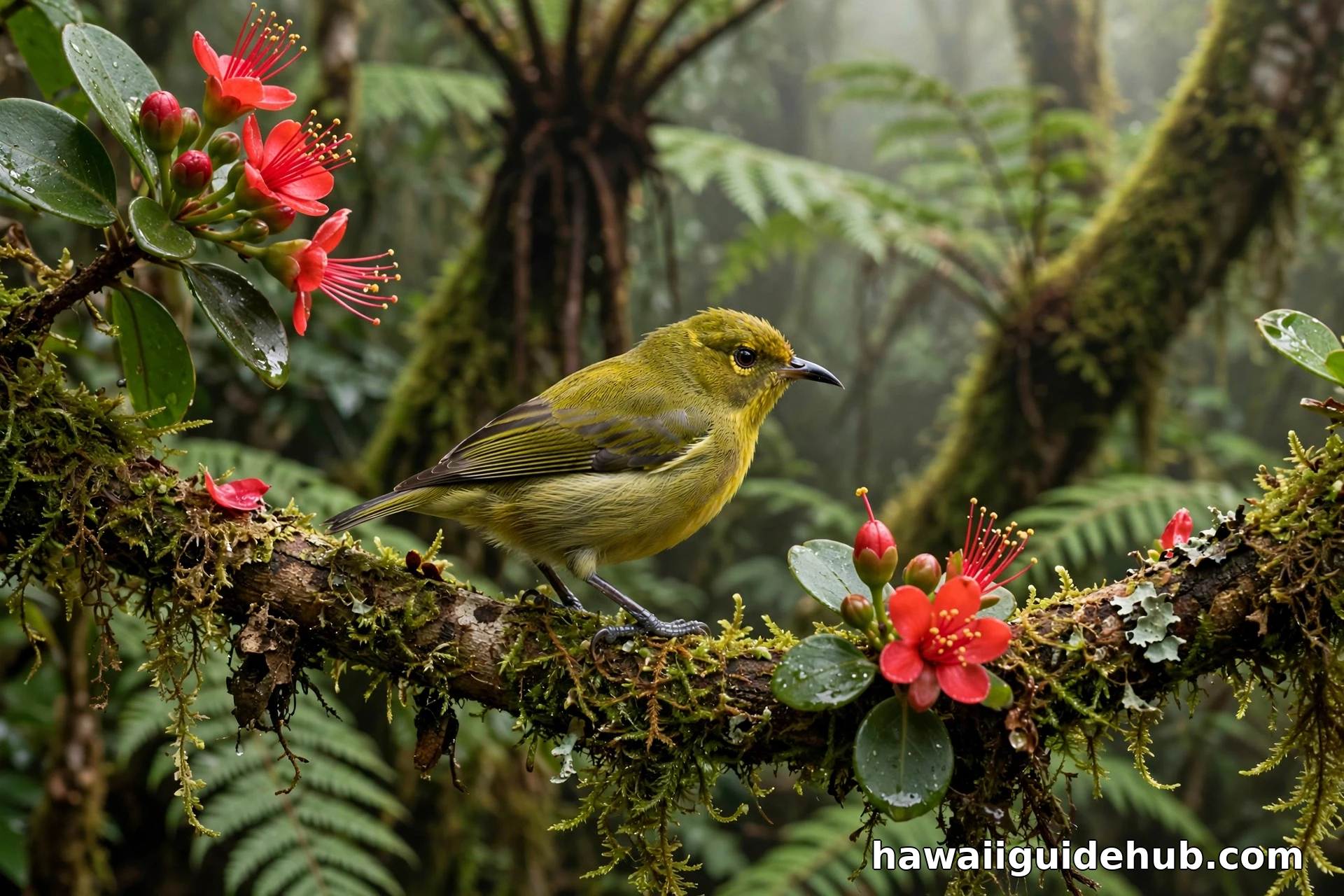
The Hawaiʻi ʻamakihi is the small yellow-green bird most likely to greet you in a Hawaiian mountain forest. It is one of the most common native honeycreepers left in the islands, a generalist that sips nectar, gleans insects, and seems to turn up in almost every kind of forest. For many visitors it is the first truly native forest bird they ever see, and often the easiest one to learn well.
This page is the single complete guide to the Hawaiʻi ʻamakihi, also written as Hawaii amakihi and common ʻamakihi. It covers how to identify it, where it lives, what it eats, how it differs from its Oʻahu and Kauaʻi relatives, why it has survived when so many honeycreepers have not, and how to watch it responsibly in the wild.
Hawaiʻi ʻAmakihi at a Glance
| Scientific name | Chlorodrepanis virens |
| Status | Endemic to Hawaiʻi, listed as Least Concern by the IUCN |
| Size | About 4.3 inches long |
| Islands today | Hawaiʻi Island, Maui, and Molokaʻi |
| Former range | Also Lānaʻi, where it was last seen in 1976 |
| Elevation | Sea level to about 8,000 feet, most reliable in higher forest |
| Food | Nectar, insects, spiders, and fruit juice |
| Close relatives | Oʻahu ʻamakihi and Kauaʻi ʻamakihi, now treated as separate species |
How to Identify a Hawaiʻi ʻAmakihi
Look for a small, active bird washed in yellow-green, brighter yellow below and olive above. The Hawaiʻi Division of Forestry and Wildlife describes it as one of the most abundant birds in the forest around you, and its plain coloring is part of the clue. It has no bold wing bars, no red plumage like an ʻapapane, and no long curved bill like an ʻiʻiwi. Its bill is short, dark, and only slightly downcurved, a general purpose tool rather than a specialist flower probe.
Males are usually a richer yellow than females, and young birds are grayer and duller. Size helps too. At roughly four inches long, an ʻamakihi looks compact and restless, moving through branches with quick hops and short flights. It often flicks its wings and calls as it feeds, which draws the eye even when the green plumage blends into the leaves. Plumage tone also shifts with local rainfall and temperature, so birds in wet Volcano area forest can look darker than birds on the dry Mauna Kea slopes.
Voice and Behavior Clues
The song is a rapid, descending trill that birders often learn before they ever see the bird clearly. Calls include a soft chirp given while foraging. Because ʻamakihi are curious and tolerant of people at a respectful distance, a patient observer standing still on a trail often gets a close look as a bird works through nearby shrubs. That confiding habit, shared with the forest trails of Kauaʻi where its relative lives, makes it a rewarding first native bird to study.
ʻAmakihi Species: Hawaiʻi, Oʻahu, and Kauaʻi
For years all the ʻamakihi were lumped together as one species. Modern taxonomy, based on genetics, bill shape, and voice, splits them into three species. The Hawaiʻi ʻamakihi, Chlorodrepanis virens, lives on Hawaiʻi Island, Maui, and Molokaʻi, with two subspecies: virens on Hawaiʻi Island and wilsoni on Maui and Molokaʻi. The Oʻahu ʻamakihi and the Kauaʻi ʻamakihi are separate species with heavier or longer bills and different ranges. If you see an ʻamakihi on Oʻahu or Kauaʻi, it is one of those species, not this one.
That split matters for visitors who island hop. A bird list from Hawaiʻi Volcanoes National Park and a bird list from Kauaʻi may both say ʻamakihi, yet they record different species. Paying attention to which island you are on is the simplest identification step of all. The three species also sit inside a much larger story: the Hawaiian honeycreepers are an adaptive radiation, dozens of species evolved from a single finch like ancestor, and the ʻamakihi group shows that process still written across the island chain.
Habitat and Range
The Hawaiʻi ʻamakihi uses more habitats than almost any other native forest bird. State wildlife accounts note that it occurs in dry māmane forest, mesic forest, and wet forest, and on Maui it has even adapted to stands of introduced pine, cypress, and fir planted at higher elevations. It ranges from sea level to about 8,000 feet, although mosquito borne disease now shapes where it can thrive, as explained below.
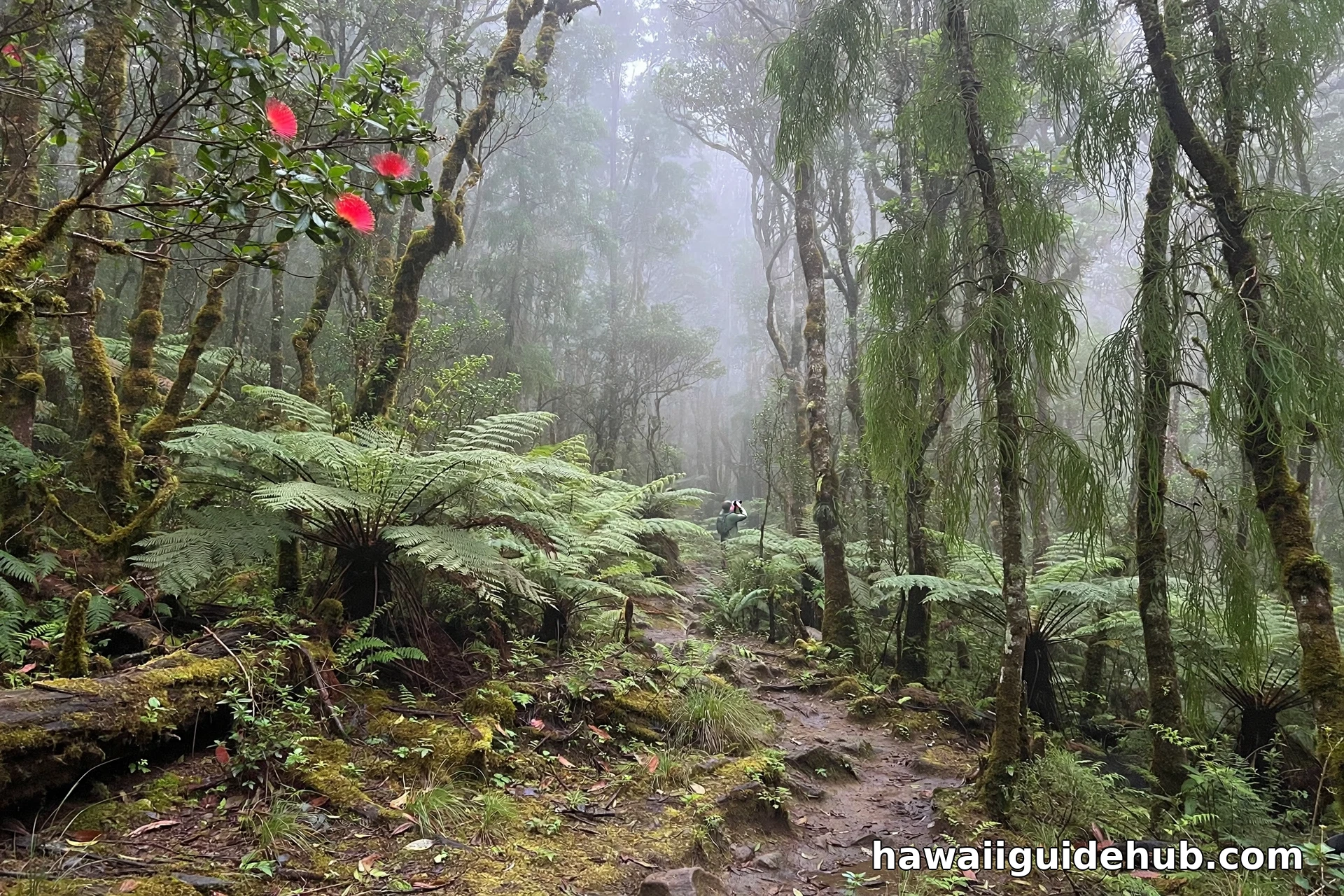
On Hawaiʻi Island, look in the ʻōhiʻa and koa forests of Hawaiʻi Volcanoes National Park, the slopes of Mauna Kea, and protected forest reserves such as Hakalau Forest National Wildlife Refuge. On Maui, Haleakalā National Park and the Waikamoi area are well known among birders. On Molokaʻi, high forest reserves hold smaller numbers in some of the least visited native forest in the state. Shaded trails such as those described in our guide to hiking in Hawaiʻi reward slow walking and frequent stops to listen, whatever island you are on.
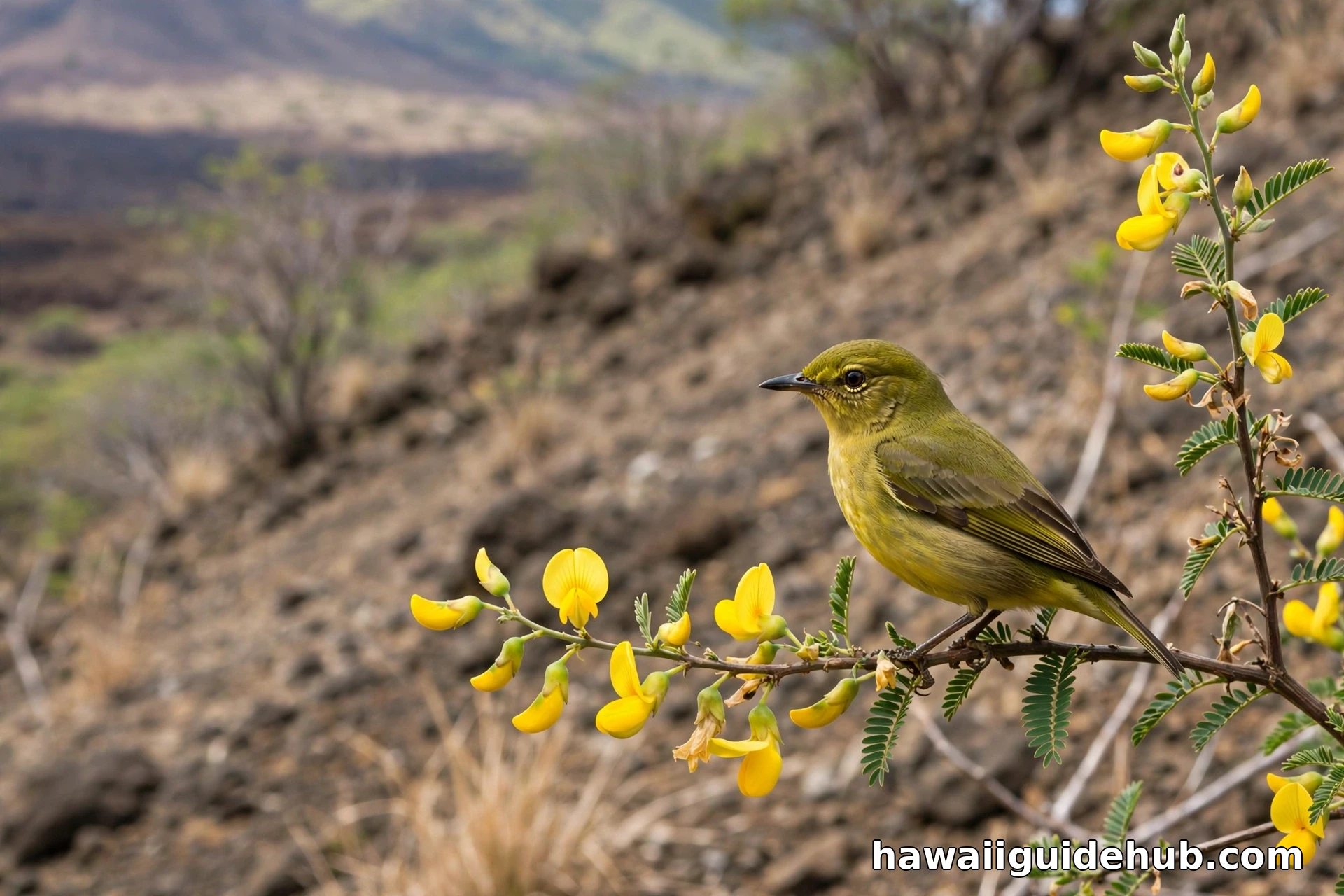
Season changes the map. In the wet season, flowering ʻōhiʻa pulls ʻamakihi into the mid canopy of rain forest, and birds spread widely through the understory. In drier months, birds concentrate where māmane blooms on the high slopes and where water and insects persist in gulches. A visitor who returns to the same trail in a different season may find the birds using a noticeably different slice of the forest, which is one more sign of how completely this species reads its landscape and adjusts to it week by week.
What ʻAmakihi Eat
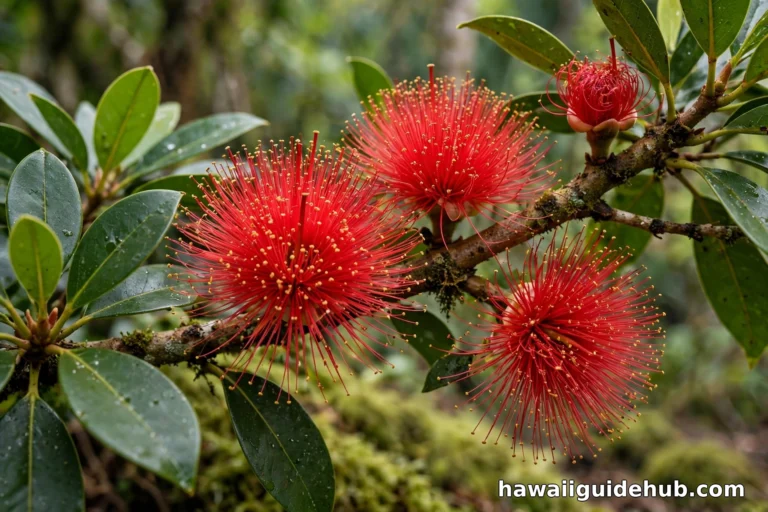
Flexibility is the ʻamakihi story. It drinks nectar from ʻōhiʻa lehua blossoms and yellow māmane flowers, probes bark and leaves for caterpillars and other insects, takes spiders, and sips juice from ripe fruit. Its brush tipped tongue helps it lap nectar, while the modest bill lets it switch to protein rich insects when feeding nestlings or when flowers are scarce. Observers have even watched ʻamakihi feeding at sap flows and on pollen, squeezing value from foods that specialist birds ignore.
That varied diet explains a lot. Specialist honeycreepers tied to one flower shape or one forest type suffered badly when forests changed and flowers failed. The ʻamakihi could shift foods, shift trees, and shift elevation. In dry māmane forest it follows the bloom across the slope. In wet forest it gleans insects from ʻōhiʻa foliage. Few native birds adjust this well, and that adjustment is written into its daily routine from dawn to dusk.
Breeding and Family Life
ʻAmakihi build a small, finely woven cup nest in trees and shrubs, often in ʻōhiʻa, and lay small clutches that both parents help to feed. Chicks stay in the nest for roughly two to three weeks before fledging, and young birds may remain loosely associated with their parents for a couple of months while they learn the local feeding circuit. Breeding timing follows food supply, with more nesting activity when flowers and insects peak after seasonal rains.
Because the species is still relatively common, its breeding biology is better documented than that of rarer honeycreepers. Researchers use it as a comparison point: a living example of how a Hawaiian honeycreeper feeds, nests, and raises young, set against relatives that vanished before science could record those details. Every nest monitored in a protected forest adds baseline knowledge that helps biologists judge how the rarer species are doing.
Why the ʻAmakihi Survived: Disease and Resistance
Hawaiian forest birds evolved without mosquitoes, so they had little defense when introduced mosquitoes brought avian malaria and avian pox. Those diseases devastated low elevation bird communities across the islands. State biologists note that many native birds were wiped out below about 3,000 feet, yet ʻamakihi have been spotted at lower elevations, and evidence suggests some populations are evolving resistance or tolerance to avian malaria. That makes the species a focus of real scientific hope, not just a common bird.
Recent federal survey work at Hakalau Forest National Wildlife Refuge tracks ʻamakihi alongside ʻapapane and ʻiʻiwi to measure how forest birds respond as warming pushes mosquitoes higher into the last disease free refuges. Survival is not the same as safety. Rapid ʻōhiʻa death, a fungal disease killing ʻōhiʻa trees, threatens the forests the bird depends on, and climate change shrinks the cool refuges at high elevation. The ʻamakihi is listed as Least Concern because it remains widespread and numerous, not because its forests are secure. Its story, like the broader story told in our Hawaii facts guide, is one of resilience inside a fragile system.
Where Visitors Can See Hawaiʻi ʻAmakihi
Your best strategy is elevation, native trees, and patience. Morning is the most active period, when birds sing more and feed lower in the vegetation. Stand quietly beside flowering ʻōhiʻa or māmane and wait rather than chasing birds through the understory. Binoculars help, but many encounters happen at close range on the trail itself, where a curious bird may approach to inspect you.
Reliable settings include high elevation trails in Hawaiʻi Volcanoes National Park, the māmane forest on Mauna Kea, Hosmer Grove and the summit district of Haleakalā on Maui, and forest reserves on Molokaʻi. Combine birding with a wider island day using our guide to things to do on the Big Island, and give the forest at least one unhurried hour. Rushed stops produce lists with no ʻamakihi on them, while a slow hour almost always delivers.
Responsible Viewing and Forest Etiquette
Stay on trail, keep your distance from nests, and never use recorded playback repeatedly to pull a bird toward you. Clean your boots between forests. Soil on footwear can spread the fungus behind rapid ʻōhiʻa death, and state agencies ask hikers to brush and disinfect soles before and after entering native forest. Do not feed wild birds, and pack out every scrap of food, since crumbs attract predators and ants that harm native wildlife.
If you find a sick bird or a dead bird, do not handle it. Note the location and report it to the Hawaiʻi Division of Forestry and Wildlife. That hands off approach protects both you and a bird community where a single disease event matters. Photography follows the same rule: a long lens and patience always beat a close approach that flushes a feeding bird.
Video: Forest Birds of the Mauna Kea Slopes
This American Bird Conservancy walk on the Palila Forest Discovery Trail shows the dry forest habitat where Hawaiʻi ʻamakihi and Hawaiʻi ʻelepaio are regularly seen and heard.
Frequently Asked Questions
Is the Hawaiʻi ʻamakihi endangered?
No. It is listed as Least Concern by the IUCN and is one of the most common native honeycreepers. That status reflects its wide range and adaptability, although its forest habitat still faces serious threats from disease and rapid ʻōhiʻa death.
Where does the Hawaiʻi ʻamakihi live?
It lives only in Hawaiʻi, on Hawaiʻi Island, Maui, and Molokaʻi, in dry, mesic, and wet forest from sea level to about 8,000 feet. It formerly lived on Lānaʻi, where it was last seen in 1976.
What is the difference between the Hawaiʻi, Oʻahu, and Kauaʻi ʻamakihi?
They are now treated as three separate species. Each is confined to its own island or island group, and they differ in bill size, tone of plumage, and voice. The island you are standing on identifies which one you are watching.
What do Hawaiʻi ʻamakihi eat?
They eat nectar from native flowers such as ʻōhiʻa and māmane, plus insects, spiders, and fruit juice. That flexible diet is a major reason the species has persisted while specialist honeycreepers declined.
Can visitors see ʻamakihi easily?
Yes, by Hawaiian forest bird standards. Visit high elevation native forest in the morning, listen for the descending trill, and wait near flowering trees. Hawaiʻi Volcanoes National Park and Haleakalā National Park are two of the most accessible places to try.
The Hawaiʻi ʻamakihi is not the rarest bird in the forest, and that is exactly its value. It is the native honeycreeper most visitors can actually meet: a small green presence in the ʻōhiʻa canopy, proof that a flexible, resilient species can still hold its ground. Learn its trill, watch it work a flowering branch, and you will understand both what Hawaiʻi has lost in its other honeycreepers and what careful forest protection is still holding on to.