Hawaiʻi Marine Base Housing: How MCBH Family Housing Works

For a Marine family with orders to Hawaiʻi, housing is the first real question, and it arrives long before the household goods do. Marine Corps Base Hawaii, usually shortened to MCBH and still called Kaneohe Bay by almost everyone, runs one of the most distinctive housing situations in the Marine Corps: a privatized family housing community spread across a tropical peninsula on Oʻahu’s windward coast, plus neighborhoods on the other side of the island near Camp H. M. Smith. Demand is high, waitlists are normal, and the choices you make in the first weeks shape the whole tour.
This guide explains how Marine base housing in Hawaiʻi actually works: who is eligible, how the application and waitlist run, which neighborhoods exist and who lives in them, what the homes are like, what happens with pets, schools, and temporary lodging, and how on base housing compares with renting in Kailua, Kāneʻohe, or near Camp Smith. It is written for relocating service families. The base itself is a working military installation with restricted access, and its housing areas are homes, not visitor attractions.
The Base Behind the Housing
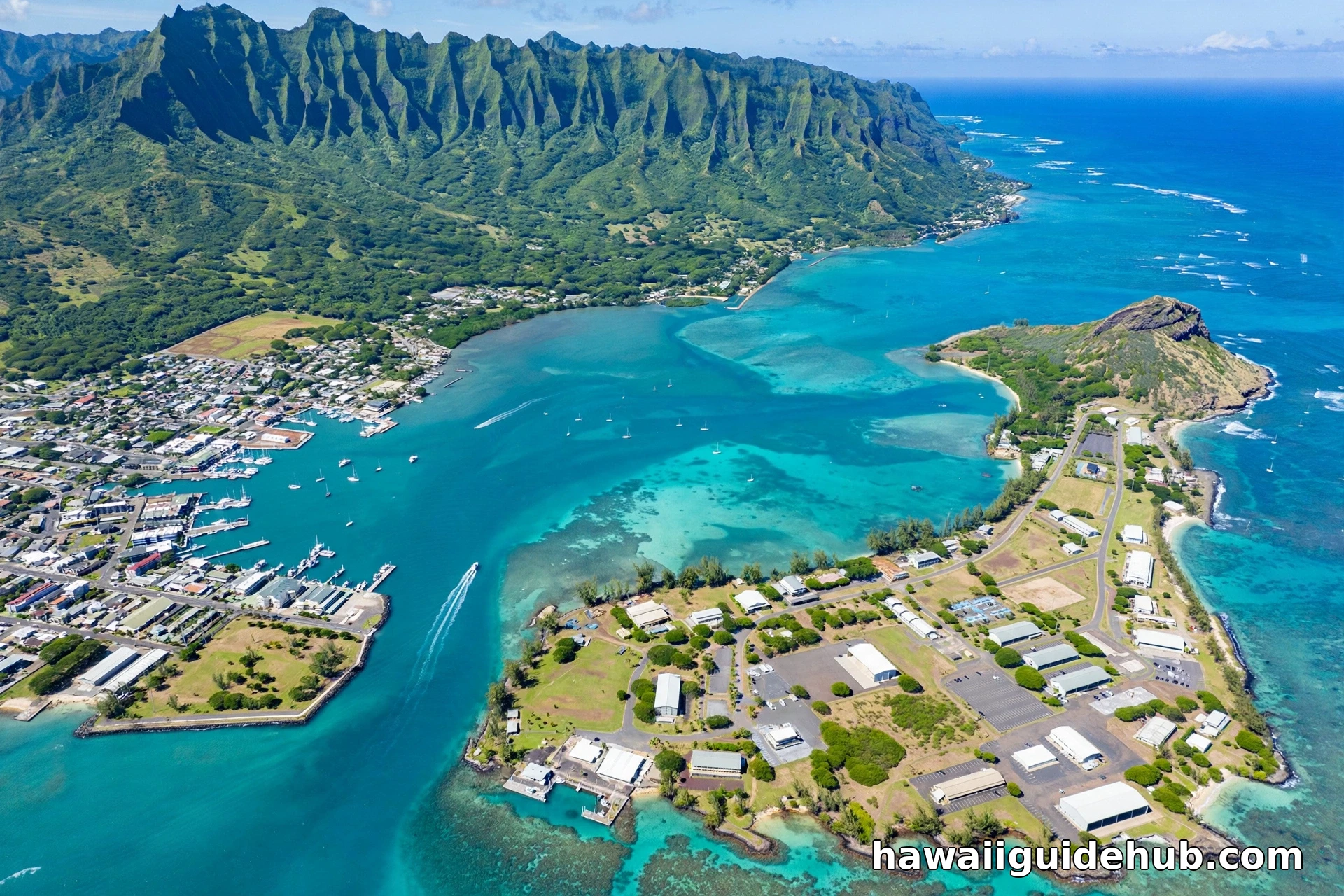
Marine Corps Base Hawaii occupies the entire Mōkapu Peninsula, about 2,951 acres on Oʻahu’s northeastern shore, between the windward communities of Kailua and Kāneʻohe and roughly 12 miles northeast of Honolulu. Kāneʻohe Bay borders the peninsula on the west, Kailua Bay on the east, and the Pacific to the north. The main gate is reached at the eastern end of Interstate H-3, one of the most scenic freeway drives in the country, which crosses the Koʻolau mountains from Honolulu. The base operates a 7,800 foot runway as Marine Corps Air Station Kaneohe Bay and hosts units including the 3rd Marine Littoral Regiment and Marine Aircraft Group 24.
The peninsula has a long military history. The Navy built a seaplane base here before World War II, and Naval Air Station Kaneohe Bay was attacked on December 7, 1941, minutes before the attack on Pearl Harbor began. That history matters to housing more than you might expect, because parts of the base, including some of its oldest housing areas, date from that era and sit alongside neighborhoods built in the last decade. Families researching the wider military footprint can compare installations in our guide to Oahu military bases.
Who Runs the Housing and Who Can Apply
Family housing at MCBH is privatized. The government Family Housing Office works with a public private venture partner, ʻOhana Military Communities, managed by Hunt Military Communities, which operates and maintains the homes. According to the official MilitaryINSTALLATIONS profile for MCB Hawaii, housing is provided to families of Marines assigned to duty on Oʻahu and to members of other services assigned to Marine Corps Base Hawaii, Kaneohe Bay, and to Marine Forces Pacific at Camp H. M. Smith. The Family Housing Office is on the first floor at 1571 Lawrence Road, Kaneohe Bay, with hours listed as Monday, Tuesday, Thursday, and Friday from 7:30 in the morning to 3:30 in the afternoon, and Wednesday from 7:30 to 2:00. Confirm hours before visiting, since office schedules change.
| Step | What happens |
| Submit advance application | Send the DD Form 1746 housing application with a copy of your PCS orders |
| Join the waitlist | Your name can be placed on a waiting list in advance, before you arrive |
| Report in person | No home is offered before you physically arrive and officially report for duty |
| Report to the housing office | Accompanied members must report to the Family Housing Office at Kaneohe Bay on arrival |
| Accept and move in | You may accept and move into housing up to 14 days before your family arrives |
Allow about ten working days after sending an application for your information to enter the housing database, and use the base housing website to track your wait position. Because inventory is limited and demand is high, applying the moment orders are in hand is the single most useful thing a family can do. Waiting until arrival to start paperwork is the most common avoidable mistake in this process.
The Neighborhoods: Kaneohe Bay, Camp Smith, and Manana
ʻOhana Military Communities manages homes in three broad areas. The largest group sits on MCBH itself at Kaneohe Bay. A second group serves Camp H. M. Smith, the hilltop headquarters above Pearl Harbor on the leeward side. The third, the Manana neighborhood in Pearl City, sits between the two and is the practical option for many Camp Smith families. Because one manager runs homes on both sides of the island, families are sometimes offered a home far from the duty station they expected, so confirm the neighborhood location of any offer before accepting it. Commuting across Oʻahu at the wrong hour is a daily cost, not a one time inconvenience.
Within Kaneohe Bay, neighborhoods are largely organized by rank band, and floor plans generally run from two to five bedrooms. Hana Like, built in 2017, offers three and four bedroom townhomes for senior enlisted families, close to the commissary, the exchange, and Mokapu Elementary, with two car garages. Hawaii Loa sits on a hillside overlooking the base, with three and four bedroom homes near the base theater and Semper Fit gym. Heleloa is the historic quarter: homes first constructed in 1941 and renovated in 2009, four bedroom houses for senior officers overlooking North Beach, near the Kaneohe Klipper Golf Course. Kaluapuni and Kapoho are small officer neighborhoods, a few dozen homes between them, with ocean views and garages. At Camp Smith, the small senior neighborhood offers large four bedroom homes, while Manana in Pearl City serves a wide range of ranks with a community center, pool access, and a mini mart nearby. Neighborhood assignments and rank bands are set by the housing office and change with inventory, so treat any list, including this one, as a map of the options rather than a promise of availability.
What the Homes Are Like
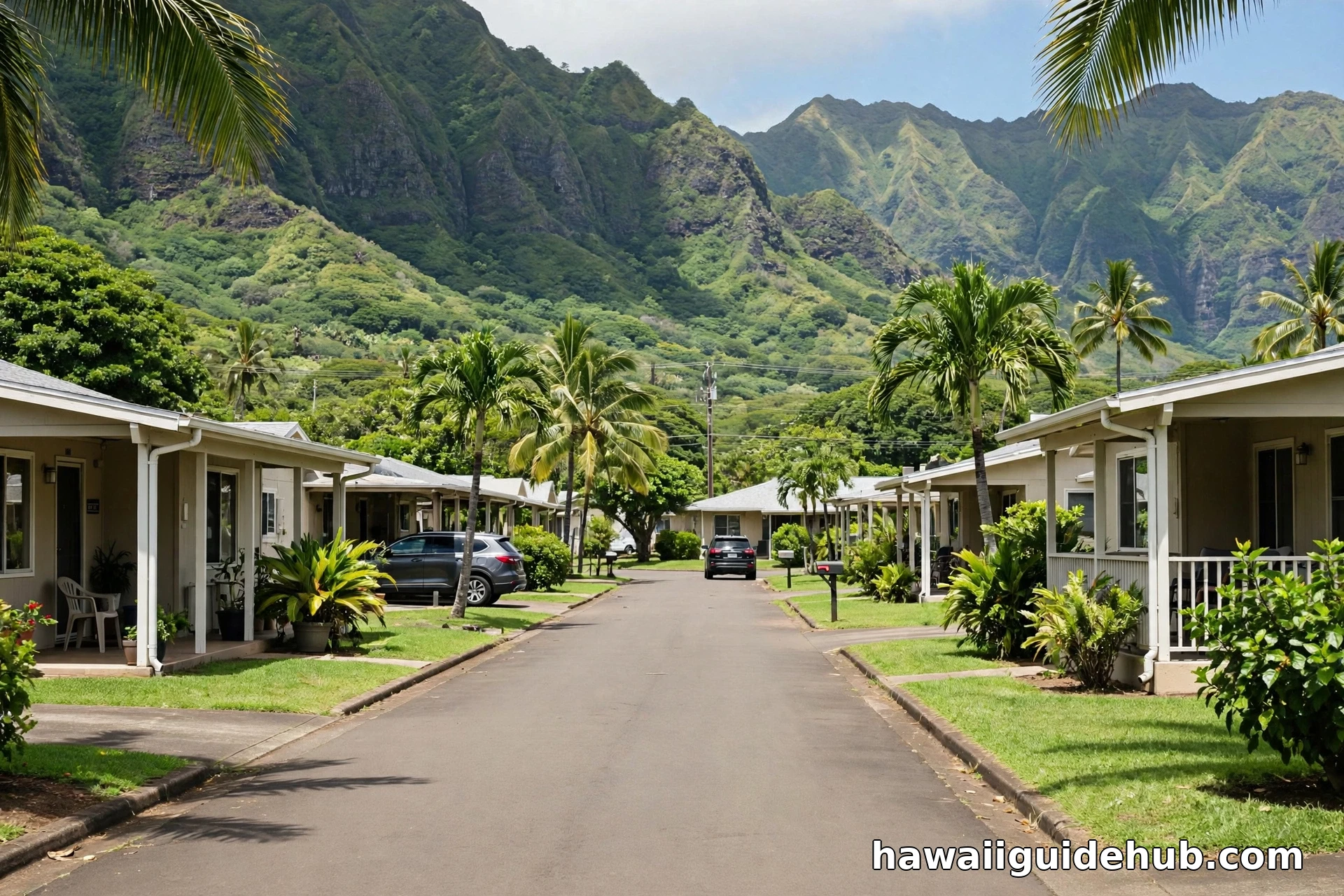
Privatized homes at MCBH come equipped with the basics of island daily life: an electric range, microwave, and refrigerator are standard, and lawn care for front and side yards is provided, a meaningful perk in a climate where grass grows all year. Many homes have air conditioning, fenced yards, and lanais, the covered outdoor living spaces that Hawaiʻi homes are built around. The housing stock spans generations, from renovated 1940s homes in Heleloa to construction from the late 2010s in Hana Like, so two families in the same rank band can have noticeably different houses. Ask for the specific floor plan, square footage, and renovation status of any home you are offered, and review the floor plan library the housing manager publishes before you decide.
Pets
Base housing policy allows a maximum of two pets per household, and certain terrier breeds are prohibited on base under the policy summarized by MilitaryINSTALLATIONS, which names American Staffordshire Terriers and Staffordshire Terriers. Hawaiʻi also has strict animal import rules as a rabies free state, and preparing a dog or cat for entry without quarantine takes months of veterinary paperwork started well before the move. Start the pet process at the same time as the housing application, not after it. Families who arrive with incomplete pet paperwork face boarding costs and separation that early planning avoids.
Temporary Lodging and the First Weeks
Most families spend their first nights in temporary lodging while their waitlist position resolves or their household goods cross the Pacific. The Inns of the Corps, just inside the main gate, handles arrival lodging for MCBH, including some pet friendly rooms, and the base also maintains beach cottages and villas used for temporary and recreational stays when available. Book arrival lodging as early as your orders allow, because windward temporary rooms fill during the summer PCS season. Use those first weeks deliberately: report to the housing office, confirm your waitlist status in person, drive the off base neighborhoods at commute hour, and visit the schools your children would attend.
Schools and Daily Life on the Windward Side
Hawaiʻi has no Department of Defense school system for MCBH families. Children attend Hawaiʻi Department of Education public schools, private schools, or charter schools, and on base children are served by Mokapu Elementary, which sits on the installation itself. The base School Liaison Officer is the right first call for registration questions, school zoning for a specific housing address, and the tuberculosis clearance Hawaiʻi schools require for enrollment. Daily life on base includes the commissary and exchange, medical and dental clinics, the marina on Kāneʻohe Bay, and beaches inside the installation that are open only to authorized users. Off base, Kailua and Kāneʻohe provide grocery stores, libraries, and public beaches such as Kailua Beach, a short drive from the gate.
On Base or Off Base? The Honest Comparison
On base housing trades choice for simplicity. Your Basic Allowance for Housing generally covers the home, the commute is minutes, maintenance is a phone call, and the neighborhood is full of families living the same PCS cycle. Off base renting in Kailua or Kāneʻohe offers more house styles and a civilian neighborhood life, at market rents that are among the highest in the United States, with utilities, deposits, and a commute through the H-3 tunnels or along Kamehameha Highway. Families assigned to Camp Smith often weigh Pearl City, ʻAiea, and Mililani instead. Neither answer is right for everyone, but the decision should be made with real numbers for your rank and dependency status, which the official BAH calculator provides, rather than with listings alone. Our guide to living in Hawaii gives a realistic picture of island costs for any household weighing the move, and families who want to understand the December 1941 history their new home sits within can plan a visit using our guide to visiting Pearl Harbor.
Video: Marine Corps Base Hawaii From the Air
This official style footage from Marine Corps Air Station Kaneohe Bay shows the airfield and peninsula setting that MCBH housing surrounds.
Frequently Asked Questions
How do I apply for Marine base housing in Hawaiʻi?
Submit the DD Form 1746 application with a copy of your PCS orders to the Family Housing Office at 1571 Lawrence Road, Kaneohe Bay. You can join the waitlist in advance, but no home is offered until you arrive and report for duty in person.
Who manages MCBH family housing?
The homes are privatized and managed by ʻOhana Military Communities, a Hunt Military Communities operation, working with the government Family Housing Office. The same manager runs the Kaneohe Bay, Camp Smith, and Manana housing areas.
Can other services live in Marine base housing in Hawaiʻi?
Yes, within the rules. The official housing profile states that housing serves families of Marines assigned on Oʻahu and members of other services assigned to MCBH and to Marine Forces Pacific at Camp H. M. Smith, subject to availability and waitlist priority.
How many pets can we bring to base housing?
Base policy allows a maximum of two pets per household, and some breeds are prohibited. Hawaiʻi’s rabies free import rules require months of advance veterinary preparation for dogs and cats, so start both processes as soon as orders arrive.
Where do MCBH children go to school?
Children attend Hawaiʻi public, private, or charter schools. Mokapu Elementary is located on the base itself. Contact the School Liaison Officer for zoning and enrollment help for your specific address.
Marine base housing in Hawaiʻi rewards the families who start earliest. Send the application with your orders, line up temporary lodging and pet paperwork in parallel, learn the difference between the Kaneohe Bay, Camp Smith, and Manana options before an offer arrives, and the windward peninsula can be one of the best addresses in the Marine Corps: a home between a turquoise bay and a green mountain wall, minutes from work, in a neighborhood that understands exactly what a PCS move takes out of a family.