
Molokaʻi Travel Guide
Molokaʻi is the island Hawaiʻi keeps for itself. While the other main islands built resorts and highways, Molokaʻi stayed quiet, rural, and deeply Hawaiian, with a small population, no stoplights, and a culture that asks visitors to slow down and show respect. This guide covers everything you need to plan a trip: how to get there, where to stay, what to see, and how to visit in a way the island welcomes.
On This Page
- Molokaʻi at a Glance
- Getting to Molokaʻi
- Where to Stay: The Island’s Regions
- Top Things to Do on Molokaʻi
- Beaches, Hikes, and Waterfalls: An Overview
- Culture, Community, and Traveling with Respect
- Practicalities: What to Know Before You Go
- Best Time to Visit Molokaʻi
- Frequently Asked Questions
- Related Guides
Molokaʻi at a Glance
Molokaʻi, known as the Friendly Isle, is the fifth largest of the main Hawaiian Islands and by far the least developed. About 7,300 people live here, and a large share are Native Hawaiian, giving the island the highest proportion of Native Hawaiian residents of any of the main islands. That fact shapes everything about a visit. Hawaiian language, custom, and community life are not performances for tourists on Molokaʻi. They are the daily reality, and visitors are guests in it.
Geographically, Molokaʻi is a long, narrow island, roughly 38 miles from end to end and only about 10 miles wide at its broadest point. The island divides naturally into three parts. The west end is dry ranch country, home to the small plantation town of Maunaloa and some of the island’s best beaches. The central area around Kaunakakai, the island’s main town, holds the harbor, most shops and restaurants, and the airport at Hoʻolehua. The east end rises into the lush Kamakou mountains and drops into the remote Hālawa Valley, one of the oldest continuously inhabited valleys in Hawaiʻi.
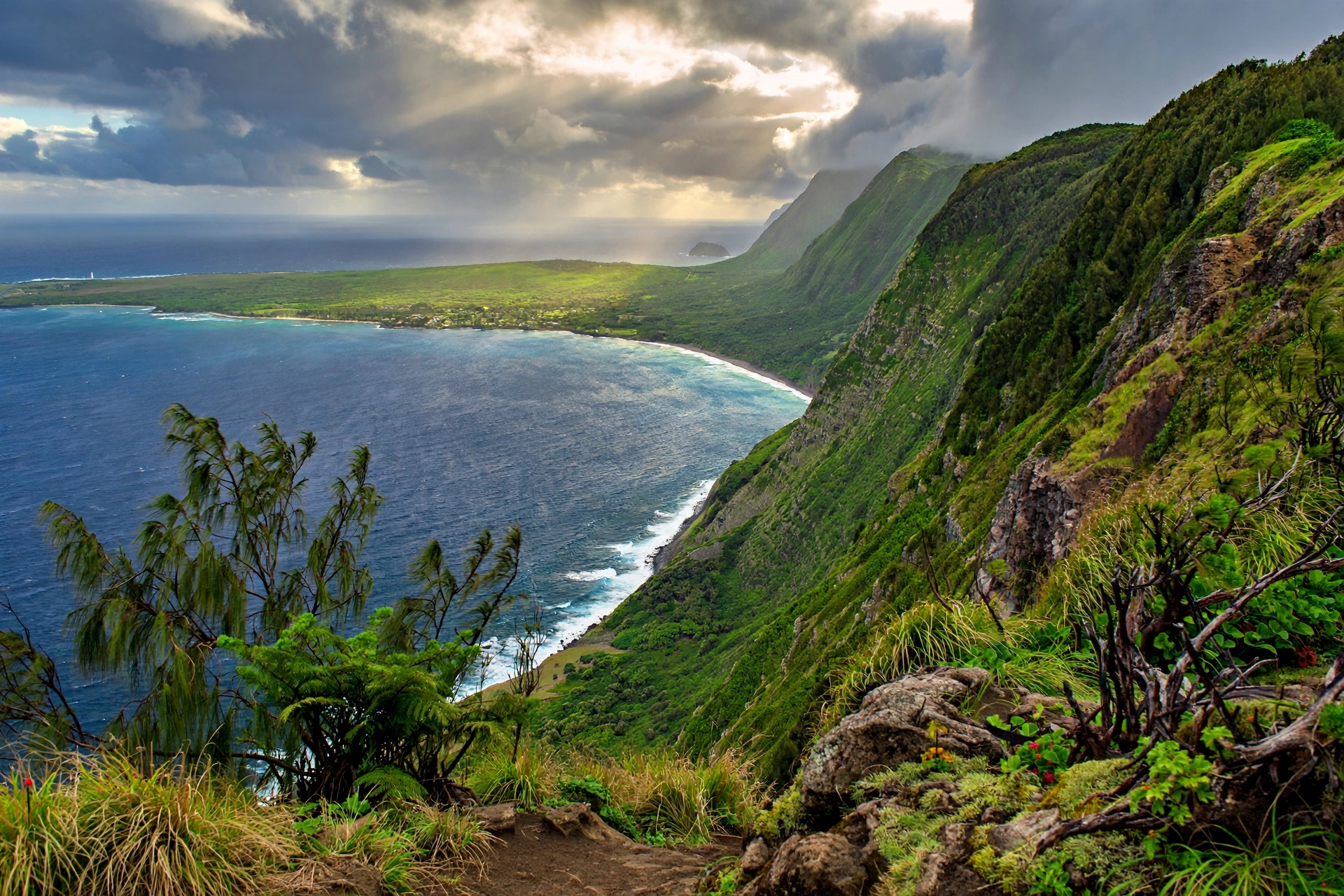
The north shore is a wall of sea cliffs, among the tallest in the world at roughly 3,000 feet, cut by deep valleys like Hālawa and Wailau. There are no roads along this coast. The famous Kalaupapa peninsula sits at the base of these cliffs on the north shore, a place of profound history that is now a National Historical Park with strictly limited access.
What Molokaʻi does not have is as defining as what it does. There are no traffic lights anywhere on the island. There are no large resorts, no chain restaurants of note, and very little nightlife. Dining options are limited and many businesses close on Sundays. The pace is slow by design, and residents have repeatedly chosen to keep it that way, resisting the kind of large scale development seen on the other islands. Travelers who arrive expecting Maui will be disappointed. Travelers who arrive ready for quiet, for local food, and for genuine encounters tend to leave changed.
Because the island is small and its resources are limited, planning matters more here than on the bigger islands. Rental cars should be reserved well in advance, since the fleet is small. Groceries, fuel, and cash deserve forethought, because options thin out quickly outside Kaunakakai. And respect is not optional. Molokaʻi’s community is protective of its land and culture, and visitors who behave thoughtfully, support local businesses, and follow posted rules will find the island remarkably welcoming.
Getting to Molokaʻi
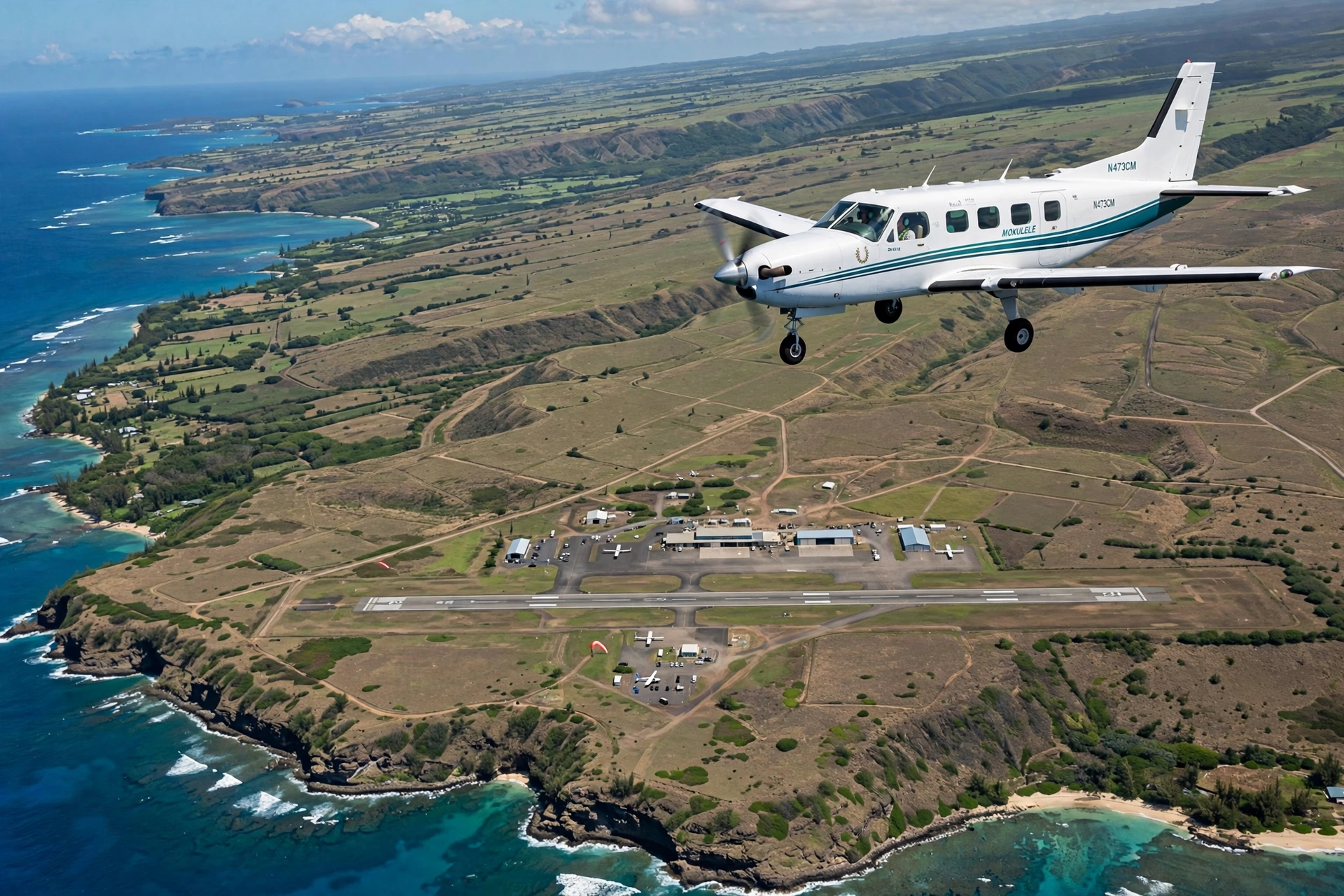
There are no direct flights to Molokaʻi from the US mainland. Every trip routes through Honolulu International Airport (HNL) on Oʻahu, where travelers connect to a short commuter flight to Molokai Airport (MKK) at Hoʻolehua on the island’s central plateau. The flight takes about 25 to 30 minutes and is operated by small commuter airlines such as Mokulele Airlines. Schedules are limited compared with interisland jets, so book early, especially around holidays, and build buffer time into connections.
There is currently no passenger ferry service to Molokaʻi. The last ferry, which ran between Lahaina on Maui and Kaunakakai, ended service in 2016, and no replacement has been established. Flights are the only practical way to reach the island. Private boat charters exist but are uncommon and expensive, and they are not a standard transportation option for visitors.
Once on Molokaʻi, a rental car is effectively essential. The island has a small public bus system, but routes and frequency are geared toward residents rather than sightseeing, and taxis are few. The rental fleet at MKK is small, so reserving a car at the same time you book flights is wise. Most of the island’s paved roads are easily handled by a standard car, but some destinations, such as the Kamakou Preserve, require four wheel drive and advance permission, and a few remote areas are best left to guided access.
Driving on Molokaʻi is straightforward and pleasant. The main highway, Kamehameha V Highway (Highway 450), runs east from Kaunakakai along the south shore to the end of the road near Hālawa Valley, passing fishponds, beaches, and small communities. Maunaloa Highway (Highway 460) runs west from Kaunakakai through Hoʻolehua to Maunaloa and on toward the west end beaches. Distances are short: Kaunakakai to the east end takes under an hour, and Kaunakakai to the west end takes about 30 minutes. Drive with patience. Locals are in no hurry, and neither should you be.
Where to Stay: The Island’s Regions
Molokaʻi has no large resorts and only a handful of small hotels, so most visitors stay in vacation rentals, condominiums, or small inns. Where you base yourself shapes the trip, because the island’s regions feel quite different from one another.
Kaunakakai and Central Molokaʻi
Kaunakakai is the island’s main town and the practical choice for most visitors. Staying here or nearby puts you within easy reach of the harbor, grocery stores, the island’s best restaurant selection (still modest), and central access to both ends of the island. Accommodations in this area tend to be simple hotels, vacation rentals, and a few bed and breakfast style inns. This is the best base for travelers who want convenience and plan to explore the whole island.
The West End
The west end, around Maunaloa and the coast near Papohaku Beach, is the island’s driest and sunniest region. This is where you will find the island’s main condominium developments, many of them set along quiet stretches of coast with ocean views and sunset exposure. The west end suits travelers whose priority is beach time and tranquility. Dining and shopping out here are very limited, so plan to self cater or drive into Kaunakakai, about 20 to 30 minutes away.
The East End
The east end, from the outskirts of Kaunakakai toward Hālawa Valley, is lush, rural, and the most traditionally Hawaiian feeling part of the island. Accommodations here are mostly private vacation rentals, some of them quite remote. This area suits travelers seeking immersion and solitude, and it is the best base for exploring the east end’s valleys, coastline, and cultural sites. Be aware that the road narrows considerably past the 20 mile marker, and services are essentially nonexistent beyond the small communities along the way.
No matter where you stay, book well in advance. The island’s lodging supply is tiny compared with the other main islands, and availability tightens during holidays and summer. Also note that Molokaʻi’s accommodations are generally simpler than what visitors may be used to elsewhere in Hawaiʻi. That simplicity is part of the island’s character, not a shortcoming.
Top Things to Do on Molokaʻi
Molokaʻi’s attractions are fewer in number than the other islands, but they run deep. The island rewards travelers who take time at each place rather than rushing between many stops.
Kalaupapa National Historical Park
Kalaupapa, on a remote peninsula beneath the world’s tallest sea cliffs on Molokaʻi’s north shore, is one of the most significant historic sites in Hawaiʻi. Established in 1866 as an isolation settlement for people with Hansen’s disease (leprosy), it became home to thousands of Hawaiians forcibly separated from their families. The settlement’s story is inseparable from figures like Saint Damien de Veuster and Mother Marianne Cope, who devoted their lives to caring for its residents.
Today Kalaupapa is a National Historical Park, and it remains home to a small number of former patients who chose to stay. Access is strictly limited and requires advance arrangement through an authorized tour or permit. Independent visits are not permitted. Visitors are expected to behave with quiet respect: this is a place of suffering, faith, and endurance, not a photo opportunity. Photography of residents is not appropriate, voices stay low, and the rules of the park are absolute. For travelers willing to approach it properly, Kalaupapa is a profoundly moving experience and the single most important historic site on the island.
Palaʻau State Park and the Kalaupapa Overlook
For travelers who cannot or do not arrange a visit into Kalaupapa itself, Palaʻau State Park offers the famous overlook of the peninsula and its towering sea cliffs from above. The view from the clifftop, roughly 1,600 feet above the settlement, takes in the whole peninsula, the crashing surf, and the green pali dropping to the sea. The park also contains Kaule o Nānāhoa, known as Phallic Rock, a natural stone formation of cultural significance in Hawaiian tradition. Visit with respect, stay on marked paths, and keep noise down.
Hālawa Valley
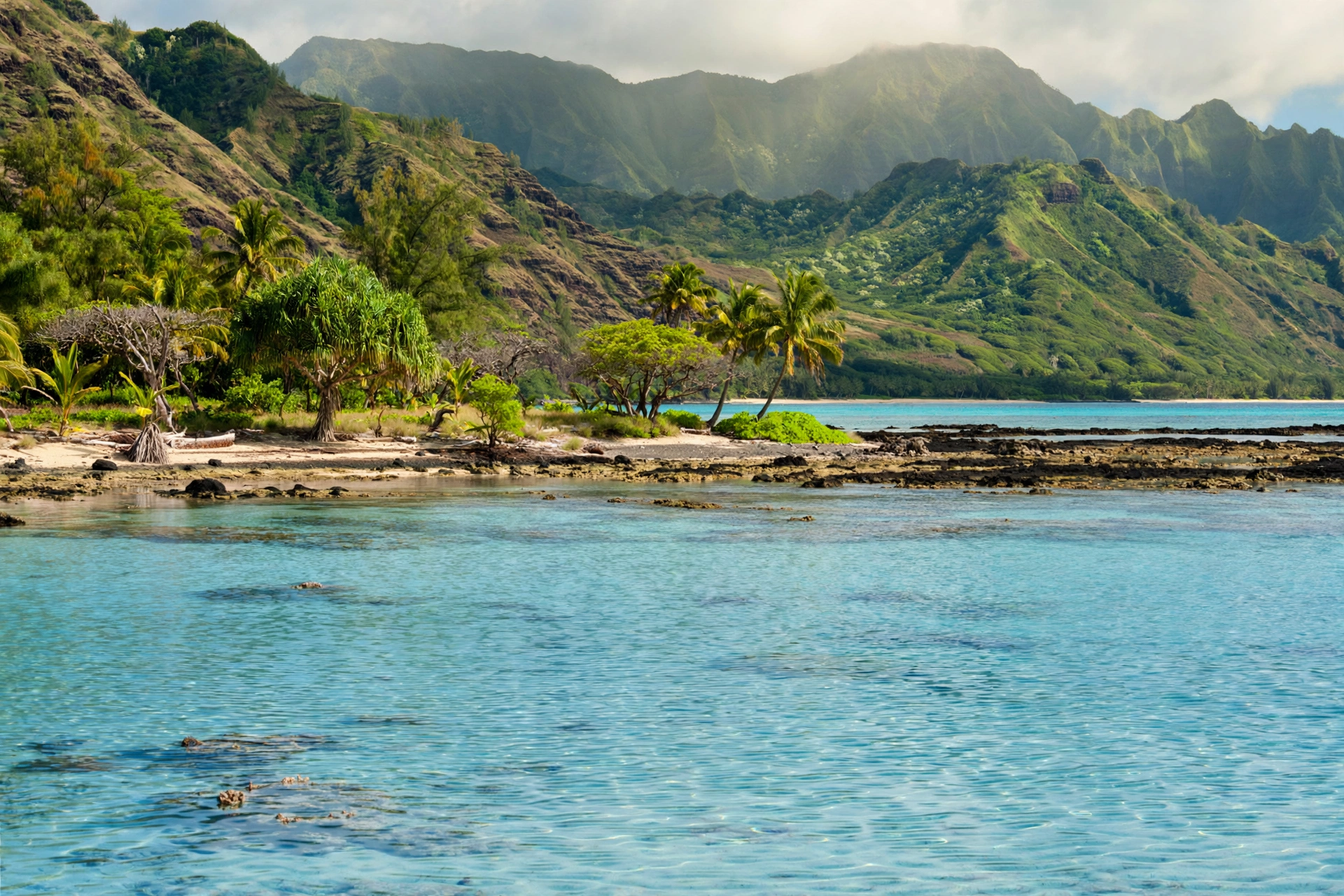
Hālawa Valley, at the island’s remote east end, is one of the oldest settled valleys in all of Hawaiʻi, with a history of continuous habitation stretching back many centuries. Waterfalls drop from the valley walls, taro still grows in the lowlands, and the sense of stepping back in time is powerful. Access into the valley beyond the overlook is best done with a local guide, both for safety and out of respect for the families who live and farm there. The drive to the valley along the narrowing east end road is itself one of the island’s great experiences.
Papohaku Beach
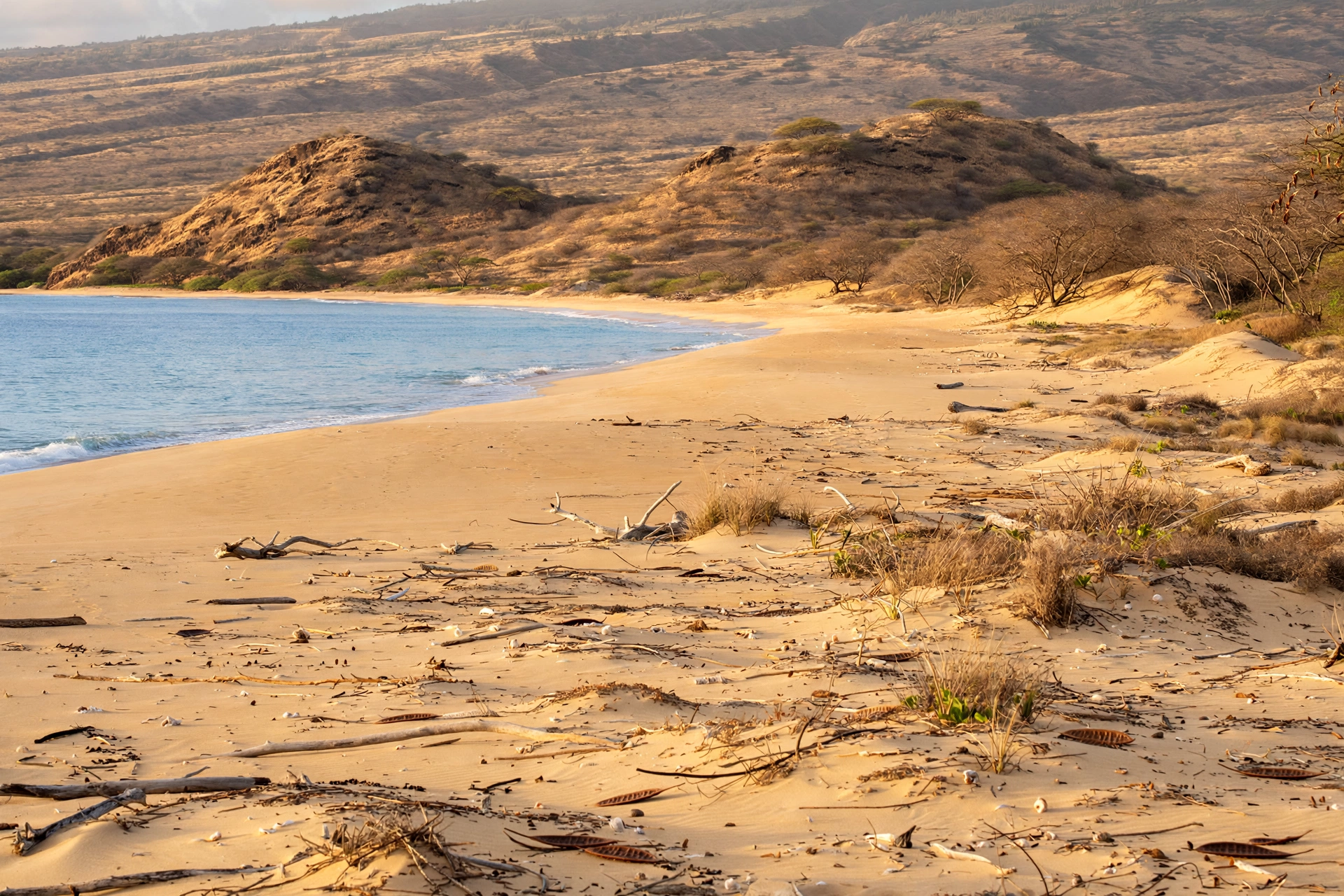
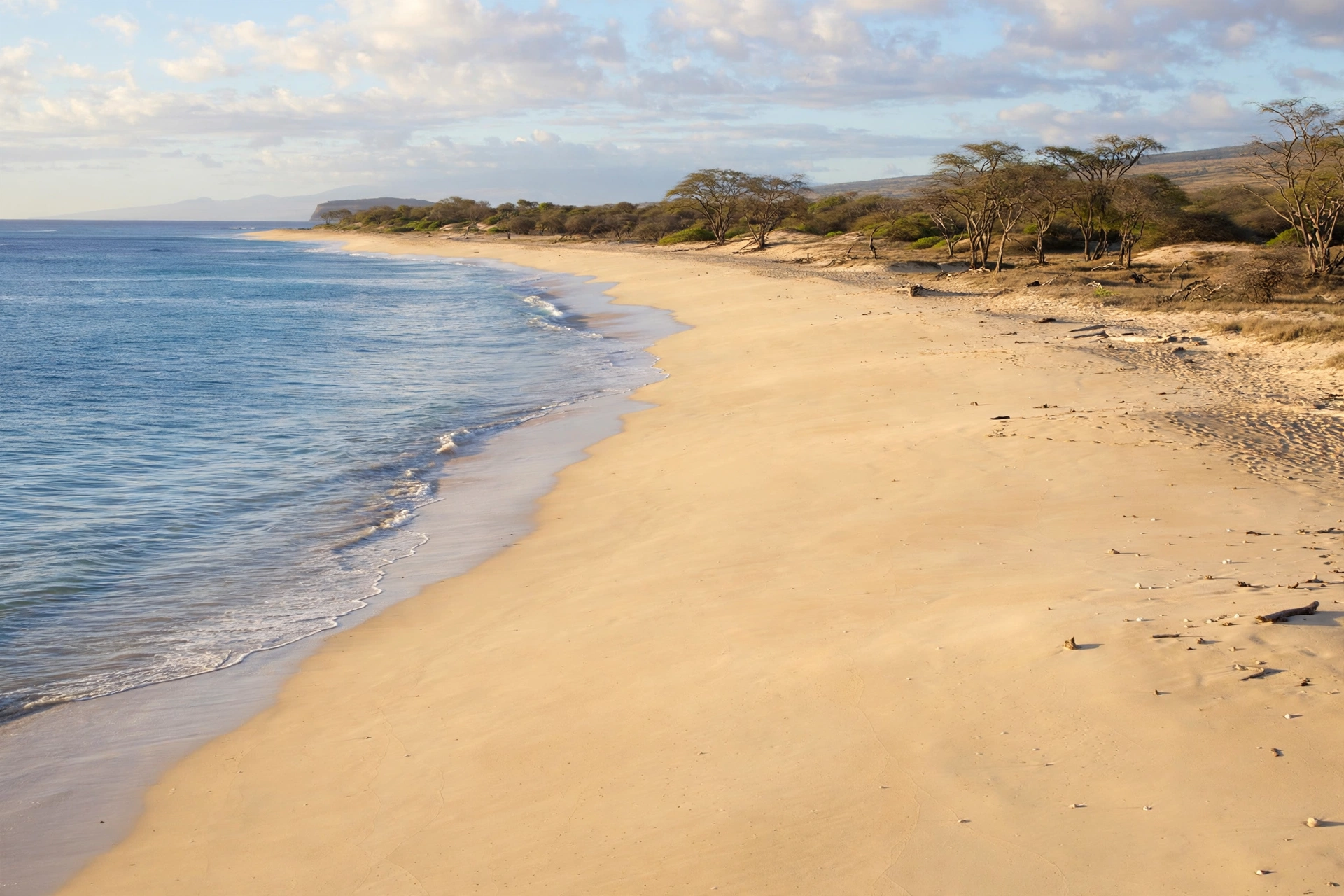
Papohaku Beach on the west end is one of the longest white sand beaches in Hawaiʻi, stretching for roughly three miles. On most days you may share it with only a handful of people. The sand is soft and golden, the sunsets are spectacular, and the sense of space is unlike anything on the more developed islands. Note that the surf here can be rough and there is no lifeguard, so swim with caution and respect posted warnings.
Kamakou Preserve
The Kamakou Preserve, managed by The Nature Conservancy, protects some of the most intact native rainforest left in Hawaiʻi, high in the mountains of east Molokaʻi. Rare native birds, plants found nowhere else on earth, and a mossy, primeval landscape reward the effort of getting there. Access requires advance permission and a four wheel drive vehicle for the rough access road, and weather can close the route. This is a destination for serious nature lovers, and it should be arranged well before your trip.
Kapuāiwa Coconut Grove
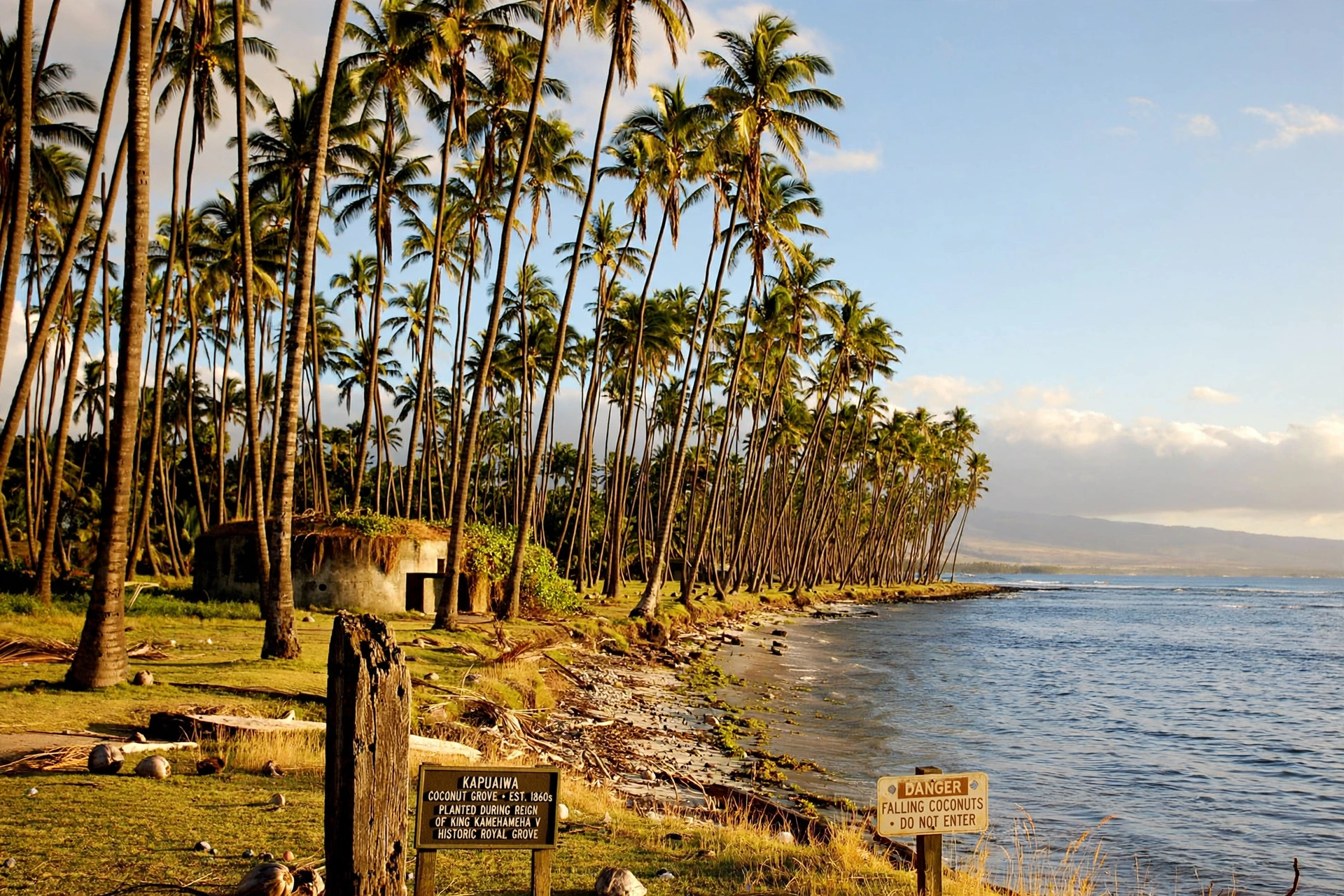
The Kapuāiwa Coconut Grove near Kaunakakai is one of the island’s most photographed cultural sites. The royal coconut grove was planted in the 1860s during the reign of Kamehameha V and remains a living connection to the Hawaiian monarchy era. The grove sits on the shore road west of town, an easy stop that pairs well with the nearby Church Row and other historic sites.
Purdy’s Natural Macadamia Nut Farm
Purdy’s, a working macadamia nut farm in Hoʻolehua, offers one of the island’s most beloved visitor experiences: a personal, often humorous tour of a real family farm, with tastings of nuts roasted in flavors you will not find in stores. It is the rare Molokaʻi attraction that feels lighthearted, and it supports a local family business directly. Tours are small and fill up, so reserve ahead.
Kaunakakai Town
Molokaʻi’s main town deserves unhurried exploration. Fronting the island’s south shore, Kaunakakai’s main street holds local shops, bakeries, and eateries where residents actually eat and gather. The wharf at the end of the main street is the island’s historic harbor. Saturday mornings bring a farmers market feel, and the town’s murals and storefronts tell the story of plantation era Molokaʻi. This is also where you will find the island’s best (and nearly only) options for groceries, banking, and supplies.
South Shore Fishponds and the East End Drive
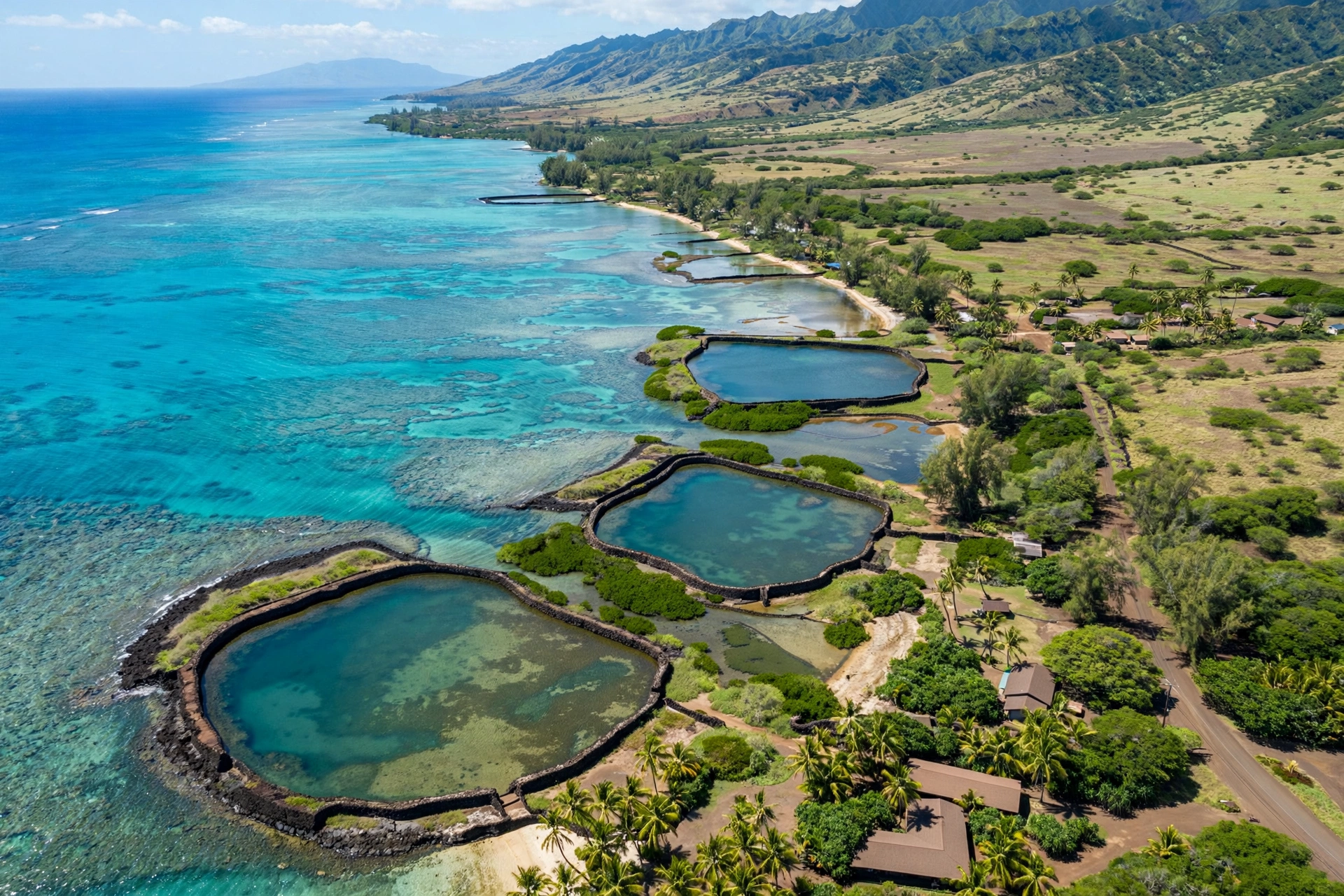
The drive east from Kaunakakai along Kamehameha V Highway passes one of the great cultural landscapes of Hawaiʻi: a chain of ancient coastal fishponds, massive walled enclosures built by hand centuries ago to raise fish for the community. Several have been restored and are still used today, and roadside pullouts let you stop and take in their scale. Continue past the 20 mile marker and the road narrows, hugging sea cliffs and dropping toward Hālawa Valley. This is one of the most beautiful drives in the state, and it asks for slow speeds, yielded turnouts, and frequent stops rather than a destination mindset.
Beaches, Hikes, and Waterfalls: An Overview
Molokaʻi’s outdoor offerings are real but limited compared with the bigger islands, and conditions vary widely by coast and season. The island’s detailed guides cover each topic in depth. What follows is the essential orientation.
Beaches
The west end holds the island’s best swimming beaches, including the long Papohaku Beach and the smaller, calmer Kepuhi and Make Horse beaches nearby. The south shore near Kaunakakai has calm, shallow water suited to families, though the water can be murky. The east end’s beaches are scenic but often rough, and the north shore has no road accessible beaches at all. Crucially, most Molokaʻi beaches have no lifeguards. Ocean safety is the visitor’s own responsibility: check conditions, never swim alone, and respect warning signs. See the Molokaʻi beaches guide for the full rundown.
Hikes
Molokaʻi’s hiking is adventurous and lightly traveled. The Kamakou Preserve offers the island’s premier rainforest hiking for those who secure permission and transport. The Hālawa Valley trail, best done with a guide, leads through ancient agricultural landscapes to waterfall views. Shorter walks include the Palaʻau State Park trails and coastal paths near Kaunakakai. Trails here are often unmarked or rough by the standards of the other islands, so preparation, water, and local advice matter. The Molokaʻi hikes guide has the details.
Waterfalls
Molokaʻi’s waterfalls concentrate in the wet east end and along the inaccessible north shore valleys. Hālawa Valley’s falls are the most famous, visible on guided valley visits. The north shore’s great cataracts, including some of the tallest waterfalls in Hawaiʻi, can only be seen from the air or sea. Roadside waterfalls are few, which is one reason the island feels so different from Kauaʻi. See the Molokaʻi waterfalls guide for more.
Culture, Community, and Traveling with Respect
This section matters more on Molokaʻi than anywhere else in Hawaiʻi. The island’s residents have watched mass tourism transform their neighboring islands, and they have made deliberate choices to keep Molokaʻi different. Visitors are welcome, but the welcome is conditional on respect.
Start with the basics. Drive slowly and pull over to let locals pass. Greet people. Do not trespass, and take every private property and kapu (forbidden) sign at face value. Stay on marked trails, never move or stack rocks at cultural sites, and leave every place cleaner than you found it. At heiau (temples) and other sacred sites, observe quietly from designated areas and do not climb on structures.
Support the local economy directly. Eat at locally owned restaurants, shop at local stores, buy from farmers markets and roadside stands, and choose locally owned lodging and tour operators. Money spent with local families stays on the island and is one of the most meaningful ways a visitor can contribute. Avoid haggling, tip service workers fairly, and remember that many businesses are small family operations, not hospitality corporations.
Understand that Molokaʻi is not a theme park of Hawaiian culture. It is a living community where Hawaiian language is spoken, subsistence fishing and hunting are practiced, and family land is deeply held. Ask before photographing people. Keep drones away from communities and cultural sites unless you have clear permission. Keep voices down at sacred and solemn places, especially Kalaupapa. And accept that some places are simply not for visitors. If a beach, trail, or valley is described as local or restricted, take that seriously rather than treating it as a challenge.
Sunday is a quiet day on much of the island, with many businesses closed and a slower rhythm that residents value. Plan around it rather than fighting it: stock up on Saturday, and use Sunday for a slow beach day or a drive. Patience with limited hours, limited menus, and limited options is not just good manners here. It is the price of admission to an island that has refused to sell itself.
Practicalities: What to Know Before You Go
A few practical realities shape every Molokaʻi trip. First, supplies. Kaunakakai has the island’s main grocery stores, but selection and hours are limited compared with the other islands, and prices run higher because nearly everything arrives by barge or plane. Stock up on arrival day, especially if you are staying on the west or east end, and plan around Sunday closures.
Fuel up when you can. Gas stations are few, concentrated in Kaunakakai and Maunaloa, and prices are among the highest in the state. Do not let the tank run low before heading to the east end. Cash is useful at farmers markets, roadside stands, and some small eateries, though cards are widely accepted in town.
Medical and emergency services are limited. The island has a small hospital in Kaunakakai, but serious emergencies may require air transport to Oʻahu. Travel insurance is worth considering, and visitors with medical conditions should plan accordingly. Cell coverage is decent in town and along main roads but fades in the east end valleys and remote areas. Download offline maps before exploring.
Pack with the island’s simplicity in mind. Reef safe sunscreen, a reusable water bottle, and sturdy walking shoes cover most days. Bring any specialty items you need, from snorkel gear to medications, because selection on island is thin and prices are high. A cooler in the rental car is a local way of life: stock it in Kaunakakai and you can picnic at beaches and overlooks all day without depending on the island’s limited food options.
Good to know: Molokaʻi has no traffic lights, no shopping malls, and no fast food chains of note. Dining is local and limited, with many kitchens closing early. The island rewards travelers who plan meals and days loosely, keep expectations modest, and treat slow service as a feature rather than a flaw.
Best Time to Visit Molokaʻi
Molokaʻi’s weather follows the same broad Hawaiian pattern as the other islands: warm year round, with a wetter winter season from roughly November through March and a drier summer from April through October. The west end stays sunny most of the year, while the east end and mountains catch the most rain. Winter brings bigger surf to exposed coasts, especially the north and west shores, while summer ocean conditions are generally calmer.
For most travelers, the sweet spots are April through June and September through early November, when weather is pleasant, ocean conditions are favorable, and the island is at its quietest. Winter offers lush green landscapes and whale watching offshore, but also the most rain and the roughest surf. There is no true bad time to visit, but travelers focused on beaches should favor the calmer summer months, while those drawn to green valleys and waterfalls may prefer the wetter winter season. See the Molokaʻi weather guide for month by month detail.
Frequently Asked Questions
Is Molokaʻi worth visiting?
For the right traveler, absolutely. Molokaʻi offers what the other islands largely cannot: genuine quiet, a deeply Hawaiian community, empty beaches, and a pace of life that has all but disappeared elsewhere in the state. It is not worth visiting for travelers seeking resorts, nightlife, or packed activity schedules. It is worth visiting for travelers seeking authenticity, solitude, and respect for a living culture.
How do you get to Molokaʻi?
By air. All visitors connect through Honolulu (HNL) to a short commuter flight into Molokai Airport (MKK) at Hoʻolehua. The flight takes about 25 to 30 minutes. There has been no passenger ferry service since 2016, so flights are the only practical option.
Can you visit Kalaupapa?
Only with advance arrangement. Kalaupapa is a National Historical Park with strictly limited access, and independent visits are not permitted. Visits require booking through an authorized tour or obtaining the proper permit well ahead of time. The settlement remains home to former patients, so visitors must follow all rules and behave with quiet respect. The Palaʻau State Park overlook offers views of the peninsula for those who do not go down.
Do you need a rental car on Molokaʻi?
Yes, effectively. Public transportation is minimal and geared toward residents, and the island’s sights are spread across 38 miles. The rental fleet is small, so reserve your car when you book your flights. A standard car handles all paved roads; only the Kamakou Preserve and a few remote areas require four wheel drive.
Is Molokaʻi safe for tourists?
Molokaʻi is generally safe, with low rates of violent crime. The main safety concerns are natural: rough ocean conditions at unguarded beaches, remote hiking terrain, and limited emergency services. Standard precautions apply: lock your car, do not leave valuables visible, check ocean conditions before swimming, and respect all warning signs and restricted areas.
What is Molokaʻi known for?
Molokaʻi is known as the Friendly Isle, for its large Native Hawaiian population, its resistance to large scale development, and its historic sites, above all Kalaupapa. It is also known for Papohaku Beach, one of Hawaiʻi’s longest white sand beaches, the Hālawa Valley, and a rural way of life that has largely vanished from the other main islands.
How many days do you need on Molokaʻi?
Three to four days is a good minimum, giving you time to explore Kaunakakai, the west end beaches, the Kalaupapa overlook, and the east end without rushing. Five to seven days allows a slower pace, a guided Hālawa Valley visit, and time to simply absorb the island’s rhythm. Because the island is small, longer stays are about depth rather than distance.
Is Molokaʻi expensive?
Daily costs run higher than many travelers expect. Groceries, fuel, and dining cost more than on Oʻahu or Maui because nearly everything is shipped in. Lodging, mostly vacation rentals and small inns, is moderate by Hawaiʻi standards but must be booked early. The island has few budget options and no hostels of note, so plan a realistic budget before you go.
Related Guides
- Molokaʻi Map: orientation, regions, and driving routes
- Molokaʻi Beaches: the island’s best shores, coast by coast
- Molokaʻi Hikes: trails from Kamakou to Hālawa Valley
- Molokaʻi Waterfalls: the island’s great cascades
- Molokaʻi Snorkeling: reefs, calm bays, and ocean safety
- Molokaʻi Weather: seasons, microclimates, and best time to visit
- Molokaʻi Towns: Kaunakakai, Maunaloa, and the east end
- Molokaʻi Wildlife: native birds, sea life, and the Kamakou forest
- Molokaʻi History: from ancient settlement to Kalaupapa
- Molokaʻi Transportation: flights, rental cars, and getting around
- Hawaiʻi Map: the full island chain in context
- Lānaʻi Travel Guide: the neighboring island’s overview
Molokaʻi does not try to impress you, and that is precisely its gift. It is an island that has kept its language, its land, and its dignity in the face of enormous pressure to become something else, and it offers visitors a rare thing in modern Hawaiʻi: an honest encounter with a place that is still, stubbornly, itself. Come with humility, move slowly, spend your money with local families, and leave the island as quiet as you found it. The Friendly Isle rewards those who understand that the greatest luxury it offers is not a resort or a restaurant, but the privilege of being welcomed at all.