
Molokaʻi Beaches
On This Page
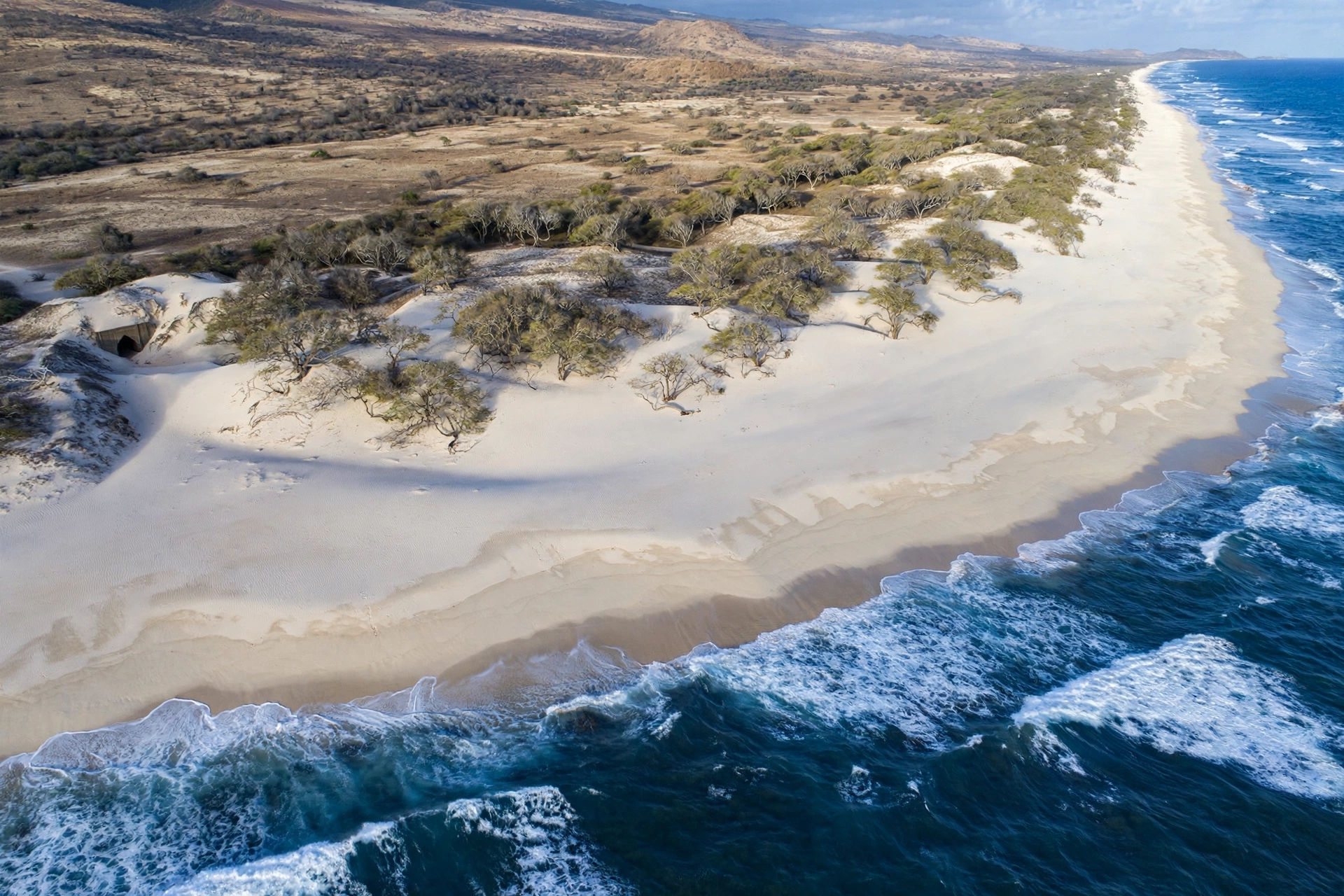
Molokaʻi’s beaches are the wildest and least crowded of any major Hawaiian island. You can walk a three mile stretch of white sand and share it with fewer than ten people, swim from a quiet cove that locals have loved for generations, or snorkel a reef where you are the only person in the water. There are no resorts fronting these beaches, no beach clubs, and no crowds. What you get instead is something increasingly rare in Hawaiʻi: coastline that feels genuinely untouched.
That wildness comes with responsibility. There are no lifeguards on any Molokaʻi beach. None. Most beaches have no facilities beyond what a small beach park offers, and some have no facilities at all. Help can be a long drive away, so the ocean safety section below is not filler. Read it before you get in the water.
Molokaʻi Beaches: An Overview
Molokaʻi’s 88 miles of coastline face in every direction, and each side behaves differently. The island sits between Oʻahu and Maui, and the channels between them shape the surf. Here is the short version of the geography:
- The west end: Dry, sunny, and home to the island’s biggest sand beaches, including Papohaku, one of the longest white sand beaches in all of Hawaiʻi. Fully exposed to open ocean swell with no protective reef.
- The south shore: Sheltered by a fringing reef that runs for roughly 28 miles, one of the longest continuous fringing reefs in the United States. The water here is shallow and calm, with ancient Hawaiian fishponds dotting the shoreline. Best for wading, families, and calm water days.
- The east end: Lush and green, with pocket beaches at mile markers along Kamehameha V Highway. Kumimi (Murphy’s) Beach and Sandy Beach are the standouts, with good swimming and snorkeling when conditions are calm.
- The north shore: Spectacular, inaccessible sea cliffs and no swimmable beaches. Admire it from the Palaʻau overlook or a boat, not from the water.
The reef matters. Where the south shore reef sits close in, the water is flat and gentle. Where there is no reef, as on the west end, the full power of the open Pacific reaches the sand. A calm looking beach can still have a powerful shore break, and rip currents form at any beach with open ocean exposure. Because no beach on Molokaʻi is guarded, every swimmer is their own lifeguard. Swim with a buddy, stay in calm conditions, and never turn your back on the ocean.
Good to know: Molokaʻi beach parks are county or state parks. Parking is free, and camping is allowed with a permit at Papohaku Beach Park and One Aliʻi Beach Park. Most rural beaches have no restrooms, no showers, no phones, and no first aid. Plan like you are going somewhere remote, because you are.
Molokaʻi Beaches at a Glance
| Beach | Area | Best For | Swimming | Facilities |
|---|---|---|---|---|
| Papohaku | West end | Walking, sunset, photography | Usually unsafe | Restrooms, showers, picnic, camping |
| Kapukahehu (Dixie Maru) | West end | Swimming in calm conditions | Good in summer, dangerous in winter surf | None |
| Kepuhi | West end | Surfing, summer swimming | Summer only | None |
| Kawakiu | West end | Seclusion | Check access first | None |
| One Aliʻi Beach Park | South shore | Families, picnics, wading | Calm and shallow | Restrooms, showers, playground, camping |
| Kumimi (Murphy’s) | East end | Swimming, snorkeling | Good when calm | Picnic tables only |
| Sandy Beach | East end | Quiet swims, views | Good when calm | None |
No beach on Molokaʻi has lifeguards. The table above describes typical conditions, but the ocean changes daily. Always assess conditions yourself before entering the water.
The Best Beaches of Molokaʻi
Papohaku Beach (West End)
The giant. Papohaku stretches for nearly three miles and runs about 100 yards wide, making it one of the longest and widest white sand beaches in the Hawaiian Islands. It is nicknamed Three Mile Beach, and the name fits. Backed by low sand dunes and thorny kiawe trees, it feels less like a beach park and more like a private island, because on most days you will share it with a handful of people at most.
Do not let the beauty fool you. Papohaku has no protective reef, so it takes the full force of open ocean swell. The shore break is powerful and rip currents are real, and swimming here is unsafe for most people most of the time. This is a beach for long walks, sunset watching, beachcombing, and photography. On a clear day you can see Oʻahu across the Kaiwi Channel.
Papohaku Beach Park has restrooms, indoor and outdoor showers, picnic tables, barbecues, and campsites. There is no electricity, no phone, and no first aid. The beach has a layered history: it was the site of Hawaiʻi’s largest sand mining operation from the early 1960s until 1975, and military training exercises took place here during World War II. Buried debris is occasionally exposed by heavy surf, another reason to admire the sand with your shoes on.
Kapukahehu (Dixie Maru) Beach (West End)
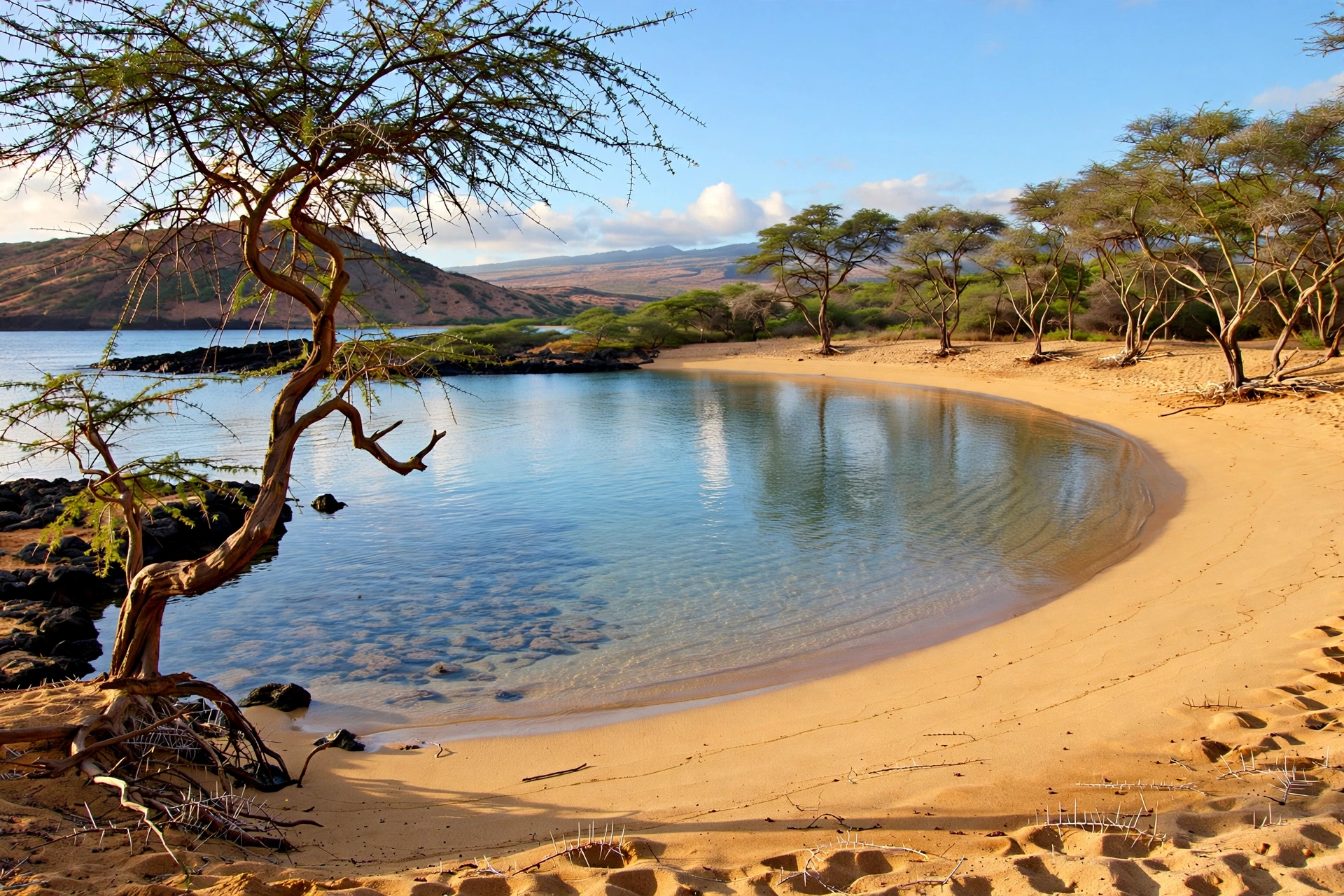
Tucked into a small cove on the west end, Kapukahehu is the beach locals bring their families to. The crescent of golden sand sits in a protected pocket, so the water is usually calm enough for swimming when the rest of the west end is rough. It is a favorite of residents and visitors alike, which on Molokaʻi still means you will have plenty of room.
Watch the season. In winter, large surf can create a dangerous shore break even in this sheltered cove. There are no facilities here, so bring water, shade, and everything you need. Access is via an unpaved road off the main west end route; a standard car can usually manage it in dry conditions, but go slowly.
Kepuhi Beach (West End)
Just north of Kapukahehu, Kepuhi is a favorite surfing spot when the swell is running and a pleasant swimming beach in summer when it is calm. The pattern on the west end is consistent: summer is the forgiving season, winter is the dangerous one. When winter surf is up, stay out of the water entirely. No facilities, and the same rough access road as Kapukahehu.
Kawakiu Beach (West End)
Kawakiu sits on private land, and access depends on the landowner’s current policy. This is Molokaʻi in miniature: a gorgeous beach that exists within the island’s strong culture of private land and permission. Do not trespass. If access is open, treat the privilege with respect, pack out everything you pack in, and keep noise down. If access is closed, accept it graciously and head to the public beaches nearby.
One Aliʻi Beach Park (Central South Shore)
Pronounced oh-nay ah-lee-ee, this is the island’s main family beach park, about three miles east of Kaunakakai on Kamehameha V Highway. The name means “royal sand,” a reference to the thin strip of golden sand once reserved for the aliʻi, the high chiefs. The beach sits inside the fringing reef, so the water is shallow and usually calm, making it the safest swimming option on the island’s south shore.
Be honest about expectations. The water is shallow and can be murky, so this is a wading, picnicking, and family gathering beach rather than a swimming destination. There are no lifeguards. Facilities include restrooms, outdoor showers, a pavilion, picnic areas, and a playground. Tent camping is allowed with a county permit. On weekends it fills with local families celebrating reunions and birthdays, which is one of the best cultural experiences on the island if you are respectful and friendly.
Kumimi (Murphy’s) Beach (East End)
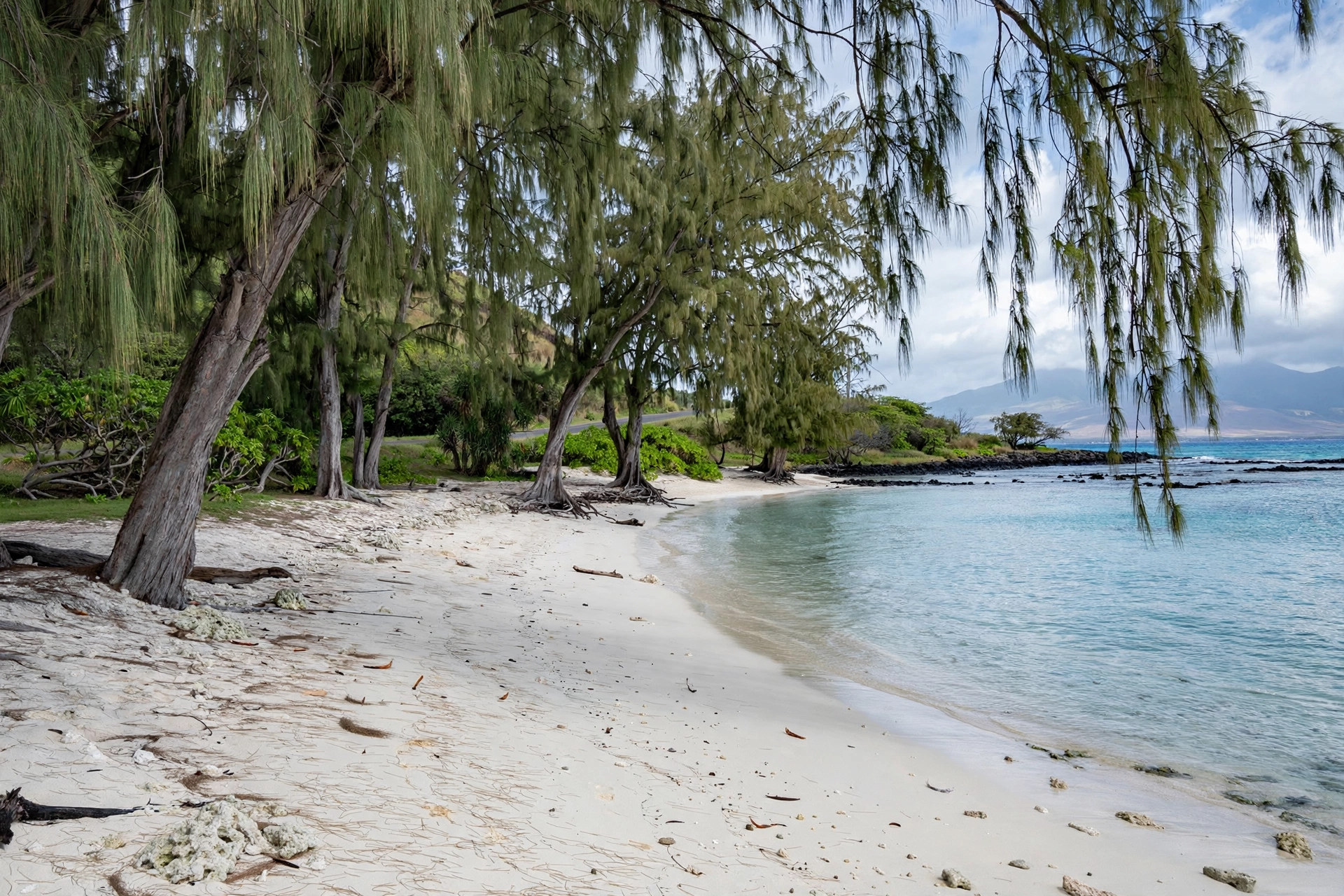
At mile marker 20 on the east end, Kumimi Beach, also called Murphy’s Beach or 20-Mile Beach, is Molokaʻi’s favorite snorkel spot. A small, shaded park with ironwood trees fronts a pocket of white sand and calm, clear water. In calm conditions the swimming and snorkeling here are genuinely good, with reef fish and the occasional honu (Hawaiian green sea turtle) cruising the shallows.
The key phrase is “in calm conditions.” A south swell can stir the water up quickly, so check the surf forecast before you go and stay out if the ocean looks unsettled. There are no facilities beyond the small park’s picnic tables. This is the beach to choose if you want the classic tropical cove experience on Molokaʻi.
Sandy Beach (East End)
Between mile markers 21 and 22, just past Kumimi, Sandy Beach is a small crescent of white sand with winsome views across the channel to Maui and Lānaʻi. It has no facilities at all, just sand, water, and a view. Swimming is generally safe here in calm conditions; stay out when surf is up. It is the last beach before the road climbs toward lush Hālawa Valley, so it makes a natural stop on an east end drive.
Pōhakuloa Point and the East End Pocket Beaches
Scattered along the east end highway are small roadside pullouts and pocket beaches, including Pukoʻo and the area around Pōhakuloa Point. These are informal spots with no facilities and variable conditions. The rule for all of them is the same: calm water means a possible swim, anything else means stay on the sand. Never park where you block the narrow highway, and never leave valuables visible in the car.
Ocean Safety: Read This First
Molokaʻi’s beaches kill people who underestimate them. That sounds blunt because it needs to be. With no lifeguards on any beach and emergency help a long drive away, the margin for error is thin. Here is what to know:
- No lifeguards, anywhere. This is the single most important fact on this page. If you get into trouble, you are relying on whoever is on the beach with you. Never swim alone.
- Winter surf is dangerous. From roughly November through March, north and west swells pound the exposed coasts. West end beaches like Papohaku, Kapukahehu, and Kepuhi can be life threatening in winter. Summer is the calm season, but strong surf can occur at any time of year.
- Shore breaks break bones. Where waves break directly on the sand with no reef to soften them, the shore break can slam swimmers into the sand hard enough to cause spinal injuries. If waves are dumping on the beach, stay out.
- Rip currents. If you are caught in one, do not fight it. Stay calm, float, and swim parallel to shore until you are out of the current, then swim in. Signal for help if you need it.
- Reef and rocks. The south shore reef protects the water but creates shallow, rocky entries. Wear reef shoes, shuffle your feet, and never stand on living coral. Coral cuts infect easily in tropical water.
- Never turn your back on the ocean. Set your towel well above the high water line, especially on west end beaches where waves can wash far up the sand.
- Flash floods and stream mouths. After heavy rain, streams feeding into east end beaches can carry debris and bacteria. Do not swim near brown, murky stream outflows.
Emergency numbers: Call 911 for any emergency. There is one small hospital in Kaunakakai and limited medical facilities islandwide. Serious emergencies require air transport to Oʻahu. Tell someone where you are going before heading to a remote beach.
Snorkeling on Molokaʻi
Snorkeling on Molokaʻi is a quiet affair. The south shore’s fringing reef creates miles of shallow reef habitat, and the east end pockets hold the clearest water. Kumimi (Murphy’s) Beach is the island’s favorite snorkel spot: calm water, easy entry, reef fish, and frequent turtle sightings when conditions are settled.
One Aliʻi Beach Park offers shallow reef wading rather than true snorkeling; the water is often too murky for good visibility. The west end beaches are generally poor snorkeling choices because of surf exposure and strong surge. Wherever you snorkel, follow reef etiquette: never touch coral, never stand on the reef, keep a respectful distance from turtles (at least 10 feet), and wear reef-safe sunscreen. Hawaiʻi law bans sunscreens containing oxybenzone and octinoxate, so check your label before you swim.
Visibility is best in the morning before the trade winds pick up and in the summer months when the ocean is calmest. If the water looks milky or the surge is pushing you around, get out. The reef will still be there tomorrow.
Beach Access and Etiquette
Beach access on Molokaʻi follows the island’s broader culture: respectful, low key, and permission based. All beaches in Hawaiʻi are public up to the high water mark, but getting to the sand often means crossing private land, and some beloved spots sit entirely on private property. The rules are simple:
- Do not trespass. If a beach is on private land and access is closed, do not go around the gate. This is not a suggestion; it is the law and the local expectation.
- Respect kapu signs. A kapu sign means keep out. Honor it without argument.
- Pack out everything. Many beaches have no trash cans. If you brought it in, take it out, including food scraps and cigarette butts.
- Keep it quiet. Molokaʻi residents value the peace of their beaches. Loud music and rowdy behavior mark you instantly as a disrespectful visitor.
- Do not take sand, rocks, or shells in quantity. A small shell is one thing; filling a bag is another. Leave the beach as you found it.
- Support the local economy. Buy your beach supplies, plate lunches, and shave ice in Kaunakakai or Maunaloa. The island’s small businesses notice and appreciate it.
- Ask before photographing people. Beaches are community gathering places. A quick, friendly ask goes a long way.
Best Time to Visit the Beaches
For beach days, the sweet spot is late spring through early fall, roughly April through October. The ocean is at its calmest, the trade winds are steady but manageable, and the west end beaches are at their most inviting. Winter brings the biggest surf and the most dangerous conditions on the exposed coasts, though the reef-sheltered south shore stays swimmable in most winter weather.
Mornings are almost always the best time of day: calmer winds, clearer water, and softer light. By afternoon the trades can pick up, blowing sand across west end beaches and chopping up the east end. If you are camping at Papohaku or One Aliʻi, stake your tent well back from the water and secure everything before the afternoon wind arrives.
What to Bring
Because most Molokaʻi beaches have no stores, no rentals, and no facilities, you bring the beach with you. The checklist:
- Water and food. More water than you think you need. There is no place to buy either at most beaches.
- Shade. An umbrella or pop-up tent. Kiawe and ironwood trees provide natural shade at some beaches, but not all, and midday sun is intense.
- Reef-safe sunscreen. Oxybenzone and octinoxate are banned in Hawaiʻi. Apply before you leave and reapply often.
- Reef shoes. Rocky entries and kiawe thorns make bare feet a bad idea.
- Snorkel gear. There are no rental stands on the beaches. Rent in Kaunakakai or bring your own.
- A dry bag. For your phone, keys, and wallet. Do not leave valuables visible in the car.
- A trash bag. Pack out everything, including what was already there if you feel generous.
- Cash. Small bills for farm stands and local shops on the way.
- A charged phone and offline maps. Cell coverage is spotty on the west and east ends.
Molokaʻi Beaches FAQ
Are there lifeguards on Molokaʻi beaches?
No. There are no lifeguarded beaches on Molokaʻi. Every swimmer is responsible for their own safety, which is why you should never swim alone, stay in calm conditions, and read the ocean safety section of this guide before getting in the water.
What is the best beach on Molokaʻi?
It depends on what you want. Papohaku is the most spectacular: three miles of white sand and almost no people, but unsafe for swimming. Kumimi (Murphy’s) Beach is the best all-rounder for swimming and snorkeling in calm conditions. One Aliʻi Beach Park is the safest family option with facilities.
Can you swim at Papohaku Beach?
Usually not safely. Papohaku has no protective reef and takes the full force of open ocean swell, creating a powerful shore break and rip currents. It is a world-class beach for walking, sunset, and photography, but swimming is unsafe for most people most of the time.
Where is the best snorkeling on Molokaʻi?
Kumimi (Murphy’s) Beach on the east end is the island’s favorite snorkel spot, with calm water, reef fish, and turtles in settled conditions. The south shore reef offers shallow snorkeling in places, though visibility is often better on the east end.
Is One Aliʻi Beach Park good for kids?
Yes, it is the best family beach option on the island. The water inside the reef is shallow and calm, and the park has restrooms, showers, a playground, and picnic areas. There are no lifeguards, so adults still need to supervise children closely.
Can you camp on Molokaʻi beaches?
Yes, with a permit. Papohaku Beach Park and One Aliʻi Beach Park both allow tent camping with a county camping permit. Facilities are basic, so bring everything you need, including water.
Why are some Molokaʻi beaches on private land?
Molokaʻi has a high proportion of private land and a strong culture of land stewardship. Some beaches, like Kawakiu, sit on private property where access depends on the landowner. Never trespass, and respect kapu signs. The island’s public beaches are more than enough for a full trip.
What is the water temperature on Molokaʻi?
Ocean temperatures range from the mid 70s Fahrenheit in winter to the low 80s in summer, comfortable for swimming year round without a wetsuit. The air temperature at the beaches averages in the 70s to mid 80s, with the west end running warmer and drier.
Related Guides
- Molokaʻi Travel Guide: the complete island overview, where to stay, and what to do
- Molokaʻi Map: regions, towns, roads, and distances
- Molokaʻi Hikes: trails, permits, and safety
- Molokaʻi Waterfalls: which falls you can visit and how
- Hawaiʻi Beaches: the best beaches across all the islands
- Maui Beaches and Kauaʻi Beaches: compare with the neighboring islands
A Final Note
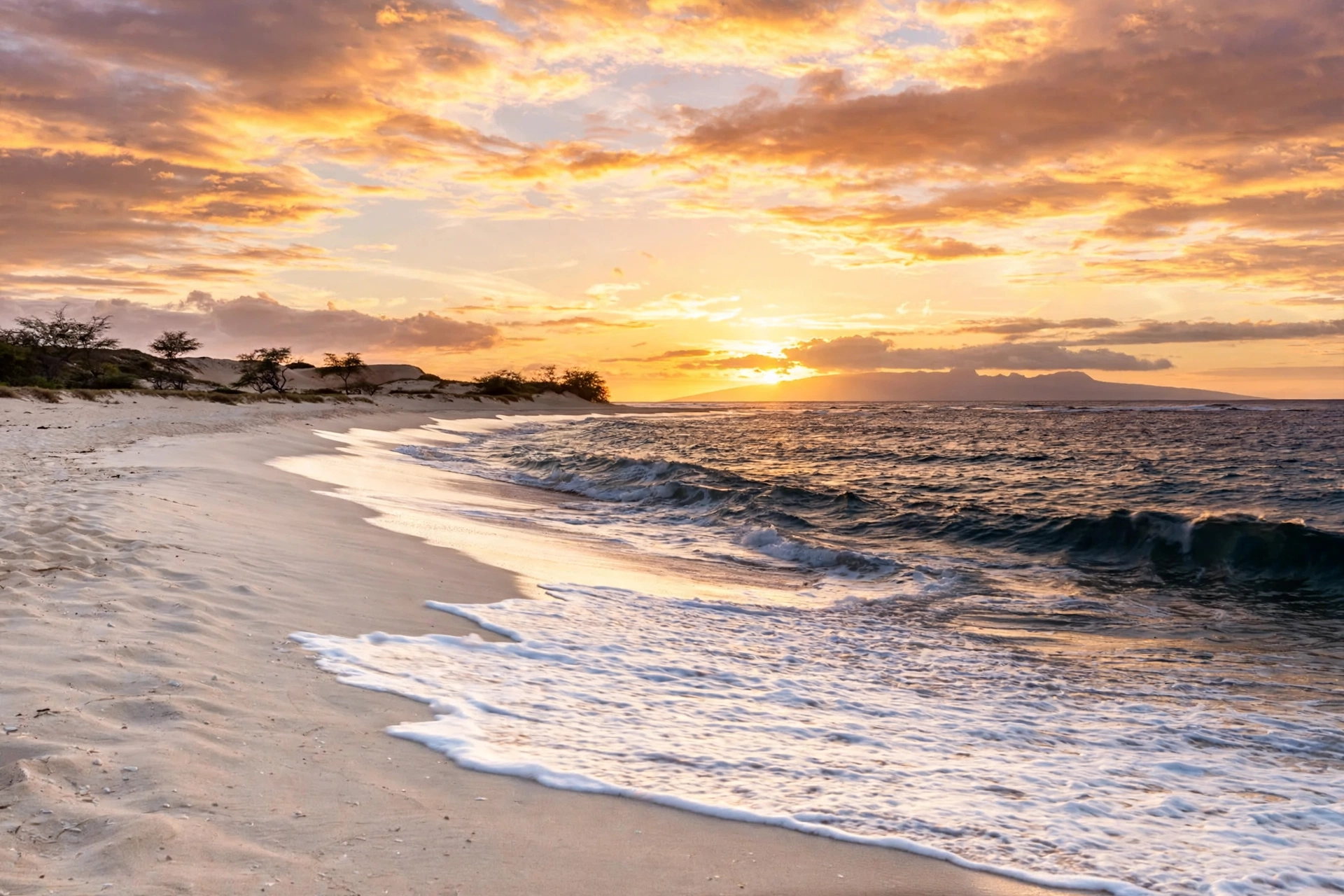
Molokaʻi’s beaches reward the traveler who slows down. There is no boardwalk, no soundtrack, no scene, just sand, water, wind, and the occasional honu surfacing offshore. The island asks little in return: swim carefully, tread lightly, respect the land and the people who call it home, and leave every beach cleaner than you found it. Do that, and you will understand why the people who love Molokaʻi’s beaches guard them so fiercely.