
Molokaʻi Wildlife
Molokaʻi may be the least visited of Hawaiʻi’s major islands, but its wildlife tells one of the most interesting stories in the archipelago. Here you will find native birds clinging to high-elevation forests, seabirds nesting on the tallest sea cliffs on Earth, monk seals hauled out on empty beaches, and herds of axis deer that have no business being on a Hawaiian island at all. This guide covers the animals of Molokaʻi, where to find them, and how to watch them without harming them.
On this page
Molokaʻi Wildlife at a Glance
Molokaʻi sits between Oʻahu and Maui in the central Hawaiian Islands, and its position has shaped a wildlife story that is equal parts native treasure and introduced accident. The island was never connected to any continent, so every land animal that arrived on its own wings or in its own fins became something found nowhere else. The only native land mammal in all of Hawaiʻi is the Hawaiian hoary bat (ʻōpeʻapeʻa), a solitary insect-eater that roosts in trees and takes to the air at dusk. Everything else with four legs was brought by people, and some of those introductions have reshaped the island.
That split between native and introduced defines what you will see. The high forests of Kamakou Preserve still shelter native honeycreepers and the bright red ʻiʻiwi, though far fewer species survive than once lived here. The north shore sea cliffs, rising some 3,000 feet from the Pacific, are a stronghold for nesting seabirds. The south shore is fronted by a fringing reef roughly 28 miles long, the longest in Hawaiʻi, and its calm shallows host reef fish, green sea turtles, and the occasional Hawaiian monk seal. And across the dry west end and central plateau, herds of axis deer graze in numbers that surprise first-time visitors.
Three protected areas anchor wildlife viewing on the island. Kamakou Preserve, managed by The Nature Conservancy in the east end uplands, protects native forest and its birds. Moʻomomi Preserve on the northwest coast protects ancient dunes and nesting seabirds. Palaʻau State Park gives the famous overlook of the Kalaupapa peninsula and its bird-covered cliffs. All three have access rules, and two of them require advance permission, which is part of Molokaʻi’s culture of protecting what it has.
Land Animals
If you see a large mammal on Molokaʻi, it almost certainly arrived on a ship. The island’s land mammals are a catalog of human decisions, some deliberate and some accidental, and they now shape the island’s ecology as much as any native species.
Axis Deer
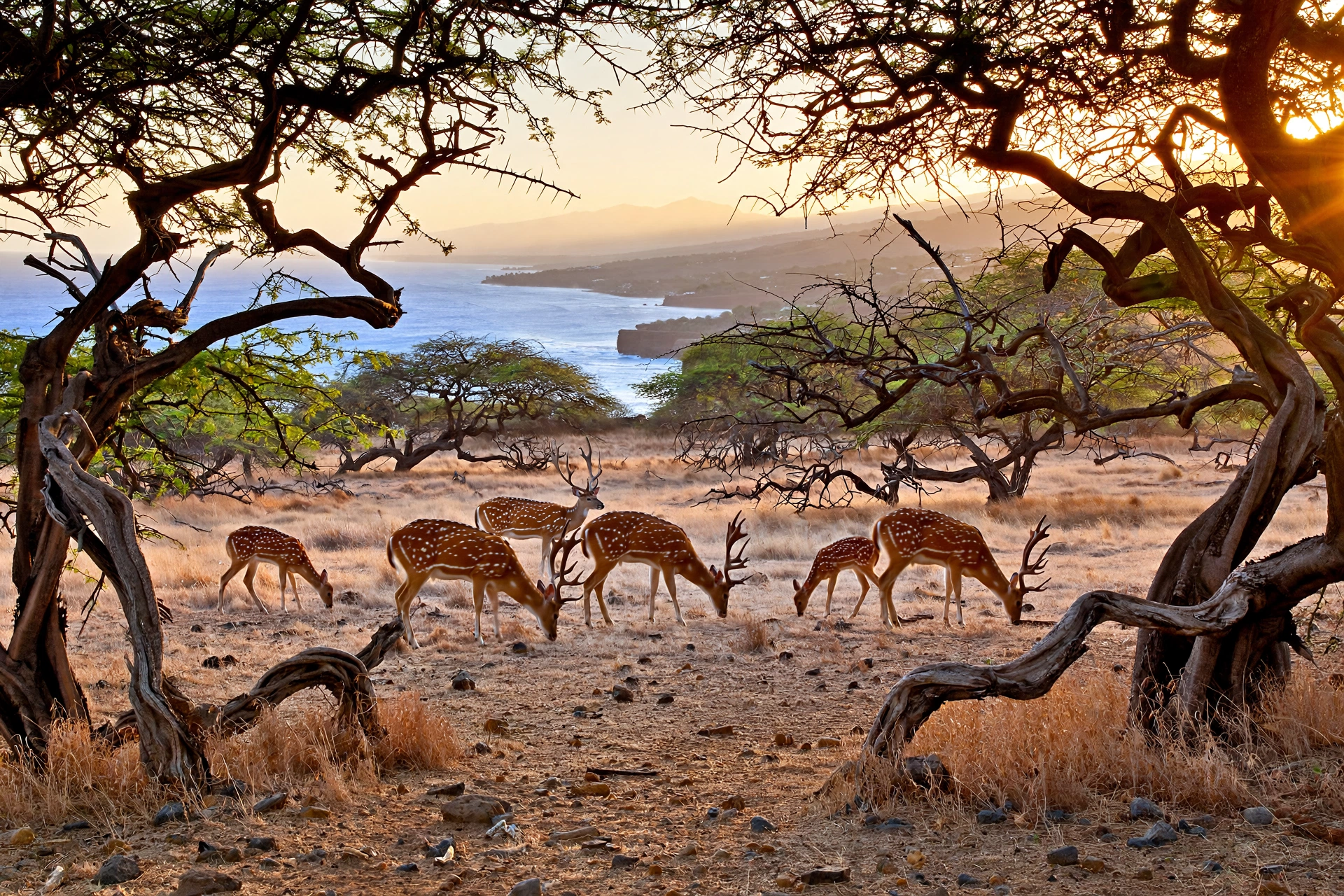
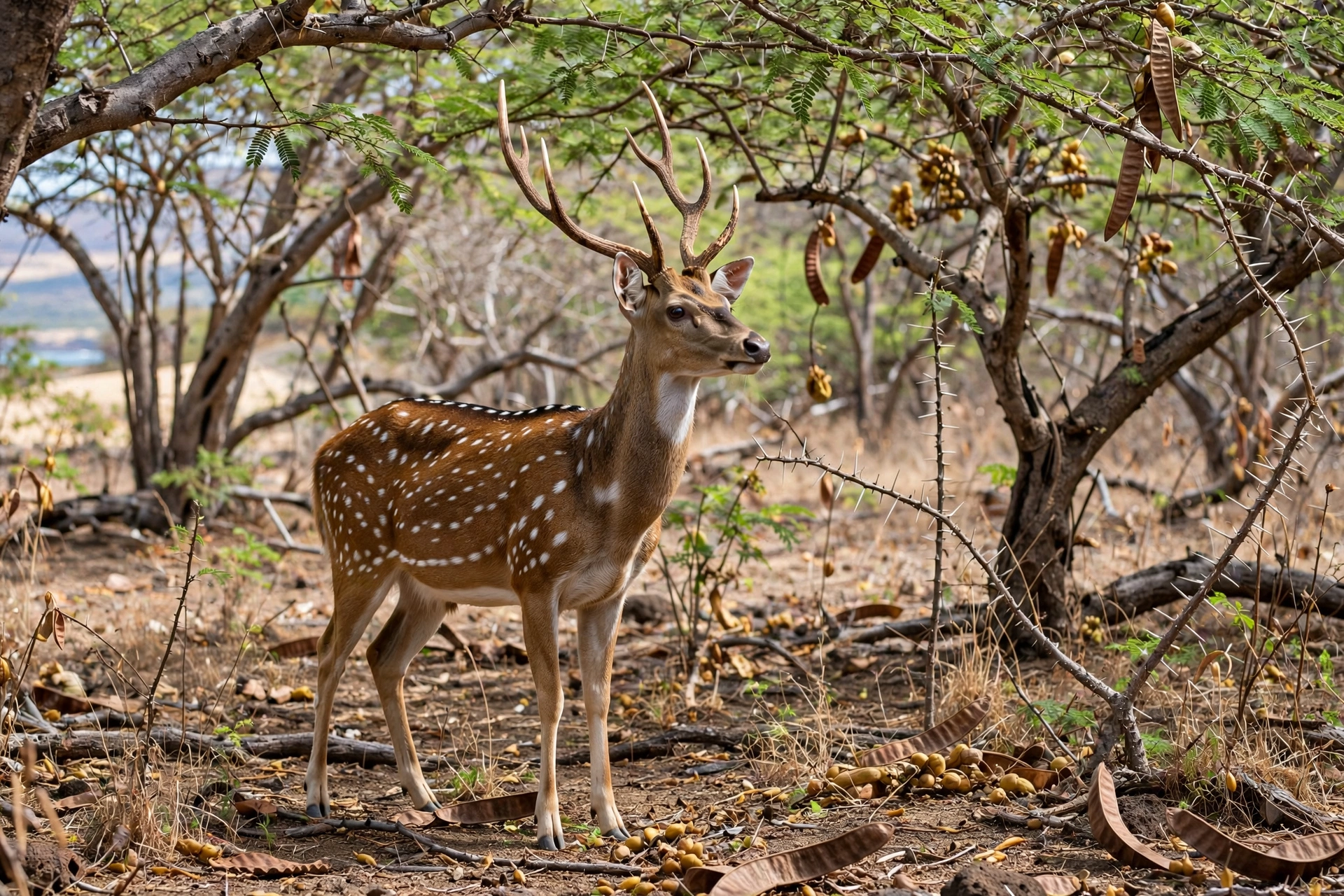
The axis deer (chital) is Molokaʻi’s most visible land animal, and its story starts in 1868, when eight deer were gifted to King Kamehameha V by the British consul in Hong Kong. Those eight animals were released on Molokaʻi, and with no natural predators and year-round forage, the population exploded. Today axis deer are found across the island but are most easily seen on the dry west end and the central plateau, where herds graze in open country at dawn and dusk. The deer are beautiful animals with spotted coats and elegant antlers, but they are also a serious ecological problem. They strip native vegetation, spread invasive weeds, and compete with livestock. Regulated hunting helps control the population, and the meat, known locally as venison, is prized. Visitors who see a herd standing motionless in the kiawe trees are looking at the descendants of a royal gift that became one of Hawaiʻi’s toughest conservation challenges.
Feral Pigs, Goats, and Sheep
Feral pigs (puaʻa) roam the wetter forests and valleys of the east end, where their rooting tears up native understory and accelerates erosion. They are the descendants of animals brought by early Polynesian settlers and later European arrivals, and they are now thoroughly wild. Goats and sheep run feral in drier areas, particularly in the rugged country where hunting pressure is lighter. All three are managed through hunting, which is both a cultural tradition and a conservation tool on Molokaʻi. You are unlikely to see pigs or goats from the road, but hikers in the east end uplands may find their sign.
Small Mammals: Mongoose, Rats, and Cats
The small Indian mongoose was introduced to Hawaiʻi in 1883 to control rats in sugarcane fields, a plan that failed because rats are nocturnal and mongooses hunt by day. Molokaʻi has mongooses, and they are a major threat to ground-nesting birds. Roof rats and other rodents arrived with ships centuries ago and remain widespread. Feral cats, some descended from pets and some long wild, prey on native birds, including the endangered seabirds that nest at Moʻomomi. Toxoplasmosis, a parasite spread by cat feces, is also a documented threat to Hawaiian monk seals, which makes the island’s cat colonies a marine problem as well as a land one. Visitors can help by never feeding cats or any wild animal, and by keeping food secured at campsites and beach parks.
The Hawaiian Hoary Bat
The Hawaiian hoary bat (ʻōpeʻapeʻa) is Hawaiʻi’s only native land mammal, and it is found on Molokaʻi, though it is far less common here than on the Big Island. This solitary bat roosts in trees rather than caves and hunts insects on the wing at dusk and dawn. It is federally listed as endangered, and its population faces threats from habitat loss and collisions with wind turbines. Seeing one requires luck and timing: watch the sky over forest edges and pastures in the last light of evening, and look for a fast, fluttering silhouette larger than a moth but smaller than most birds. If you see one, you have spotted the island’s only true native mammal.
Birds of Molokaʻi
Molokaʻi’s birdlife is a story of loss and persistence. The island once hosted forest birds found nowhere else, including the Molokaʻi creeper (kākāwahie) and the olomao (Molokaʻi thrush), both now extinct. Avian malaria, carried by introduced mosquitoes, wiped out lowland forest birds across the islands, and habitat loss finished the rest. What survives is concentrated in the high, cool forests where mosquitoes cannot thrive, and in the coastal cliffs and offshore islets beyond the reach of predators. Knowing this history makes the birds you do see feel like survivors, because they are.
Native Forest Birds of Kamakou
The best place to see native forest birds is Kamakou Preserve in the east end uplands, a Nature Conservancy reserve that protects some of the island’s last intact native forest. Access requires an advance permit, and the road up is rough, but the reward is a forest of ʻōhiʻa and koa filled with birdsong. The most common native birds here are the Hawaiʻi ʻamakihi, a small yellow-green honeycreeper with a downcurved bill, and the ʻapapane, a bright crimson bird with black wings that feeds on ʻōhiʻa blossoms. The ʻiʻiwi, a scarlet honeycreeper with a long curved salmon-colored bill, still occurs here and is unmistakable in flight. Listen for their calls at dawn, when the forest is most active. These birds live above the mosquito line, roughly 4,000 feet and up, which is why the cool, misty uplands matter so much. Bring binoculars, warm layers for the damp chill, and rain gear; Kamakou weather changes fast.
Nēnē
The nēnē, or Hawaiian goose, is Hawaiʻi’s state bird and one of conservation’s great comeback stories, brought back from roughly 30 wild birds in the 1950s to several thousand today. The strongholds are Hawaiʻi Island, Maui, and Kauaʻi. On Molokaʻi, nēnē are rare and not reliably seen; a small number have been reported, but this is not an island to count on for a sighting. If you do spot a gray-brown goose with a black face and buff-colored neck feathers in an upland pasture, give it plenty of space. Nēnē are protected, and the island’s birds face the same threats as everywhere: vehicle strikes, predators, and habitat loss. Do not feed them under any circumstances.
Pueo
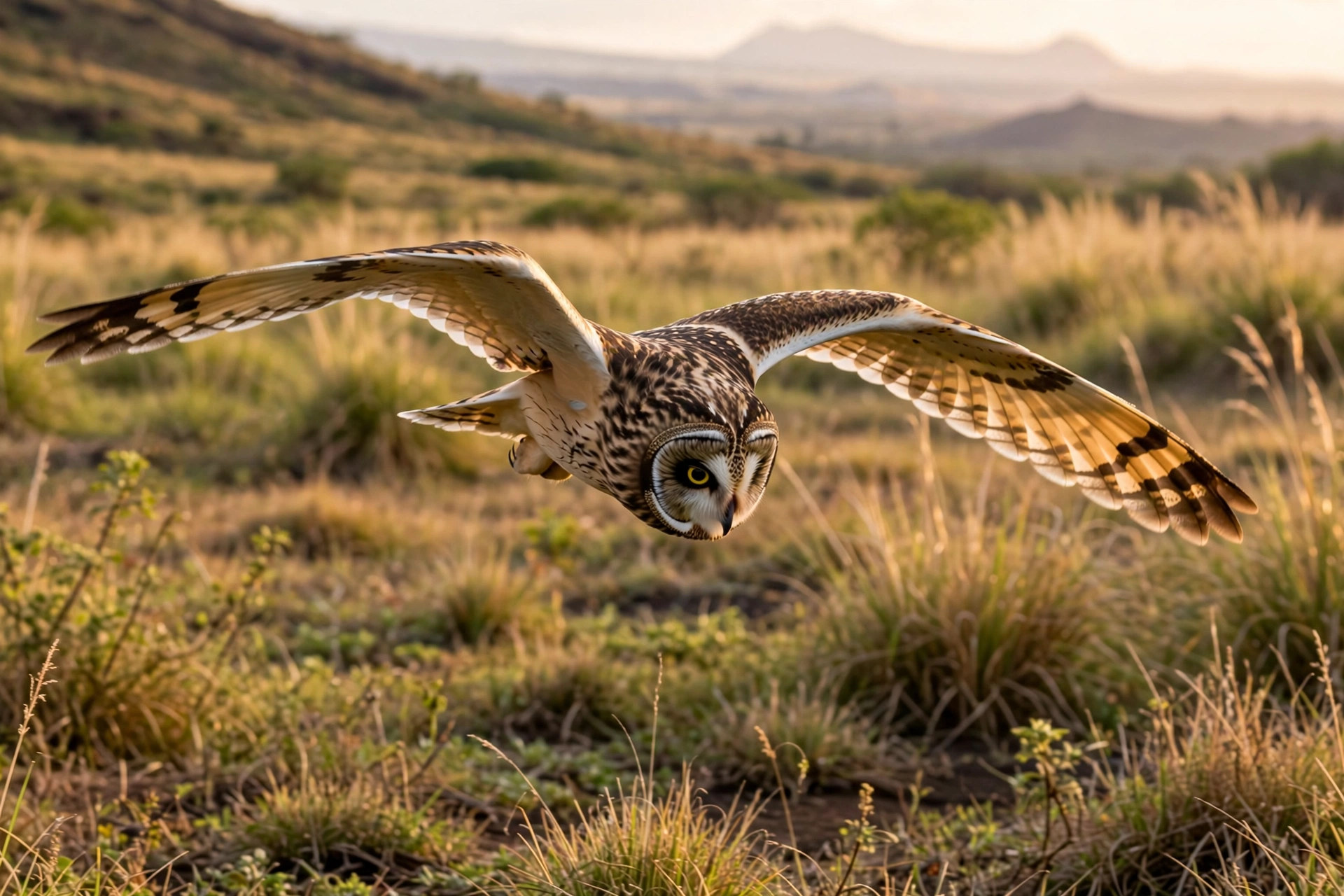
The pueo, or Hawaiian short-eared owl, hunts over Molokaʻi’s grasslands and open country by day, which makes it one of the easier native birds to see. Look for a medium-sized owl with mottled brown plumage quartering low over pastures and fields, especially in the late afternoon. In Hawaiian culture the pueo is an ʻaumakua, a family guardian, and it is treated with deep respect. The best viewing is on the central plateau and west end, where open grassland stretches for miles. Unlike most owls, the pueo is active in daylight, so any daytime walk through open country is a chance.
Seabirds of the North Shore and Moʻomomi
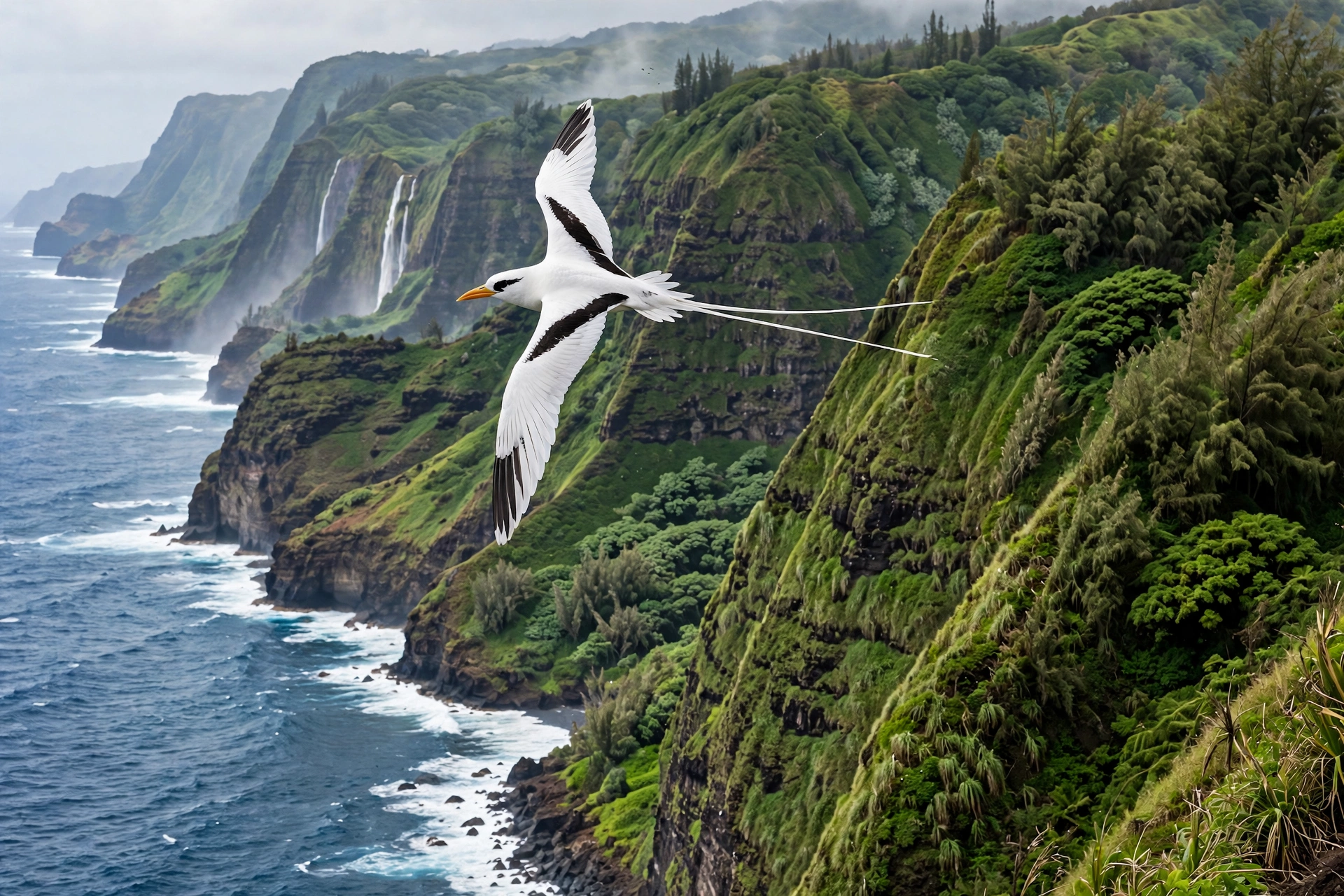
Molokaʻi’s most dramatic bird spectacle belongs to the seabirds. The north shore sea cliffs, among the tallest in the world, provide nesting ledges for white-tailed tropicbirds (koaʻe kea), red-footed boobies, brown boobies, and great frigatebirds (ʻiwa), which you can watch soaring along the cliff faces from the Palaʻau State Park overlook or from a boat offshore. On the northwest coast, Moʻomomi Preserve protects one of Hawaiʻi’s most important wedge-tailed shearwater (ʻuaʻu kani) nesting colonies, along with nesting sites for other seabirds. The preserve is accessible only through guided hikes run by The Nature Conservancy, and the hikes are as much about the ancient dunes and native coastal plants as the birds. Nesting season, roughly spring through fall depending on the species, is the most active time, but the birds are sensitive to disturbance, so stay on the path, keep voices low, and never approach a burrow or nest.
Introduced Game Birds
Ring-necked pheasants, wild turkeys, francolins, and quail are common sights along roadsides and in fields, particularly on the west end and central plateau. Turkeys in particular have become abundant, and their gobbling is part of the island’s dawn chorus in some areas. These birds were introduced for hunting and are now thoroughly established. They are fun to watch but they are not native, and they compete with native birds for food and habitat.
Marine Life
The waters around Molokaʻi are as rich as the land, and in some ways richer. The island’s south shore is fronted by a fringing reef about 28 miles long, the longest continuous fringing reef in the Hawaiian Islands. On the north shore, the sea cliffs drop straight into deep water where pelagic life passes close to shore. Winter brings humpback whales into the channels between the islands. Here is what lives in Molokaʻi’s waters and where you are likely to meet it.
Reef Fish and Coral
The south shore reef is a classic Hawaiian reef community. Convict tangs (manini) school in the shallows in silvery flashes. Yellow tangs (lauʻipala) graze algae on the coral heads. Parrotfish (uhu) crunch coral with their beak-like teeth, and you may hear their scraping if you snorkel quietly. Reef triggerfish (humuhumunukunukuāpuaʻa), Hawaiʻi’s state fish, patrol their territories with gruff confidence. Christmas tree worms dot the coral heads with tiny spiraled crowns. The reef flat is shallow and the coral is fragile, so proper buoyancy is not a suggestion here; it is the whole game. Never stand on coral, never touch it, and enter and exit only over sand.
Green Sea Turtles
Green sea turtles (honu) are common along the south shore, where they graze on algae and rest on the reef. Kumimi Beach and the calm south shore entries are good places to see them, often close to shore. Federal and state law requires you to stay at least 10 feet away, and you must never touch, chase, feed, or block a turtle’s path to the surface. If a turtle approaches you while you are snorkeling, stay still and let it pass. Turtles that haul out on beaches to bask are resting, not stranded; give them space and keep dogs leashed and far away.
Hawaiian Monk Seals
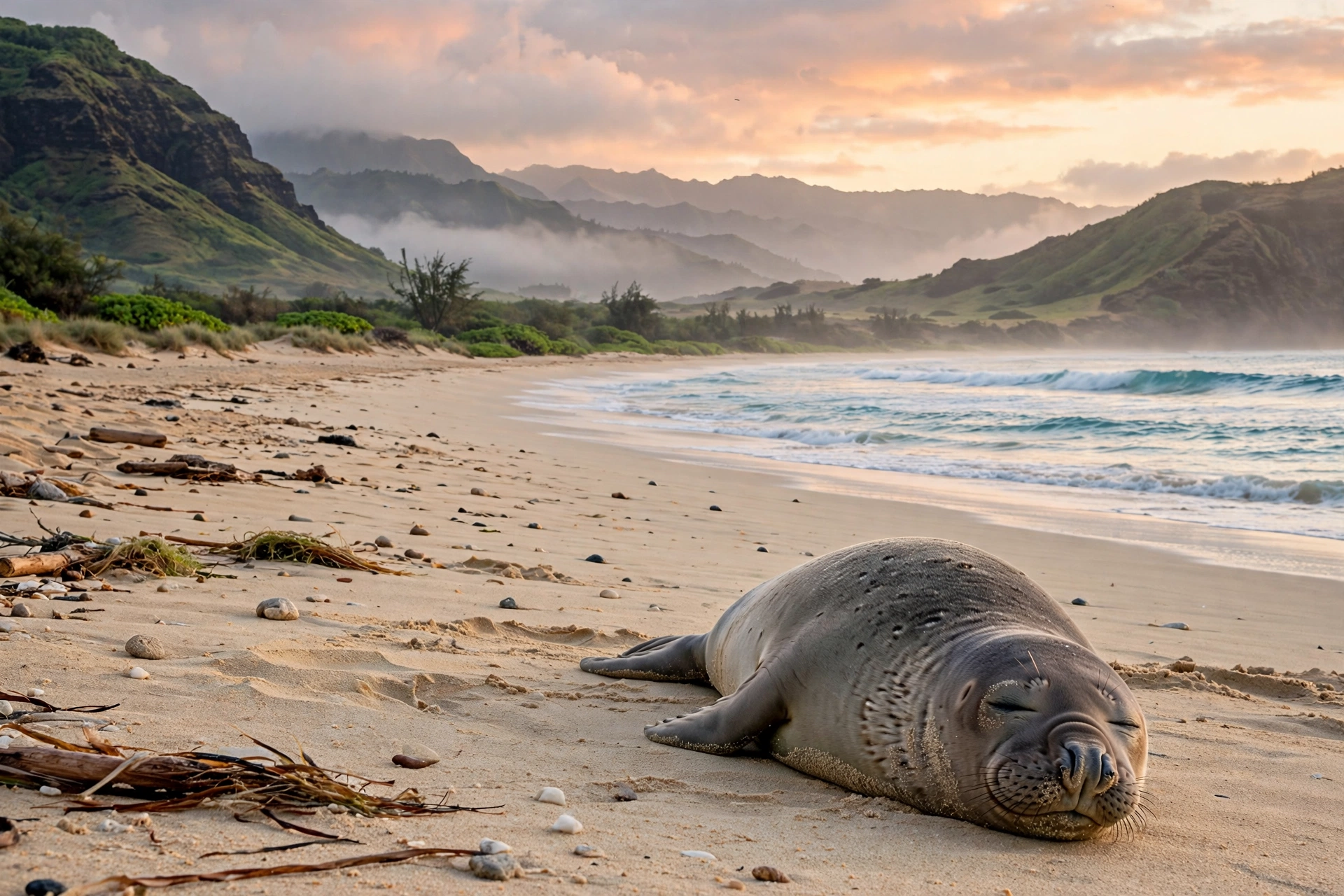
The Hawaiian monk seal (ʻīlio holo i ka uaua) is one of the rarest marine mammals on Earth, with roughly 1,600 animals in existence, and Molokaʻi’s quiet beaches are among their favored haul-out spots. A seal hauled out on the sand is almost always resting, and rest is critical to its survival. Federal law requires a 50-foot viewing distance, and you should never get between a seal and the water. Mothers with pups are especially sensitive; a mother may abandon a pup if she feels threatened. If you see a seal, enjoy it from a distance, keep dogs leashed, and report the sighting to the NOAA marine mammal hotline if it appears injured or entangled. Seeing a monk seal in the wild is a privilege that comes with responsibility.
Spinner Dolphins and Humpback Whales
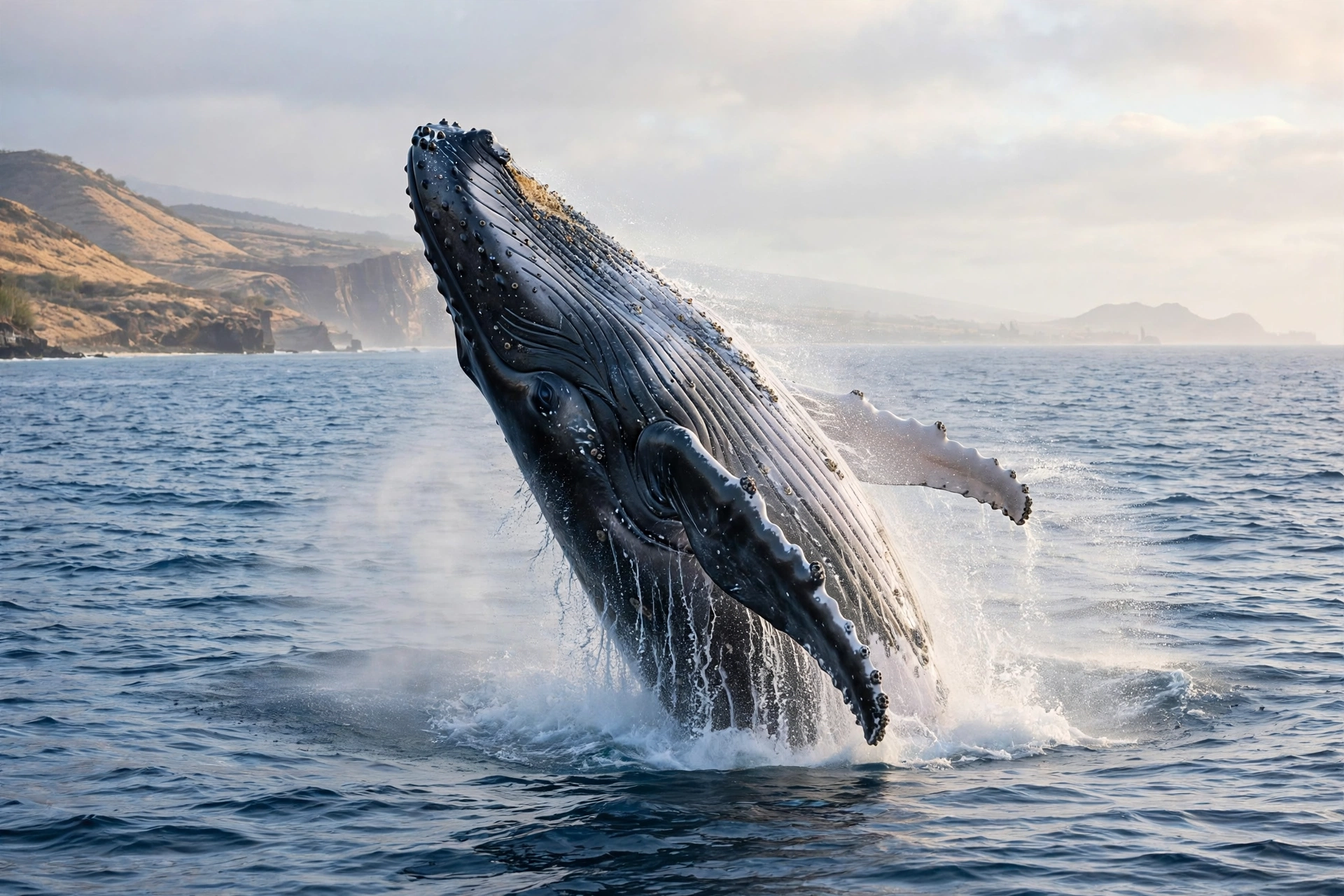
Spinner dolphins (naiʻa) travel in pods along the coasts, often visible from shore in the early morning as they return from nighttime feeding. Federal guidelines call for a 50-yard distance; the dolphins rest during the day in nearshore bays, and chasing them disrupts that rest. From December through April, humpback whales (koholā) move through the Kaiwi Channel between Molokaʻi and Oʻahu and the Pailolo Channel between Molokaʻi and Maui. The west end and south shore offer shore-based whale watching on calm winter days; look for blows, breaches, and tail slaps. Federal law requires staying 100 yards from whales, and you must never swim with or approach them. If you are lucky, you may hear whale song while snorkeling on a quiet winter morning, a sound that carries for miles underwater.
Where to See Wildlife
Molokaʻi rewards the prepared. The best wildlife spots are spread across the island, several require permission, and all of them reward early starts and quiet behavior.
- Kamakou Preserve (permit required): The Nature Conservancy reserve in the east end uplands is the island’s premier native forest bird site. Permits must be arranged in advance, the access road is rough and often requires high clearance, and weather is cool and wet. Target the ʻamakihi, ʻapapane, and ʻiʻiwi at dawn.
- Moʻomomi Preserve (guided hike only): The Conservancy’s northwest coast preserve protects ancient dunes, rare native coastal plants, and a major wedge-tailed shearwater nesting colony. Monthly guided hikes are the only public access; book well ahead.
- Palaʻau State Park: The overlook above the Kalaupapa peninsula is free, open to the public, and one of the finest seabird-watching spots in the islands. Scan the cliffs for tropicbirds, boobies, and frigatebirds with binoculars. The park also has short walks and the famous Kaule o Nānāhoa (Phallic Rock).
- South shore reef: Kumimi Beach and the calm south shore entries offer the island’s best shore snorkeling for reef fish and turtles. Go in the morning before the trade winds pick up, enter over sand, and never touch the reef.
- West end and central plateau: The open country around Maunaloa and Hoʻolehua is the place for axis deer at dawn and dusk, pueo hunting over grasslands by day, and wild turkeys along the roadsides.
- Kalaupapa cliffs (view only): The peninsula and its towering cliffs are visible from the Palaʻau overlook and from boats offshore. The settlement itself is a National Historical Park with restricted access; the cliffs and their nesting seabirds are best appreciated from a distance.
Wildlife Ethics and the Law
Molokaʻi’s wildlife survives because people protect it, and visitors are part of that compact. The rules are simple and they are the law, not suggestions.
- Keep your distance: 10 feet from sea turtles, 50 feet from monk seals, 50 yards from dolphins, 100 yards from whales. For birds, if your presence changes their behavior, you are too close.
- Never feed wildlife: Feeding changes behavior, spreads disease, and is illegal for marine mammals and many other species. This includes the island’s cats, whose feeding stations threaten native birds and monk seals.
- Respect closures and kapu: If a beach, trail, or area is closed or marked kapu, stay out. Many closures protect nesting birds or cultural sites.
- Protect the reef: Hawaiʻi law bans sunscreens containing oxybenzone and octinoxate. Use reef-safe sunscreen, never stand on or touch coral, and do not take shells, coral, or sand.
- Report problems: Report injured or entangled marine animals to the NOAA marine mammal hotline, and report suspected wildlife violations to the Department of Land and Natural Resources.
- Dogs: Keep dogs leashed at all times near wildlife, and never allow them near seals, turtles, or nesting birds.
Best Time for Wildlife Viewing
Wildlife viewing on Molokaʻi is good year-round, but seasons shift the highlights. Humpback whales are present from December through April, with February and March typically the peak. Seabird nesting activity runs roughly spring through fall, varying by species. The south shore reef is calmest from April through October, when trade winds are lighter and the water clearest. Axis deer are visible year-round but are most active at dawn and dusk, and the dry summer months concentrate them near remaining water. Native forest birds in Kamakou sing most actively in the spring breeding season. For any wildlife outing, start early: animals are most active in the first hours after sunrise, and Molokaʻi’s afternoons belong to the trade winds.
Frequently Asked Questions
What is the most famous animal on Molokaʻi?
The axis deer is the island’s signature land animal, descended from eight deer gifted to King Kamehameha V in 1868. For native wildlife, the highlights are the forest birds of Kamakou Preserve, the seabirds of the north shore cliffs, and the Hawaiian monk seals that haul out on quiet beaches.
Can I see monk seals on Molokaʻi?
Yes, Molokaʻi’s uncrowded beaches are among the best places in the islands to see monk seals hauled out and resting. Remember the 50-foot legal viewing distance, keep dogs leashed, and never get between a seal and the water. A resting seal is not in distress; it is doing exactly what it needs to survive.
Are there nēnē on Molokaʻi?
Nēnē are rare on Molokaʻi and not reliably seen here. The strongholds for the Hawaiian goose are Hawaiʻi Island, Maui, and Kauaʻi. If you are hoping to see nēnē, plan time on one of those islands, and treat any Molokaʻi sighting as a lucky bonus.
Do I need a permit to visit Kamakou Preserve?
Yes. Kamakou Preserve is managed by The Nature Conservancy and requires an advance permit for hiking. The access road is rough and often needs high clearance, and the weather is cool and wet. Arrange the permit well before your trip and check road conditions.
Can I visit Moʻomomi Preserve on my own?
No. Moʻomomi Preserve is accessible only through guided hikes run by The Nature Conservancy, offered on a limited schedule. The hikes protect the fragile dunes and nesting seabirds while giving visitors access to one of Hawaiʻi’s most remarkable coastal landscapes. Book as early as you can.
Where can I see seabirds on Molokaʻi?
The Palaʻau State Park overlook is the easiest option: scan the Kalaupapa cliffs for tropicbirds, boobies, and frigatebirds with binoculars. Moʻomomi’s guided hikes visit an important shearwater nesting colony. Boats along the north shore also pass nesting cliffs, though the water there is rough.
Are there snakes on Molokaʻi?
No. There are no native land snakes in Hawaiʻi, and the islands work hard to keep it that way. If you see a snake, report it immediately to 643-PEST. The animals to watch for instead are feral pigs in the forests, axis deer on the roads at dawn and dusk, and urchins and sharp coral in the water.
When is whale season off Molokaʻi?
Humpback whales are typically present from December through April, with February and March the peak months. The west end and south shore offer shore-based viewing on calm days, and the Kaiwi and Pailolo Channels are prime whale water. Keep the legal 100-yard distance and never approach a whale in the water.
Related Guides
Continue exploring Molokaʻi and the islands:
- Molokaʻi Travel Guide: the complete island overview
- Molokaʻi Map: regions, towns, roads, and distances
- Molokaʻi Hikes: trails, permits, and safety
- Molokaʻi Beaches: the island’s wild shoreline
- Molokaʻi Snorkeling: the 28-mile fringing reef
- Maui Wildlife: the neighboring island’s animals
- Hawaii Map: the full island chain
A Final Note
Molokaʻi’s wildlife is a study in contrasts: native birds holding on in the misty uplands, seabirds thriving on cliffs no predator can reach, and introduced deer and turkeys filling the open country in between. The island’s small human population and protective attitude toward its land have given its animals something increasingly rare in Hawaiʻi, which is room to be wild. The axis deer will likely be the first animal you notice and the monk seal the one you remember longest, but the deeper story belongs to the forest birds of Kamakou and the shearwaters of Moʻomomi, survivors of an extinction wave that took so many of their kin. See them with patience, keep your distance, and leave the island’s wild places exactly as you found them.