
Molokaʻi Snorkeling
In This Guide
Molokaʻi is home to the longest continuous fringing reef in Hawaiʻi, a living shoreline that runs roughly 28 miles along the island’s south shore. Where the reefs of Oʻahu and Maui draw crowds by the hundred, Molokaʻi’s reef flats are often empty. On a weekday morning at a south shore entry, you may share the water with no one at all. That solitude is the point. Snorkeling here is quiet, shallow, and close to the reef, which means it rewards patience and respect more than athleticism. This guide covers where to get in, what you will see, how to stay safe on a reef flat, and the rules that protect it.
Molokaʻi Snorkeling Overview
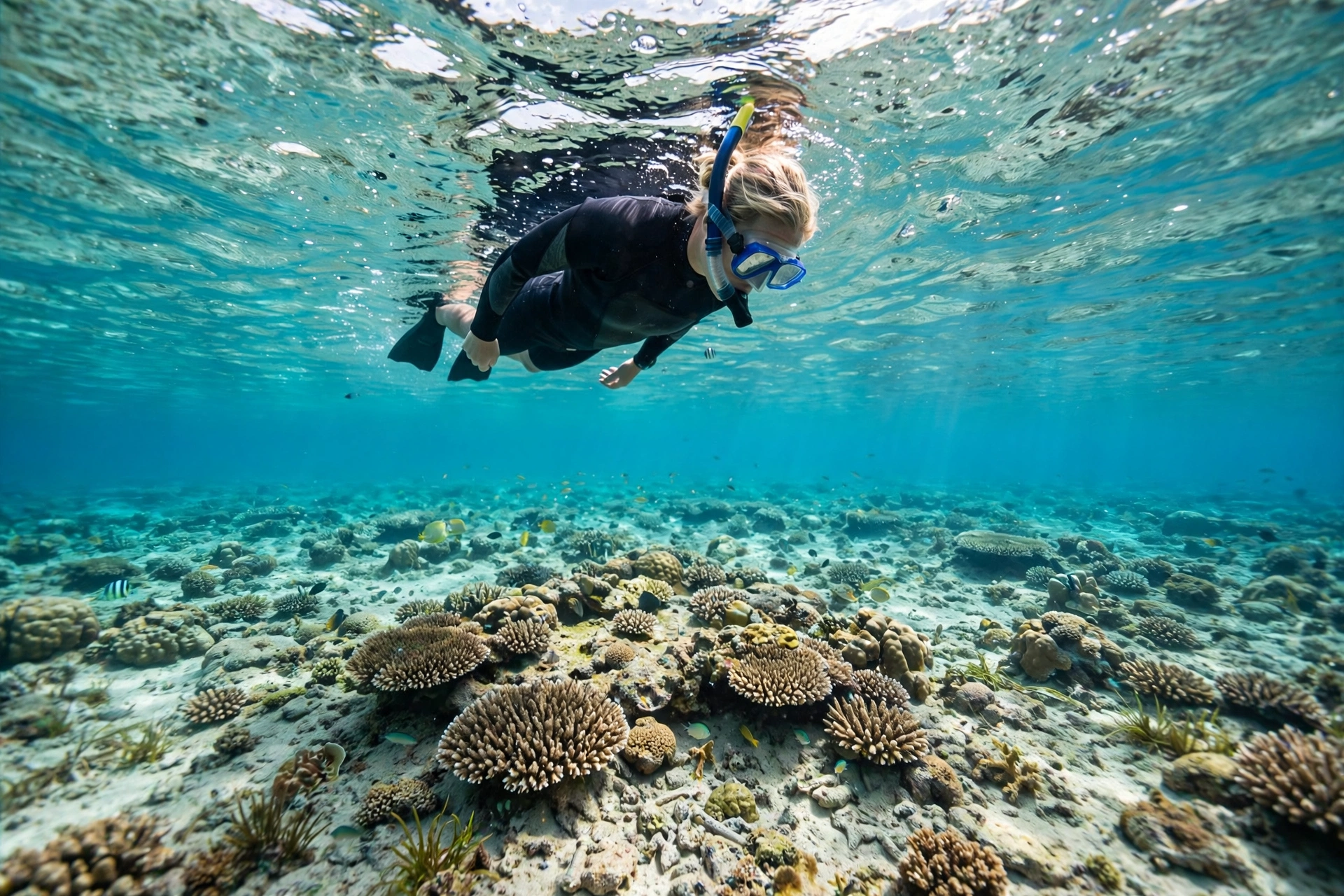
The south shore fringing reef is the defining feature of Molokaʻi snorkeling. A fringing reef grows directly from the shoreline with no deep lagoon between reef and land, and Molokaʻi’s version is the most extensive in the main Hawaiian islands. At its widest points the reef flat stretches well over half a mile seaward. Much of that flat is extremely shallow, often just two to four feet of water over limestone and coral rubble, which keeps the water warm and calm but also means entry points matter. You cannot simply wade in anywhere. The productive snorkeling happens at gaps, channels, and beach entries where the reef opens into deeper water with living coral and fish.
The reef did not form overnight. Molokaʻi is geologically older than the Big Island and Maui, and its south shore reef has had millions of years to build outward from the volcanic shoreline. The flat you float over is a pavement of limestone covered in a living skin of coral, algae, and invertebrates. In places the reef flat is several hundred yards wide, a zone of sand, rubble, and scattered coral heads that acts as a nursery for juvenile fish. The real coral gardens sit at the outer edge, where the flat drops into deeper water and wave energy brings constant nutrients. Understanding this structure is practical, not just interesting. It tells you where the fish are, where the coral is healthiest, and why some entries are worth the walk while others are not.
This geography creates a particular kind of experience. The water inside the reef is protected from open ocean swell, so conditions are often glassy on the south shore even when other coasts are rough. Visibility is best in the morning before the trade winds stir the flat. Marine life is abundant but spread out. Honu (green sea turtles) are the signature sighting. Reef fish, urchins, and rays are common. Dolphins and monk seals appear but should never be pursued.
There are no snorkel tour boats operating on Molokaʻi in the way visitors know them from Maui or the Big Island. Snorkeling here is shore based, which keeps it uncrowded and self directed. That also means there is no lifeguard watching you. Plan like an independent swimmer, not a tour guest.
Best Snorkeling Spots
Kumimi (Murphy’s) Beach Park
Kumimi, also called Murphy’s Beach, is the most reliable shore snorkeling on Molokaʻi and the natural starting point for most visitors. The county park sits on the east end side of the south shore with white sand, ironwood trees, picnic tables, and restrooms. Just offshore, a sandy entry leads to patch reef in six to twelve feet of water. Coral heads are separated by sand channels, which makes navigation easy and keeps contact with living coral low. Turtle sightings are frequent. This is the one Molokaʻi spot that can be recommended to a first time island snorkeler without qualification.
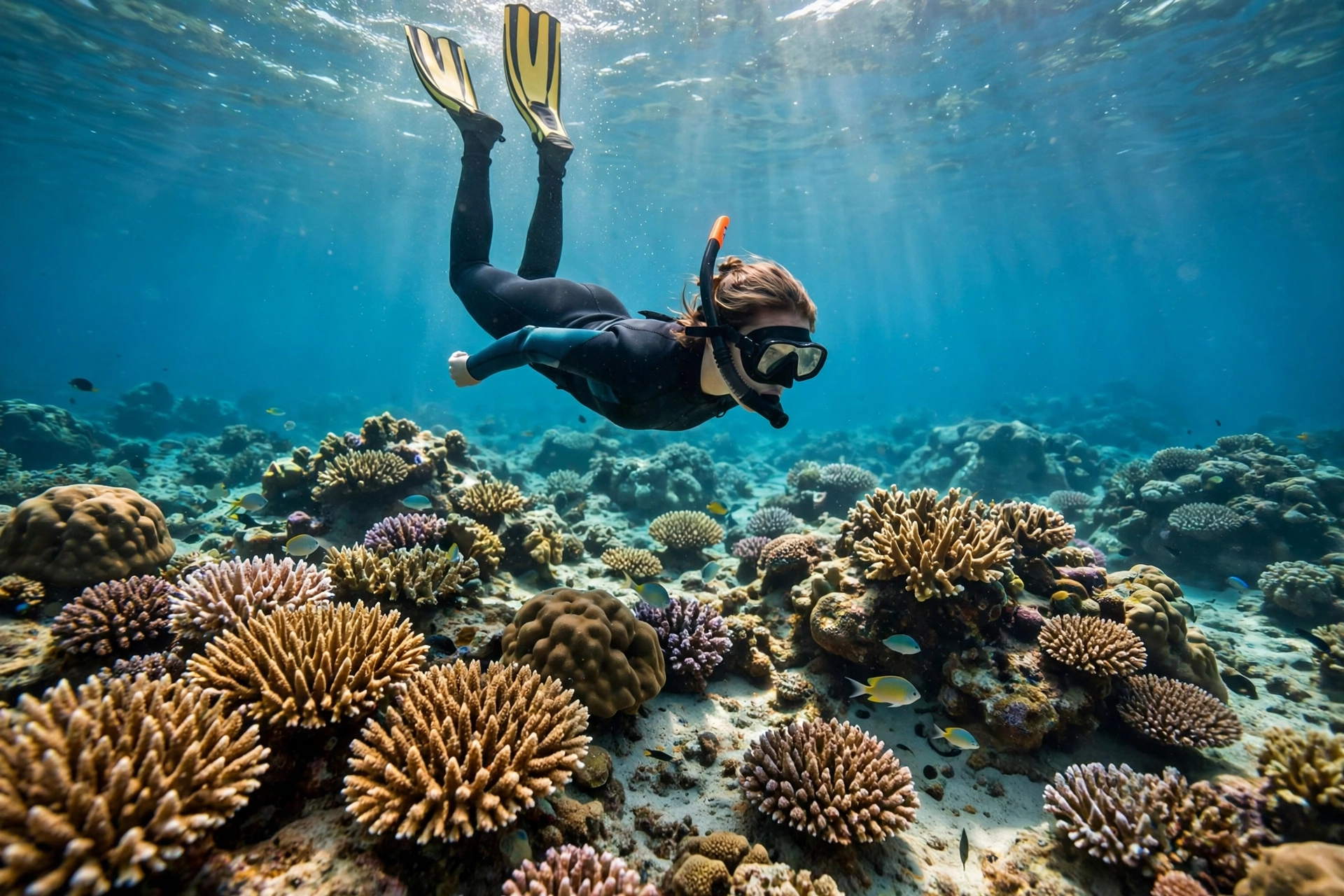
Work the reef slowly. Swim out through the sandy channel, then drift along the coral heads at the edge rather than cutting across them. The outer edge holds the best coral growth, with finger coral, lobe coral, and cauliflower coral colonies that shelter damselfish, butterflyfish, and the occasional moray eel. Morning light slants through the water and makes the coral colors stand out. If the wind picks up by midday, visibility drops as the flat stirs, so an early start pays off. Kumimi is also one of the few spots with enough infrastructure for a full morning, meaning you can snorkel, rest in the shade, and go back in for a second session.
South Shore Reef Entries
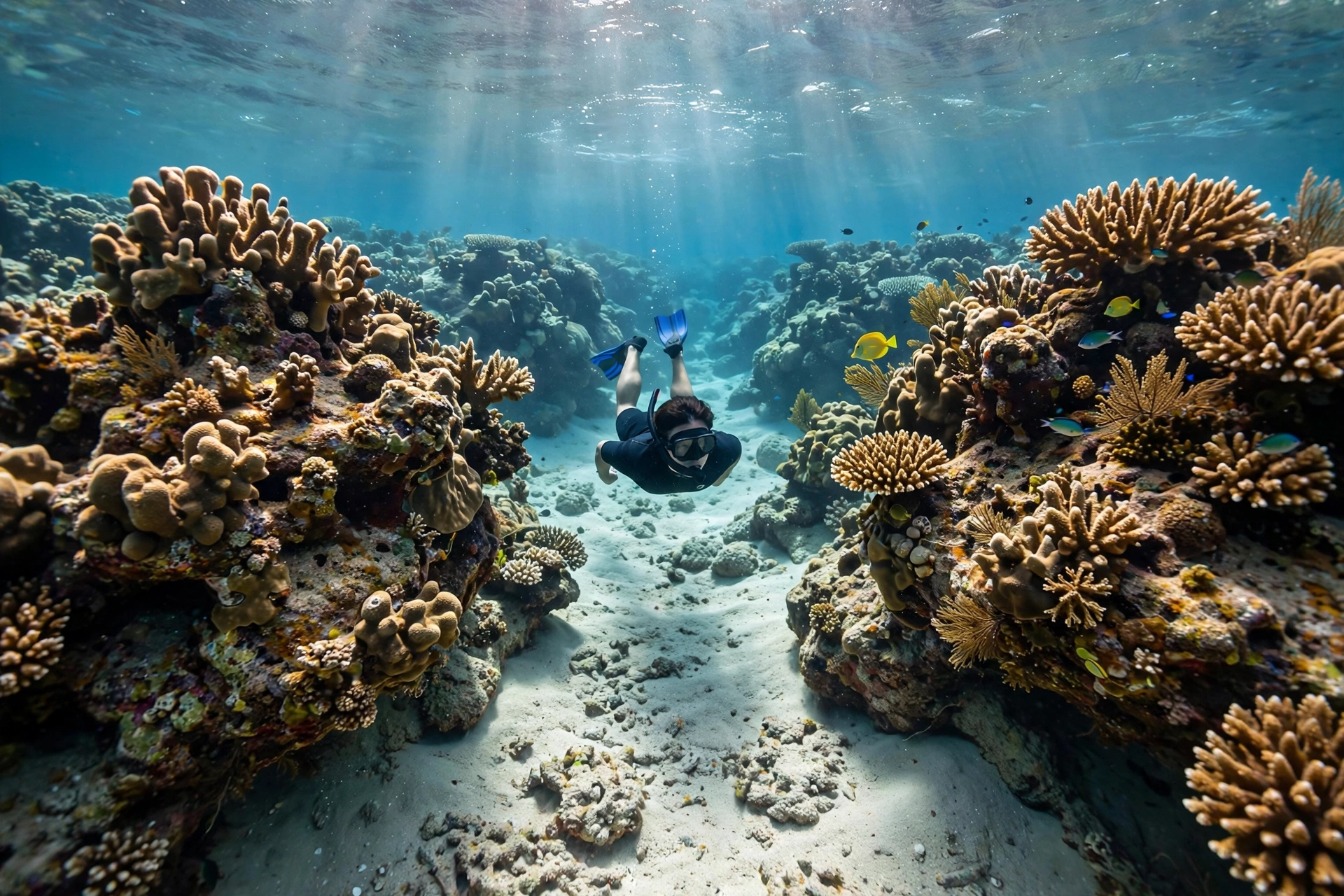
Along the central south shore between Kaunakakai and ʻUalapuʻe, the reef flat runs for miles with scattered public access. Entries here require local knowledge or careful scouting. The best approach is to walk the shoreline at low tide and look for sandy channels cutting through the flat. Where a channel opens, you can float out to the reef edge where coral growth and fish density improve. Never walk across the reef flat to reach water. The flat is a living surface, and walking on it damages coral that took decades to grow. If you cannot find a clean sandy entry, move on rather than forcing your way across the reef.
These central shore entries are where Molokaʻi snorkeling earns its reputation for solitude. You may be the only swimmer for a mile in either direction. That freedom comes with responsibility. Mark your entry point clearly, note your position relative to a landmark on shore, and do not swim beyond the reef edge into open water. The drop off beyond the reef can be abrupt, and the open ocean outside the flat has currents that do not exist inside it. Snorkel the edge, not beyond it.
One Aliʻi Beach Park
One Aliʻi is a calm, shallow beach park near Kaunakakai with easy parking and facilities. The water here is shallow and sandy with patchy reef, better suited to families and beginners than to serious snorkeling. Visibility can be variable after rain because nearby runoff clouds the flat. Think of One Aliʻi as a comfortable first dip or a kids’ snorkeling spot rather than a destination.
The park’s real value is as a learning spot. New snorkelers can practice mask clearing, finning, and floating in water that is rarely more than chest deep. Kids can see small fish and urchins in the shallows without the exposure of the reef edge. Keep expectations modest, watch for runoff after rain, and graduate to Kumimi or a central shore entry once you are comfortable.
Kapukahehu (Dixie Maru) Cove
This small west end cove has a sheltered pocket of reef on one side of the beach. It is worth snorkeling if you are already at the west end, but it is not worth a long drive on its own. The cove is calm in summer and can have surge in winter. Coral diversity here is modest compared with Kumimi, but fish life around the rocks is interesting.
Time your visit to the cove for a calm summer morning. Enter from the sand, swim the rocky point on the right side of the beach, and stay inside the sheltered pocket. Do not round the point into open water, where surge builds quickly. The cove is small enough to explore fully in one session, and it pairs naturally with a west end beach day at Papohaku or Kapukahehu’s sand.
East End Spots
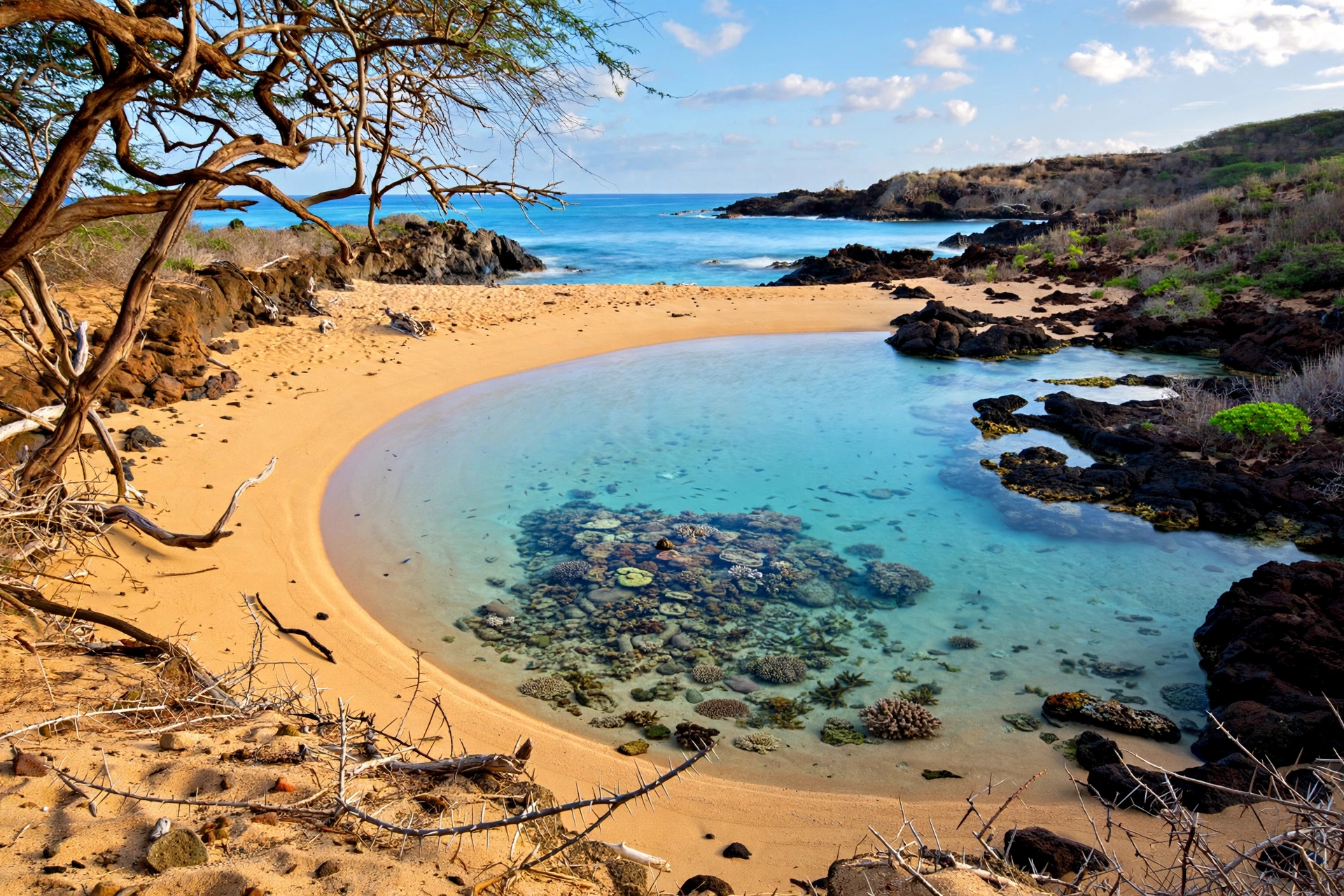
East of Kumimi, the shoreline turns rugged with pocket beaches and rocky points. Snorkeling quality varies with swell and access. Some east end entries have excellent coral but no facilities, no easy parking, and sometimes difficult footing. East end water gets rougher in winter, and the drive itself is slow. These spots suit confident swimmers who have snorkeled elsewhere on the island first.
The east end rewards preparation. Scout entries at low tide the day before if you can, bring a buddy, and carry everything you need because there is nothing to buy nearby. The coral at the better east end entries is among the healthiest on the island precisely because so few people reach it. Treat these spots as earned, not casual, and you will be rewarded with some of the clearest, least visited water in Hawaiʻi.
West End Note
The west end coastline from Papohaku to Kapukahehu is exposed to open ocean with strong shore break and limited reef protection. It is not a snorkeling coast. Papohaku Beach in particular has dangerous shore break and no safe snorkeling. Enjoy the west end beaches for walking and sunsets, and take your snorkeling to the south shore reef.
Marine Life
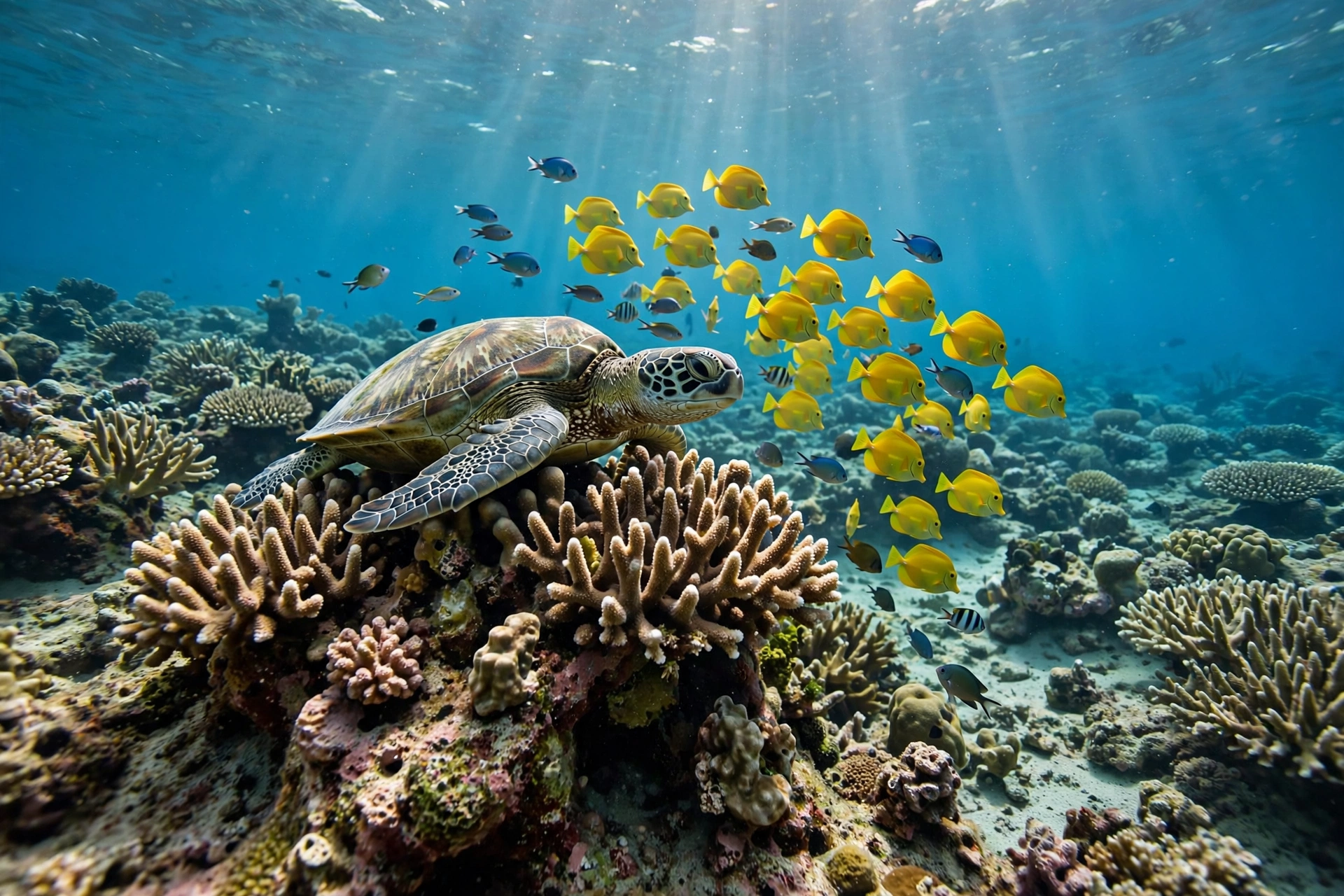
The south shore reef supports a full cross section of Hawaiian reef life. Expect to see schools of convict tangs (manini) and yellow tangs (lauʻipala), parrotfish (uhu) scraping coral, needlefish skimming the surface, and wrasses patrolling the reef edge. Humuhumunukunukuāpuaʻa, the reef triggerfish and Hawaiʻi’s state fish, shows up around deeper coral heads. Honu are the stars. Turtles rest on the reef flat and surface regularly, and Molokaʻi’s quiet water gives excellent, calm viewing.
Less common but possible sightings include spotted eagle rays gliding over sand channels, reef sharks (usually whitetip pups in shallow water, harmless and shy), and octopus (heʻe) tucked into coral heads at dusk. Hawaiian monk seals haul out on south shore beaches to rest. Federal law requires keeping at least 50 feet from a seal, and you must never approach one in the water. Spinner dolphins (naiʻa) pass along the coast. Watch from a distance and never chase.
The reef flat itself is alive in ways you notice only when you slow down. Look for Christmas tree worms, tiny filter feeders whose bright crowns retract into coral the moment your shadow passes. Sea cucumbers dot the sand, and helmet urchins cluster in the shallows. At night the reef transforms, with moray eels hunting and reef squid flashing color, but night snorkeling on Molokaʻi is for experienced swimmers with lights and a buddy, given the shallow flat and lack of support. Even in daylight, the longer you float quietly over one coral head, the more reveals itself.
Snorkeling Safety
Reef flat snorkeling has its own risk profile, different from boat or beach-break snorkeling on other islands. Shallow water is the main factor. Much of the south shore flat is only a few feet deep, and surge can push a swimmer onto limestone or fire coral in a swell. Check the surf forecast before entering, and skip the water if there is any south swell running.
Sea urchins are abundant in rocky areas. A pair of reef shoes or fins worn from the sand entry prevents most urchin injuries. Cuts from limestone and coral are common and infect easily in warm water. Rinse any cut immediately with fresh water and keep it covered.
Currents on the reef flat are usually gentle, but channels that cut through the reef can carry outgoing flow, especially on a falling tide. If you feel yourself being pulled, swim parallel to the reef rather than fighting the current, and signal for help if you cannot make progress. Snorkel with a buddy whenever possible, and tell someone on shore where you entered and when you expect to return.
Turtle rules: Stay at least 10 feet from honu at all times, on land and in the water. Do not touch, feed, or chase turtles. If a turtle approaches you, stay still and let it pass. Harassing a green sea turtle is a violation of federal law.
One more reality check. There are no lifeguards at Molokaʻi snorkeling spots. Swim within your ability, stay off the reef edge in swell, and get out of the water at the first sign of fatigue or worsening conditions. The reef will be there tomorrow.
Reef Etiquette and Laws
Molokaʻi’s reef is under real pressure, and the island community is protective of it. Snorkelers carry part of the responsibility. The rules are simple and non negotiable.
- Never touch coral. Even light contact kills the living polyps. Control your buoyancy and keep fins and hands clear of coral heads.
- Never stand on the reef. If you need to rest, float on your back or return to a sandy area. Walking the reef flat crushes decades of growth.
- Do not feed fish. Feeding disrupts natural behavior and damages the reef ecosystem. It is also illegal in Hawaiʻi.
- Use reef safe sunscreen. Hawaiʻi’s Act 104 bans the sale of sunscreens containing oxybenzone and octinoxate. Apply mineral sunscreen before you arrive at the beach so it absorbs fully, and reapply on sand, not in the water.
- Take nothing. Shells, coral pieces, sand, and rocks belong to the reef. Removing them is prohibited.
- Keep your distance from wildlife. Ten feet from turtles, 50 feet from monk seals, 50 yards from dolphins. Never corner an animal for a photo.
Gear and Preparation
You will need to bring your own snorkel gear. There are no beachfront rental shacks on Molokaʻi, and the limited rental options in Kaunakakai can sell out. Bring a mask that seals well, a dry snorkel, and fins. Reef shoes or fin socks are strongly recommended for rocky entries. A rash guard or wetsuit top protects against sun and coral scrapes, and reduces the sunscreen load on the reef.
Pack a dry bag with fresh water for rinsing, a towel, snacks, and a basic first aid kit. Cell service is unreliable at some east and west end beaches, so download offline maps and check the surf and wind forecast before you drive out. A waterproof phone case is useful for photos, but never at the cost of reef contact. If you cannot frame the shot without touching coral, skip the shot.
Planning Your Snorkeling Day
A typical Molokaʻi snorkeling day starts in Kaunakakai. Check the surf forecast and wind forecast before you leave town, then head east toward Kumimi or a central shore entry with the morning still calm. Bring more water and snacks than you think you need, because there are no stores between Kaunakakai and the east end spots. Plan for two water sessions with a rest between them rather than one long swim. Fatigue is the most common cause of snorkeling accidents, and the shallow flat is forgiving only when you are fresh.
Build your day around the tide. A rising or high tide gives more clearance over the reef flat and makes entries easier. Low tide exposes more of the flat, which is good for scouting entries on foot but poor for swimming over them. If you are trying a new entry, arrive at low tide, walk it, pick your line through the sand channels, and then swim it on the rising tide.
Keep the island’s pace in mind. Molokaʻi moves slowly, and snorkeling here works best when you do too. The reef rewards the swimmer who floats in one place and watches over the swimmer who covers distance. Pick one spot, learn it across two sessions, and you will see more than someone who rushed through three.
Best Time to Snorkel
Snorkeling conditions on Molokaʻi’s south shore are best from April through October, when trade winds are steady but the south swells of summer have not peaked. Morning is the best time of day year round. Enter before 10 a.m. for the calmest water and clearest visibility, before afternoon trades chop the flat.
Winter months from November through March bring larger swells and murkier water, especially on the east end and around river mouths after rain. Some days are still fine, but check the forecast and be ready to skip the water. Visibility is also reduced after heavy rain anywhere near stream runoff, so avoid snorkeling within a day of a big storm.
FAQs
Is Molokaʻi good for snorkeling?
Yes, for the right swimmer. The 28 mile south shore fringing reef is the longest in Hawaiʻi, and the water is uncrowded. But snorkeling here is shore based, shallow, and unguarded, which suits confident swimmers more than nervous beginners. Kumimi Beach is the most beginner friendly entry.
Where is the best snorkeling on Molokaʻi?
Kumimi (Murphy’s) Beach is the most reliable spot, with easy entry, patch reef in swimmable depth, and frequent turtle sightings. The central south shore reef has good entries for experienced snorkelers who can read a reef flat.
Are there snorkel tours on Molokaʻi?
No tour boats operate dedicated snorkel trips on Molokaʻi. Snorkeling is shore based, which is part of why the water stays uncrowded. Bring your own gear and plan like an independent swimmer.
Is it safe to snorkel at Papohaku Beach?
No. Papohaku has dangerous shore break and no protective reef, and it is not a snorkeling beach. Take your snorkeling to the south shore reef instead.
Can I see sea turtles while snorkeling on Molokaʻi?
Very likely. Honu are common over the south shore reef, especially at Kumimi. Stay at least 10 feet away, never touch or chase, and let the turtle control the encounter.
Do I need reef shoes?
They are strongly recommended. Many south shore entries cross limestone or rubble, and sea urchins are common in rocky areas. Fin socks or reef shoes prevent the most common injuries.
What sunscreen can I use?
Hawaiʻi law bans sunscreens containing oxybenzone and octinoxate. Use a mineral sunscreen, apply it before arriving at the beach, and wear a rash guard to cut down on sunscreen in the water.
Can I rent snorkel gear on Molokaʻi?
Options are limited to a few shops in Kaunakakai, and gear can sell out. The safest plan is to bring your own mask, snorkel, and fins.
Related Guides
- Molokaʻi Travel Guide
- Molokaʻi Beaches
- Molokaʻi Map
- Hawaiʻi Beaches
- Maui Snorkeling
- Kauaʻi Snorkeling
- Big Island Snorkeling
A Final Note
The south shore reef is one of the great natural features of the Hawaiian islands, and it survives in good health partly because so few people visit it. Snorkeling on Molokaʻi carries a quiet responsibility. Float gently, touch nothing, give the wildlife its space, and leave the reef exactly as you found it. The reward is a stretch of ocean that still feels like Hawaiʻi did before the crowds, and that is worth protecting.