Hawaii Ocean Safety Guide: How to Stay Safe in the Water

Hawaii’s ocean is the main reason most people visit, and it deserves more respect than it usually gets. The same water that looks like a swimming pool on a postcard can hide rip currents, shorebreak, box jellyfish, and surf that doubles in size in an hour. Visitors account for a disproportionate share of ocean drownings in Hawaii, and nearly all of those tragedies share one trait: they were preventable with basic knowledge.
This is the single complete Hawaii ocean safety guide. It covers the golden rules, how to read conditions, rip currents, shorebreak, jellyfish and marine life encounters, seasonal hazards, waterfall and stream safety, what to do in an emergency, and FAQs. Everything about staying safe in Hawaii’s ocean lives on this one page.
Hawaii Ocean Safety at a Glance
| Rule number one | When in doubt, do not go out |
| Where to swim | Lifeguarded beaches, in daylight, with a buddy |
| Before you go in | Check the Hawaii Beach Safety website and oceansafety.hawaii.gov for official conditions |
| Caught in a rip current | Stay calm, swim parallel to shore, then in at an angle |
| Never do this | Turn your back on the ocean, especially on rocks |
| Wildlife law | Sea turtles: look, do not touch; they are protected by federal law. Monk seals: give them at least 50 feet of space on the beach. |
| Box jellyfish calendar | Arrive on south-facing shores roughly 8 to 12 days after the full moon |
The Five Golden Rules
Hawaii’s lifeguards and ocean safety officials repeat the same guidance everywhere, from the airport videos to the beach signs. Learn these five before you touch the water.
1. When in doubt, do not go out
This is the Hawaii Lifeguard Association’s signature message, and it is the only rule you need if you remember nothing else. If the water looks rough, if you feel unsure, if nobody else is swimming: stay on the sand. The ocean will still be there tomorrow. Conditions in Hawaii change fast, and confidence is a poor flotation device.
2. Swim at lifeguarded beaches
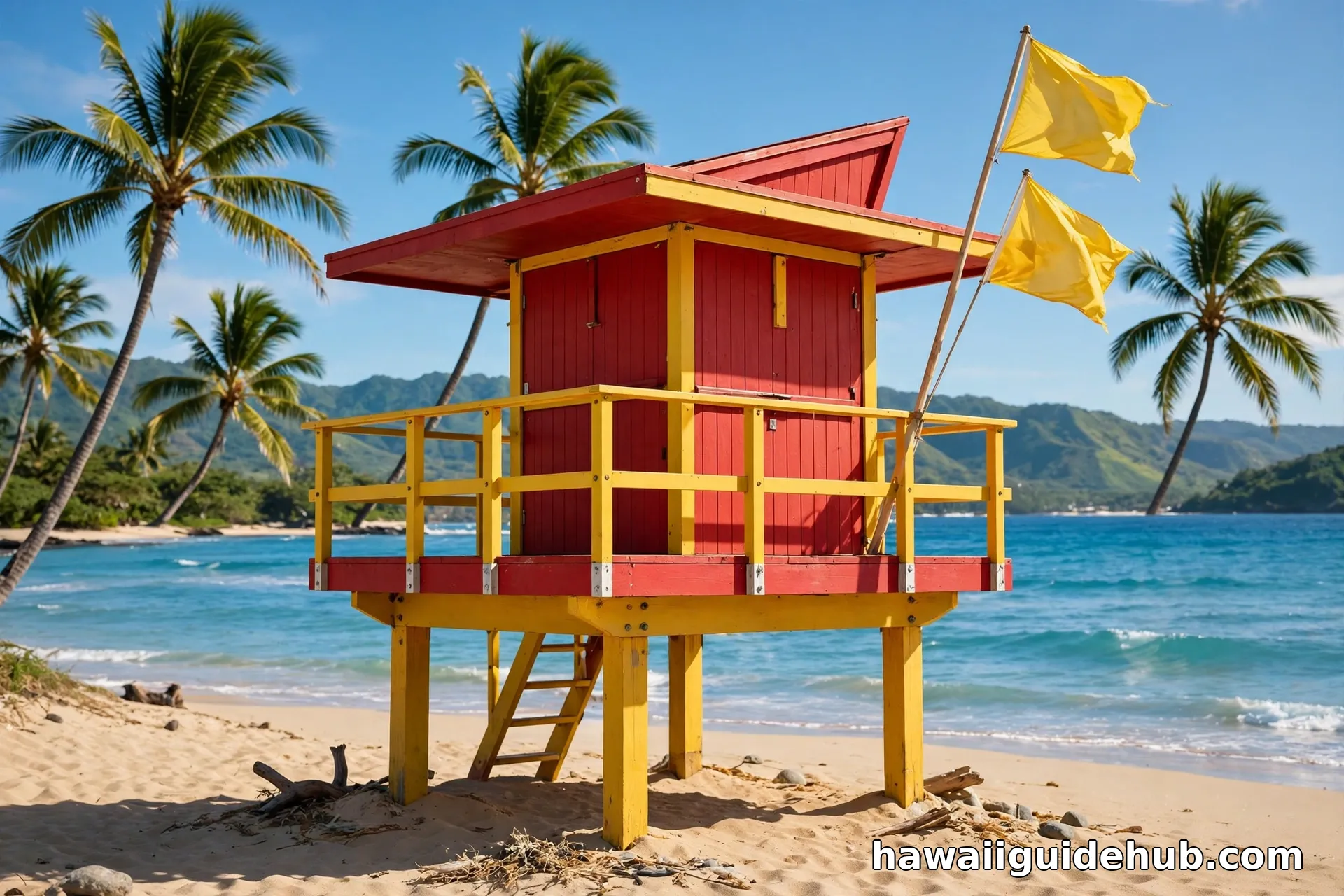
Choose beaches with lifeguard towers, swim during guarded hours, and stay near the tower. Lifeguards do far more than rescues: ask them about conditions before you enter, and they will tell you exactly where it is safe to swim that day. Many of Hawaii’s most dangerous beaches have no lifeguards at all, which is precisely why they are dangerous.
3. Never turn your back on the ocean
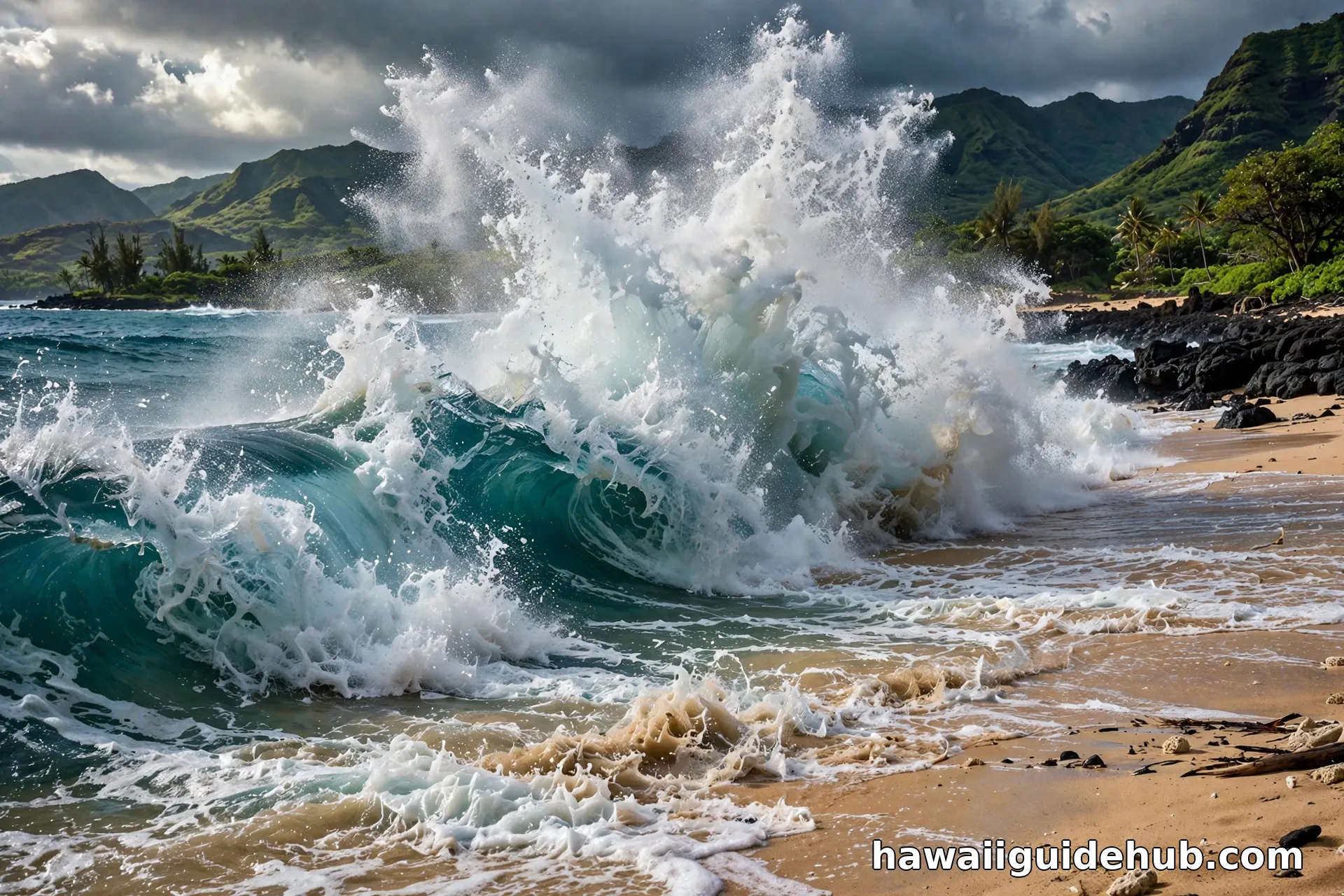
Sneaker waves and surges can sweep across rocks and beaches with no warning, and they injure more sightseers than swimmers. When walking on rocky shorelines, tide pools, or blowhole lookouts, keep your eyes on the water and stay well back from the edge. The photograph is never worth it.
4. Read and obey every posted sign
Warning signs in Hawaii are not suggestions. High surf warnings, brown water advisories after heavy rain, jellyfish warnings, and beach closures are posted for real, current conditions. A beach that was perfect yesterday can be closed today. Check the signs every single time you arrive.
5. Know your limits and go with a buddy
Swim within your ability, stay in water where you can comfortably stand until you know the spot, and never swim or snorkel alone. Snorkelers in particular should use the buddy system: shallow-water blackout and equipment problems turn survivable situations fatal when nobody is watching.
Understanding Rip Currents
Rip currents are the ocean’s most underestimated killer. These narrow channels of water flow outward from the beach, and they can pull even strong swimmers away from shore in seconds. They are common at many Hawaiian beaches, especially where waves break over reefs and sandbars.
Learn to spot one: look for a channel of choppier, darker, or foam-streaked water cutting through the surf line, or a gap in the breaking waves. If you are caught, do not fight it by swimming straight back to shore: you will exhaust yourself. Instead, stay calm, float, and swim parallel to the beach until you are out of the current, then swim in at an angle. If you cannot escape, face the shore, wave, and call for help. Teach this to everyone in your group, including teenagers who think they are strong swimmers.
Shorebreak: Hawaii’s Spinal Injury Machine
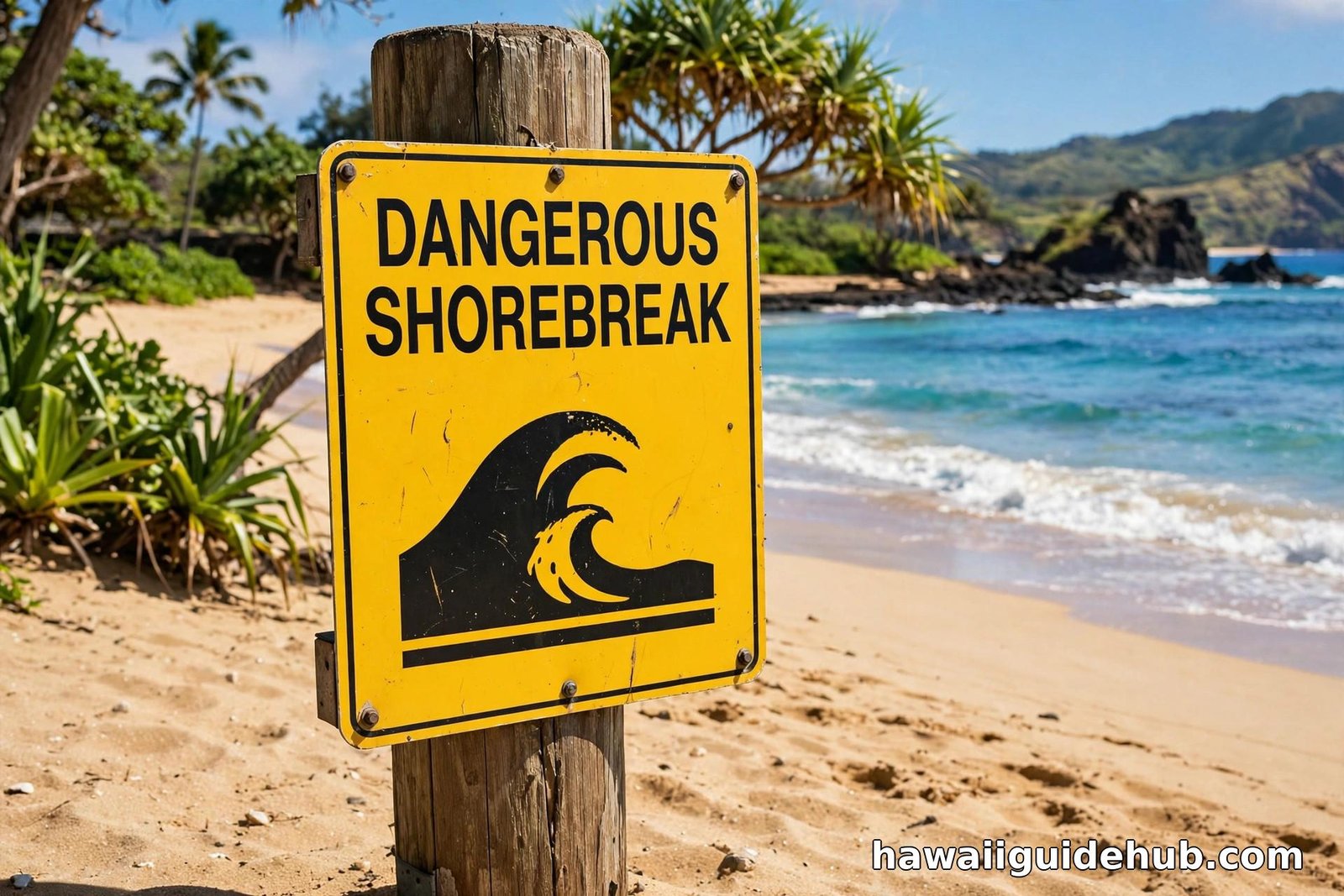
Shorebreak is the violent dumping of waves directly onto shallow sand, and it causes a large share of Hawaii’s serious ocean injuries, including broken necks and backs. Famous shorebreak beaches like Sandy Beach and Makapuu on Oahu look inviting and punish the unwary. The rule is simple: never dive into shorebreak, never bodysurf waves breaking in very shallow water, and keep children well back from the waterline at these beaches. Watch the locals first: if experienced bodysurfers are being careful, you should be more careful.
Seasonal Hazards: Surf, Jellyfish, and Runoff
Winter surf (roughly November through February)
Winter swells transform the north-facing shores of every island. The North Shore of Oahu, the north shore of Maui, and Kauai’s north shore can see waves of 20 to 40 feet. Swimming is often impossible and always dangerous. Even watching from shore demands caution: stay off wet rocks and obey closures. Winter is for watching the surf, not joining it.
Box jellyfish
Box jellyfish arrive on south-facing shores, including Waikiki and Ala Moana, roughly 8 to 12 days after each full moon. Their stings are painful and occasionally dangerous. The Waikiki Aquarium publishes a box jellyfish arrival calendar: check it before swimming on south shores during the arrival window, and heed any posted jellyfish warnings. Vinegar, available at lifeguard towers, is the first-aid treatment for stings.
Portuguese man o’ war
These blue, balloon-like creatures with long stinging tentacles wash onto windward beaches when onshore winds blow. Their sting is intensely painful. If you see them on the sand, do not enter the water: where there are some on the beach, there are more in the water. Do not touch them even when they look deflated.
Brown water and runoff
After heavy rain, streams dump muddy runoff into the ocean, creating brown water advisories. Do not swim in brown water: it carries bacteria and pollutants, and it attracts sharks by reducing visibility. Wait a day or two after major rain before swimming near stream mouths.
Marine Life Encounters: Look, Do Not Touch
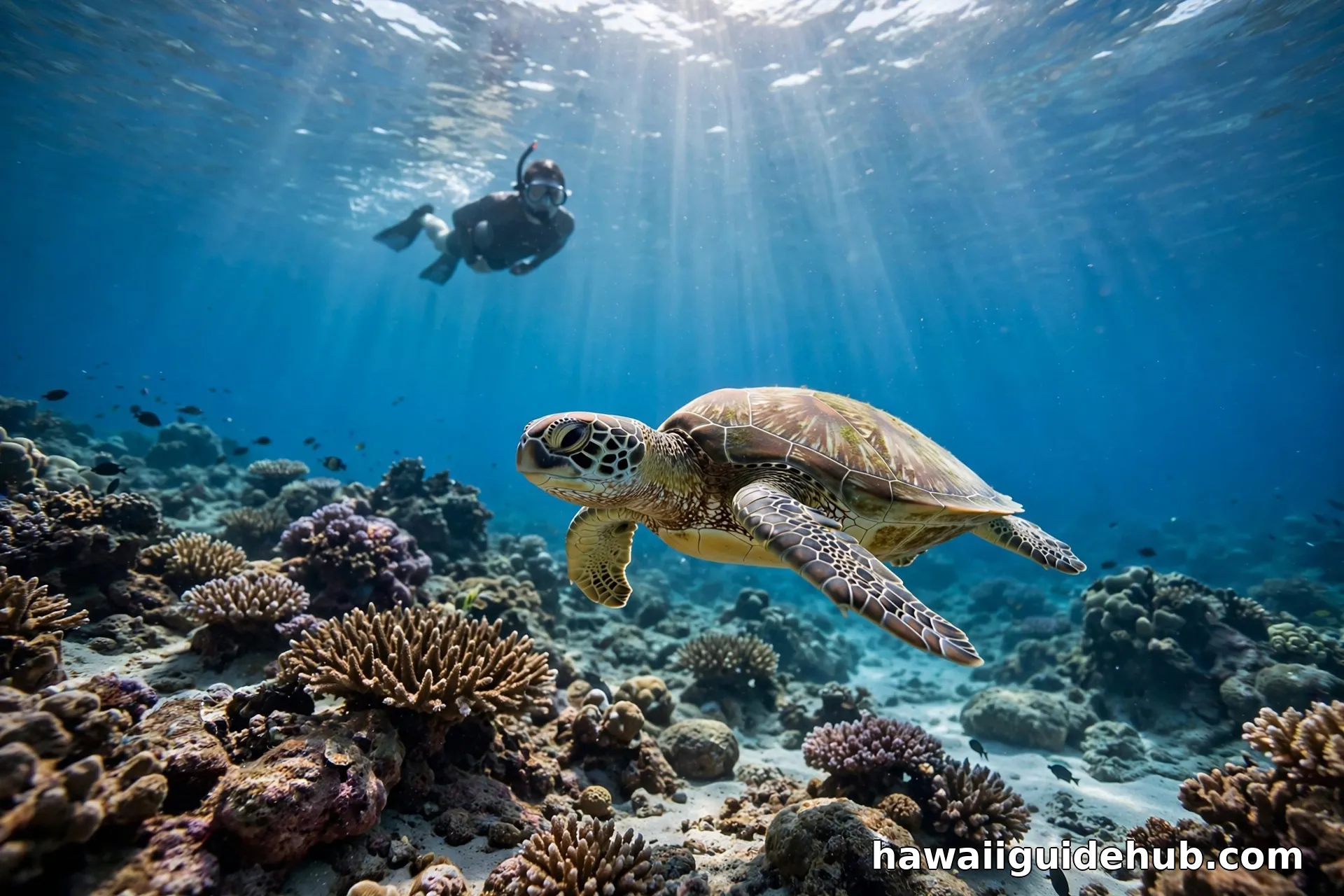
Hawaii’s wildlife encounters are magical, and the rules are simple. Hawaiian green sea turtles are protected by federal law: admire them from a distance and never touch, chase, or feed them. Our guide to sea turtle conservation and snorkeling etiquette explains the details, and our turtle snorkeling guide covers the best responsible viewing spots.
Hawaiian monk seals, among the rarest marine mammals on earth, haul out on beaches to rest. Give them at least 50 feet of space, keep dogs leashed and away, and never get between a mother and pup. For sharks: they live here, attacks are extremely rare, and your risk drops to near zero if you avoid swimming at dawn and dusk, near stream mouths after rain, and in murky water. Do not swim alone in remote areas.
Coral deserves the same respect. Never stand on or touch coral: it is a living animal that breaks easily and takes years to recover. Poor swimmers who grab coral for support destroy in seconds what took decades to grow. If you cannot swim without touching the reef, that spot is beyond your ability.
Snorkeling Safety
Snorkeling looks effortless and kills the complacent. Always snorkel with a buddy and stay close enough to help each other. Use a well-fitting mask: a leaking mask causes panic in beginners. Do not hyperventilate before diving down, and surface long before you feel the urge to breathe hard. Be honest about your swimming ability: many snorkeling deaths involve poor swimmers in water that looked calm. If you are new, take a guided snorkel tour first rather than figuring it out alone at a reef like Sharks Cove.
Waterfalls, Streams, and Flash Floods
Hawaii’s waterfalls are beautiful and genuinely dangerous. Flash floods can arrive with no warning: rain falling miles upstream in the mountains can send a wall of water down a sunny streambed in minutes. Never cross a rising stream, never swim in a stream that is visibly rising or muddy, and always look upstream at the weather, not just overhead. Stay behind guard rails at waterfall lookouts, do not climb on wet rocks near falls, and never dive into pools you cannot see the bottom of: submerged rocks and logs cause paralyzing injuries every year.
What to Do in an Emergency
If someone is in trouble in the water, your first job is not to become a second victim. Throw them something that floats, a cooler, a boogie board, anything, and call 911 immediately. Only enter the water to help if you are a strong swimmer and have flotation. On guarded beaches, alert the lifeguard first: that is what they are there for. Learn the location of the nearest lifeguard tower when you arrive at any beach, before anyone goes in.
For jellyfish stings, rinse with vinegar (not fresh water), remove tentacles with tweezers or a gloved hand, and apply heat. For coral cuts, clean thoroughly: coral wounds infect easily in tropical water. For any sting with breathing difficulty, chest pain, or spreading numbness, call 911.
Check Conditions Every Day
Make this a morning habit. Check the surf forecast, read the beach warning signs on arrival, and ask a lifeguard. The Hawaii Beach Safety website publishes official surf, wind, and safety reports, and the state ocean safety site at oceansafety.hawaii.gov collects videos and guidance. Conditions can change between morning and afternoon, so recheck if the wind picks up or the sky darkens. Winter visitors should also keep an eye on high surf advisories from the National Weather Service, which are issued for specific shores and time windows.
Watch: Official Hawaii Ocean Safety Video
Hawaii Ocean Safety FAQs
Is it safe to swim in Hawaii?
Yes, with basic precautions. Swim at lifeguarded beaches during the day, check conditions, go with a buddy, and respect warnings. Millions of people swim safely in Hawaii every year. The danger comes from treating the ocean casually, not from the ocean itself.
What is the most dangerous part of the ocean in Hawaii?
Rip currents and shorebreak cause the most injuries and deaths, followed by high surf in winter. Marine animals are far down the list. Your safety plan should focus on currents, waves, and conditions, not sharks.
Should I worry about sharks in Hawaii?
Shark incidents in Hawaii are extremely rare. Reduce your already tiny risk by avoiding swimming at dawn and dusk, staying out of murky or brown water, not swimming near stream mouths after rain, and not swimming alone in remote spots. Do not let shark fear keep you out of the water while ignoring the far greater risks of currents and surf.
What should I do if I see a monk seal on the beach?
Stay at least 50 feet away, keep dogs leashed and at a distance, do not feed or touch the seal, and let it rest. Seals haul out to sleep and digest; disturbing them is harmful and illegal. If the seal appears injured or entangled, call the NOAA marine mammal hotline rather than approaching.
Can I snorkel if I am not a strong swimmer?
Only with precautions: wear a flotation vest, go with a guide or a strong-swimmer buddy, stay in calm shallow water, and choose a sheltered spot. Many snorkeling deaths involve weak swimmers who overestimated calm-looking water. A guided tour is the safest way to start.
What does a brown water advisory mean?
It means runoff has made nearshore water murky after heavy rain, and swimming is discouraged due to bacteria and reduced visibility. Wait until the water clears, usually a day or two, before swimming near stream mouths or after major storms.
Respect the Ocean and It Will Reward You
Hawaii’s ocean gives more than it takes: weightless mornings over coral gardens, turtles gliding past in clear water, sunsets that turn the whole Pacific gold. All it asks in return is attention. Check the conditions, swim where the lifeguards are, never turn your back on the water, and when in doubt, do not go out. Do that, and the ocean becomes what it should be: the best part of your trip.