Kamilo Beach: Hawaii’s Remote Plastic Beach

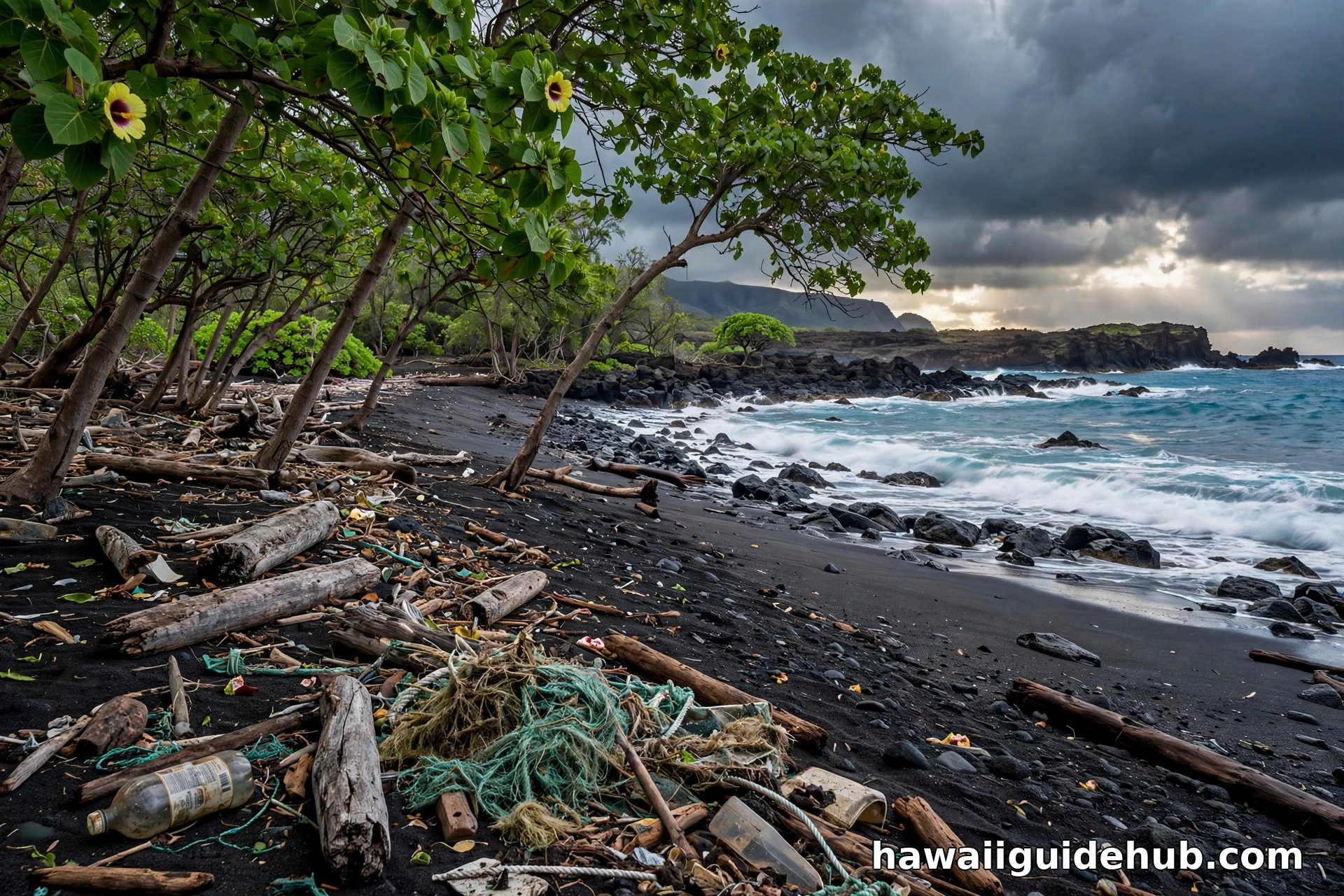
Kamilo Beach sits on the remote southeastern shore of the Big Island, in the Kaʻū district near South Point, and it is unlike any other beach in Hawaii. Ocean currents dump tons of plastic and fishing gear onto its black sand every year, earning it nicknames like Trash Beach and Plastic Beach. It is not a swimming beach and it is not easy to reach, but it is one of the most eye opening places you can visit in the islands.
This is the single complete guide to Kamilo Beach Hawaii. It covers where the beach is, how to get there, why so much debris washes ashore, whether it is safe to visit, what the Hawaii Wildlife Fund cleanups have accomplished, and what to know before you go. If you have been searching for anything about Kamilo Beach, the answers are all here on this one page.
Kamilo Beach at a Glance
| Kamilo Beach: should you make the trek? | The reality | The tradeoff |
|---|---|---|
| Location | Kaʻū district, southeastern Big Island, near South Point | Remote even by Big Island standards |
| Also known as | Trash Beach, Junk Beach, Plastic Beach | The nicknames tell the story |
| Meaning of the name | Kamilo means swirling or twisting in Hawaiian | The currents swirl; so does the plastic |
| Access | High clearance 4WD vehicle required, or a long hike | Getting there is half the expedition |
| Facilities | None, no restrooms, water, or trash cans | Bring everything; leave nothing |
| Lifeguards | None | You are on your own out here |
| Swimming | Not recommended, strong currents and rocky shore | Come to witness, not to swim |
| Best for | Understanding ocean plastic pollution, remote coastal scenery | A sobering, unforgettable visit |
| Cleanups | Hawaii Wildlife Fund organizes regular volunteer cleanups | Join one if your timing lines up |
| Cost | Free to visit | The cheapest eye-opening experience on the island |
Where Kamilo Beach Is
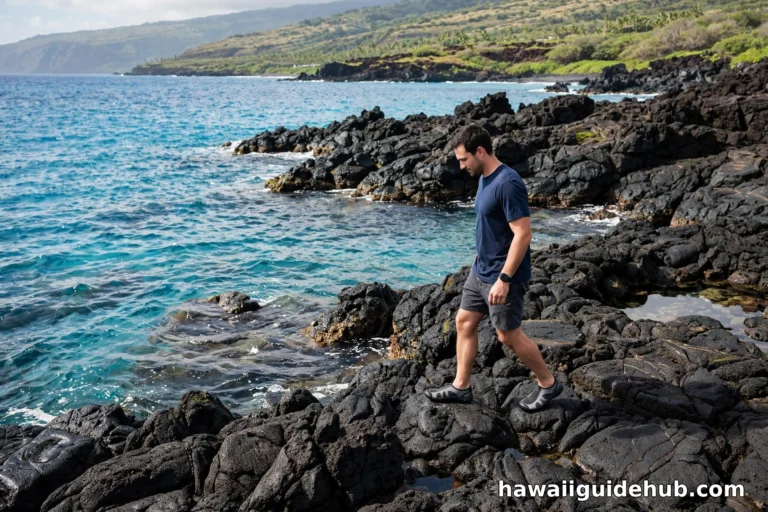
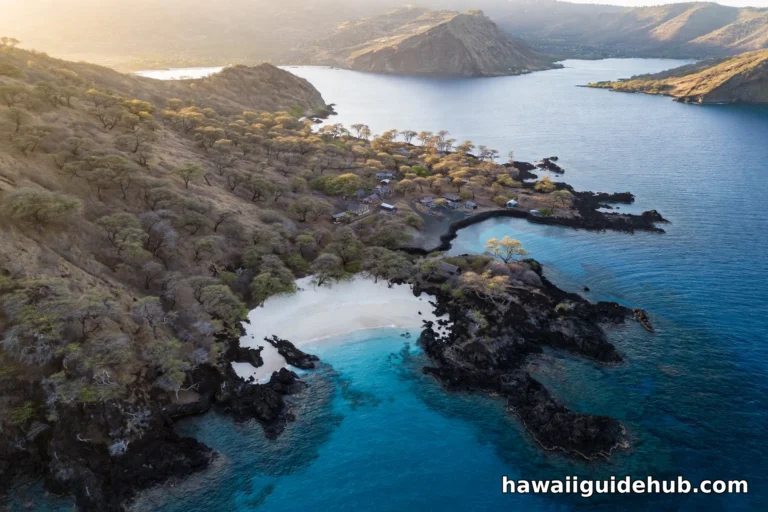
Kamilo Beach lies on the southeastern tip of the island of Hawaii, in the Kaʻū district, within the Kaʻū Forest Reserve in the Waiʻōhinu ahupuaʻa. It sits along a roughly ten mile stretch of wild coastline that runs from Ka Lae, better known as South Point, the southernmost point in the United States, eastward past the famous green sand beach to Kamilo itself. There are no towns, resorts, or services anywhere nearby. The landscape is raw lava rock, dry grassland, and windswept shoreline.
The name Kamilo means swirling or twisting in Hawaiian, a fitting name for a place shaped by currents. Milo trees, which share their name with the beach, grow along parts of the shore and provide the only real shade. This is the far edge of the Big Island, far from the Kona coffee farms to the west and the volcano country to the northeast, and reaching it feels like traveling to the end of the road in every sense.
How to Get to Kamilo Beach
Getting to Kamilo Beach is an adventure in itself, and you should not attempt it in a standard rental car. From Highway 11 in Kaʻū, take South Point Road toward Ka Lae, then turn onto the unpaved Kamilo Road. From there it is a long, slow drive over dirt, dust, and lava rock that takes about an hour each way. You need a high clearance four wheel drive vehicle, good tires, and the willingness to navigate ruts, loose rock, and sections where the track nearly disappears into the lava field.
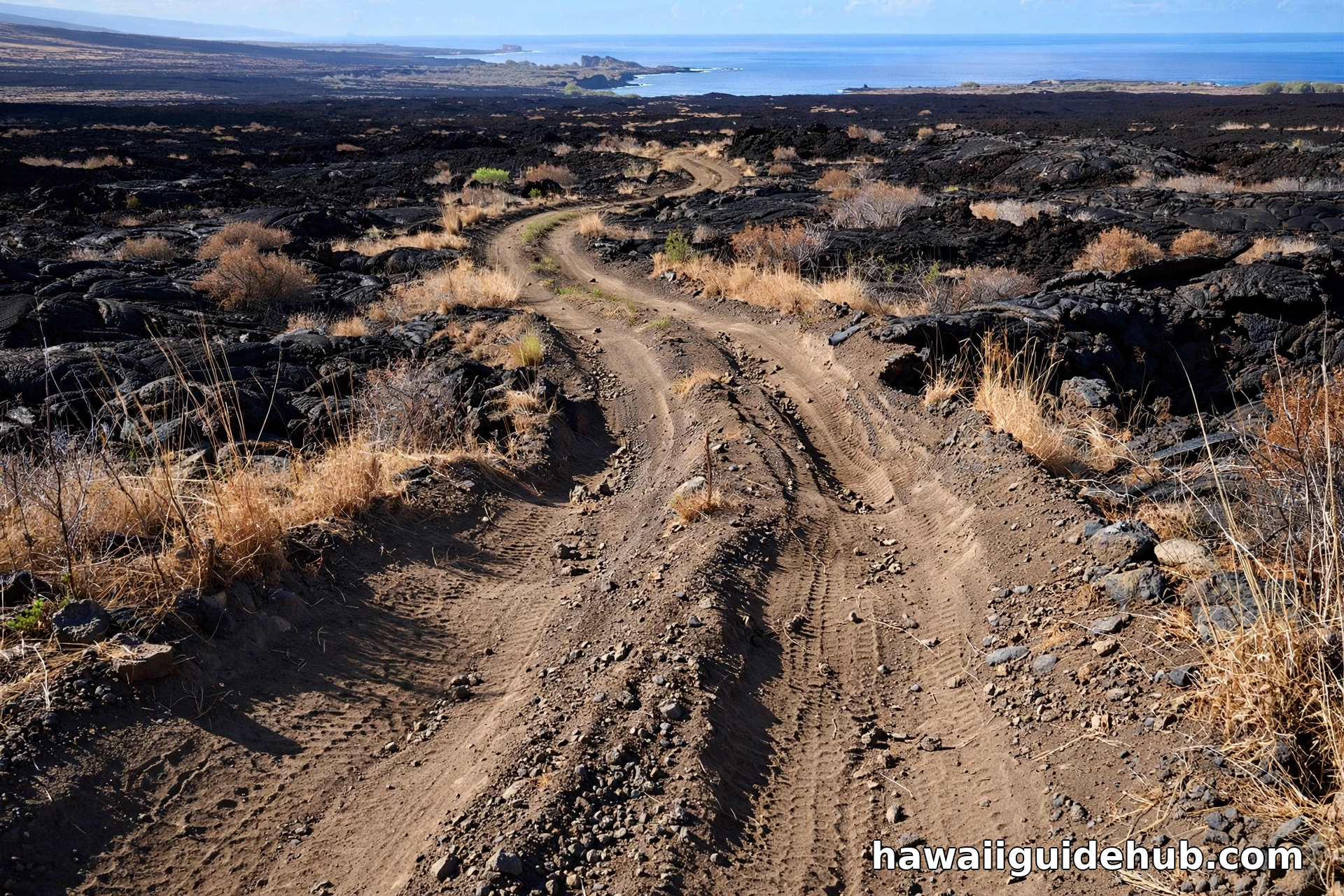
The alternative is hiking in, which is a very long walk through hot, exposed terrain with no water sources, so most visitors who go without a 4WD do not go at all. There is no parking lot, no signage to speak of, and no cell service for much of the route. Tell someone where you are going, carry far more water than you think you need, and fill your fuel tank before leaving Highway 11. This is one of the most genuinely remote beaches in Hawaii, and it demands self sufficiency.
Why Kamilo Is Called Plastic Beach
Hawaii sits just east of the Great Pacific Garbage Patch, the vast swirling system of currents in the North Pacific that concentrates floating debris. Kamilo Beach sits directly in the path of the currents that spin rubbish out of the gyre and onto shore. The result is that plastic from all over the world, bottles, crates, fishing nets, lighters, toothbrushes, even items labeled in Japanese, washes up on this one remote beach day after day. Researchers estimate that about ninety percent of the debris by count is plastic.
This is not litter left by beachgoers. Kamilo is barely visited, and the trash arrives from the ocean itself, some of it decades old. Volunteers have found bottles dating back to the 1950s. The beach has been called one of the dirtiest places in the world, not because Hawaiians are careless, but because the island sits at the center of the currents that gather the planet’s floating waste. A 2019 study found that Hawaiian fish begin eating plastic particles just days after being born, which shows how deeply the problem reaches into the marine food web.
The sight is genuinely shocking the first time you see it. Long stretches of shoreline are littered with plastics of every shape, size, and color, tangled in the lava rocks and piled along the high tide line. Microplastics grind down into the sand itself until the beach is partly made of plastic grains. It is the opposite of the postcard Hawaii most visitors expect, and that contrast is exactly why the beach matters.
The Hawaii Wildlife Fund Cleanups
The Hawaii Wildlife Fund, a nonprofit dedicated to protecting Hawaii’s native wildlife, has been organizing cleanups at Kamilo since 2003. Staff and volunteers make the rugged trip regularly, hauling debris off the beach and the surrounding coastline. The organization has removed more than 400 tons of marine debris from Hawaii’s shores since it began, with Kamilo and the Kaʻū coastline among its most important and most difficult work sites. Some cleanups have drawn 80 or more volunteers, and single day hauls have topped a thousand pounds.
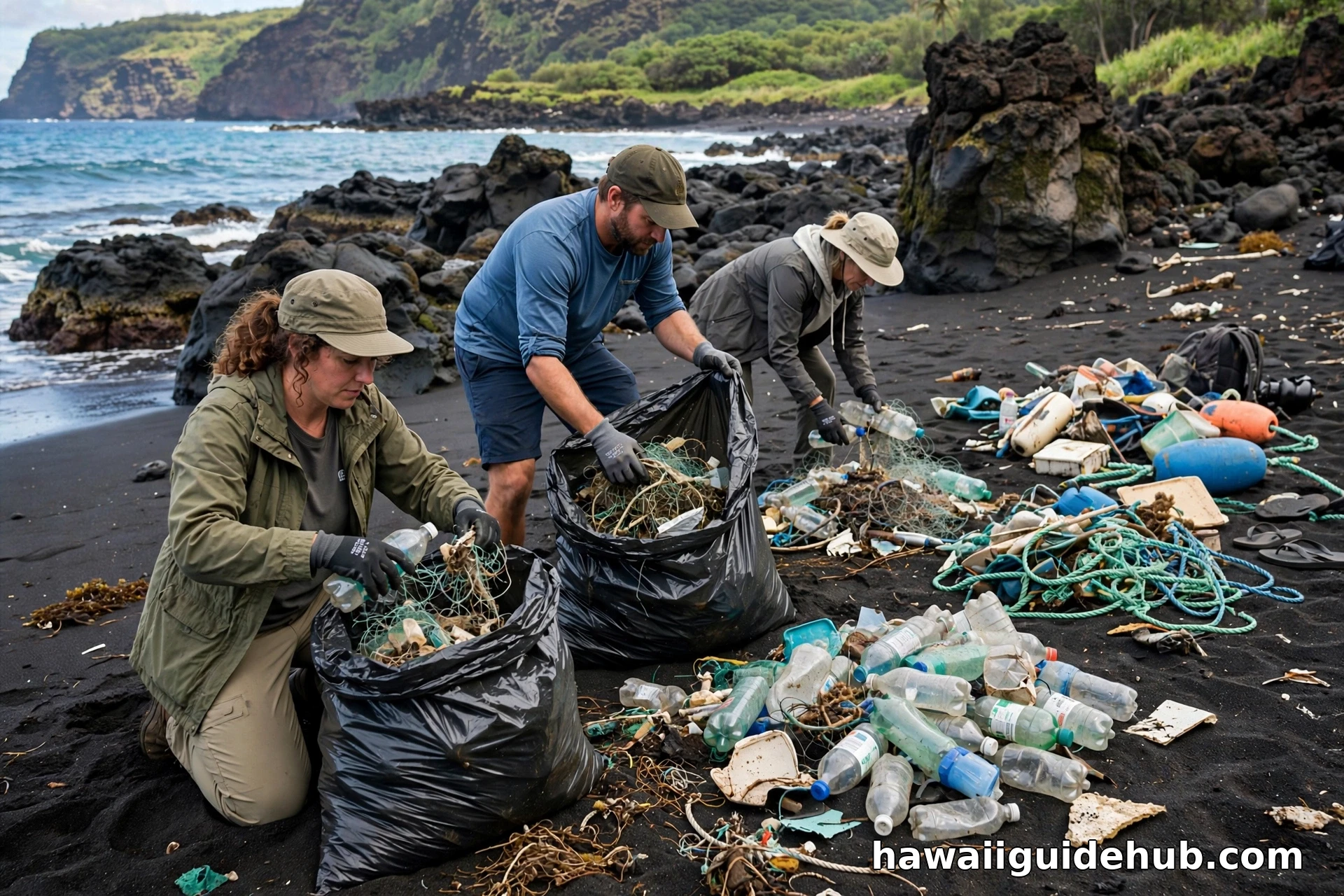
Fishing nets and lines make up a huge share of the haul. Derelict nets are the second most common large item collected in the group’s shoreline surveys at Kamilo Point, after miscellaneous plastic fragments from consumer products. The nets are especially dangerous because they continue to trap marine life long after they are lost, and they are so heavy that crews have needed winches mounted on trucks to drag them off the shore.
If you want to help, the Hawaii Wildlife Fund welcomes volunteers at its scheduled cleanups, which run several times a year. It is hard, hot, dirty work at the end of a punishing drive, and it is also one of the most meaningful things a visitor can do on the Big Island. Check the organization’s website for the current schedule before your trip.
Why the Currents Target This Coastline
The reason Kamilo collects so much debris comes down to ocean physics. The North Pacific gyre is a vast, slow moving whirlpool of currents that rotates clockwise across the ocean between Asia and North America. Floating material that enters the gyre, from fishing gear lost off Alaska to bottles tossed from ships, drifts for years until the currents fling it outward. Hawaii sits just east of the gyre’s center, and the Kaʻū coast faces the swells that carry this material ashore.
The cycle is not constant. Currents shift with the seasons and with longer climate patterns, pushing the heart of the debris field closer to the islands in some years and farther away in others. After the 2011 tsunami in Japan, wreckage from the disaster rode the same currents across the Pacific and washed up on beaches from Hawaii to California, and Kamilo was among the first Hawaiian shores to receive it. Items labeled in Japanese, Korean, and Chinese turn up regularly, alongside debris from the Pacific Northwest and California, each piece a small record of a long ocean journey.
What makes Kamilo especially vulnerable is its shape and exposure. The beach faces the open ocean with no reef to break the incoming swells, so everything the currents carry arrives intact. Rocky points on either side trap debris in the cove, and the same eddies that swirl the water, the swirling the beach is named for, hold floating material against the shore instead of letting it drift past. Other Kaʻū beaches collect debris too, but Kamilo’s geography makes it the collection point.
Can You Swim at Kamilo Beach?
No, Kamilo is not a swimming beach, and you should not treat it like one. The shoreline is rocky, the surf breaks hard against lava rock, and the currents that deliver the plastic are strong and unpredictable. There are no lifeguards, no facilities, and no help nearby if something goes wrong. The same swirling currents that give the beach its name make the water dangerous.
Most people come to Kamilo to witness the marine debris crisis firsthand, to photograph the stark landscape, or to join a cleanup. If you are looking for a swimmable beach in Kaʻū, the famous green sand beach at Papakōlea is nearby and far better suited to a beach day, though it also requires a hike or a ride in and has no lifeguards. For a broader look at planning your time on the island, see our guide to the best things to do on the Big Island of Hawaii.
What to Bring and What to Know
Preparation makes the difference between a memorable visit and a miserable one. Bring at least a gallon of water per person, sun protection, sturdy closed toe shoes for walking on lava and debris, gloves if you plan to pick up trash, and bags to carry out everything you bring in, plus anything you collect. There are no trash cans at Kamilo, so every scrap you remove is a genuine contribution.
Respect the wildlife. Hawaiian monk seals and sea turtles haul out on remote Kaʻū beaches, and federal law requires keeping your distance. Do not stack rocks, carve into trees, or take anything from the beach except trash. The milo trees and native coastal plants are part of a fragile ecosystem. Leave the beach cleaner than you found it and take only photographs.
Timing matters too. The drive is best in dry conditions, since rain turns the dirt track into slick mud. Winter swells bring more debris ashore and rougher seas, while summer is calmer but hotter inland. If you are combining Kamilo with the island’s other wild places, our guide to exploring Hawaii’s hidden gems covers more off the beaten path adventures, and Hawaii Volcanoes National Park makes a natural pairing for a Kaʻū focused itinerary.
Nearby Places Worth Combining
Kamilo is remote enough that you should plan the whole Kaʻū coast as one expedition rather than a quick stop. South Point, or Ka Lae, is the southernmost point in the United States, a windswept cliff where locals have fished for centuries and brave souls leap into the ocean from the rocks. It is reachable by paved road plus a short dirt track, far easier than Kamilo, and the sunset views are spectacular.
Papakōlea, the famous green sand beach, lies a few miles east of South Point and rewards the hike in with sand colored by olivine crystals. Punaluʻu Black Sand Beach, farther east toward Volcano, is the accessible face of Kaʻū’s black sand coast, with restrooms, a parking lot, and frequent Hawaiian green sea turtles basking on the sand. Stringing these together, South Point, the green sand beach, Kamilo, and Punaluʻu, makes for one of the great Big Island road days for travelers who like their Hawaii wild. Start with our overview of the best things to do on the Big Island of Hawaii to fit them into a wider itinerary.
Video: The Trash on Kamilo Beach
See what the currents deliver to Kamilo Point and why volunteers keep returning to clean it up.
Frequently Asked Questions
Where is Kamilo Beach?
Kamilo Beach is on the southeastern coast of the Big Island of Hawaii, in the Kaʻū district near South Point, within the Kaʻū Forest Reserve. It is accessible only by high clearance 4WD vehicle or a long hike.
Why is Kamilo Beach full of trash?
Ocean currents from the North Pacific gyre carry floating plastic and fishing gear from all over the world and deposit it on Kamilo’s shore. About ninety percent of the debris is plastic, and it arrives from the ocean, not from beach visitors.
Can you swim at Kamilo Beach?
Swimming is not recommended. The shore is rocky, the surf is rough, currents are strong, and there are no lifeguards or facilities anywhere nearby.
Do you need a 4WD to get to Kamilo Beach?
Yes, for all practical purposes. The access road is a long, rough track over dirt and lava rock that requires high clearance and four wheel drive. Standard rental cars cannot make the trip.
Who cleans up Kamilo Beach?
The Hawaii Wildlife Fund has organized volunteer cleanups at Kamilo since 2003, removing more than 400 tons of marine debris from Hawaii’s coastlines. Cleanups run several times a year and welcome volunteers.
Is Kamilo Beach worth visiting?
If you want to understand the ocean plastic crisis with your own eyes, yes. It is not a beach for sunbathing or swimming, but it is one of the most powerful and memorable places on the Big Island for anyone who cares about the ocean.
Kamilo Beach will not give you the Hawaii of the postcards, and that is precisely its value. Standing on its black sand among debris from a dozen countries, you understand in a single afternoon what charts and statistics can never quite convey: the ocean connects everything, and what we throw away does not go away. Go prepared, go respectfully, and consider leaving it cleaner than you found it.