Understanding the Hawaiian Green Sea Turtle: Conservation Efforts and Snorkeling Etiquette

The green sea turtle, or honu, is a beautiful sight as it glides through the turquoise waters of Hawaii. Both locals and tourists love to see them. One of the best things about going to the islands is seeing one of these gentle giants. But with this amazing experience comes a lot of responsibility. It is important to know how to treat the honu with respect, what its biology is, and what its conservation status is in order to keep it alive.
This guide explains Hawaiian green sea turtle conservation and practical viewing etiquette. It distinguishes the recommended viewing distance from the legal prohibition on harassment, explains why basking turtles should be left alone, and sets out what to do if an animal appears injured.
Learning about the Hawaiian Green Sea Turtle
Honu is the Hawaiian name for the green sea turtle. Hawaii’s turtles are part of the Central North Pacific population, which has its own conservation status under the Endangered Species Act. Protecting both coastal feeding areas and nesting beaches matters throughout their long lives.
How do Hawaiian green sea turtles look?
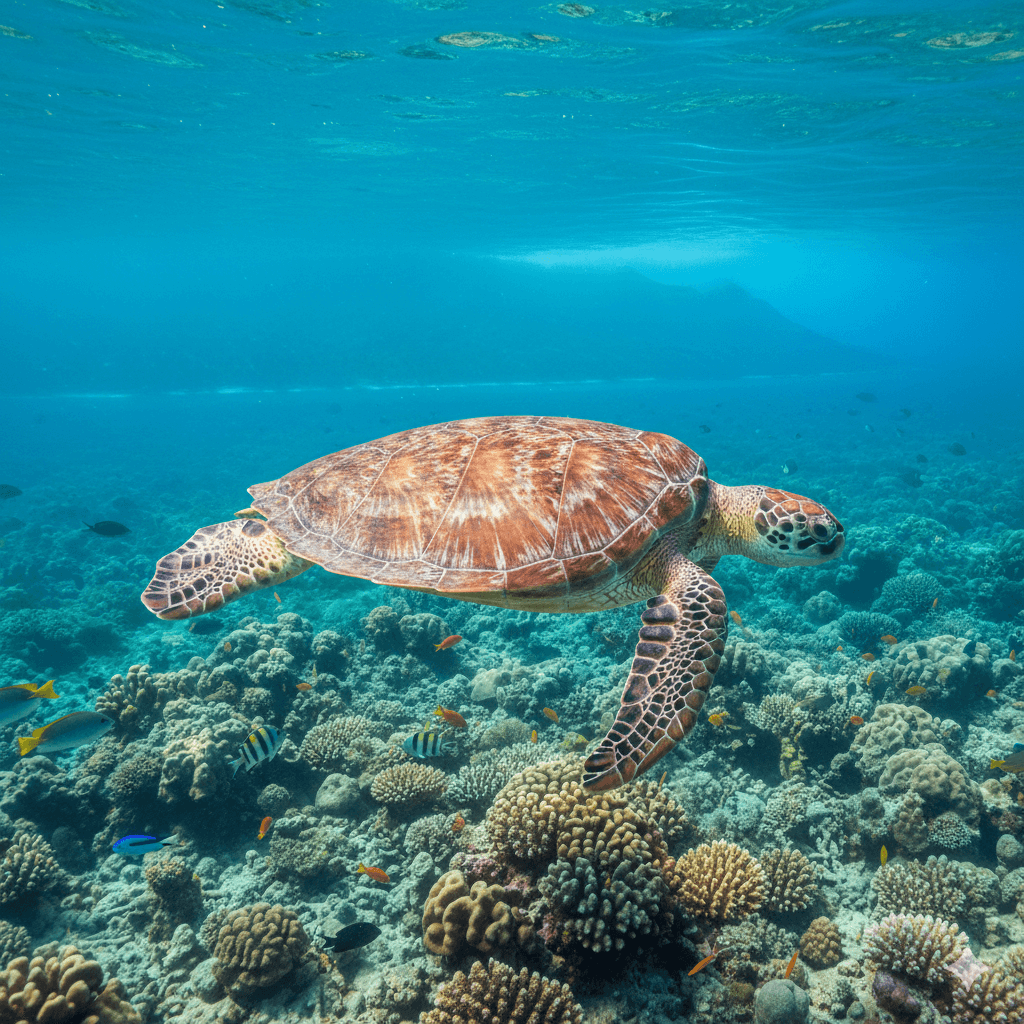
The name “green turtle” refers to the color of the fat, not the shell. Shells can show brown, olive and other shades. Adult green turtles feed mainly on algae and seagrasses; coral itself is not their principal food.
According to NOAA’s green turtle profile, adults generally measure 3 to 4 feet and weigh 250 to 400 pounds. Size alone should not be used to identify a turtle’s age.
How long do Hawaiian green sea turtles live?
Their exact maximum lifespan is uncertain, but green turtles may live 70 years or more. NOAA gives a typical female maturity range of 25 to 35 years. Adults can migrate between feeding and nesting areas, so a turtle seen repeatedly at one reef is still part of a much wider habitat network.
Where in Hawaii can you find honu?
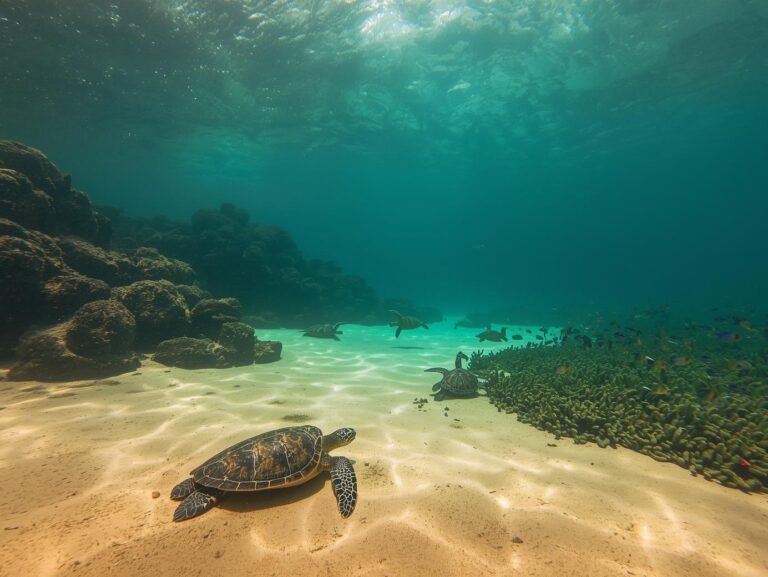
Green sea turtles can be seen all over the Hawaiian Islands. They are often seen foraging in shallow coastal waters, resting on sandy beaches, or cruising over coral reefs.
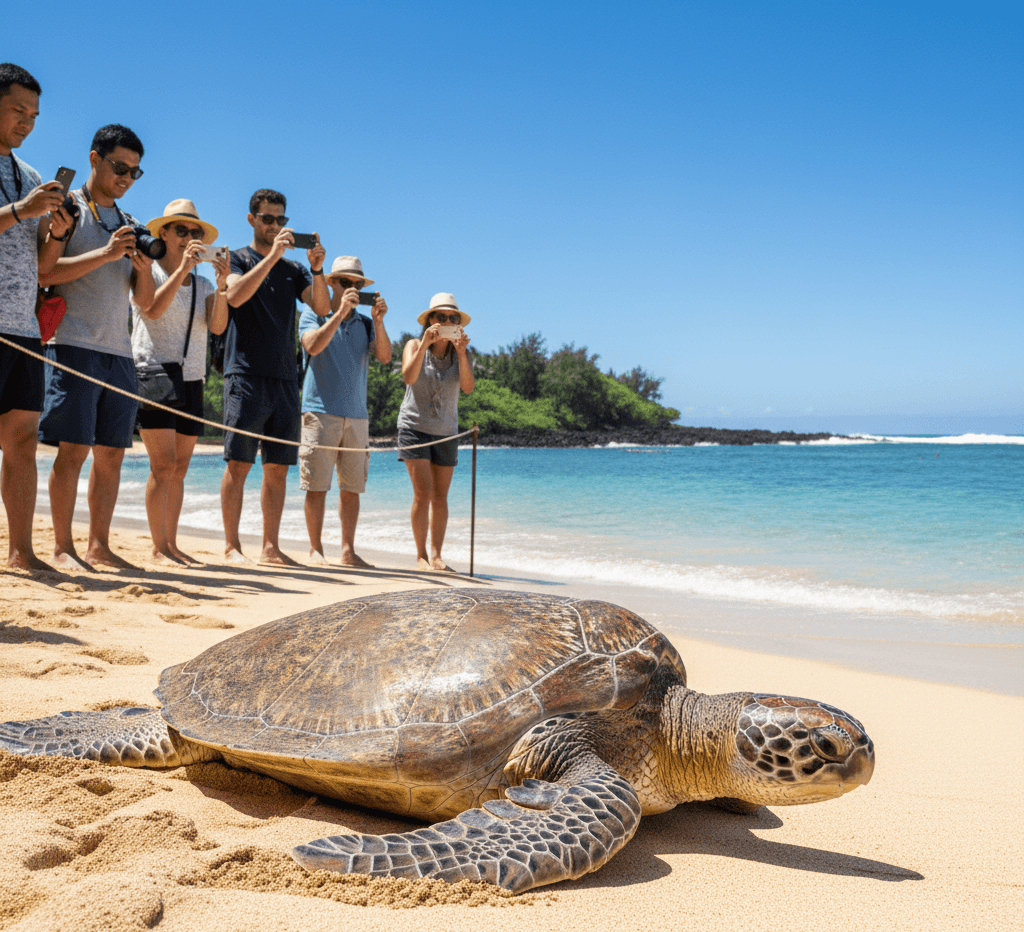
- Basking: Some green turtles rest on Hawaiian beaches. A turtle lying still on the sand is not necessarily stranded; do not push it into the sea.
- Protect the habitat: Keep clear of resting areas and leave an unobstructed route between the turtle and the ocean.
What is the best time of year to see sea turtles in Hawaii?
Green turtles can be encountered in Hawaii throughout the year. Weather affects whether it is suitable to enter the water; it does not create a guaranteed turtle-viewing season. Use our Oahu snorkeling conditions guide for coastal and seasonal planning.
Are there other kinds of sea turtles that live in Hawaii?
The green sea turtle is the most common type of turtle in Hawaii’s waters, but there are other types as well, though they are not seen as often. These are:
- Honuʻea, the hawksbill turtle: A less frequently encountered species with an endangered federal listing and a distinctly pointed beak.
- The Leatherback Sea Turtle: The largest sea turtle species, easily identified by its leathery, ridged shell.
- Olive Ridley Sea Turtle: One of the smallest sea turtles, it is not often seen in shallow waters.
- Loggerhead Sea Turtle: This species is named for its big head and doesn’t come around very often.
Status of Conservation: A Story of Recovery
Harvesting turtles and eggs contributed to historical population declines. Hawaiian green turtles received federal protection as threatened in 1978. Describing them as endangered in 1978 and then downgraded to threatened in 2016 would misstate that history.
Are Hawaiian green sea turtles still at risk of extinction?
The 2016 federal listing divided green turtles into distinct population segments. Hawaii’s Central North Pacific segment remains threatened. Nesting numbers have increased over the longer term, but recovery does not remove protection or eliminate ongoing threats.
This is a success story for conservation, but it doesn’t mean the turtles are completely safe. Even though they are “threatened,” the law still fully protects them. This is because they are still in danger from human activities and changes in the environment.
Respect the Honu: Rules for Snorkeling and Viewing
Observing an honu in its natural habitat is an unforgettable privilege. Following strict rules is very important to make sure that these meetings are safe for you and the turtles. Keep in mind that these animals are wild and protected by law.
Keep Your Distance
NOAA recommends at least 10 feet (3 meters) of viewing distance on land and in water. This is viewing guidance, not a promise that every interaction beyond 10 feet is harmless or lawful. Give more room if your presence changes the turtle’s behavior, and respect barriers and staff directions.
What Are The Penalties For Touching A Sea Turtle In Hawaii?
Do not touch, chase, feed, restrain or harass a turtle. Federal and state protections can carry penalties, but there is no single automatic fine that applies to every incident. The practical rule is to observe without interfering with feeding, resting, nesting or movement.
- Keep hands off: Do not attempt to move a turtle or inspect an apparent injury yourself.
- Touching or chasing can cause stress, leading the turtle to flee its resting or feeding area, wasting precious energy.
- Interference interrupts natural behavior: Do not block an animal as it feeds, rests or surfaces to breathe.
Snorkeling with Turtles: What You Should Know
- Never get in their way when they are going to the surface. Turtles are air-breathing reptiles and need to come up for air. Always be aware of your position and make sure you are not above them.
- Observe without approaching: Maintain space rather than swimming toward the animal from any direction.
- Do not chase them. Let the turtle control the encounter. If it swims away, let it go.
- Avoid making loud noises or sudden movements that could startle the animal.
- Reduce your impact: Wear sun-protective clothing, follow local sunscreen requirements and keep fins away from the reef. A “reef-safe” label does not guarantee that a product is harmless.
Guidelines for Watching Turtles on the Beach
- Maintain at least the recommended 10-foot distance. Use your camera’s zoom and allow more space when needed.
- Stay quiet. Basking turtles are resting. Loud noises can disturb them and force them back into the water, wasting energy they need for foraging and breeding.
- Do not use flash photography, especially at night, as it can disorient them.
- Keep pets on a leash and far away from resting turtles.
Plan a Respectful Visit
The Hawaiian green sea turtle is a symbol of resilience and a cherished part of Hawaii’s natural and cultural heritage. By treating them with respect and following these simple guidelines, you can ensure that these ancient mariners continue to thrive for future generations to enjoy.
For location planning, use our Oahu snorkeling locations guide. If you prefer staying on land, read about watching turtles from shore on Oahu. Neither option guarantees a sighting.
If a Turtle Appears Injured or Entangled
Keep people and pets back and contact the NOAA Marine Wildlife Hotline at 888-256-9840. Note the location and describe what you see. Do not pull fishing line, remove hooks, move the animal or attempt a rescue unless an authorized responder directs you. A turtle resting on a beach may be behaving normally; give it space while seeking advice.