Hawaii Beach Parking Rules: Where to Park and How to Avoid Tickets

Parking in Hawaii looks easy until it is not. One minute you are cruising toward a perfect beach, the next you are circling a full lot, squinting at a tow-away sign, or discovering that the residential street you parked on has no mercy for blocked driveways. Beach parking rules in Hawaii are a mix of common sense, county ordinances, and local etiquette, and visitors who learn them save money, avoid tickets, and keep their rental cars intact.
This is the single complete guide to Hawaii beach parking rules. It covers where to park at beaches on every island, fees and time limits, what gets you ticketed or towed, how to prevent break-ins, overnight rules, and FAQs. Everything about parking at Hawaii’s beaches lives on this one page.
Hawaii Beach Parking at a Glance
| The rule | What it means for you |
|---|---|
| Golden rule | Park only in marked stalls; read every sign before you walk away |
| Biggest risk | Break-ins: never leave anything visible in the car |
| Ticket triggers | Blocking driveways, parking on grass or vegetation, expired meters, tow-away zones |
| Waikīkī hotels | Overnight parking typically $35 to $60 per night; budget it in |
| Beach park hours | Most county beach parks close at night; no overnight parking without a camping permit |
| The Lanikai rule | No beach lot: use Kailua Beach Park and walk, never block driveways |
| State parks | A few charge day-use parking fees; most are free |
| Meters | Common in Honolulu; bring a card or the parking app, coins as backup |
Where to Park at Hawaii Beaches
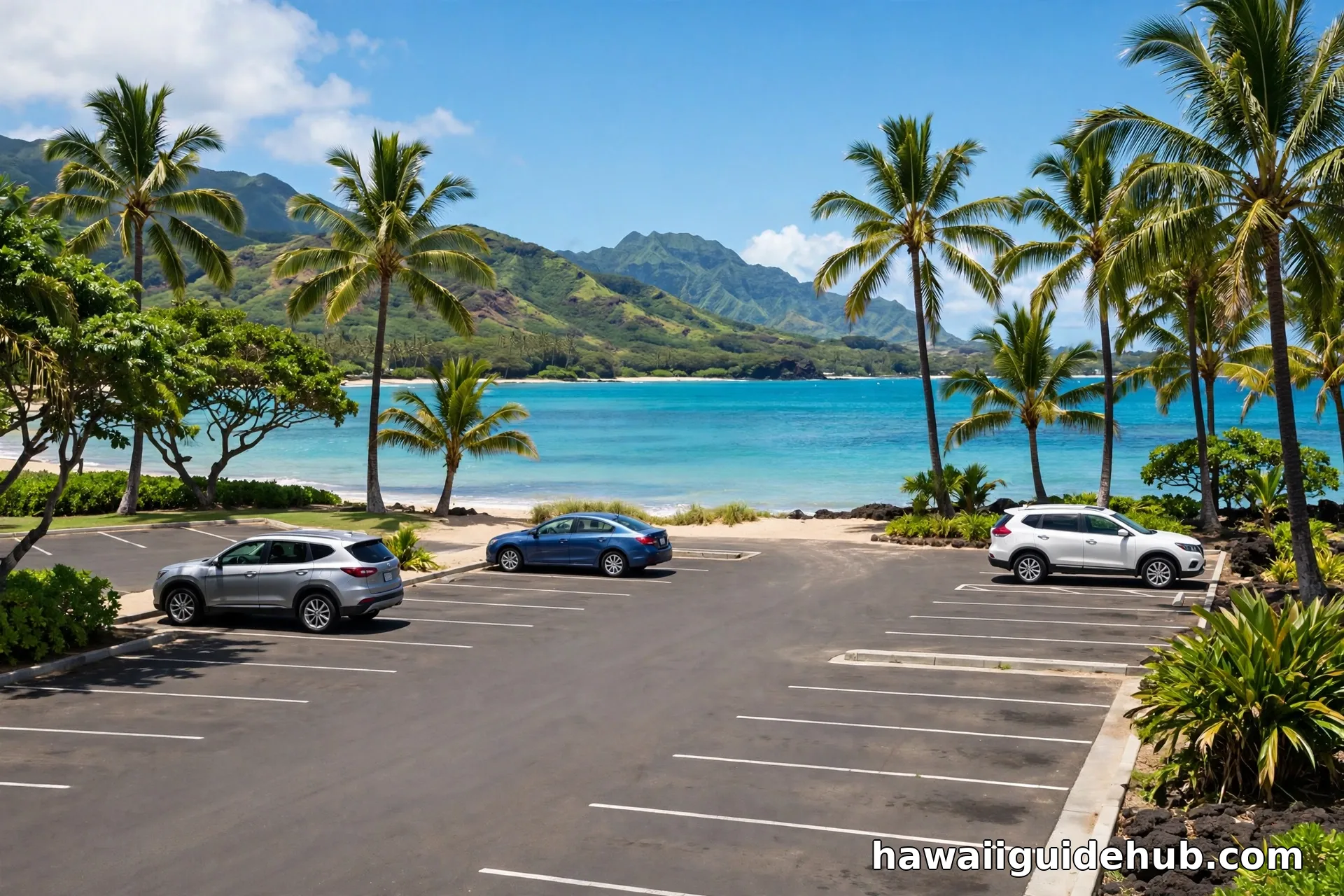
Most popular beaches have dedicated lots, and the dedicated lot is always your first choice. County beach parks across the islands provide free parking in marked stalls, usually with restrooms and showers nearby. Arrive before 10 a.m. at famous beaches and you will park easily; arrive at noon on a Saturday and you will circle. This is the single biggest variable in Hawaii beach parking: timing beats strategy every time.
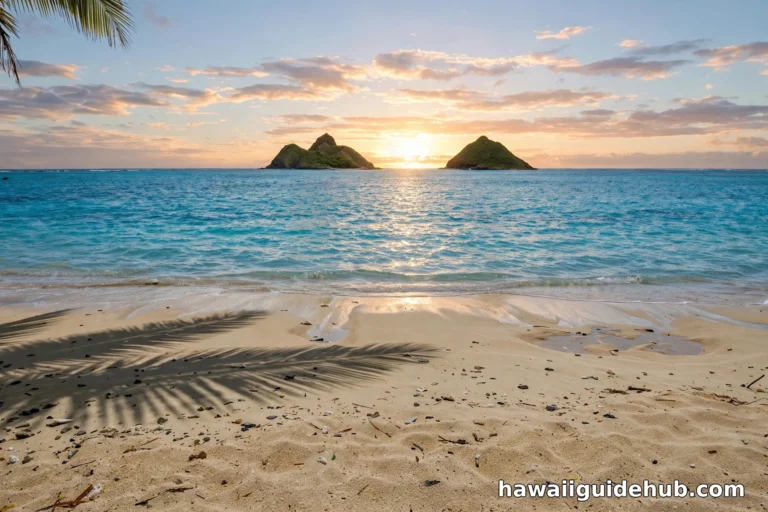
Some beloved beaches have no lot at all. Lanikai Beach on Oahu is the famous example: it sits in a residential neighborhood with no beach parking lot, and visitors are expected to park at nearby Kailua Beach Park and walk over. Parking on Lanikai’s narrow streets means never blocking driveways, mailboxes, fire hydrants, or the road itself. Residents will call a tow truck, and they are right to. When a beach has no lot, treat the surrounding neighborhood with extra care.
In towns, use public lots and garages rather than improvising. Haleiwa on Oahu’s North Shore, Paia on Maui, and Hanalei on Kauai all have public parking areas that fill and empty through the day. For North Shore beach hopping, our guide to what to do on the North Shore notes the best lots for each stop.
Fees, Meters, and Time Limits
Most county beach park lots are free, but exceptions exist everywhere. A few state parks charge day-use parking fees. Metered street parking is common in Honolulu, including around Ala Moana Beach Park and parts of Waikiki. Meters typically accept cards and mobile payment, but keeping coins as backup is wise. Time limits are enforced: an expired meter in Waikiki is one of the fastest ways to meet a parking officer.
Waikiki deserves its own warning. Street parking is scarce, competitive, and time-limited, and hotel overnight parking commonly runs $35 to $60 per night. If your trip is Waikiki-based with only a few exploring days, renting the car just for those days, rather than the whole stay, saves the nightly parking fee entirely. Budget travelers sometimes hunt for free street parking near Kapiolani Park, but spots are few and the walk is real.
What Gets You Ticketed or Towed
Hawaii’s parking enforcement is straightforward and unsentimental. These are the violations that actually get visitors:
| Blocking driveways or access | The number one tow trigger in beach neighborhoods. Even partial blockage counts. |
| Parking on grass or vegetation | Illegal in parks and along roadsides; damages native plants and earns tickets. |
| Tow-away zones | Clearly signed, especially near constricted coastal roads. Hawaii law requires proper signage, so read it. |
| Expired meters and time limits | Enforced aggressively in Honolulu and resort areas. |
| Fire hydrants and crosswalks | Standard no-parking zones, enforced everywhere. |
| Beach park after hours | Most county beach parks close at night; cars left overnight can be ticketed or towed. |
| Private property | Driveways, private lots, and clearly posted private land. Unauthorized cars can be towed immediately. |
The practical defense is boring: before leaving the car, walk around it, read every nearby sign, take a photo of the signs and your parking spot, and make sure you are fully inside a marked stall. That thirty-second routine prevents nearly every ticket.
Preventing Break-Ins: The Real Parking Skill
Tickets cost money; break-ins ruin days. Rental car break-ins are the most common crime affecting visitors in Hawaii, and trailheads and beach lots are the prime hunting grounds. Thieves watch for tourists stashing bags in trunks after parking. The defense is absolute: leave nothing visible in the car. Nothing. Not a charging cable, not an empty shopping bag, not a towel that suggests luggage in the trunk.
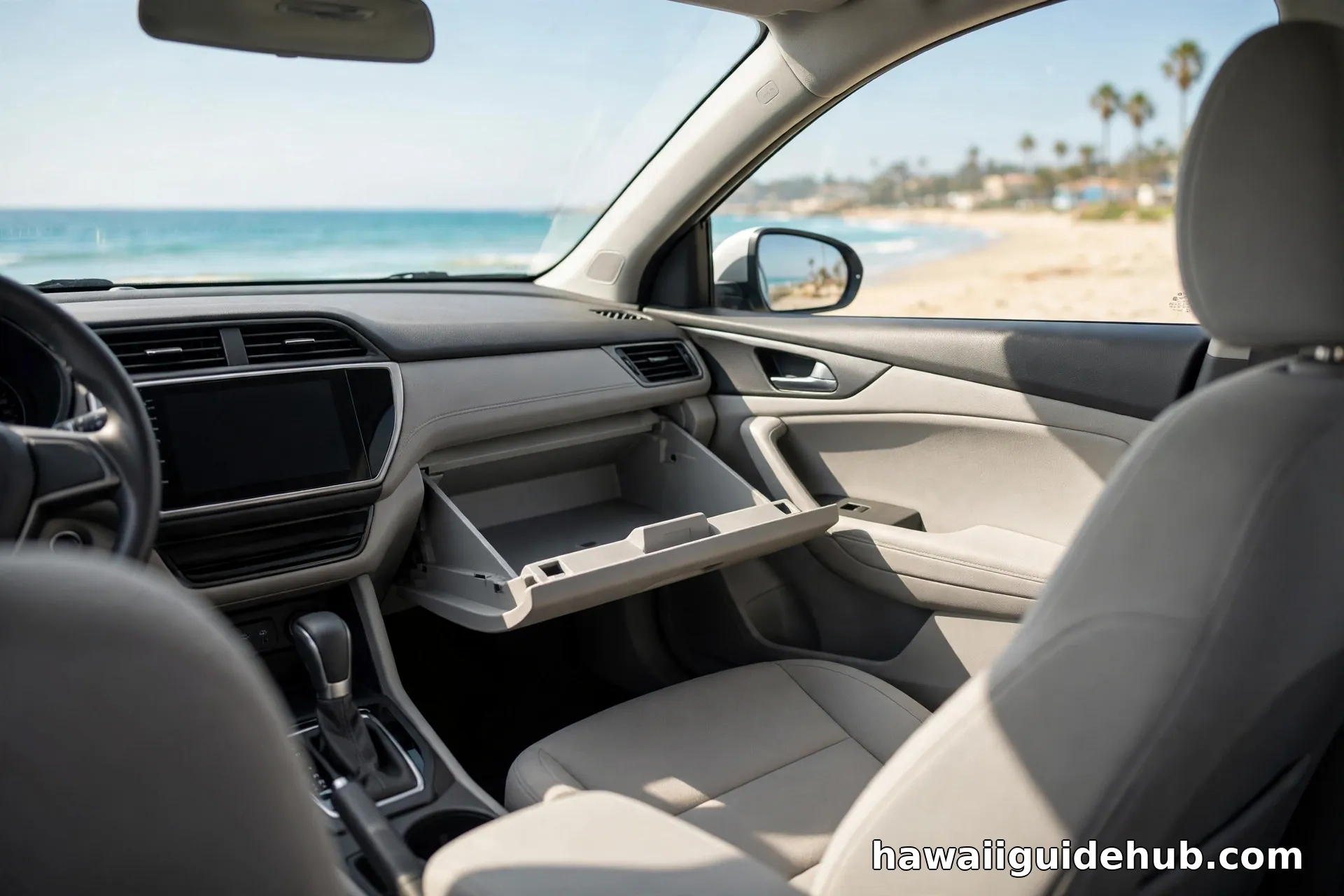
Put everything in the trunk before you arrive at the beach, not after you park. Take valuables, documents, and electronics with you in a waterproof bag if you must bring them. Leave the glove box open and empty to signal there is nothing to steal. And choose busy, visible lots over isolated roadside pullouts when you have the choice. A car that looks empty in a busy lot is the safest car on the island.
Overnight Parking and Camping Rules
Sleeping in your car at a beach park is not a loophole; it is generally prohibited. County beach parks close at night, typically around 10 p.m. to 5 a.m. depending on the county, and overnight parking without authorization can get you ticketed or towed. Legal beach camping requires a county camping permit, booked in advance for designated campgrounds, and even then the rules on vehicles, quiet hours, and length of stay are strict.
If you are road-tripping and need a place to sleep, book campgrounds or budget lodging ahead. The islands are small and enforcement is consistent. Do not plan to wing it.
Island-by-Island Parking Notes
Oahu
Oahu has the most complex parking. Waikiki is expensive and scarce; use hotel parking or rent by the day. Lanikai means Kailua Beach Park. The North Shore’s beach lots are small and fill by mid-morning in winter; arrive early or park at Haleiwa and work the coast. Diamond Head and Hanauma Bay have paid lots tied to their reservation systems.
Maui
Maui’s beach lots are generally free and adequate, but the famous ones fill: Big Beach at Makena, Ho’okipa, and the Kaanapali beach access points. On the Road to Hana, park only in designated pullouts, never on the road’s narrow bridges or shoulders. Our guide to Charley Young Beach in Kihei covers a south Maui spot with easy parking.
Kauai
Kauai’s beach parks are free and mellow, but the north shore’s limited road means Haena-area parking is now reservation-managed: do not attempt to improvise near the end of the highway. Poipu’s lots handle crowds well. See our guides to Kauai’s best swimming beaches and Hanalei Beach for lot specifics.
Big Island
The Big Island’s vast distances mean parking is rarely the problem; heat and theft are. Hapuna Beach State Recreation Area charges a parking fee. At remote beaches, park in visible areas and apply the break-in rules strictly. Never leave the car at an isolated trailhead with visible gear.
Reading Hawaii’s Parking Signs
Hawaii’s parking signs use the same national symbols as the mainland, but a few local wrinkles catch visitors. Tow-away zone signs are the ones to fear: they mean exactly that, and tow trucks patrol the constricted coastal roads where illegal parking blocks traffic. Street-cleaning signs with day and time windows are common in Honolulu neighborhoods; a car parked legally on Tuesday can be ticketed on Wednesday morning. Loading zones, bus stops, and fire lanes are enforced with particular enthusiasm near beaches and resorts.
At beach parks, look for the small print on entrance signs. Many list the park’s closing time, and some note specific rules like no commercial vehicles, no trailers, or day-use-only stalls near the sand. State park entrance stations sometimes post the day’s parking fee on a board; if the booth is unstaffed, an iron ranger box or QR code handles payment. When signs are ambiguous, the conservative choice is always correct: a longer walk beats a ticket.
Parking Apps, Payments, and Practical Tricks
Honolulu’s metered parking increasingly runs through mobile payment, so downloading the city’s parking app before your trip saves fumbling at the meter. Keep a credit card handy rather than relying on coins, though a few dollars in quarters remains the best backup in beach towns where meters are older. Screenshot or photograph your stall number and the meter’s time limit: Waikiki’s time limits are short, and the walk back to feed a meter from the beach eats swimming time.
A few veteran tricks round out the picture. At popular beaches, the lot often empties in waves as morning visitors leave for lunch around 11:30; timing your arrival for that window can beat the early birds. When a lot is full, resist the urge to create a spot on the grass verge or the shoulder: that is precisely the ticket the rangers write most. And if you are visiting multiple beaches in one day, consolidate valuables into one bag you carry, so the car stays empty-looking at every stop.
Watch: Rental Cars and Parking Costs in Hawaii
Hawaii Beach Parking FAQs
Is beach parking free in Hawaii?
Mostly yes. County beach park lots are generally free. Exceptions include some state parks with day-use parking fees, metered street parking in Honolulu, and Waikiki hotel overnight parking, which is expensive. Always check the signs at the lot entrance.
Can I park overnight at a Hawaii beach?
Generally no. County beach parks close at night, and overnight parking without a camping permit can lead to tickets or towing. Legal beach camping requires an advance county permit for designated campgrounds.
How do I avoid rental car break-ins at beaches?
Leave absolutely nothing visible in the car, load the trunk before arriving, leave the glove box open and empty, and park in busy visible lots. Take valuables with you in a waterproof bag. Break-ins target cars that look like they hold luggage.
Where do I park for Lanikai Beach?
Park at Kailua Beach Park, which has a proper lot, restrooms, and rentals, then walk to Lanikai. Do not improvise parking on Lanikai’s residential streets in ways that block driveways, hydrants, or the road: towing is swift and unsympathetic.
What happens if I get towed in Hawaii?
You will pay a towing fee plus daily storage to retrieve the car, and the process eats half a vacation day. With a rental car, you must also notify the rental company. Prevention, reading signs and parking only in marked stalls, is far cheaper than the cure.
Do I need coins for parking meters in Hawaii?
Most Honolulu meters now accept cards and mobile payment, but carrying coins as backup is still smart. Meter enforcement is consistent, and an expired meter is one of the most common visitor tickets.
Park Smart, Beach Happy
Hawaii beach parking is not complicated once you know the pattern: arrive early, use the designated lot, read the signs, pay the meter, hide everything, and respect the neighborhoods around lot-less beaches. Do those six things and parking becomes invisible, which is exactly what it should be. The beach is the point. The parking is just how you get there without a ticket, a tow, or a smashed window. Plan it once, then forget about it and enjoy the sand.