Shark’s Cove, Oahu: Snorkeling Conditions, Tide Pools and Safety

Shark’s Cove is a rocky snorkeling area within the Pūpūkea Marine Life Conservation District on Oahu’s North Shore. Conditions determine whether a visit is appropriate. There are no lifeguards at Shark’s Cove, and winter waves and currents can make both the cove and nearby tide pools extremely dangerous.
This guide covers the cove’s setting, seasonal conditions, marine life and conservation rules. It is not a beginner swimming pool or a place to explore underwater caves without specialist training. A lifeguarded beach suited to current conditions is a better choice for visitors who are uncertain about their abilities.
Before deciding on a water activity, review our Oahu snorkeling seasons and swell guide and the day’s surf forecast.
The History and Geology of the Cove
The DLNR Pūpūkea district page identifies the protected area, established in 1983, and explains its boundaries, facilities and rules. The district includes Shark’s Cove, Three Tables and Waimea Bay, but their conditions and lifeguard coverage differ.
The rocky underwater terrain includes ledges, caves and other formations. These features create habitat, but they also complicate entry, exit and navigation. Stay out of overhead spaces and do not use a sightseeing guide as instruction for cave diving.
According to DLNR, the origin of the name is uncertain, and sharks are no more common here than elsewhere around Oahu. Avoid treating an unverified story about the reef’s outline as the established origin. Give all wildlife space rather than seeking close encounters.
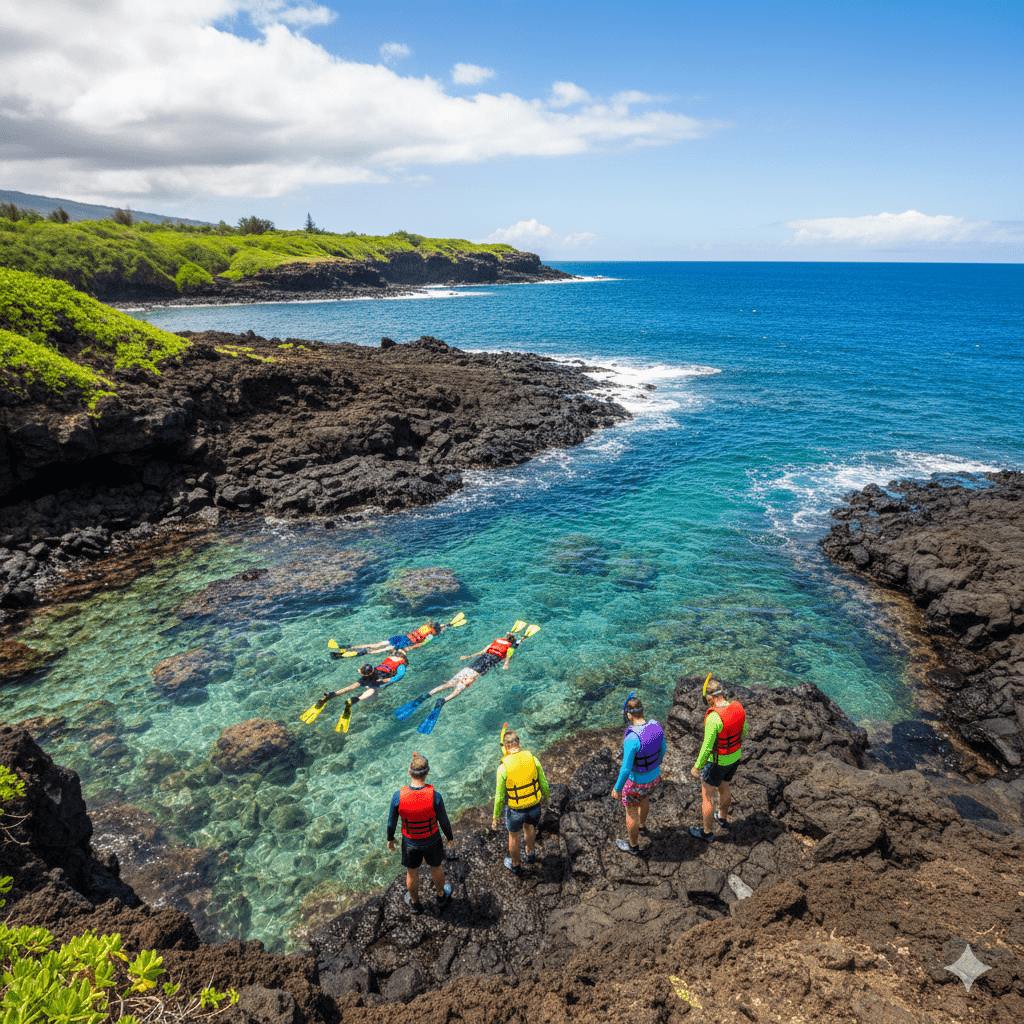
Going on an adventure: Snorkeling at Shark’s Cove
Marine life and visibility vary with conditions. DLNR notes that visibility can be poor inside the cove; do not plan around claims of guaranteed 100-foot visibility or swim farther offshore simply to find clearer water.
The rocky basin is connected to the open ocean. Its shape does not eliminate surge, currents or changing wave conditions. Entry and exit can be difficult, and the location is not suitable for every swimmer or snorkeler.
When is the Best Time to Snorkel at Shark’s Cove?
Timing is the most important thing for a successful trip to Shark’s Cove. The North Shore looks very different in different seasons.
- Generally calmer season: DLNR describes roughly May through October as generally calm, while warning that surges remain possible. Summer conditions are not a safety guarantee.
- Winter conditions: Waves and currents can become extremely dangerous throughout the district, including the tide pools. Stay away from wave-washed rocks and choose another activity during high surf. If your trip falls in the winter surf season, see our guide to Kauai in winter for seasonal ideas on another island.
Check the National Weather Service marine forecast and posted warnings. The absence of a closure sign is not an assurance of safe conditions. Do not wait for waves to break inside the cove before deciding to stay out.
What kinds of marine life will you see?
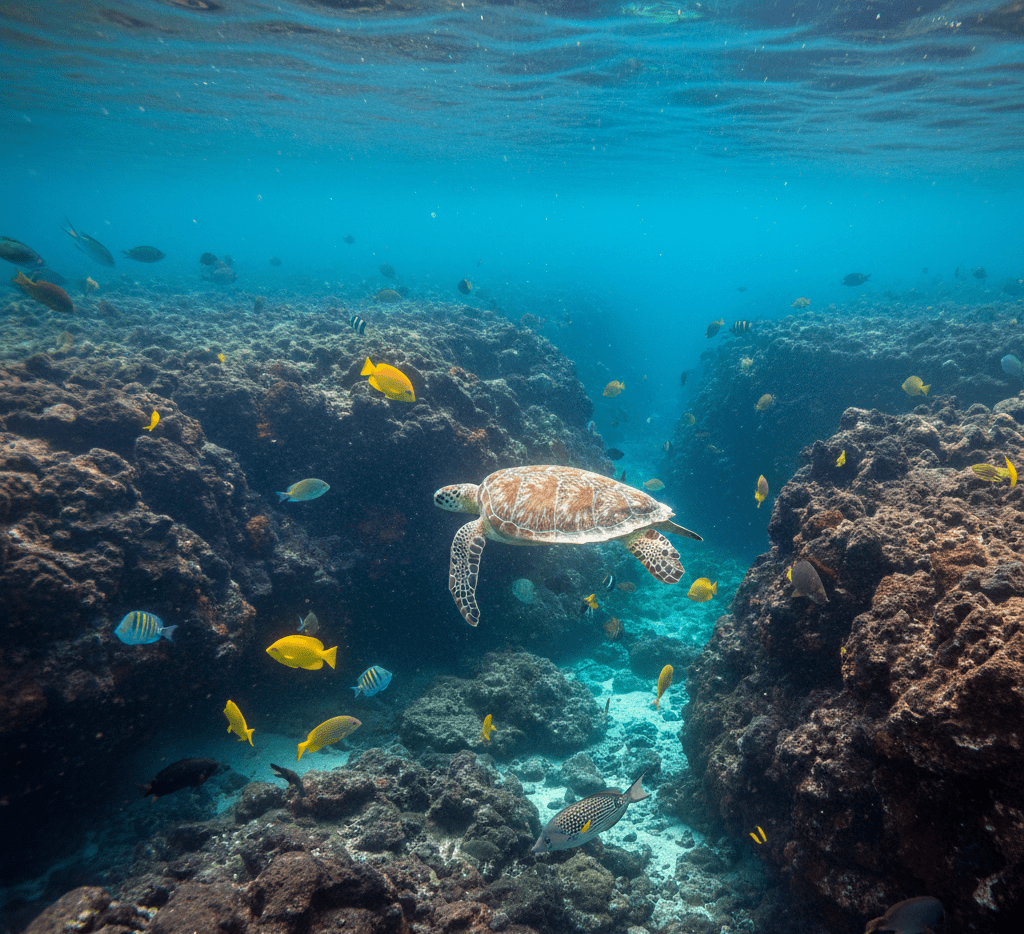
The district protects a range of reef organisms. Possible sightings include the following groups, but their presence and visibility are never guaranteed. Parrotfish, or uhu, graze on reef surfaces; avoid describing every species or feeding behavior as the same.
- Butterflyfish: Several reef species have distinctive patterns and colors; avoid assuming every yellow fish is the same species.
- Triggerfish (Humuhumunukunukuapuaʻa): Hawaii’s state fish is a common and fascinating sight.
- Surgeonfish and tangs: Look for groups of these fish eating algae.
- Sea turtles: A sighting is possible, not guaranteed. NOAA recommends staying at least 10 feet away, and visitors must avoid disturbing turtles. See our turtle conservation and etiquette guide.
- Eels (Puhi): If you look closely, you might see a moray eel peeking out from a hole.
- Crustaceans: Look for crabs and shrimp that are hiding between the rocks.
Observe from a position that leaves ample clearance above the reef. Avoid entering channels or following an animal into deeper water without understanding the conditions. Keep hands out of crevices and never stand on coral.
Is Shark’s Cove a better place than Hanauma Bay?
The useful comparison is access, supervision and suitability for the day’s conditions, rather than which location is universally “better.” Our Oahu snorkeling locations guide compares the practical differences.
- Hanauma Bay: Managed entry and lifeguard coverage distinguish it from Shark’s Cove, but currents and other hazards remain. Check current official access and reservation information before planning a visit.
- Shark’s Cove: A rocky shoreline with no lifeguards. The adjoining Three Tables area also lacks lifeguards; Waimea Bay’s lifeguard coverage does not extend to these separate sites.
The decision: Neither location guarantees an easy or safe swim. Hanauma Bay has lifeguards and managed access; Shark’s Cove has no lifeguards and a rocky shoreline. Choose based on current conditions and your abilities, and be ready to choose a land activity.
Looking at the Edges: Finding a Tide Pool
The adjacent tide pools are shallow in places, but they are not a protected children’s pool. DLNR warns that winter waves and currents can be extremely dangerous here too. Shallow water does not remove the risk of being knocked down or swept away.
Small fish, crabs and other organisms may be visible in the pools. Observe without handling animals or moving rocks, and do not cross wave-washed surfaces to get a closer look. Possible organisms include:
- Little fish
- Crabs
- Sea cucumbers
- Little shrimp
- Hermit crabs
- Be careful not to step on the sea urchins!
Do not use the tide pools as a fallback when the main cove is rough. Waves can wash across the rocky area. For families, choose an appropriate lifeguarded beach and review our children’s snorkeling readiness guide.
Important Advice for a Safe and Fun Visit
If you get ready for your trip to Shark’s Cove, it will be a lot more fun. Here are some tips that people have tried and found helpful for making the most of your day.
- Footing: Suitable footwear may reduce cuts, but it cannot prevent falls or wave hazards. Do not step onto living coral or use shoes as justification for crossing slippery, wave-washed rocks.
- Parking: Use legal parking spaces and keep driveways and emergency access clear. No arrival time guarantees a space.
- Look at the conditions: Don’t ever forget how strong the ocean is. If in doubt, don’t go out.
- Sun protection: Use shade and protective clothing as well as appropriate sunscreen. A “reef-safe” marketing label is not proof that a product is harmless; follow local rules and avoid introducing substances into the water.
- Equipment: Check fit and function before a trip. Practice with unfamiliar snorkeling gear in a controlled setting; equipment does not replace swimming ability.
- Stay hydrated and bring snacks. There are food trucks and a grocery store nearby, but it’s always a good idea to have water and snacks on hand.
- Respect Sea Life: You are a visitor in their home. You can look, but you can’t touch. Never chase animals or stand on the delicate coral.
Protecting Paradise: Conservation at Pūpūkea MLCD
The Pūpūkea MLCD has specific restrictions on taking marine life, altering geological features and feeding wildlife. The full rules include limited exceptions, including certain activities at Waimea Bay; a blanket “no fishing anywhere in the district” summary would be inaccurate. For an ordinary snorkeling visit:
- Leave natural materials in place: Do not collect wildlife, shells, coral, sand or rock during a snorkeling visit. Consult the complete DLNR rules for the district’s limited permitted harvest activities.
- Do not feed fish: Feeding fish changes how they act and hurts the ecosystem.
- Don’t leave any traces: Pack out everything you bring in. Help everyone by keeping the coast clean.
You can help keep this amazing natural treasure healthy by following these easy rules.
Adventures Beyond the Cove: Nearby Attractions
Shark’s Cove is perfectly located for a full day of North Shore exploration. After you’ve had enough of snorkeling, you can drive a short distance to see some famous places.
- Waimea Valley: A separate managed garden and cultural destination. Check current admission, opening and waterfall-access information with the operator; swimming is conditional and should not be assumed.
- ʻEhukai and Pipeline: Surf observation from an appropriate shore position can be an alternative to swimming. Stay well back from the water during high surf and obey lifeguard instructions.
- Polynesian Cultural Center: This living museum is a little bit farther east and lets you really learn about Polynesian cultures through villages, performances, and demonstrations.
- Dole Plantation: If you’re going to or from the North Shore, stop by the historic Dole Plantation for a pineapple-themed snack and a ride on the Pineapple Express train.
Plan Around Conditions, Not Expectations
Shark’s Cove offers a chance to observe a protected reef when conditions and abilities are appropriate. It also requires careful judgment. Do not let its popularity or lack of an entry fee override a decision to stay out of the water.
If your aim is simply to see turtles, consider turtle observation from shore. Seeing an animal does not require entering the ocean or approaching it.
Use our North Shore planning guide to build a flexible day with land-based options. Recheck conditions and opening information for each stop.