A Guide to the Flowers of Hawaii

Ask ten visitors what the Hawaii flower is and you will get ten different answers. One pictures the yellow hibiscus on the state flag of symbols. Another swears it is the plumeria from the lei they received at the airport. A gardener might name the bird of paradise, while someone who hiked a misty trail on Kauaʻi will tell you about the red pom-poms of the ʻōhiʻa lehua. They are all describing real flowers of Hawaii, but only one of them holds the official title, and several of the most famous ones are not native to the islands at all.
This guide sorts it out. You will learn which flower Hawaii chose as its state emblem and why, which beloved blooms are true natives and which arrived with immigrants and botanists, what the Hawaiian names mean, where to see the best displays on each island, and which flowers go into a real lei.
The Official Hawaii State Flower
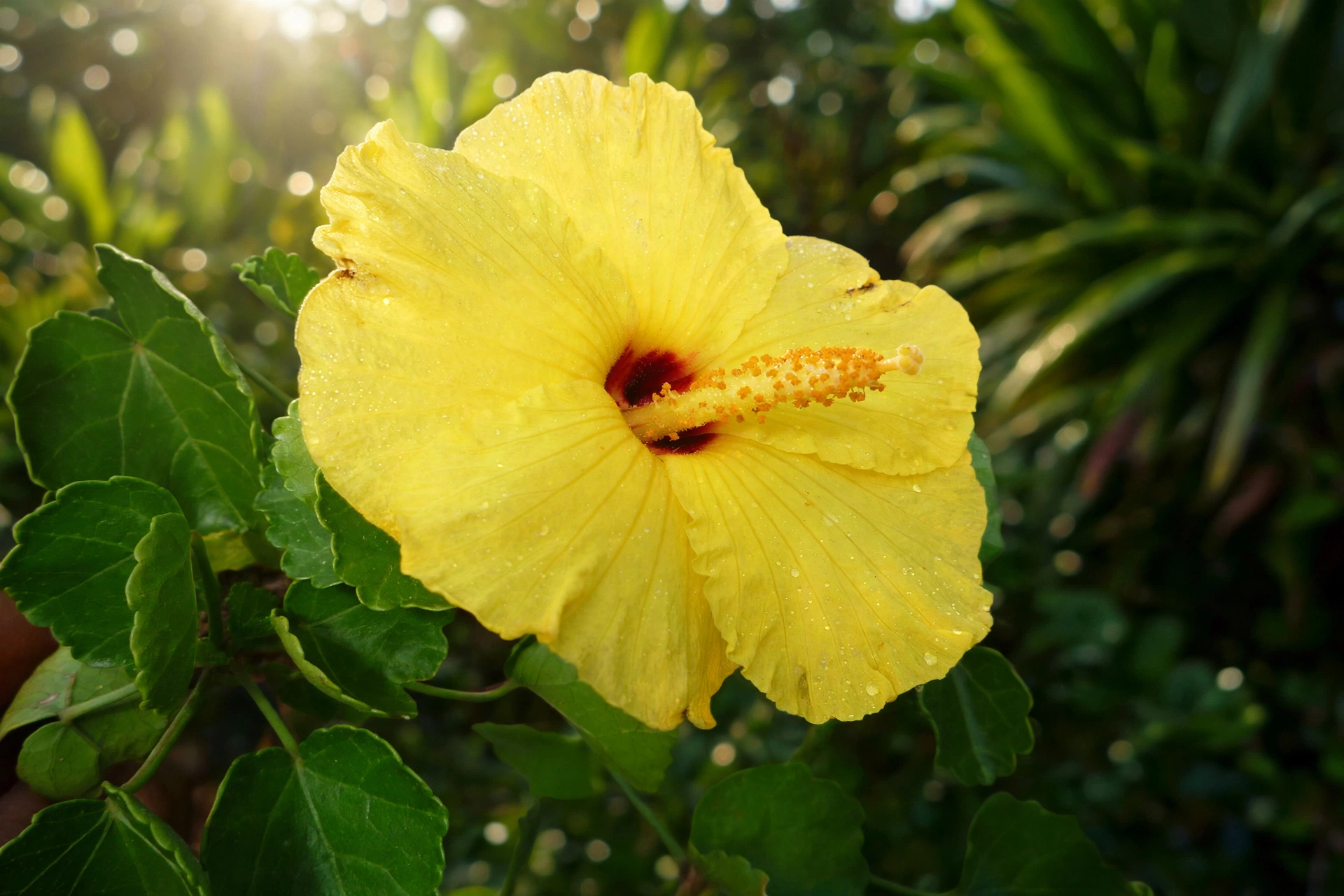
Hawaii’s state flower is the native yellow hibiscus, Hibiscus brackenridgei. In Hawaiian it is called pua aloalo, and also maʻo hau hele. The Hawaiʻi State Legislature designated it the official flower in 1988, writing it into the state statutes as the native yellow hibiscus, also known as the Pua Aloalo or Maʻo-hau-hele.
The choice was deliberate. Decades earlier, back when Hawaii was still a territory, lawmakers in the early 1920s had adopted the hibiscus as the territorial flower without naming a species. In practice that meant the big red ornamental hibiscus seen in yards everywhere, a plant with roots in Asia, became the unofficial stand-in. When statehood-era legislators revisited the question in 1988, they wanted a flower that belonged to Hawaii alone. The yellow hibiscus is endemic, meaning it grows naturally nowhere else on Earth, and it is found on all of the main Hawaiian Islands.
That rarity is also a warning. The U.S. Fish and Wildlife Service lists Hibiscus brackenridgei as an endangered species. Wild populations have been hammered by habitat loss, invasive weeds, grazing animals, and fire. A single blaze in 2007 wiped out the great majority of the remaining wild plants on Oʻahu. The flowers you see in nurseries and hotel landscaping are cultivated plants, which is a small mercy, because the species is vanishingly rare in its native dry forests.
Hawaii is not the only place in the islands with an official bloom. State law also names a flower or lei material for each island: the ʻōhiʻa lehua for the island of Hawaiʻi, the lokelani (damask rose) for Maui, the pua ʻilima for Oʻahu, the mokihana berry for Kauaʻi, the pua kukui (candlenut blossom) for Molokaʻi, the kaunaʻoa (native dodder) for Lānaʻi, the tiny pūpū shells of Niʻihau, and the hinahina (native beach heliotrope) for Kahoʻolawe.
Native Hawaiian Flowers Worth Knowing
Long before any ship brought garden plants to the islands, Hawaii had its own flowers, shaped by millions of years of isolation. Around 90 percent of Hawaii’s native flowering plants are found nowhere else in the world. Here are the ones visitors encounter most.
ʻŌhiʻa lehua
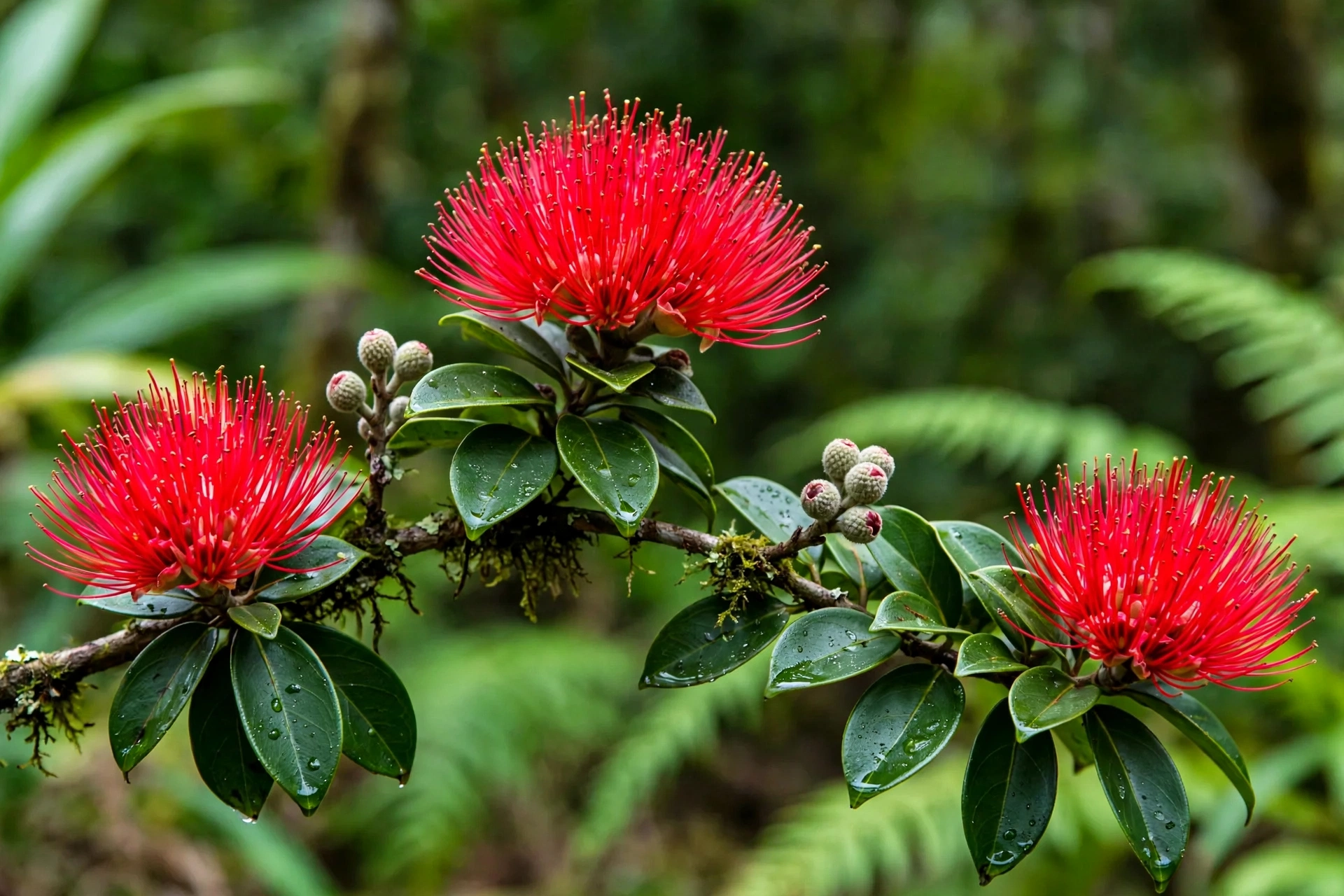
If any flower feels like the soul of the islands, it is the lehua blossom of the ʻōhiʻa tree (Metrosideros polymorpha). The tree is the most common native tree in Hawaii, ranging from lava fields to cloud forest, and its flowers are explosions of red stamens that look like tiny fireworks. In Hawaiian tradition the lehua is sacred to Pele, the volcano goddess, and picking the blossoms is said to bring rain, since it separates the lovers Pele and Kamapuaʻa in legend. It is also the official flower of the island of Hawaiʻi. You will see lehua blooming along the trails of Hawaiʻi Volcanoes National Park and in wet forests across the islands.
Native hibiscus
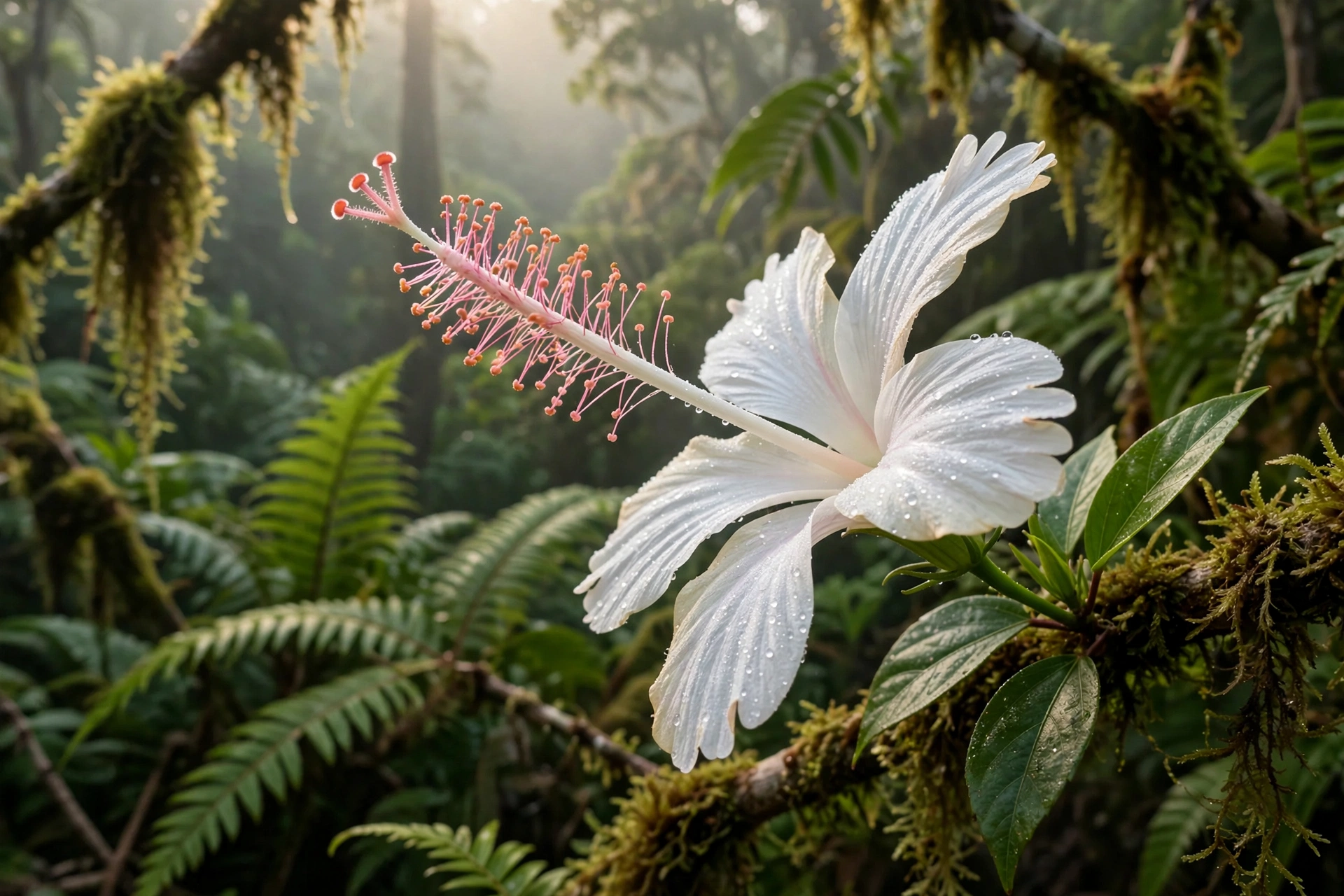
The state flower has relatives. Hawaii is home to several endemic hibiscus species: the white-flowered Hibiscus arnottianus, known as kokiʻo keʻokeʻo, which is one of the only fragrant hibiscus species in the world; the red Hibiscus kokio; the red-flowered Hibiscus clayi of Kauaʻi’s dry forests; and Hibiscus waimeae, another white and fragrant species. Most are rare in the wild and several are federally listed as endangered, which makes the cultivated plants in botanical gardens worth seeking out.
Native orchids
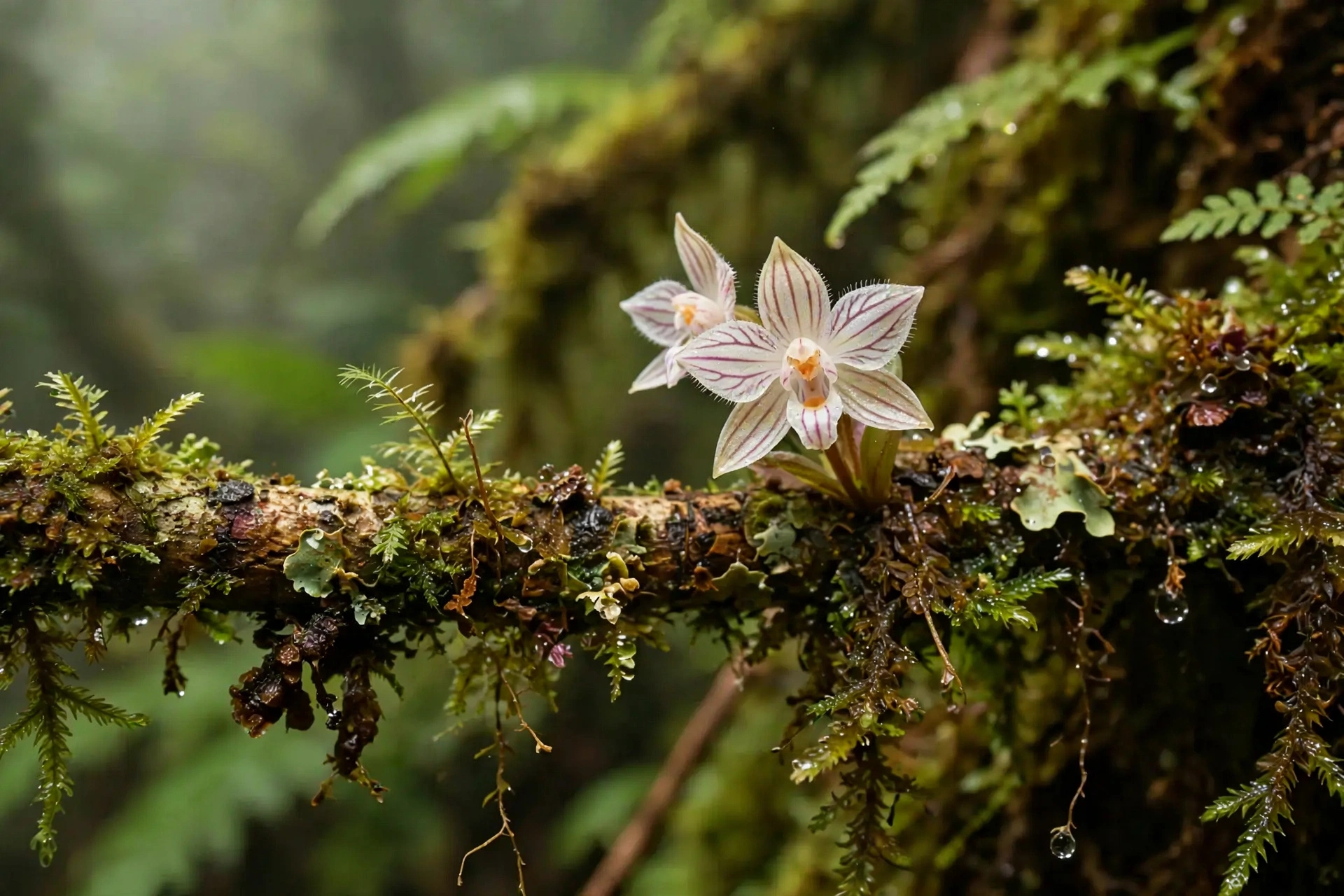
Here is a surprise for orchid lovers. Hawaii has only three orchid species that are truly native, and all three are endemic: the Hawaii jewel-orchid (Anoectochilus sandvicensis), the Hawaiʻi widelip orchid (Liparis hawaiensis), and the Hawaii bog orchid (Platanthera holochila), which is federally endangered and survives in only a handful of bogs. None of them looks like the showy corsage orchids in the flower shops. Every flashy orchid you see in a lei or a hotel lobby is an introduced variety, mostly Dendrobium hybrids grown by commercial nurseries.
ʻIlima
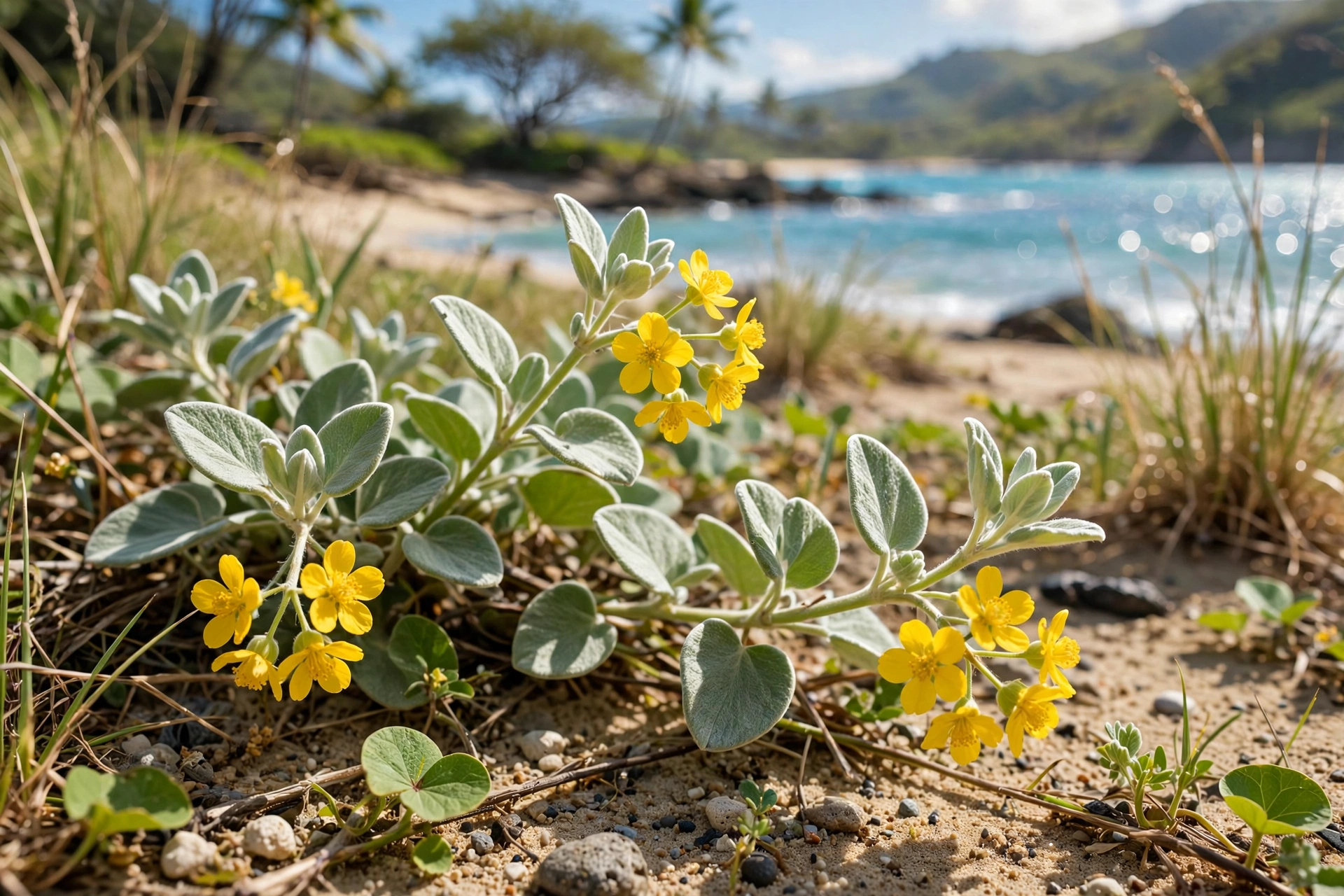
The ʻilima (Sida fallax) is a low, sprawling native shrub with small golden-yellow flowers about the size of a coin. It is the official flower of Oʻahu, and it takes roughly 500 of the tiny blossoms to string a single lei, which is why an ʻilima lei is a prized and expensive gift. Native Hawaiians also used the plant medicinally and its fine wood for house frames.
Understanding which plants are truly native changes how you look at the landscape. Our guide to native Hawaiian fruits follows the same idea, tracing which food plants arrived with the first Polynesian voyagers and which evolved here alone.
Famous Hawaiian Flowers That Are Not Native
Some of the flowers most people picture when they think of Hawaii arrived relatively recently. That does not make them less beautiful or less woven into island life, but the distinction matters if you want to understand the real botanical story.
Plumeria
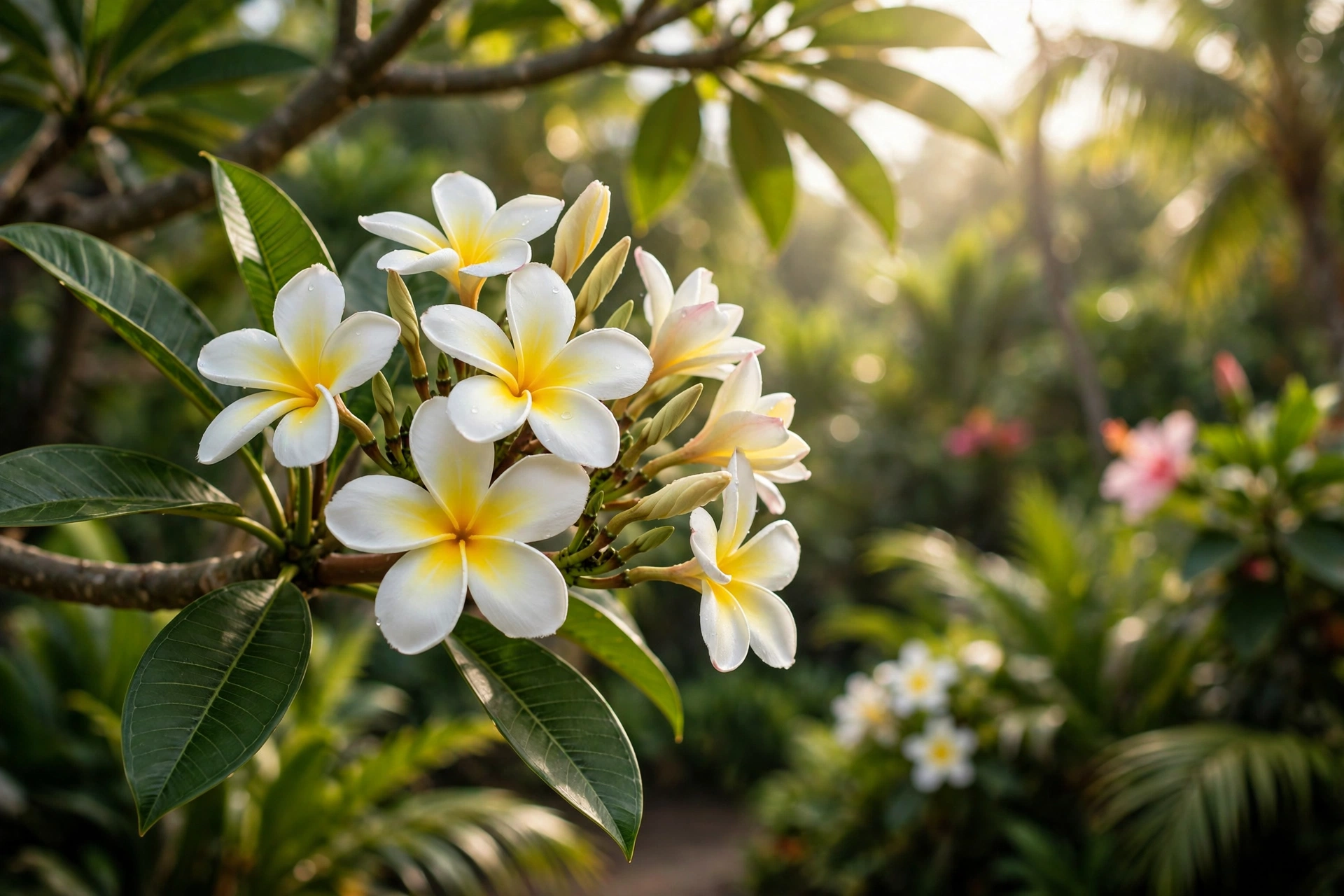
The plumeria, called melia in Hawaiian, is the flower of the classic airport lei, yet it is not native to Hawaii. Plumerias are native to Mexico, Central America, and the Caribbean. The plant reached the islands in 1860, brought by Dr. William Hillebrand, a German physician and botanist who did pioneering work on Hawaiian flora. It thrived in the warm climate and volcanic soil, and growers spent generations developing new hybrids with staggering color ranges, from the classic yellow-and-white Celadine to deep reds, pinks, and rainbow blends. Plumeria trees go dormant in winter, dropping their leaves around November, and burst back into bloom around April, so late spring through fall is peak season for the flowers.
Bird of paradise
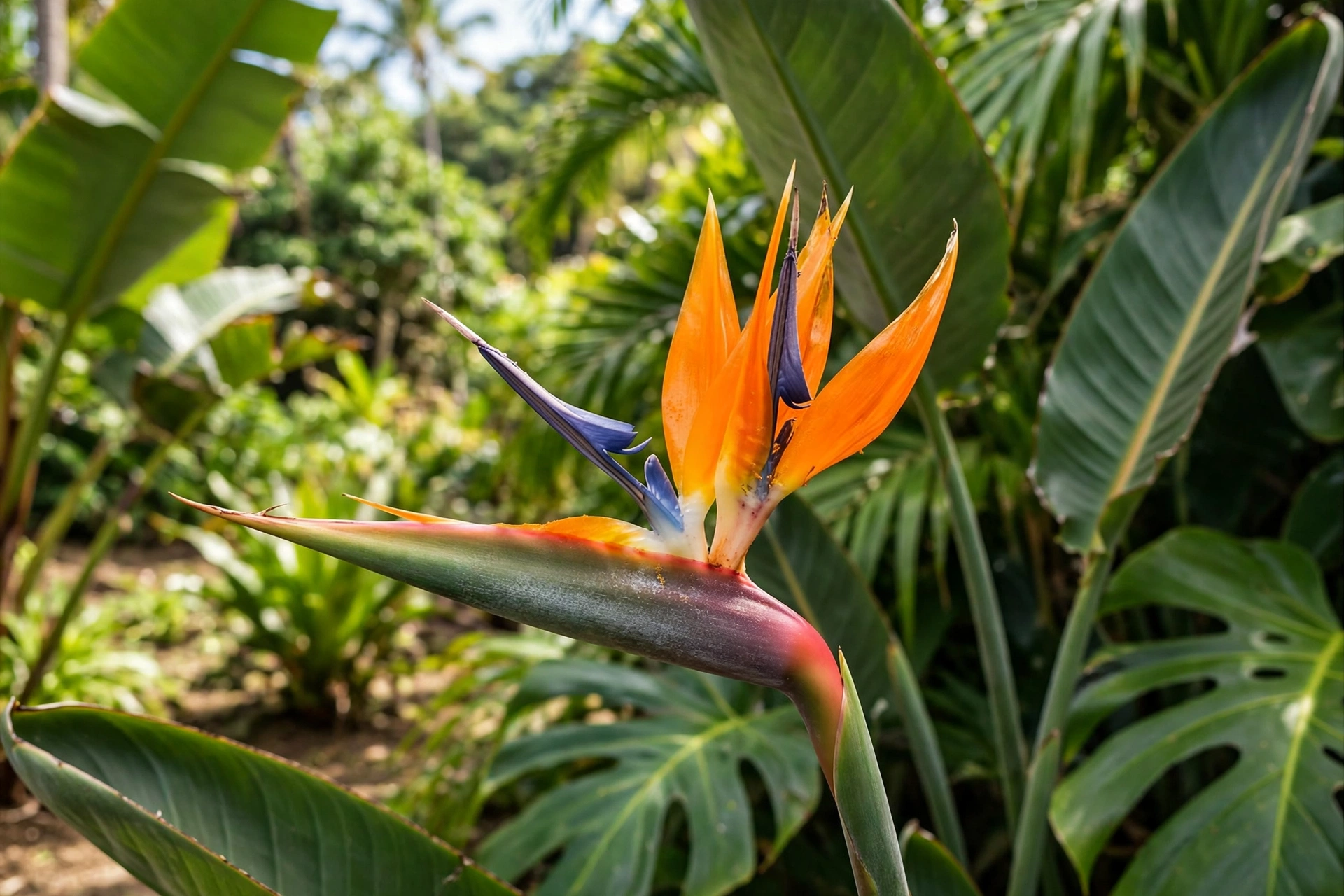
The bird of paradise (Strelitzia), with its orange and blue crane-like flowers, is another introduced ornamental. It is native to southern Africa and was brought to Hawaii as a landscape plant, where it grows almost absurdly well. Florists love it because the blooms last for weeks after cutting, and you will see it in nearly every hotel lobby arrangement on the islands.
Anthurium
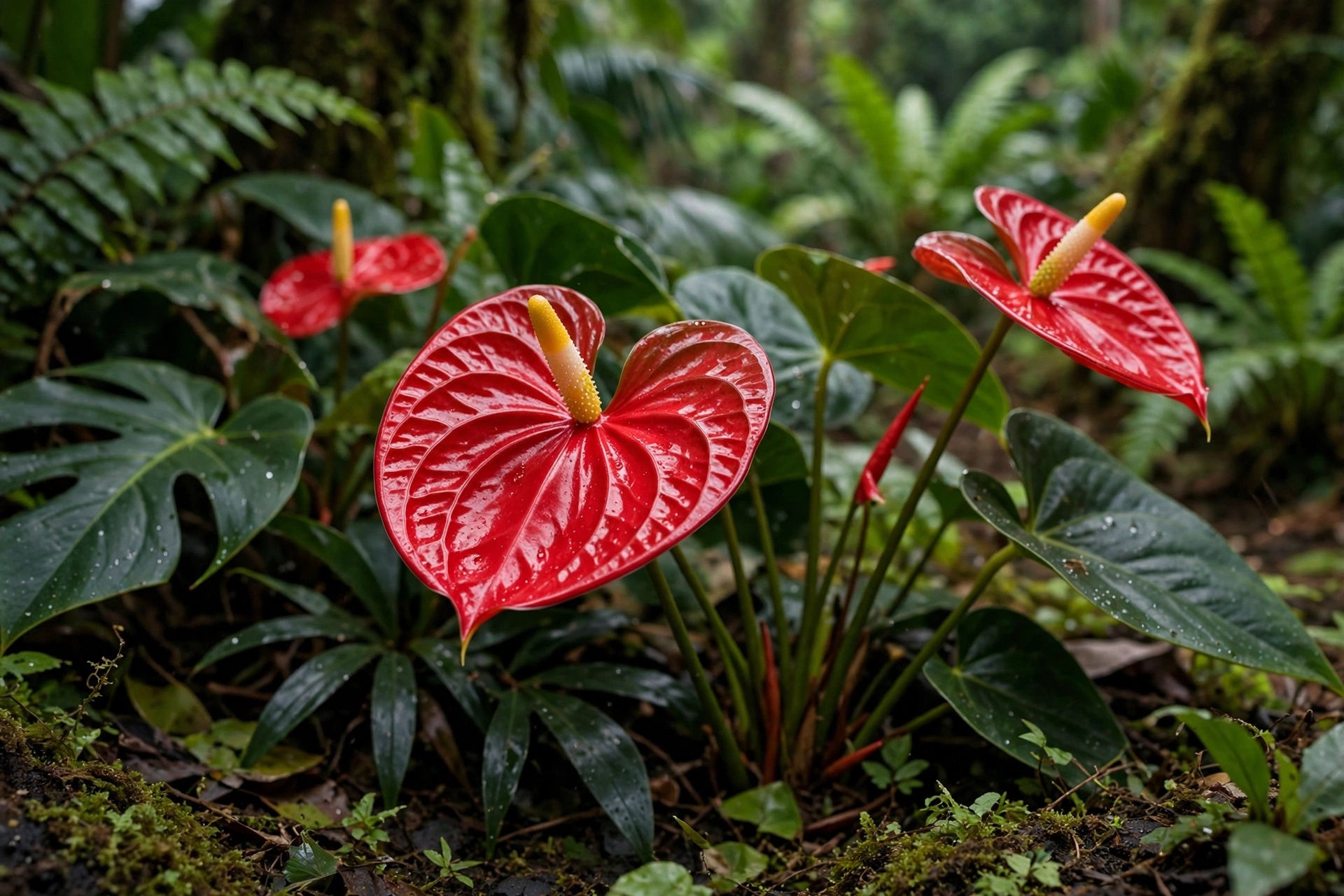
The glossy, heart-shaped anthurium, often in red, pink, or white, came to Hawaii from the tropical Americas and became one of the islands’ major cut-flower crops. Commercial anthurium farms once covered large acreages, particularly on the island of Hawaiʻi, and the flowers are still a signature of Hawaiian floral design.
Pikake
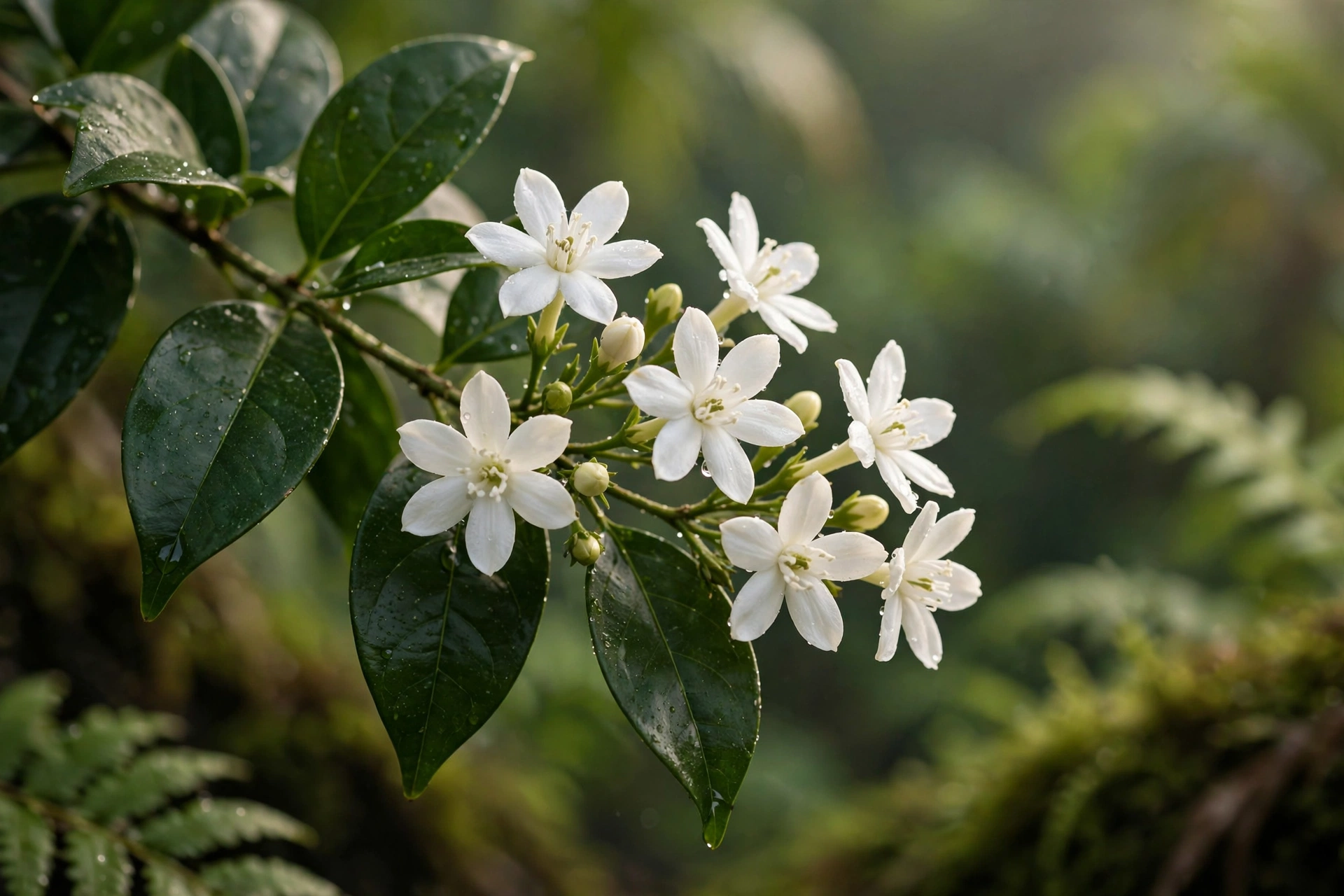
Pikake is the Hawaiian name for Arabian jasmine (Jasminum sambac), a tiny white flower with an outsized perfume. It was the signature flower of Princess Kaʻiulani, the last crown princess of the Hawaiian Kingdom, who grew up at her family’s Waikīkī estate, ʻĀinahau. The princess adored the peacocks that roamed the grounds, and the jasmine took the Hawaiian word for peacock, pīkake, as its name. A single-strand pikake lei is among the most fragrant gifts in all of Hawaii, and the blossoms are still associated with weddings and graduations.
Hawaiian Flower Names and What They Mean
Hawaiian flower names are descriptive, and learning a few deepens every garden visit. Pua simply means flower, so pua aloalo is the hibiscus flower and pua ʻilima is the ʻilima flower. Melia is the Hawaiian-ized plumeria. Lehua refers to both the ʻōhiʻa tree’s blossom and, in older usage, warriors and beloved companions. Mokihana is the fragrant green berry of Kauaʻi used for lei. Kaunaʻoa is the wispy native dodder vine of Lānaʻi, gathered for lei material. Lokelani means heavenly rose, the fitting name for Maui’s damask rose. When you see these names on garden labels, you are reading a small piece of the islands’ cultural history.
Where to See Flowers in Hawaii
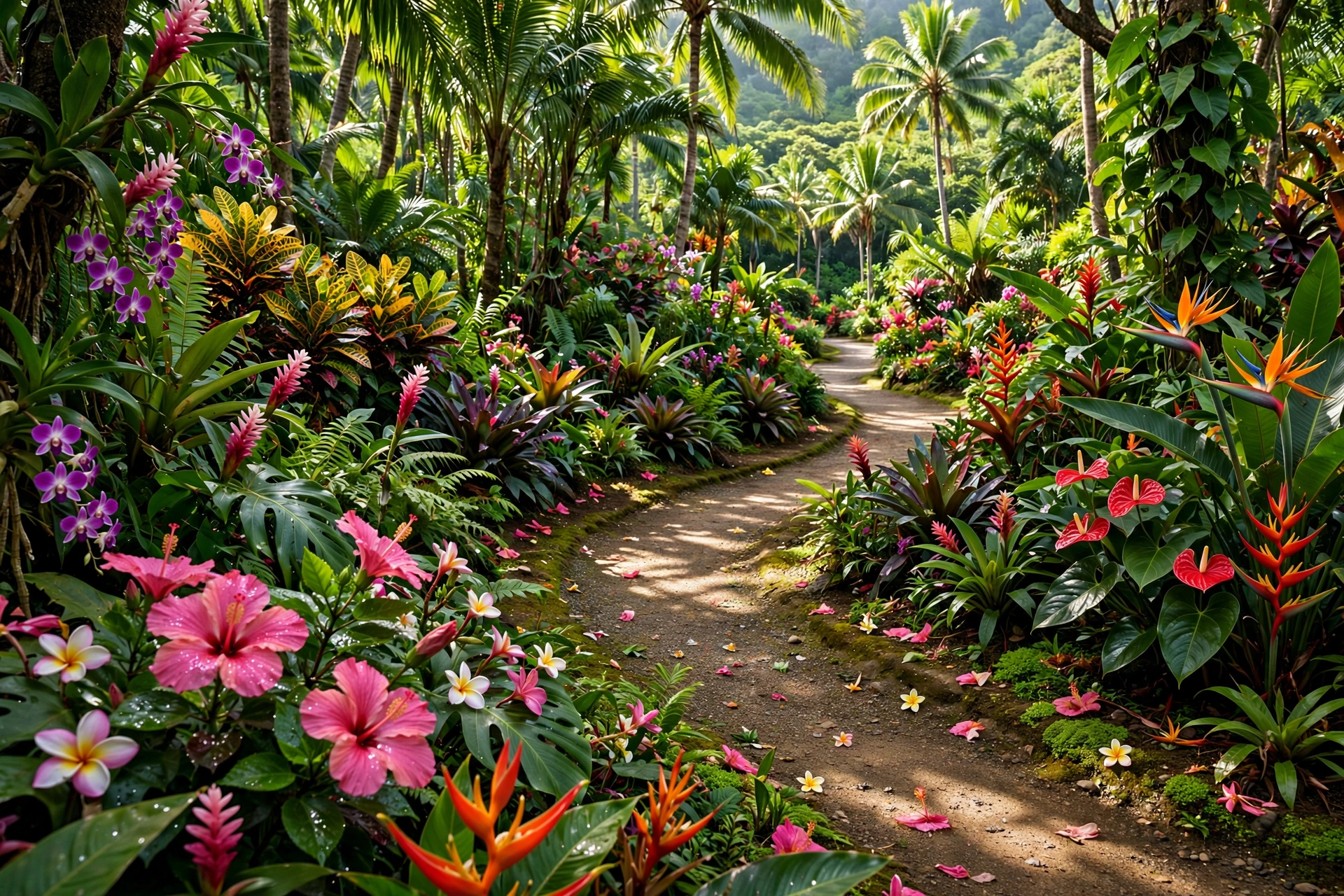
Hawaii’s botanical gardens are the best places to see native and introduced flowers side by side, with labels that tell you which is which. Each island has at least one standout garden.
Oʻahu: Foster Botanical Garden and Lyon Arboretum
Foster Botanical Garden in downtown Honolulu is the oldest of the city’s public gardens. The site’s botanical history began in 1855, when Queen Kalama sold the property to Dr. William Hillebrand, the same botanist who introduced the plumeria. Hillebrand planted the great trees that still tower over the grounds. After his return to Germany, the property passed to Captain and Mrs. Thomas Foster, who bequeathed it to the City of Honolulu in 1930 as a public tropical garden. Today it holds exceptional orchid, palm, and heliconia collections.
Up in Mānoa Valley, the Harold L. Lyon Arboretum spreads across 200 acres of rainforest on the slopes above the university. Established in 1918 and named for its first director, it focuses on tropical plants with an emphasis on Hawaiian natives and Polynesian introductions. The setting is spectacular, and the neighboring Mānoa Falls trail makes an easy pairing for a half-day of green.
Kauaʻi: Allerton Garden and McBryde Garden
On Kauaʻi’s south shore near Poʻipū, Allerton Garden and McBryde Garden are the flagship public gardens of the National Tropical Botanical Garden, a congressionally chartered institution headquartered on the island since 1964. Allerton is the former estate of Robert Allerton, designed as a series of outdoor garden rooms with sculptures, water features, and extraordinary tropical plantings. McBryde, next door in the Lawai Valley, leans more toward conservation and research, with the largest collection of native Hawaiian plants anywhere. Both are visited on guided tours.
The video below from the National Tropical Botanical Garden shows the conservation work behind these gardens, in the native forests of Limahuli Valley on Kauaʻi.
Island of Hawaiʻi: Hawaii Tropical Bioreserve Garden
Just north of Hilo at Onomea Bay, the Hawaii Tropical Bioreserve Garden winds through a steep valley on a boardwalk trail past more than 2,000 plant species. Palms, heliconias, orchids, and gingers crowd the path, and the ocean views from the valley rim are unforgettable. It is a private nonprofit garden and one of the most rewarding stops on the Hāmākua Coast.
Maui: Kahanu Garden
Near Hāna, Kahanu Garden pairs one of the most important archaeological sites in Polynesia, the massive Piʻilanihale Heiau, with a garden devoted to the plants of the Pacific voyagers, including breadfruit cultivars and native Hawaiian species. It is remote, which is exactly the point.
Flowers in the Lei
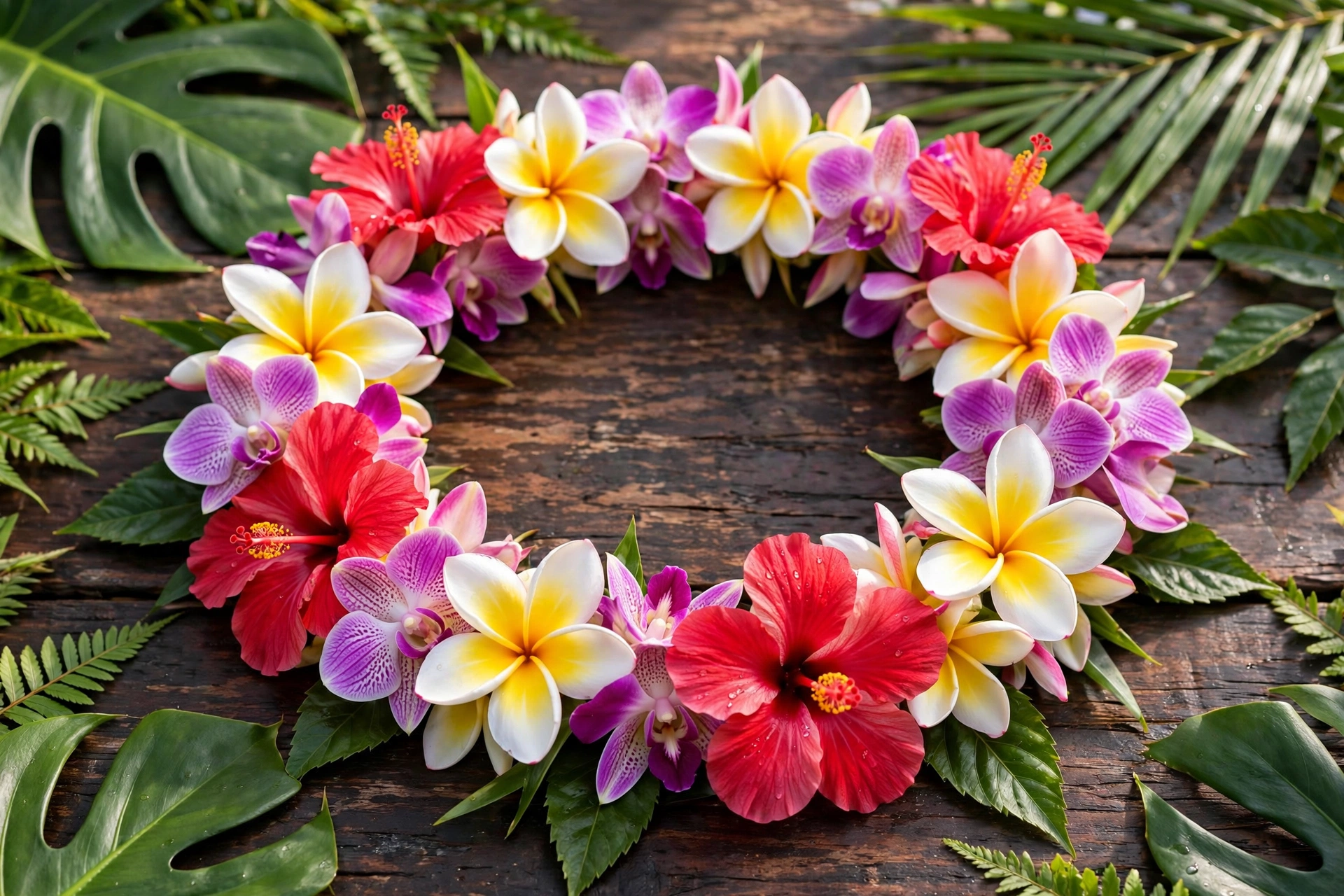
No discussion of Hawaii flowers is complete without the lei, the garland that turns blossoms into welcome, celebration, and farewell. The classic lei flowers are plumeria, dendrobium orchid, pikake, tuberose, carnation, and roses, chosen for fragrance, durability, and color. Native flowers appear too: ʻilima lei for honored guests, lehua lei for special occasions, mokihana berry lei on Kauaʻi, and maile, the fragrant native vine, for the most formal traditional lei, though maile is leaves rather than flowers.
Hawaii honors the tradition every year on May 1, Lei Day, a celebration of the lei and Hawaiian culture that dates to 1929. If your trip includes a lūʻau, you will likely receive or see fresh lei as part of the evening, and our guide to what to wear to a lūʻau covers the etiquette, including how to wear and care for a lei. For the deeper cultural roots of the practice, see our guide to traditional Hawaiian luaus and nighttime festivals.
A note of respect: lei are made to be worn and enjoyed, not taken home through agricultural inspection in most cases. Fresh flower lei cannot go through USDA inspection at the airport unless they are commercially packed and certified, so enjoy them on the islands.
When Flowers Bloom in Hawaii
One of Hawaii’s great gifts is that something is always in bloom. The tropical climate has no true winter shutdown, so flowering trees and shrubs cycle through the year. That said, there are rhythms. Plumeria peaks from late spring through fall and rests in winter. Many trees and shrubs flower most heavily in the warm, bright months from May through September. Orchids and anthuriums bloom nearly year-round in cultivation. Botanical gardens are worth visiting in any month, and a garden visited in February looks entirely different from the same garden in August, which is a fine reason to go twice.
The next time someone asks about the Hawaii flower, you will know the full answer. The official title belongs to the yellow hibiscus, the pua aloalo, a rare native chosen to represent the islands’ unique natural heritage. The flowers of daily island life, the plumeria, the pikake, the bird of paradise, are immigrants that Hawaii adopted and made its own. And the true natives, the lehua, the white hibiscus of the deep forest, the tiny wild orchids, are still out there for those who learn where to look.