Hawaii Beach Showers: How They Work and the Rules to Know

After a few hours in the Hawaiian sun, the outdoor shower at the beach park is one of the best feelings in travel: cold water, ocean breeze, sand swirling away at your feet. But Hawaii’s beach showers come with rules that surprise first-time visitors. They are rinse stations, not baths. The water is cold, soap and shampoo are prohibited, and they shut off when the park closes. This guide covers how they work, the etiquette that keeps everyone happy, and how to get truly sand-free before the drive back.
This is the single complete guide to beach showers in Hawaii. It covers what they are, the no-soap rule, water temperature, hours, etiquette, sand-removal tricks, island-by-island availability, and what to do when there is no shower. If you have been searching for anything about beach showers in Hawaii, the answers are all here on this one page.
What Hawaii Beach Showers Actually Are
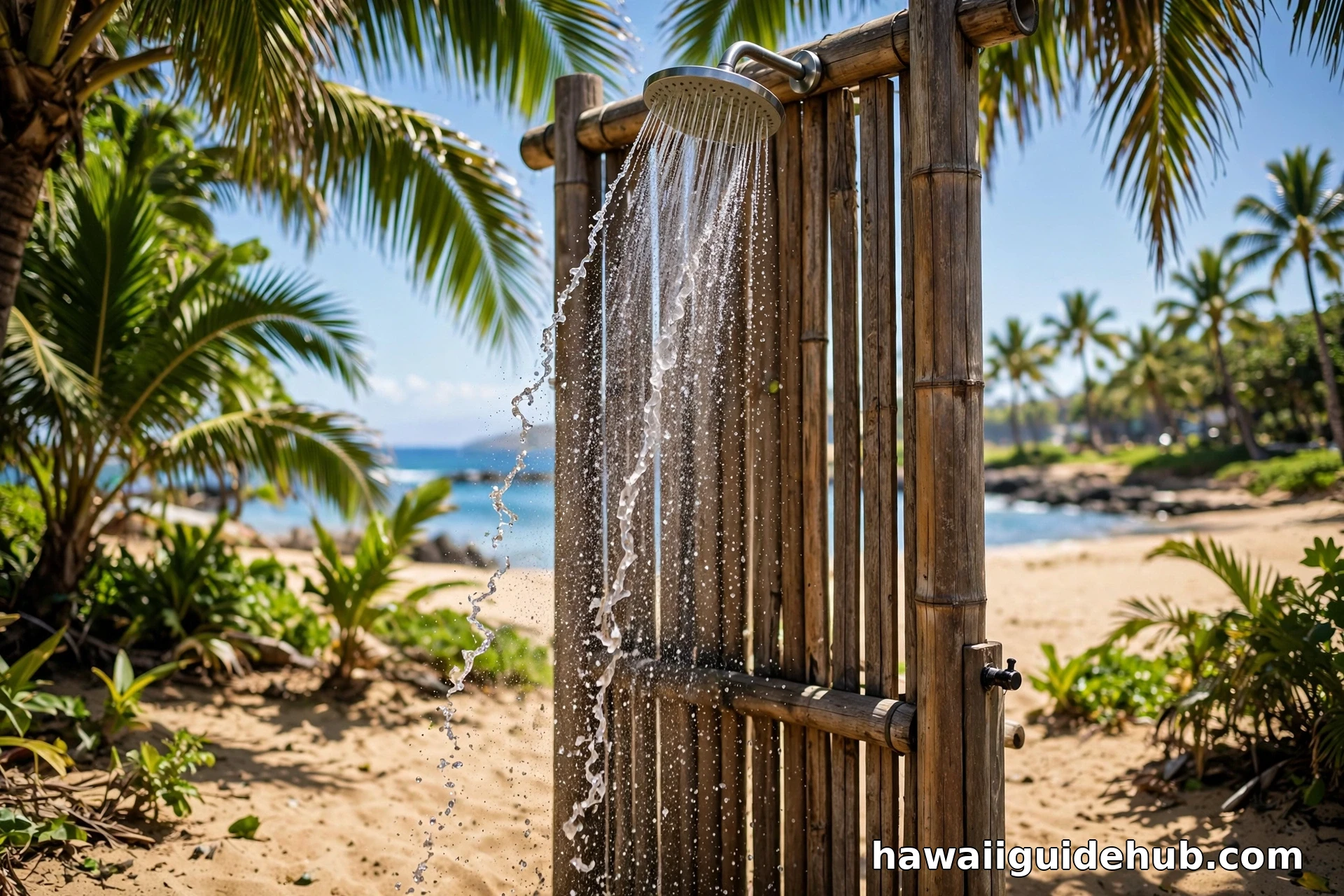
A Hawaii beach shower is a simple outdoor fixture: a shower head on a post or wall, usually near the restroom building or the parking lot, with a push-button or twist valve and a concrete pad to stand on. They exist for one purpose, rinsing sand and saltwater off your body and gear before you get in the car. They are provided by the counties as a courtesy at developed beach parks, free for everyone to use. They are not private, not enclosed, and not meant for a full wash. Think of them as the island’s way of saying mahalo for keeping the sand at the beach.
You will find them at nearly every developed beach park on every island, plus some along the Waikiki beachfront walk and at harbors. They are deliberately simple because they have to survive salt air, sun, and thousands of users. The button often runs on a timer, giving you a minute or two of water per press, which is plenty for a rinse and encourages everyone to keep it moving.
The Rules: No Soap, No Shampoo, Ever
This is the rule that matters most. Never use soap, shampoo, conditioner, or body wash at a Hawaii beach shower. The runoff drains straight into the sand and the ocean, untreated, and even small amounts of soap harm reef life and water quality. County park rules prohibit it, and it is one of those local norms that visitors are expected to know. The shower is for water only.
The same goes for washing dishes, coolers, or anything with detergent. Rinse sand and salt off with plain water, and save the real wash for your hotel. If you wear reef-safe sunscreen, and you should in Hawaii, a water rinse removes the sand just fine; the sunscreen layer can wait until your proper shower later. Keeping chemicals out of the runoff is a small act that protects the reefs you came to see.
Cold Water Only: Setting Expectations
Hawaii beach showers are cold water only, and on a hot beach day that first blast can be startling. There are no heaters, no temperature controls, just whatever comes out of the pipe. After an hour of swimming in 80-degree water and baking in the sun, most people find it refreshing within seconds. Kids tend to shriek, then beg to go again. If you are sensitive to cold, rinse your feet and legs first and work upward, and you will adjust quickly.
When Are Beach Showers Available?
Beach showers follow beach park hours. They run while the park is open, generally from early morning until around sunset, and the water is typically shut off when the park closes for the night. There is no posted schedule at most parks; the rhythm is simply dawn to dusk. If you are catching a sunrise swim, the showers should be running when you get out. If you linger past sunset, assume they are off.
Occasionally a shower is out of order, vandalized, or shut off for maintenance. It happens, especially at remote parks. This is why experienced beachgoers keep a jug of fresh water in the car as backup: a gallon poured over feet and legs does the job when the shower does not. It is cheap insurance that costs almost nothing and saves the rental car’s floor mats.
Beach Shower Etiquette
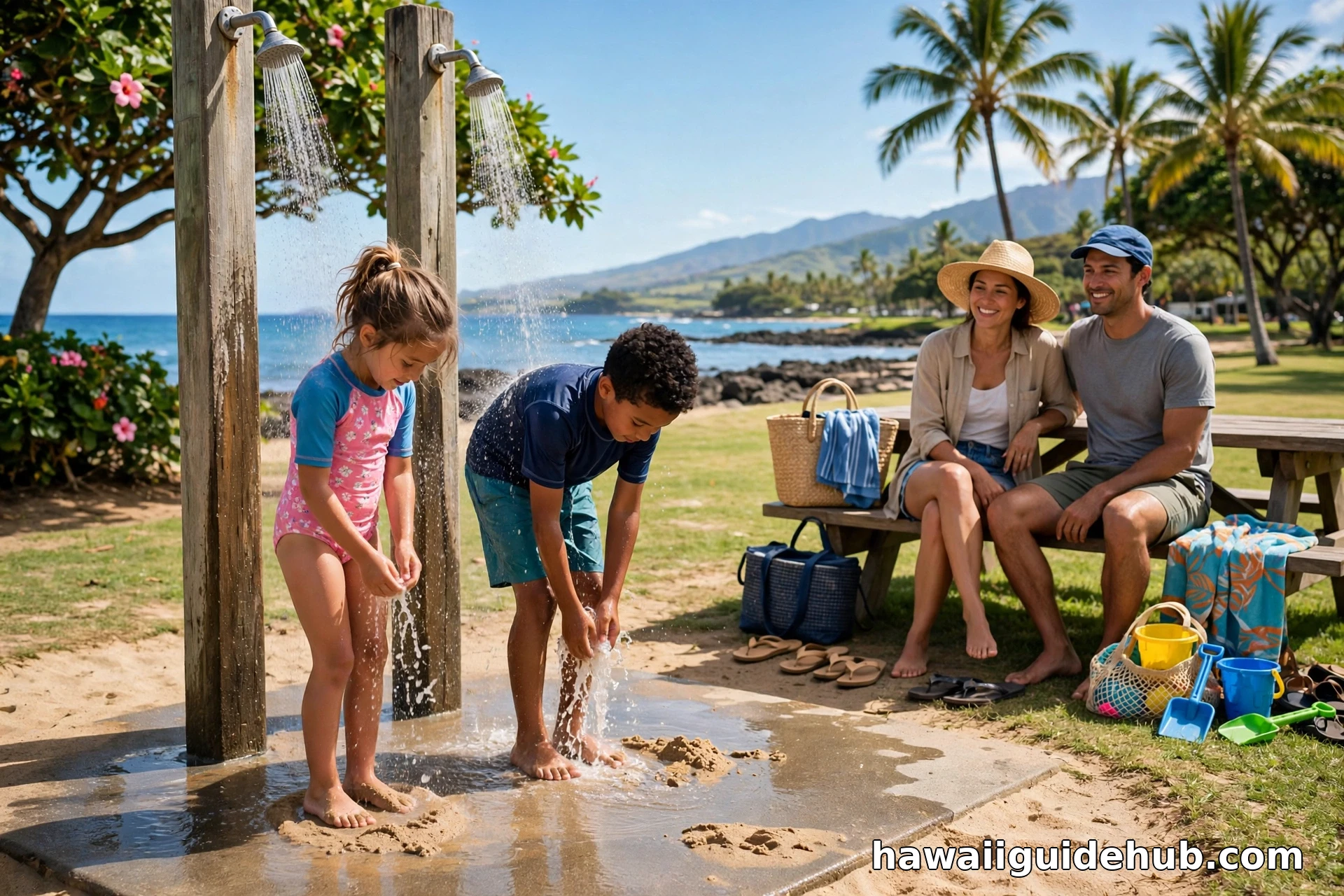
On a busy weekend, the beach shower is shared infrastructure, and a little courtesy goes a long way. Keep your rinse quick, two minutes is plenty. If others are waiting, rinse the essentials and move on; you can finish drying off at your towel. Let small children go first when there is a line, and help them reach the button. Do not stand under the water scrolling your phone. Rinse your gear, boards, beach toys, coolers, after you rinse yourself, or better yet, rinse gear to the side so the shower stays free for people.
Change of clothes happens at your car or behind a towel, not at the shower. The shower pad is a public, open space, so keep swimwear on. Shake out your towel and bag away from the shower pad so you are not showering someone else’s sand onto the concrete. And if the shower has a trash can nearby, use it for the granola bar wrapper and the broken flip-flop; leaving the area clean is part of the deal. The same leave-no-trace mindset applies if you stay for an evening beach bonfire.
Getting Sand Out: Beyond the Shower
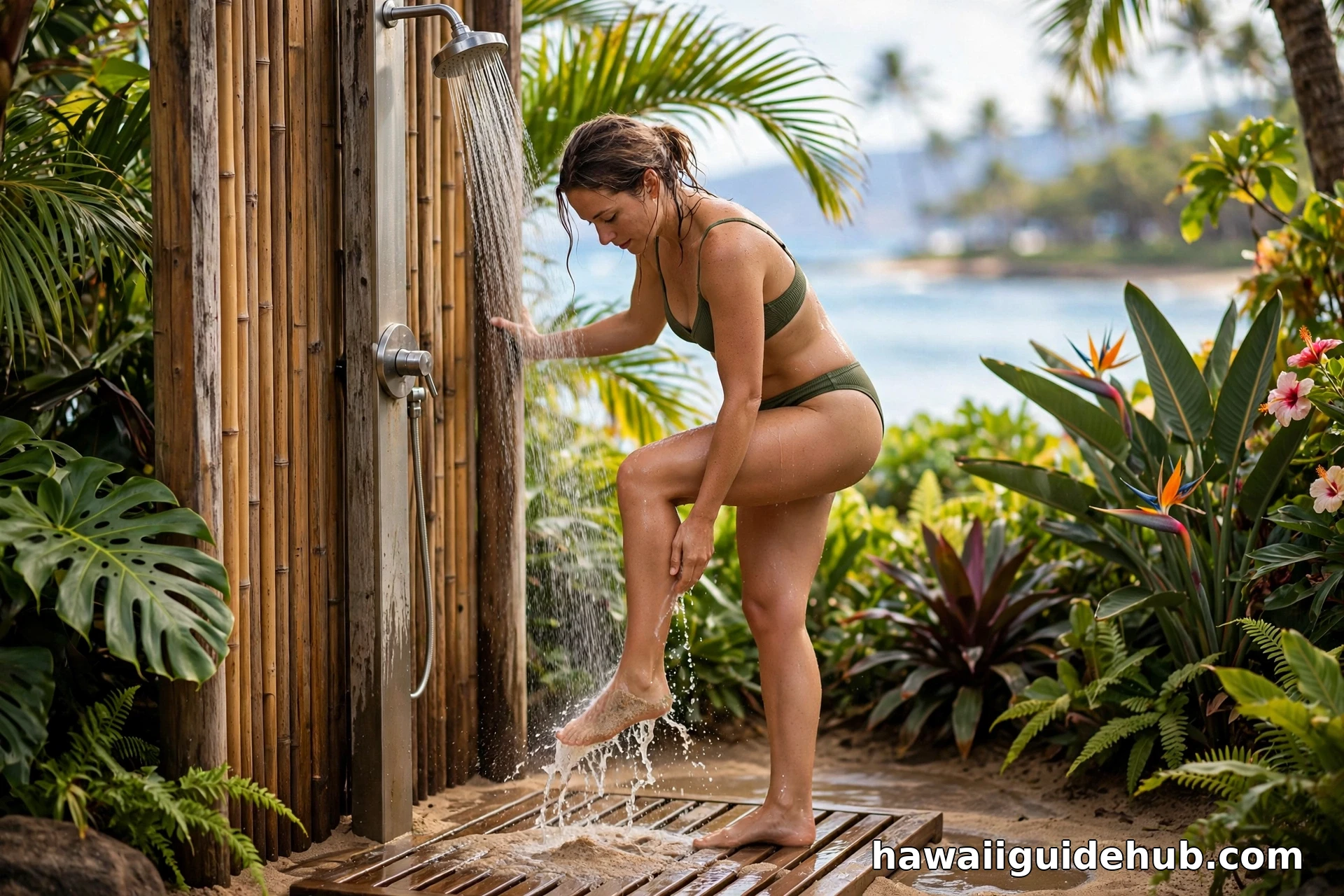
The shower handles the big stuff, but Hawaii’s fine sand clings. Here is the full sand-removal routine the locals use. First, shake everything before you leave the sand: towels, bags, suits. At the shower, rinse head to toe, including your hairline, ears, and between your toes, where sand hides. Then, and this is the trick, let your skin air dry for a few minutes. Dry sand brushes off skin far more easily than wet sand, so a quick brush with a dry towel after air drying removes what the water missed.
The famous extra trick is baby powder or talcum powder: sprinkle it on sandy skin and the sand releases instantly. Many Hawaii travelers swear by it, and a travel-size bottle lives in a lot of beach bags. For the car, a cheap sheet or towel over the seats catches what remains, and shaking out floor mats at the condo saves the cleaning fee. None of this is complicated; it is just the difference between a car that crunches for a week and one that does not.
Beach Showers on Each Island
Oahu has the most showers, at its many county beach parks and along the Waikiki beachfront, where several rinse stations serve the crowds. Maui’s popular beaches in Kaanapali, Wailea, Kihei, and along the west side have them; remote beaches often do not. Kauai’s main beach parks like Lydgate have full facilities, while the wilder North Shore beaches may have nothing. The Big Island’s developed parks around Kona and Hilo have showers, but the long black-sand and green-sand stretches in between usually do not. As with restrooms, the pattern holds: developed park, yes; wild beach, bring your own water jug.
Why the No-Soap Rule Exists
It is worth understanding the why, because it makes the rule easy to remember. A beach shower sits a few dozen yards from the ocean, and its drain goes nowhere. There is no sewer connection, no treatment plant, just a pipe to the ground. Everything you put on your skin under that shower head ends up in the sand and the nearshore water within minutes. Soap and shampoo contain surfactants and fragrances that are toxic to coral polyps, fish larvae, and the tiny organisms that keep reefs alive. Hawaii has already banned the worst sunscreen chemicals to protect its reefs; keeping soap out of beach shower runoff is the same principle applied to daily habits.
The rule also protects the water you swim in. Nearshore water quality is monitored at Hawaii’s beaches, and bacterial and chemical runoff is a real management issue. When thousands of beachgoers each rinse a little soap into the sand, it adds up fast at a popular beach. Water-only rinsing keeps the beaches you love cleaner for the next swimmer, the next family, and the next generation of reef fish. It is one of the simplest conservation acts a visitor can do.
Beach Showers vs. Your Rental’s Outdoor Shower
Many Hawaii vacation rentals and some hotels have their own outdoor showers, and the rules there are completely different. A rental’s outdoor shower drains into the property’s plumbing, just like an indoor shower, so soap and shampoo are fine. These are some of the great pleasures of a Hawaii stay: showering under the stars with garden walls around you, warm water included. Do not confuse the two. If the shower is at a public beach park, it is water only. If it is at your rental, check with the host, but soap is almost always fine.
This distinction matters because visitors sometimes assume all outdoor showers work the same way. They do not. The beach park shower protects the ocean; the rental shower is just a shower that happens to be outside. When in doubt, look at the drain. If you can see sand and ocean a few steps away and there is no enclosure, it is a rinse station. Treat it that way.
Teaching Kids the Beach Shower Routine
Children love beach showers, which makes them the easiest part of the family beach day to manage. Turn it into a game: who can rinse off the fastest, who can find sand hiding between their toes, who can shower without shrieking at the cold water. Show them the button, let them press it, and make the head-to-toe rinse a ritual. Kids who learn the routine on day one will run to the shower themselves by day three.
Two practical notes for parents. First, the concrete pads can be slippery, so water shoes or a steady hand help small children. Second, bring a complete change of clothes to the shower area, not just the towel; trying to dress a sandy toddler at the car while the ice cream melts is a Hawaii parenting rite of passage, but it is optional. A quick rinse, dry clothes, and the drive back becomes the nap they desperately need.
Protecting the Rental Car
Here is the financial reason to take the beach shower seriously. Rental car companies in Hawaii charge cleaning fees for excessively sandy or dirty returns, and those fees are not small. Sand gets everywhere: floor mats, seat crevices, the trunk, the door pockets. A thorough rinse at the beach shower, plus a towel over the seats for the drive, prevents most of it. Shake out the floor mats at your condo before returning the car. Travelers who skip the rinse often discover the cost at the return counter, when the agent runs a finger along the dashboard and starts tapping on a tablet.
Video: Lydgate Beach Park Tour
A tour of Lydgate Beach Park on Kauai, one of the island’s best-equipped parks with full visitor facilities.
Frequently Asked Questions
Can I use soap at Hawaii beach showers?
No. Soap, shampoo, and conditioner are prohibited at beach showers because the runoff drains untreated into the sand and ocean. Rinse with water only and wash properly at your hotel.
Are Hawaii beach showers free?
Yes. They are provided free by the counties at public beach parks. There is no fee and no time limit beyond common courtesy.
Is the water hot?
No, it is cold water only. After a hot day at the beach, most people find it refreshing. There are no temperature controls.
Can I wash my hair at the beach shower?
You can rinse your hair with water, but you cannot use shampoo. A water rinse removes sand and salt fine; save the shampoo for your hotel shower.
Are there any private beach showers?
Not at public parks; they are all open-air and communal. Some resorts have nicer outdoor rinse stations near their pools, but those are for guests. Expect to rinse in your swimwear.
Can I fill a water bottle at the beach shower?
Technically yes, but it is frowned upon during busy times. The showers are for rinsing people, and filling large containers while others wait is poor etiquette. If you need drinking water, buy it; the shower water is not treated for drinking anyway.
Do I need to bring my own towel to the shower?
Yes. Beach showers provide water and nothing else. Bring your beach towel to the shower area so you can dry off right away, especially on windy days when wet skin chills fast.
What if the beach has no shower?
Keep a gallon jug of fresh water in the car as backup. Pour it over feet, legs, and gear before getting in. It is the standard solution at remote beaches across the islands.
Hawaii’s beach showers are a small thing done right: cold water, no soap, quick rinse, clean car. Respect the no-soap rule, keep it brief when others wait, and pair the rinse with the dry-brush trick for truly sand-free skin. It is one of those tiny island rituals that, once learned, makes every beach day a little better.