Hawaii Public Restrooms: Where to Find Them and What to Expect

Nobody plans a Hawaii vacation around restrooms, but every traveler eventually needs one. The good news is that Hawaii is one of the easier places in the United States to find a clean, free public restroom. County beach parks have them, shopping centers have them, airports have them, and most towns have at least one reliable option. This guide shows you exactly where to look, what to expect at beach park facilities, what to carry in your day pack, and how restroom availability differs from island to island.
This is the single complete guide to public restrooms in Hawaii. It covers where to find them, beach park facilities, island-by-island differences, what to carry, restroom etiquette, accessible options, and the customers-only question. If you have been searching for anything about restrooms in Hawaii, the answers are all here on this one page.
The Short Answer: Restrooms Are Easy to Find
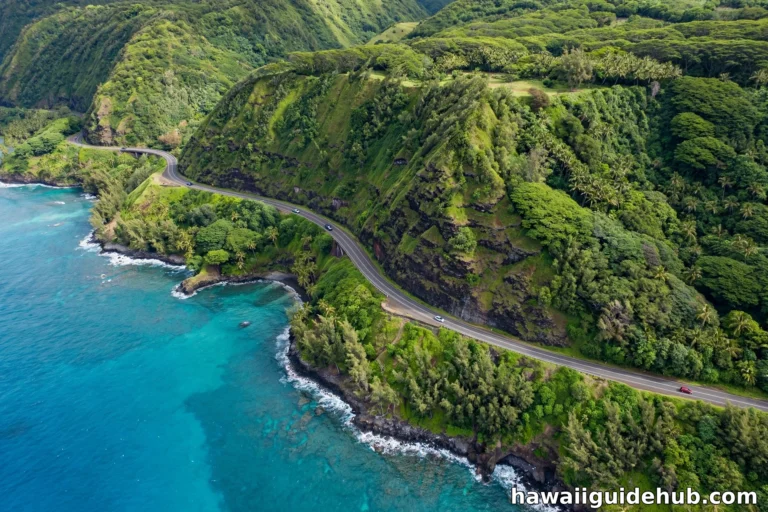
In Hawaii’s towns, resort areas, and beach parks, you are rarely more than a few minutes from a public restroom. Counties maintain restroom buildings at their beach parks, shopping malls and centers have clean facilities, airports are well stocked, and fast food restaurants and gas stations fill the gaps along highways. They are free to use, and nobody will question you for walking in. The only places where finding one takes planning are remote rural stretches, like the Road to Hana or the far North Shore, where you should go before you leave town.
Where to Find Public Restrooms in Hawaii
Your best bets, in order, start with county beach parks. Nearly every developed beach park in Hawaii has a public restroom building, free and open during daylight hours. Next come shopping malls and centers, which have the cleanest and most comfortable facilities you will find outside a hotel. Fast food restaurants are the reliable backup on road trips: walk in, use the restroom, and buy a drink if you feel like it. Gas stations along main highways usually have restrooms too, though quality varies. Airports have excellent facilities, useful on arrival and departure days. Hotel lobbies are a last resort; many have a public restroom near the lobby, though some restrict them to guests.
Beach Park Restrooms: What to Expect
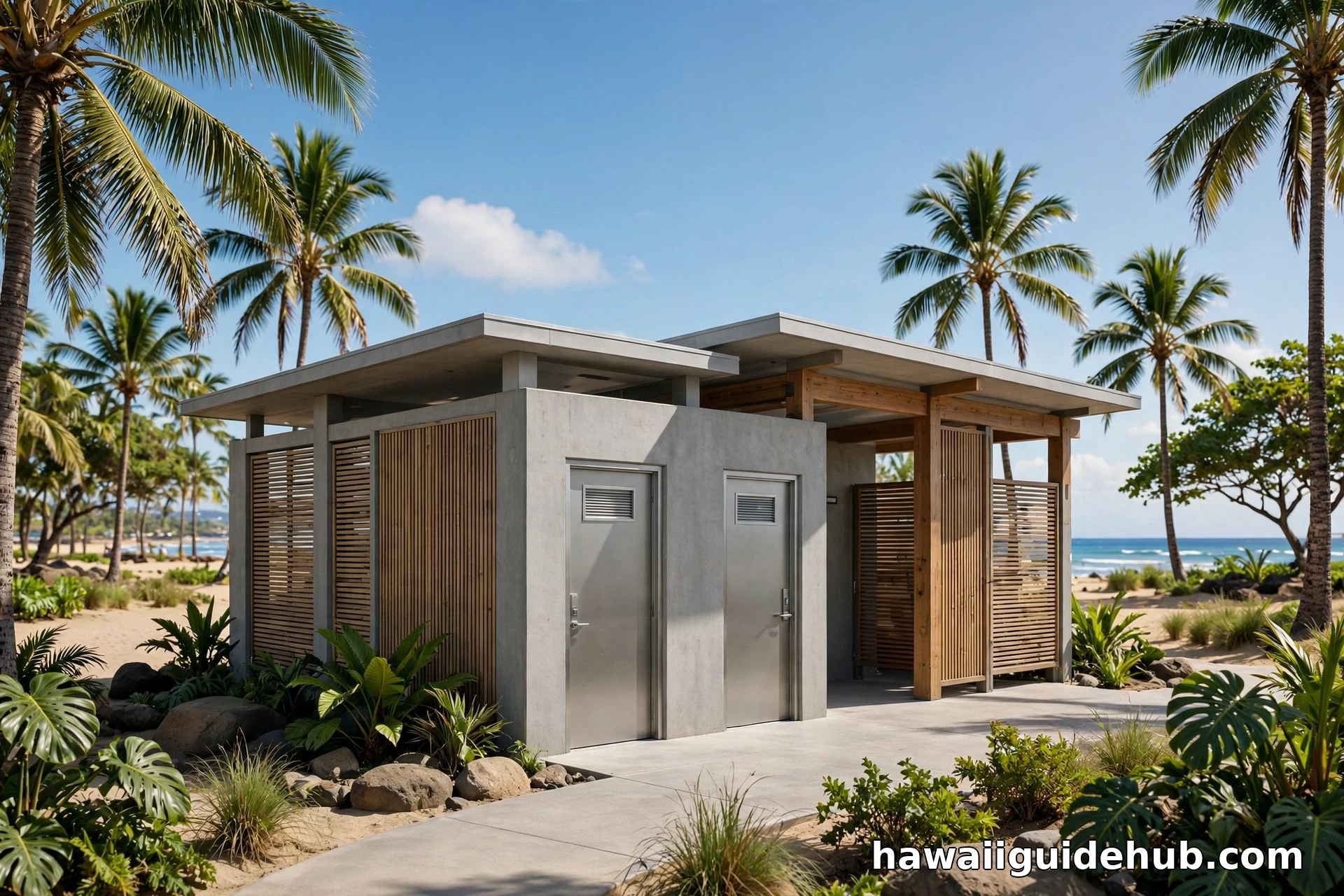
County beach park restrooms are the backbone of Hawaii’s public restroom network. They are simple concrete or block buildings, usually with separate men’s and women’s sides, toilets, sinks, and sometimes outdoor rinse showers nearby. They are free, and they are generally open from early morning until evening, closing around sunset when the parks themselves close. Do not count on them late at night.
Cleanliness varies, honestly. Popular parks near resorts tend to be cleaned regularly and stay in decent shape. Remote parks see less frequent service, and on busy weekends any restroom can run out of toilet paper or soap by afternoon. Set your expectations at functional rather than fancy, and you will be fine. The buildings are open-air by design, which keeps them ventilated in the tropical heat. Bring your own tissues and hand sanitizer as insurance, and you will never have a bad experience.
Restrooms on Each Island
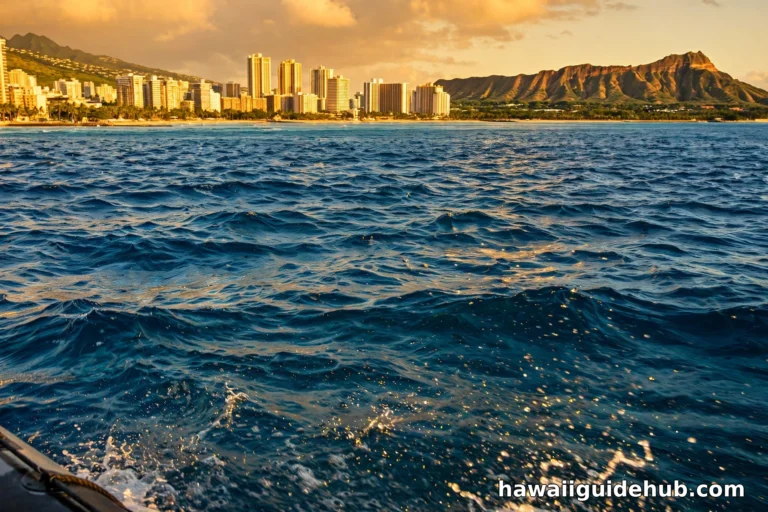
Oahu has the most options by far. Honolulu and Waikiki have malls, restaurants, and public facilities everywhere, and the island’s many beach parks are well equipped. Maui is well covered in the resort areas of Kaanapali, Wailea, and Kihei, with beach park restrooms at the popular beaches; rural stretches like the Road to Hana and the far side of Haleakalā have almost nothing, so plan ahead. Kauai’s beach parks have restrooms at the main beaches, but the North Shore beyond Hanalei and the west side past Waimea get thin. The Big Island is similar: Kona and Hilo have plenty, while the long rural highways between them do not.
Molokai and Lanai have the fewest options, with facilities concentrated around the main towns of Kaunakakai and Lanai City. If you are day-tripping to either island, treat it like a rural drive: go before you leave the town center and carry your day-pack kit. On every island, the rule is the same: use the restroom when you see one in a rural area, because the next one may be a long drive away. On every island, the rule is the same: use the restroom when you see one in a rural area, because the next one may be a long drive away. Gas stations become your best friend on the long highways, and a quick stop at a grocery store in the last town before a remote stretch is always smart.
What to Carry in Your Day Pack
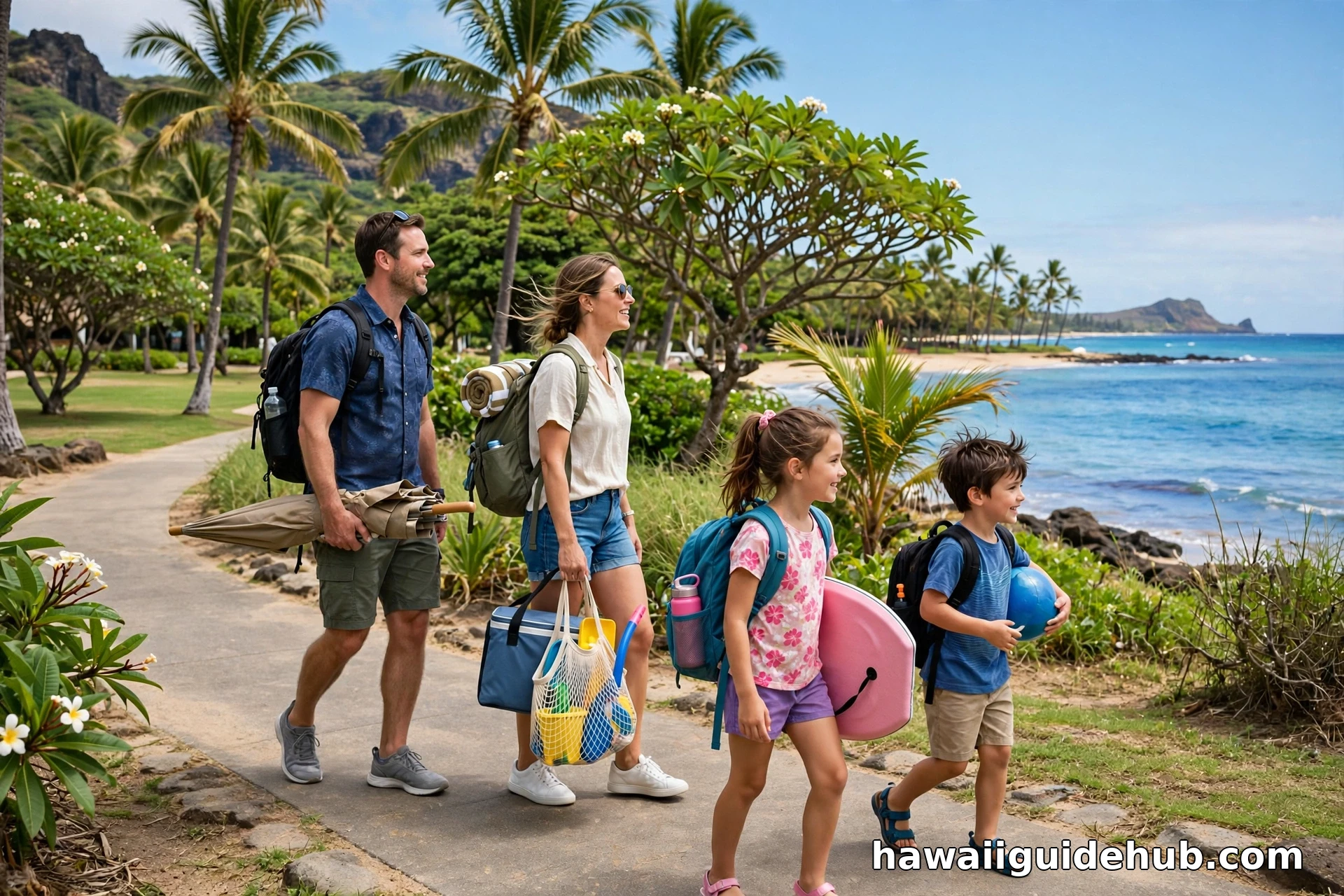
Five small items make every restroom situation in Hawaii a non-issue. Tissues or a travel pack of toilet paper, because park restrooms sometimes run out. Hand sanitizer, because sinks may lack soap. Wet wipes for quick cleanups, especially with kids. A small trash bag, so you can pack out wipes and trash from remote spots and leave every facility as you found it. And a small flashlight or your phone’s light, because some park restrooms are dimly lit and you will appreciate it at dawn or dusk.
Restroom Etiquette in Hawaii
The local ethic is simple: leave it cleaner than you found it. Hawaii’s park restrooms are shared by everyone, residents and visitors alike, and the spirit of kokua, caring for one another, applies. Do not leave trash behind. Conserve water; Hawaii’s fresh water comes from volcanic aquifers that take decades to recharge. If you use a restroom as a changing room, be quick and tidy so others are not waiting. And never wash sunscreen or soap off in or around the restroom sinks in a way that drains toward the beach; rinse off at the outdoor showers instead.
The “Customers Only” Question
In practice, Hawaii is relaxed about this. Fast food restaurants and gas stations rarely turn away someone who walks in to use the restroom, and nobody is checking receipts at mall restrooms. That said, courtesy costs little: buy a drink, a snack, or a tank of gas when you can. It keeps you welcome everywhere and it supports the local businesses that maintain these facilities. In small towns, the shave ice stand or grocery store where you buy lunch will happily point you to the restroom.
Accessible and Family Restrooms
Travelers with disabilities and Families with small children are well served. County beach parks include accessible stalls, and newer facilities are built to ADA standards. Shopping malls and airports have family restrooms with changing tables and extra space, which are far more comfortable than standard stalls when you are wrangling kids and beach gear. If you need a changing table specifically, aim for a mall or a large grocery store rather than a beach park, where they are less common.
Airports: Your Arrival and Departure Strategy
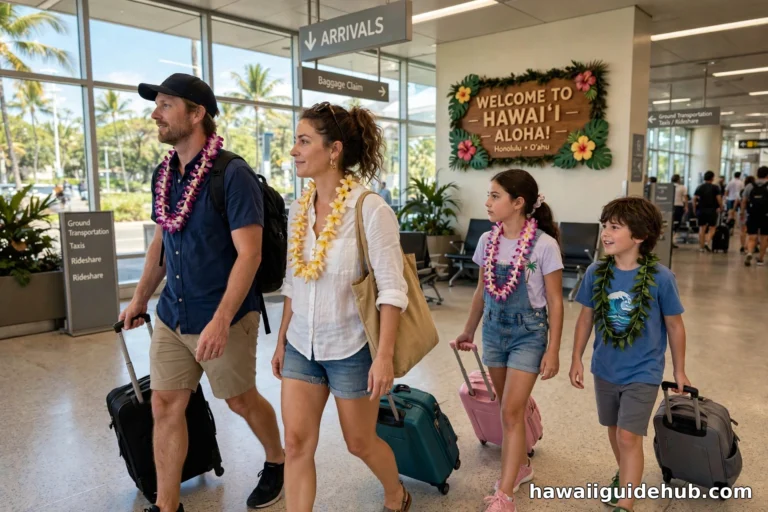
Hawaii’s airports deserve their own mention because they bookend every trip. Daniel K. Inouye International in Honolulu, Kahului, Lihue, Kona, and Hilo airports all have clean, modern restrooms in both the terminals and the rental car areas. Use them strategically. On arrival, go before you pick up the rental car, because you may be driving an hour or more to your hotel, and the first stretch of highway has few stops. On departure, go after you return the rental car but before security, since the rental car centers are a shuttle ride away from the terminal and you do not want to be caught needing one in between.
Airports are also the best place for a full refresh. If you have a long travel day, the larger terminals have spacious family restrooms where you can change out of travel clothes and into beach wear, or vice versa on the way home. Many travelers change at the airport on arrival to save time, heading straight to the beach instead of detouring to the hotel. The facilities are air conditioned, well stocked, and cleaned frequently, making them the most comfortable public restrooms you will use in Hawaii.
A Practical Beach-Day Routine
Here is how experienced Hawaii travelers handle the restroom question without thinking about it. In the morning, use your hotel restroom before leaving; it is the cleanest one you will see all day. When you arrive at the beach park, note where the restroom building is, even if you do not need it yet. Midday, when the family needs lunch, head to a nearby town for food, and use the restaurant restrooms there. This rhythm, hotel in the morning, beach park as backup, restaurant at lunch, means you never have to hunt.
For long scenic drives, the routine shifts. Eat and use the restroom in the last real town before the remote stretch. On the Road to Hana, that is Paia. On the way to Waimea Canyon, it is Waimea town. On the Saddle Road, it is Hilo or Waimea depending on your direction. Fill the gas tank at the same stop. Then drive the remote miles relaxed, knowing the next real facilities are at the far end. Parents of small children should add one more rule: stop at every decent restroom you pass in rural areas, whether anyone needs it or not, because the next one is never guaranteed.
When You Really Cannot Find One
It happens, usually on a remote road or trail. First, do not panic and do not improvise near the beach or a stream; Hawaii takes water quality seriously, and so should you. Your best move is to drive or walk to the nearest business and ask politely. In small towns, grocery stores, shave ice stands, and gas stations will almost always help a traveler in need, especially if you buy something. Locals are famously friendly, and asking, excuse me, is there a restroom nearby, works better than any app.
If you are on a trail with no facilities, follow Leave No Trace principles: go well away from trails, water, and campsites, bury waste, and pack out toilet paper and wipes in your trash bag. This is why the trash bag is in the day-pack kit. It is rare that a Hawaii day comes to this, but knowing the protocol means you are prepared for the worst case without harming the islands you came to enjoy.
Video: Kailua Beach Park Facilities
A look at Kailua Beach Park on Oahu, whose amenities include public bathrooms, beach showers, and picnic tables.
Frequently Asked Questions
Are Hawaii beach park restrooms free?
Yes. County beach park restrooms are free and open to everyone, visitors included. You will never pay to use a public restroom in Hawaii.
Are public restrooms open at night?
Generally no. Beach park restrooms typically close around sunset when the parks close. In towns, mall and restaurant restrooms are available during business hours. Plan evening outings accordingly.
Are Hawaii public restrooms clean?
It varies. Facilities near resorts and in malls are usually clean and well stocked. Remote beach parks can be rougher, especially late in the day. Carry tissues and hand sanitizer and you will be comfortable anywhere.
Can I use a hotel lobby restroom if I am not a guest?
Sometimes. Many hotels have a public restroom near the lobby, but some restrict them to guests. It is a last resort option; beach parks, malls, and restaurants are more reliable.
Where are the restrooms on the Road to Hana?
There are almost none along the road itself. Use the restroom in Paia before you start, and again in Hana when you arrive. Do not expect facilities at the roadside stops and waterfalls in between.
Are there restrooms at luaus and tourist attractions?
Yes. Commercial luaus, paid attractions, and tour departure points all have restrooms for their guests, usually clean and well maintained. This is one of the hidden comforts of booking organized activities: facilities are part of the package.
Can I use restrooms at Hawaii state parks?
State parks with developed day-use areas generally have restroom buildings, similar to county beach parks. However, some state parks charge a parking or entry fee for non-residents, so you may pay for parking even if you only need the restroom. Wilderness trailheads in state parks often have nothing at all.
Do trailheads have restrooms?
Some do and some do not. Popular trailheads in state and county parks often have a restroom building or portable toilets, but many remote trailheads have nothing. Check the trail description before you go, and go before you leave the last town.
Restrooms are one of those travel details that only matter when they go wrong, and in Hawaii they rarely do. Know the priority order, beach parks first, then malls, food stops, gas stations, and hotels, keep a tiny kit in your day pack, and plan ahead for the rural stretches. Do that, and the most practical question of your trip will never interrupt the fun.