Hawaii in May

May might be the single best month to visit Hawaii. The winter rains have eased, the summer crowds have not arrived, the ocean is warming, and the islands sit in a sweet spot of long days, calm seas, and comfortable temperatures. Add in Lei Day on May 1 and a calendar of spring festivals, and you have a month that delivers peak Hawaii without peak-season prices. This guide covers everything about Hawaii in May: the weather, the water, the events, the crowds, and how to plan the trip.
Hawaii in May at a Glance
| THE CASE FOR MAY | |
| The weather | Highs around 85°F, lows around 72°F; drier as the month progresses |
| The ocean | About 78-79°F and warming; calm south shores |
| The daylight | About 13 hours; sunrise ~6am, sunset ~7pm |
| The crowds | Low to moderate; between spring break and summer |
| The prices | Shoulder season; often cheaper than summer and winter |
| Do not miss | Lei Day, May 1 |
May Weather: The Sweet Spot
May sits at the hinge between Hawaiʻi’s two seasons, and it shows in the best way. NOAA climate normals put Honolulu’s May average high at 84.8°F and the average low at 71.5°F, warm enough for all-day beach weather without the peak heat of August. The winter rainy pattern is fading: the windward sides are still green from the wet season, but the leeward coasts are settling into their dry summer rhythm. Trade winds are steady, humidity is comfortable, and the month gets about 13 hours of daylight, with sunrise near 6:00 a.m. early in the month and sunset pushing past 7:00 p.m. by the end. For the full picture of how Hawaiian weather works across the year, see our Oʻahu winter guide, which contrasts the seasons nicely.
The Ocean in May
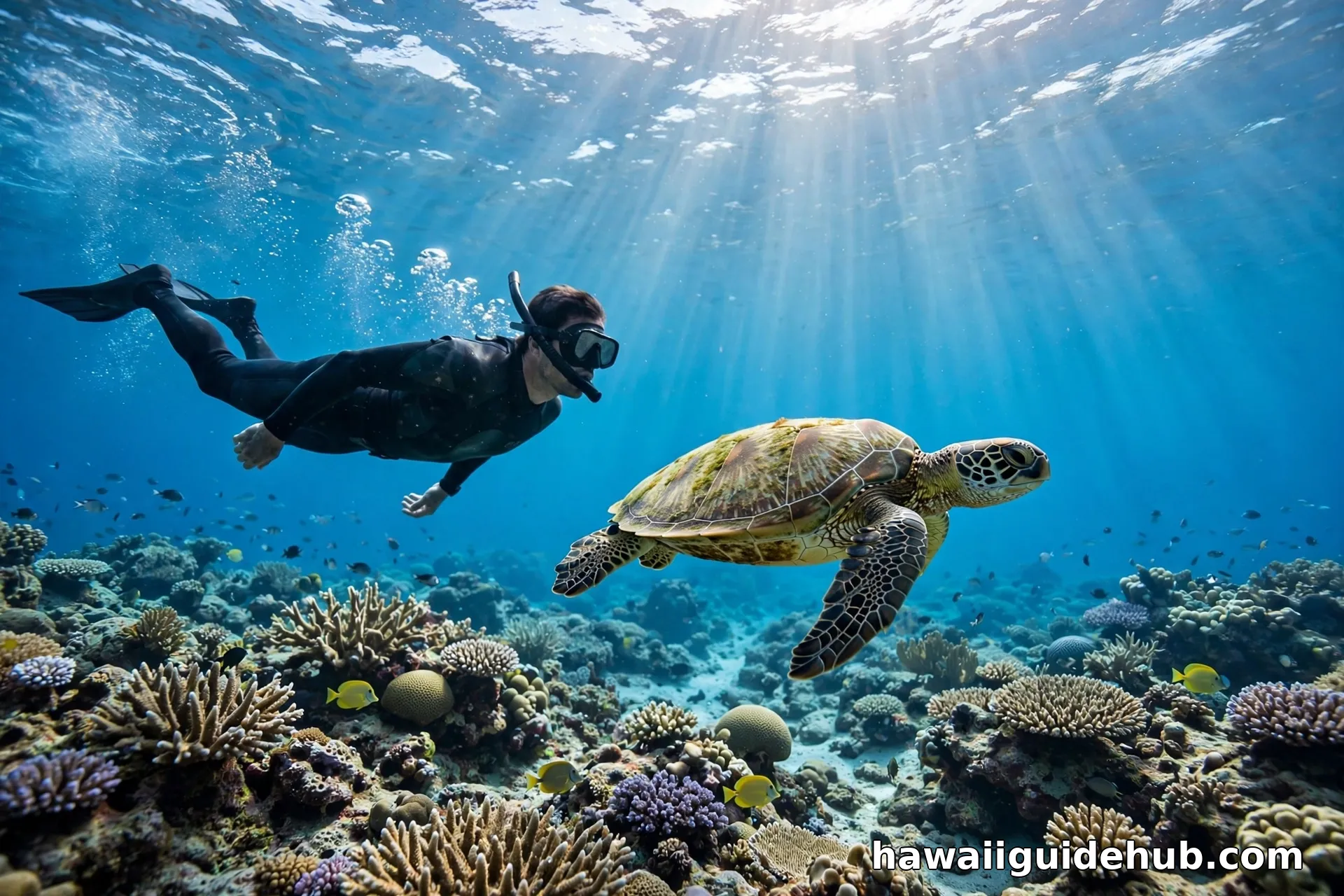
May is a superb ocean month. Water temperatures run about 78-79°F and are warming daily, comfortable for long snorkel sessions without a wetsuit. The big winter swells on the north shores have faded, and the south shores are entering their calm summer pattern, which means excellent visibility for snorkeling and diving. Sea turtles are active on the reefs, and while the humpback whales have mostly headed back to Alaska by May, the ocean feels alive in other ways. If you are still choosing which island to visit, our first-time visitor guide compares the snorkeling on each one.
Lei Day: May 1
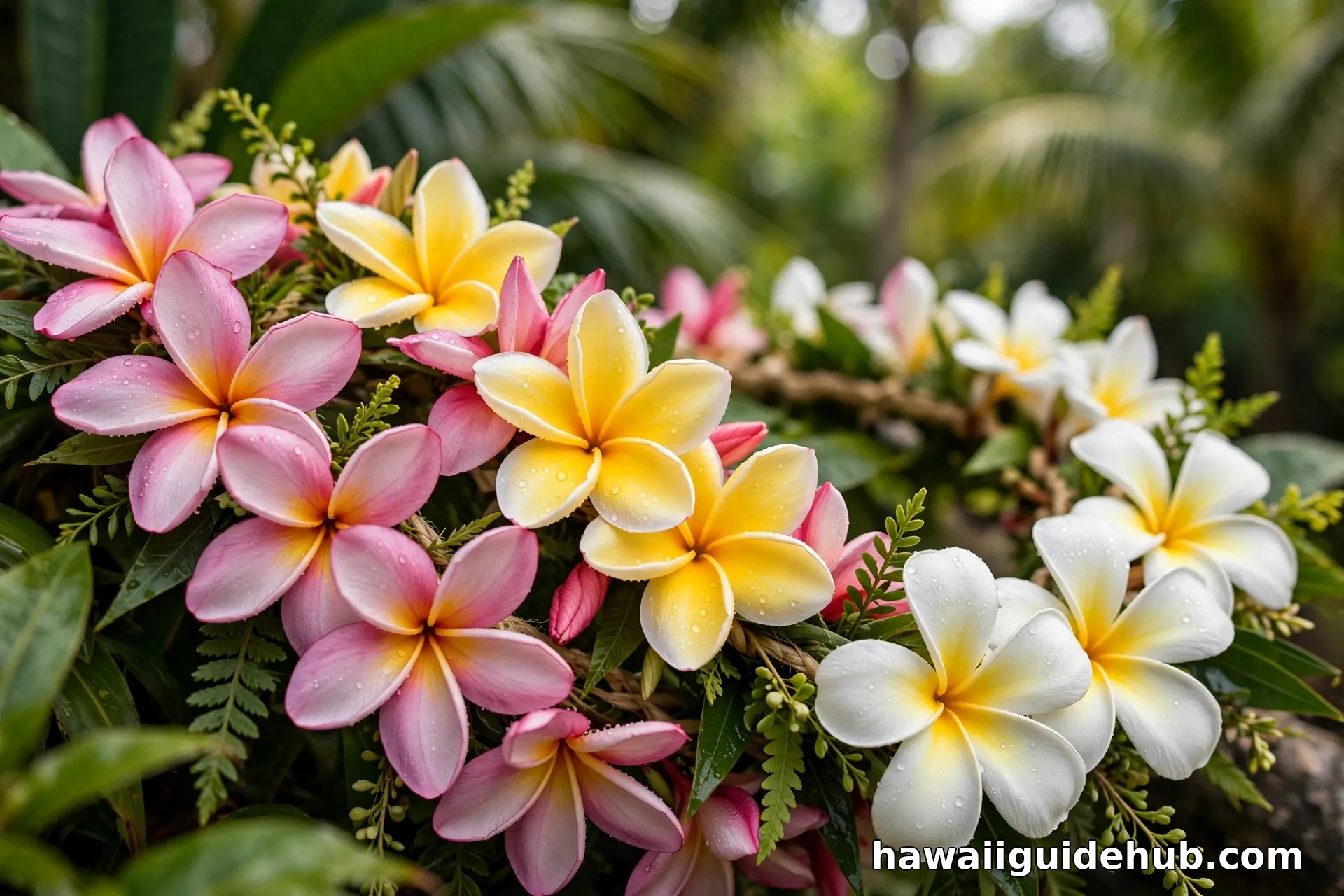
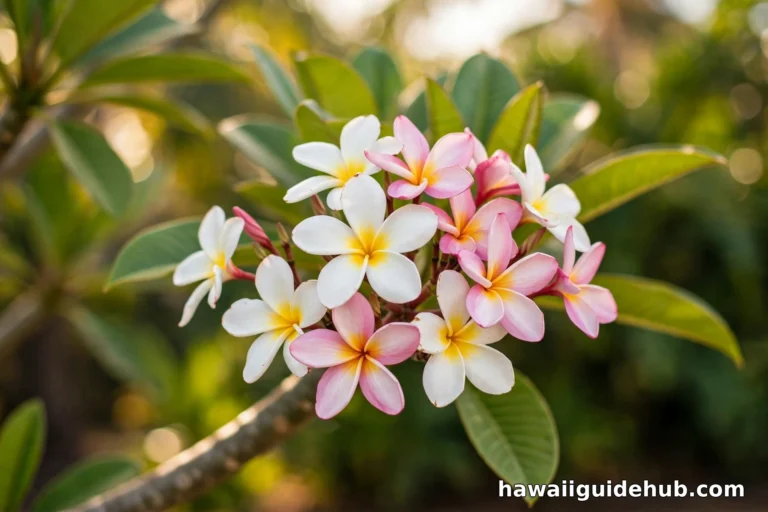
May opens with one of Hawaiʻi’s most beloved traditions: Lei Day on May 1, a celebration of the lei and Hawaiian culture with lei-making demonstrations, hula, music, and the famous lei contests. The largest celebrations happen in Honolulu, often at Kapiʻolani Park, where master lei makers display staggering creations. If your trip overlaps May 1, make it a priority; it is free, deeply local, and unlike anything else on the events calendar. Even outside the organized events, you will see more lei worn around town in early May than at any other time of year.
Crowds and Prices in May
May is shoulder season, and it is one of the best-value months of the year. Spring break crowds are gone, summer family travel has not started, and the islands feel noticeably calmer than in June or December. Hotel rates and airfares are often lower than the summer and winter peaks, though they are not the rock-bottom of the fall. The exception is the days around Memorial Day weekend at the end of the month, when domestic travel ticks up. If you can travel in the first three weeks of May, you get the best combination of weather, value, and elbow room.
May on Each Island
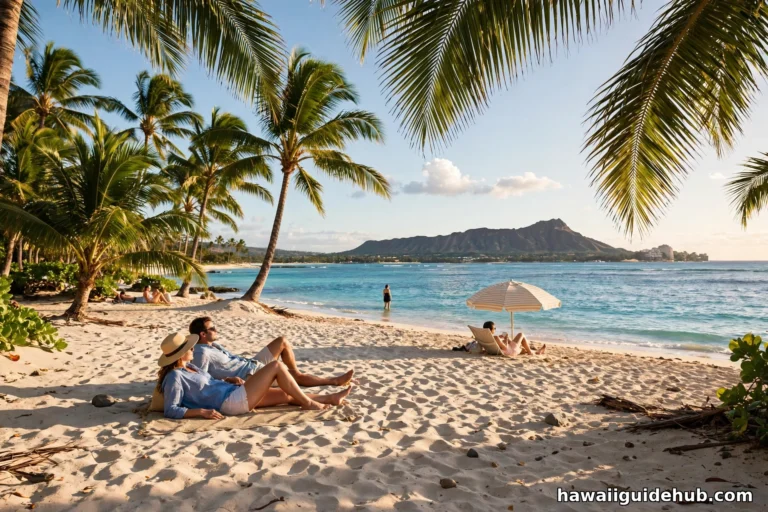
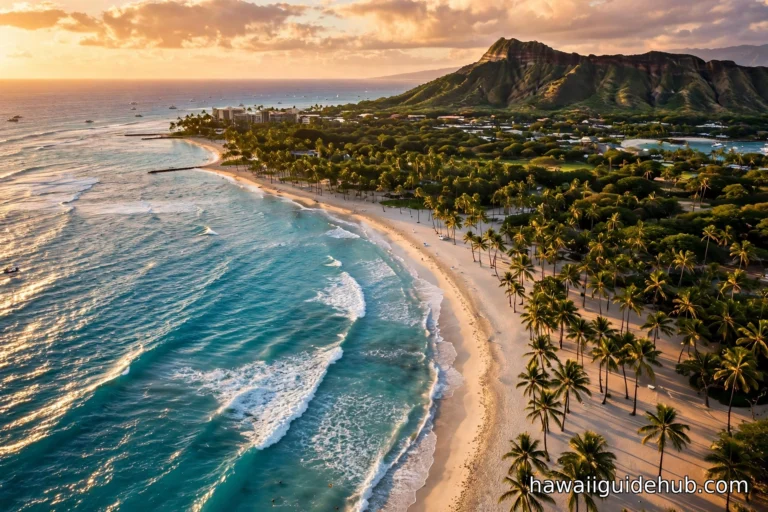
May treats every island well, but each one wears it a little differently. On Oʻahu, Waikīkī is at its most pleasant, with calm water, warm sand, and the North Shore settling into its gentle summer mood, making it a fine time for the famous beaches without the winter surf crowds. On Maui, May is arguably the island’s finest month: the Upcountry is green and cool, the south-shore beaches are calm and clear, and the Road to Hāna’s waterfalls are still running strong from the wet season’s tail. On Kauaʻi, the Garden Isle is at its lushest, with the Nā Pali Coast trails drier underfoot than in winter and the south-shore beaches entering their calm season. On the Big Island, May brings ideal conditions to both sides: the Kona coast is dry and sunny as ever, while the Hilo side’s rain eases just enough to make waterfall sightseeing comfortable. Pick the island that matches your trip style; May will not let you down on any of them.
Golden Week: The Early-May Exception
One caveat to May’s calm: Golden Week. The cluster of Japanese national holidays in late April and early May sends a wave of Japanese visitors to Hawaiʻi, especially Waikīkī, and the first week of the month can feel noticeably busier, with higher hotel occupancy and more tour buses. It is not the crush of summer or the holidays, but it is real. If you want the quietest May, aim for the second or third week. If you are traveling during Golden Week itself, book restaurants and activities a little further ahead than you otherwise would.
What to Do in Hawaii in May
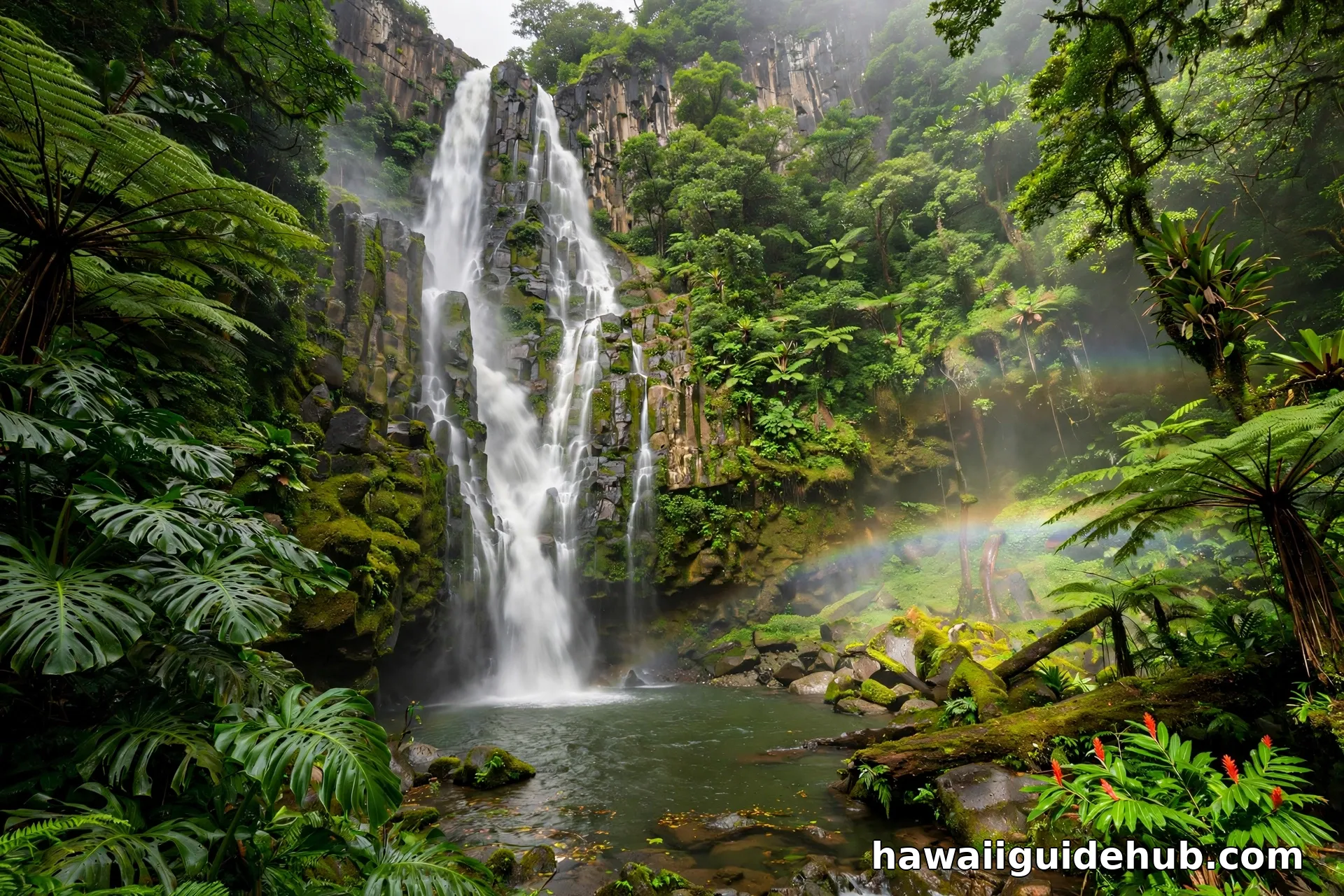
May’s conditions flatter nearly everything. Hiking trails are at their best: the winter mud has dried, the waterfalls are still fed by the tail of the wet season, and the temperatures are comfortable for climbing. Mānoa Falls on Oʻahu is a perfect May hike, lush and flowing. Beach days are peak: calm south-shore water, warm sand, long evenings. Snorkeling visibility is excellent. And the long daylight means you can stack a morning hike, an afternoon beach, and a sunset dinner without rushing any of it. If you are visiting Maui, our Maui guide will help you plan around the island’s microclimates.
May vs. Other Months
How does May stack up? Against winter (December-March), May is drier, calmer, and cheaper, though you trade away whale watching and big-wave surf spectating. Against summer (June-August), May is nearly as warm with far fewer crowds and lower prices, though the ocean is a degree or two cooler and the days slightly shorter. Against September-October, the other shoulder season, May is lusher and greener from the wet season’s tail, while fall is drier but browner. For most travelers, May and October are the two best-value months of the year; May wins for greenery and waterfall flow, October for the driest beach weather.
May Festivals and Events
Beyond Lei Day, May’s calendar includes music festivals, food events, and cultural celebrations across the islands, with the specific lineup varying by year. The Merrie Monarch hula festival, the world’s premier hula competition, usually falls in April but occasionally brushes early May in Hilo. On Oʻahu, spring brings outdoor concerts and community festivals as the weather turns reliably dry. On Maui, May is a popular month for ocean-centered events as the water calms. Check the current year’s event listings a month or two before your trip, since festival dates shift. The general rule for May: there is always something on, but nothing so dominant that it overwhelms the islands, which is exactly the balance you want.
Where to Stay in May
May’s shoulder-season status is your negotiating advantage. Waikīkī hotels that charge peak rates in summer and winter often run spring promotions, and vacation rentals on every island tend to have better availability than in the high seasons. The strategic choice: stay on the leeward side for the driest beach weather, Waikīkī or Ko Olina on Oʻahu, Kāʻanapali or Wailea on Maui, Poʻipū on Kauaʻi, the Kona coast on the Big Island. If you are island-hopping, May’s calmer interisland flight schedules and lower demand make multi-island trips smoother than in summer. Book the first three weeks of the month for the best rates; Memorial Day week behaves like a mini peak season.
Sample 7-Day May Itinerary
Here is how a week in May can flow on Oʻahu, the easiest island for a first visit. Day 1: arrive, settle into Waikīkī, sunset on the beach. Day 2: Diamond Head at sunrise (book ahead), then Waikīkī beach afternoon. Day 3: drive the windward coast, Kailua Beach, and the Nuʻuanu Pali Lookout. Day 4: North Shore day trip, shrimp trucks in Haleʻiwa, sunset at Sunset Beach. Day 5: Mānoa Falls hike in the morning, Bishop Museum or ʻIolani Palace in the afternoon. Day 6: snorkel day, then a final Waikīkī evening. Day 7: last swim, poke for lunch, fly home. May’s long days and calm seas make this pace relaxed rather than rushed, and the shoulder-season crowds mean you will not be fighting for parking at every stop.
What to Pack for May
Pack for summer with one light layer. Days are beach-hot, evenings are mild, and you will want a light jacket only for air-conditioned restaurants, Upcountry evenings, or a Haleakalā sunrise. Reef-safe sunscreen is essential; the May sun is strong and the UV index runs high. Bring a reusable water bottle, a hat, and quick-dry clothes. If you are visiting in the first half of the month, toss in a compact rain jacket for the occasional passing shower, though you will likely never unfold it. Water shoes are worth packing if you plan to explore tide pools or rocky entries; for pure sand beaches, flip-flops do the job.
Video: Visiting Hawaii in Spring
Oʻahu travel experiences and suggestions, including why spring is a smart time to visit.
Frequently Asked Questions
Is May a good time to visit Hawaii?
Yes, it is one of the best months. Warm dry weather, calm seas, low crowds, shoulder-season prices, and about 13 hours of daylight make May arguably the sweet spot of the Hawaiian year, beating even the peak summer months for overall value.
Is it rainy in Hawaii in May?
Not much. May marks the transition into the dry season; the leeward coasts are settling into their summer dry pattern, and while the windward sides still see passing showers, prolonged rain is uncommon.
What is the water temperature in Hawaii in May?
About 78-79°F and warming. Comfortable for swimming and snorkeling without a wetsuit, with excellent visibility as the winter swells fade.
Are there whales in Hawaii in May?
Mostly not. Humpback whale season runs December through April, and by May the vast majority have migrated back to Alaska. Late stragglers are occasionally spotted in early May, but do not plan a trip around it.
What happens on Lei Day?
Lei Day on May 1 celebrates Hawaiian culture and the art of lei making, with demonstrations, hula, music, and lei contests. The biggest celebrations are in Honolulu, and events are free and open to all.
Is May crowded in Hawaii?
Generally no. May is shoulder season, between spring break and summer, with lower crowds and better prices than the peak months. The main exception is Golden Week in late April and early May, when Japanese visitor numbers spike, especially in Waikīkī.
Can you swim in Hawaii in May?
Absolutely. Ocean temperatures are about 78-79°F, the south shores are calm, and conditions are ideal for swimming and snorkeling on all islands.
Is May hurricane season in Hawaii?
No. Hurricane season runs June through November, so May sits just outside it. Early-season tropical activity is extremely rare, and May is one of the calmest months for ocean conditions.
May is Hawaii at its most generous: summer weather without summer crowds, warm water without the peak heat, and a cultural calendar that opens with flowers. If your schedule is flexible, point it at May. Book the first three weeks for the best value, plan around Lei Day if you can, and leave room in the itinerary for the spontaneous beach afternoon that May all but guarantees. Few months reward the traveler this consistently. The islands will do the rest.