Common Flowers in Hawaiʻi: Names You Will See Every Day

Walk out of almost any airport, hotel, or grocery store in Hawaiʻi and flowers are the first thing you meet. They spill over garden walls, perfume the sidewalks, and arrive around your neck within minutes of landing. Yet most visitors can name only one or two of the blooms they are seeing, and many assume every colorful flower in the islands is native. The truth is more interesting, and learning the common flowers in Hawaiʻi, with their names, turns every walk into a small field trip.
This guide is the single reference for flowers from Hawaiʻi names. It covers the blooms you will actually see every day, from plumeria and hibiscus to pikake, ʻilima, and ʻōhiʻa lehua. For each one you get the English name, the Hawaiian name where one exists, how to recognize it, whether it is native, introduced, or endemic, and where it fits in Hawaiian culture, including lei making and the official island flower list set in state law.
First, a Quick Word on Native, Endemic, and Introduced
Three words explain almost every flower story in Hawaiʻi. A native plant reached the islands without human help, carried by wind, waves, or birds over immense time. An endemic plant is native and found naturally nowhere else on Earth, and Hawaiʻi has an unusually high share of them because the islands are so isolated. An introduced plant arrived with people, either with Polynesian voyagers, who brought essential canoe plants such as kukui and tī, or in the centuries after 1778, when ships brought ornamentals from around the world. Many of the most common flowers in Hawaiʻi today, including plumeria and bougainvillea, are beloved introductions rather than natives, and there is no shame in that. Knowing which is which simply makes the landscape readable.
| Flower | Hawaiian name | Status | Where you will see it |
| Plumeria | Melia | Introduced | Yards, hotels, cemeteries, lei stands |
| Yellow hibiscus | Maʻo hau hele | Endemic, endangered, state flower | Botanical gardens, dry native plantings |
| ʻŌhiʻa lehua | ʻŌhiʻa lehua | Endemic | Upland forests, volcano landscapes |
| Pikake | Pīkake | Introduced | Gardens, lei, perfume hedges |
| ʻIlima | ʻIlima | Native | Coastal areas, Oʻahu lei |
| Naupaka | Naupaka kahakai | Native | Beach shrubs statewide |
| Bougainvillea | Pua kepani in common use | Introduced | Walls, fences, dry slopes |
| Bird of paradise | No traditional name | Introduced | Hotel landscaping, cut flower farms |
Plumeria (Melia): The Lei Flower Everyone Knows
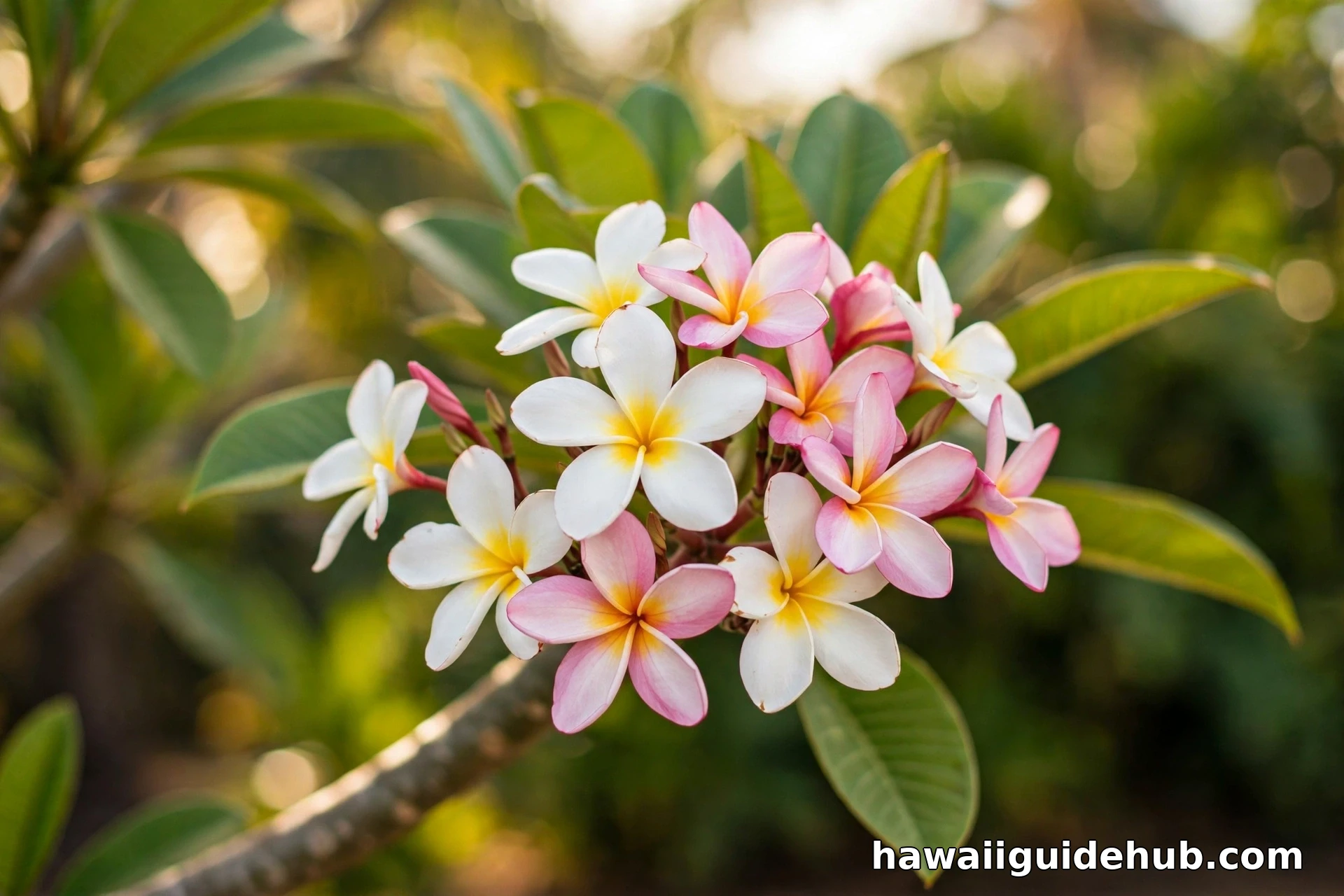
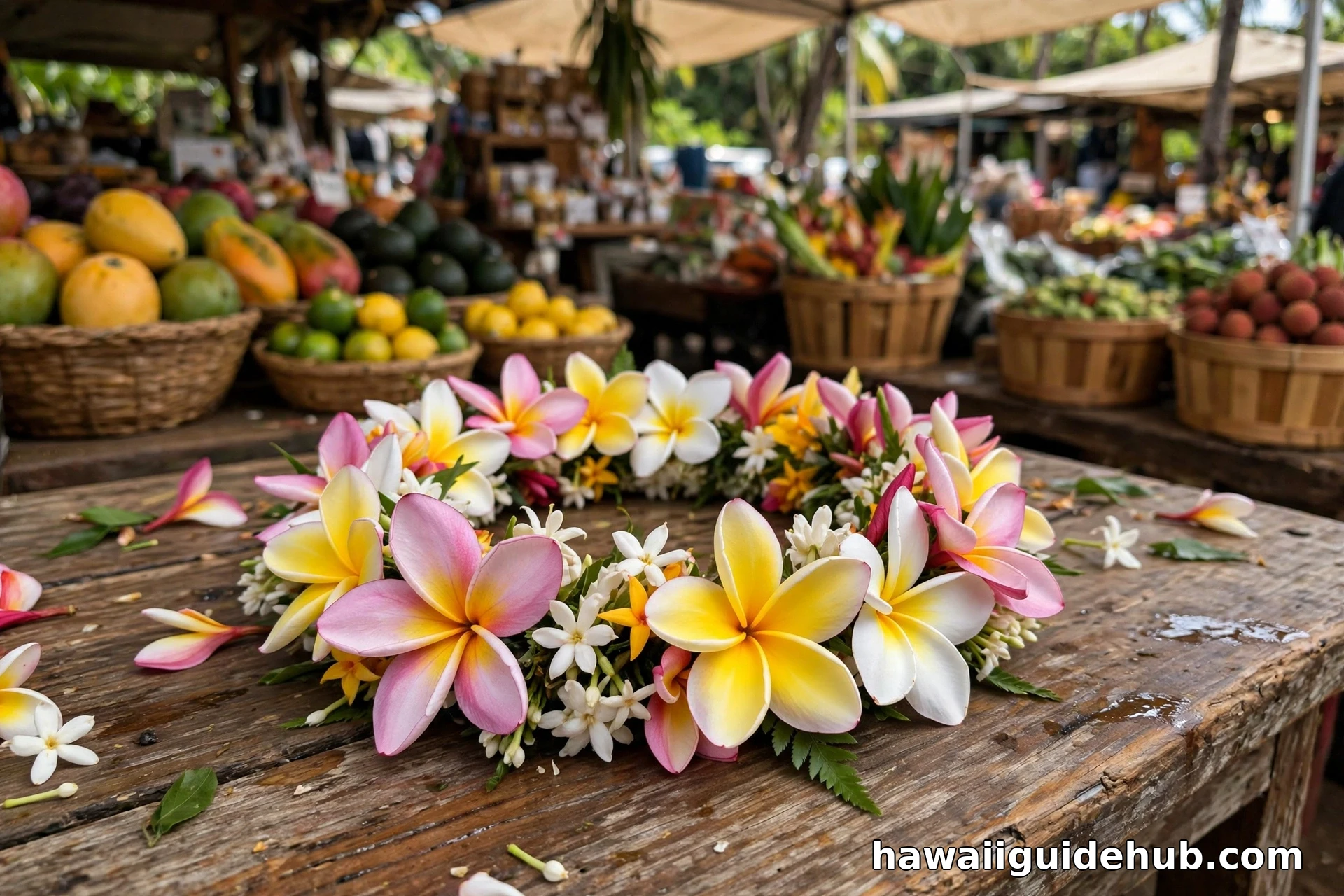
If one flower defines the visitor experience, it is plumeria. The five petaled blooms grow in clusters at the tips of thick, sculptural branches, in white, yellow, pink, red, and sunset blends, and they carry the sweet, unmistakable fragrance that greets you at the airport. Plumeria came to Hawaiʻi from the tropical Americas in the 1800s and thrived so completely that it now feels like it was always here. The trees drop their leaves in winter, bloom heaviest from spring through fall, and drop fresh flowers daily, which is why you find perfect blooms scattered on sidewalks every morning.
Plumeria is the workhorse of the visitor lei because the flowers are fragrant, sturdy enough to string, and produced in generous clusters. A fresh plumeria lei is also the flower behind the single bloom tucked behind an ear across the islands. For a deeper look at the flower most people picture first, see our guide to the Hawaiʻi flower and what it means.
Hibiscus: Garden Star and Official State Flower
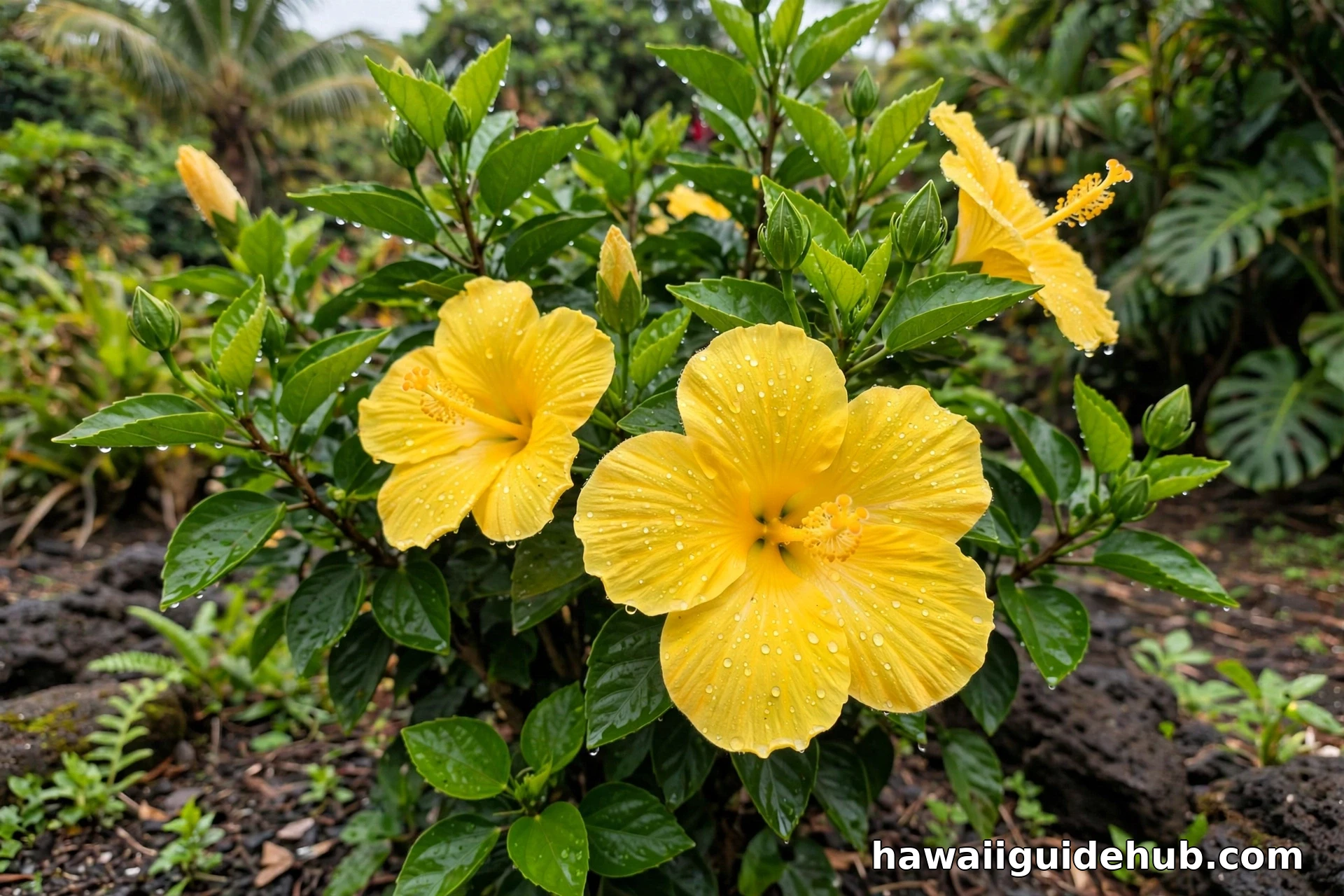
Hibiscus hedges bloom in red, pink, orange, and yellow outside homes and hotels on every island, and most of those garden shrubs are hybrid ornamentals bred for size and color. The hibiscus that matters most legally and ecologically is a different plant. In 1988 the state designated the native yellow hibiscus, Hibiscus brackenridgei, known in Hawaiian as maʻo hau hele, as the official state flower. It is endemic, found in the wild nowhere else, and it is listed as endangered, surviving in dry forest and shrubland on several islands in small numbers.
Hawaiʻi also has native white hibiscus, including kokiʻo keʻokeʻo, one of the few hibiscus in the world with a noticeable fragrance. The practical lesson for visitors is simple: enjoy the rainbow hedges, but understand that the big ornamental blooms are garden hybrids, while the true state flower is a rarer yellow native you are most likely to see labeled in a botanical garden. That distinction is one of the most common flower misconceptions in the islands, right alongside assuming plumeria is native.
ʻŌhiʻa Lehua: The Forest Flower With the Highest Stakes
No common flower list is complete without ʻōhiʻa lehua, the pompom bloom of the ʻōhiʻa tree, most often red and sometimes yellow, orange, or white. ʻŌhiʻa is the backbone tree of Hawaiian native forest, among the first plants to colonize new lava flows, and its nectar feeds native forest birds. It is also the official flower of Hawaiʻi Island under state law. In recent years a fungal disease called Rapid ʻŌhiʻa Death has killed large numbers of these trees, which is why visitors are asked to clean boots and gear between forests and never move ʻōhiʻa wood or soil between islands. Admiring lehua blossoms carries a responsibility that garden flowers do not.
Pikake, ʻIlima, and Naupaka: Three Small Flowers With Big Stories
Pikake is the Hawaiian name for Arabian jasmine, a introduced garden shrub whose small white blossoms produce one of the most prized fragrances in the islands. Princess Kaʻiulani was fond of both the flower and the peacocks, called pīkake, that roamed her garden, and the name connects the two. Strung into lei, often in multiple strands, pikake is a classic choice for weddings and graduations, and its scent is instantly recognizable in perfumes and lotions across Hawaiʻi.
ʻIlima is a native coastal shrub with small yellow to orange flowers, fine and papery, that were historically strung into lei associated with royalty. ʻIlima is the official flower of Oʻahu. A finished ʻilima lei can require hundreds of delicate blossoms, which is why genuine ʻilima lei are treasured and priced accordingly. Naupaka kahakai, the beach naupaka, is the native shrub with thick, glossy leaves and a curious white flower that looks like half a blossom, with petals on one side only. Hawaiian tradition explains the half flower through a story of separated lovers, one belonging to the shore and one to the mountains, where the mountain naupaka bears the matching half.
The Official Island Flowers
State law, Hawaiʻi Revised Statutes section 5-16, names a flower or lei material for each island, and the list is a small tour of Hawaiian botany. Hawaiʻi Island claims ʻōhiʻa lehua. Maui claims lokelani, the pink Damask rose. Oʻahu claims ʻilima. Kauaʻi claims mokihana, a fragrant native berry used in lei rather than a showy petal flower. Molokaʻi claims the white kukui blossom. Lānaʻi claims kaunaʻoa, a native orange dodder vine. Niʻihau claims pūpū, small white shells, the one entry that is not a plant at all. Kahoʻolawe claims hinahina, the silvery native beach heliotrope. Island colors used in pageantry and school traditions follow the same list, which is why Maui pink and Hawaiʻi Island red show up everywhere.
More Common Flowers You Will See Every Day
Bougainvillea pours over walls in magenta, red, orange, and white, especially on dry, sunny sides of the islands. What look like petals are actually colored bracts around tiny true flowers. Bird of paradise, from South Africa, raises orange and blue crane shaped blooms in hotel landscaping statewide. Anthuriums, from the Americas, produce glossy red, pink, and white heart shaped spathes and anchor a long running Big Island cut flower industry. Orchids appear in lei, hotel lobbies, and shaded gardens, with purple and white dendrobium orchids the most common lei import and local greenhouse product. Heliconia and red ginger add vertical red and pink torches to wet windward gardens. Crown flower, a pale lavender milkweed relative, is strung into lei once favored by Queen Liliʻuokalani. Ti plants, while grown for their leaves rather than flowers, frame half the gardens in the state and belong in any honest survey of Hawaiian yards.
Together these plants explain why a simple neighborhood walk can feel like a botanical garden tour. If your curiosity runs toward the edible side of Hawaiian plants, our guide to native Hawaiian fruits makes a natural companion read, and our collection of Hawaiʻi facts covers the state symbols, including the flower, in context.
Flowers, Lei, and How to Behave Around Them
Lei are the living link between these flowers and Hawaiian culture. A lei is given, not taken, and it is worn with appreciation rather than removed in front of the giver. If you receive one and cannot keep it, passing it on respectfully or leaving it at a meaningful natural place, without littering, is better than a trash can. Never pick flowers from yards, parks, or native forest to make your own. Many native plants are protected, some are endangered, and picking in gardens is simply taking someone else’s work. Buy lei from lei makers and stands, where the flowers were grown or gathered for that purpose. Our guide to what to wear to a lūʻau explains where a lei fits into dressing respectfully for the occasion.
One practical note on taking flowers home: cut flowers and lei generally can travel to the mainland United States, but they pass through agricultural inspection, and plants, soil, and some seeds and fruits are restricted. Pre inspected lei from airport shops are the simplest option for travelers. Rules change, so check the inspection guidance at the airport rather than relying on habit.
Video: A Walk Through a Hawaiʻi Tropical Garden
Watch the layered look of a real island garden, where common flowers grow in the same beds you will pass on your own walks.
Frequently Asked Questions
What is the most common flower in Hawaiʻi?
Plumeria is the flower visitors encounter most often, in yards, hotel grounds, cemeteries, and lei. Hibiscus hedges run a close second. Both are introductions that became fully woven into island life, which is a useful reminder that common and native are two different ideas in Hawaiʻi.
What is the Hawaiʻi state flower?
The state flower is the native yellow hibiscus, Hibiscus brackenridgei, called maʻo hau hele. It was designated in 1988. It is endemic to Hawaiʻi and listed as endangered, so the state flower is also a conservation story, not just a symbol.
What are flowers from Hawaiʻi called in Hawaiian?
The general word for flower is pua. Individual flowers carry their own names: melia for plumeria, pīkake for Arabian jasmine, ʻilima for the native coastal shrub, and maʻo hau hele for the yellow hibiscus. This page collects those names together so you can match a bloom to its Hawaiian name on sight.
Is plumeria native to Hawaiʻi?
No. Plumeria is native to the tropical Americas and was introduced to Hawaiʻi in the 1800s. It naturalized so completely, and became so central to lei making and the visitor welcome, that most people reasonably assume it is native. It is instead the best example of an introduced plant becoming a Hawaiian icon.
Which flowers are used in Hawaiian lei?
Plumeria, pikake, tuberose, orchids, ʻilima, crown flower, and maile foliage are among the most used materials, along with native berries such as mokihana on Kauaʻi. Fragile native blooms like ʻilima require hundreds of flowers per lei, which is why authentic native lei are special occasion pieces.
The common flowers of Hawaiʻi reward a second look because so few of them are only decoration. One is a state symbol fighting for survival in dry forest. One feeds endangered forest birds and anchors a culture’s first forests on new lava. One arrived on a ship two centuries ago and now defines how the whole world imagines these islands. Learn their names, and the sidewalks, shorelines, and mountain trails of Hawaiʻi start telling you their stories as you pass.