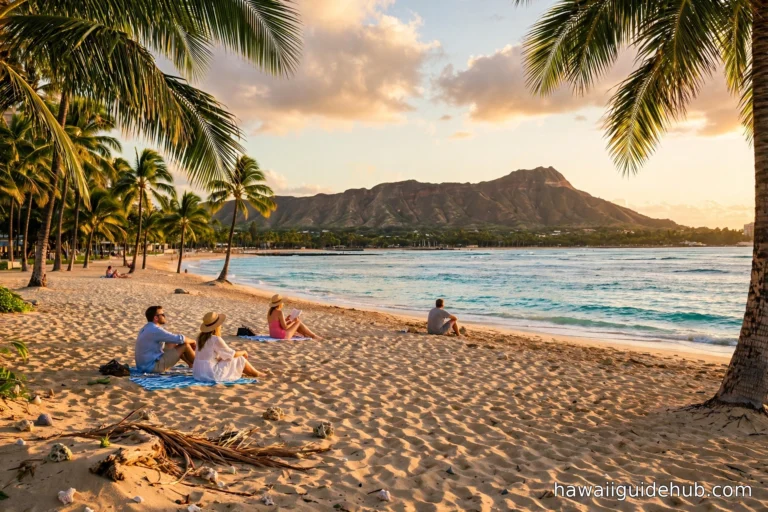
Hawaii Beach Fires and Barbecues: Park Rules and Planning

Do not assume that a bonfire on a Hawaiian beach is permitted. Open fires on sand, cooking in a grill and using an authorized campground fire facility are different activities. The rules depend on who manages the exact site, posted restrictions and current fire conditions.
For most visitors, the practical choice is a picnic or an authorized barbecue, after checking the park’s rules. A beach photograph, an old fire ring or someone else’s fire is not evidence of permission. This guide explains the distinctions and where to check before bringing fuel or cooking equipment.
A Bonfire Is Not the Same as a Barbecue
A pile of wood burning on sand is an open fire. A barbecue uses an approved grill or brazier for cooking. A campground may have a separate designated fireplace or fire ring, but its use still depends on that campground’s rules and any temporary restrictions.
Do not assume that permission to cook includes permission to build a larger wood fire, roast food over a fire on the beach or burn driftwood. A cooking facility is not a general bonfire area. Digging a pit in the sand does not create authorization.
State Parks: Follow the Site Rules
The Hawaii State Parks rules direct visitors to use provided fireplaces and grills where fires are not prohibited. They allow portable stoves or warming devices in designated camping and picnic areas unless prohibited. These are conditional permissions, not a statewide right to light fires at any beach.
The same guidance specifies designated ash pits or receptacles for live coals. Never put hot coals in ordinary rubbish bins, bury them in sand or scatter them on the ground. If you cannot identify the authorized disposal method, ask park staff before cooking.
Individual parks can be stricter. For example, Nā Pali Coast State Wilderness Park prohibits open fires. A camping permit does not override a specific fire prohibition.
Oahu County Parks: Check Honolulu’s Rules
Honolulu’s general park rules prohibit fires other than in a grill or brazier. Posted directions and more specific camping or facility rules also apply. This does not establish that every park has a grill available or that any portable device is suitable in any location.
If you are considering Ala Moana, Kailua or Waimānalo, confirm the current facility and cooking rules with the Honolulu Department of Parks and Recreation. Do not plan around an unverified claim that these parks provide public bonfire pits. A charcoal-disposal receptacle is not a place to build a fire.
Check closing times for the exact park. There is no single 10 p.m. closing time that can safely be assumed for every beach or access area. Day-use access, overnight camping and special events can have different requirements.

Other Counties and Campgrounds
On Kauai, the county parks code contains specific fire and grill provisions, including supervision and extinguishing requirements. If your visit includes the Garden Isle, see our guide to things to do on Kauai and our roundup of Kauai’s top swimming beaches — but note that state parks on Kauai operate under a different management system than county parks, so check the managing authority rather than applying one island-wide rule to every beach.
For Maui County facilities, start with the Department of Parks and Recreation rules and the conditions attached to the specific permit or campground. A rule for one campsite does not automatically apply to another beach park.
For any other county park, national park, private campground or concession-operated area, consult that site’s own current information. Confirm the exact campground section as well as its name. A nearby beach with the same place name may have a different manager and different restrictions.
Before paying for a campsite or buying fuel, ask whether cooking is allowed, which devices and fuels are permitted, where equipment may be placed and how ash must be handled. If permission is unclear, use a meal that does not require a fire.
Questions to Resolve Before a Beach Barbecue
Who manages this location? Identify the actual park or campground, not just the nearest town or beach nickname. State, county and federal land can have different conditions.
Is the site open? Check current closure and access notices. Storm damage, maintenance or fire restrictions can change what is available even when a general park page describes cooking facilities.
What equipment is allowed? Confirm whether a provided grill, portable grill or stove is permitted. Do not assume the existence of a picnic table means a cooking device may be placed on it.
Do we need a permit? Group use, reserved areas, camping and special activities may have different permit requirements. Do not rely on a blanket claim that permits begin at 25 people. Ask the managing authority about your actual gathering.
How will we finish and leave? Allow time to stop cooking, deal with fuel and waste through the authorized method, and leave before closing. Do not start an activity that you cannot complete responsibly within the available time.
Fire Conditions Can Change the Plan
Permission under ordinary rules does not mean that using a flame is sensible or permitted during every weather condition. Wind can carry embers into dry vegetation. Check current restrictions and warnings before leaving, and reassess at the site.
DLNR’s Be Pono Outdoors guidance emphasizes responsible fire use, a ready water source and ensuring coals are cool before leaving. Keep a responsible adult attending any authorized cooking fire and keep children and equipment away from hot surfaces.
Use only the fuel and equipment allowed by the site and follow manufacturer directions. Do not burn rubbish, plastics or treated timber. Do not collect vegetation or materials from a protected site to use as fuel.
If a fire escapes control, move people away and call 911. Do not remain to protect belongings or attempt to fight a spreading fire beyond your ability. Follow instructions from emergency personnel.
Why Burying Coals Is Not Cleanup
Sand can conceal heat rather than make it disappear. Buried coals can injure someone who later walks or digs in that spot. An apparently tidy beach can therefore still contain a serious hazard.
Use the park’s authorized ash-disposal procedure and follow instructions for the particular grill or fuel. Do not pour hot material into an ordinary bin, vegetation, drains or the ocean. Keep children away from the cooking and disposal areas until everything is fully cooled and the area is safe.
Plan an Evening That Does Not Need a Fire
A picnic with prepared food can provide the same time together without depending on fire facilities. Bring drinking water, suitable food storage, a light layer, a rubbish bag and enough lighting to pack up. Check rules on alcohol, amplified sound and park hours for the exact site.
Keep light and noise low around wildlife and other visitors. Stay away from nesting or resting animals, leave natural materials in place and take your belongings and waste with you. Do not turn a sunset visit into nighttime swimming at an unfamiliar beach.
Use our Hawaii packing list generator to prepare a general checklist, then adapt it to the park and your group. For broader ideas, browse the existing things-to-do guides and choose an activity that fits current access and conditions.
Quick Answers
Can I make a fire directly on the sand? Do not assume you may. The state and Honolulu rules discussed above restrict where fires can be used. A hole or ring of rocks does not make an open beach fire lawful.
Does a camping permit include a bonfire? Not automatically. Read the permit conditions and the site’s fire rules; specific prohibitions and temporary restrictions still apply.
Can I use a barbecue instead? Sometimes, where the exact facility, device and use are permitted. Confirm the rules and disposal arrangements first. If you cannot verify them, bring prepared food and leave the fuel behind.