Little Fire Ants in Hawaii: The Tiny Terror Raining From Trees

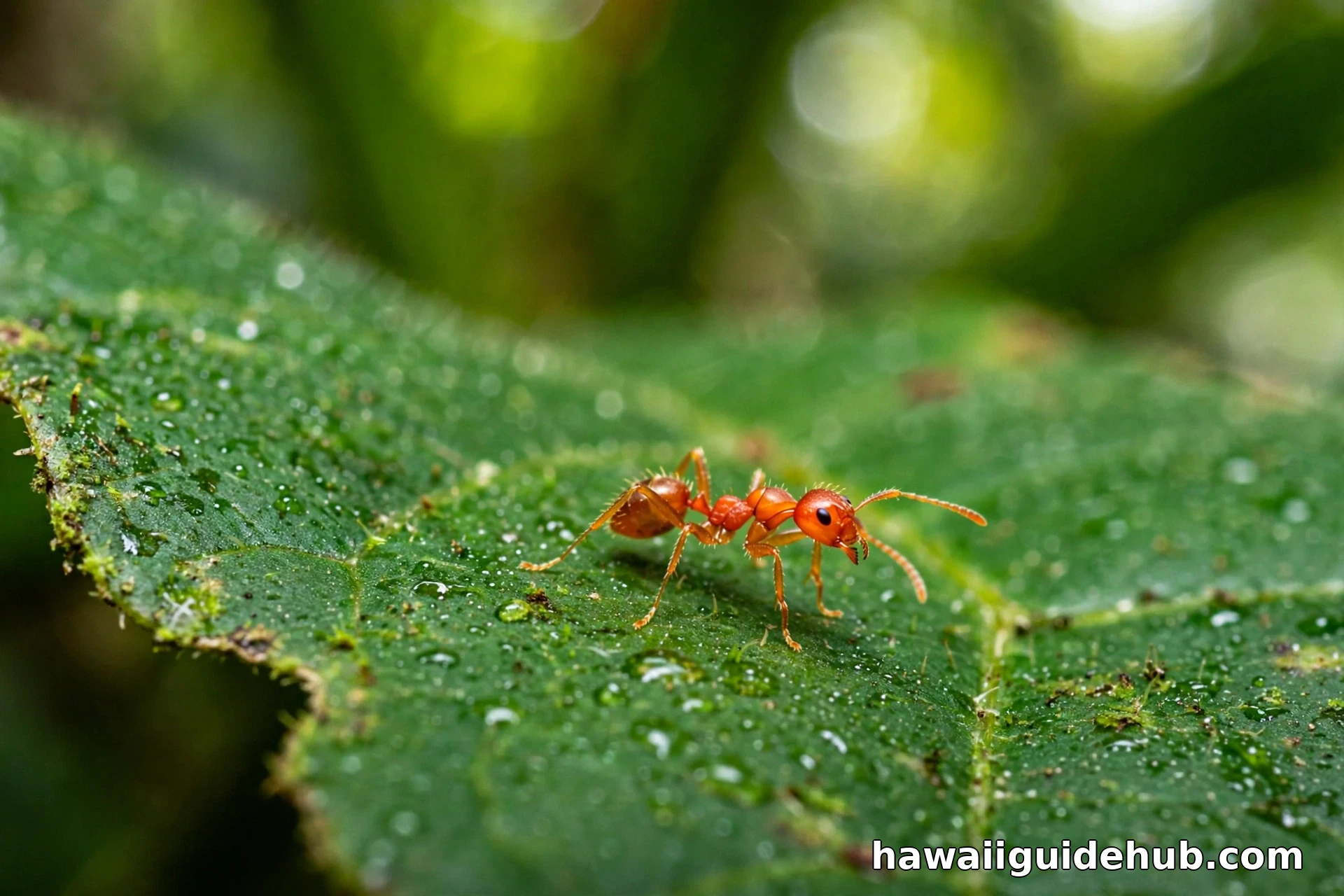
It is as long as a penny is thick, pale orange, and it rains from trees. The little fire ant, one of the world’s 100 worst invasive species, has colonized yards, farms, and forests across four Hawaiian islands since 1999, stinging people, blinding pets, and making outdoor life miserable in infested areas. It does not swarm or chase; it simply lives everywhere, in the trees above your picnic and the bushes beside your door, and stings when squeezed against skin.
This is the single complete guide to little fire ants in Hawaii. It covers how to identify them, how they arrived and spread, the damage they do to people, pets, and farms, how to survey your yard with a chopstick, how treatment works, and what visitors should know. If you have been searching for anything about little fire ants in Hawaii, the answers are all here on this one page.
The Ant That Rains From Trees
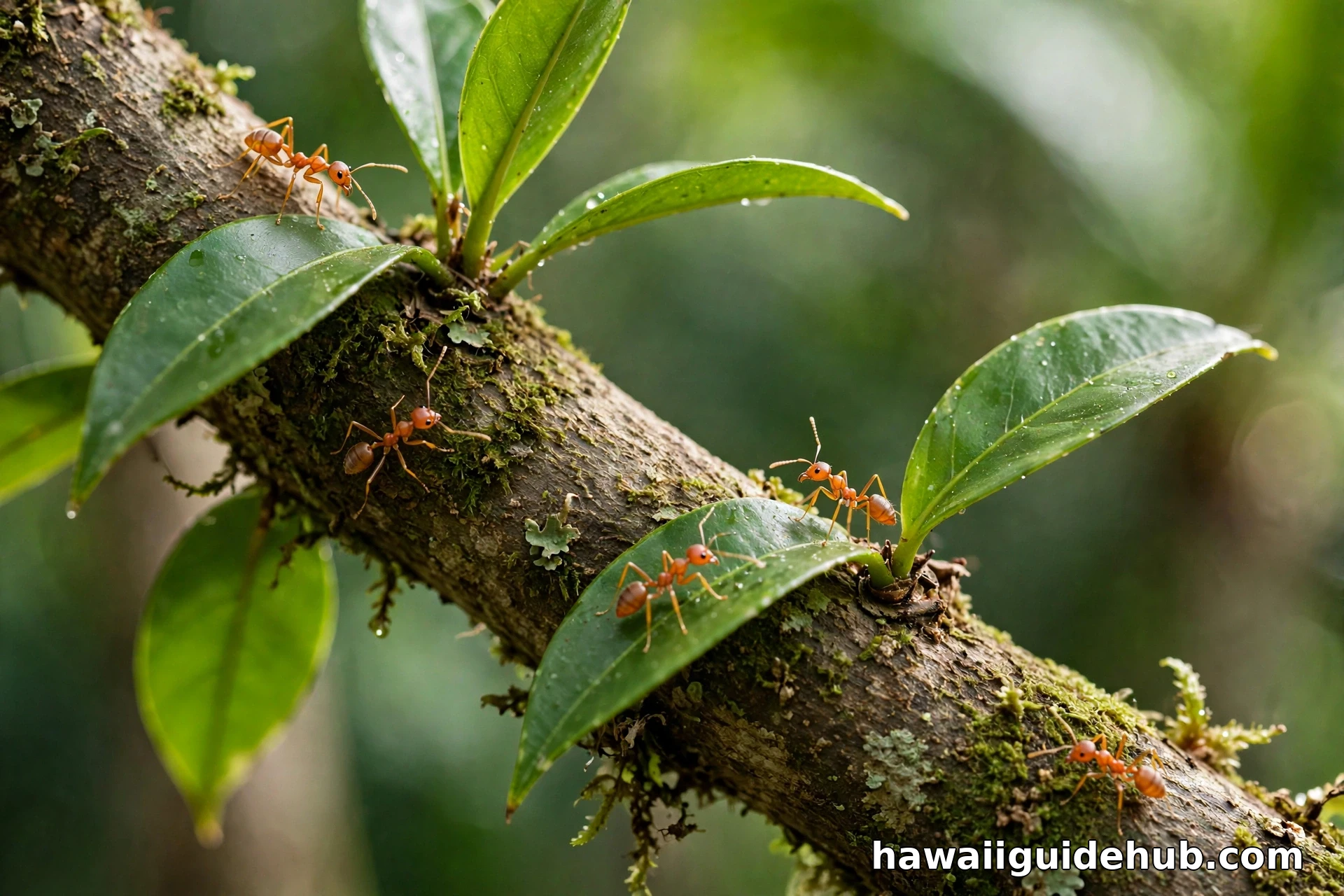
The little fire ant (Wasmannia auropunctata), native to Central and South America, is arboreal: it nests in trees as well as on the ground. Brush a lychee branch or stand under a mango tree on a windy day in an infested area, and disturbed ants drop onto skin, hair, and clothing. They are slow-moving and do not sting on contact; the sting comes when an ant gets trapped, under a watchband, in a collar, in bedding. Then it burns: painful welts and itching that can last for days.
No ants are native to Hawaii, but the little fire ant is in a different category from the kitchen-counter nuisance species. It forms massive, dense populations, stings people in their homes and beds, and alters entire ecosystems: in infested areas almost no other small animals can live, and the ants sting and eat anything that cannot escape, from geckos to baby birds.
LFA or Just Ants? Know the Difference
Most ants in Hawaii are harmless tramps. The table below shows how to tell the little fire ant apart.
| Trait | Little fire ant | Ordinary house ants |
| Size | Tiny: as long as a penny is thick (per MISC) | Noticeably larger |
| Color | Pale orange to reddish | Black, brown, or dark red |
| Speed | Slow-moving | Fast runners |
| Where | Trees, bushes, and ground; arboreal | Mostly ground and counters |
| Sting | Burning sting when trapped against skin | Most do not sting at all |
| Test | Peanut-butter chopstick lures draw them (per UH/Hawaii Ant Lab) | May ignore the lure |
Identification is the bottleneck of the whole fight. Most people who get stung never see the ant that did it, and most yards with LFA go untreated because the owners assume their ants are the ordinary kind. Learn the look: pale orange, slow, tiny enough to doubt your eyes. If it matches, do the chopstick test. Ten minutes with peanut butter can save your pets’ sight and your yard’s future.
How It Got Here and Where It Is
The little fire ant was first discovered on the Big Island and Kauaʻi in March 1999, likely arriving in nursery plants. It does not spread far on its own; queens start new nests only very close to the old one. Humans do the spreading: a whole nest can travel in a single macadamia nut, in potted plants, in green waste, in hapuʻu fern logs shipped between islands. That last pathway caused real damage: in 2013, infested hapuʻu logs shipped from the Big Island to Maui triggered new infestations, including a difficult one in the rainforest near Hana.
Today the ant is established on Hawaiʻi Island, Oʻahu, Maui, and Kauaʻi. Maui’s record shows eradication is possible when infestations are caught early: the Waiheʻe infestation, confined to a single property, was officially eradicated in April 2014 after a multi-agency response. But on the Big Island, where the ant arrived first and spread widest, residents now manage sanctuaries amid a sea of stinging ants.
Why It Matters: Stings, Pets, Farms
For people, the stings are the headline: painful, burning, unavoidable in heavily infested yards, striking children, adults, and elders alike. For pets, the damage is worse. The ants sting animals’ eyes, and repeated stings cause corneal clouding and blindness; photographs from infested areas show blinded cats and dogs, a common and heartbreaking outcome. Livestock suffer similarly.
For agriculture, the ants damage crops and food production and make farm labor miserable; in badly infested areas elsewhere in the world, farmers struggle to keep workers. For native ecosystems, the ants are a quiet catastrophe, preying on native invertebrates and disrupting the food webs that native birds depend on. Everywhere the ant spreads, the cost is measured in stings, in sight, and in biodiversity.
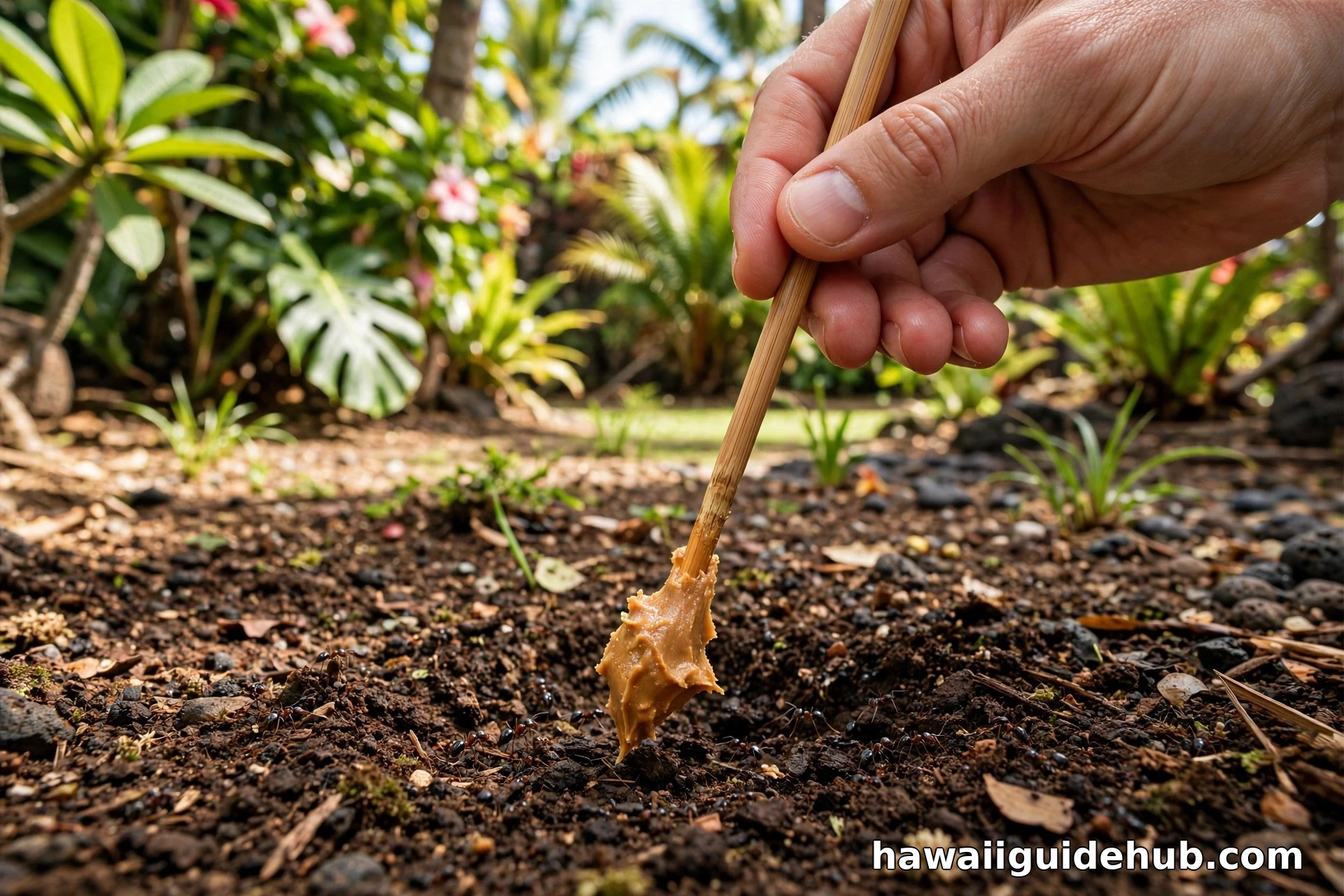
The Chopstick Survey
Detection starts with a kitchen staple. The Hawaii Ant Lab and island invasive species committees teach residents to dab peanut butter on chopsticks or popsicle sticks, place them around the yard, and check for the slow orange ants. Students on Oʻahu have submitted nearly 3,000 samples through school programs, a genuine citizen-science surveillance network. The Big Island Invasive Species Committee offers free workshops teaching the technique.
Science keeps refining the lure. A September 2026 University of Hawaiʻi study found the ants overwhelmingly prefer cooked beef and sunflower seeds over the water-packed tuna many people use, meaning tuna-baited surveys can underestimate infestations. If you survey, use the tastiest bait: the ants’ preferences are now published in the Journal of Applied Entomology, and your yard survey should benefit from it.
Fighting Back: Bait and Patience
Treatment is a marathon. Once LFA are confirmed, the protocol is bait applications every four to six weeks, in early morning or late afternoon, never in rain, until surveys come back clean, then quarterly surveys indefinitely to catch reinfestation. The baits are designed to be carried back to the nest, killing the queens that are the only true source of new colonies. Barriers can keep ants out of the house, but never barrier the lot’s border while treating: it stops foraging ants from carrying bait back to nests on neighboring properties.
The hard truth is that eradication at island scale is not currently feasible on the Big Island; management means creating and defending ant-free sanctuaries. On islands where infestations are still small and localized, the strategy is the opposite: find every nest fast and eradicate, as Maui did at Waiheʻe. The difference between those two futures is early detection, which is why the chopstick matters more than the pesticide.
The Blindness Problem
The cruelest little fire ant injury is also the most preventable. The ants are drawn to moisture, and animals’ eyes are moist. Dogs and cats in infested areas get stung repeatedly around the eyes; the resulting inflammation clouds the cornea, and untreated, the animal goes blind. Veterinarians in infested parts of the Big Island know the condition on sight. Livestock suffer the same fate, and in the Pacific islands where the ant has spread, blinded pigs and goats are documented.
The protection is straightforward but relentless: keep animals’ sleeping and feeding areas treated, check eyes regularly, and treat stings early. For outdoor pets in infested zones, the ant-free sanctuary concept applies to the dog run as much as to the vegetable garden. An animal cannot choose to avoid the ants; its owner has to do the choosing.
A World Tour of Damage
Hawaii is one front in a global war. The little fire ant ranks among the world’s 100 worst invasive species because the same story repeats everywhere it lands. On the Galápagos Islands, the ants kill and eat baby tortoises and attack the soft tissues of adults. In Papua New Guinea and the Solomon Islands, they blind livestock, devastate subsistence gardens, and make village life miserable. In French Polynesia, they have overrun forests much as they threaten to do in Hawaii.
The pattern is always the same: arrival in plant material, explosive population growth, stings that change how people live outdoors, and ecological damage that outlasts any single control campaign. Hawaii’s fight benefits from the hard lessons of these earlier invasions, which is why the state’s response emphasizes early detection and rapid eradication of new infestations above all else.
The Eradication Wins
Against this grim backdrop, Hawaii has genuine victories. The Waiheʻe infestation on Maui, caught while confined to a single property, was eradicated in April 2014 through a coordinated campaign by the county, the Maui Invasive Species Committee, the Department of Agriculture, USGS, the University of Hawaiʻi, and the Hawaii Ant Lab. Two nascent Wailea infestations found in 2014 were also eradicated. When little fire ants were detected on Oʻahu in January 2014, a multi-agency response contained them.
The formula in every win is identical: find it early, delimit the infestation with intensive surveys, treat aggressively, and verify with follow-up monitoring. The Nahiku infestation near Hana, spread along a drainage by flood-borne debris, showed how much harder the job gets once ants escape into difficult terrain. Early detection is not a slogan; it is the entire strategy.
What You Can Do
Whether you live in Hawaii or are visiting, the rules are simple. Inspect any plants, soil, or green waste you move, and never carry them between islands. If you live in or near an infested area, survey with chopsticks, treat on schedule, and report new detections to your island’s invasive species committee or the Hawaii Ant Lab. If you are buying plants, ask the nursery about their ant management; reputable growers in infested areas treat preventively.
And spread the word, not the ants. Most new infestations start with someone who did not know: a load of mulch, a potted plant from a friend, a hapuʻu log for the garden. The little fire ant’s greatest advantage is invisibility, its size, its silence, its habit of arriving unnoticed. Its greatest vulnerability is an informed public with peanut butter and chopsticks.
What Visitors Should Know
Visitors are unlikely to encounter little fire ants at beach resorts, but hikers and farm-stay guests in infested areas should know the signs. Do not brush against vegetation unnecessarily in known infested zones; if ants fall on you, brush them off promptly before they get trapped in clothing. Shake out beach towels and bags used near trees. And never transport plants, soil, or green waste between islands: the hapuʻu log episode proves how easily a souvenir plant becomes an ecological disaster. When in doubt, ask your hosts whether LFA are present and what precautions they take.
For more on Hawaii’s invasive species battles, the guide to Hawaiian cultural traditions adds the human dimension, while responsible travel practices and the guide to Hawaii’s natural environments cover visiting fragile places with care.
Watch: Fire! Little Fire Ants in Hawaii
Frequently Asked Questions
What are little fire ants in Hawaii?
The little fire ant (Wasmannia auropunctata) is a tiny, stinging invasive ant from Central and South America, established on four Hawaiian islands since 1999.
Do little fire ants sting?
Yes. They sting when trapped against skin, causing painful burning welts and itching that can last for days.
Can little fire ants blind pets?
Yes. Repeated stings to animals’ eyes cause corneal clouding and blindness in cats, dogs, and livestock.
How do you test for little fire ants?
Dab peanut butter (or cooked beef) on chopsticks, place them around your yard, and check for tiny slow orange ants. Free workshops are offered by island invasive species committees.
Which Hawaiian islands have little fire ants?
Hawaiʻi Island, Oʻahu, Maui, and Kauaʻi. Early infestations on Maui have been eradicated; the Big Island has the widest establishment.
The little fire ant is a reminder that Hawaii’s most dangerous invaders are not always the ones you can see coming. A pig you can hear; an ant the size of a pinhead, raining from a mango tree, you cannot. But a chopstick and peanut butter, in enough hands, is a surveillance network no government could afford to build. In Hawaii, the fight against the tiniest invader is everybody’s kuleana.