Reef Safe Sunscreen in Hawaii: What You Can Legally Use

Hawaii is the only state in America with a law that decides which sunscreens you can buy, and if you are visiting Maui, the rules are even stricter. Show up at a beach on Maui with the wrong bottle and you are breaking county law. This guide explains exactly what is banned, what is legal, and how to read a sunscreen label in under a minute so you protect both your skin and the reefs.
This is the single complete guide to reef safe sunscreen in Hawaii. It covers the statewide ban, Maui County’s mineral-only rule, the ingredients to avoid, what “reef safe” on a label really means, and how to shop for compliant sunscreen before and during your trip. If you have been searching for anything about Hawaii sunscreen laws, the answers are all here on this one page.
Why Hawaii Banned Certain Sunscreen Chemicals
Hawaii’s coral reefs are among the most valuable natural assets in the state. They protect shorelines from erosion, feed local fisheries, and draw millions of snorkelers and divers every year. They are also under pressure from warming oceans, runoff, and the chemicals that wash off swimmers’ skin. Research by marine scientists, including work from the Haereticus Environmental Laboratory, found that oxybenzone can contribute to coral bleaching, damage coral DNA, and harm juvenile coral at very low concentrations. Those findings became the scientific backbone of Hawaii’s sunscreen law.
The scale of the problem is bigger than most beachgoers realize. The National Park Service estimates that between 4,000 and 6,000 tons of sunscreen enter coral reef areas around the world every year. On a busy beach day, thousands of swimmers can each rinse a thin film of lotion straight into the same small bay. Hawaii decided that removing the most damaging chemicals at the point of sale was the most direct way to reduce that load, and in 2018 it became the first state in the world to pass a sunscreen ingredient ban.
Hawaii’s Sunscreen Laws at a Glance
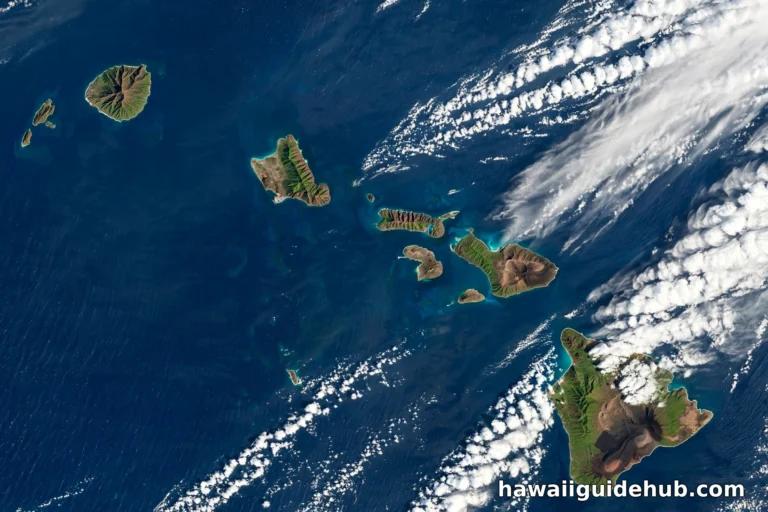
Hawaii actually has two layers of sunscreen law. The state law applies on every island. Maui County, which includes Maui, Molokai, and Lanai, adds a stricter county rule on top of it. Know which island you are visiting, because the product that is fine on Oahu may not be legal on Maui.
| Law | Statewide ban (Act 104) | Maui County rule |
| Effective date | January 1, 2021 | October 1, 2022 |
| What it bans | Sale of sunscreens with oxybenzone or octinoxate | Sale and use of any non-mineral sunscreen |
| Allowed active ingredients | Everything except oxybenzone and octinoxate | Only zinc oxide and titanium dioxide |
| Applies to | All islands | Maui, Molokai, and Lanai |
| Prescription exception | Yes | Yes |
The State Law: What Act 104 Bans
Senate Bill 2571, signed into law in 2018 as Act 104, made Hawaii the first state to ban the sale of certain sunscreen chemicals. Starting January 1, 2021, it became illegal to sell, offer for sale, or distribute over-the-counter sunscreens containing oxybenzone or octinoxate anywhere in Hawaii. When you walk into a store in Honolulu, Kona, or Lihue, the sunscreens on the shelf comply with this law, because retailers cannot legally stock the banned formulas.
The ban covers the product being sold, not what is already in your beach bag. If you packed a sunscreen containing oxybenzone at home and brought it to Oahu, the state law does not make you a criminal for using it. The law targets retailers and distributors. That said, using a banned chemical defeats the purpose of the law, and the right move is to switch to a mineral formula before your trip.
Two exceptions are written into the state law. Sunscreens prescribed by a licensed healthcare provider are exempt, so anyone with a medical need for a specific formula can still get it. Products marketed and sold as cosmetics, rather than as sunscreen, are also outside the ban. The law also blocked counties from passing their own restrictions on these two chemicals before the state ban took effect, which is why the county rules you hear about today came later and took a different approach.
Maui County’s Stricter Mineral-Only Rule
Maui County went further than the state. Since October 1, 2022, only mineral-based sunscreens may be sold or distributed in the county, and the rule also covers use on county beaches. In practice this means the only legal active ingredients in Maui County are zinc oxide and titanium dioxide. If your sunscreen’s active ingredients include avobenzone, octocrylene, homosalate, or octisalate, it is legal under state law on Oahu, Kauai, and the Big Island, but it does not meet the Maui County standard.
This matters because Maui County includes three islands: Maui, Molokai, and Lanai. Visitors island hopping from Oahu to Maui sometimes buy sunscreen in Waikiki and assume it is fine everywhere. It is not. Check the active ingredients panel, not the front of the bottle, before you fly to Maui. The Maui Nui Marine Resource Council, a local conservation group, recommends choosing non-nano zinc oxide or titanium dioxide when possible, and its website publishes plain-language guidance on what the county allows.
Enforcement focuses on sellers, and the county has discussed fines for businesses that do not comply. For visitors, the practical takeaway is simple. Buy or bring a mineral sunscreen with only zinc oxide, titanium dioxide, or both as the active ingredients, and you are legal on every island in Hawaii with nothing to worry about.
What “Reef Safe” on a Label Really Means
Here is the uncomfortable truth about sunscreen marketing. “Reef safe,” “reef friendly,” and “ocean friendly” are not regulated terms. No government agency defines them, and no one certifies them. A bottle can print “reef safe” in big letters while containing avobenzone or octocrylene, which are restricted in Maui County. Some brands have even faced lawsuits and regulatory action over broad reef claims on their packaging, which is why many companies now print narrower phrases like “Hawaii Act 104 compliant” or “made without oxybenzone and octinoxate.”
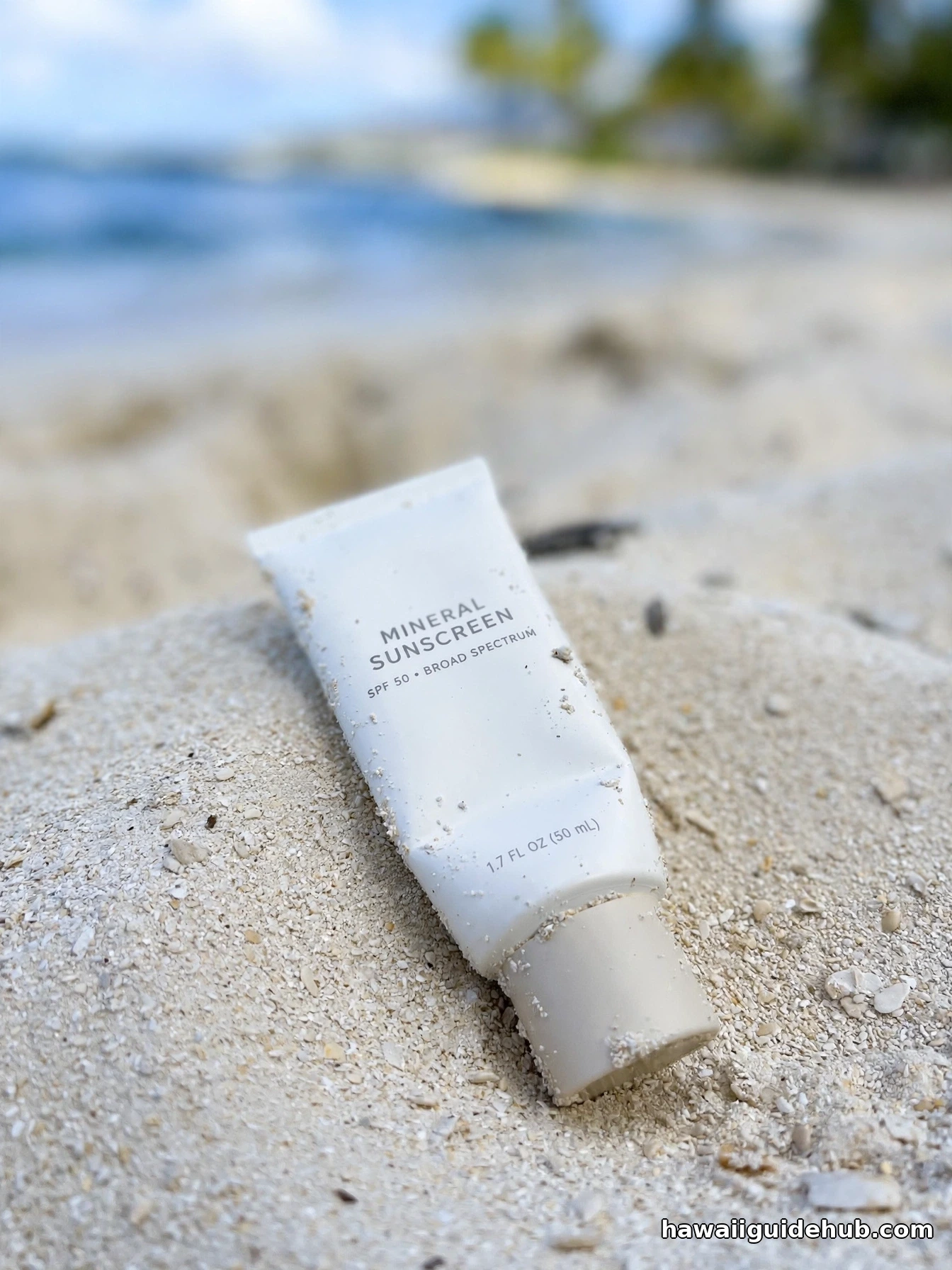
The only reliable check is the Drug Facts panel on the back of the bottle, where the active ingredients are listed by law. Ignore the front label entirely. Flip the bottle over, find “Active Ingredients,” and read that short list. If it says zinc oxide, titanium dioxide, or both, and nothing else, the product is legal everywhere in Hawaii. If it lists anything else as an active ingredient, it is not compliant with the Maui County rule, and if it lists oxybenzone or octinoxate, it cannot even be sold in the state.
How to Read a Sunscreen Label in 60 Seconds
Do this in the store aisle or while packing, and you will never buy the wrong sunscreen for Hawaii again. First, turn the bottle around and find the Drug Facts box. Second, read the Active Ingredients section, which is usually just one to four items. Third, apply the two-ingredient test: the list should contain only zinc oxide, titanium dioxide, or both. Fourth, scan the inactive ingredients for oxybenzone or octinoxate hiding as preservatives or fragrance components, although the active list is what the law cares about. Fifth, check the SPF and make sure it says broad spectrum, which means it protects against both UVA and UVB rays.
A common trap is the chemical sunscreen that markets itself with island imagery, a turtle logo, or the words “Hawaii” and “reef” on the front. None of that is regulated. Another trap is assuming a high SPF number means a better or safer product. SPF measures UVB protection only, and dermatologists generally recommend SPF 30 or higher with broad spectrum coverage, applied generously. The number on the front tells you nothing about whether the formula is legal in Hawaii.
Choosing a Mineral Sunscreen That Works
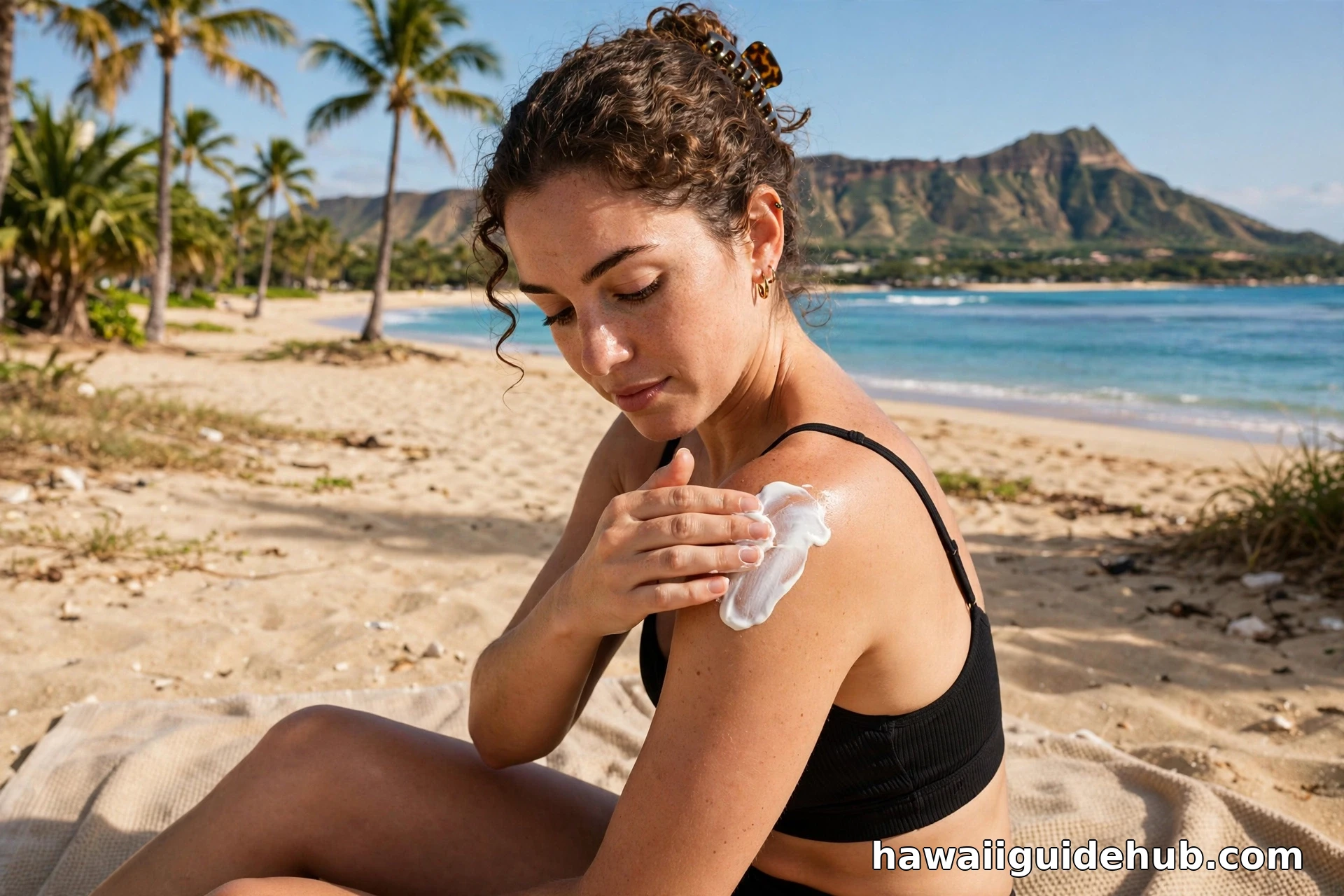
Mineral sunscreens have a reputation for leaving a white cast, and older formulas earned it. Newer zinc oxide and titanium dioxide lotions are much more wearable, though very fair or very deep skin tones may still notice some whitening. Tinted mineral formulas, which add iron oxides for color, solve this for many people and remain compliant because the tint is not an active UV filter. Stick formats are handy for faces, ears, and the backs of hands, and they tend to stay put during long snorkel sessions.
Look for three things on top of the legal ingredients. Pick SPF 30 or higher and broad spectrum protection. Choose a water resistant formula if you will be swimming or sweating, and remember that water resistant does not mean waterproof; reapply after swimming, toweling off, or every two hours. Consider a non-nano formula, which uses larger mineral particles that are less likely to be ingested by coral and filter-feeding marine life. The Maui Nui Marine Resource Council specifically recommends non-nano zinc oxide or titanium dioxide.
You do not need to hunt for compliant sunscreen before you leave home. Every major retailer in Hawaii, from grocery stores to ABC Stores to resort shops, stocks mineral sunscreens that meet the state law, and shops on Maui stock mineral-only options. Buying after you arrive has a real advantage: the products on local shelves are already screened for the local rules, and you avoid packing a bottle that turns out to be wrong for your island. If you prefer to buy ahead, order a mineral formula and verify the active ingredients on the listing before checkout.
Sun Habits That Matter More Than the Bottle
The most reef-friendly sunscreen is the sunscreen you do not need. A long-sleeve rash guard with UPF 50 blocks more UV than any lotion, never washes off, and keeps you in the water longer without reapplying. Wide-brim hats, sunglasses, and seeking shade between 10 AM and 4 PM, when Hawaii’s sun is strongest, cut your exposure dramatically. Many snorkelers now wear full leggings and hooded sun shirts, which also protect against scrapes on coral. At popular snorkel spots like Shark’s Cove on Oahu’s North Shore, a rash guard plus mineral sunscreen is the standard kit.
When you do use sunscreen, timing matters for the reef. Apply it 15 to 30 minutes before entering the water so the minerals bond to your skin instead of rinsing off in the first wave. Use about a shot-glass-sized amount for full body coverage; most people apply far too little, which is why dermatologists stress generous application. Reapply every two hours and immediately after swimming or heavy sweating. For children, mineral sunscreen plus a rash guard and hat is the standard advice from pediatric dermatologists, and Hawaii’s intense midday sun makes that combination worth the effort.
Where to Buy Compliant Sunscreen in Hawaii
Grocery stores like Foodland and Safeway, big-box stores like Costco, Walmart, and Target, and pharmacies across the islands all carry mineral sunscreens that comply with state law. On Maui, Molokai, and Lanai, look specifically for the mineral-only section or ask staff for the county-compliant options. Resort shops and beach vendors near popular snorkel spots also stock compliant bottles, though at higher prices. Farmers markets sometimes sell locally made mineral sunscreens, which can be excellent, but verify the active ingredients on the label the same way you would for any brand.
Avoid buying sunscreen from airport vending machines or mainland discount bins without checking the label, since those products were stocked for a different market. And do not assume a bottle labeled “Hawaii” anything is compliant. The word Hawaii on packaging is marketing, not certification. The Drug Facts panel is the only label that matters.
Video: How Sunscreen Chemicals Affect Reefs
A short film from the team behind Reefs at Risk, filmed on Hawaii’s beaches, explaining the science that led to the sunscreen bans.
Frequently Asked Questions
Can I bring my own sunscreen to Hawaii?
Yes. The state law bans the sale of sunscreens containing oxybenzone or octinoxate, not possession by visitors. But bringing a banned formula misses the point of the law, and it will not meet Maui County’s mineral-only rule. Pack a mineral sunscreen with zinc oxide or titanium dioxide as the only active ingredients and you are covered on every island.
Is avobenzone banned in Hawaii?
Avobenzone is legal under Hawaii state law, which only bans oxybenzone and octinoxate. However, avobenzone is not allowed under Maui County’s mineral-only rule, so a sunscreen with avobenzone does not comply on Maui, Molokai, or Lanai. If you are visiting multiple islands, choose a mineral formula to keep things simple.
What does “Hawaii Act 104 compliant” mean?
It means the product contains no oxybenzone or octinoxate and therefore complies with Hawaii’s statewide sunscreen law, Act 104. It does not automatically mean the product meets Maui County’s stricter mineral-only rule. A product can be Act 104 compliant while containing avobenzone, which Maui County does not allow.
Do children need a special sunscreen in Hawaii?
Children need the same compliant sunscreen as adults: a mineral formula with zinc oxide or titanium dioxide, SPF 30 or higher, broad spectrum. Pediatric dermatologists also recommend rash guards, hats, and shade for kids, since no sunscreen blocks 100 percent of UV rays. Mineral formulas are often marketed for sensitive skin, which suits children well.
Are spray mineral sunscreens legal in Hawaii?
Yes, if the active ingredients are only zinc oxide, titanium dioxide, or both. The delivery format, lotion, stick, or spray, does not matter to the law. Only the active ingredients count. Sprays can be harder to apply evenly, so rub them in after spraying and avoid inhaling the mist.
Can I get fined for using the wrong sunscreen?
The laws are aimed at sellers and distributors, not tourists applying lotion on the beach. No visitor checkpoint inspects your sunscreen. The real consequence of using the wrong product is environmental, not legal: the chemicals wash into the water where you are swimming. Choosing a mineral sunscreen is about protecting the reef you came to see.
Hawaii’s sunscreen laws ask one simple thing of visitors: check the active ingredients and choose minerals. Zinc oxide and titanium dioxide protect your skin effectively, satisfy the strictest county rule, and keep thousands of tons of reef-damaging chemicals out of the ocean. Pack a mineral bottle, pair it with a rash guard, and you can enjoy Hawaii’s beaches knowing the reef below you is getting a break.