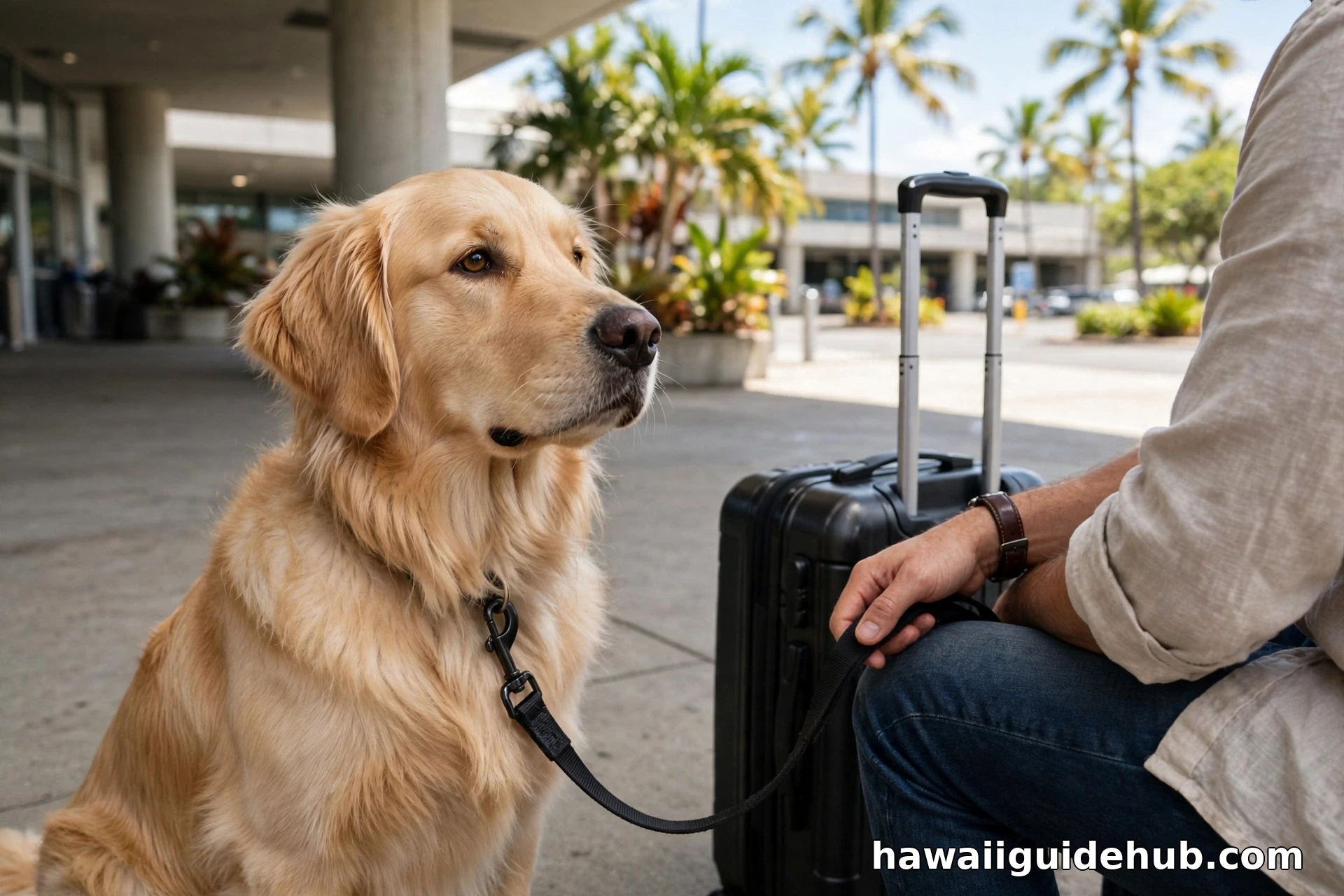
Can Dogs Travel to Hawaii?

Yes, dogs can travel to Hawaii, and thousands of them do it every year. What surprises most owners is not the flight. It is the paperwork. Hawaii is rabies free, and the state protects that status with the strictest pet import system in the United States. A dog that arrives fully prepared can walk out of the airport with its owner the same day. A dog that arrives unprepared goes into quarantine for up to 120 days, at the owner’s expense.
This is the complete guide to bringing a dog to Hawaii. It covers the quarantine law and why it exists, the 5-Day-Or-Less program and Direct Airport Release step by step, the rabies blood test timeline that decides everything, the real costs, how flying with a dog to Hawaii works in the cabin and in cargo, the special permit for landing directly on Maui, Kauaʻi, or the Island of Hawaiʻi, and the honest question every vacationer should ask first: for a short trip, is it worth it at all?
Why Hawaii Has a Quarantine Law for Dogs
Hawaii has never had rabies in its animal population, and it is one of the few rabies free places in the world. Rabies is almost always fatal once symptoms appear, in animals and in people, so the state treats every arriving dog and cat as a possible risk until proven otherwise. The Hawaii Department of Agriculture and its Animal Industry Division run the system through the Animal Quarantine Station in Hālawa Valley on Oʻahu, near ʻAiea.
The law applies to everyone. It does not matter whether you are moving to Hawaii for good, visiting for a month, or passing through with a dog that never leaves the airport area. It does not matter how healthy your dog looks or how current its vaccinations are if the documents are not in order. Age does not exempt a dog either: puppies face the same rules, and because the required vaccinations and waiting periods take months, very young puppies effectively cannot qualify for quick release.
| Program | What it means | State fee per dog |
| Direct Airport Release | All steps done early, documents received in time, dog released at Honolulu airport on arrival | $185 |
| 5-Day-Or-Less | All health steps done, but documents late or a short wait remains, dog held up to 5 days | $244 |
| Neighbor Island Inspection Permit | Direct flight to Kahului, Kona, or Līhuʻe with inspection arranged in advance | $165, plus the release program fee |
| 120-day quarantine | Requirements not met, dog stays at the Animal Quarantine Station | $1,080 |
Those state fees are only one part of the bill. Veterinary visits, the blood test and its laboratory and shipping charges, the health certificate, and the airline pet fee all add to the total, and this guide adds them up in the cost section below. Fees are set by the state and can change, so confirm the current amounts with the Animal Quarantine Station while you plan.
The 5-Day-Or-Less Program, Step by Step
The program’s name is slightly misleading. Most dogs that complete every step correctly never spend a night in quarantine at all, because they qualify for Direct Airport Release in Honolulu. The 5-Day-Or-Less label covers both outcomes. What matters is the sequence, because the steps must happen in a specific order and each one starts a clock.
Step 1: Microchip first
Your dog needs a working microchip, and it must be implanted before the rabies blood test is drawn. The chip number appears on every document that follows, from vaccination certificates to the import form, and inspectors scan the dog on arrival to match the animal to the paperwork. If the chip cannot be read, the dog cannot be released. Ask your veterinarian to scan and confirm the chip at every visit during the process.
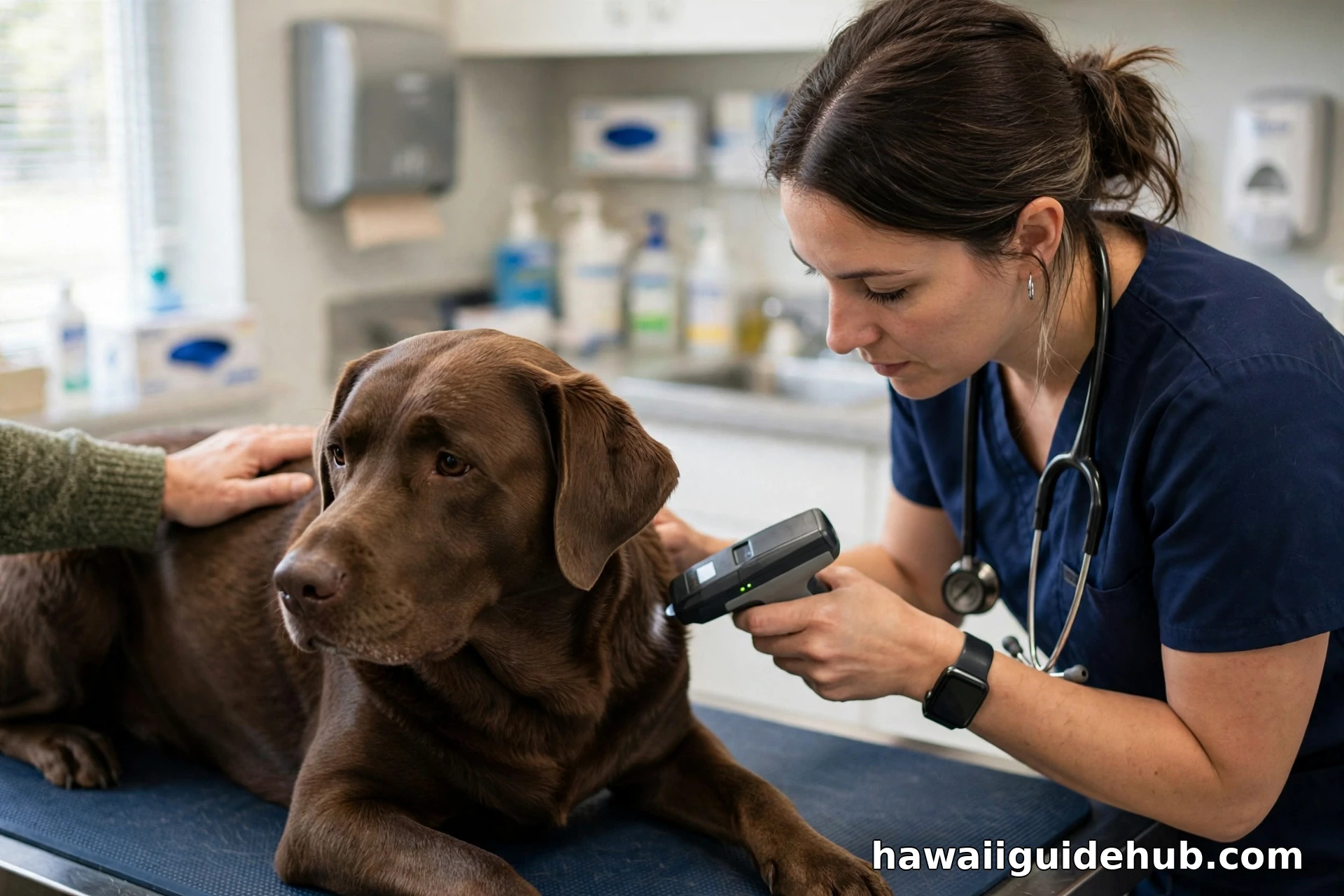
Step 2: Two rabies vaccinations
Your dog must have at least two rabies vaccinations in its lifetime, given more than 30 days apart. The most recent vaccination must still be current on the arrival date and must have been given at least 30 days before arrival. You need the original vaccination certificates, signed by the veterinarian, listing the vaccine details. A dog with only one lifetime rabies shot, or with a lapsed booster, starts the clock over in practical terms, because the second qualifying vaccination and the waiting periods all sit ahead of it.
Step 3: The FAVN rabies antibody blood test
This is the step that decides your timeline. The OIE-FAVN test measures rabies antibodies in your dog’s blood. Your veterinarian draws the sample and sends it to an approved laboratory. The result must be at least 0.5 IU/mL to pass. Results go to your veterinarian and directly to the Hawaii Department of Agriculture, and a passing result remains valid for a set period, which is why dogs that travel to Hawaii repeatedly do not restart from zero every trip.
After the laboratory receives a passing sample, a mandatory waiting period must pass before your dog can enter with quick release. Arrive before that waiting period ends and the dog waits in quarantine until it does. Between the two vaccinations, the laboratory turnaround, and the waiting period, owners starting from scratch should think in terms of roughly four months or more of preparation. Starting early is not a suggestion in this system. It is the whole strategy.
Step 4: Documents, tick treatment, and the health certificate
The core form is the Dog and Cat Import Form, AQS-279, one per dog. For Direct Airport Release in Honolulu, the Animal Quarantine Station must receive your completed documents at least 10 days before arrival. Send them late and you drop into the higher fee and the dog may be held. Within 14 days of arrival, an accredited veterinarian must issue a health certificate, and within that same window your dog must be treated with a long acting product labeled to kill ticks, with the product name and date written on the certificate. Dogs found with ticks or other parasites on arrival do not qualify for direct release.
Can I Fly My Dog to Hawaii? Cabin, Cargo, and Routes
Flying is, in practice, the only way to bring a dog to Hawaii. There is no passenger ferry from the mainland, and private boats face the same import law on arrival with far more complexity. So the real question is how your dog flies. Small dogs that fit in a carrier under the seat can ride in the cabin on airlines that accept pets in cabin, for a per flight pet fee set by the airline. Larger dogs fly as checked pets or as cargo in a pressurized, temperature controlled hold, in an airline approved crate.
From the West Coast, flights to Honolulu run roughly five to six hours, which is long for a dog that has never flown. Talk with your veterinarian about your dog’s health, age, breed, and anxiety before choosing. Flat faced breeds face higher breathing risks in flight, and airlines restrict pet carriage in the hold during extreme heat. For a full picture of how the arrival airport works, see our guide to Hawaii airports, since the inspection step happens inside that flow.
Timing your flight matters more than most owners expect. Airport inspection in Honolulu runs during set daytime hours, and dogs must reach the Airport Animal Quarantine Holding Facility in time to be inspected, generally arriving by mid afternoon for same day release. Land in the evening and your fully qualified dog spends the night at the facility and is released the next day, which is safe but stressful for everyone. Choose a morning departure from the mainland whenever you can.
Landing Directly on Maui, Kauaʻi, or the Big Island
Direct Airport Release exists only in Honolulu. If your plans center on another island, you have two choices. You can fly into Honolulu, clear inspection there, and continue on an interisland flight the same day. Or you can apply for a Neighbor Island Inspection Permit, which allows a direct flight into Kahului on Maui, Kona on the Island of Hawaiʻi, or Līhuʻe on Kauaʻi, where an approved inspector meets the flight.
The permit route takes more advance work, not less. Documents must reach the state earlier, generally at least 30 days before arrival, you arrange and pay for the inspection with an approved provider on that island, and the permit is tied to your arrival date with only a small window of flexibility. A changed flight can mean a new permit. Travelers combining islands should plan the dog’s arrival island carefully; our Hawaii itinerary guide shows how most visitors sequence the islands, and the dog’s paperwork should follow that sequence, not fight it.

What It Costs, Added Up Honestly
For a dog starting the process from scratch, owners commonly spend several hundred dollars before the flight: two vaccination visits if needed, the microchip if missing, the FAVN test with laboratory and shipping fees, the health certificate visit with tick treatment, and the state fee of $185 to $244. Add the airline pet fee each way, which varies widely by airline and by whether the dog rides in the cabin or below deck, plus a compliant crate if you do not own one. A realistic planning range for the ground costs alone is roughly $350 to $700 per dog, before airfare for the humans and before any quarantine charges.
The expensive failure is quarantine. The 120-day program costs $1,080 per dog in state fees, and the emotional cost is higher: your dog lives at the station in Hālawa while you visit during set hours. Every missed deadline in this system converts directly into money and separation, which is why experienced owners treat the checklist like a legal filing, not a suggestion list. People living in Hawaii who bring dogs through the process once tend to keep the blood test current afterward, since a valid passing result makes later entries far simpler.
Life With a Dog Once You Arrive
New arrivals are often surprised by how leash based Hawaii is. Dogs are not allowed on most public beaches in the state, are barred from many state parks, and must be leashed in the county parks and neighborhoods where they are welcome. Each county posts its own list of dog friendly parks and any designated off leash areas, and those lists are the ones to check for the island where you will stay. Heat is the other adjustment: midday pavement burns paws, and dogs overheat fast in the Hawaii sun, so walks shift to mornings and evenings.
Lodging takes planning as well. Many hotels do not accept dogs at all, and those that do often limit size and charge a nightly pet fee. Vacation rentals vary house by house. If your trip is built around beaches, hikes, and long days out, honestly assess how much of it your dog can join. Families weighing that question may also want our guide to the best Hawaiian island for kids, since family logistics and dog logistics tend to collide on the same days.
Common Mistakes That Send Dogs to Quarantine
The classic mistakes are all clerical. A microchip implanted after the blood test was drawn. A second rabies vaccination given fewer than 30 days after the first. Documents mailed nine days before arrival instead of ten or more. A health certificate dated 15 days out instead of within 14. A tick treatment that is not written on the certificate. A flight that lands in Honolulu at night, or a direct flight to Maui without a permit in hand. None of these owners meant to break the rules. All of them paid for the gap.
The other mistake is starting too late and hoping for an exception. There is no rush process and no exception desk. The waiting periods exist because rabies develops slowly, and the state applies them to a celebrity’s dog exactly as it applies them to yours. If your dates are fixed and close, the kindest plan is often to leave your dog with a trusted sitter at home and bring them on the next trip, with the process started months ahead.
Video: How Direct Release Works on Kauaʻi
This walkthrough from a Kauaʻi humane organization shows the same state steps from the neighbor island side, including the inspection permit that direct arrivals need.
Frequently Asked Questions
Can dogs travel to Hawaii without quarantine?
Yes, if every step is completed correctly and on time: microchip, two rabies vaccinations, a passing FAVN blood test with its waiting period, documents received at least 10 days before a Honolulu arrival, a health certificate within 14 days, and tick treatment. Dogs meeting all of that qualify for Direct Airport Release.
How long does it take to prepare a dog for Hawaii?
Starting from scratch, plan on roughly four months or more. The vaccinations must be spaced out, the laboratory needs time to process the blood test, and a waiting period must pass after a passing result before your dog can enter with quick release.
Can I fly my dog directly to Maui or Kauaʻi?
Yes, with a Neighbor Island Inspection Permit arranged in advance. Documents go to the state earlier than for Honolulu, you arrange inspection with an approved provider on that island, and the permit is tied to your arrival date. Without the permit, your dog must clear inspection in Honolulu.
How much does it cost to bring a dog to Hawaii?
State fees run $185 for Direct Airport Release or $244 for the 5-Day-Or-Less program, per dog. Veterinary work, the blood test, the health certificate, tick treatment, and airline fees add several hundred dollars more. Full 120-day quarantine costs $1,080 in state fees alone.
What happens if my paperwork is wrong on arrival?
Your dog does not enter on your schedule. Depending on what is missing, the dog is held under the 5-Day-Or-Less program until the gap closes, or placed in quarantine for up to 120 days at the Animal Quarantine Station at your expense.
Is it worth bringing a dog on a one week Hawaii vacation?
For most visitors, honestly, no. The process takes months, costs several hundred dollars, and Hawaii restricts dogs at most beaches and parks. Owners who are relocating, staying for a month or more, or traveling with a dog whose blood test is already current get far more from the effort.
Dogs can absolutely travel to Hawaii, and a prepared owner will find the system strict but fair, with every rule published and every deadline knowable in advance. Start months early, follow the state’s checklist in order, double check every date, and choose flights that land in daylight. Do that, and the dog in the seat or the hold beside you walks out of the airport into the trade winds the same day you do.