Hawaiian Bento Box: A Local’s Guide to Japan’s Gift to Hawaii’s Lunch

The Hawaiian bento box is not quite Japanese and not quite anything else. It is what happened when Japanese immigrants brought their lunchbox tradition to Hawaii’s sugar plantations in the late 1800s and it collided with Hawaiian, Chinese, Korean, Filipino, and Portuguese foodways over the next century. The result is a uniquely local institution: a compartmentalized box of rice, protein, and sides that feeds everyone from schoolchildren to construction crews to beachgoers across the islands.
This is the complete guide to the Hawaiian bento box. It covers where the bento tradition came from, how Hawaii transformed it, what goes inside a classic local bento, the regional variations across the islands, where visitors encounter bento in Hawaii, how to build your own, and what it tastes like. Everything about bento in Hawaii lives on this one page.
Hawaiian Bento Box at a Glance
| The concept | A compartmentalized lunch box of rice, protein, and sides; Hawaii’s everyday takeout meal |
| The roots | Japanese bento tradition, transformed by plantation-era Hawaii |
| Inside the box | White rice, teriyaki or katsu protein, mac salad or tossed salad, pickled vegetables, tamagoyaki |
| The damage | Roughly $8 to $15 at delis and okazuya, more at specialty shops |
| Where to buy | Okazuya (Japanese delis), grocery delis, plate lunch shops, farmers markets, convenience stores |
| Pack it for | Beach picnics, road trips, affordable local lunches |
| Do not confuse with | Mainland sushi bento; Hawaii bento is a hot and cold mixed meal, not a sushi set |
Where Bento Came From
Bento, the Japanese packed lunch, arrived in Hawaii with the first Japanese immigrants. The Gannenmono, the 153 Japanese who came to work Hawaii’s sugar plantations in 1868, carried the custom of packing rice and side dishes in lacquered boxes for the workday. Between 1885 and 1924, more than 200,000 Japanese immigrated to Hawaii as plantation laborers, and the bento came with every wave of them.
On the plantations, the bento proved its worth immediately. Field workers needed a portable, filling midday meal that could be eaten wherever the work took them, and the bento box delivered exactly that. But the plantation camps were mixed communities, Japanese living alongside Chinese, Korean, Filipino, Portuguese, and Native Hawaiian workers, and the contents of the box began to change. A Japanese worker might trade with a Filipino neighbor; a Korean family might share their pickled vegetables. Over decades, the bento absorbed all of it.
What emerged is distinct from anything in Japan. A Japanese bento is typically a careful, seasonal arrangement eaten at room temperature. A Hawaiian bento is heartier, more casual, and more mixed: fried chicken next to pickled cabbage, spam musubi beside tamagoyaki, mac salad sharing space with namasu. It is less about refinement than about abundance, and locals would not have it any other way.
What Goes Inside a Classic Hawaiian Bento
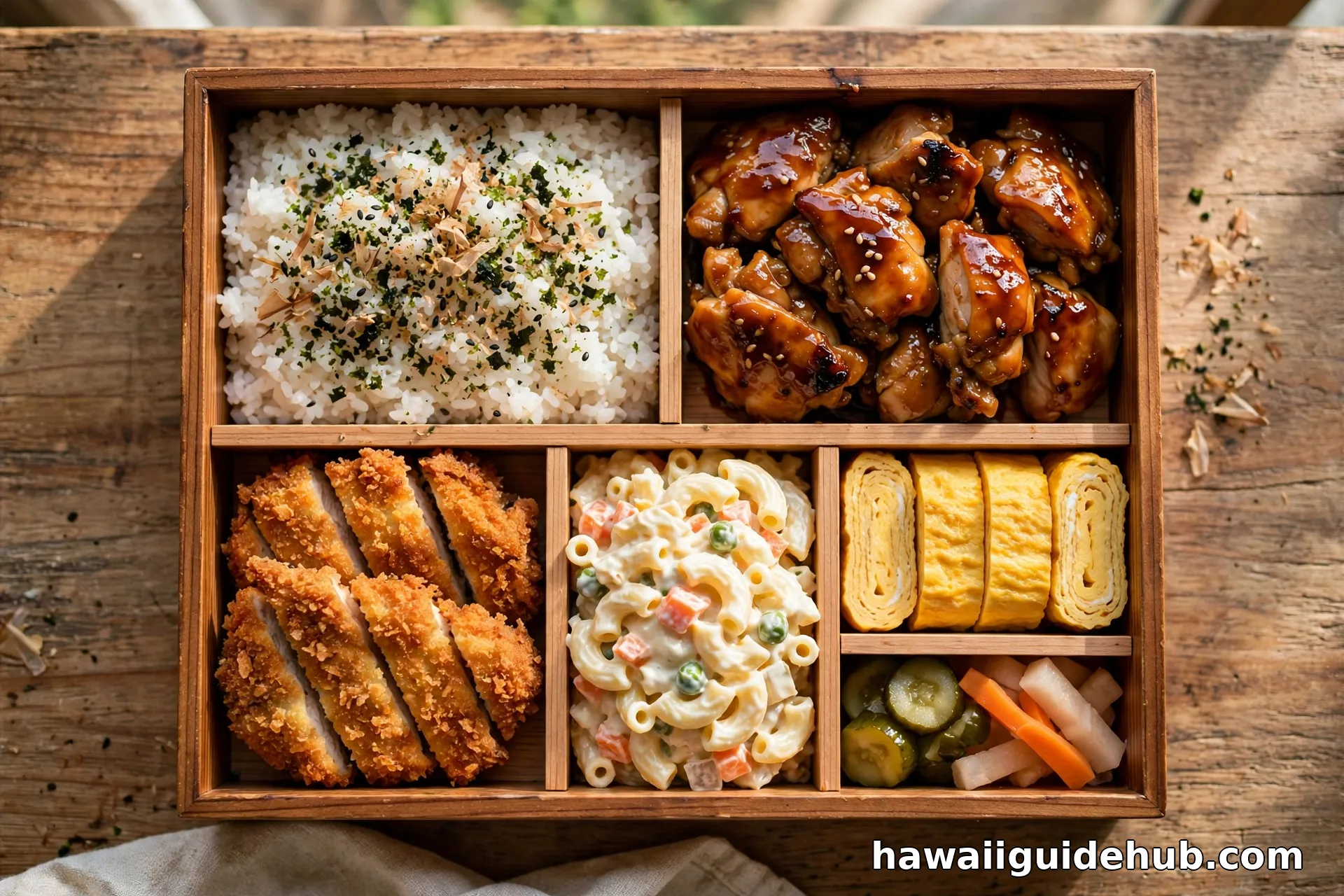
There is no single official recipe, but a classic local bento follows a reliable formula. Understanding the components helps you order, build, or appreciate one.
The Rice
Rice is the foundation, usually plain steamed white rice, sometimes with a sprinkle of furikake (seasoned rice topping) or a pickled plum (umeboshi) on top. Some bentos use fried rice or a layer of rice topped with a protein, blurring into plate lunch territory. The rice compartment is often the largest, because rice is the meal.
The Main Protein
The protein is the star and the main variable. Common choices include teriyaki chicken or beef, chicken katsu or tonkatsu, fried chicken (often Korean-style or garlic chicken), spam (as musubi or fried slices), grilled fish, shrimp tempura, and hamburger steak. Many okazuya let you pick two proteins, which is the correct move.
The Sides
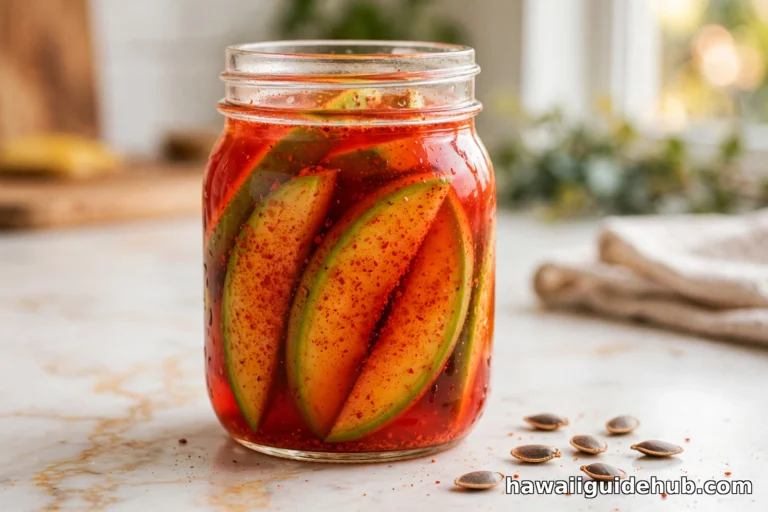
Sides are where the multicultural history shows. Expect macaroni salad (a non-negotiable in local food), tossed green salad or shredded cabbage, tamagoyaki (sweet rolled omelet), pickled vegetables like takuan (pickled daikon) or namasu (vinegared vegetables), and sometimes a small portion of noodles or potato salad. The sides are small but numerous, giving the box its characteristic variety.
The Extras
Many bentos include a packet of shoyu, a dab of mustard or chili sauce, and sometimes a piece of fruit or a small dessert. Garnishes like shredded nori, sesame seeds, or beni shoga (pickled red ginger) add color and punch.
Okazuya: Where Hawaii Buys Bento
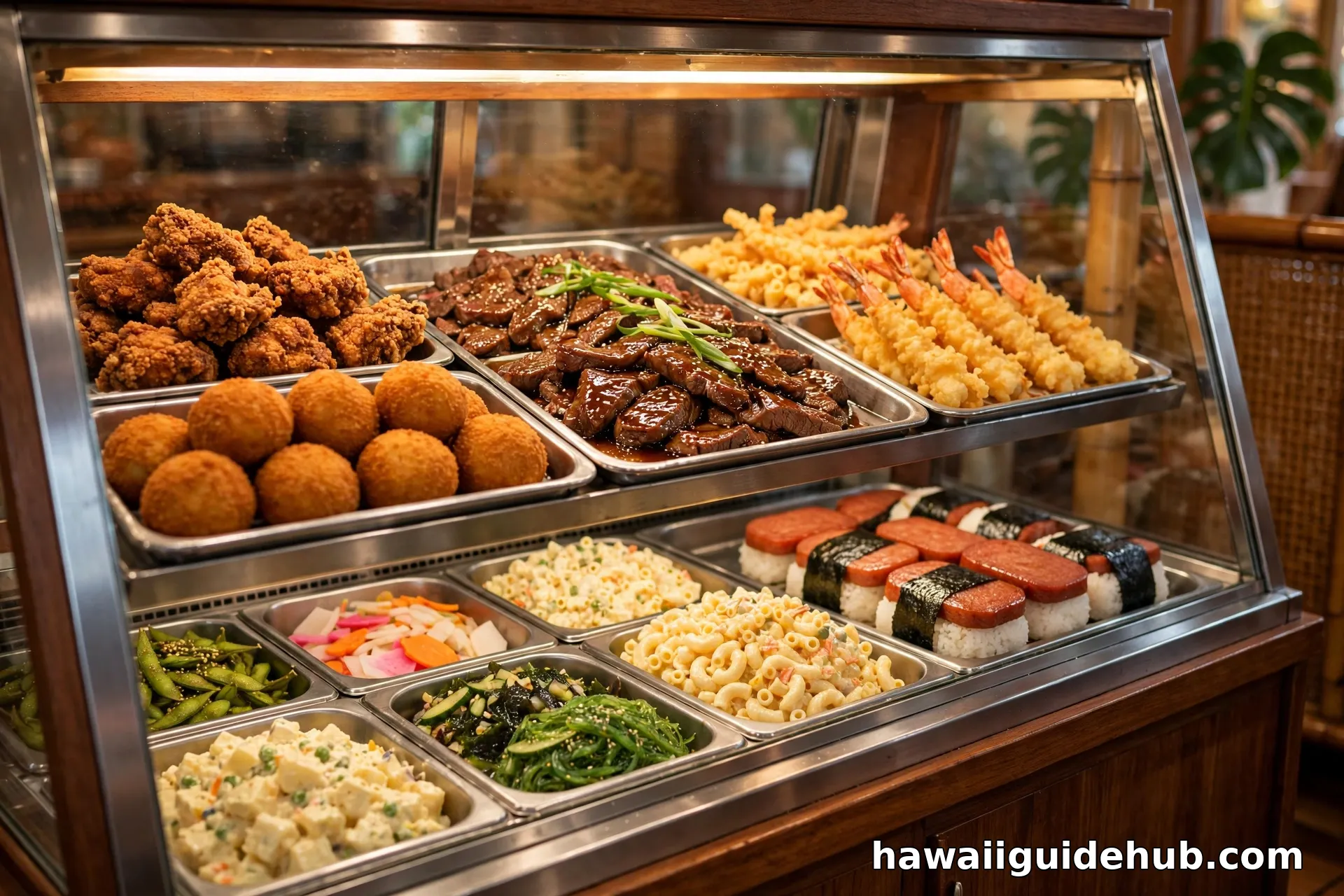
The spiritual home of the Hawaiian bento is the okazuya, the Japanese-style deli where you point at what you want from a glass case of prepared foods. Okazuya are a Hawaii institution, concentrated on Oahu but found across the islands. The ritual is part of the pleasure: slide your tray along, choose a protein, add sides, watch the box fill up, and pay at the register. Prices are local, portions are generous, and the food is made fresh through the day.
Beyond okazuya, bento shows up everywhere in Hawaii food life. Grocery store delis (Foodland, Times, and Safeway all have strong bento cases) sell them all day. Plate lunch shops offer bento-style boxes. Farmers markets have vendors selling specialty bentos. Even convenience stores carry serviceable grab-and-go bento. For visitors, the grocery deli bento is one of the great travel hacks: a full local meal for around ten dollars.
Regional Variations Across the Islands
Each island puts its stamp on the bento. On Oahu, the okazuya tradition is strongest, with the widest variety and the most competition. On the Big Island, bentos lean heartier, reflecting the island’s ranching and farming culture. Maui bentos often feature local fish when available. Kauai’s bentos, sold at smaller delis and markets, tend toward the homestyle. The differences are subtle, but locals notice them, and part of the fun of island hopping is comparing.
Specialty bentos have also emerged: breakfast bentos with eggs and Portuguese sausage, seafood bentos heavy on poke and grilled fish, vegetarian bentos built around tofu and vegetable sides, and premium bentos from higher-end delis with items like unagi or sashimi. The form is endlessly adaptable, which is why it has survived for over a century.
How to Build Your Own Hawaiian Bento
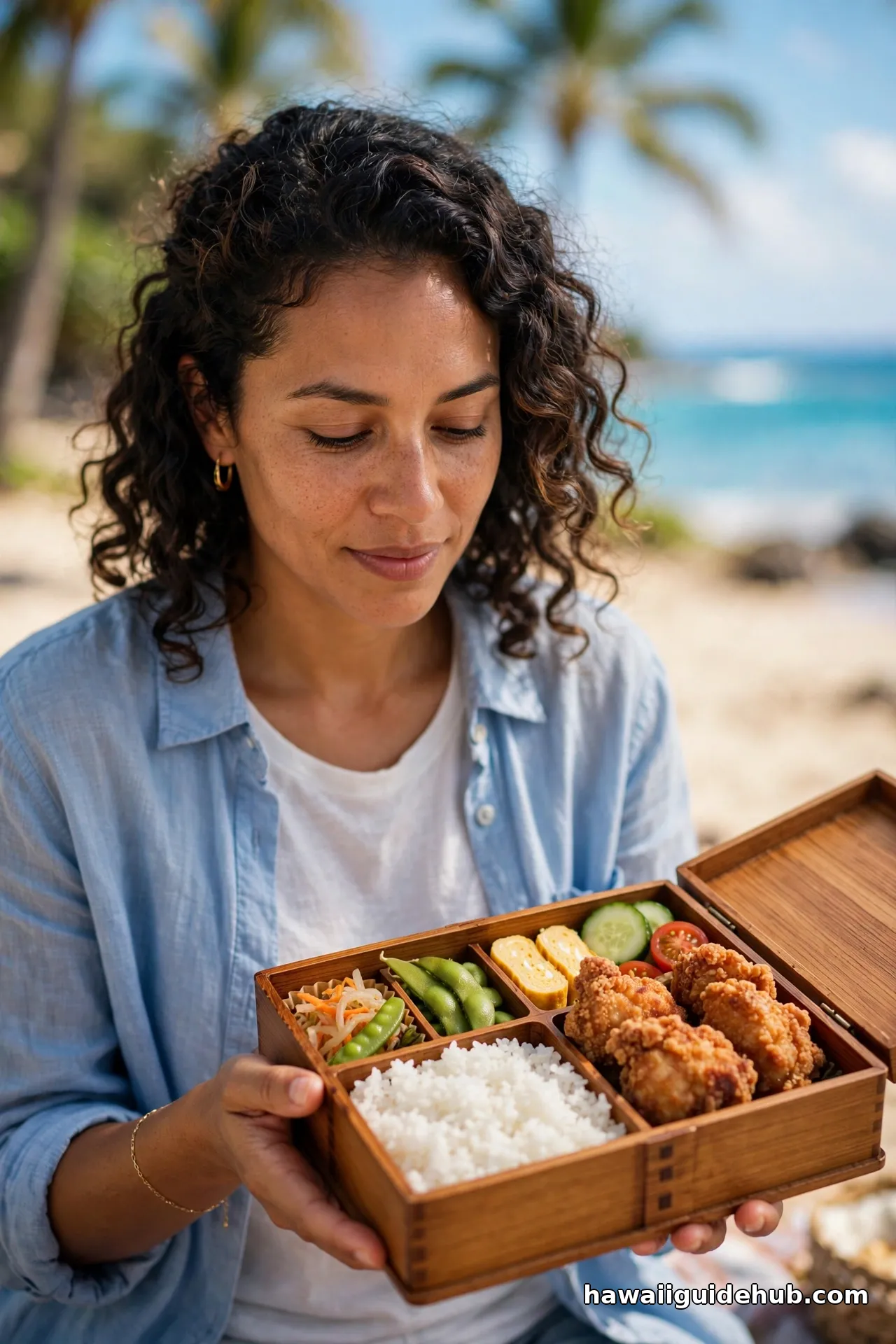
Making a Hawaiian bento at home is straightforward and forgiving. You need a compartmentalized container, cooked rice, one or two proteins, and a handful of sides. The key principles: cook the rice fresh, make components that taste good at room temperature, include something pickled or acidic for contrast, and do not skimp on variety.
A Simple Home Bento Formula
- Cook the rice. Make short-grain white rice and let it cool slightly. Fill the largest compartment, about two cups cooked.
- Pick your proteins. Teriyaki chicken is the classic home choice: marinate chicken thighs in shoyu, sugar, garlic, and ginger, then pan-fry or grill. Add a second protein like tamagoyaki or fried spam slices.
- Add the sides. Make a quick mac salad (elbow macaroni, mayonnaise, a splash of milk, salt, and pepper), add shredded cabbage with dressing, and include something pickled such as store-bought takuan or quick-pickled cucumber.
- Season and garnish. Sprinkle furikake over the rice, tuck in a packet of shoyu, and add sesame seeds or green onion over the protein.
- Pack it right. Pack the box fairly full so nothing slides around. Bento is meant to be eaten at room temperature within a few hours; refrigerate if you are holding it longer, and keep cold items cold with an ice pack for food safety.
What a Hawaiian Bento Tastes Like
A good Hawaiian bento is a study in contrast. The rice is mild and comforting, the teriyaki sweet and savory, the katsu crunchy and rich, the mac salad cool and creamy, the pickles sharp and bright. No single bite is complicated, but the combination across the box is deeply satisfying. It tastes like Hawaii itself: layered, generous, and shaped by many hands.
For visitors, the bento is also a practical revelation. It is portable, affordable, filling, and genuinely local in a way that resort restaurant food rarely is. A ten-dollar bento eaten on a beach or at a scenic overlook is one of the best meals in Hawaii, full stop.
Bento vs. Plate Lunch: What Is the Difference
Visitors often confuse bento with the plate lunch, and the two overlap. The plate lunch is the other great Hawaii meal format: two scoops of rice, a scoop of mac salad, and a protein, usually served in a single container or on a plate. The bento differs in its compartmentalized box, its wider variety of smaller items, and its Japanese deli roots. In practice, many shops blur the line, and nobody will fault you for loving both.
Bento Culture: How Hawaii Eats From the Box
To understand the Hawaiian bento, you have to understand where it gets eaten. It is the lunch of the construction site and the classroom, the standard issue for sports teams and field trips, the thing aunties bring to the beach park in stacked containers. In Hawaii, offering someone a bento is a gesture of care, and refusing one is nearly impossible. The box carries a social meaning that goes beyond food: it says someone thought about you at lunchtime.
This is why bento quality matters so much to locals. A good okazuya builds a loyal following that spans generations; families have their spot the way other towns have their pizza place. Workers judge a job site partly by how close it is to a good bento source. And visitors who learn to eat like this, grabbing a ten-dollar box and eating it somewhere beautiful, unlock the most authentic and affordable dining in the islands.
Bento Tips for Visitors
A few practical notes for first-time bento buyers. Go early for the best selection; popular okazuya sell out of signature items by midday. Pointing is perfectly acceptable, and most counter staff will happily explain anything you do not recognize. Chopsticks are standard, though forks are always available. If you are taking bento on a hike or a long drive, buy an ice pack or eat within a couple of hours; Hawaii’s heat is no friend to room-temperature protein. And try the local drinks alongside: iced green tea, Ramune soda, or a passion-orange juice.
For the full experience, eat your bento the local way: at a beach park, a scenic overlook, or a roadside table, with the ocean or the mountains as your dining room. The box was designed for exactly this, over a century ago, by workers who ate wherever the day took them. Some traditions survive because they are perfect.
Video: Okazuya, Hawaii’s Beloved Deli Tradition
PBS Hawaiʻi visits a longtime okazuya to explain how these family delis shaped Hawaii’s neighborhoods and food culture.
Frequently Asked Questions
Is a Hawaiian bento the same as a Japanese bento?
Related but different. The Hawaiian bento grew out of the Japanese bento tradition brought by plantation immigrants, but it evolved in Hawaii over more than a century, absorbing Chinese, Korean, Filipino, Portuguese, and Hawaiian influences. It is heartier, more varied, and more casual than a typical Japanese bento.
Where can visitors buy an authentic bento in Hawaii?
Okazuya (Japanese delis) are the classic source, especially on Oahu. Grocery store delis, plate lunch shops, farmers markets, and convenience stores all sell bento too. Ask locals for their favorite okazuya and you will get strong opinions.
How much does a bento cost in Hawaii?
Most deli and okazuya bentos run roughly $8 to $15. Specialty or premium bentos with higher-end proteins can cost more. It remains one of the most affordable full meals in Hawaii.
Can you bring bento to the beach?
Absolutely, and locals do it constantly. Bento is the ideal beach food: portable, eaten at room temperature, and filling. Bring a cooler with drinks, eat within a few hours of purchase, and pack out all your trash.
What is the difference between bento and a lunch box?
In Hawaii, “bento” specifically means the compartmentalized Japanese-derived boxed meal with rice, protein, and sides. A generic lunch box could be anything. When a Hawaii menu says bento, expect the classic format described in this guide.
The Hawaiian bento box is more than lunch. It is a century of immigration history you can eat, a working person’s meal that became an island art form, and proof that the best food traditions are the ones that keep absorbing new influences. Pick one up from an okazuya, find a beach or a park bench, and taste what happens when many cultures pack the same box.