What Is Kulolo? Hawaii’s Chewy Taro and Coconut Pudding

Ask a kamaʻāina what dessert truly tastes like Hawaii and you might be surprised by the answer. It is not shave ice. It is not a Portuguese malasada. It is a dense, dark, glossy square of something chewy, caramel-like, and deeply comforting. It is kulolo.
Kulolo is the traditional Hawaiian pudding made from grated taro and coconut, slowly steamed or baked until it sets into a fudge-like block. It is rich without being cloying, sweet without shouting, and it carries the story of the islands in every bite.
What Is Kulolo, Exactly?
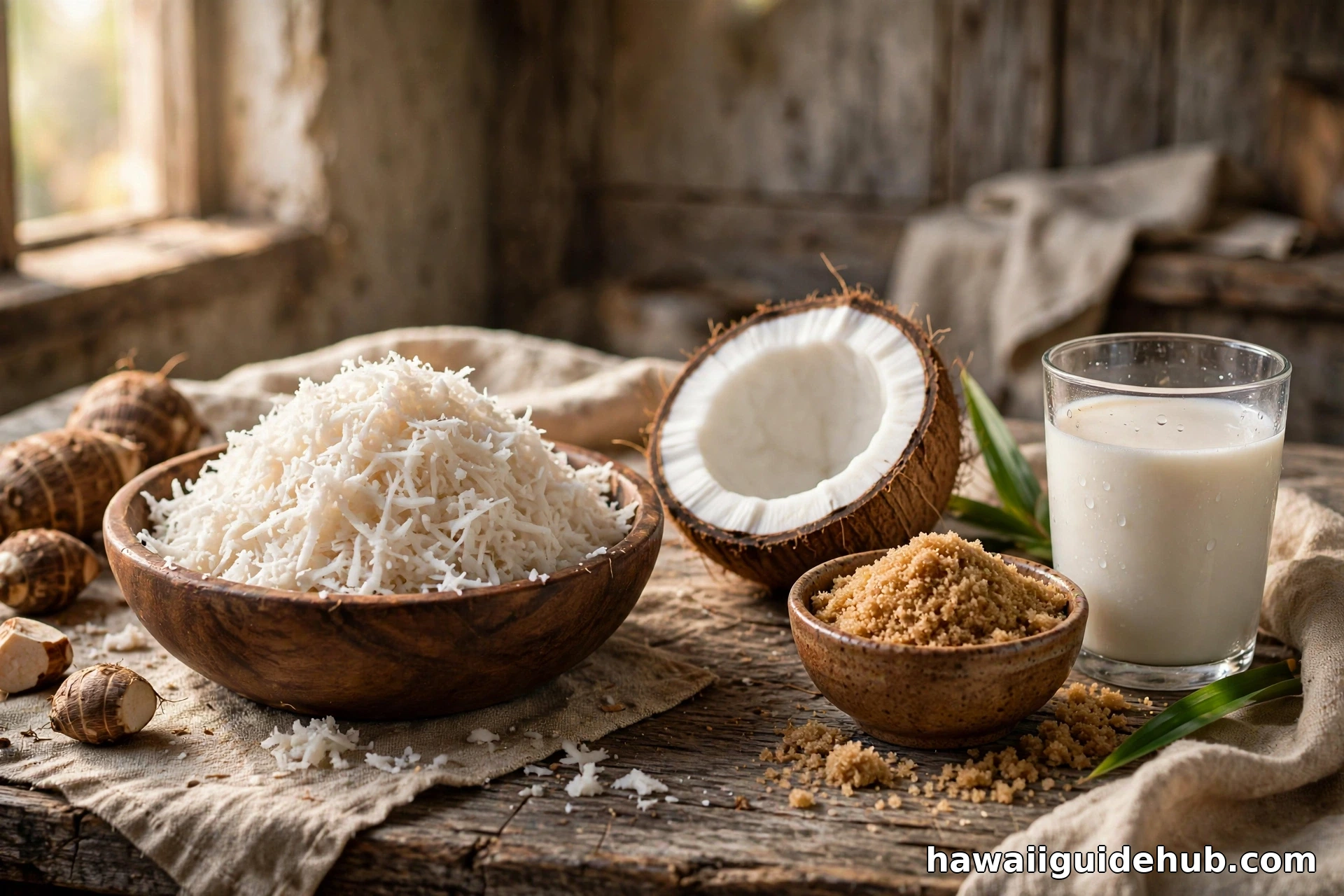
At its simplest, kulolo is a steamed or baked pudding made from two main ingredients: kalo (taro root) and coconut. The raw taro is peeled and finely grated, then mixed with coconut milk, grated coconut meat, and sugar. The mixture is pressed into a pan, traditionally lined with ti leaves, and cooked slowly for hours until it becomes firm, dense, and chewy.
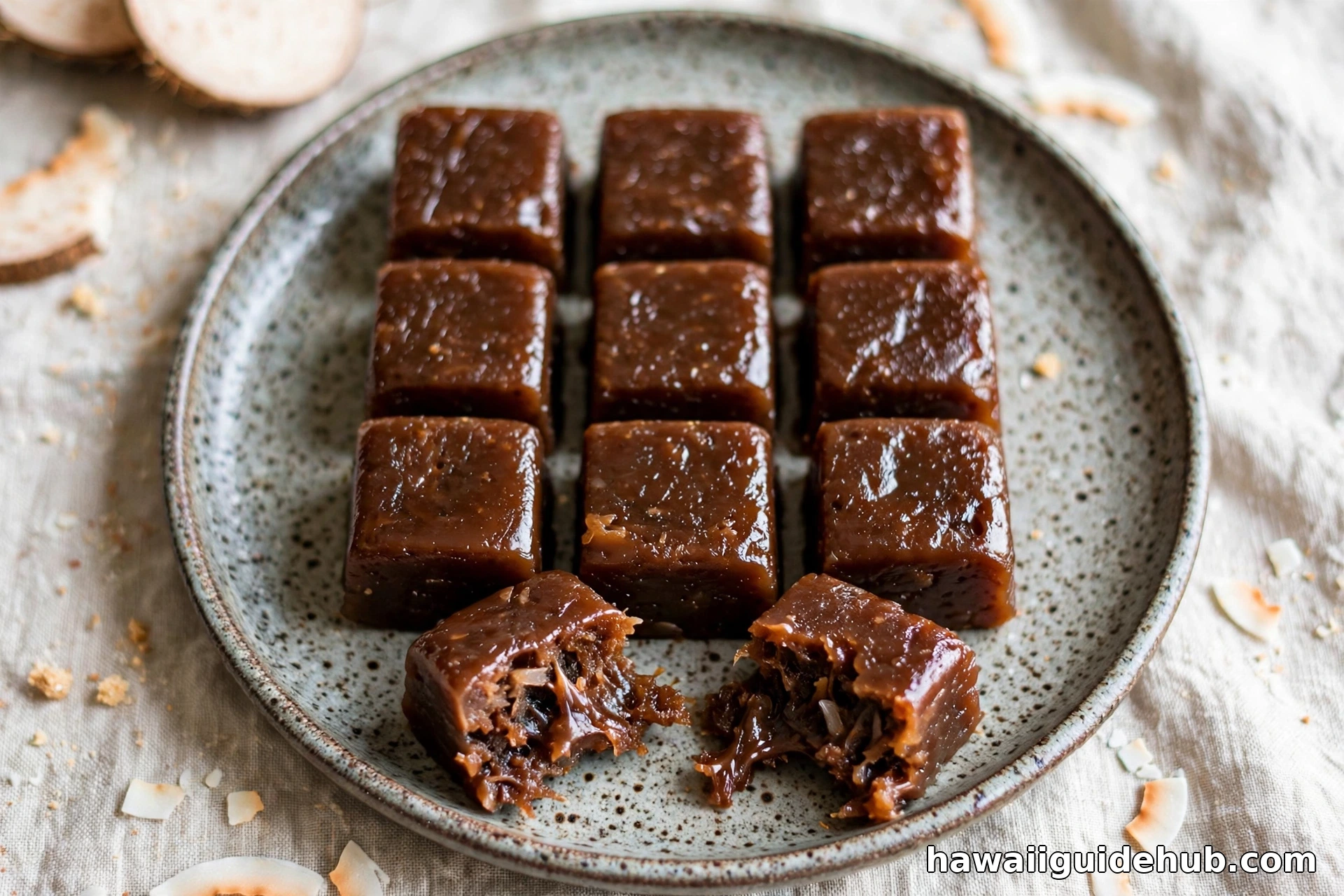
The finished kulolo looks almost like dark caramel fudge. It has a deep mahogany color, a glossy surface, and a texture that lands somewhere between fudge, Southeast Asian dodol, and Chinese nian gao. It is always served cut into squares or rectangles, and because it is so rich, a small piece goes a long way. Locals eat it with their fingers, usually at room temperature.
Kulolo is considered a festive food. You will find it at lūʻau, family gatherings, holiday tables, and community fundraisers. It has been documented by visitors to Hawaii since the late 1800s, which tells you how long this dessert has been a beloved part of island life.
What Does Kulolo Taste Like?
The first thing you notice about kulolo is the chew. It is not soft like cake or crisp like a cookie. It resists a little when you bite in, then gives way into something dense and satisfying. People who grew up in Hawaii often compare it to Chinese gau, the sticky New Year cake, and the comparison is fair: both are steamed, chewy, brown-sugar-sweetened treats.
The flavor is dominated by caramel. The long, slow cooking caramelizes the sugars and deepens the taro into something nutty and almost smoky-sweet. The coconut rounds everything out with richness rather than a sharp coconut flavor. It is not the bright, milky coconut of haupia. It is deeper, warmer, more grounded.
Kulolo is sweet, but not aggressively so. Traditional recipes let the natural sweetness of taro and coconut do much of the work, with sugar as quiet support rather than the star.
The Two Ingredients That Matter
Everything about kulolo comes down to the quality of its two core ingredients.
Kalo, the Sacred Taro
Kalo, the Hawaiian word for taro, is not just another root vegetable in Hawaii. In the Kumulipo, the Hawaiian creation chant, the first kalo plant is Hāloa, the elder sibling of the Hawaiian people. That genealogy makes kalo a spiritual ancestor, not merely a crop. Hawaiians have cultivated taro in loʻi, the irrigated terraces you still see across the islands, for more than a thousand years.
For kulolo, the taro must be raw and grated fine. The variety matters less than freshness, but Kauai-grown taro is widely considered the gold standard, which is one reason Kauai is so closely associated with great kulolo. One practical warning: always wear gloves when peeling and grating raw taro. Raw taro contains tiny needle-shaped calcium oxalate crystals that can make your hands itch and irritate your mouth and throat. Thorough cooking destroys the irritation completely, which is why kulolo, with its hours of cooking, is perfectly safe. Just do not taste the raw mixture.
Coconut, the Richness
The second pillar is coconut, used in two forms: fresh coconut milk or cream, and grated coconut meat. The coconut provides the fat that makes kulolo taste luxurious and keeps the long-cooked taro from turning dry or gummy. In the old days, families grated fresh coconut by hand and squeezed their own coconut cream. Today, full-fat canned coconut milk is a perfectly acceptable substitute, and most home recipes use it without apology. What matters is that the coconut is rich and uncompromised: light coconut milk will give you a thin, disappointing kulolo.
Where Kulolo Comes From
Kulolo belongs to the oldest layer of Hawaiian food culture. Before sugar plantations and Portuguese immigrants and plate lunches, the Hawaiian diet was built on kalo, sweet potato, breadfruit, coconut, and fish. Kulolo is one of the sweet expressions of that world, a dish that likely began as a festive preparation for makahiki, the harvest season, and other special gatherings.
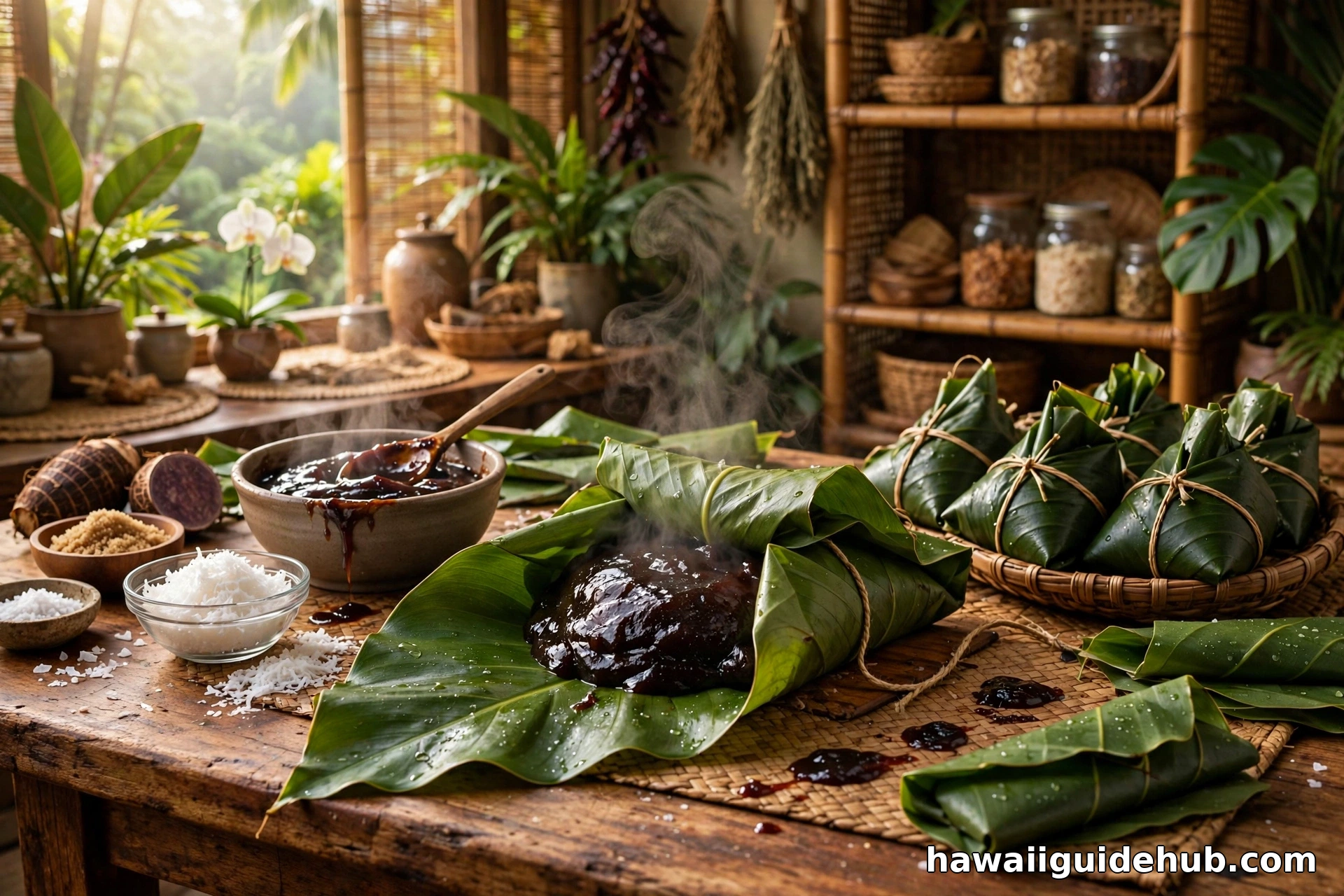
The traditional preparation is inseparable from the imu, the underground oven that is the heart of Hawaiian cooking. The taro-coconut mixture was wrapped in ti leaves, which kept it moist and added a faint herbal note, then placed in the imu alongside kālua pig and other foods to bake for six to eight hours in the earth’s steady heat. That slow burial of heat is what gives real kulolo its signature density and caramel depth.
Non-Hawaiian visitors were writing about kulolo with admiration by the late 1800s, and it has been a fixture at traditional Hawaiian lūʻau ever since. When you see kulolo on a dessert table next to haupia and fresh fruit, you are looking at a direct line to the old Hawaii.
How Traditional Kulolo Is Made
The method has barely changed in its essentials, even if the equipment has. Here is how the two approaches compare.
The Imu Method
In the traditional imu method, the grated taro is mixed with coconut cream and sugar, sometimes with a little coconut water, and the mixture is wrapped tightly in ti leaves. The bundle goes into the imu, the pit oven lined with hot stones, and bakes under layers of leaves and earth for six to eight hours. The result is kulolo with a depth that no shortcut fully reproduces: deeply caramelized, intensely chewy, infused with the faintest breath of ti leaf.
The Modern Oven and Steamer Methods
Very few people have an imu in the backyard, so modern kulolo is made in the oven, a steamer, or a pressure cooker. The most common home method is the oven: the mixture goes into a foil-lined loaf pan, the pan is covered tightly with foil to trap steam, and it bakes at 400°F for about two hours, with the foil removed for the last half hour so the top browns. A pressure cooker or Instant Pot can do the job in about two and a half hours at high pressure. Steaming on the stovetop takes five to six hours. All three methods produce genuine kulolo, and the differences are a matter of texture nuance, not authenticity.
Why Kauai Is Kulolo Country
Taro is grown on every major Hawaiian island, but Kauai is the undisputed taro capital of Hawaii. The Hanalei Valley on Kauai’s north shore holds the largest concentration of working loʻi in the state, and the island’s abundant water and rich soil produce taro with a flavor and starch quality that makers prize. Because kulolo is basically taro plus coconut, the taro is the whole game, and Kauai taro wins.
That is why the best kulolo is so often associated with Kauai, and why visitors who taste kulolo made from Hanalei taro talk about it for years afterward. Makers like Hanalei Taro and Juice Co. have built their reputation on exactly this connection. If you are on Kauai, buying kulolo there is not just convenient, it is the pilgrimage version of the experience.
Kulolo vs Haupia: Don’t Mix Them Up
Visitors often confuse kulolo with haupia, Hawaii’s other famous coconut dessert, so let’s settle it. Haupia is made from coconut milk thickened with sugar and starch into a soft, pale, jelly-like pudding. It is delicate, milky, and cool. Kulolo is made from taro and coconut, cooked for hours into a dark, dense, chewy block. It is hearty, caramel-like, and substantial.
Think of it this way: haupia is the light, elegant dessert, and kulolo is the rich, grounding one. You will often see them side by side at gatherings, and locals have strong opinions about which is better. There is even a modern hybrid called haulolo that layers haupia and kulolo together, which tells you everything about how beloved both are. If you enjoy Hawaiian sweets generally, our guide to malasadas covers the islands’ other great dessert tradition.
Where to Buy Kulolo in Hawaii
Here is the honest truth about homemade kulolo: it is labor intensive and time consuming, and most Hawaii residents buy it from someone who specializes in it. Your best bet is a farmers market.
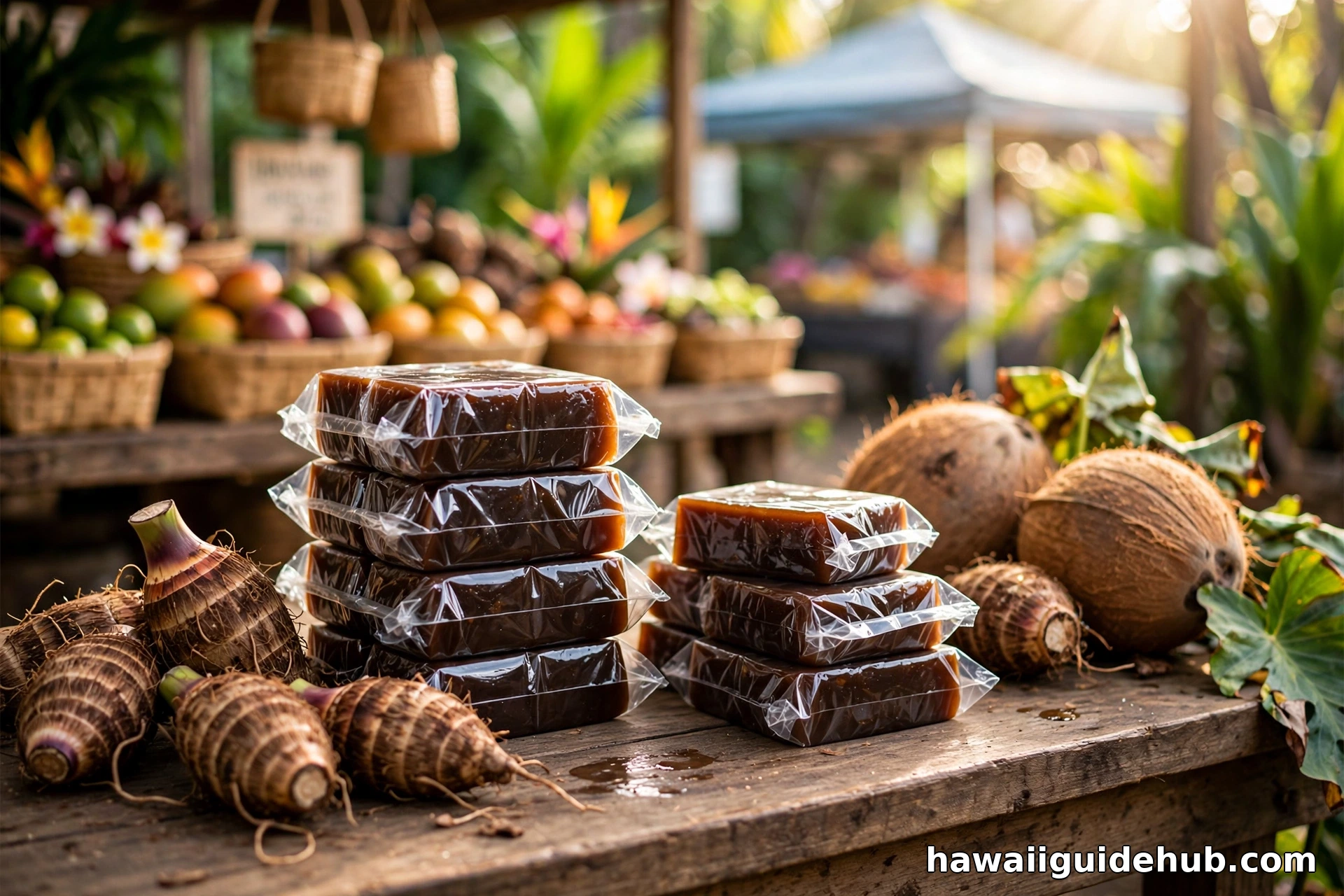
On Oahu, look for Pomai Kulolo, a family operation founded by three siblings that sells kulolo, haupia, and haulolo at markets including the Kakaʻako Farmers Market. Their kulolo is made from family recipes and it is the real thing. On Kauai, Hanalei Taro and Juice Co. and the various roadside stands around Hanalei sell excellent kulolo, often in one-pound bricks wrapped in plastic.
Elsewhere, keep your eyes open at local grocery stores, okazuya delis, and Hawaiian food shops. Kulolo also turns up sold from coolers at roadside stands and out of truck beds, which sounds informal because it is, and is completely normal in Hawaii. A one-pound brick typically costs a few dollars and will serve a small crowd, since a little goes a long way.
If you want to assemble a full Hawaiian plate around your kulolo, pick up some lomi lomi salmon while you are at it, and browse our roundup of must-try local dishes to plan the rest of your food tour.
How to Make Kulolo at Home
Making kulolo at home is absolutely doable. It asks for patience more than skill. This is the classic oven method, adapted from the traditional recipe, and it makes one loaf pan of kulolo, about 16 squares.
Ingredients
- 3 cups taro root, peeled and finely grated (about 2 pounds)
- 1 cup fresh coconut, grated (or unsweetened shredded coconut)
- 1 cup coconut water
- 1 cup full-fat coconut milk
- 3/4 cup brown sugar or raw sugar
- 1/4 teaspoon salt (optional, but it sharpens the flavor)
Instructions
- Preheat your oven to 400°F. Grease a 9 by 5 inch loaf pan and line it with foil, leaving overhang on the sides so you can lift the kulolo out later.
- Wearing gloves, peel the taro and grate it finely. Rinse the grated taro briefly if it feels very slimy, then squeeze out excess liquid.
- In a large bowl, combine the grated taro, grated coconut, coconut water, coconut milk, sugar, and salt. Mix thoroughly until the sugar is fully dissolved and the mixture is uniform.
- Spread the mixture evenly into the prepared pan and smooth the top. Cover the pan tightly with foil to trap the steam.
- Bake for 2 hours. Remove the foil for the last 30 minutes so the top browns and caramelizes lightly.
- Let the kulolo cool completely in the pan, at least one hour, before lifting it out and cutting it into 1 and 1/2 inch squares. Serve at room temperature.
Tips for the Best Kulolo
Do not undercook it. Kulolo needs the full time for the starches to set and the sugars to caramelize. If the center still looks wet or loose, give it another 20 minutes under foil. Do not over-sweeten on your first try; you can always adjust the next batch, and traditional kulolo is less sweet than most American desserts. A toothpick test works: it should come out clean or with just a few moist crumbs.
If you have access to ti leaves, line the pan with them before adding the mixture and lay a few over the top. It is optional, but it adds a subtle traditional note that coconut-lined foil cannot match. And if you own a pressure cooker, you can cut the cooking time to about two and a half hours at high pressure with a natural release, which many local cooks prefer.
How to Serve and Store Kulolo
Kulolo is served at room temperature, cut into squares, and eaten with the fingers. It needs no sauce, no ice cream, no garnish, though a sprinkle of toasted coconut on top does not hurt.
For storage, keep kulolo in an airtight container in the refrigerator, where it will stay good for three to four days. Chilling firms it up considerably, so let it come back to room temperature before serving for the best chewy texture. You can also freeze kulolo for up to three months; thaw it overnight in the refrigerator. Some families pan-fry day-old slices in a little butter until the edges crisp, which is not traditional but is undeniably delicious.
Kulolo FAQs
What is kulolo made of?
Kulolo is made from grated taro root, coconut milk, grated coconut, and sugar. The mixture is steamed or baked for several hours until it sets into a dense, chewy pudding with a caramel-like flavor.
Is kulolo gluten free?
Yes. Traditional kulolo contains no wheat, no flour, and no gluten at all. It is naturally gluten free and dairy free, since the richness comes from coconut rather than butter or milk.
How long does kulolo last?
Homemade or market-bought kulolo keeps for three to four days in the refrigerator in an airtight container. For longer storage, freeze it for up to three months and thaw overnight in the fridge.
Can I make kulolo without ti leaves?
Absolutely. Ti leaves are traditional and add a subtle flavor, but foil or parchment lining works fine. Most home recipes skip the ti leaves entirely and the result is still genuine kulolo.
Watch: How Kulolo Is Made
Seeing the process helps, especially the texture you are aiming for. This video walks through a simple three-ingredient kulolo made in an Instant Pot, which is one of the easiest ways to get an authentic result at home.
Kulolo is one of those foods that explains Hawaii better than any beach photograph. It is the taste of kalo, the sacred elder sibling of the Hawaiian people, transformed by coconut, sugar, and hours of patient heat into something that has fed celebrations for generations. Whether you buy a brick at a farmers market on Oahu, taste it fresh in Hanalei, or spend an afternoon making it in your own kitchen, you are taking part in a tradition that reaches back to the old Hawaii. Take the small square. Eat it slowly.