Punalau Falls: Maui’s Hidden Waterfall on the Road to Hana

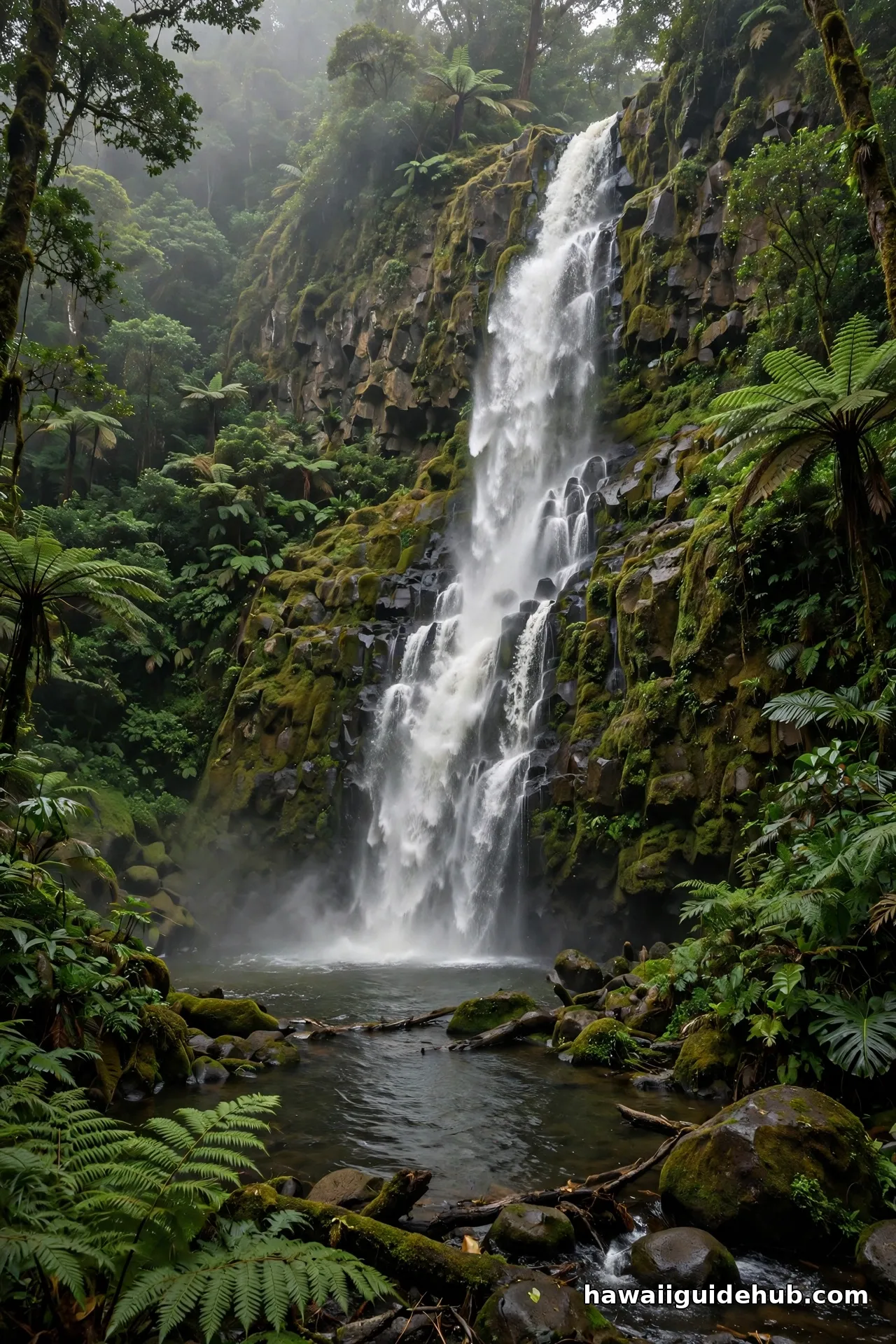
Punalau Falls is the waterfall you drive past without knowing it. It sits a quarter mile past mile marker 13 on the Road to Hana, invisible from the highway, at the end of a rough 800-foot scramble up a boulder-strewn stream. There is no sign, no marked trail, and no parking lot. What there is, for those willing to pick their way upstream, is a 100-foot cascade pouring into a narrow Maui gulch that most Hana Highway travelers never see.
This is the complete guide to Punalau Falls. It covers exactly where the falls are, how to reach them, what the scramble demands, the serious safety warnings you must understand before going, the best conditions for a visit, what to bring, and how this hidden falls compares to the famous waterfalls nearby. Everything about Punalau Falls and the Punalau Falls hike lives on this one page.
Punalau Falls at a Glance
| Where is it? | East Maui, off the Hana Highway (Route 360), just past mile marker 13 |
| How big? | About 100 feet |
| How do you get there? | About 800 feet each way up Punalau Stream (roughly 0.25 mile round trip); 10 to 30 minutes each way depending on stream levels |
| Is there a trail? | No. It is an unmarked boulder scramble with no trail markings; you route-find up the streambed. Moderate to difficult. |
| What does it cost? | Nothing. No fees or permits; park in the tiny roadside turnout near the bridge past mile marker 13. |
| What can go wrong? | Flash floods, slippery boulders, falling rocks, and leptospirosis risk from stream water. Skip it after rain. |
Where Punalau Falls Is
Punalau Falls is on the island of Maui, on the windward slopes of Haleakala along the famous Road to Hana. To find it, drive the Hana Highway (Route 360) past mile marker 13. About a quarter mile beyond the marker, just past a small white bridge, there is a tiny turnout on the far side of the road. Park there, find the stream, and head upstream.
The falls sit at the head of Punalau Stream’s gulch, and you cannot see them from the road, which is why most travelers pass right by. The stream runs through the Koolau Forest Reserve area, typical East Maui rainforest country: dense green walls, dripping vegetation, and a narrow rocky streambed that funnels everything, water included, in one direction.
The Hike: An 800-Foot Stream Scramble
Calling this a hike is generous. It is a stream scramble, and an unmarked one. From the road, you drop to Punalau Stream and pick your way upstream over volcanic boulders, most of them wet, many of them slippery, some of them submerged. There is no trail to follow; the streambed is the route. You will use your hands for balance, wade through shin-deep sections, and hop from rock to rock for about 800 feet until the gulch narrows and the 100-foot falls block further progress.
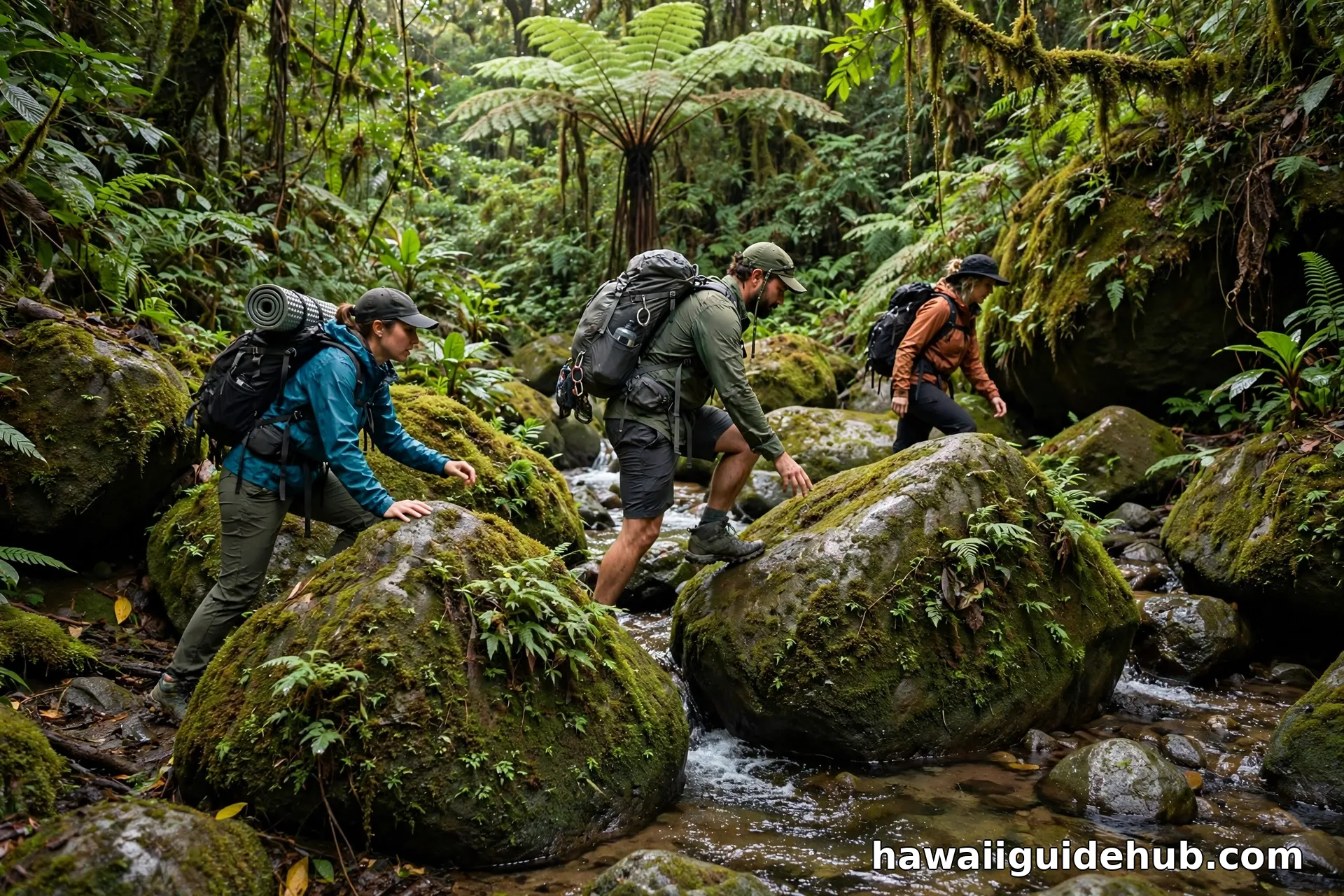
In low water, experienced scramblers can make it in 10 to 15 minutes each way. In higher water or for the less sure-footed, allow 30 minutes or more. The boulders demand constant attention: an turned ankle or a cut here is a real problem, because you are off the maintained trail system and help is not close. Sticky rubber water shoes or tabis-style footwear make an enormous difference; smooth-soled sneakers are a liability.
The payoff is a slender, lacy cascade dropping about 100 feet down a mossy cliff into the head of the gulch. In low flow it can be a delicate trickle; after rain it runs fuller and louder. Either way, you will very likely have it to yourself. The falls are the end of the line; the cliff and the narrow gulch block any further upstream travel.
Safety: Read This Before You Go
Punalau Falls demands more caution than its short distance suggests. The hazards are real and have injured people at East Maui waterfalls repeatedly.
Flash Floods
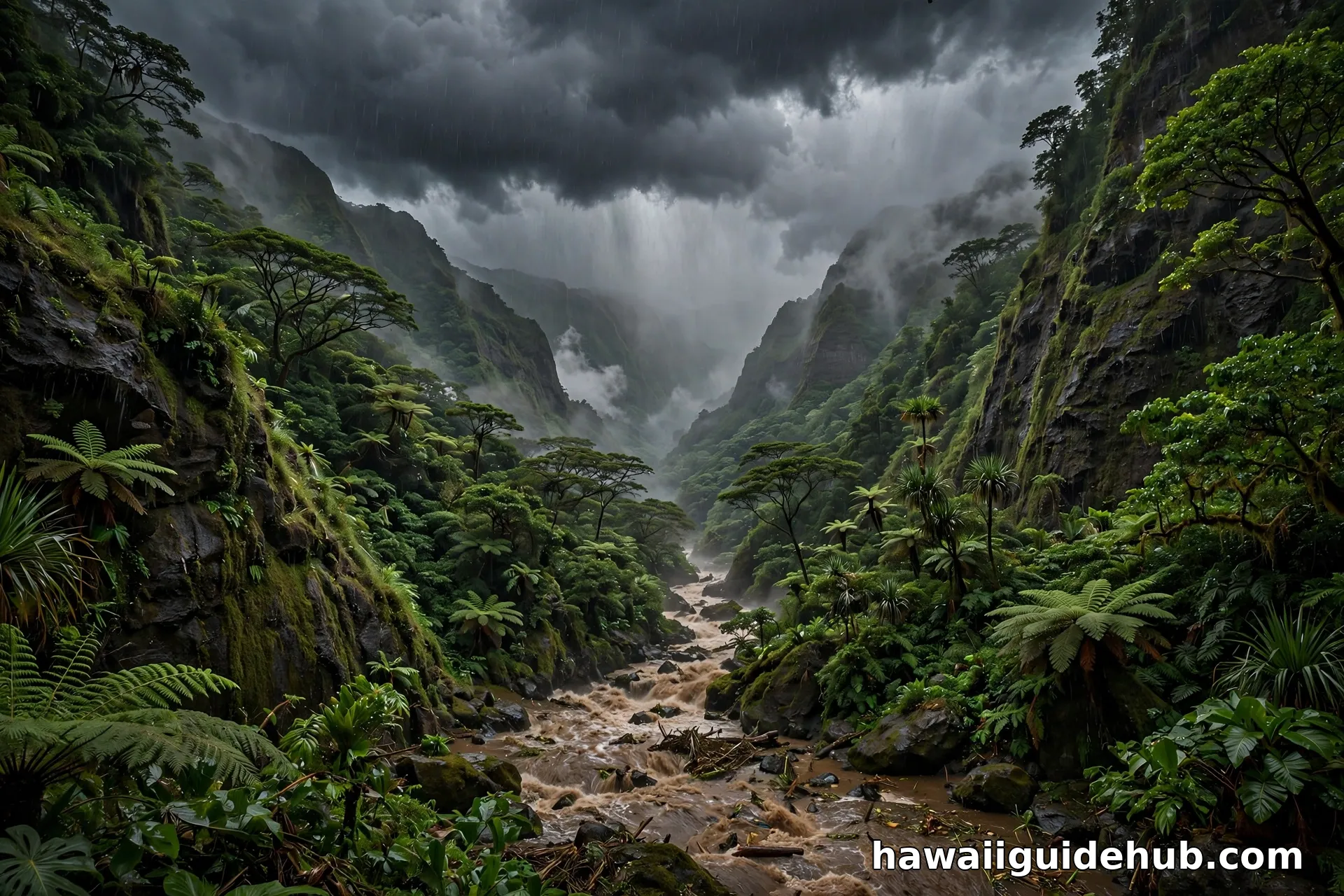
This is the serious one. East Maui gulches can flash flood with terrifying speed when rain falls upslope, even when it is sunny where you are standing. A narrow streambed like Punalau’s gives you nowhere to go if a wall of water comes down. If it is raining, if rain is forecast, or if you see dark clouds building over the mountain, do not enter the stream. Check the weather before you go and keep watching the sky while you are in the gulch.
Slippery Rock and Falling Rock
The boulders are slick with algae and spray, and the gulch walls shed rocks. Wear footwear with real grip, go slowly, test handholds, and keep an eye on the cliffs above you, especially after rain. A hiking stick or trekking pole helps enormously with balance on the wet rock.
Leptospirosis
Hawaii streams can carry leptospirosis, a bacterial infection spread through the urine of wild animals. The Hawaii Department of Health advises avoiding stream water contact with open cuts and avoiding swallowing stream water. Cover any cuts with waterproof bandages, do not put your head under, and wash up afterward. Any open wound in stream water is a genuine infection risk.
Access and Etiquette
There is no formal trailhead here, and the surrounding land includes areas locals are protective of. Park fully off the road without blocking the turnout or driveways, keep noise down, pack out everything, and do not trespass beyond the stream corridor. If conditions feel wrong, turn around; the falls will be there another day.
Best Time to Visit Punalau Falls
Punalau Falls can be visited year round, but conditions vary enormously. The drier months, roughly April through September, generally offer lower stream levels and a safer, easier scramble. Winter brings heavier rain to windward Maui, which makes the falls more dramatic but the scramble significantly more dangerous. Morning is the best time of day: you get better light in the gulch, and East Maui weather often deteriorates in the afternoon.
Flow matters more than season for the experience itself. In very low flow the falls can be a thin ribbon; after moderate rain they are fuller and far more photogenic. The sweet spot is a day or two after rain has passed, when the stream has dropped back to safe levels but the falls are still running well. Never go during active rain.
What to Bring
Pack for a wet, rough scramble, not a stroll. Sticky-soled water shoes or canyoneering footwear are the single most important item. Bring a hiking stick or trekking poles, a small dry bag for your phone and camera, drinking water, and a basic first aid kit with waterproof bandages. Wear quick-dry clothes and expect to get wet to the shins at minimum. Leave the nice camera gear behind unless it is waterproof; the spray and the scrambling do not mix with delicate electronics.
How Punalau Falls Compares to Nearby Waterfalls
The Road to Hana is lined with waterfalls, and Punalau occupies a specific niche among them. The famous roadside falls like those at Puaa Kaa State Park are easy and crowded. The big-name hikes like the Pipiwai Trail to Waimoku Falls in Haleakala National Park are maintained, spectacular, and busy. Punalau is none of those things: it is short, rough, unmarked, and usually empty. Choose it if you want solitude and do not mind earning it with a scramble. Choose the maintained trails if you want reliability, safety infrastructure, and facilities.
One honest note: almost every gulch on the windward slopes of Haleakala hides a waterfall, because the volcano’s hard rock layers resist erosion while softer layers wash away. Punalau is special mainly because it is documented and reachable, not because it is the only falls of its kind. The whole Road to Hana corridor rewards travelers who look closely.

Why East Maui Grows Waterfalls
Punalau Falls exists because of the geology of Haleakala’s windward slopes. The volcano laid down alternating layers of hard, erosion-resistant lava rock and softer ash and soil. Streams cutting down through these layers chew through the soft material quickly but stall at the hard layers, creating the sheer drops that become waterfalls. Just about every gulch on this side of East Maui has at least one falls for exactly this reason.
The rainfall does the rest. The trade winds pile moist ocean air against Haleakala’s slopes, and the mountain wrings it out as rain, sometimes measured in hundreds of inches per year at the wettest elevations. That constant water supply keeps the streams running and the gulches green, and it is why the Road to Hana corridor holds one of the highest waterfall densities in the United States. Punalau is one expression of a landscape-wide pattern.
Photographing Punalau Falls
The falls sit at the head of a narrow, shaded gulch, which makes for moody photography and tricky light. Midday gives the most even illumination in the gorge; early morning can leave the falls in deep shadow. A phone in a waterproof pouch is the sensible camera here, given the scrambling and spray. If you bring a real camera, a waterproof bag is mandatory, and a small tripod or stabilized surface helps with the low light. Do not climb for a better angle; the wet rocks at the base are the most dangerous ground in the gulch.
What the Approach Looks Like, Step by Step
For those who want a clearer mental picture before committing: park in the tiny turnout past the bridge and look for where Punalau Stream passes under or near the road. Drop down to the streambed, which is wide and rocky at the road. Head upstream, staying in or beside the stream channel. The first few hundred feet are the easiest, with room to pick your line. As you progress, the gulch narrows, the boulders get bigger, and the walls close in. You will wade sections where the water runs shin-deep over smooth rock. The sound of the falls reaches you before the sight does; around the last bend, the 100-foot cascade comes into view, filling the head of the gulch. That is the end. Enjoy it, take your photos, and scramble back down the way you came, which is often trickier than the ascent.
Video: Waterfalls on the Road to Hana
A slow, unhurried look at waterfalls and rainforest on Maui’s Road to Hana, the same highway corridor that hides Punalau Falls.
Frequently Asked Questions
Is Punalau Falls on the Big Island or Maui?
Punalau Falls is on Maui, along the Road to Hana (Hana Highway, Route 360), just past mile marker 13. It is sometimes mislabeled online, but the falls, the stream, and the mile marker are all on Maui’s windward east side.
Can you swim at Punalau Falls?
There is no real swimming pool at the base; the falls drop into a rocky streambed at the head of a narrow gulch. Wading is part of the approach, but this is not a swimming spot. Given the leptospirosis risk in Hawaii streams, keep your head out of the water and cover any cuts.
Do you need a permit to visit Punalau Falls?
No permit or fee is required. There is also no formal trailhead, no facilities, and no staff. You are on your own, which is part of both the appeal and the risk.
Is the Punalau Falls hike kid friendly?
No. The unmarked boulder scramble, slippery rocks, and flash flood risk make it unsuitable for children and for anyone unsteady on their feet. Families on the Road to Hana are better served by the maintained stops like Puaa Kaa State Park or the Pipiwai Trail.
How do you find the turnoff?
Drive the Hana Highway past mile marker 13. About a quarter mile beyond it, just past a small white bridge, look for a tiny turnout on the far side of the road. Park fully off the pavement, find Punalau Stream, and head upstream. If you cannot find safe parking, skip it; the road here is narrow and blocking it creates a hazard.
Punalau Falls is not the biggest, tallest, or most famous waterfall on Maui. It is something rarer on the well-traveled Road to Hana: a genuinely hidden one. If you are a confident scrambler, check the weather, wear the right shoes, and go early, you may find yourself alone at the base of a 100-foot cascade while hundreds of travelers drive past, never knowing it is there.