Pickle Mango Recipe: Hawaii’s Sweet, Salty and Tangy Li Hing Treat

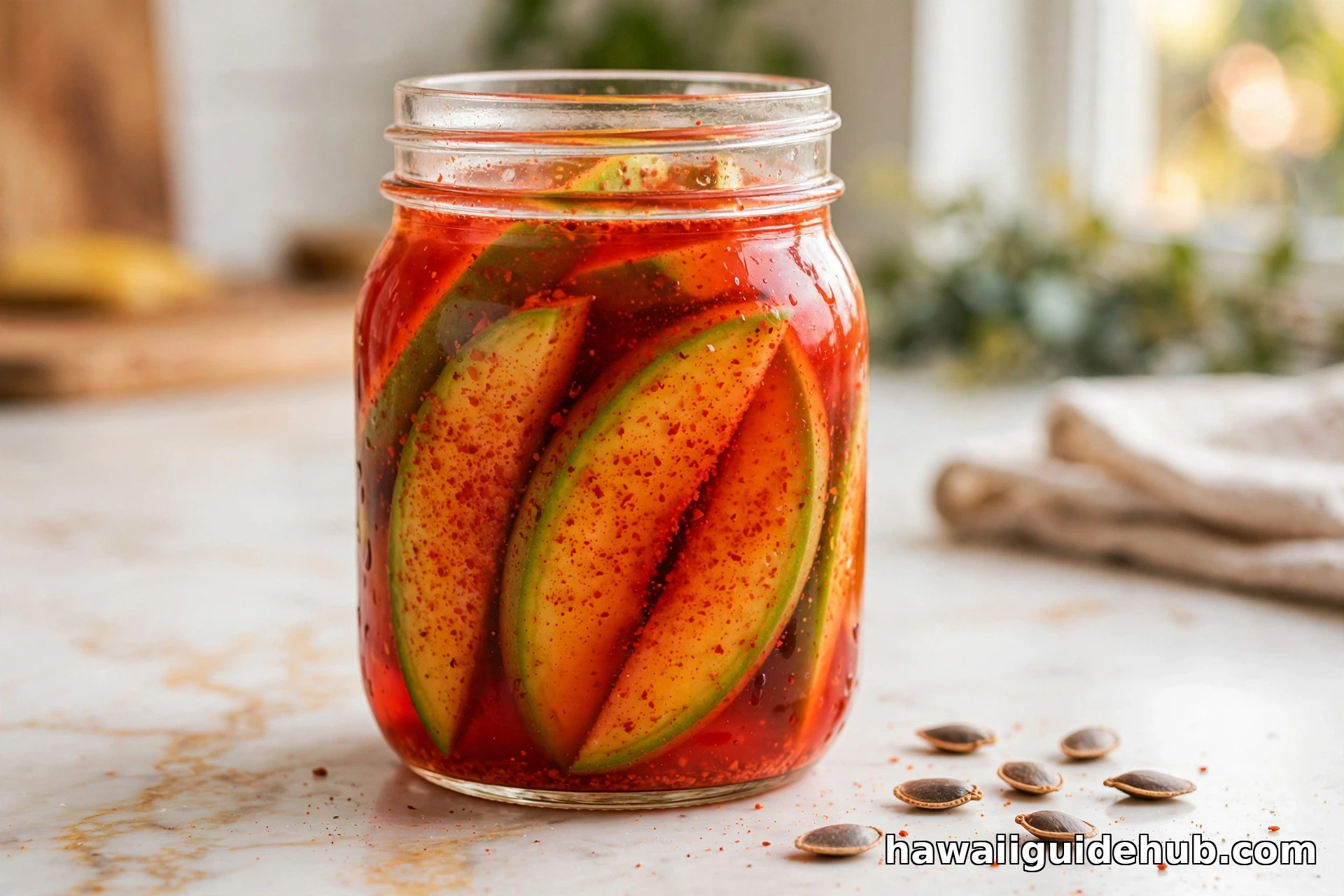
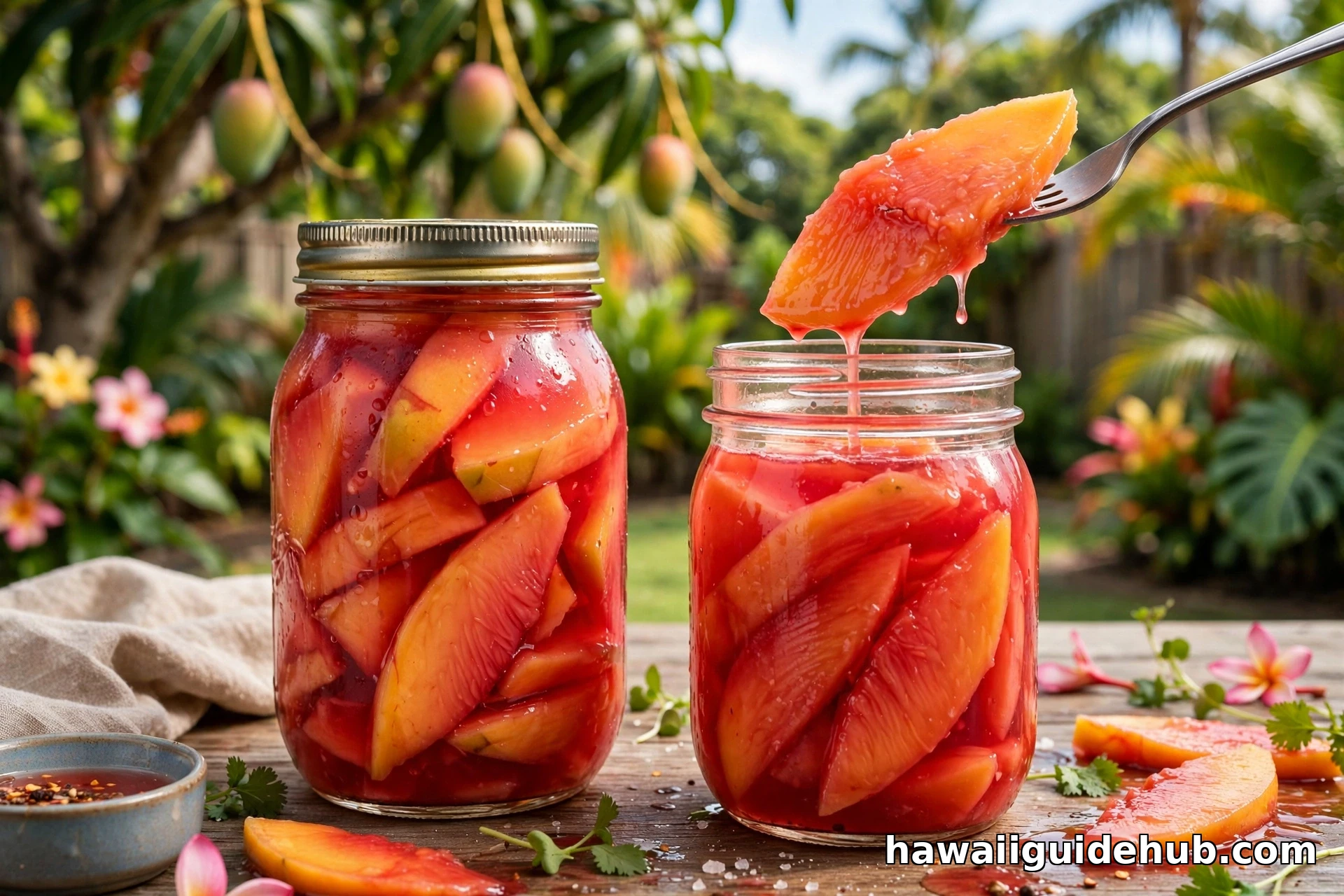
Few snacks capture the spirit of Hawaii quite like pickle mango. Cold, crunchy, and glowing red from li hing mui, it is the treat locals reach for on hot afternoons and the taste visitors remember long after they fly home. Green mango slices soak in a sweet and salty brine until they turn tangy, crisp, and completely addictive.
This guide gives you an authentic pickle mango recipe the way it is made across the islands, plus the story behind it and the small details that separate a good jar from a great one.
Pickle Mango at a Glance
| The formula | Green mango slices pickled in a sweet, salty vinegar brine with li hing mui |
| The flavor math | Crunchy, tart, sweet, and salty, with a distinctive red tint |
| The wait | About 30 minutes of prep, plus 24 hours of chilling |
| The difficulty | Easy, no special equipment needed |
| The key buy | Li hing mui powder or seeds |
| Where to find it | Crack seed stores, farmers markets, and supermarkets across Hawaii |
What Is Pickle Mango?
Pickle mango is a Hawaii local favorite made from green, unripe mangoes. The mangoes are peeled, sliced, and soaked in a brine of vinegar, sugar, water, and salt. Li hing mui, a dried plum seasoning with roots in China, gives the finished pickle its signature red color and its unmistakable sweet and salty flavor.
The texture is the whole point. Ripe mango is soft and juicy, but pickle mango stays firm and crisp. Each bite delivers a rush of tartness first, then sweetness, then the salty tang of the li hing. It is eaten cold, straight from the jar, as a snack or a dessert. On a warm day, nothing beats it.
If you grew up in Hawaii, pickle mango probably tastes like childhood. Grandparents made it from backyard mangoes every summer when the trees were heavy with fruit. Kids traded jars at school. Even now, when mango season arrives, home kitchens across the islands fill with the smell of simmering vinegar and sugar.
The Story Behind Pickle Mango
Pickle mango exists because of the meeting of two food traditions. Mangoes arrived in Hawaii in the 1800s and thrived in the tropical climate. Before long, mango trees were everywhere, and families needed ways to use the enormous harvests that arrived each summer.
At the same time, Chinese immigrants were arriving in Hawaii to work on the sugar plantations in the late 1800s. They brought li hing mui with them, a salted dried plum that had been a popular snack in China for generations. The powder made from it, sweet, salty, and slightly sour, turned out to be a perfect match for tart green mango.
Local families combined the two ideas. The Chinese tradition of preserving fruit with salt and sugar met the Hawaiian abundance of mangoes, and pickle mango was born. Over the decades it became one of the defining flavors of Hawaii, right alongside shave ice and other must-try local dishes in Hawaii.
Today, li hing mui flavor shows up far beyond pickle mango. You will find li hing powder dusted on pineapple, gummy bears, popcorn, and even margaritas. But pickle mango remains its most beloved use, the original pairing that started it all.
What Does Pickle Mango Taste Like?
Imagine the crunch of a fresh apple crossed with the pucker of a sour candy, then layered with salt and a whisper of plum. That is pickle mango. The green mango itself is tart and firm, almost like a granny smith apple but with a tropical perfume underneath.
The brine softens the tartness without removing it. Sugar rounds out the edges, salt deepens everything, and the li hing mui adds a savory note that makes it impossible to eat just one slice. Served ice cold, straight from the refrigerator, the crunch sharpens and the sweet and sour flavors pop.
Pickle Mango Ingredients
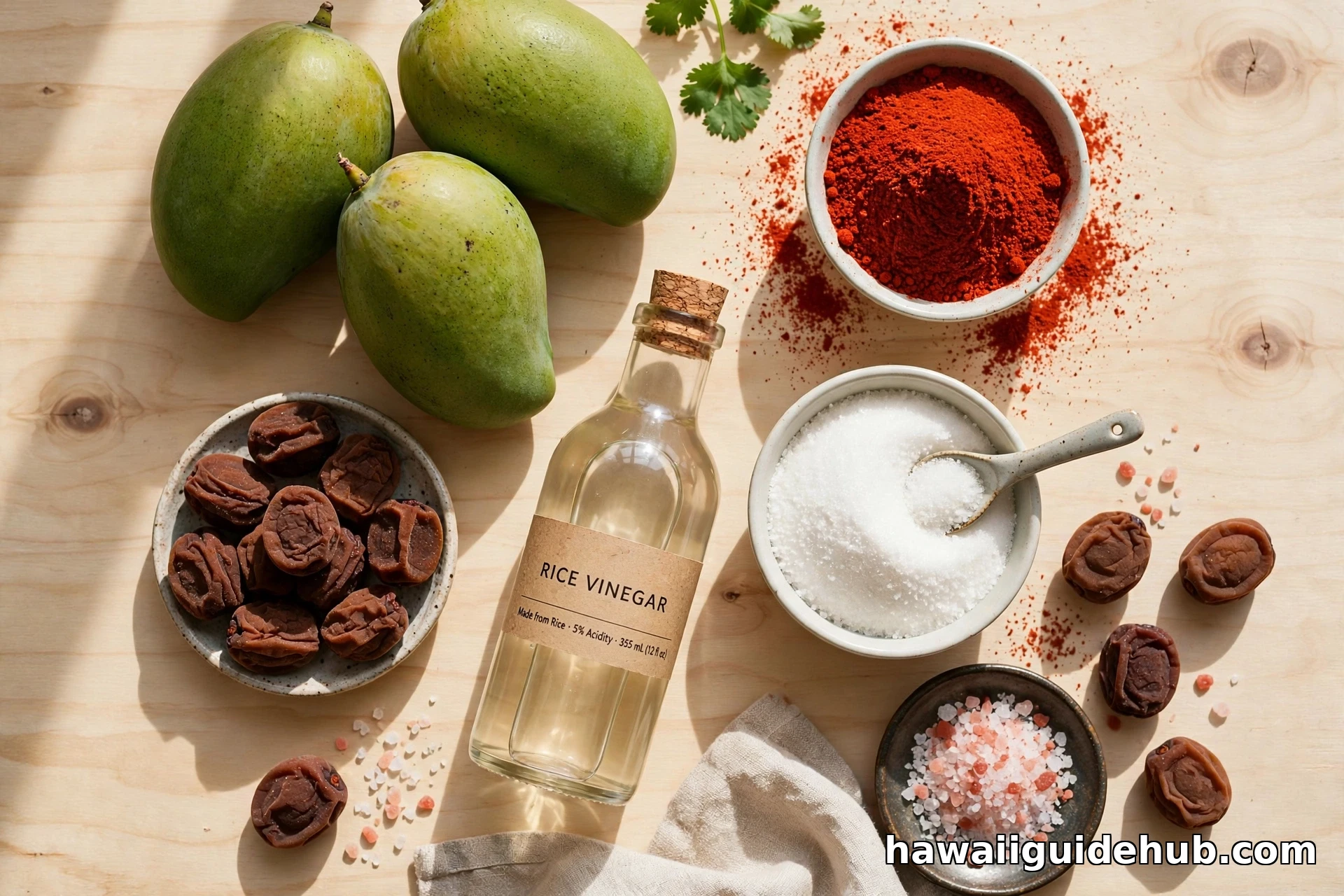
One of the best things about this pickle mango recipe is how short the ingredient list is. You probably have most of it in your kitchen already. The only specialty item is the li hing mui, which is easy to find in Hawaii and available online elsewhere.
| Ingredient | Amount | Notes |
|---|---|---|
| Green mangoes | 4 to 5 large | Firm and unripe, heavy for their size |
| Rice vinegar | 1 cup | White vinegar works in a pinch |
| Water | 1 cup | Helps mellow the brine |
| Sugar | 2 cups | Adjust to taste |
| Hawaiian salt | 1/4 cup | Sea salt is a fine substitute |
| Li hing mui powder | 2 tablespoons | The signature flavor and red color |
| Li hing mui seeds | 8 to 10 | Optional, adds extra punch |
Choosing the Right Mangoes
The mangoes make or break this recipe. You want green, unripe mangoes that feel rock hard when squeezed gently. The skin should be fully green with no yellow blush, and the flesh inside should be pale, firm, and tart. If the mango gives even slightly to pressure, it is too ripe. Ripe mango turns mushy in the brine and loses the crunch that defines pickle mango.
In Hawaii, mango season runs roughly from May through September, and that is when green mangoes are cheapest and most abundant. Backyard trees often produce far more than one family can eat, which is exactly why pickling became a tradition. If you are buying mangoes, look for them at farmers markets and Asian grocery stores, where unripe fruit is easier to find than at mainland-style supermarkets.
What Is Li Hing Mui?
Li hing mui is a dried, salted plum that originated in China. The name means “traveling plum,” a nod to its history as a portable snack. In Hawaii, it comes in several forms. Whole li hing mui seeds are the dried plums themselves, wrinkled and intensely flavored. Li hing mui powder is the ground version, and it is what gives pickle mango its famous red color.
The flavor is hard to describe until you taste it: sweet, salty, sour, and savory all at once. A pinch of the powder transforms plain fruit into something craveable. In Hawaii you can buy li hing mui powder and seeds at crack seed stores, supermarkets, and even convenience stores. Outside Hawaii, look for it at Asian markets or order it online.
If you cannot find li hing mui at all, you can still make a tasty pickled mango with just the vinegar, sugar, and salt brine. It will not have the signature red tint or the distinctive plum flavor, but it will still be crisp, sweet, and tangy. Some cooks add a drop or two of red food coloring to mimic the classic look.
Pickle Mango Recipe: Step by Step
This recipe makes about two quart-sized jars. The active work takes roughly 30 minutes, but plan ahead: the mango needs at least 24 hours in the refrigerator for the flavors to develop fully.
Step 1: Prepare the Mangoes
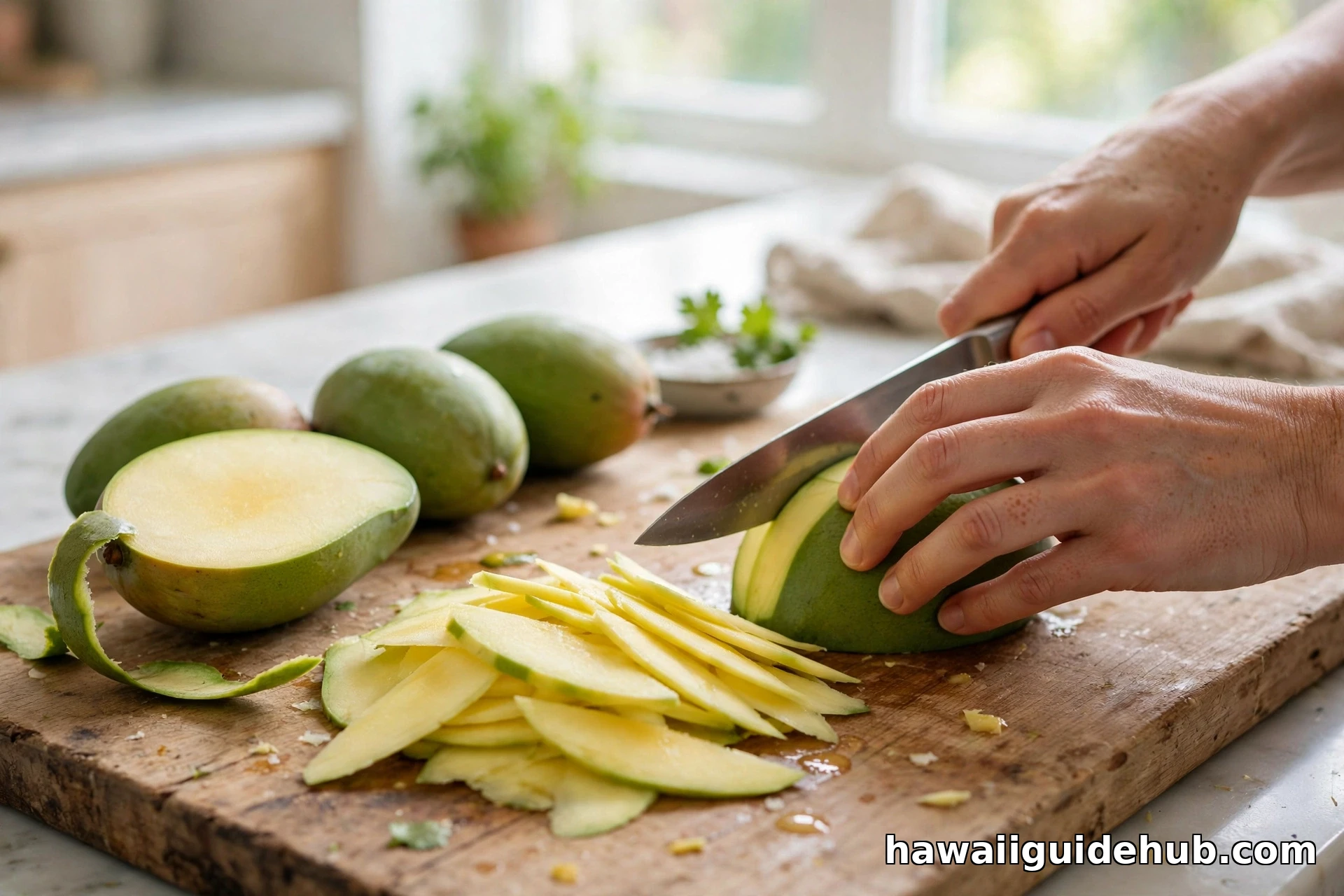
Wash the green mangoes well and pat them dry. Using a sharp knife or vegetable peeler, remove all of the skin. The skin of an unripe mango is tough and bitter, so be generous with the peeler. Cut the mango flesh away from the flat seed in the center, then slice the cheeks into pieces about a quarter inch thick. Uniform slices pickle evenly, so try to keep them consistent.
Place the sliced mango into clean glass jars or a large glass container. Pack the slices in snugly but do not crush them. Tuck a few li hing mui seeds between the layers if you are using them.
Step 2: Make the Brine
In a non-reactive saucepan, meaning stainless steel, enamel, or glass, combine the rice vinegar, water, sugar, and Hawaiian salt. The acid in vinegar can react with aluminum or cast iron and give the brine a metallic taste, so choose your pot with care. Bring the mixture to a gentle boil over medium heat, stirring until the sugar and salt dissolve completely.
Once everything is dissolved, remove the pot from the heat and stir in the li hing mui powder. The brine will turn a beautiful deep red. Let the brine cool to lukewarm before you pour it over the mango. Pouring boiling liquid over the fruit will soften it and ruin the crunch.
Step 3: Combine and Chill
Pour the cooled brine over the mango slices, making sure every piece is submerged. If any slices float above the surface, press them down gently. Seal the jars tightly and place them in the refrigerator.
Wait at least 24 hours before tasting. The mango needs this time to absorb the brine and develop its full flavor. After two days, the flavor is even better. The pickled mango will keep in the refrigerator for several weeks, though most jars do not last nearly that long.
Tips for the Best Pickle Mango
Small details make a big difference with this simple recipe. Keep these tips in mind and your pickle mango will turn out crisp, balanced, and full of flavor every time.
First, always taste your brine before you pour it. Everyone likes a different balance of sweet and sour, and it is easy to adjust at this stage. Add more sugar if you like it sweeter, or a splash more vinegar if you want extra tang. Second, keep everything cold. Pickle mango is at its best served straight from the refrigerator, and storing it cold keeps the slices crisp.
Third, use clean equipment. Wash your jars, lids, knife, and cutting board well before you start. Clean tools keep the pickles safe and help them last longer. Fourth, be patient. It is tempting to sneak a slice after a few hours, but the full 24-hour soak is what builds the deep flavor.
Finally, save the brine. When the mango is gone, the sweet and sour liquid left behind is delicious. Some people drink it, use it in salad dressings, or pour it over a fresh batch of mango slices for a second round.
Variations Worth Trying
Once you master the classic version, there are plenty of ways to make the recipe your own. Families across Hawaii each have their own twist, and part of the fun is finding the version you like best.
For a spicy kick, add sliced chili peppers to the jar. Thai chilies or Hawaiian chili peppers give the brine a slow-building heat that pairs beautifully with the sweetness. For a simpler version, skip the li hing mui entirely and let the vinegar, sugar, and salt shine on their own. This plain style is closer to a traditional refrigerator pickle.
Some cooks swap the rice vinegar for apple cider vinegar for a fruitier note, or use brown sugar instead of white for a deeper flavor. A few drops of red food coloring in the brine will give it the vivid color of the store-bought kind.
The same method works with other firm fruits too. Green papaya, mountain apple, and even pineapple can be pickled in li hing brine. If you enjoy exploring native Hawaiian fruits, pickling is a wonderful way to try them in a new form.
Where Visitors Can Find Pickle Mango
If you are visiting Hawaii and want to taste pickle mango without making it, you have plenty of options. Crack seed stores are the classic source, selling jars of pickled mango alongside li hing mui and dried fruits. These old-fashioned shops are a piece of Hawaii food culture worth visiting in their own right.
Farmers markets are another great bet, especially during mango season from May through September. Vendors often sell jars of homemade pickle mango next to fresh produce. You will also find it at many supermarkets across the islands, in the snack aisle near the dried fruit, and at roadside stands along country roads.
Bringing a jar home is a popular souvenir, but check your airline rules about carrying liquids if you are flying with it in a carry-on. Packing it in checked luggage is the safer choice. And if pickle mango wins you over, as it does for so many visitors, the recipe above means you can make it at home wherever you live.
Watch: Pickle Mango Made in Hawaii
Seeing the process makes it even clearer. This video walks through a classic Hawaii-style pickled mango with li hing mui, from slicing the green mangoes to pouring the brine:
Frequently Asked Questions
Can I use ripe mangoes for pickle mango?
It is not recommended. Ripe mangoes are soft and sweet, and they turn mushy in the brine. The whole appeal of pickle mango is the firm crunch of unripe fruit against the sweet and sour brine. Stick with green, hard mangoes for the authentic texture.
How long does pickle mango last?
Stored in sealed jars in the refrigerator, pickle mango keeps well for several weeks. Always use clean utensils when serving from the jar, and discard it if you notice any off smells, mold, or fizzing, which can signal spoilage.
Is pickle mango the same as Indian mango pickle?
No. Indian mango pickle, or aam ka achar, is made with oil, mustard, and hot spices, and it has a completely different flavor. Hawaii pickle mango is a sweet and sour refrigerator pickle flavored with li hing mui. They share a name and a main ingredient, but they are different foods.
What can I use instead of li hing mui powder?
If you cannot find li hing mui, make the brine with just vinegar, sugar, water, and salt. The result is still delicious, though it will lack the signature red color and plum flavor. A tiny pinch of citric acid can add extra tartness if you like.
Why did my pickle mango turn soft?
The most common cause is pouring hot brine over the fruit, which cooks the mango slightly. Always let the brine cool to lukewarm first. Using mangoes that were too ripe is the other usual culprit. Start with rock-hard green mangoes and keep the finished jars refrigerated.
Can I reuse the brine?
Yes, within reason. Once the mango is gone, you can pour the leftover brine over a fresh batch of sliced green mango. The second batch may be slightly milder since some flavor went into the first. Do not reuse brine more than once, and always keep it refrigerated.
Pickle mango is more than a recipe. It is a taste of Hawaii’s plantation history, a clever answer to mango season abundance, and a snack that earned its place in the islands’ food culture. The story of malasadas shows how immigrant food traditions shaped what Hawaii eats today, and pickle mango belongs in that same story. Make a jar, chill it well, and share it. That is the local way.