Kalua Pork and Cabbage: Hawaii’s Smoky Comfort Dish, From Imu to Home Kitchen

There is a smell that tells you a Hawaiian party is about to start. It drifts out of backyards on weekends, out of church halls before fundraisers, out of any kitchen where someone decided today was the day. It is pork and smoke and salt, and once you have smelled it, you never mistake it for anything else. That is kalua pork. Add cabbage, and you have one of the most comforting plates in all of island cooking.
Kalua pork and cabbage sits at the intersection of two Hawaiis. One is the old Hawaii, where a whole pig spends the night in an underground oven lined with volcanic rock. The other is the everyday Hawaii, where a pork shoulder goes into a slow cooker before work and comes out shredded by dinnertime. Both are real. Both are delicious. This guide covers the dish from its roots to your kitchen, with a recipe that actually works.
What Kalua Pork and Cabbage Actually Is
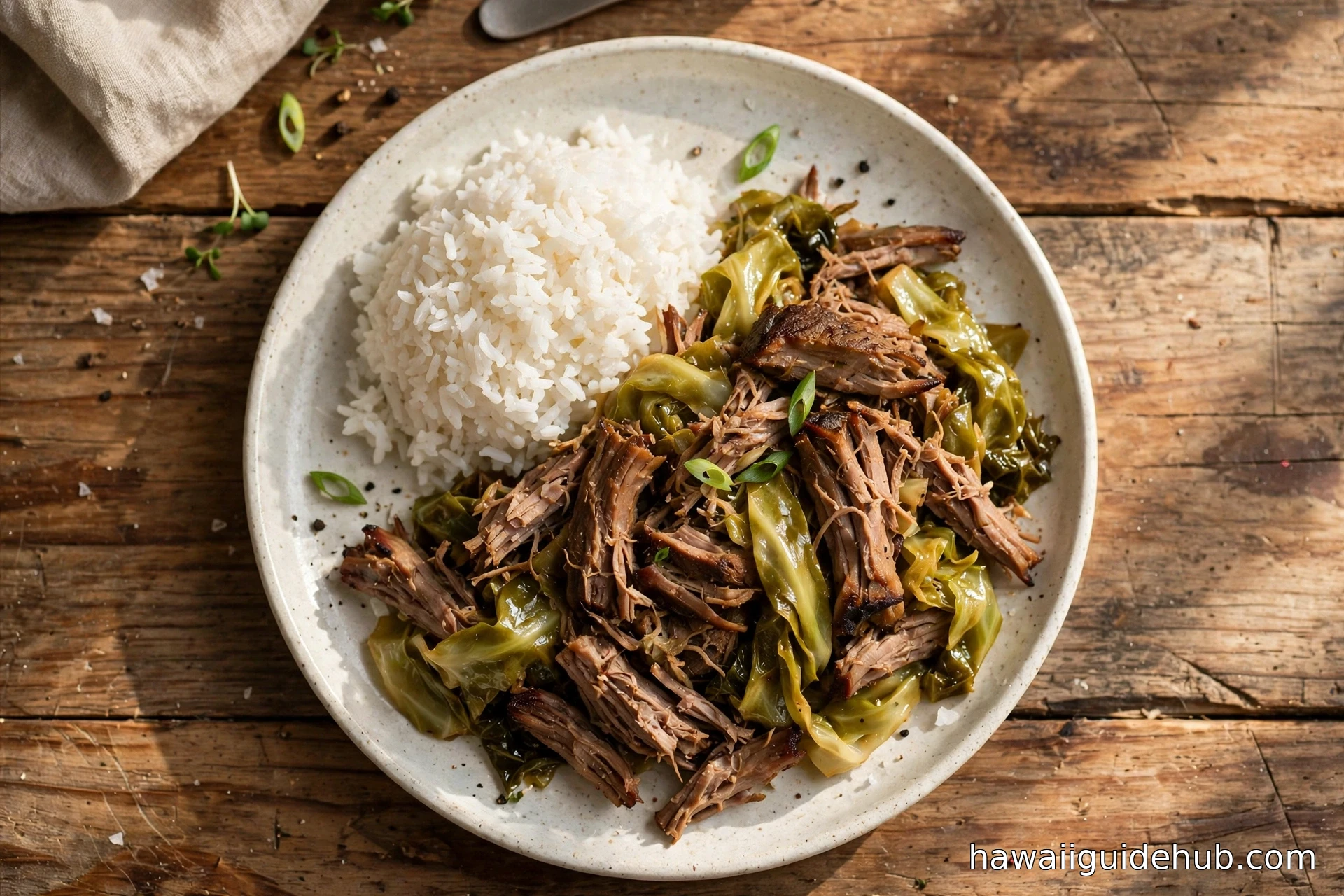
Strip away the ceremony and the dish is simple. Pork, cooked low and slow until it surrenders into shreds. Cabbage, wilted down in the savory juices the pork leaves behind. Salt for seasoning. Smoke for character. Rice underneath to catch everything.
The word kalua describes the cooking method, not the meat. In Hawaiian, kalua means to cook in an underground oven, and the oven itself is called an imu. So kalua pork is pork cooked the imu way. When Hawaiians say kalua pig, they usually mean the traditional whole hog. When they say kalua pork, they often mean the home version made from a pork shoulder. The cabbage joined the party later, as a practical way to stretch the meat and soak up flavor. It stuck around because it is genuinely good.
What surprises first-timers is how little seasoning the dish needs. No barbecue sauce. No spice rub with twelve ingredients. Salt, smoke, pork, cabbage. The long cooking does the rest. That restraint is the whole philosophy of the dish, and it is why getting each simple element right matters so much.
The Imu: Where It All Started
Long before slow cookers, there was the pit. An imu is dug into the earth, usually two to four feet deep, and sized to match the feast. Porous volcanic rocks are piled onto a fire of kiawe wood and heated for two to three hours until they glow. The fire is then cleared away, and the real layering begins.
Banana stalks and ti leaves go down first, cushioning the hot rocks. Then the pig, heavily salted and wrapped in more leaves, is lowered in. More banana leaves follow, then wet burlap sacks, then a canvas tarp, and finally dirt shoveled over everything to seal the steam inside. The pig roasts in that earthen oven for eight hours or more.
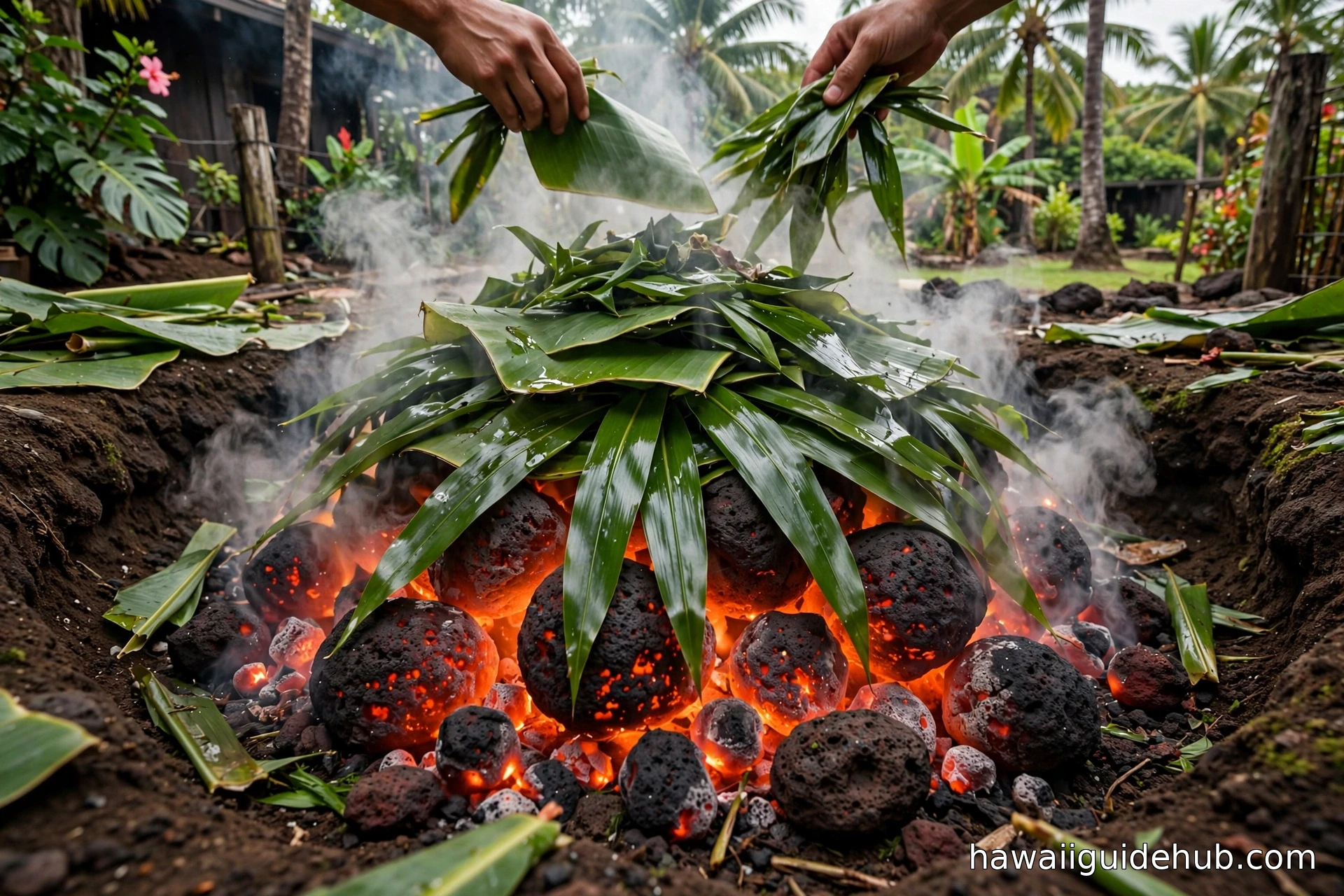
When the imu is finally opened, the reveal never gets old. Steam pours out of the earth. The leaves are pulled back. And there is the pig, transformed into something that falls apart at the touch, infused with smoke from the wood and sweetness from the leaves. Traditionally the meat was shredded by hand.
This is celebration food. Imu cooking is labor intensive enough that it has always been reserved for gatherings: luaus, weddings, graduations, holidays. A family does not dig an imu on a Tuesday. The pit, the rocks, the waiting, these are communal acts, and the pork that comes out of the ground carries that meaning with it.
From Whole Hog to Pork Shoulder
Almost nobody has an imu in their backyard, and even in Hawaii, most kalua pork eaten on a regular weeknight never sees a pit. The home version uses a pork shoulder, also called pork butt or Boston butt, which has the fat and connective tissue needed to stay moist through long cooking. Hawaiian sea salt stands in for the salt rubbed into the whole hog. Liquid smoke stands in for the kiawe fire.
Purists will tell you it is not the same, and they are right. It is not the same. But it is recognizably, satisfyingly close, and it captures the spirit of the dish: simple ingredients, patience, and pork treated with respect.
The Recipe: Kalua Pork and Cabbage at Home
This is the slow cooker method, which is the most forgiving. An oven variation follows. Serves 8 to 10 as a main dish.
Ingredients
- 4 to 5 pound bone-in pork shoulder (pork butt)
- 2 tablespoons Hawaiian sea salt (red alaea salt if you can find it)
- 1 tablespoon liquid smoke (kiawe or mesquite flavor)
- 1 cup water or chicken broth
- 1 medium head green cabbage, cut into 2-inch pieces
- 1 onion, sliced (optional)
- 4 garlic cloves, peeled (optional)
Slow Cooker Method
Step 1. Pat the pork dry. Rub the salt all over it, pressing it into the meat. Drizzle the liquid smoke over the top, letting it seep into every crevice.
Step 2. Pour the water or broth into the slow cooker. Set the pork in, fat side up. Tuck the onion and garlic around it if you are using them.
Step 3. Cover and cook on LOW for 10 to 12 hours. Do not lift the lid to peek. The pork is done when it shreds easily with a fork and the bone slides out clean.
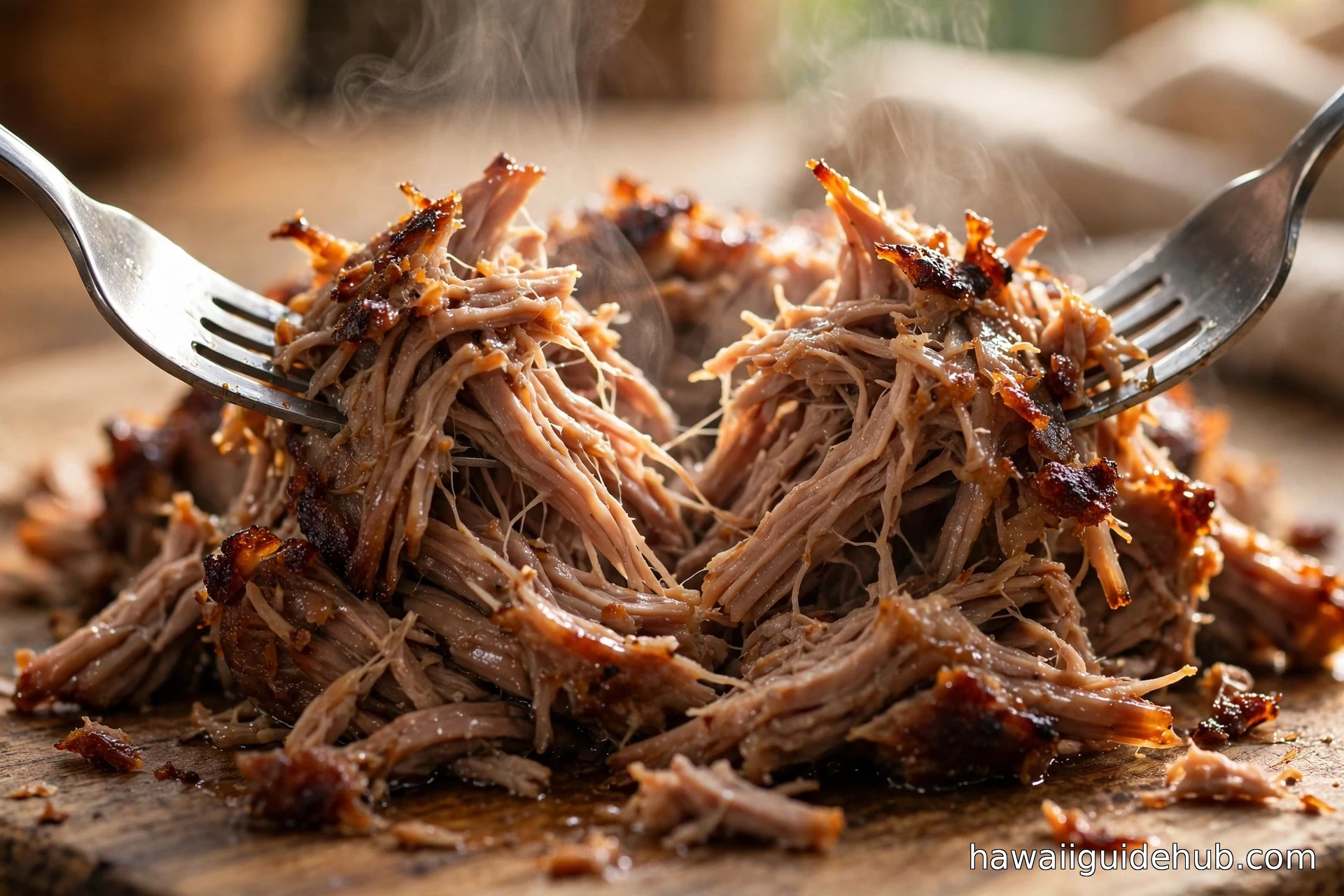
Step 4. Lift the pork out onto a cutting board. Shred it with two forks, discarding the bone and any large pieces of fat. Skim excess fat from the cooking liquid if you like, but leave the flavorful juices.
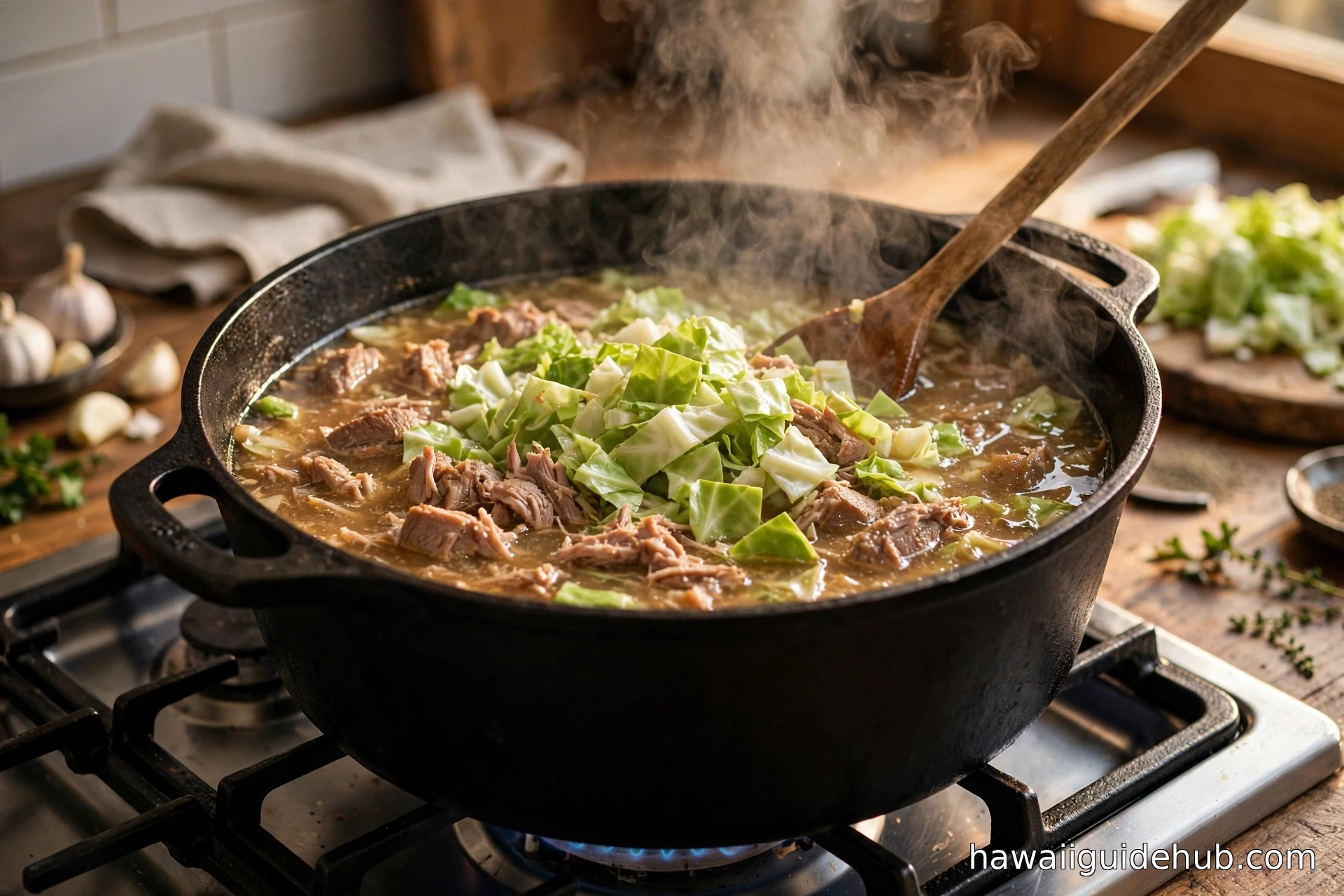
Step 5. Add the chopped cabbage to the hot juices in the slow cooker. Return the shredded pork on top. Cover and cook 30 to 45 minutes more, until the cabbage is tender. Toss everything together and serve over steamed rice.
Oven Method
Rub the pork with salt and liquid smoke as above. Wrap it tightly in ti leaves if you have them, then in heavy foil. Set it in a roasting pan and cook at 300 degrees for 5 to 6 hours, until it shreds easily. Unwrap, shred, then finish with the cabbage: warm the juices in a large pot or Dutch oven, add the cabbage, cook until tender, and toss with the pork.
Why the Cabbage Matters
The cabbage is not a garnish. It is a full partner in the dish. Added near the end of cooking, it wilts down in the pork juices and picks up every bit of smoke and salt the meat spent hours developing. The texture contrast is the point: rich, unctuous pork against cabbage that still has a little bite.
Timing matters here. Add the cabbage too early and it dissolves into mush. Too late and it stays raw and squeaky. Thirty to forty-five minutes in the hot juices is the sweet spot for most slow cookers. If you like your cabbage softer, give it the full hour. There is no wrong answer, only preference.
Tips for the Best Result
Do not trim all the fat. The fat cap bastes the meat as it cooks and keeps it moist. You can skim or discard excess at the shredding stage.
Salt generously. Kalua pork is meant to be seasoned assertively. It is traditionally served with plain rice and mild sides like poi, which balance the salt. If you under-salt, the whole plate tastes flat.
Resist peeking. Every time you lift the slow cooker lid, you lose heat and add cooking time. Trust the process.
Save the juices. Leftover cooking liquid is gold. Use it to reheat the pork, moisten rice, or as the base for a soup.
Make it ahead. Kalua pork reheats beautifully and often tastes better the next day. Cook it a day before a party, refrigerate, and warm it gently with a splash of the reserved juices.
Variations Worth Trying
Instant Pot. Cut the shoulder into large chunks, add a cup of water, salt, and liquid smoke, and pressure cook on high for 90 minutes with natural release. Shred, add cabbage, and pressure cook 3 more minutes.
With ti leaves. If you can find fresh ti leaves, wrap the salted pork in them before it goes into the slow cooker or oven. They add a subtle grassy sweetness that gets you closer to the imu flavor.
Shoyu cabbage style. Some local cooks saute the shredded pork and cabbage quickly in a hot skillet with a splash of shoyu instead of slow cooking the cabbage in the juices. It gives a slightly caramelized edge.
Leftover magic. Kalua pork is one of the most versatile leftovers in Hawaiian cooking. Pile it on rice with a fried egg, tuck it into sandwiches with coleslaw, or crisp it in a hot pan for a texture contrast.
How to Serve It
The classic plate is kalua pork and cabbage over steamed white rice, period. At a luau you will find it alongside lomi lomi salmon, poi, and haupia. For a home dinner, it pairs beautifully with other local favorites like chicken long rice or squid luau. The traditional luau spread is the dish’s natural habitat, and understanding that context makes the first bite taste even better.
And if you ever get the chance to eat kalua pork that actually came out of an imu, say yes before the question is finished. The home version is wonderful. The real thing, eaten outdoors with the steam still rising off the leaves, is something else entirely. It tastes like the ground it came from, like smoke and patience and celebration. Some foods you eat. This one you remember.
Watch: Kalua Pork Two Ways
The video below walks through two home methods for kalua pork, oven and Instant Pot, from a Hawaii-based cooking channel.
Kalua pork and cabbage endures because it asks so little and gives so much. A tough cut of meat, a head of cabbage, salt, smoke, and time. Out of that comes a dish that has fed celebrations for generations and now feeds weeknight dinners thousands of miles from the nearest imu. Make it once and you will understand why Hawaiians never let it go.
A Short History of the Pig in Hawaii
The pig arrived in Hawaii twice. The first pigs came with Polynesian voyagers during the early settlement period, small Asiatic domestic pigs that became the puaa of old Hawaii. These animals were valuable enough to be reserved for chiefs and for religious offerings. Pork was not everyday food. It was ceremony food, which is exactly why it became the centerpiece of the feast.
The second arrival came with Captain James Cook in 1778, when larger European domestic pigs were introduced to the islands. The two populations mixed over time, and the pig became more widely available. But the association with celebration never left. Even as kalua pork moved from the imu to the backyard to the slow cooker, it kept its role as the dish you make when people gather.
That history is part of why the dish resists shortcuts in spirit even as it accepts them in practice. Nobody pretends a slow cooker is an imu. But the salt, the smoke, the patience, and the sharing are the same. The method changed. The meaning did not.
The Salt Deserves Its Own Paragraph
Hawaiian sea salt is not a garnish here. It is the primary seasoning, and the traditional choice is alaea, the red sea salt colored with volcanic clay. Alaea has a mellow, earthy flavor that regular table salt does not, and it is what gives authentic kalua pork its distinctive taste and faint pink hue.
If you cannot find alaea, coarse sea salt or kosher salt works fine. What matters is using enough of it and using a coarse grain that you rub into the meat rather than a fine salt that just sits on the surface. The salt needs to penetrate during those long hours. This is not the place for a timid hand.
Storing and Reheating
Kalua pork and cabbage keeps well in the refrigerator for up to four days in an airtight container. It also freezes beautifully for up to three months. Portion it into meal-sized bags, squeeze out the air, and freeze flat for easy stacking.
To reheat, warm it gently in a covered skillet over medium-low heat with a splash of the reserved cooking juices or a little water. The microwave works too, but the stovetop gives you the chance to crisp some of the edges, which is worth the extra few minutes. Cold kalua pork straight from the fridge, tucked into a sandwich with fresh island fruit on the side, is a legitimate lunch.