Farm to Table on Maui: Restaurants, Farmers Markets and Local Ingredients

How Maui Became a Farm-to-Table Island
Maui did not become a farm-to-table island by accident. It happened because a handful of chefs got tired of cooking with ingredients that had flown thousands of miles to get there. In 1991, twelve Hawaii chefs, led by Peter Merriman, sat down together and decided to change how the islands ate. They called it Hawaii Regional Cuisine. The idea was simple: cook with what grows and swims around you, put the farmer’s name on the menu, and let the islands’ own flavors lead.
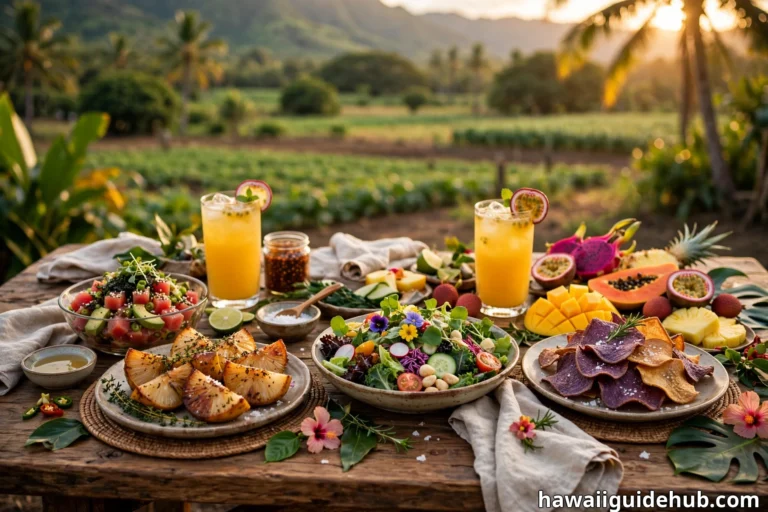
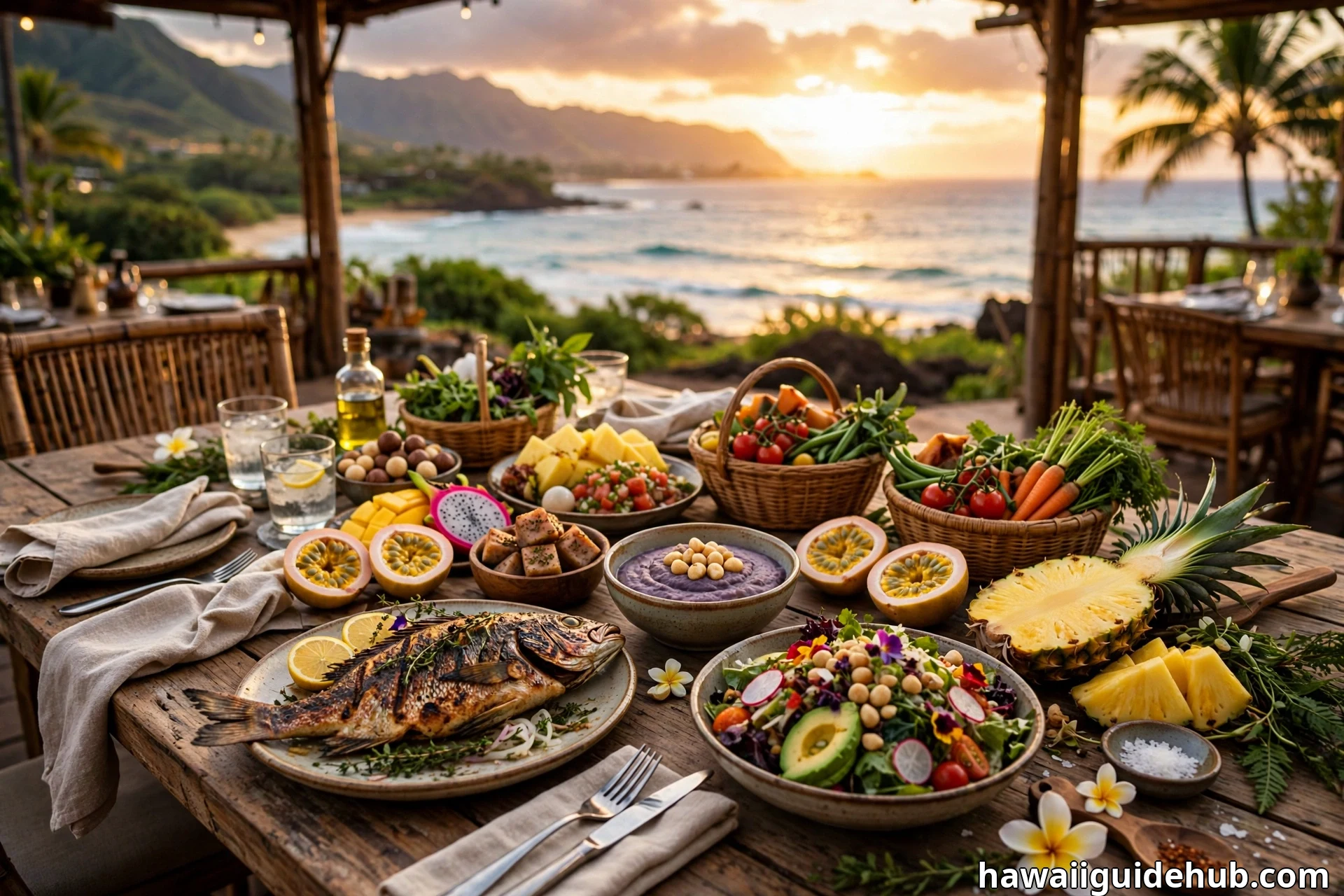
More than thirty years later, that idea is woven into how Maui eats. Menus change with the seasons. Servers can tell you which farm grew your salad greens and which boat caught your fish. And for visitors, it means you can taste the island in a way that goes far beyond a plate lunch. This guide covers the best farm-to-table restaurants on Maui, the farmers markets worth your Saturday morning, the local ingredients to know, and how to plan your own farm-fresh food days.
From Sugar Fields to Salad Greens
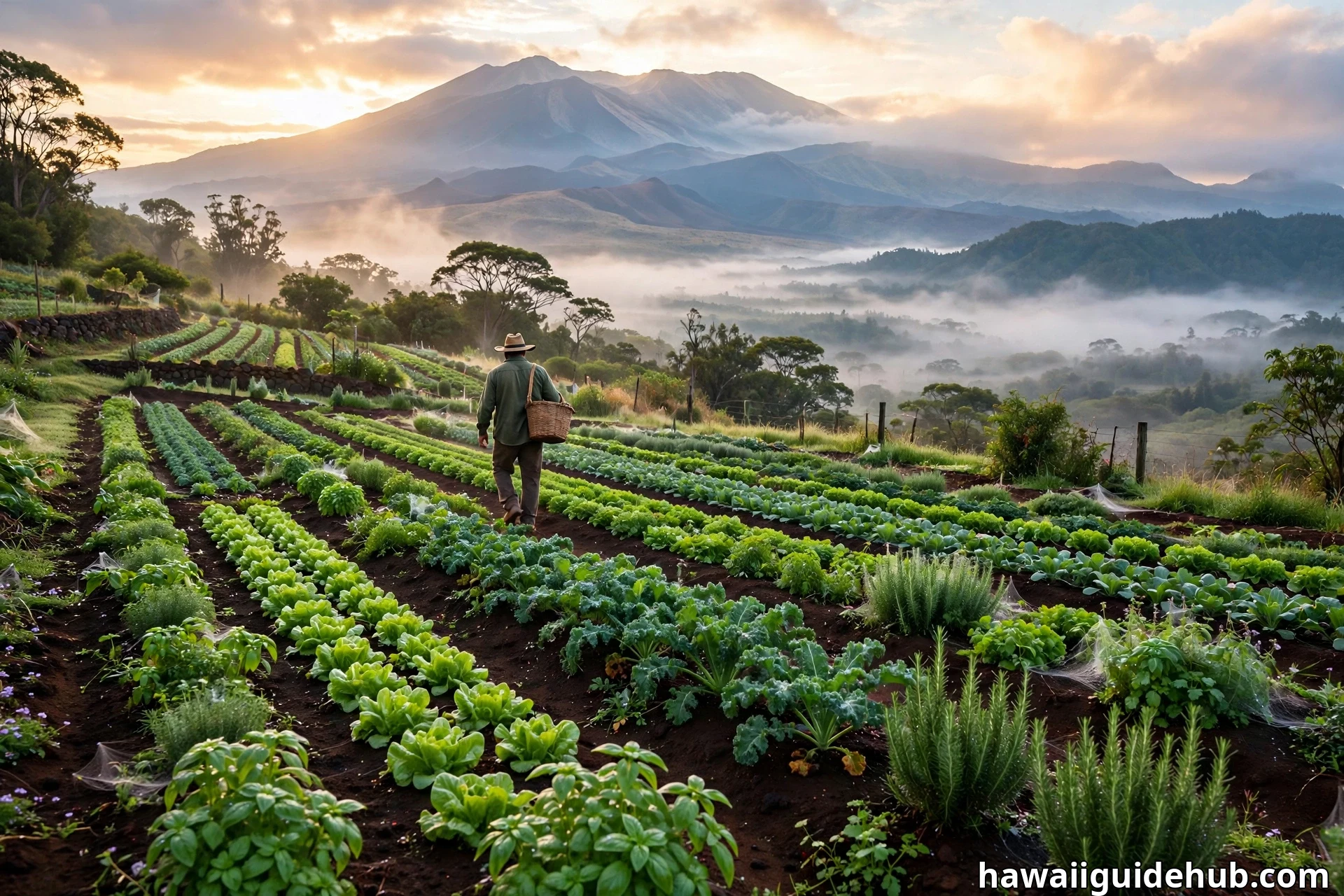
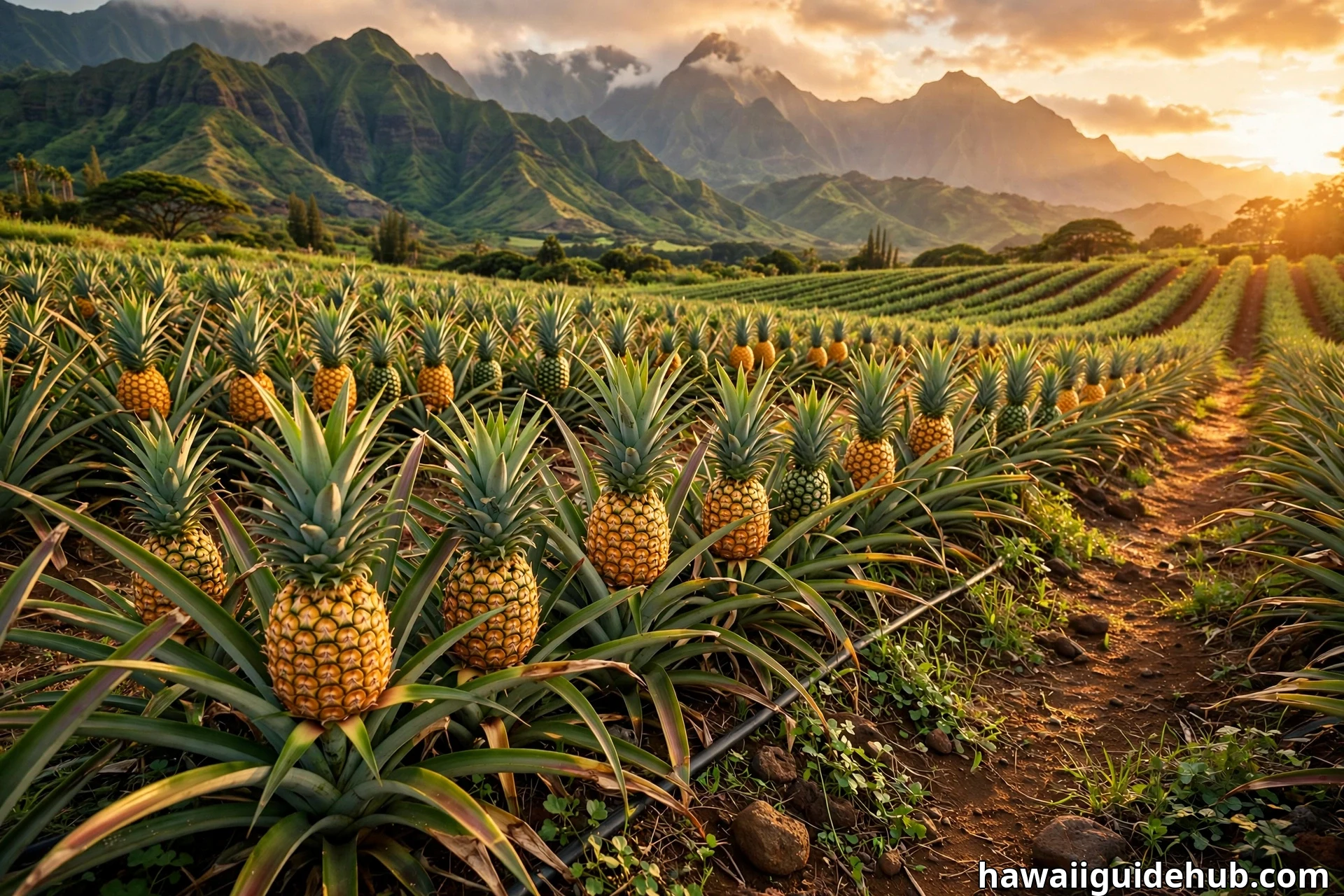
To understand farm-to-table Maui, it helps to know what came before. For more than a century, Maui’s agriculture meant two crops: sugar and pineapple. Vast plantations covered the central valley and the slopes. When the sugar industry declined and the last mills closed, thousands of acres opened up for something new. Small diversified farms took root, especially Upcountry, where the elevation and volcanic soil suit vegetables, herbs, fruits, and flowers.
That transition is still visible. The Maui Tropical Plantation, home to The Mill House restaurant, sits on former sugar land. Kula’s farm lots were once pasture and pineapple fields. Today’s patchwork of small farms, many family-run, is the direct result of chefs like Merriman creating demand for local produce. When restaurants commit to buying local, farmers can afford to grow diverse crops. It is a cycle that visitors support with every locally sourced meal.
The Hawaii Regional Cuisine Story
Before 1991, fine dining in Hawaii mostly followed European traditions, and much of the produce arrived by air from the mainland. Merriman, then a young chef on the Big Island, started visiting farms, ranches, and docks himself, telling producers, “If you grow it or catch it, I’ll buy it.” When he gathered eleven other chefs, including Roy Yamaguchi, Alan Wong, Sam Choy, and Beverly Gannon of Maui’s Haliimaile General Store, they agreed on a shared mission: build a cuisine around Hawaii’s own ingredients and the people who produce them.
Merriman was the group’s founding president. He was one of the first chefs to list farm names on his menus, and others followed. That practice, now common in farm-to-table restaurants everywhere, started right here. On Maui, the movement took deep root because the island has something special: Upcountry. The cool, misty slopes of Haleakala around Kula and Makawao offer rich volcanic soil and a temperate climate where lettuce, carrots, berries, herbs, and flowers thrive. That growing region, combined with a year-round fishing culture, gives Maui chefs a remarkable pantry.
Maui’s Best Farm-to-Table Restaurants
These are the restaurants where the farm-to-table philosophy runs deepest on Maui. Reservations are smart at all of them, especially for dinner.
Merriman’s Kapalua
The flagship. Chef Peter Merriman’s Kapalua restaurant sits on a point overlooking Kapalua Bay, and it is the purest expression of his vision. More than 90 percent of the ingredients are sourced locally. Produce often comes from nearby Kapalua Farms, picked that morning and served that evening. The four-course dinners feature dishes like butter-poached Keahole lobster with Maui corn and grilled Kahua Ranch lamb. Come before sunset for the views, and do not skip the mai tai with lilikoi foam. It is fine dining at its most romantic on Maui, and it books out, so reserve ahead.
Monkeypod Kitchen by Merriman
Merriman’s casual sibling, with locations in Wailea and Kaanapali. This is farm-to-table without the white tablecloths: wood-fired pizzas, poke tacos, macadamia-crusted fish, and the famous Monkeypod Mai Tai topped with honey-lilikoi foam. The menu leans on local farms and the day’s catch, prices stay reasonable, and there is live music most evenings. Families love it, locals love it, and the cream pies have a devoted following. Expect a wait at peak times even with a reservation.
The Mill House
Tucked into the Maui Tropical Plantation at the base of the Waikapu Valley, The Mill House builds its menu from the plantation’s own fields. Think taro leaf risotto, fresh ceviche, and Swiss chard fritters, all plated with serious technique. Dinner on the open-air lanai, with the West Maui Mountains behind you and the plantation grounds around you, is one of the island’s great settings. It is a straight line from soil to plate, and you can see the fields from your table.
Haliimaile General Store
Chef Beverly Gannon, one of the original twelve Hawaii Regional Cuisine chefs, turned a 1920s general store in Upcountry Maui into a beloved restaurant. The setting is pure plantation-era charm, and the food is island comfort with a farm-to-table backbone: fresh fish, local produce, and her famous pineapple upside-down cake. It is a bit of a drive up the hill from the coast, and that is exactly the point. Go for lunch and make a day of Upcountry.
Fork and Salad
For farm-to-table on a budget, Fork and Salad in Kahului and Kihei keeps it simple: salads, sandwiches, and juices made with locally grown and organic ingredients whenever possible. It was founded by the team behind Three’s Bar and Grill with the goal of making healthy local food accessible. Quick, fresh, and genuinely local.
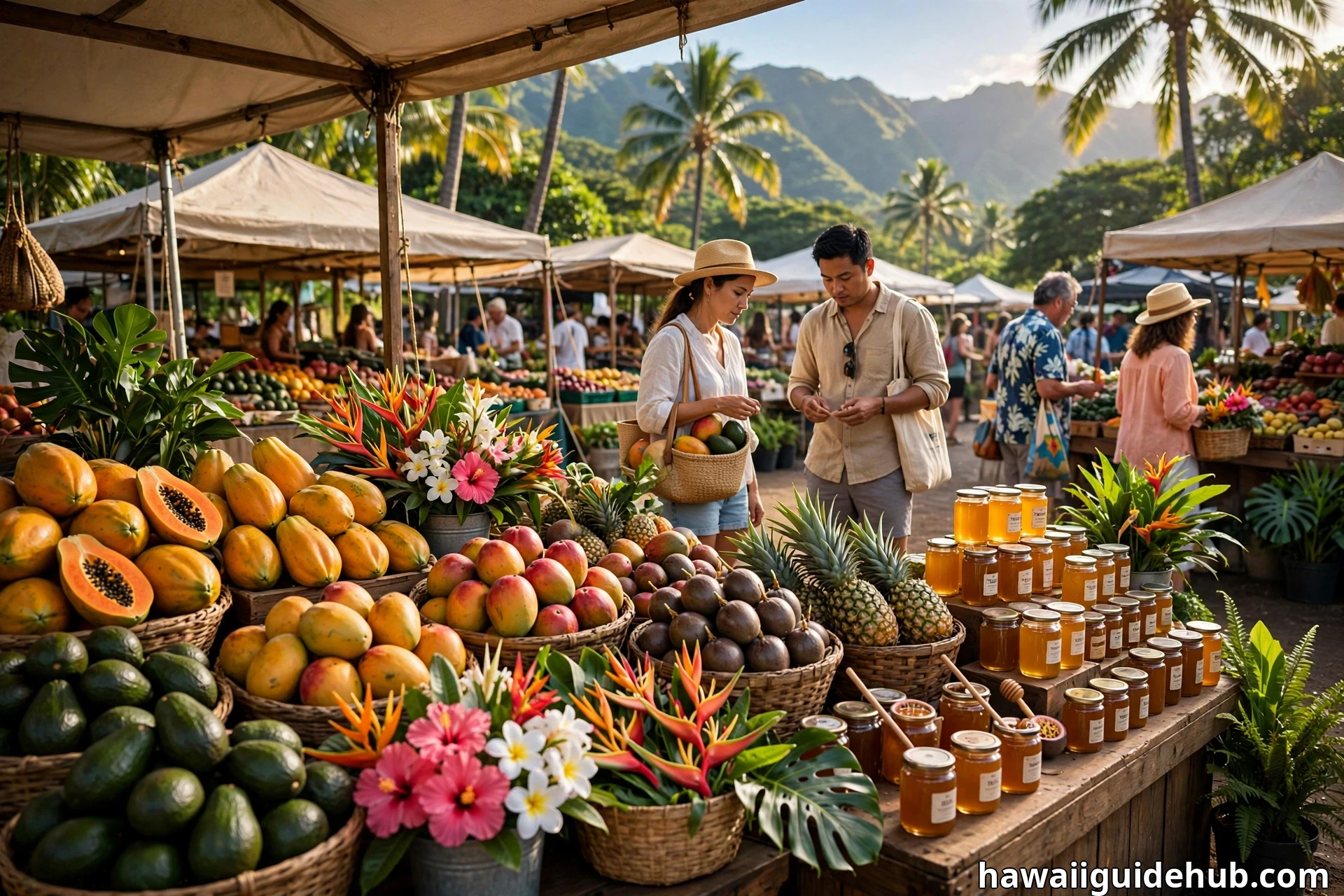
Maui Farmers Markets Worth Your Morning
The other half of farm-to-table Maui happens at the markets, where you can buy directly from the growers. Bring cash, a reusable bag, and an appetite for samples.
Upcountry Farmers Market
Saturdays, 7 to 11 AM, at Kulamalu Town Center in Pukalani. This is the big one, running for over forty years. Dozens of vendors sell Kula lettuce, heirloom carrots, berries, Maui onions, mushrooms, macadamia nuts, flowers, honey, fresh fish, and prepared foods. Arrive early for the best selection. The cool mountain air and community atmosphere make it a destination in itself.
Napili Farmers Market
Wednesdays and Saturdays, 8 AM to 12 PM, on the west side. Smaller than Upcountry but beloved by West Maui locals. Expect papayas, citrus, organic greens, small-batch hot sauces, and fermented foods.
Makawao Farmers Market
Wednesdays, 8 AM to 1 PM, in Makawao town. Organic produce, baked goods, crafts, and eco-friendly products with a relaxed, sustainability-minded vibe.
Kula Country Farms
Open Monday to Saturday, 9 AM to 4 PM (closed Sundays), on Kula Highway. More farm stand than market, with seasonal produce, jams, and pickles grown on site. Strawberry and pumpkin picking events run in season.
Local Ingredients to Know
When a Maui menu says “local,” these are the ingredients that matter most.
Kula produce. The Upcountry growing region supplies lettuce, carrots, herbs, strawberries, and flowers. If a menu names Kula, it means mountain-fresh.
Maui onions. Sweet, mild, and grown in the island’s volcanic soil. They appear in everything from salads to the famous onion soup at local spots.
Maui Gold pineapple. Grown on Maui and prized for its low acidity and intense sweetness. It is the pineapple that ruins mainland pineapple for you.
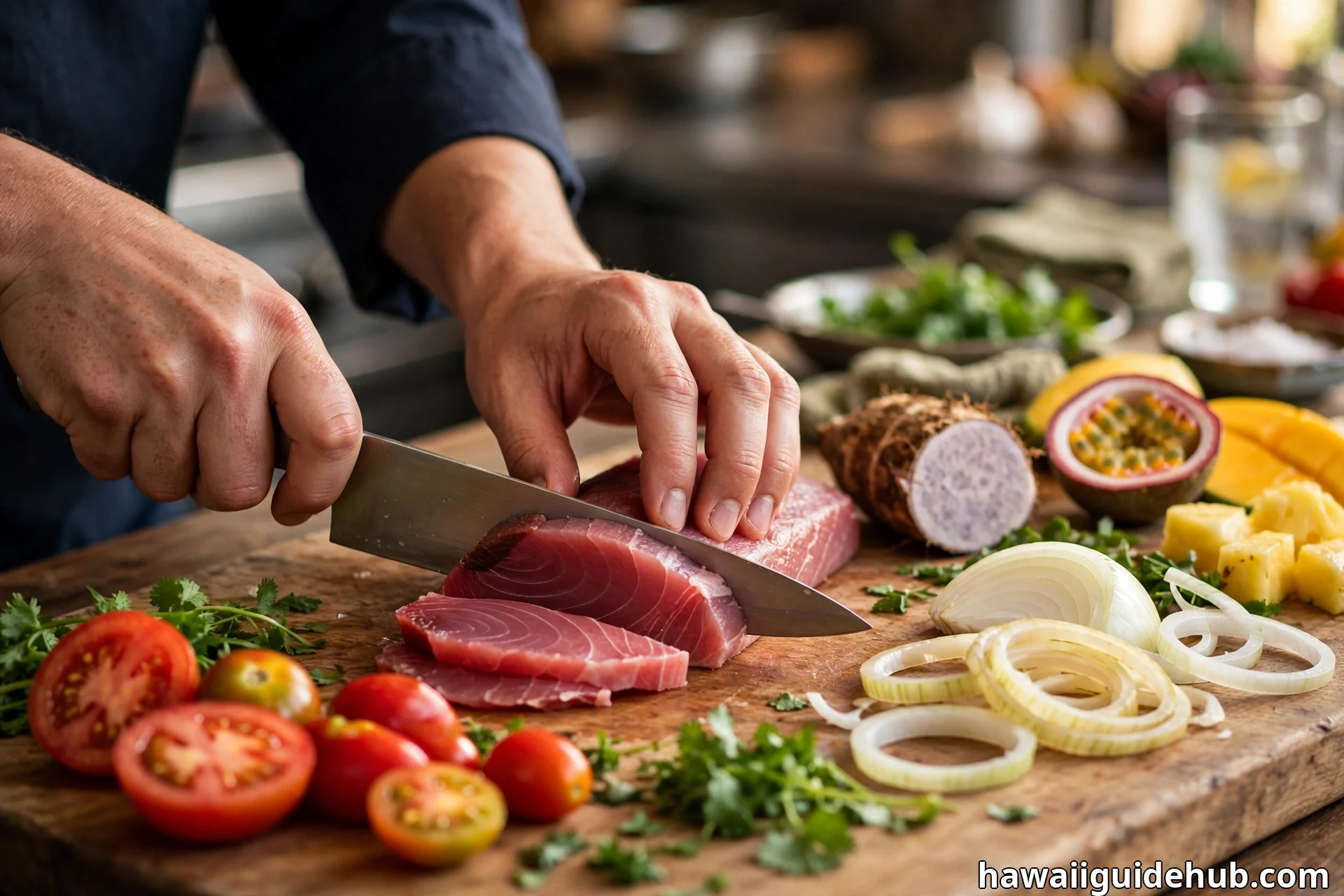
Fresh-caught fish. Ahi, mahi mahi, ono, and opakapaka, often caught the same day. Ask your server what came in this morning.
Taro and breadfruit. Ancient Hawaiian staples that Hawaii Regional Cuisine chefs brought back to fine dining. Taro appears as poi, chips, and even risotto.
Lilikoi. Passion fruit, used in sauces, desserts, and the famous mai tai foam at Monkeypod.
Farm Tours and Agritourism on Maui
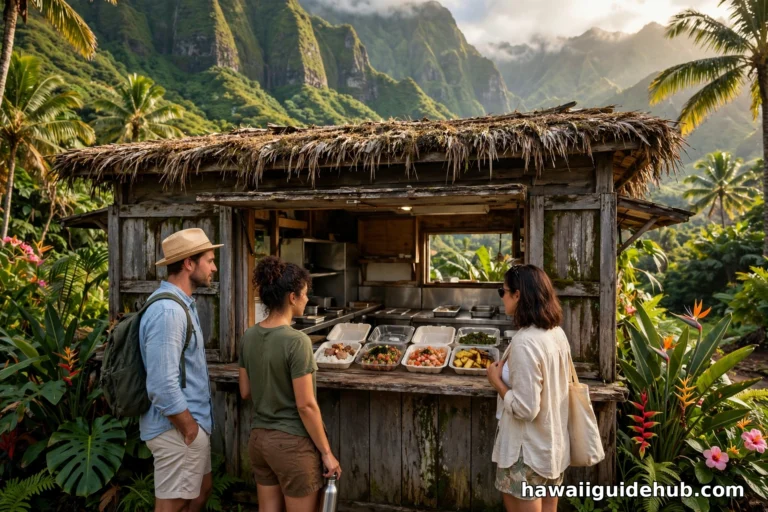
If you want to go beyond the plate, Maui offers working farm experiences. The Maui Tropical Plantation runs tram tours through its fields, with tastings of tropical fruit and coconut husking demonstrations. Several Upcountry farms welcome visitors for tours, from lavender farms to goat dairies to coffee estates. Kula Country Farms hosts seasonal picking events for strawberries and pumpkins. These visits give you the full story: the soil, the climate, and the people behind the ingredients on your dinner plate.
Booking ahead is wise, especially for smaller farms with limited tour slots. Wear closed shoes, bring sun protection, and go hungry. Many tours end with tastings, and you will want to buy what you try.
How to Plan a Farm-to-Table Day on Maui
The classic move: hit the Upcountry Farmers Market on Saturday morning, stock up on fruit and snacks, then drive down to the coast for a farm-to-table lunch. Pair it with a stop at the Maui Tropical Plantation or a stroll through Makawao town. If you are staying in a vacation rental, market shopping is the best way to eat well for less, and many condos have full kitchens.
For dinner, book ahead at Merriman’s Kapalua or Monkeypod Kitchen. Tell your server you want to eat local and ask what is freshest. Menus change with the seasons and the catch, so the best dish is often the one that arrived that morning. And if a menu names the farm, that is not marketing. On Maui, it is a point of pride that goes back to 1991.
One more tip: lunch is often the smartest farm-to-table value on Maui. Many of the same local ingredients appear at midday for lower prices, and Upcountry cafes and food trucks serve excellent farm-fresh plates without the dinner markup. Save your splurge for one special dinner, and eat local all day long.
See Farm-to-Table Maui on Video
Farm-to-Table Maui: FAQs
What is Hawaii Regional Cuisine?
A culinary movement started in 1991 by twelve Hawaii chefs, led by Peter Merriman, built around island-grown ingredients, local farmers and fishermen, and menus that reflect Hawaii’s multicultural food heritage.
What is the best farm-to-table restaurant on Maui?
Merriman’s Kapalua is the flagship fine-dining choice, with over 90 percent local sourcing. Monkeypod Kitchen offers the same philosophy in a casual setting. The Mill House and Haliimaile General Store are also standouts.
When is the Upcountry Farmers Market?
Saturdays from 7 to 11 AM at Kulamalu Town Center in Pukalani. It has run for over forty years and is Maui’s largest farmers market.
Is farm-to-table dining on Maui expensive?
It ranges widely. Merriman’s Kapalua is fine dining with fine-dining prices. Monkeypod Kitchen is mid-range, and Fork and Salad or a farmers market haul can be very affordable.
Do I need reservations?
Yes for Merriman’s Kapalua and recommended for Monkeypod Kitchen at dinner. The Mill House and Haliimaile General Store are also smart to book ahead, especially on weekends.
What should I buy at a Maui farmers market?
Kula lettuce and herbs, Maui onions, papayas, lilikoi, avocados, macadamia nuts, local honey, and whatever is in season. Ask the growers; they love to talk about their produce.
A Delicious Way to Know the Island
Eating farm-to-table on Maui is not just about good food, though the food is very good. It is about understanding the island through its soil and sea. When you eat a salad grown that morning in Kula or fish caught off the coast that day, you are tasting Maui as it actually is. The chefs who started this movement wanted you to know the farmer’s name. More than thirty years later, on Maui, you still can.
Maui’s food scene rewards curiosity, and the farm-to-table trail is one of the reasons to visit Maui that keeps visitors coming back. If you are planning meals around your trip, our guide to must-try local dishes in Hawaii pairs well with this one, and our guide to native Hawaiian fruits will help you identify everything you find at the markets. For a full day built around Upcountry, see our guide to the best things to do in Wailea, and if this is your first trip, start with our best island for first-time visitors guide.