Hawaii Tide Pools Guide: Where, When & How to Explore Safely

Hawaii’s tide pools are the ocean’s display cases: lava-rock bathtubs full of urchins, tiny fish, crabs, and sea stars, refreshed twice a day by the tide. They are also one of the islands’ most underestimated hazards: every year, visitors are swept off the rocks by waves they never saw coming. This guide covers the best tide pools on each island, when to go, what you will see, and how to explore them without becoming a statistic.
This is the single complete guide to Hawaii’s tide pools. It covers tide pool safety, the best pools by island, reading the tides, what lives in the pools, the leave-no-trace rules, and FAQs. Everything about Hawaii tide pools lives on this one page.
Tide Pool Safety First
The ocean makes the rules. Never turn your back on the sea: sneaker waves arrive without warning and have swept people off rocks at Queen’s Bath, Sharks Cove, and elsewhere. Check the surf forecast and the tide charts before you go: explore at low tide, ideally a negative low tide when the pools are fully exposed and the surge is minimal. If waves are washing over the rocks, do not go in or near the pools. Wear reef shoes or tabis: the lava is razor-sharp and urchin spines are no joke. Tell someone where you are going, and never explore alone. The pools will be there tomorrow; make sure you are too.
Tide Pool Picks: Best For / Skip If
| Pool | Island | Best for | Skip if |
| Sharks Cove | Oahu | Snorkeling with turtles; huge protected pools | Winter surf; waves over the barrier |
| Kaena Point pools | Oahu | Remote exploring; albatross nearby | High surf; long hot hike in |
| Queen’s Bath | Kauai | Photography on glass-calm summer days | Any wave action; gate closed; winter |
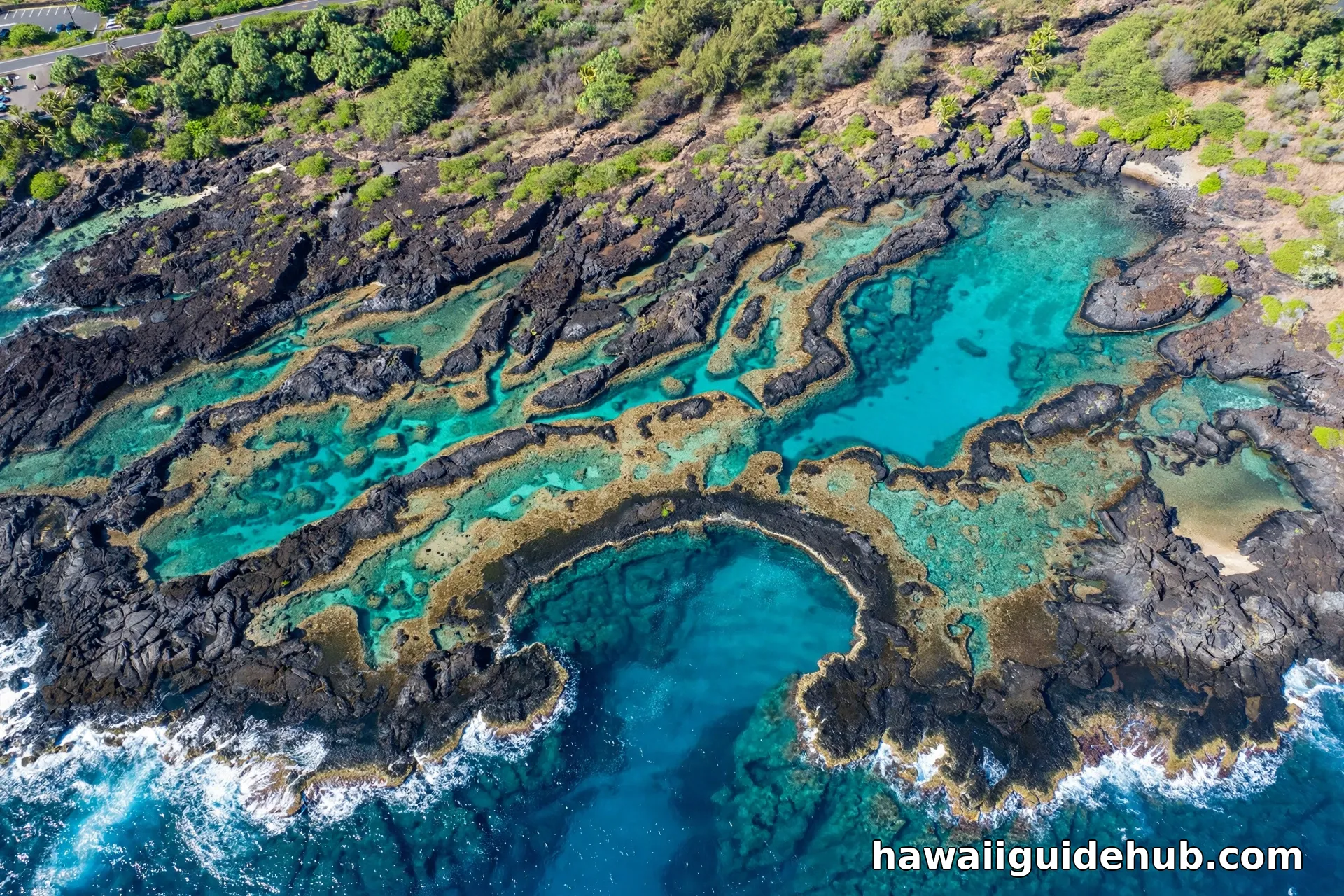
| Kapoho pools | Big Island | Warm, sheltered wading | After lava activity changes access |
| Ahihi-Kinau | Maui | Pristine lava pools; marine reserve | You want to touch anything; strict no-take |
Sharks Cove: The Classic
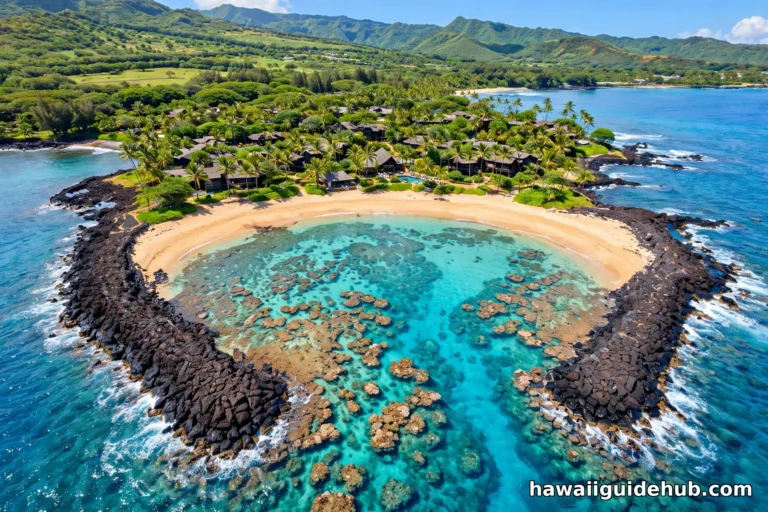
Pupukea’s Sharks Cove is Hawaii’s most famous tide pool: a natural rocky barrier creates vast, calm pools behind it, full of fish, eels, and honu in summer. The formula is simple: go in summer, go early (the lot fills by 11 AM), go at low tide, and stay inside the protected pools. In winter, the North Shore surf pounds over the barrier and the cove becomes genuinely dangerous: if no one is entering the water, take the hint. There is no lifeguard station, though patrols post condition signs. Bring aqua socks: the volcanic rock ringing the pools is brutally sharp.
Queen’s Bath: Beautiful and Lethal
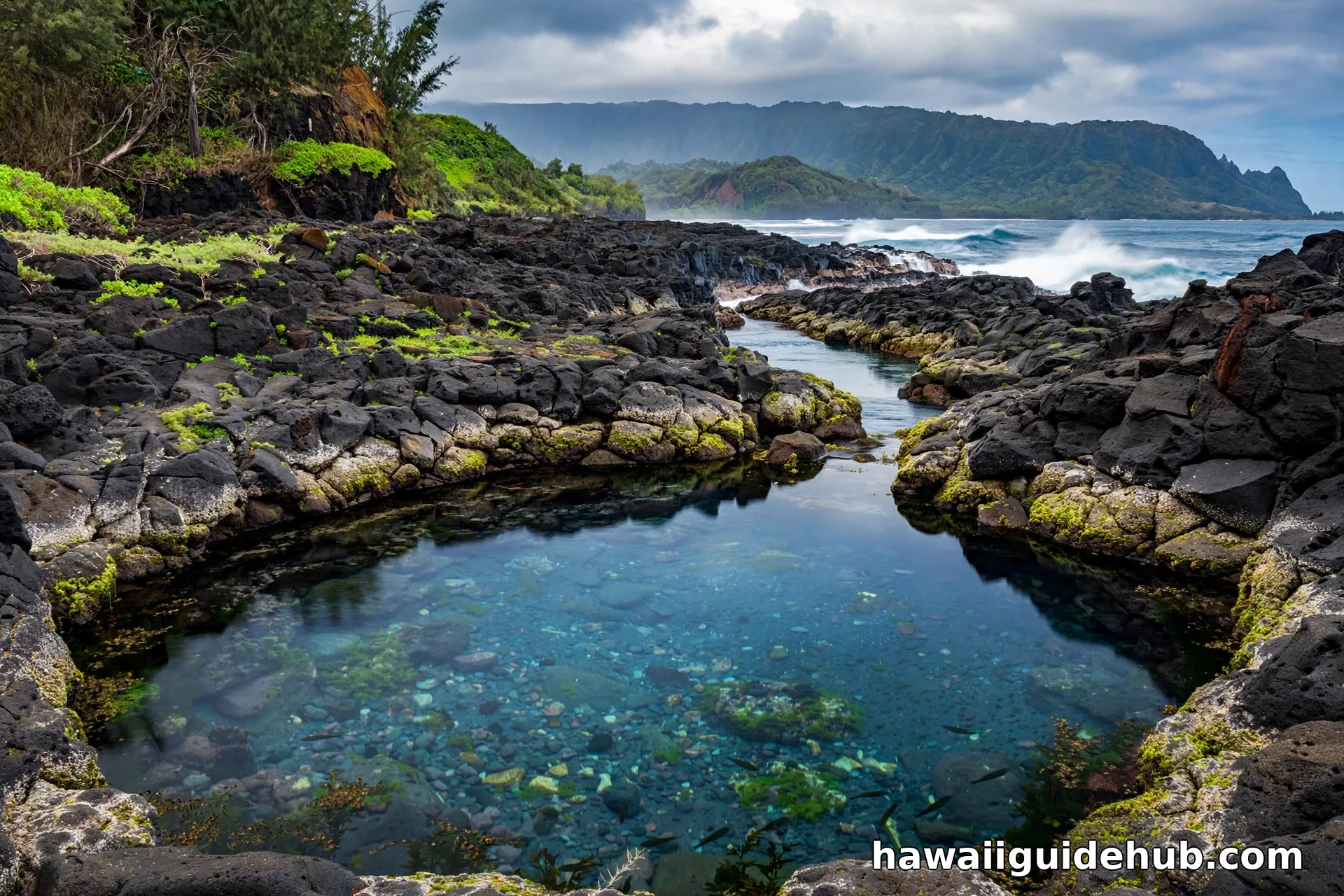
Queen’s Bath near Princeville is the tide pool everyone photographs and the one that demands the most respect: at least 29 deaths have occurred here, per local reporting, as rogue waves sweep the lava shelf. The rules are absolute: summer only, calm seas only, check the surf report the same morning, and if the access gate is closed, do not go. The 10 to 15 minute trail is muddy and root-tangled; wear real shoes. Stay far back from the ocean edge of the rocks, and do not swim if there is any wave action at all. On a glass-calm summer morning it is magical; on any other day it is a trap.
What Lives in the Pools
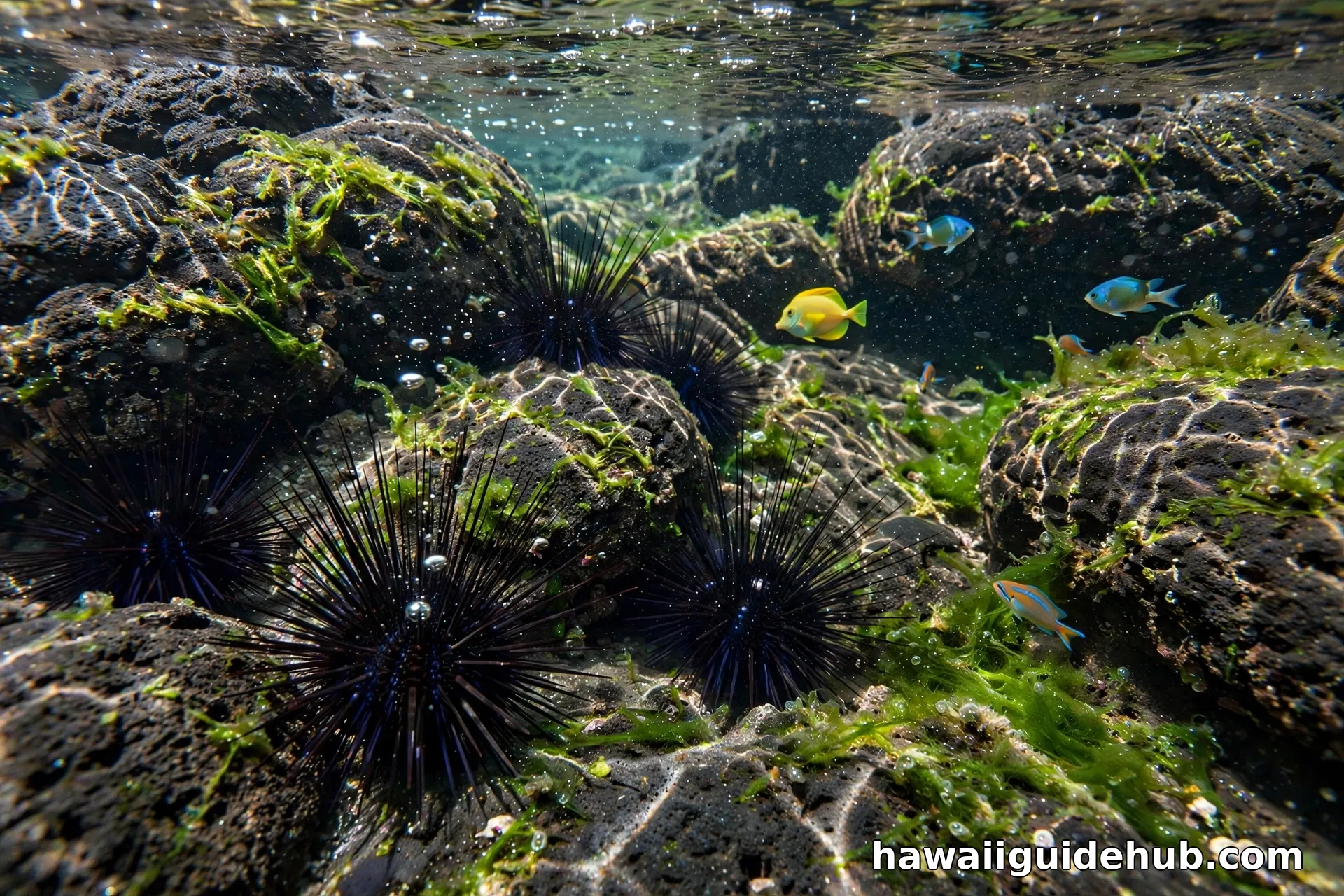
A healthy tide pool is a condensed reef. Wana, the spiny black sea urchins, graze the algae; their spines are a warning to watch your step, not a decoration to touch. Opihi limpets clamp to the rock at the waterline. Small damselfish, gobies, and juvenile wrasses dart between the corals; crabs patrol the edges; sea cucumbers vacuum the sand. Limu, the seaweeds, anchor the whole food web: dozens of edible species Hawaiians gathered for millennia. The pink crust on the rocks is coralline algae, living rock that cements the reef together. Everything in the pool is alive, including the rock: step only on bare stone, never on the pink.
Reading the Tides
Hawaii has mixed semidiurnal tides: two highs and two lows a day, of unequal size. The best exploring is around the lower low tide, when the maximum rock is exposed: check the NOAA tide predictions for your island the night before. A negative tide (below the average low) is the jackpot: pools fully drained to their basins, surge minimal, marine life concentrated. Arrive an hour before low tide and leave as it turns: the rising tide refills the pools and the surge returns. Time your visit to the tide, not to your schedule: the ocean does not negotiate.
The Leave-No-Trace Rules
Tide pools are fragile and heavily visited: treat them like a museum you can wade in. Do not take anything: no shells, no urchins, no rocks, no “souvenirs.” Do not turn rocks over and leave them: the animals underneath die in the sun; if you lift one, put it back exactly as it was. Do not feed the fish: it disrupts their behavior and the pool’s balance. Wear reef-safe sunscreen and apply it well before entering, or better, wear a rash guard instead. Take only photographs, and even those gently: no trampling the algae for the perfect angle. For honu encounters, our honu etiquette guide covers the rules.
Kapoho: Warm Water Wonders
On the Big Island’s Puna coast, the Kapoho tide pools were warmed by geothermal heat: a maze of interconnected lava pools, some bathtub-warm, full of tropical fish. The 2018 Kilauea eruption buried much of the area under lava, and access has changed: check current conditions before planning a visit, as the coastline was entirely remade. Where accessible, the recovering pools show nature’s resilience: fish and urchins recolonizing fresh lava within years. Kapoho is a reminder that Hawaii’s tide pools are not permanent fixtures but chapters in the islands’ ongoing volcanic story.
Ahihi-Kinau: The Reserve That Says No
Maui’s Ahihi-Kinau Natural Area Reserve holds some of Hawaii’s most pristine tide pools, and it protects them by saying no: no taking, no fishing in the reserve zones, no touching the coral. The pools here are aquarium-clear, set in some of the youngest lava on Maui, and the marine life is correspondingly abundant and unbothered. The strict rules are the reason it works: this is what every tide pool looked like before heavy use. Visit as a student, not a collector: look, learn, and leave the reserve richer for your restraint.
Sneaker Waves: The Science of the Danger
The waves that kill at tide pools are not the big ones you see coming: they are the sneaker waves, sets that arrive larger than the background surf after long lulls. Wave groups travel across the Pacific and arrive in sets; the biggest set in an hour can be twice the average height, washing over rocks that looked safe for the previous fifty minutes. This is why “never turn your back on the ocean” is not folklore but physics: the safe-looking rock is only safe until the set arrives. Watch the ocean for at least 15 minutes before approaching any exposed rock, note the highest water marks on the rocks (the wet, algae-free zone is the wave zone), and stay above that line.
Tide Pooling with Kids: The Family Playbook
Kids and tide pools are a perfect match, with the right pool and the right rules. Choose the most protected option: Sharks Cove’s inner pools in summer, or Kapoho where calm. Go at the lowest tide, when the pools are shallow and the surge is gone. One adult per small child, always within arm’s reach. Reef shoes for everyone: urchin spines and lava cuts end trips fast. Bring a small net? No: bring a magnifying glass and an underwater camera instead; catching stresses the animals and teaches the wrong lesson. The goal is a young naturalist, not a young collector: the kid who learns to watch a crab will protect reefs for life.
Night Pools: A Different World
Some tide poolers go at night, with red-filtered lights: the pools change shifts, with moray eels hunting, octopus emerging, and crabs out in force. It is magical and it is advanced: only in the most protected pools, only at low tide, only with a partner, and only where you know the terrain intimately from daytime visits. For most visitors, sunset is the better magic hour: the pools glass over, the light goes gold, and the day shift hands over to the night. Watch the transition, then head in for dinner. The eels will manage without an audience.
The Ethics of the Perfect Photo
Tide pools photograph beautifully, and the pursuit of the shot damages them: photographers trample algae beds for angles, move animals into “better” positions, and stack rocks for compositions. The rules are simple: no moving animals, no rearranging the pool, no stepping on living surfaces for the shot. The best tide pool photographers work with long lenses and low angles from bare rock, and their secret is patience, not staging: wait for the fish to come to you. A photo that cost the pool its urchins is not a good photo, whatever the likes say.
Beyond the Pools: The Rocky Shore
The pools are the highlight, but the rocky shore between them is its own ecosystem: the splash zone’s opihi and periwinkles, the surge channels’ coralline algae, the blowholes’ pressure physics. Walk the whole shore at low tide, not just the photogenic pools: the zonation from dry rock to submerged reef is a textbook written in basalt, and every band has its residents. The tide pool guide that only visits the pools misses half the story. The shore is the sentence; the pools are the exclamation marks.
Watch: Sharks Cove Tide Pools
Hawaii Tide Pools FAQs
When is the best time to visit tide pools in Hawaii?
At low tide, ideally a negative low tide, on a calm day. Summer offers the calmest conditions on north-facing shores like Sharks Cove and Queen’s Bath; winter surf makes them dangerous. Check NOAA tide predictions and the surf forecast before going.
Are Hawaii’s tide pools safe?
They can be, with respect: go at low tide on calm days, never turn your back on the ocean, wear reef shoes, and stay out if waves are washing over the rocks. Queen’s Bath has seen at least 29 deaths: it is a summer, calm-day-only destination.
What should I bring to tide pools?
Reef shoes or tabis, reef-safe sunscreen or a rash guard, water, and a tide chart. A small mask and snorkel transform the bigger pools; an underwater camera captures what the naked eye misses.
Can kids enjoy tide pools?
Yes, with close supervision: the shallow, protected pools at Sharks Cove (summer) and Kapoho are ideal for kids. Keep them in arm’s reach, away from the ocean edge, and out of any pool with surge. Queen’s Bath is not a kids’ destination.
Is it legal to take shells from tide pools?
Many tide pool areas are in marine reserves or conservation districts with strict no-take rules, and taking live animals is regulated statewide. The ethical rule is simpler: take nothing, leave everything for the next visitor and the ecosystem.
The Ocean’s Display Cases
Hawaii’s tide pools compress the reef into something you can crouch beside: urchins grazing, gobies darting, opihi clinging, all in a bathtub of lava refreshed by the tide. They are free, they are everywhere, and they reward the patient observer more than the hurried swimmer. Time the low tide, respect the surf, step only on bare rock, and take nothing. The pools have been running this exhibit for millennia; your job is to leave it exactly as you found it, teeming with life and ready for the next low tide’s patient and timeless renewal, twice every single day. For more shoreline exploring, see our Kauai beaches guide and Kauai guide. Check the tide charts before you go; a falling tide opens pools that a rising tide hides.