South Shore Surf Spots: Oahu’s Best Waves for Every Level

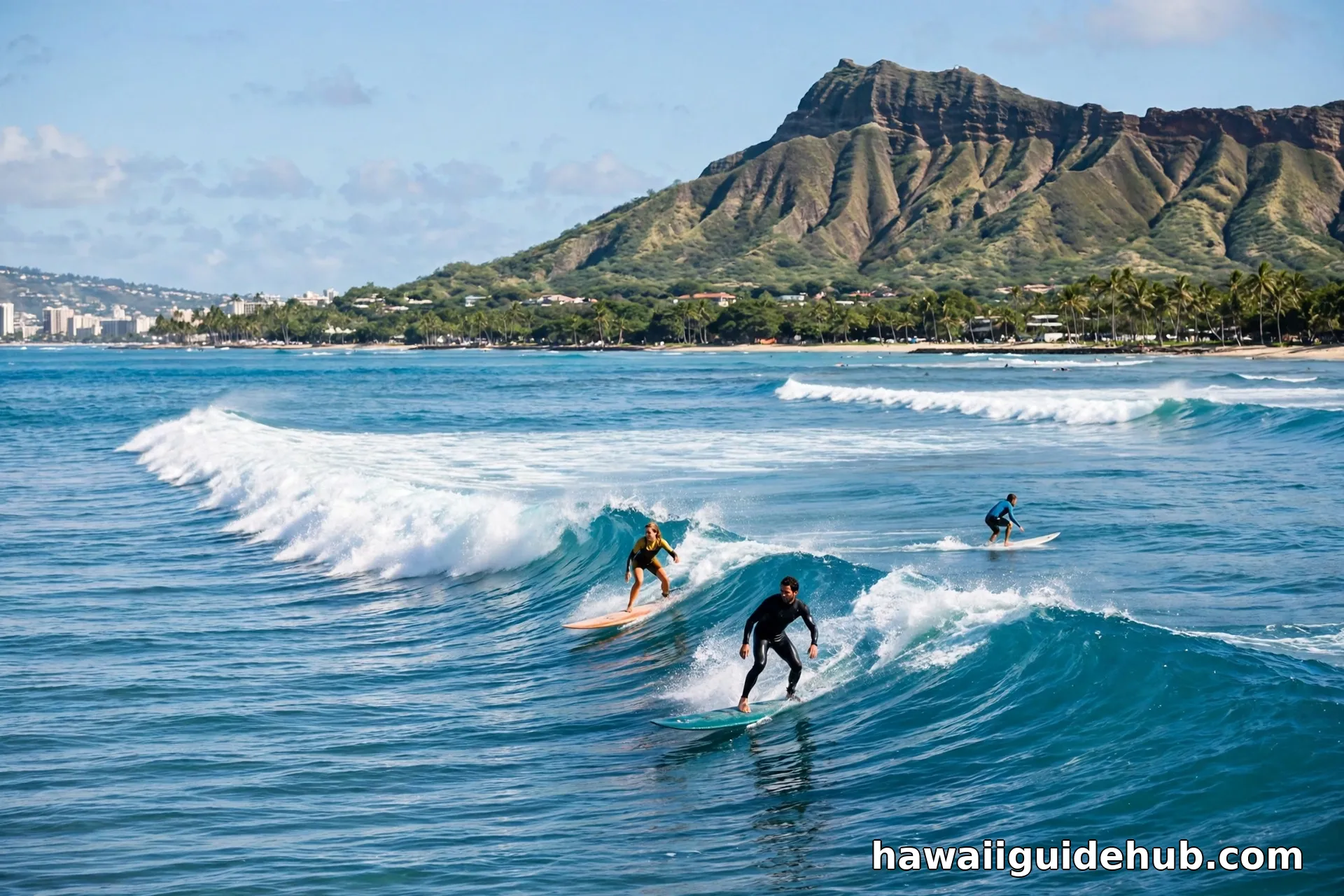
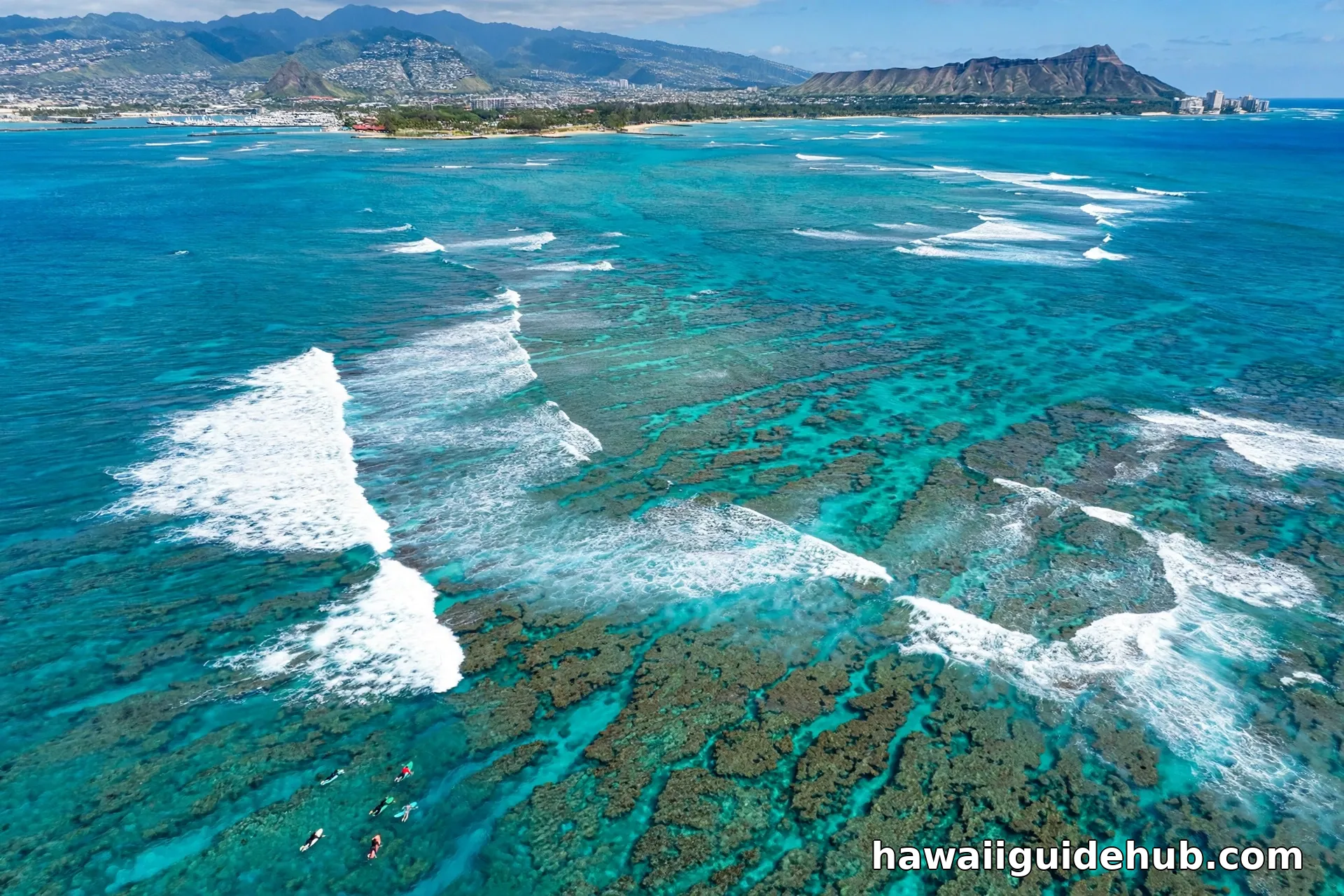
When surfers say “South Shore,” they mean Oʻahu’s southern coast: the string of reef breaks from Ala Moana to Diamond Head, with Waikīkī at its heart. This is where Duke Kahanamoku, the father of modern surfing, rode the same rolling waves you can learn on today. From first-timer whitewash to hollow reef barrels, the South Shore has a break for every level.
This guide covers the best south shore surf spots from easiest to hardest, when each one works, surf etiquette that keeps you safe in crowded lineups, and what to expect from lessons. Summer brings the south swells, but there is surf to be found here most of the year.
South Shore Surf Spots at a Glance
| Spot | Level | The wave | Go if |
| Canoes, Waikīkī | Beginner | Long, gentle rollers | It is your first wave ever; the classic learner break |
| Queens, Waikīkī | Beginner | Mellow longboard wave, hundreds of feet long | You want a long, forgiving ride on a longboard |
| White Plains, ʻEwa Beach | Beginner | Sandy bottom beach break | You want fewer tourists around while you learn |
| Pops, Waikīkī | Intermediate | Fun reef peak outside the beginner zone | You have outgrown Canoes but want to stay close |
| Threes, Waikīkī | Intermediate | Welcoming wave that handles size well | You want a step up that stays friendly when it gets bigger |
| Diamond Head (Cliffs) | Intermediate | Scenic reef break under the lighthouse | You want scenery with your session |
| Tongg’s, ʻĀina Haina | Intermediate | Local reef break | You want fewer crowds and a local lineup |
| Ala Moana Bowls | Advanced | Fast, hollow left | You are experienced and want a real test |
| Kaisers, Waikīkī | Advanced | Shallow reef right with a tight takeoff | You are experienced and comfortable over shallow reef |
When the South Shore Works
The South Shore runs on south swells, which arrive from April through October. Summer is prime time: long-period swells from South Pacific storms light up every reef from Waikīkī to Diamond Head. Mornings are best, when the northeast trade winds blow gently offshore and groom the faces smooth. By afternoon the trades strengthen and chop the surface, so early sessions are the move.
In winter the South Shore goes quiet as the energy shifts to the North Shore, but Waikīkī’s reefs still catch small windswell and wrap from other directions. It is rarely truly flat. If you are learning, summer’s consistent small surf is ideal. If you are experienced, the shoulder months bring cleaner conditions with smaller crowds.
One more local truth: the South Shore rewards consistency over swell-chasing. The regulars who surf Canoes or Diamond Head three mornings a week know every section, every tide quirk, every wind shift. Visitors get a week, not a season, so make the most of it: surf early, watch the locals, and pick one break to learn instead of hopping between five.
Beginner Spots: Learn Here First
Waikīkī is where modern surfing was born. Duke Kahanamoku grew up riding these reefs on heavy wooden boards, then carried the sport to the world. More than a century later, the same gentle rollers still teach thousands of first-timers every year. There is no better classroom on Earth, and the three breaks below are where your surfing life should start.
Canoes is the most famous beginner break in the world, and it earns the title. Named for the outrigger canoes that share the lineup, it sits just off central Waikīkī in front of the Duke Kahanamoku statue. The waves are long, slow, and forgiving, breaking over reef deep enough to be friendly. This is where surf schools teach, and for good reason: the rides are measured in city blocks, not seconds.
Queens, just east of Canoes, is a longboarder’s paradise. It peels as a mellow right for hundreds of feet, perfect for practicing turns and noserides. It gets crowded with skilled longboarders, so beginners should stick to the inside whitewash or the adjacent Baby Queens area closer to shore.
White Plains Beach in ʻEwa Beach is the locals’ beginner pick. A sandy-bottom beach break means softer wipeouts than reef, and the crowds are mostly residents rather than tourists. It works best on south swells in summer. Facilities include showers, restrooms, and plenty of parking.
Intermediate Spots: Level Up
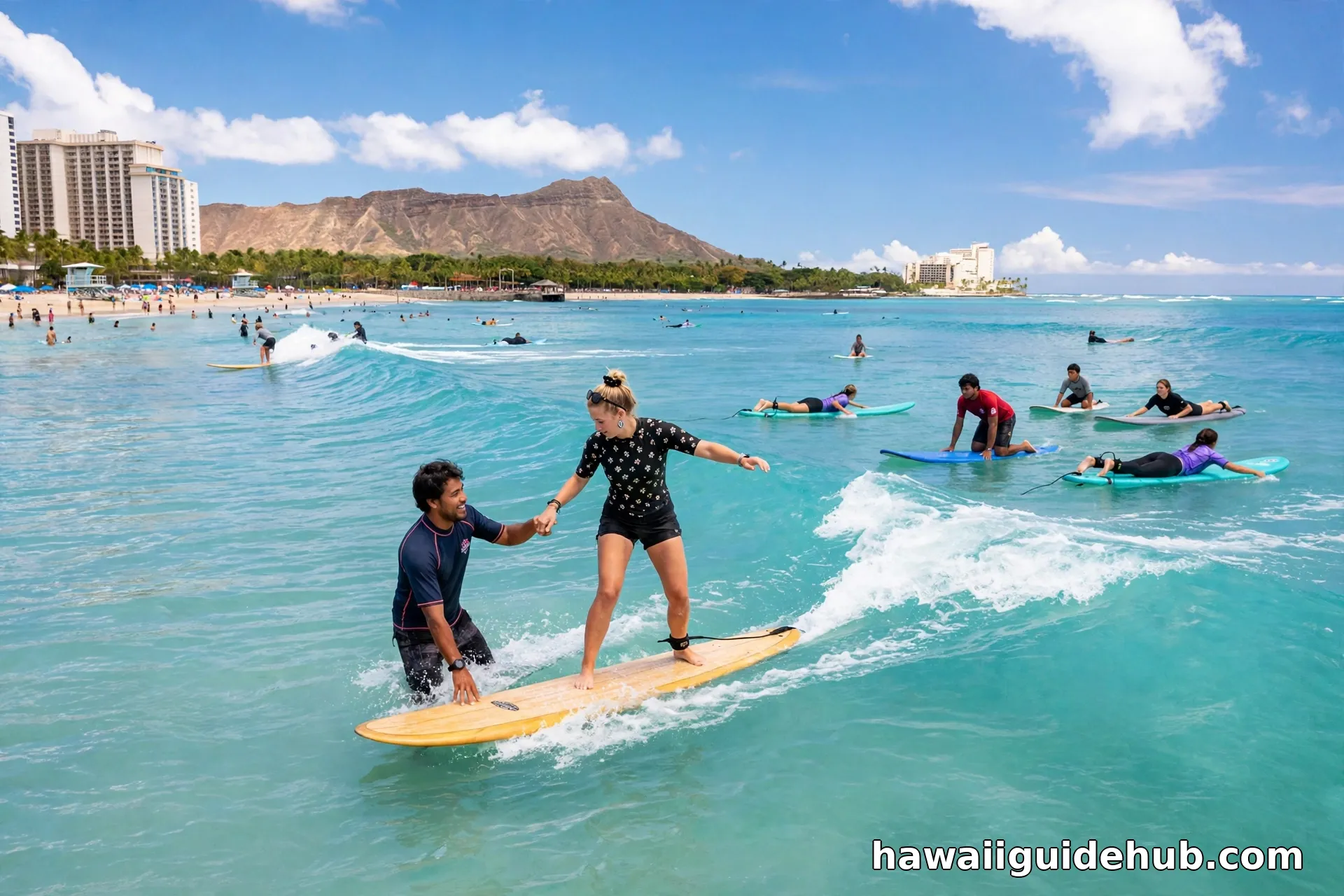
Pops sits just outside the beginner zone at Waikīkī, a fun reef peak that rewards surfers ready to paddle out past the whitewash. The takeoff is manageable, the wave has some shape, and the crowd is thinner than at Canoes.
Threes, off the Outrigger Reef, is a welcoming wave when it is not pumping, with a channel at the end of the wave that makes the paddle back out easy. It handles size well, holding shape even when well overhead, which makes it a favorite step-up spot.
Diamond Head (Cliffs) offers one of the most scenic sessions in surfing: reef breaks peeling beneath the lighthouse with the crater towering above. The waves are fun but can break in shifting sections, so watch for a while before paddling out. The paddle is longer than at Waikīkī, which keeps the crowds down.
Tongg’s in ʻĀina Haina is a local intermediate reef break further east, quieter than town with a loyal regular crew. Respect the locals, wait your turn, and you will be welcomed.
Advanced Spots: Experts Only
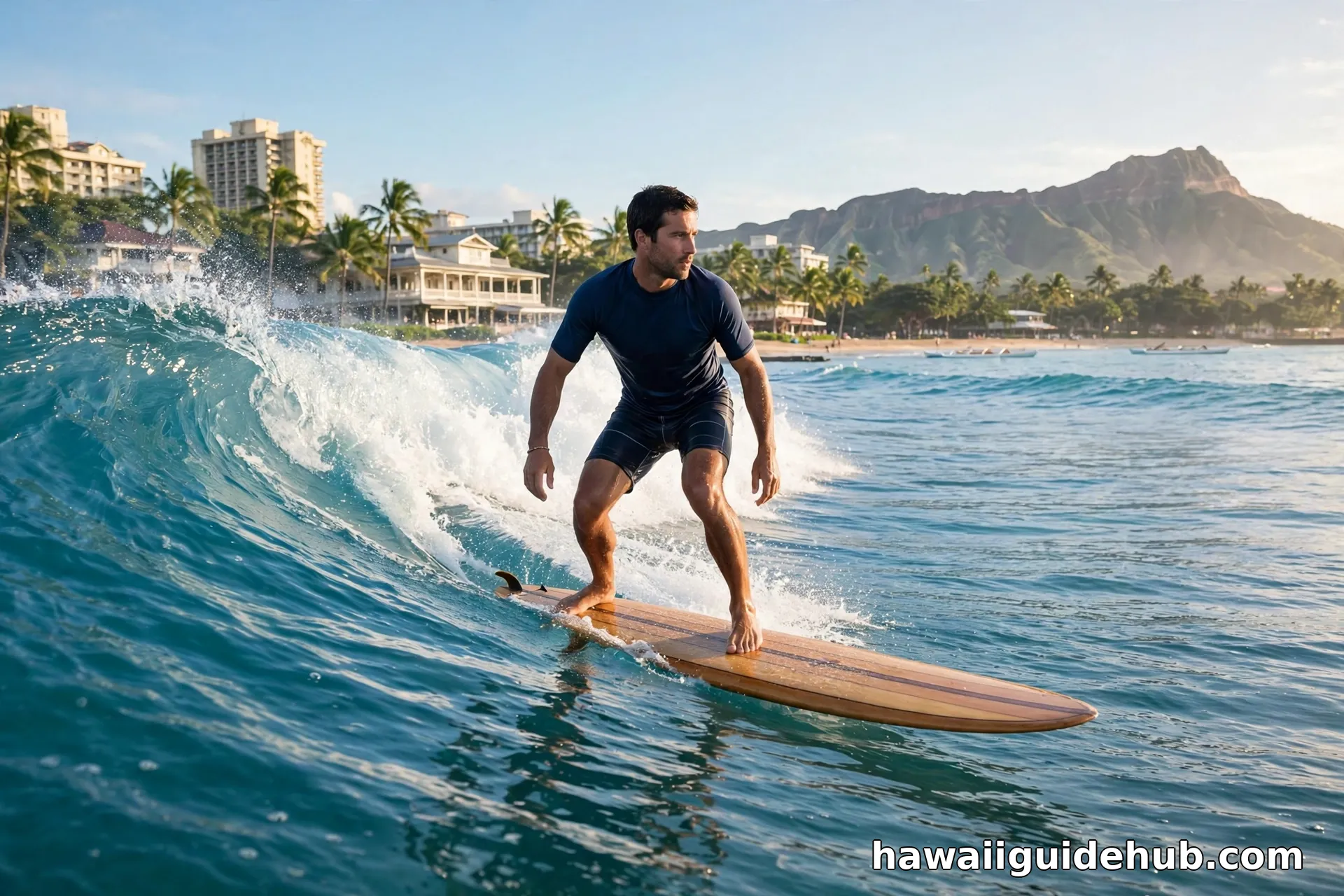
Ala Moana Bowls is the South Shore’s proving ground: a fast, hollow left breaking into the mouth of the harbor, guarded by a seasoned local crew. The wave is a far paddle from shore, the reef is shallow, and the takeoff demands commitment. Watch from Magic Island across the channel before even thinking about paddling out.
Kaisers is a predominant right breaking over a very shallow reef shelf, with a tight takeoff zone and a hungry pack of locals. The stretch of reef between Kaisers and Bowls, known as Rockpiles, offers fast lefts over sharp shallow reef for experienced shortboarders and longboarders alike.
The rule at every advanced South Shore break is the same: if you have to ask whether you are ready, you are not. These reefs are shallow, the locals have surfed them for decades, and respect is earned wave by wave. There is no shame in watching. Some of the best surf education on the South Shore happens from the sand.
Reading a Surf Report for the South Shore
Before you paddle out, learn to read the forecast. Three numbers matter most: swell height, swell period, and swell direction. For the South Shore, you want swell direction from the south, ideally between 180 and 200 degrees. Swell period matters more than height: a 3-foot swell at 14 seconds carries far more energy than a 4-foot swell at 8 seconds, and it will feel twice as big on the reef.
Wind is the other half of the equation. Light northeast trades in the morning groom the south shore breaks clean. Strong trades chop them up by afternoon. Kona winds, which blow from the south, are sideshore to onshore for Waikīkī and make conditions messy. The classic South Shore day is a 2 to 4 foot south swell at 12-plus seconds with light morning trades: small enough to learn on, clean enough to enjoy.
Surf Etiquette on the South Shore
South Shore lineups are among the most crowded in the world, and etiquette is what keeps them functioning. The golden rule: the surfer closest to the peak has the right of way. Dropping in on someone else’s wave is the fastest way to make enemies and get hurt.
Do not paddle straight through the lineup to the peak. Paddle around the break, wait your turn, and do not snake other surfers by paddling around them for position. Keep your board under control: a loose board in a Waikīkī crowd is a weapon. Beginners should stay on the inside, away from the main peak, until they can steer and stop reliably.
Respect the locals. Many South Shore regulars have surfed the same break for decades, and they know every section. A smile, a little patience, and giving the best waves to the regulars will earn you far more waves than aggressive paddling. When in doubt, do not go. There is always another wave.
Lessons and Rentals: What to Expect
If you have never surfed, take a lesson. Waikīkī’s surf schools run daily at Canoes and Queens, and a good instructor will have you standing in your first hour. Group lessons are the most affordable, private lessons get you more waves, and most schools include the board, leash, and rash guard. Book the earliest session of the day for the calmest conditions.
Renting a board is easy all along Waikīkī, but be honest about your ability when choosing one. Beginners want big, soft foam boards: more float, more stability, softer landings. Fiberglass shortboards are for surfers who already know what they are doing. Reef-safe sunscreen, a rash guard, and water are the rest of the kit. For more active trip ideas, see our guide to outdoor adventures in Hawaii and family-friendly activities.
What to wear matters more than beginners expect. A rash guard protects your chest and stomach from board rash during long sessions, and reef-safe sunscreen is required by law to be free of oxybenzone and octinoxate. Booties are worth considering at reef breaks: the reef at low tide is sharp, and a cut can end your surf trip. Most schools provide the essentials, so ask what is included before you book.
South Shores on the Other Islands
Oʻahu owns the “South Shore” name, but every island has a southern coast with surf. On Maui, the Kīhei side picks up south swells in summer, with mellow breaks off Kalama Park for beginners. Kauaʻi’s Poʻipū gets fun south swell surf in summer too. On the Big Island, Kahaluʻu Beach Park near Keauhou offers gentle beginner waves over a protected reef.
The seasonal logic is the same everywhere: south-facing shores wake up in summer, north-facing shores in winter. Check the surf forecast, match the break to your ability, and you will find your wave. For the full island bucket list, see our Hawaii bucket list and best beaches for volleyball when your arms need a rest.
Video: Surf Lessons in Waikīkī
What a beginner surf lesson at Waikīkī looks like: boards, instruction, and your first rides.
Frequently Asked Questions
What is the best surf spot for beginners on the South Shore?
Canoes at Waikīkī is the best beginner spot: long, gentle waves over forgiving reef, with surf schools teaching there daily. White Plains in ʻEwa Beach is the top pick for a sandy bottom and fewer tourists.
When is the best time to surf the South Shore?
April through October, when south swells arrive. Mornings offer the cleanest conditions before the trade winds pick up.
Can you surf Waikīkī in winter?
Yes, though it is smaller. Waikīkī catches windswell and wrap year-round, so there is usually something rideable even when the south swells fade.
Do you need a lesson to surf Waikīkī?
If you have never surfed, yes. A lesson teaches you ocean safety, etiquette, and technique that would take weeks to figure out alone, and Waikīkī’s schools are among the world’s best.
What is surf etiquette at crowded breaks?
The surfer closest to the peak has the right of way. Never drop in, paddle around the lineup, control your board, and give the best waves to the locals.
Is the South Shore good for longboarding?
It is one of the best longboard destinations in the world. Queens, Canoes, and Diamond Head all offer long, peeling waves made for classic longboard style.
Are there sharks at South Shore surf spots?
Sharks live in Hawaiian waters, but encounters at South Shore surf spots are extremely rare. The crowded, shallow reefs of Waikīkī are among the safest lineups in the state. Avoid surfing at dawn and dusk alone, and stay out of murky water after heavy rain.
The South Shore is where surfing went from Hawaiian tradition to world phenomenon, and the waves that taught Duke Kahanamoku are still teaching beginners today. Start at Canoes, respect the lineup, and work your way down the coast as your skills grow. The hardest part is catching your first wave. Everything after that is just joy.