Hawaii’s Freshwater Streams: The Fish That Climb Waterfalls

Hawaii’s streams are short, steep, and full of athletes. The native fish hatch in the mountains, drift to the ocean as larvae, then return as juveniles and climb waterfalls, some hundreds of feet high, using suction discs on their bellies. The shrimp and snails climb too. This is the freshwater stream ecosystem: an amphidromous community built on the unbroken connection between mountain and sea, and it is one of the most distinctive stream faunas on Earth.
This is the single complete guide to Hawaii’s freshwater stream ecosystem. It covers amphidromy, the five native fishes, the climbing invertebrates, stream zonation, the diversion crisis, restoration, where to see stream life, and FAQs. Everything about Hawaii’s freshwater streams lives on this one page.
Amphidromy: The Commute That Defines Everything
Every native Hawaiian stream animal is amphidromous: adults live and spawn in freshwater, newly hatched larvae wash downstream to the ocean, spend months feeding and growing at sea, then return to freshwater as juveniles and migrate upstream to adulthood. The whole system depends on an unbroken stream from the mountains to the ocean: mauka to makai. Break the connection with a diversion ditch, a dam, or a dewatered reach, and the larvae cannot get out or the juveniles cannot get back. As University of Hawaii researchers put it, you have to take care of the stream from the mountains to the ocean, making sure it connects all the way. The stream is not a place; it is a corridor.
The Stream Team: Amphidromous Commuters
| Species | Hawaiian name | Superpower | Where found |
| Oopu alamoo (Lentipes concolor) | Alamoo / hiu kole | Strongest climber; found above 300-ft falls | Highest reaches; endemic |
| Oopu nopili (Sicyopterus stimpsoni) | Nopili | Inchworm climb with mouth + suction disc | Mid to upper reaches; endemic |
| Oopu nakea (Awaous guamensis) | Nakea | Largest; over a foot long | Lower to mid reaches; indigenous |
| Opae kalaole (Atyoida bisulcata) | Opae kalaole | Shrimp that climbs waterfalls | Swift mountain reaches; endemic |
| Hihiwai (Neritina granosa) | Hihiwai | Snail found above tall falls | Mountain reaches; endemic, edible |
How a Fish Climbs a Waterfall
Three of the native gobies have pelvic fins fused into a ventral suction disc. The alamoo and nopili use it to ascend vertical and even overhanging waterfalls: the nopili inchworms upward, alternating mouth and disc, at roughly 12 body lengths per second in power bursts. For a human, the equivalent would be climbing a vertical cliff for a marathon’s distance. Researchers filming the nopili discovered it uses the same jaw muscles to climb and to feed, scraping algae off rock: the climbing may have evolved from the feeding. An old Hawaiian saying holds that as the nopili clings, so will luck: a fish so tenacious it became a proverb.
Zonation: Every Species Has Its Elevation
Walk from a stream’s mouth to its headwaters and the fauna changes with altitude, each species sorted by climbing ability. The nakea and the sleeper (oopu akupa) hold the lower reaches; the nopili takes the middle; the alamoo owns the highest water, found above waterfalls hundreds of feet tall that no other fish can pass. The hihiwai snail and opae kalaole shrimp climb too, found in large populations above falls that seem impassable. This zonation is so consistent that biologists can predict which species they will find from the stream’s gradient: the stream is a staircase, and climbing ability is the ticket to each step.
The Diversion Crisis
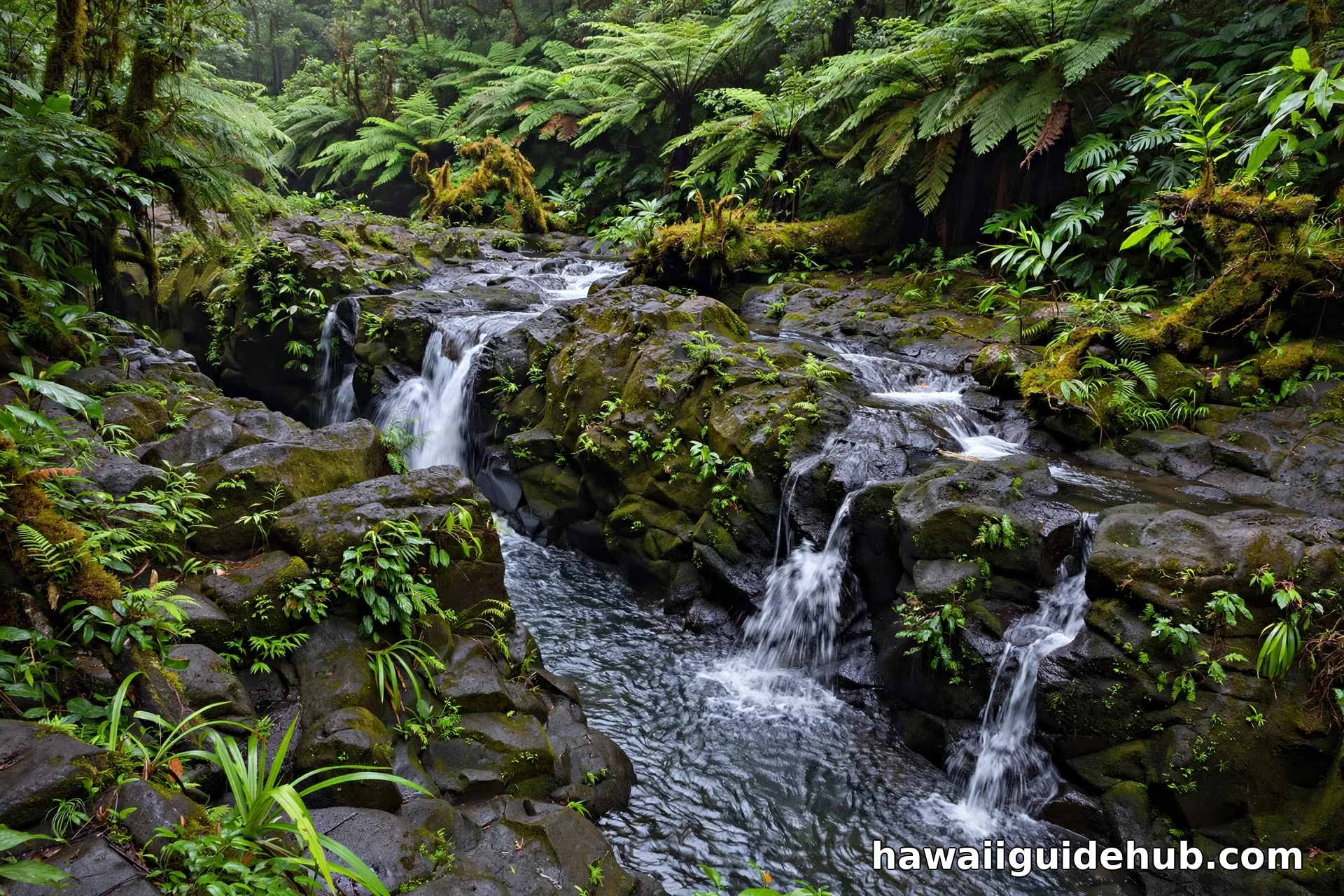
The plantation era replumbed Hawaii’s streams: ditches diverted water to cane and pineapple fields, leaving streambeds dry below the intakes. For amphidromous animals, a dry reach is a wall: juveniles returning from the ocean perish in puddles, waiting for rains big enough to overtop the diversions. Legal battles over stream flow, most famously on Maui’s Na Wai Eha and East Maui streams, have restored some flows, but many streams remain dewatered. Add introduced predators, mosquitofish, tilapia, and channelization, and the native stream fauna is a fraction of what Hawaiians knew: the oopu once fed royalty, steamed in ti leaves, its aroma supposedly betraying commoners who dared cook it.
Restoration: Putting Water Back
The fix is conceptually simple: restore continuous flow from mauka to makai. Court-ordered flow restorations on Maui have shown native species rebounding when water returns: the corridor reopens and the commuters resume. Barrier removal, fish-friendly diversion designs, and invasive predator control complete the toolkit. Community groups monitor streams and advocate for flow standards; the Hawaii Fish Habitat Partnership coordinates statewide strategy. Every restored stream is a proof of concept: the animals are still in the ocean, waiting for the water to come back. Give them a connected stream, and they climb home.
Where to See Stream Life
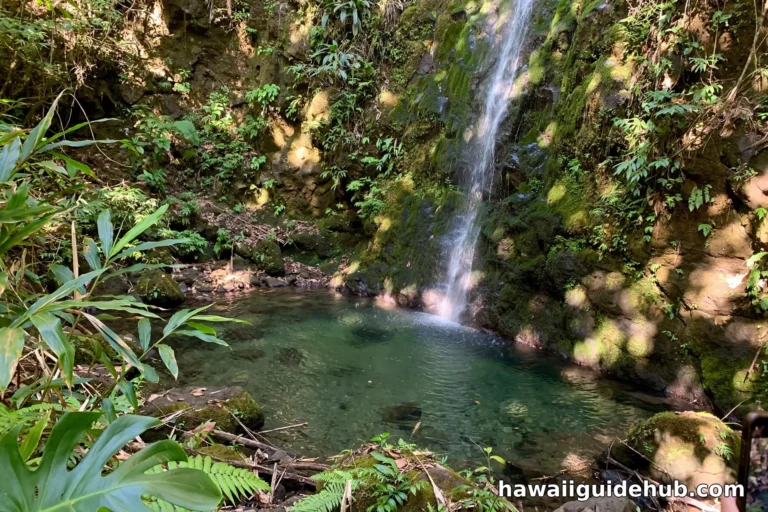
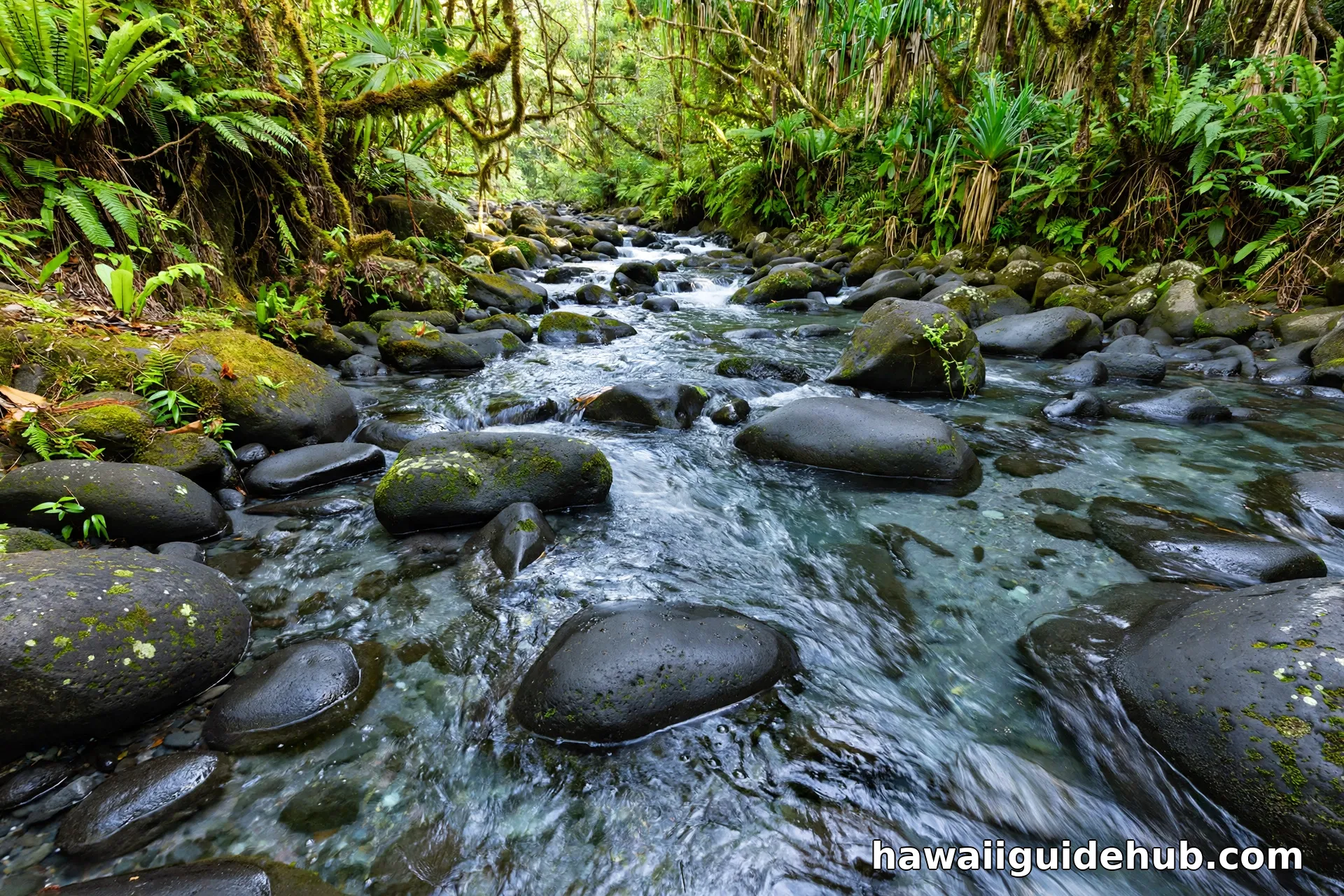
Bring a mask and snorkel to the calm pools of windward streams: Iao Valley’s stream on Maui, where the nakea still shows its black-barred yellow fins among the rocks, is the classic spot. Manoa Stream on Oahu holds natives in its upper reaches. Watch for the inchworming nopili on wet rock faces beside small falls, and the hihiwai’s ridged shells in the current. Rules: never move rocks unnecessarily, never release aquarium fish or bait, and do not dam or divert the stream for swimming holes: that still pool is someone’s commute. For valley context, see our Waimea Canyon guide.
The Damselflies: Hawaii’s Other Radiation
The fish get the glory, but the insects got the diversity. Hawaii has no native stoneflies, mayflies, or caddisflies: the isolation filtered them out. What arrived instead radiated spectacularly: the damselflies, especially Megalagrion, diversified into dozens of endemic species, some breeding in streams, others in the water pooled in leaf axils high in the forest. Certain dipteran flies radiated into specialized stream niches too. The result is a stream insect fauna unlike any other: missing whole orders, bursting with endemics in the groups that made it. Turn over a streamside rock and the small things you see are likely found nowhere else.
Estuaries: Where the Corridor Meets the Sea
The stream’s lower end is its own ecosystem: the estuary, where fresh and salt water mix. The hapawai snail lives in the deep estuaries near the ocean; the opae oehaa, a small endemic prawn, inhabits the brackish zone; aholehole and mullet venture up from the sea. Estuaries are the larvae’s departure lounge and the juveniles’ arrival gate: the whole amphidromous cycle passes through them twice. They are also the most altered part of the system: channelized, filled, and polluted near towns. Protecting the stream means protecting its mouth too: the corridor has two ends, and both must stay open.
Na Wai Eha: The Water Wars
No stream story is complete without the water wars. Na Wai Eha, “the four waters” of Waihee, Waiehu, Wailuku, and Waikapu on Maui, were diverted for over a century to feed sugar cane. In 2014, after decades of legal battles, the state Commission on Water Resource Management ordered significant flow restoration: water returned to streams that had run dry for generations. Native species rebounded; taro farmers replanted loi; the community watched streams come back to life within seasons. The lesson traveled statewide: stream flow is not just an environmental preference but a public trust, and the law increasingly agrees. The diversions were built for an industry that no longer exists; the streams are being replumbed for the ecosystem that never left.
Flash Floods: The Stream’s Reset Button
Hawaiian streams are violent by nature: steep gradients and intense rainfall produce flash floods, freshets, that scour the streambed regularly. The native fauna evolved with this: the oopu’s suction disc is as much a flood anchor as a climbing tool, letting fish hold station when the stream becomes a torrent. Between floods, the water runs gin-clear, visibility exceeding 30 feet. This natural disturbance regime is why the streams look so clean: every flood resets the algae and sediment. But floods are also why you never enter a Hawaiian stream during heavy rain or when the water rises and turns brown: the same force that maintains the ecosystem can kill a hiker. Respect the freshet.
How to Read a Hawaiian Stream
Stand at any windward stream and read it like the biologists do. Clear water over basalt: healthy, with natives likely. Green, silty water: erosion upstream, possibly from pigs or development. A dry bed below a concrete intake: diverted, its corridor broken. Algae-choked pools: nutrient pollution, often from cesspools or fertilizer. Oopu holding in the current, hihiwai on the rocks: the system working. The stream is a report card for the whole watershed, written in water clarity and fish. Learn to read it, and every hike in Hawaii gains a new dimension: the landscape telling you, honestly, how it is doing.
The Oopu in Hawaiian Culture
The oopu was more than food: it was woven into language and story. Place names reference it; proverbs use its tenacity as moral instruction. The village of Waihee was known for its oopu-scented wind, the makani kili oopu, carrying the smell of the fish steaming in ti leaves. Royal fishponds and stream management included oopu: Hawaiians understood the mauka-to-makai connection long before biologists named amphidromy, managing streams as part of the ahupuaa from the mountains to the sea. The modern stream restoration movement is, in a real sense, a return to that understanding: the stream as a corridor to be kept open, not a resource to be drained.
A Stream Snorkel: The Practical Guide
Stream snorkeling is Hawaii’s most underrated wildlife experience, and it is nearly free. Go on a calm, dry day: never after heavy rain. Wear tabis or sturdy water shoes; the rocks are slippery and the urchins are absent but the basalt is sharp. Float quietly in the deeper pools and watch: the nakea holding in the current, the nopili inching up the wet rock, the hihiwai grazing. Do not touch, chase, or feed the animals, and never stand in the spawning gravels. An hour in a windward pool will show you more endemism per square foot than almost anywhere else in Hawaii: the whole radiation, visible through a mask, in water up to your chest.
Watch: Fish That Climb Waterfalls
Hawaii Freshwater Stream FAQs
What is an oopu?
The Hawaiian name for the native stream gobies: five species, four of them endemic. They are amphidromous, climbing waterfalls with fused pelvic-fin suction discs to reach their adult habitats upstream.
How high can the oopu climb?
The alamoo has been found above waterfalls several hundred feet tall, including the 442-foot Akaka Falls on the Big Island, whose interpretive panels explain the life cycle. The larvae drift down; the juveniles climb back up.
What does amphidromous mean?
A two-part life cycle: hatch in freshwater, drift to the ocean as larvae, grow at sea for months, then return to freshwater as juveniles and migrate upstream. All nine of Hawaii’s native freshwater macrofauna species do this.
Why are Hawaiian streams dewatered?
Plantation-era ditches divert stream water to agriculture and development. Dewatered reaches block the amphidromous migration, and court battles over restoring stream flow continue today, especially on Maui.
Can I eat oopu?
Traditionally yes: oopu steamed in ti leaves was a prized food, and the hihiwai snail and opae shrimp are still gathered. But populations are fragile: follow all state regulations, take sparingly, and consider catch-and-release observation instead.
The Commute Continues
Hawaii’s stream animals run one of nature’s great commutes: born in the mountains, raised in the ocean, climbing waterfalls to come home. The whole system fits in streams you can step across, and it depends on a single unbroken thread of water from the peaks to the sea. Every diversion is a roadblock; every restored flow is a reopened highway. Snorkel a windward pool, watch a two-inch fish inch up a wet cliff, and remember the saying: as the nopili clings, so will luck. The streams are clinging. For more island water stories, see our Kauai guide.