Puʻu Poa Beach: Princeville’s Hidden Snorkeling Cove Below the Bluff

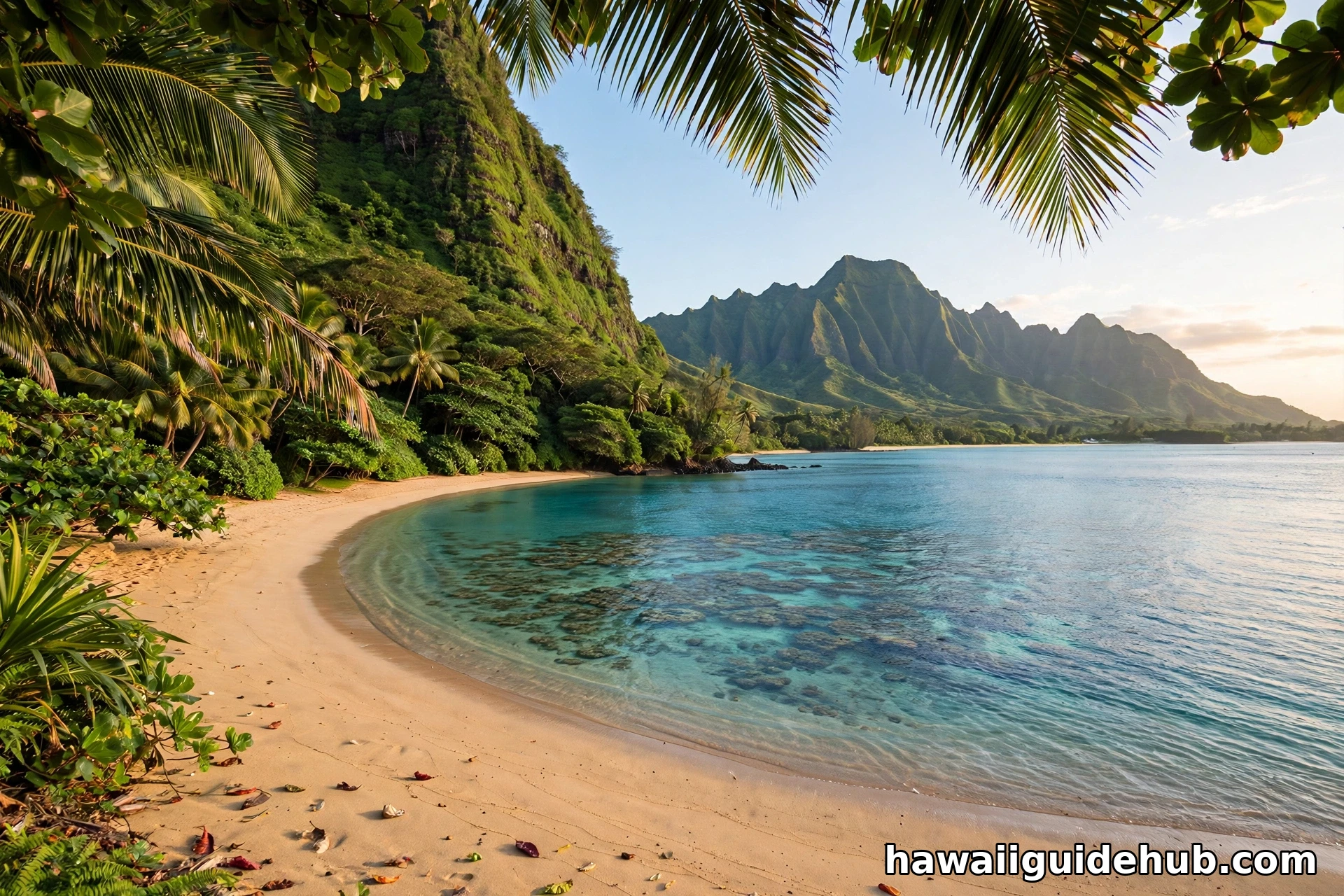
Most people who stay in Princeville never swim at the beach directly below their room. They look at it from the bluff each morning, watch the sun sink behind it each evening, and somehow never make the walk down. Puʻu Poa Beach is that kind of place. It is small, it is tucked under a 200-foot cliff, and it asks you to earn it with a descent that keeps the crowds thin. What you get in return is one of the prettiest pockets of sand on Kauai’s north shore, a reef full of turtles, and a straight-on view of Makana, the mountain ridge the world knows as Bali Hai.
This guide covers the whole visit: where the beach sits, the two coves that make it up, how to actually get down there, when the snorkeling is worth it, and when it is not.
Where Puʻu Poa Sits on the Map
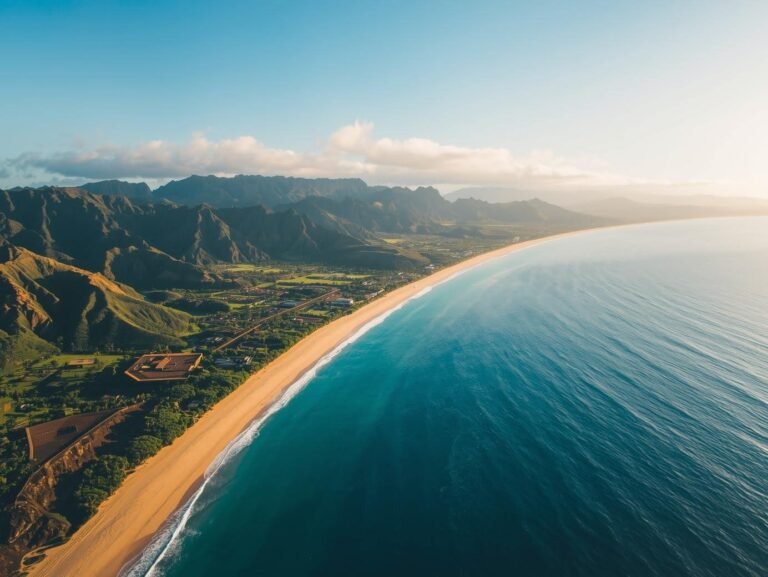
Puʻu Poa Beach lies on the northeastern edge of Hanalei Bay, in Princeville, below 1 Hotel Hanalei Bay and the Hanalei Bay Resort. The shoreline runs from the mouth of the Hanalei River toward the resort, ending in front of the hotel. It is a reef-protected stretch of golden sand, the longest in the Princeville area, wide in front of the resort and narrower toward the river.
What makes the setting special is the view. The beach faces directly west across Hanalei Bay toward Makana and the Na Pali mountains. Large trees line the back of the beach and throw shade over much of the sand for most of the day, which is a genuine relief on a north shore afternoon. Sunsets here are the kind people write home about.
Two Beaches, Not One
Here is the detail that confuses first-timers. There are two beaches here, and they behave differently.
The main beach
The main stretch fronts the resort. This is where the paved path and the stairs arrive, where the shade is thickest, and where most people settle. The sand is beige and soft enough for lounging. An offshore reef breaks the incoming swell, which is what makes this a snorkeling beach rather than a surfing one in summer. Sea turtles work the reef here regularly. Reviewers mention them more than anything else about this beach, and they are right to.
The second cove
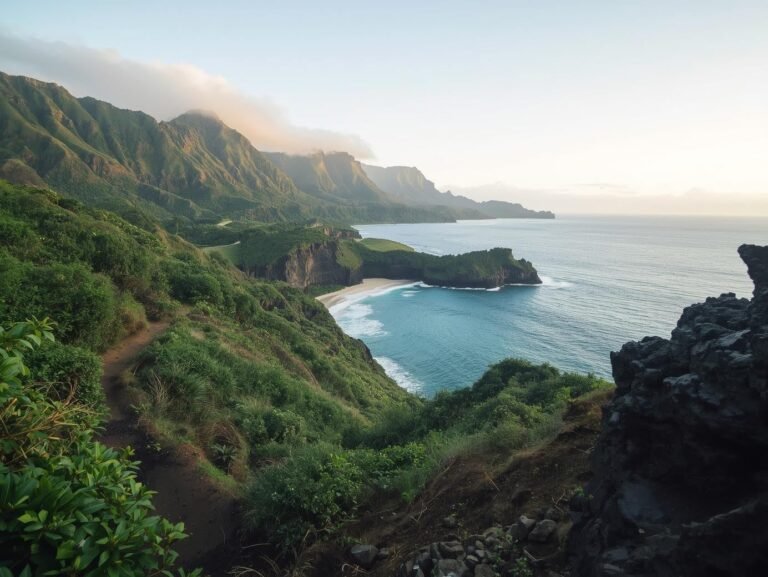
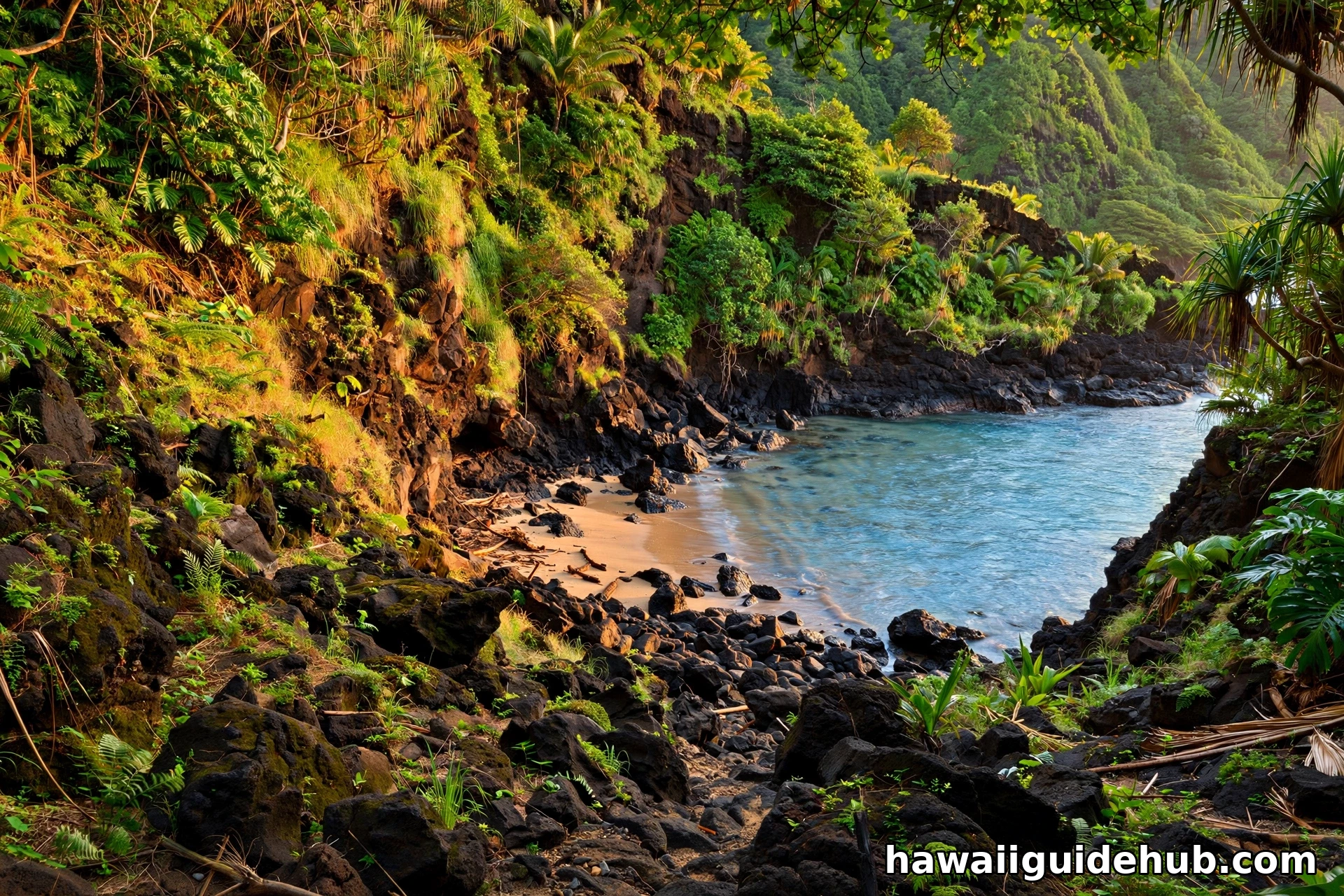
Walk to the left end of the main beach and scramble over the rocks and you reach a second, much smaller cove. It is often deserted. There is less sand, more rock, and a wilder feeling, with the cliff rising right behind it. It is not a swimming spot. Think of it as a look-around-and-take-photos spot, the kind of place you visit for twenty minutes and remember for years. If you go, wear shoes with grip. The rocks are uneven and can be slick.
Getting There: The Descent
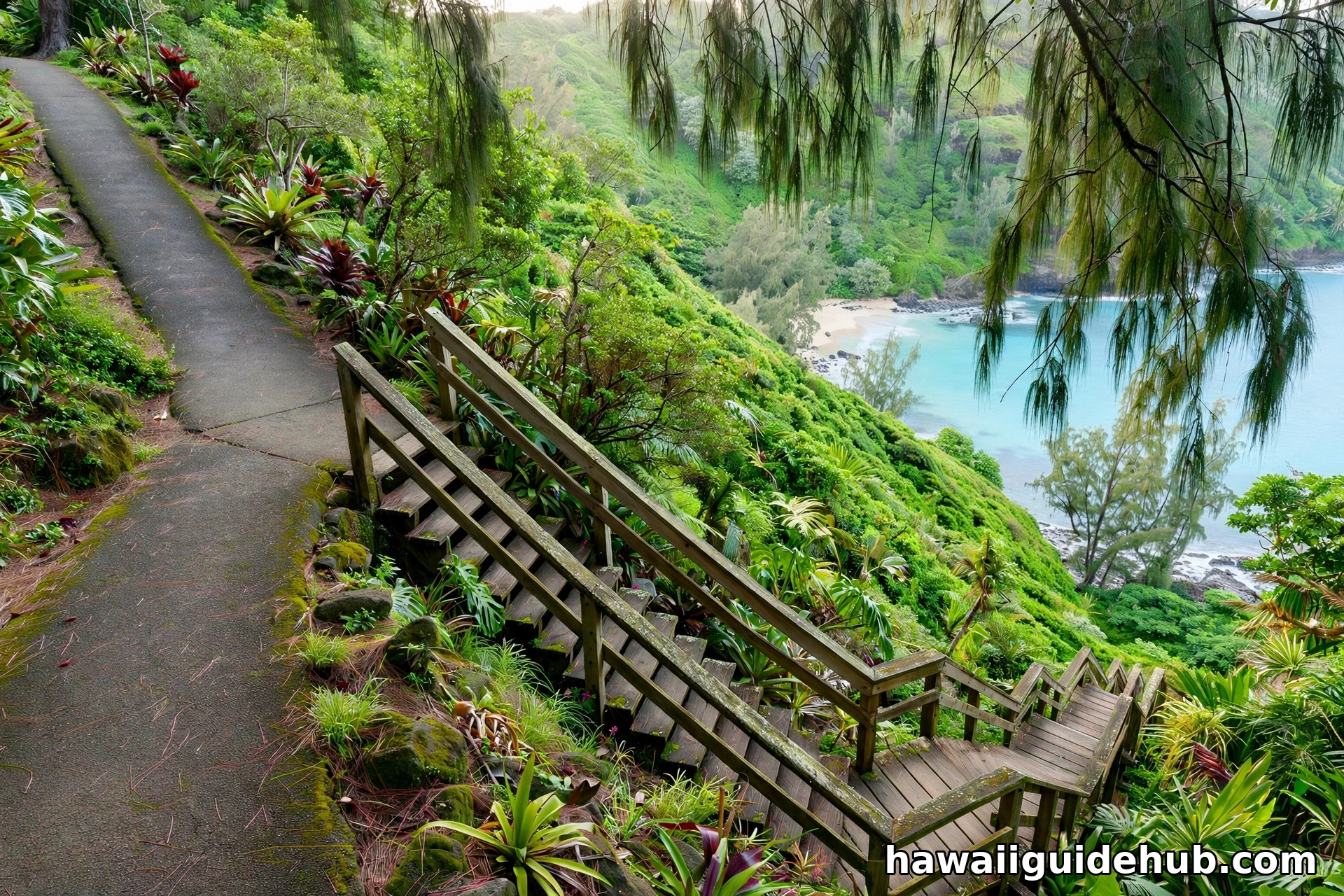
Like every Princeville beach, Puʻu Poa sits at the bottom of a bluff, and getting down is part of the experience. The drop is roughly 200 feet. Among the Princeville beaches, this is one of the easier descents, because you get a choice: a paved path or a set of stairs.
The public access is straightforward once you know it. From Highway 56, turn onto Ka Haku Road, the main Princeville entrance. There is a small public parking lot just before the resort gatehouse, on the right. It holds about eight cars. That is the catch. Eight stalls, shared with visitors heading to Hideaways Beach too, means the lot fills early and often. Arrive in the morning or be ready to wait for a spot to open.
If the lot is full, the resort valet is the fallback. You cannot be charged for walking to a public beach, but the resort can charge for parking on its property. The practical workaround that many visitors use is validating at the beach bar with a drink purchase. Guests of 1 Hotel Hanalei Bay or the Hanalei Bay Resort have it easiest: a paved path or a shuttle ride takes them straight down.
The trail itself is well built, with stairs where the grade gets steep. It can be slippery after rain, which is frequent on the north shore, so take it steady. Carry water if you go in the heat of the day. There is no shame in taking the path slowly. Everyone does.
Snorkeling: The Real Reason to Come
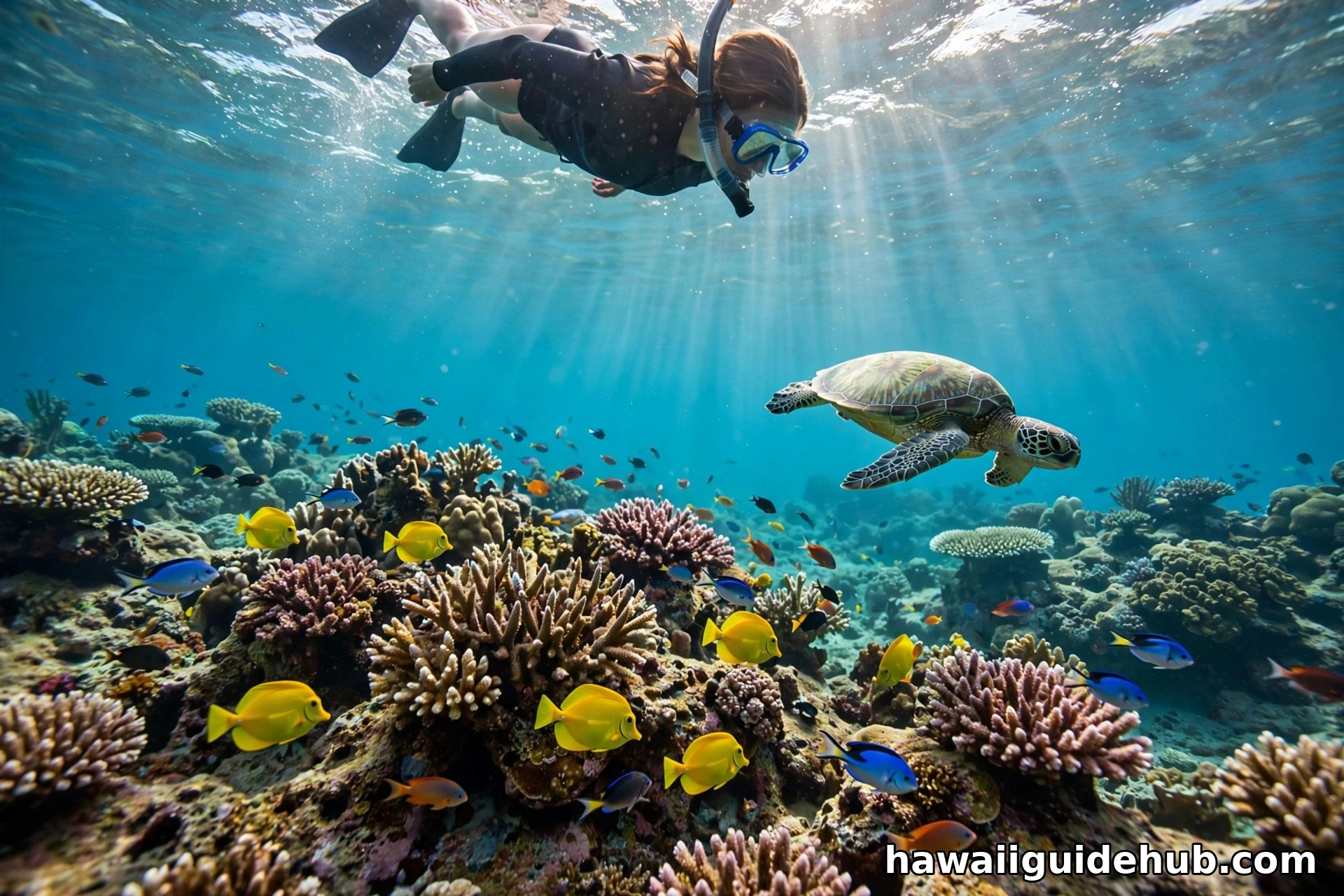
Be honest about what this beach is for. It is a snorkeling beach first and a swimming beach second. The reef that shields the shore from the swell doubles as habitat, and the fish population reflects it. On a calm, clear day you can expect clouds of small reef fish, and green sea turtles are so common here that regulars treat them as a given rather than a hope.
The best snorkeling is to the right of where the path meets the sand. Entry is easiest there in summer, when the water is at its calmest. A narrow sand channel runs out through the reef to deeper water, and that is your lane in and out. Outside that channel, the reef sits just under the surface across most of the beach. At higher tides there is enough water over it to snorkel comfortably. As the tide drops, it gets too shallow to float over without scraping, so time your session around the tide chart.
One rule that matters everywhere in Hawaii, and especially at a turtle-heavy spot like this: give honu space. Federal and state guidance asks for at least 10 feet of distance, and it is the right thing regardless of the letter of the law. The Hawaiian green sea turtle is protected, and a turtle that is resting or feeding should never be chased, touched, or crowded.
Swimming: Possible, With Caveats
Swimming here is real but limited. In summer, with calm water and a higher tide, the protected water near shore is perfectly swimmable, and families with kids do use it. But the reef structure means much of the water in front of the beach is shallow and rocky rather than open. It is not the place for long, carefree laps.
In winter, the equation changes. The outer edge of the reef catches the north swells, and the same reef that protects the beach in summer can turn the water rough. When the surf is up, snorkeling is not advised and swimming becomes a judgment call for strong swimmers only. There are no lifeguards at Puʻu Poa, so the decision and the responsibility are entirely yours. If the water looks powerful, it is. Sunbathe, take photos, and come back in summer.
Summer Versus Winter
The north shore runs on two seasons, and Puʻu Poa shows both faces clearly.
Summer, roughly May through September, is the season this beach was made for. The reef does its job, the water goes glassy, visibility improves, and the snorkeling is at its best. A low sandbar sometimes appears in summer, stretching the beach toward Black Pot Beach and Hanalei Bay. The shade trees are at their most welcome.
Winter, roughly October through April, brings the swells. The surf that hits the outer reef is famous among Kauai surfers, and the beach becomes a place to watch the ocean rather than get in it. The sand can narrow as winter waves rearrange it. None of this makes it a bad winter visit. It makes it a different one: dramatic, loud, and best enjoyed from a towel with a camera nearby.
What to Bring, and What Is (and Isn’t) There
Set your expectations. Puʻu Poa is a natural beach, not a park. There are no public restrooms, showers, or lifeguards on the sand itself. The resort bar and its facilities are the nearest option, and they are generally accessible to beachgoers, though chairs and cabanas are reserved for resort guests.
Bring what a natural beach requires: reef-safe sunscreen (Hawaii law bans sunscreens containing oxybenzone and octinoxate, and the reef here deserves the real thing), drinking water, water shoes for the rocky entries and the scramble to the second cove, and your own snorkel gear if you have it. There is shade from the trees, but a light cover works for the walk down and back.
One more practical note. Do not park on the roadside in the neighborhood. Cars get towed. If the eight-stall lot is full, use the valet arrangement rather than improvising.
Nearby: Make a Day of the North Shore
Puʻu Poa pairs well with the rest of Princeville and Hanalei. Hanalei Beach and the town of Hanalei are minutes away by car, with food trucks, shave ice, and the pier. If you are beach-hopping the island, the ultimate Kauai things to do guide puts the north shore in context with the rest of the island.
And if Puʻu Poa’s parking defeats you, do not despair. That is a normal north shore experience, and the island has no shortage of backup beaches.
A Quick Note on the Name Confusion
One thing trips up nearly every visitor, so let us clear it up. There is a Puʻu Poa condominium property in Princeville, but it sits above Hideaways Beach, not above Puʻu Poa Beach. The irony is well documented among locals. If your vacation rental is at Puʻu Poa and you walk out expecting to be above this beach, you will be at the wrong staircase. The beach described in this guide is the one below 1 Hotel Hanalei Bay and the Hanalei Bay Resort, at the end of Ka Haku Road. When in doubt, follow the public access signs near the resort gatehouse, not the condo name.
The Descendants Connection
If the beach looks familiar on your first visit, there is a reason. The walk down the bluff and the shoreline itself were featured in the 2011 film The Descendants, the George Clooney drama set on Kauai. The movie used several north shore locations, and Puʻu Poa’s path and sand made the cut. Film tourism is a real phenomenon on Kauai, and this is one of the quieter spots where you can stand in a frame you have already seen on screen. No markers, no plaques. Just the beach, looking the way it looked on camera.
Photography: Making the Most of the Light
Puʻu Poa is one of the better photography beaches on the north shore, and the reasons are all about geometry. The beach faces west, which means late afternoon light rakes across the water and turns the Bali Hai ridgeline into a layered silhouette. Golden hour here is genuinely golden, and the reef shows through the shallow water in the foreground of wide shots.
A few practical tips. Shoot the ridgeline from the middle of the beach rather than the ends, where the cliff blocks the angle. The shade trees are generous, but they also create dappled light that confuses camera meters, so midday is the hardest time to shoot and the least flattering. Morning gives you calm water and soft light on the green cliff behind the beach. If you want the classic postcard, the hour before sunset is when the whole bay glows.
For underwater photographers, the reef on the right side is the subject. Turtles here are accustomed to snorkelers and will often continue feeding while you watch from a respectful distance. A floating camera or a simple waterproof phone case is enough. The water is shallow enough that natural light does most of the work.
See It on Video
The Honest Summary
Puʻu Poa Beach is not trying to be the biggest or the easiest beach on Kauai. It is a small, shaded, reef-protected cove that rewards a short climb with good snorkeling, resident turtles, and one of the great views in the islands. Go in summer for the water. Go in winter for the show. Go early for the parking. And when you stand on the sand looking across at Makana, you will understand why the people on the bluff keep looking down at it.