Kuilima Cove: Oahu’s Sheltered Snorkeling Sanctuary at Turtle Bay

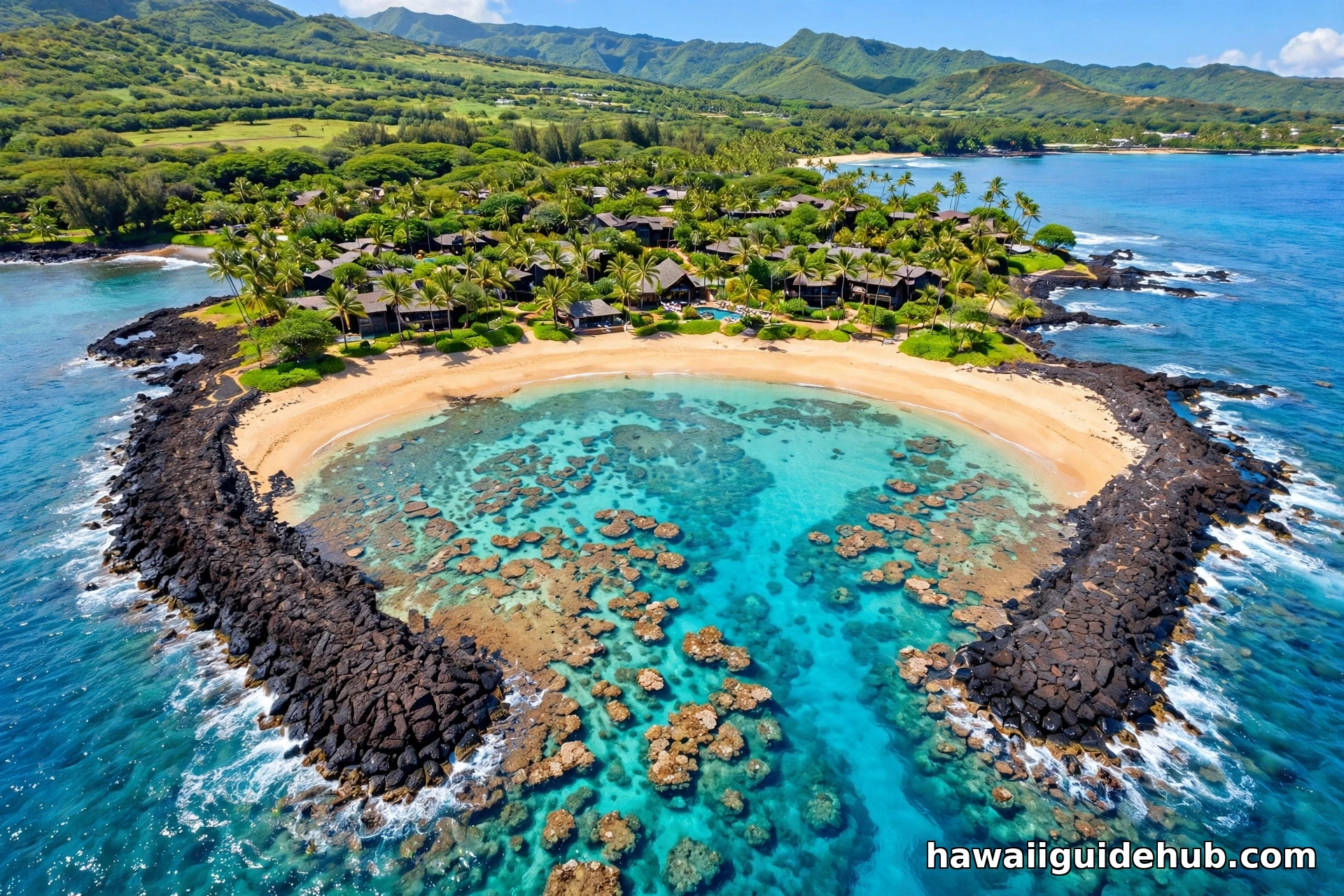
On the far northern tip of Oʻahu, where the island’s famous surf coast begins its long roll toward Sunset Beach and Pipeline, there is a small pocket of water that barely ripples even when the ocean beyond it is roaring. Kuilima Cove sits tucked against the eastern edge of Turtle Bay Resort, a crescent of calm carved between dark lava rock arms, and it has quietly become one of the most trusted beginner snorkeling spots on the island. Families wade in from the sand, first timers practice with their masks in chest deep water, and patient snorkelers are often rewarded with the sight of a juvenile green sea turtle gliding over the reef. This is the complete guide to the cove: where it is, what lives in it, how to park, what to bring, and how to stay safe while you enjoy one of the North Shore’s gentlest introductions to the ocean.
Where Exactly Is Kuilima Cove?
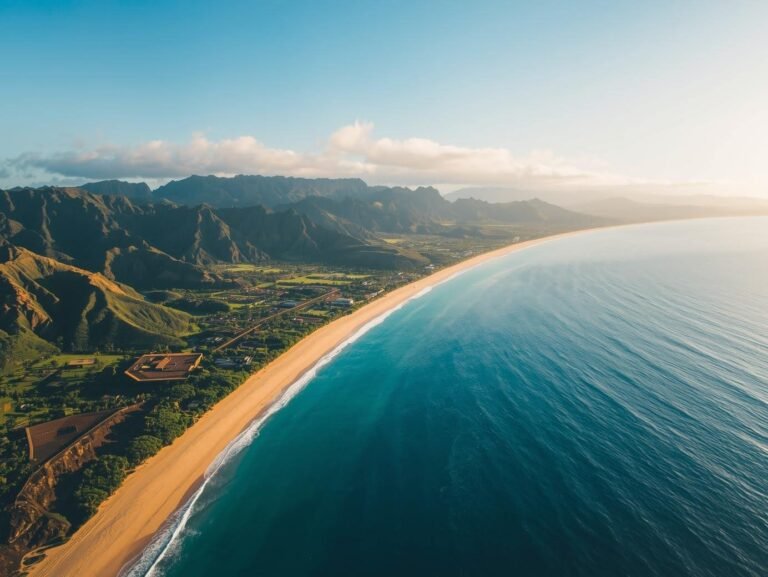
Kuilima Cove sits on the eastern side of Turtle Bay Resort at the northernmost point of Oʻahu, roughly an hour’s drive from Waikīkī via Kamehameha Highway. If you stand in front of the resort facing the ocean, the cove is the smaller bay to your right. The larger bay to your left is Turtle Bay itself, which looks tempting but is generally not good for swimming or snorkeling because the bottom near shore is rocky and the water is exposed to north swells.
The cove is easy to miss if you do not know to look for it. Drive through the resort’s main gates and follow the signs toward the hotel. The Kuilima Cove parking area sits on the right hand side near the tennis courts, marked with stalls designated for beach access. From there it is a short walk down to the sand. The whole approach takes only a few minutes, which is part of the cove’s charm: no long hike, no reservation system, no complicated logistics.
The Name Story: Kuilima, Turtle Bay, and Kalaeokaunu
The name on the resort sign has changed over the decades, and the cove’s name carries that history. The property opened in 1972 as Del Webb’s Kuilima Resort Hotel and Country Club, and the area was known as Kuilima long before that. The resort officially adopted the Turtle Bay name in 1983, taking it from the bay itself, which was named for the large numbers of green sea turtles that once hauled out and nested on its beaches.
The point of land between the two bays also has an older name: Kalaeokaunu, which refers to an altar that once stood on the point and was used by Hawaiian fishermen. Residents of the area have also called the cove Kalokoiki in the past, meaning “the little pool,” which is a fitting description of a sheltered pocket of water barely disturbed by the open ocean. Whatever name you use, the small cove on the east side of the point is the one swimmers and snorkelers mean when they talk about Turtle Bay’s calm water.
Why the Cove Stays Calm
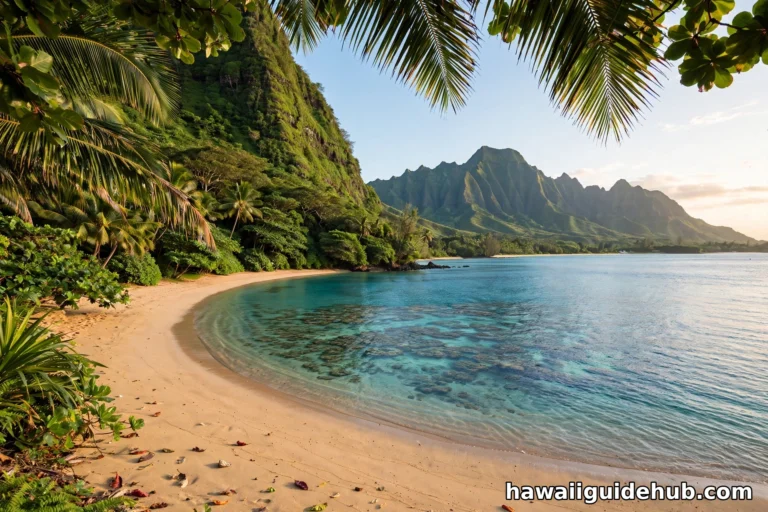
What makes Kuilima Cove special is geology. Natural volcanic rock jetties curve out from both sides of the cove, forming a crescent that absorbs the energy of incoming swells. Inside those arms, the water stays remarkably flat even on days when the surf is up along the rest of the North Shore. The sandy bottom near shore gives way to coral heads and reef patches a little farther out, and the whole protected bowl is small enough that you can see from one rocky arm to the other.
That protection has limits. During large winter north swells, surge can still push into the cove, and a strong rip current can run out of the cove mouth along the point during high surf. On those days, stay close to shore or pick a different beach entirely. But on a typical calm summer day, the cove lives up to its old nickname: a little pool, separated from the Pacific by walls of black rock.
Snorkeling at Kuilima Cove
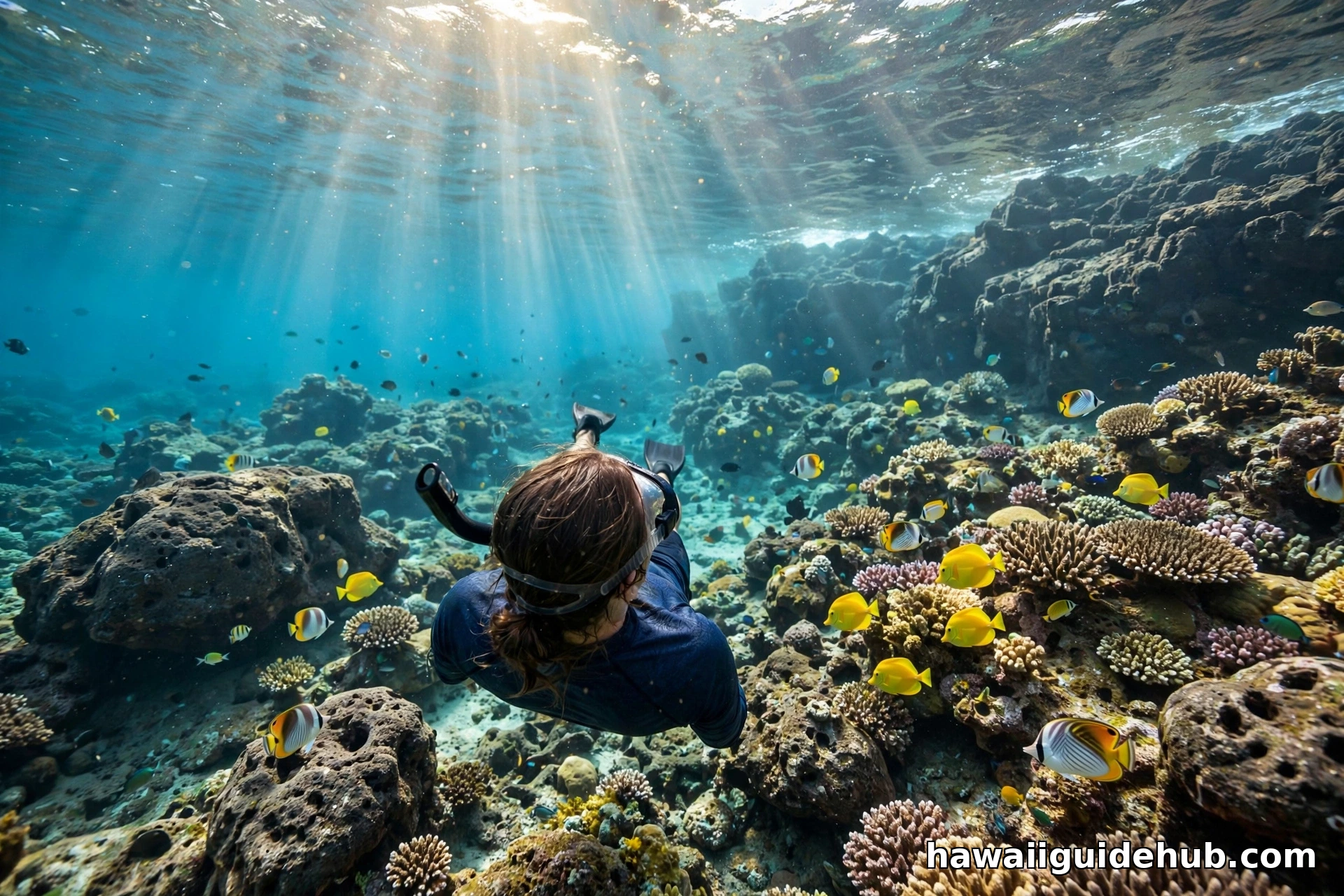
For many visitors, Kuilima Cove is their first real snorkeling experience in Hawaii, and it is an excellent place to learn. Wade in from the sandy middle of the beach and within a few steps you are floating over 4 to 10 feet of clear water. The reef starts close to shore, so you do not need to swim far to find fish. Swim out a little farther toward the larger coral formations for the best viewing; right at the waterline there is mostly sand.
Visibility is best on calm mornings before the afternoon trade winds stir things up. Because the cove is sheltered, it often stays swimmable on days when other North Shore spots are blown out, which is why locals recommend checking conditions here when the surf forecast looks rough elsewhere. Bring your own gear or rent from the resort area; either way, fit your mask properly before you walk in, because a leaking mask will ruin the experience faster than anything else.
Marine Life: Turtles, Fish, and Reef Residents
The reef at Kuilima Cove is livelier than its small size suggests. Patient snorkelers report butterflyfish, parrotfish, damselfish, surgeonfish, unicorn fish, moorish idols, tangs, wrasse, boxfish, triggerfish, goatfish, and porcupine fish, along with crustaceans and invertebrates tucked into the coral. Lucky visitors even spot the humuhumunukunukuapuaʻa, the reef triggerfish that once held the title of Hawaii’s state fish. The variety comes from the mix of habitats: sandy patches, coral heads, and rocky edges each host different residents.
The shallowness of the reef is both a blessing and a responsibility. In some areas the coral sits uncomfortably close to the surface, which means snorkelers need to float carefully and never stand on the reef. Coral is a living animal, and a single misplaced fin kick can destroy years of growth. The rule is simple: look, float, and leave everything untouched.
The Honu: Green Sea Turtles at Turtle Bay
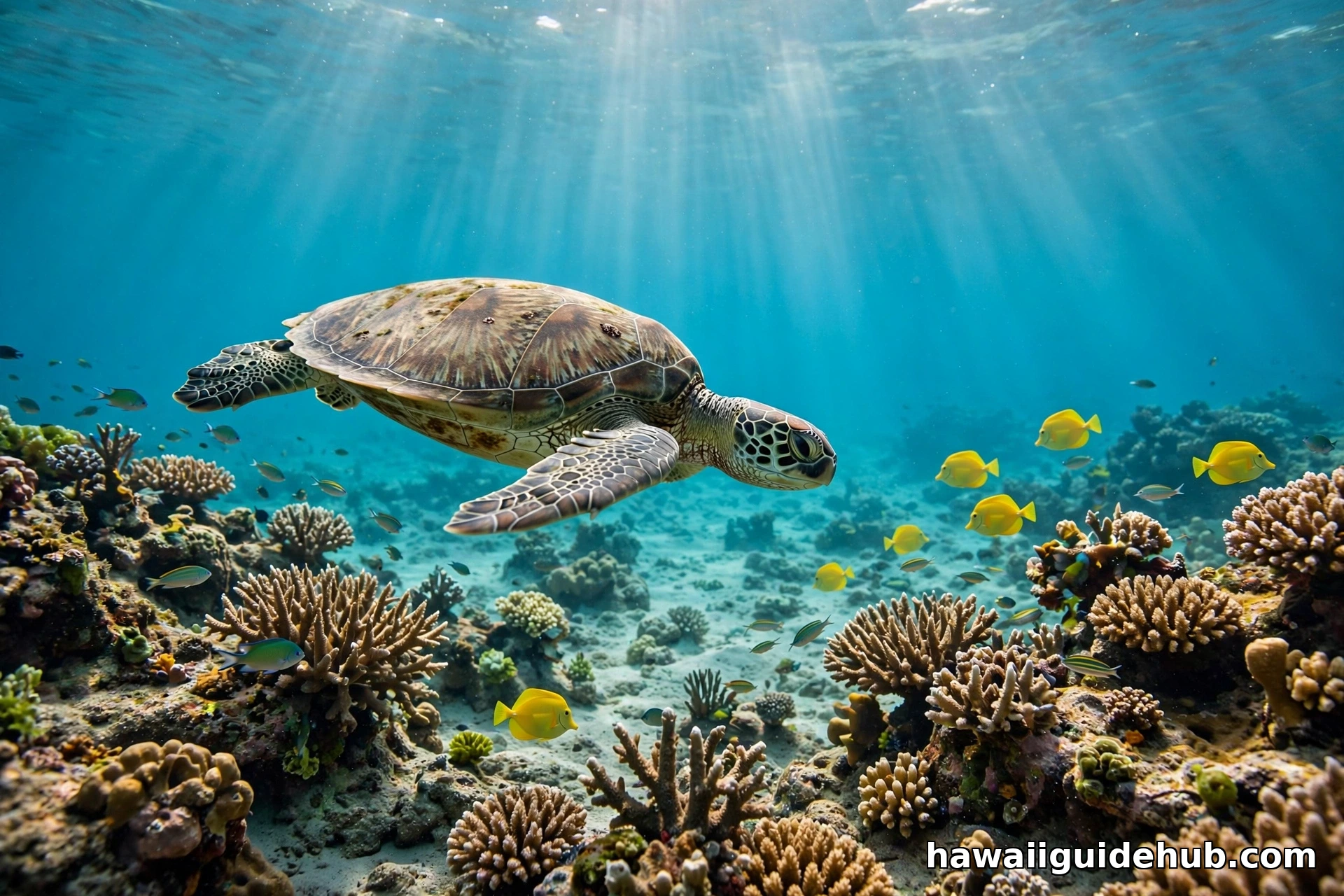
The turtles are the reason the larger bay got its name, and they still cruise through the waters around the point. Juvenile green sea turtles, known in Hawaiian as honu, are sometimes seen swimming near the reef edges inside Kuilima Cove itself, and adults are common in the waters just outside the rock arms. Seeing a honu glide past while you float motionless is one of those moments that defines a Hawaii trip.
Honu are protected under federal law, and the rules for watching them are strict for good reason. Stay at least 10 feet away, never chase or touch a turtle, and do not try to feed one. If a turtle swims toward you, stay calm and let it pass. For a deeper look at how to share the water respectfully, read our sea turtle etiquette guide before your visit.
When to Visit
Summer is the prime season at Kuilima Cove. From roughly May through September, the North Shore’s big winter swells are gone, the water inside the cove is at its calmest and clearest, and the sandy entry is easy for kids and beginners. Mornings are the best time of day: the water is glassiest, the parking lot is emptiest, and the reef fish are most active.
Winter visits are still possible but require more caution. When a north swell is running, surge enters the cove and the water near the rock arms gets rough. Check the surf forecast before driving up; if the North Shore is showing double overhead surf, plan a different activity or at least stay on the sand. The cove is at its most magical on those flat summer days when you can float over the reef and hear nothing but your own breathing.
Parking and Getting There
All beach access parking is inside the Turtle Bay Resort grounds. Drive in through the main gates, continue toward the hotel, and look for the beach access stalls on the right near the tennis courts. The lot is shared with resort guests, so it can fill up on weekends and holidays. Arriving before 9 a.m. is the surest way to get a spot close to the beach path.
From the parking area, follow the short path to the cove. The walk takes only a couple of minutes and is manageable for families with kids and beach gear. If the lot is full, have a backup plan: the North Shore has no shortage of beaches, and our North Shore guide covers the alternatives within a short drive.
Facilities and Amenities
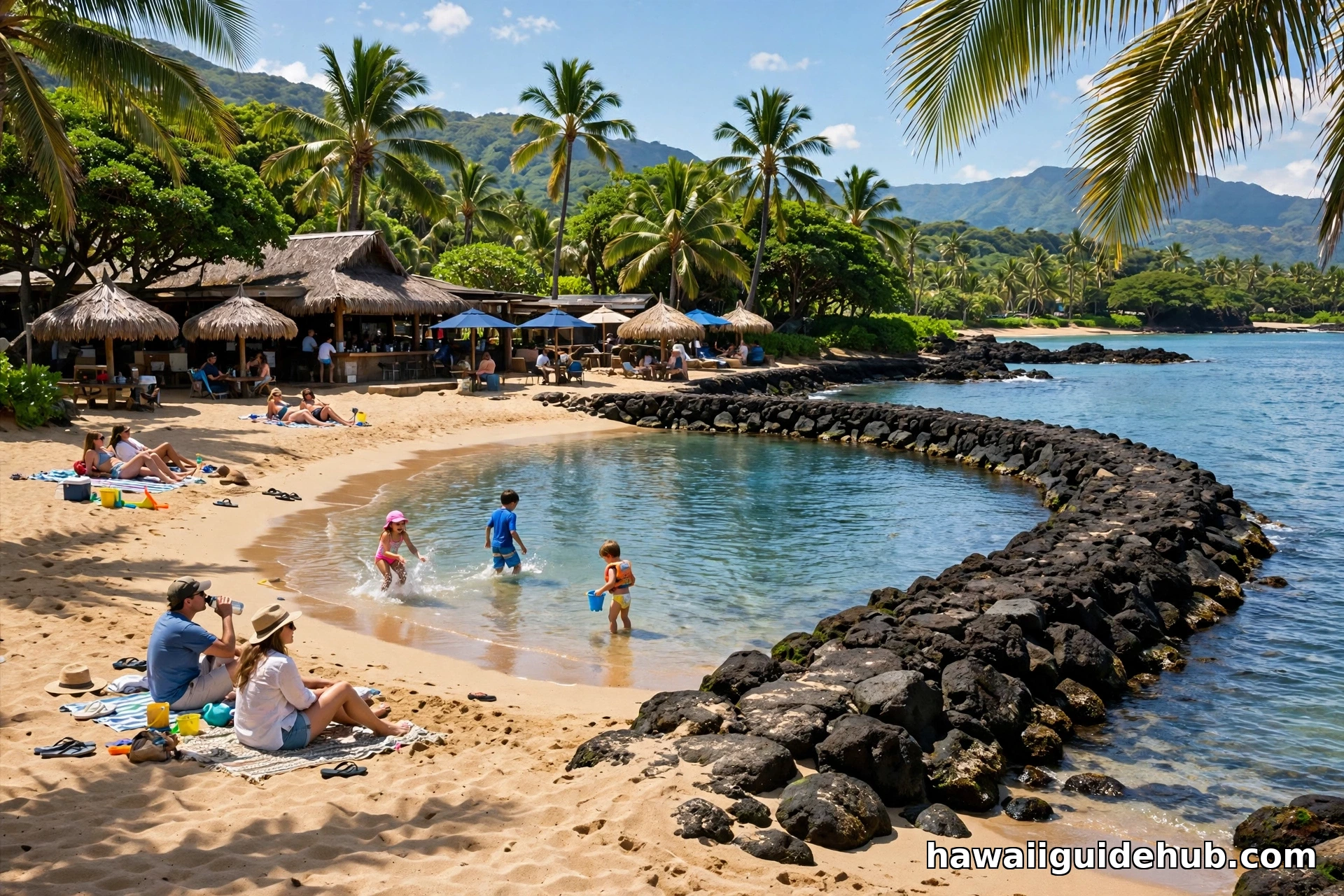
For a small cove, Kuilima is well equipped. Restrooms and outdoor beach showers sit near the sand, so you can rinse off the salt after your swim. A beach bar and grill operates right on the sand, serving drinks and casual food with your toes in the sand. Beach chairs and umbrellas are available to rent if you want more comfort than a towel.
One important gap: there is no lifeguard on duty at Kuilima Cove. That is standard for many of Oʻahu’s smaller beaches, but it means you are responsible for your own safety. Swim with a buddy, stay inside the protected cove, keep an eye on children at all times, and respect the ocean even when it looks calm.
Safety: What to Watch For
Kuilima Cove is one of the safer ocean entries on the North Shore, but “safer” is not the same as “safe.” The main hazards are the ones common to Hawaiian reefs everywhere. Black sea urchins hide in crevices in the reef and along the rock arms; their spines are painful and difficult to remove. Shuffle your feet when wading, avoid putting your hands on the reef, and consider reef shoes if you plan to explore.
The lava rock jetties that protect the cove are sharp, uneven, and full of holes that can turn an ankle. They look tempting to walk on, but they are dangerous underfoot and best admired from the water or the sand. During high surf, stay out of the cove mouth entirely, where the rip current runs strongest. And because there is no lifeguard, conservative judgment is the right call: if conditions look questionable, enjoy the beach and snorkel another day.
Beyond the Cove: Turtle Bay and Kawela Bay
Once you have had your fill of the cove, the surrounding coastline is worth exploring. The larger Turtle Bay to the west of the point has a rock edged entry and is better for watching surfers than for swimming; a longboard wave breaks off the point during swells and draws a regular crowd of onlookers. To the east, Kawela Bay offers a quieter, tree lined stretch of coast that feels a world away from the resort.
The resort sits on roughly 840 acres with about five miles of coastline and miles of walking trails, so a beach day can easily stretch into a coastal walk. If you are building a full North Shore itinerary, pair the cove with Shark’s Cove for a second snorkeling perspective, and browse our outdoor adventures in Hawaii for the hike or paddle that rounds out the day.
What to Bring
Pack like a local and the day goes smoothly. Reef safe sunscreen is required by Hawaii law and essential here, since you will be floating over shallow coral. A rash guard adds sun protection and a little warmth. Reef shoes help on the sandy entry and around the urchin dotted reef. Bring your own snorkel gear if you have it, plus towels, water, and snacks, because resort food prices run high. A waterproof bag for your phone and keys keeps the essentials safe while you swim.
See Kuilima Cove on Video
A Calm Corner of the North Shore
Kuilima Cove succeeds because it knows exactly what it is: a small, sheltered, honest little bay that does a few things very well. It gives beginners a safe place to learn, families a calm place to swim, and snorkelers a reef full of color within a short drive of Waikīkī. It does not pretend to be a wilderness adventure or a surf break. Pair it with an early arrival, a calm summer morning, and a respectful attitude toward the reef and the honu, and you will understand why so many visitors call it their favorite swim on Oʻahu. For more of what swims beneath the surface, explore our guide to Hawaii’s marine life before you go.