Hawaii Grocery Shopping Guide: Where to Shop and How to Save

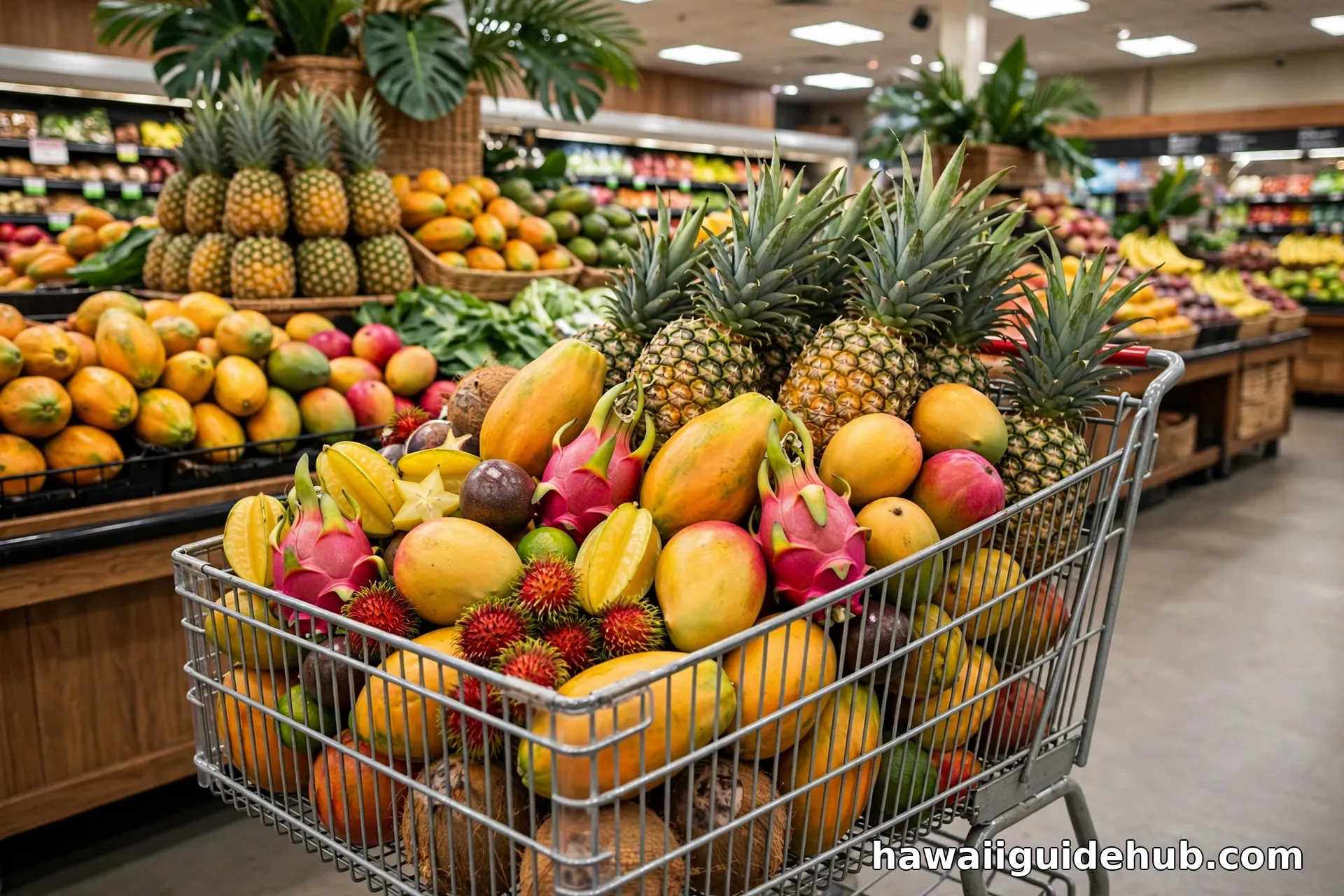
Grocery shopping in Hawaii is a culture shock with a receipt. An estimated 85 to 90 percent of the state’s food arrives by ship or plane, and prices reflect every mile of that journey. A gallon of milk can cost twice what you pay at home. But visitors who shop strategically eat well for far less than restaurant prices: the islands have excellent local chains, warehouse clubs, farmers markets, and roadside stands, each with a distinct role in a smart shopping plan.
This is the single complete Hawaii grocery shopping guide. It covers where to shop on each island, what everything costs in relative terms, the loyalty cards worth getting, what to buy versus what to bring from home, farmers markets and roadside stands, and FAQs. Everything about grocery shopping in Hawaii lives on this one page.
Where to Shop: Best For / Skip If
No single store does it all in Hawaii. Match the store to the mission.
| Store | Best for | Skip if | Price level |
| Costco | Bulk staples, snacks, drinks, and beach supplies for a week-plus stay | You are here under 5 days or have no storage space | $ (bulk value) |
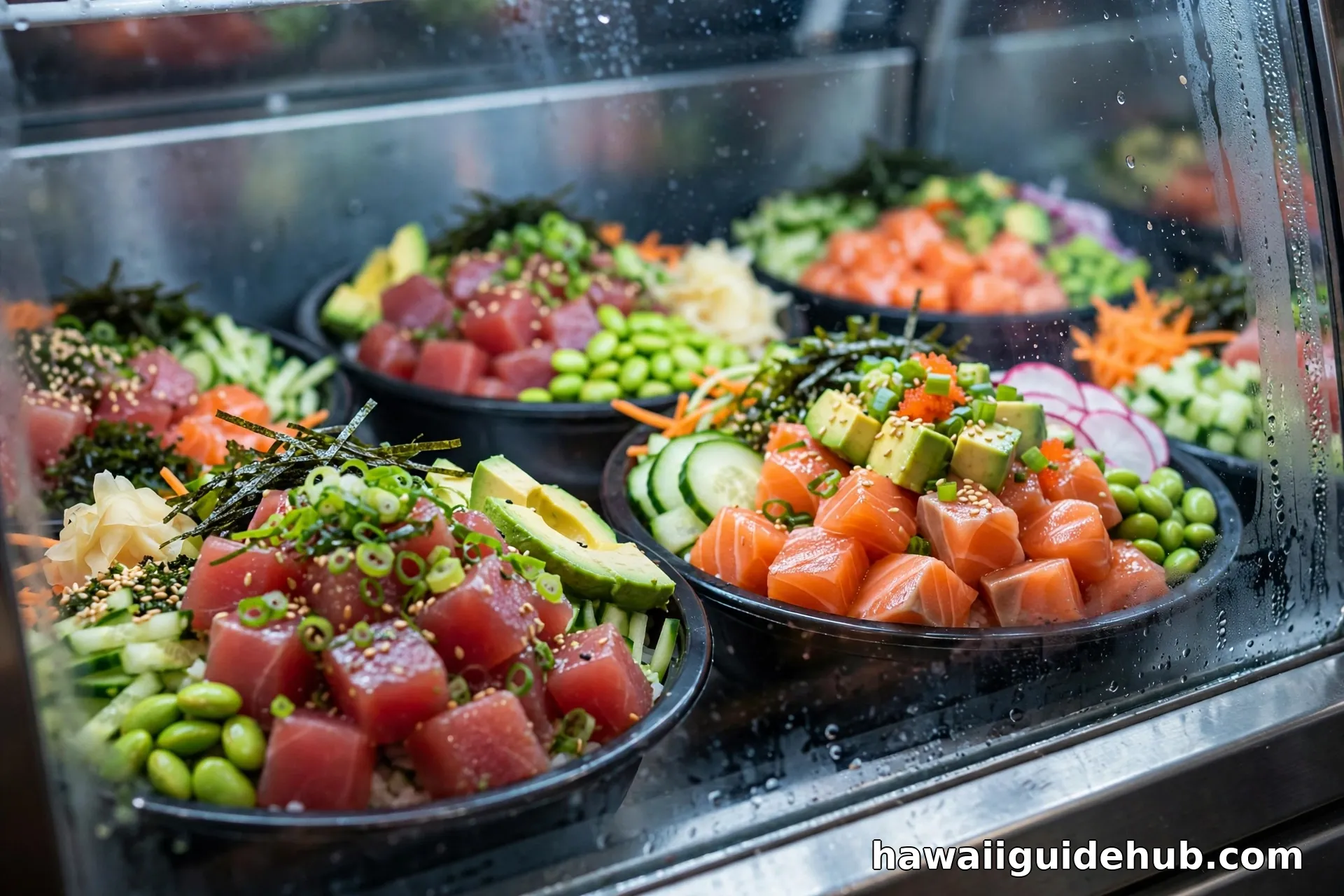
| Foodland / Sack N Save | Local groceries, fresh poke bowls, island snacks | You want the absolute lowest price on basics | $$ |
| Safeway / Times | Mainland-style one-stop shopping with loyalty-card deals | You dislike signing up for a store card | $$ |
| Don Quijote (Oahu) | Bargain hunting, poke, and Japanese groceries in Honolulu | You are not on Oahu | $ |
| Walmart / Target | Pantry staples, sunscreen, and beach gear in one trip | You want fresh local produce and seafood | $ |
| Farmers markets | Tropical fruit, local produce, prepared foods, community vibe | You expect supermarket prices on everything | $$-$$$ |
| Roadside stands | Peak-season fruit at the lowest prices, straight from farms | You need a full grocery run | $ |
| ABC Stores | Emergency snacks and drinks near the beach | You are doing real grocery shopping | $$$ |
Price levels are relative to each other within Hawaii, not to the mainland: even the “$” options cost more than you are used to. The winning pattern for most visitors is a Costco or Walmart run on arrival day for bulk goods, plus Foodland or a farmers market mid-week for fresh local food.
The Loyalty Cards Worth Five Minutes
Hawaii’s grocery chains run loyalty programs that genuinely cut prices, and visitors can use them. At Safeway, the loyalty discount can be activated with just a phone number at checkout, no card needed. Foodland’s Maika’i program (shared with Sack N Save) offers member pricing on weekly specials; signing up takes minutes in-store or online. Times Supermarkets runs its own program similarly. These discounts stack with sale prices and routinely cut 20 to 50 percent off featured items, which matters when a box of cereal costs what it does here. There is no reason to pay full price as a matter of principle.
Buy in Hawaii vs. Bring From Home
Luggage space is a grocery strategy. Some things are dramatically cheaper or better on the mainland; others you can only get here.
| Bring from home | Why | Buy in Hawaii | Why |
| Spices and specialty seasonings | Tiny, light, and expensive per ounce in Hawaii | Fresh poke and local fish | Cheaper, fresher, and unavailable at home |
| Protein bars and snacks | Big mainland price advantage, no spoilage | Tropical fruit in season | Pineapple, papaya, and mango at peak ripeness |
| Reef-safe mineral sunscreen | Better selection and prices at home | Poi, lomi salmon, local snacks | The island food experience itself |
| Reusable shopping bags | Hawaii bans single-use plastic bags; bring your own | Kona or Kauai coffee | Fresher and often cheaper at the source |
| Kids’ favorites and formula | Avoid the island markup on must-haves | Portuguese sausage and local treats | Part of eating like a local |
TSA rules apply as usual: solid foods fly fine in carry-ons, and checked bags handle the rest. Do not pack fresh produce into Hawaii: agricultural inspections restrict it, and the islands grow their own anyway.
Farmers Markets and Roadside Stands
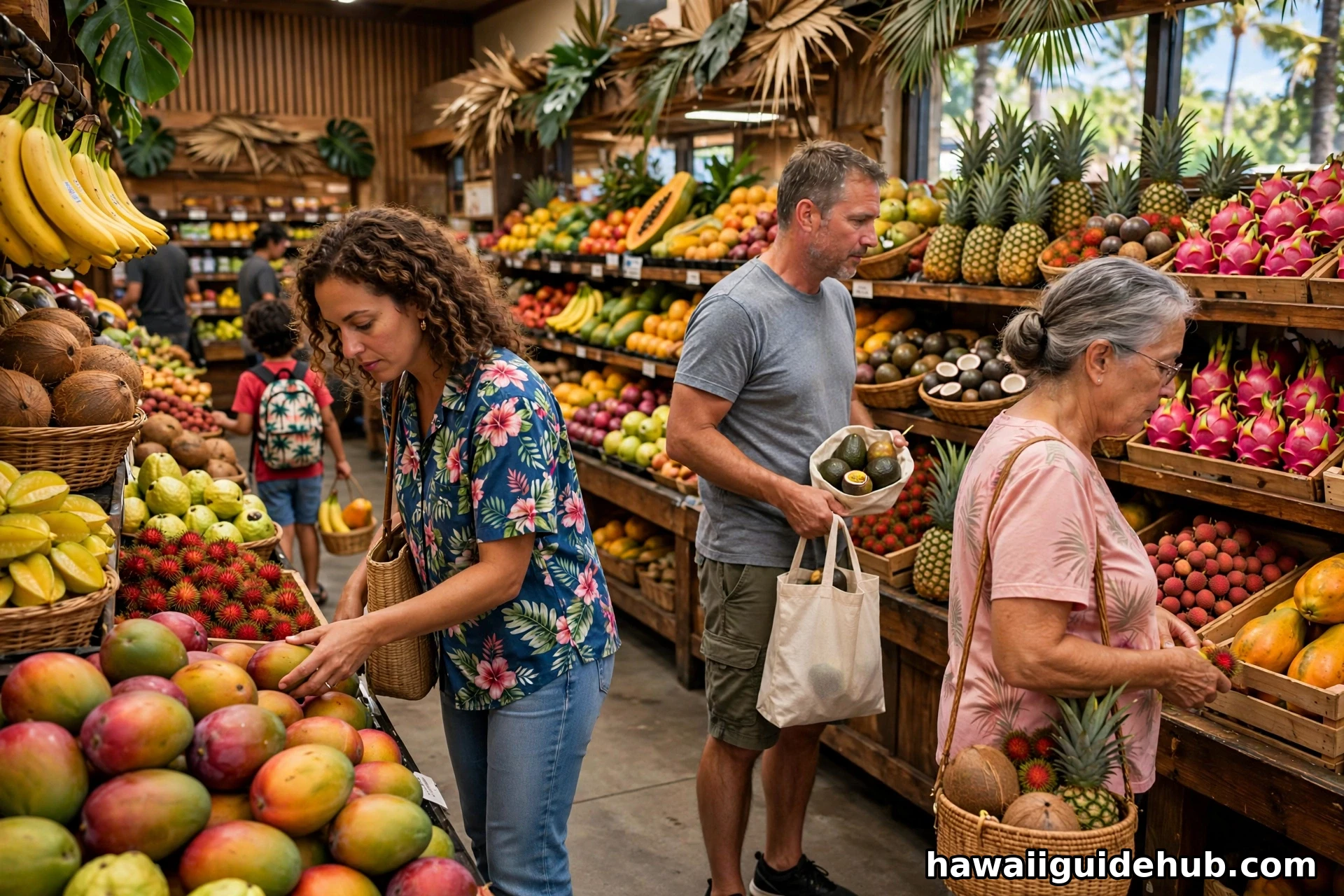
Hawaii’s farmers markets run year round, a mainland rarity that visitors should exploit. The KCC Farmers Market in Honolulu on Saturday mornings is the flagship: dozens of vendors, prepared foods, and produce at its peak. Every island has its own circuit of weekly markets; hotel concierges and visitor brochures list the current schedules, which shift seasonally.
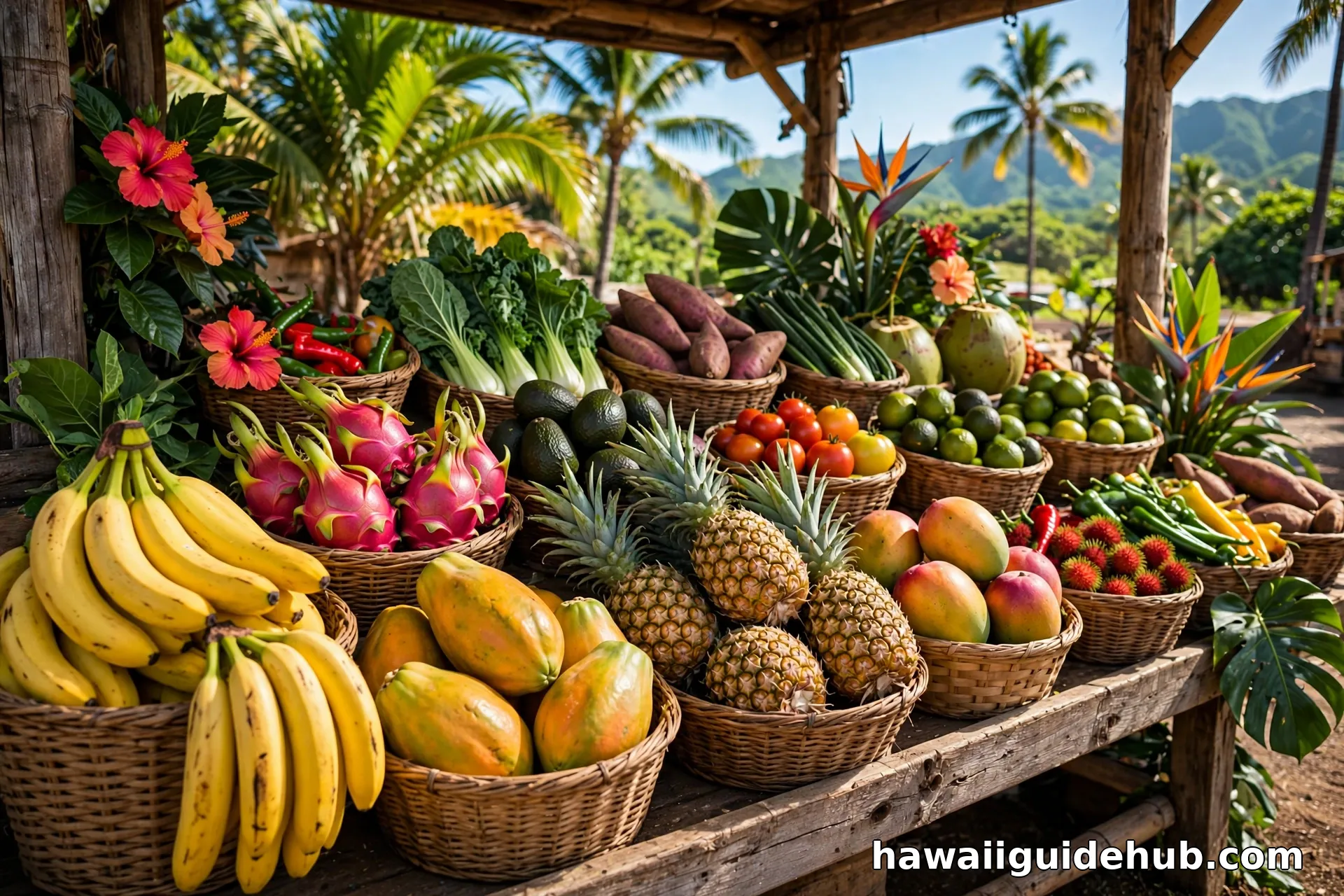
Roadside stands are the insider’s produce aisle. Trucks and stands along rural roads sell whatever is ripe: mangoes, rambutan, apple bananas, avocados, often at a fraction of supermarket prices. Carry cash in small bills. One caution from longtime residents: some market vendors resell imported produce at local prices, so a little buyer awareness helps. When a stand is clearly farm-direct, the quality and value are unbeatable.
For the deeper story of what to eat once you have shopped, see our guide to must-try local dishes across Hawaii, plus our features on lomi lomi salmon and huli huli chicken.
The First-Day Stock-Up Strategy
Shop on arrival day, before the beach. Land, get the rental car, and drive straight to your big store: Costco or Walmart for the bulk run. Buy breakfast supplies for the week, lunch fixings, snacks, drinks, sunscreen, and any beach gear you did not pack. This single trip typically replaces three or four restaurant meals per day with condo meals, which is where the real savings live: a family that eats breakfast and lunch in pays for the vacation’s best dinner out with the difference.
Mid-week, do a fresh top-up at Foodland or a farmers market: poke for dinner, tropical fruit, bread, and anything you underestimated. This two-trip rhythm keeps food fresh without daily store runs eating your beach time. If your condo has a grill, one barbecue night with local fish or chicken is both a money-saver and a trip highlight.
Island-by-Island Notes
Oahu
Oahu has the most options: Don Quijote in Honolulu for bargains, Foodland and Safeway everywhere, Costco in Kapolei and Honolulu, and the KCC market on Saturdays. Waikiki itself has small grocery stores with tourist pricing: walk a few blocks out of the tourist core or drive to a full supermarket instead.
Maui
Costco in Kahului is the classic arrival-day stop before driving to the resort areas. Foodland and Safeway cover the west and south sides. Upcountry farmers markets and roadside stands along the slopes of Haleakala offer the island’s best produce.
Kauai
Costco in Lihue anchors the arrival shop. Smaller towns rely on Foodland-affiliated stores and local markets with higher prices and thinner selection: stock up before heading to the north shore or the west side, where options narrow.
Big Island
Costco in Kona and a Walmart nearby handle the west side; Hilo has the island’s best everyday prices on the east side. The Kona side’s resort areas have boutique markets with steep markups: drive the extra ten minutes to a real supermarket.
What Groceries Actually Cost: The Honest Picture
Visitors deserve specifics, so here is the honest shape of Hawaii grocery pricing in relative terms. Dairy is the shock category: milk, cheese, and yogurt routinely cost double or more what mainland shoppers pay, because they are heavy, perishable, and shipped cold. Bread and cereal run noticeably higher. Eggs swing with supply but trend high. Meat and chicken cost more per pound, though local fish at the deli counter is often the best protein value in the store.
Produce splits in two. Imported mainland produce, berries, apples, stone fruit, costs a premium and often arrives tired from the journey. Local tropical produce in season is the bargain of the store: pineapples, papayas, mangoes, and bananas at prices that make mainland shoppers jealous. The rule writes itself: eat what grows here now, and skip what flew further than you did. Pantry goods, canned foods, rice, and pasta sit in the middle: higher than home, but not dramatically, especially at warehouse clubs.
One more pricing truth: the gap between the cheapest and most expensive option for the same item is wider in Hawaii than on the mainland. The store brand at Walmart versus the resort-area boutique market can differ by multiples, not percentages. Ten minutes of driving to the right store routinely saves more than any coupon.
Condo Kitchen Essentials for the Week
A well-stocked condo kitchen turns a rental into a money-saving machine, but only if you buy the right things on day one. Beyond food, grab the unglamorous supplies: cooking oil, salt, pepper, and a basic spice or two if you did not pack them, dish soap, sponges, trash bags, and paper towels. Condos provide cookware but rarely restock consumables, and buying a tiny bottle of oil at a resort shop costs triple the supermarket price.
For food, think in meal templates rather than recipes. Breakfast template: eggs, bread or bagels, fruit, cereal, coffee. Lunch template: sandwich fixings or poke bowls plus fruit. Dinner template, three or four nights: pasta with sauce, tacos with local fish, grilled chicken with rice, and one barbecue night. Snacks: the bulk bags from the arrival run. Drinks: the big win is buying water and drinks in bulk rather than one bottle at a time from beach shops. This is not gourmet cooking; it is vacation fuel that frees the budget for the dinners that matter.
Watch: Grocery Shopping Island Style
Hawaii Grocery Shopping FAQs
Why are groceries so expensive in Hawaii?
Because an estimated 85 to 90 percent of Hawaii’s food is imported by ship or plane, and every mile adds cost. Limited local farmland, high commercial rents, and Jones Act shipping rules all contribute. Shopping strategically, warehouse clubs plus local markets, offsets much of the premium.
Is Costco worth it for a one-week Hawaii trip?
For most families and groups, yes. A single arrival-day Costco run covering breakfasts, lunches, snacks, drinks, and supplies typically saves hundreds over a week compared to eating out or buying the same goods at resort-area stores. Solo travelers and couples on short trips may do better with Foodland and farmers markets.
Can visitors use Safeway and Foodland loyalty cards?
Yes. Safeway’s discount works with just a phone number at checkout, and Foodland’s Maika’i program accepts visitor sign-ups in minutes. There is no residency requirement, and the savings on sale items are substantial.
Are farmers markets cheaper than supermarkets in Hawaii?
Sometimes. In-season fruit and farm-direct produce at roadside stands are often the cheapest option. But some market vendors charge premium prices, and a few resell imported produce. Markets win on freshness, variety, and experience; supermarkets win on staples and consistency. Use both.
What should I cook in a Hawaii condo?
Keep it simple: breakfasts (eggs, fruit, cereal), packed lunches (sandwiches, poke bowls), and a few easy dinners (grilled fish, pasta, tacos). Save restaurant budgets for dinners out, where Hawaii’s food scene shines. One grocery run plus one mid-week top-up covers a week.
Do I need to bring reusable bags?
Bring them or buy them there. Hawaii bans single-use plastic bags at checkout, so you will be buying reusable bags otherwise. They double as beach totes, making them the rare souvenir that pays for itself daily.
Shop Smart, Eat Well
Hawaii grocery shopping rewards a simple formula: bulk up on arrival day, buy fresh and local mid-week, sign up for the loyalty cards, and let farmers markets and roadside stands supply the island flavor. The sticker shock is real, but so are the workarounds, and visitors who shop like locals eat better than visitors who eat out three times a day. For the bigger cost picture, see our guide to how expensive Hawaii really is. Then go find the poke counter, grab a pineapple that was picked this week, and enjoy the most underrated part of the trip: eating well in paradise without the restaurant bill. Happy shopping.