How Humid Is Hawaii?

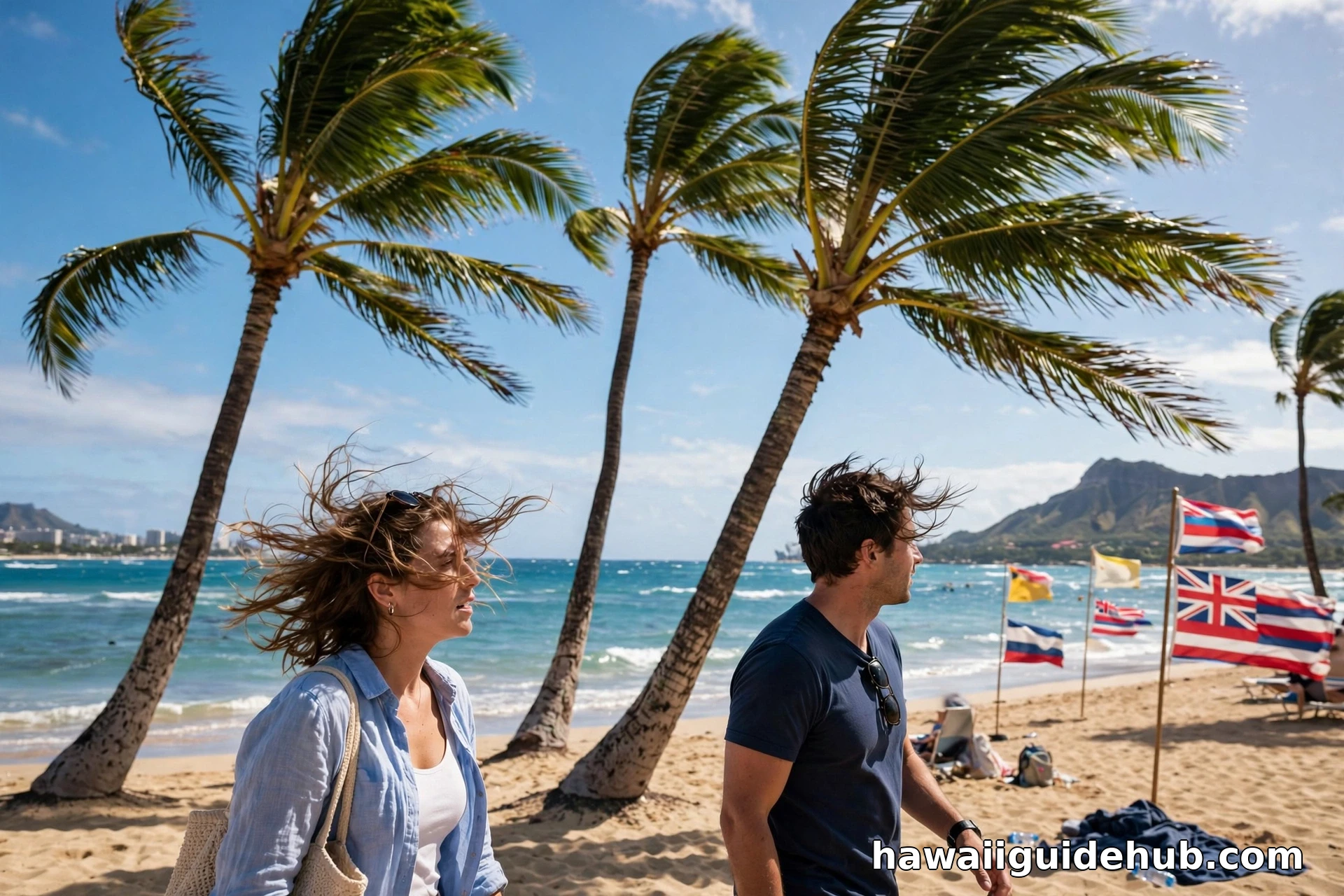
Yes, Hawaiʻi is humid. It is a chain of tropical islands in the middle of the Pacific, so moisture in the air is a given. But the number on a weather app does not tell the real story. Hawaiʻi humidity, most of the year and in most resort areas, feels nothing like the heavy, still air of a Gulf Coast or Southeast Asian summer. The reason is one word: wind. The trade winds stir the air almost daily, and they turn what could be oppressive heat into the climate people write songs about.
This guide explains exactly how humid Hawaiʻi is, in numbers you can compare with home, and then explains why it feels better than the numbers suggest. It covers the differences between islands and between neighborhoods, the most and least humid months, the muggy exception called Kona wind weather, and how to dress and plan so humidity never gets in the way of your trip.
The Short Answer: Humid, But Almost Always Moving
In Honolulu, average relative humidity sits in the 60s as a percentage across the year, typically higher in the early morning and lower by mid afternoon when the air warms. Dew points, the number meteorologists trust more, usually run in the mid 60s Fahrenheit and climb toward 70 degrees on the most tropical days of late summer. For comparison, a dew point in the mid 60s feels noticeably moist but comfortable to most people, while the mid 70s dew points common in Houston or Miami in August feel truly heavy. Hawaiʻi almost never reaches that second tier, and its ocean breeze arrives on schedule.
| Measure | Typical Hawaiʻi range | What it feels like |
| Daytime temperature | Low to high 80s Fahrenheit at sea level | Warm, rarely extreme |
| Relative humidity | About 55 to 75 percent most days | Moist air, softened by breeze |
| Dew point | Mid 60s, near 70 in late summer | Tropical but usually pleasant |
| Trade winds | About 10 to 20 miles per hour on breezy days | Natural air conditioning |
| Ocean temperature | About 75 to 82 degrees Fahrenheit | Comfortable swimming all year |
Why Hawaiʻi Humidity Feels Better Than It Reads
The trade winds blow out of the northeast and east, pushed by a high pressure system that parks itself north of the islands for much of the year. As that moving air crosses the mountains of each island, it rises, cools, and drops much of its moisture as brief windward showers. By the time the same air descends on the leeward side, where most resorts sit, it is warmer, drier, and still moving. That constant circulation is the whole secret. Stagnant humid air feels miserable. Humid air in motion feels like a beach.
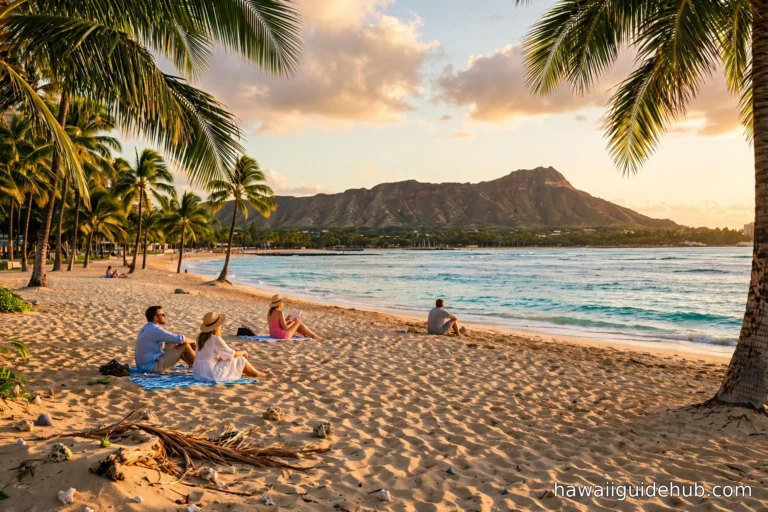
The National Weather Service forecast office in Honolulu builds its daily forecasts around this pattern: trade wind showers favor windward and mountain areas, mostly at night and in the early morning, while leeward beaches stay sunnier and drier. It is why you can watch clouds stream over the Koʻolau ridge above Honolulu while Waikīkī, just a few miles away in the rain shadow, sits in sunshine with a flag snapping breeze.
The Exception: Kona Wind Days
A few times a year the pattern flips. Winds swing around to the south, the so called Kona winds, and the islands get the humid, still, hazy version of Hawaiʻi weather. Temperatures feel higher, the air feels heavy, volcanic haze called vog can drift up from Kīlauea on Hawaiʻi Island, and afternoon showers build over leeward slopes instead of windward ones. Kona wind spells are most common in the cooler months and usually last a few days. If your trip lands in one, mornings are your friend: the air is freshest early, and the ocean is calmest then too.
Humidity by Island and by Neighborhood
The single biggest mistake visitors make is treating Hawaiʻi humidity as one number. It is really a map. Windward sides face the trades and catch the moisture. Leeward sides sit in the rain shadow and run drier. Hilo, on the windward side of Hawaiʻi Island, receives well over 100 inches of rain in an average year and feels lush and humid most days. Kailua Kona, on the same island leeward coast, gets a small fraction of that rain and feels almost desert like at midday. You can drive between two different climates in about two hours.
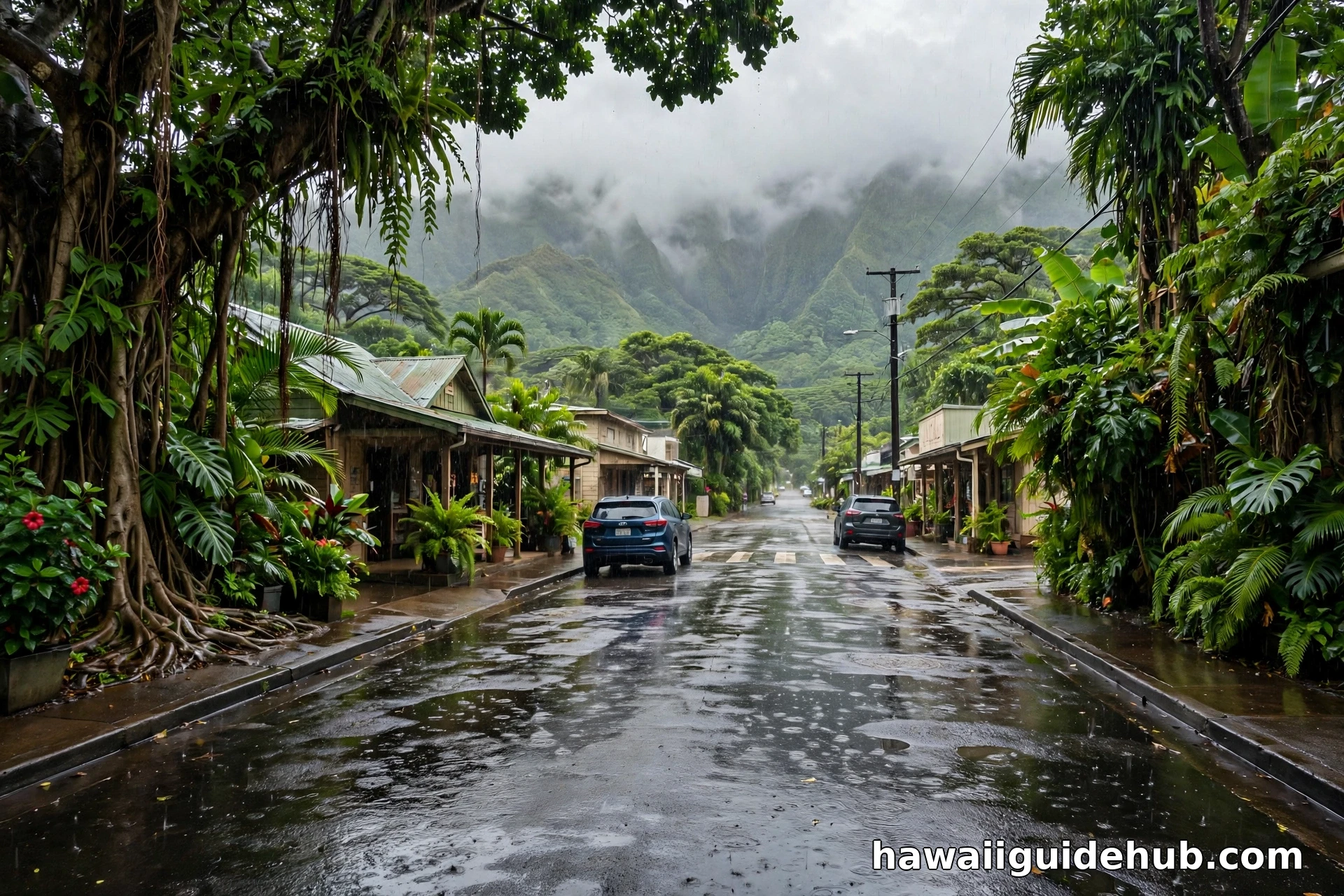
The same split repeats everywhere. On Oʻahu, Kāneʻohe and Kailua on the windward side feel greener and more humid than Waikīkī and Ko Olina. On Maui, Hāna is rainforest humid while Kīhei and Wailea are among the driest resort areas in the state. On Kauaʻi, the north shore around Hanalei is famously wet, while Poʻipū on the south shore markets itself on sunshine. Elevation changes everything too: climb a few thousand feet into upcountry Maui or Waimea on Hawaiʻi Island and the air turns crisp, sometimes even chilly at night, humidity forgotten. Our month by month guides to weather in Hawaii in June and Hawaii weather in July show how these patterns play out across the summer.
The Most and Least Humid Times of Year
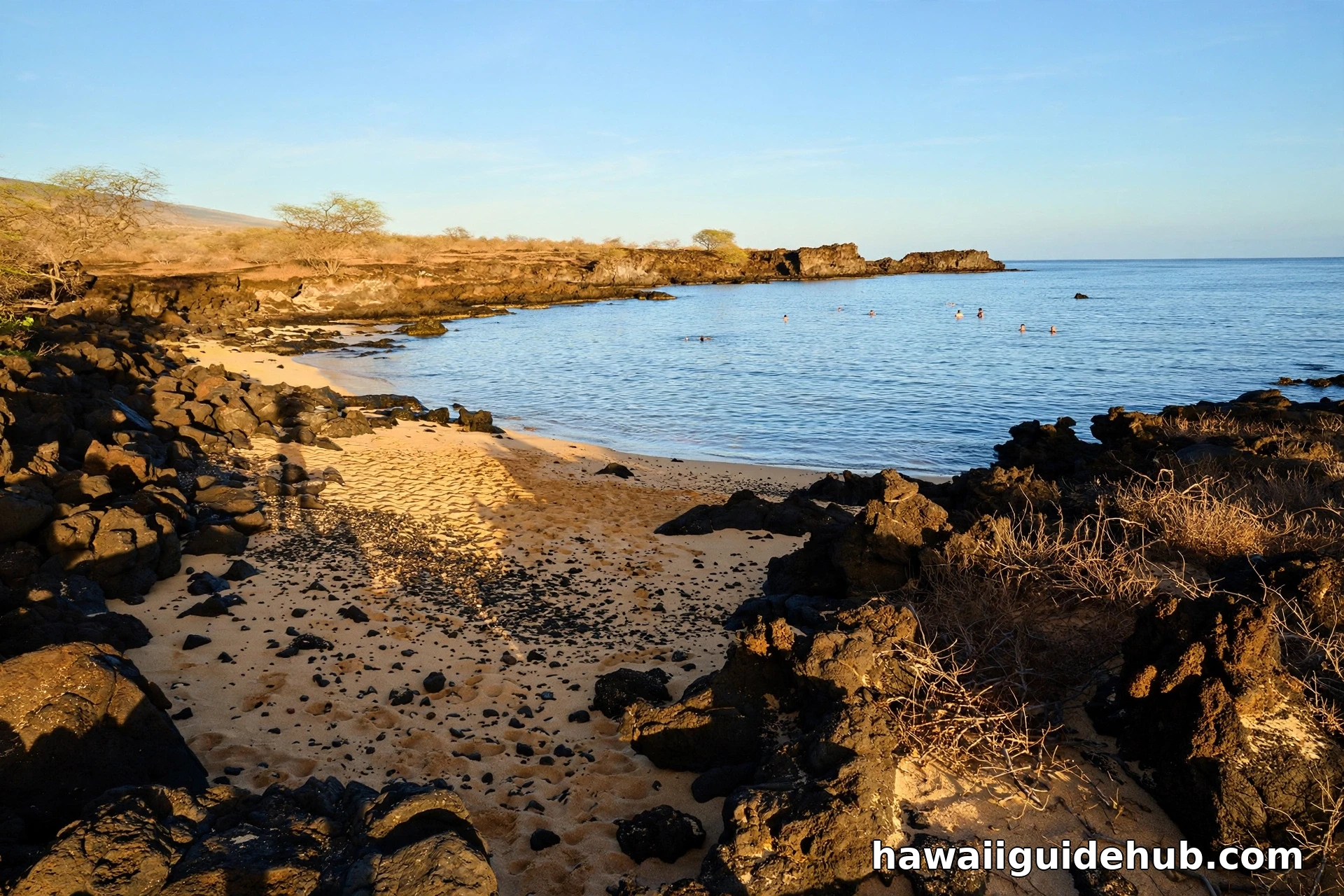
Hawaiʻi seasons are gentle, but humidity does breathe in and out across the year. Late summer into early fall, roughly August through October, is the warmest and most humid stretch. Ocean temperatures peak near 82 degrees Fahrenheit, dew points ride highest, and the trades occasionally falter, which is why Hawaii in September feels like true midsummer tropics. This is also the heart of the Central Pacific hurricane season, which the National Weather Service dates from June 1 through November 30, although direct impacts on the islands remain uncommon.
Late winter and spring feel the freshest. From February through May, temperatures ease a few degrees, the dew point slips, and the returning trades keep the air washed and moving. Many residents quietly call this the best feeling weather of the year. The rainiest months for windward areas are usually November through March, when passing fronts add to the trade showers, yet leeward resorts often stay dry and breezy straight through the wet season. Rain and humidity, in other words, do not move together the way visitors expect.
How Humidity Will Actually Affect Your Trip
For most visitors the effects are small and manageable. Hair goes wavy. A shirt worn on a windward hike comes home damp. Camera lenses fog when you step out of an air conditioned car at a humid trailhead, a classic Hawaiʻi moment that clears in a few minutes. Sunscreen sweats off faster than at home, so reapply after swimming and long walks. Paper maps curl, leather goods can mildew in a closed condo, and anything you hang to dry on a windward lanai may still be damp at breakfast. None of this ruins trips. It just rewards a little planning.

The one effect to respect is exertion. Humid air slows the body cooling system, so hikes that look easy on a map feel harder here, especially the exposed ridge and valley trails described in our guide to hiking in Kauaʻi. Start hikes early, carry more water than you think you need, and treat midday sun on an unshaded trail as a genuine hazard rather than a discomfort. Heat illness sends visitors to Hawaiʻi clinics every year, and it almost always involves the same recipe: noon, no breeze, not enough water.
What to Pack for Hawaiʻi Humidity
Pack for moving air and quick drying. Choose linen, lightweight cotton, and modern moisture wicking fabrics over anything heavy or structured. Bring two swimsuits so one is always dry. A packable rain jacket earns its space on windward excursions, while a light layer handles air conditioned restaurants and high elevation stops like the Haleakalā summit, where temperatures can drop into the 30s and 40s Fahrenheit. Leave the denim at home: once humid denim gets wet, it stays wet. Reef safe sunscreen, a real hat, and a small dry bag for your phone round out the humidity kit.
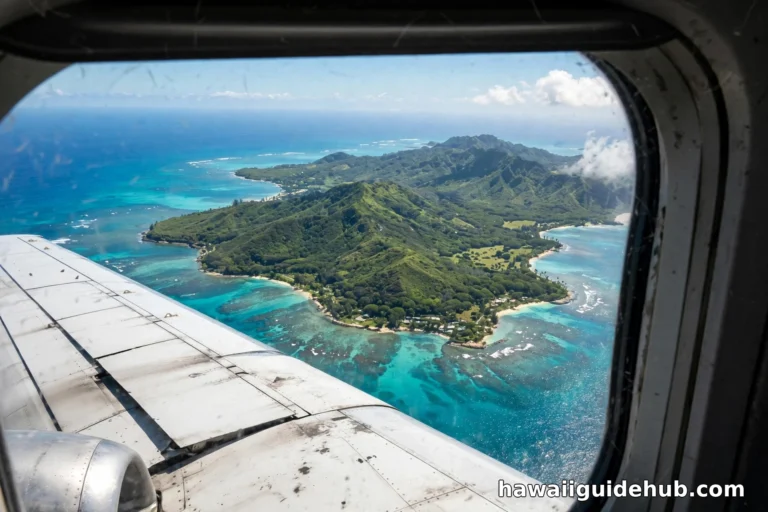
A Maui meteorologist explains trade wind weather from the air, including why windward slopes get the rain.
Humidity at Elevation and Indoors
One of the pleasures of Hawaiʻi is how quickly you can change your personal climate. Air cools by roughly 3 degrees Fahrenheit for every 1,000 feet you climb, and humidity falls with it. A beach morning at 86 degrees can become an afternoon in Waimea, Volcano, or Kula at 70 degrees with air that feels almost mainland crisp. Sleep high or sleep with the trade winds and you may never switch on the air conditioning. Indoors, most hotels and condos run air conditioning that keeps rooms in the comfortable range, although lanai doors left open all day will let the tropical air, and its moisture, move right in.
That vertical escape also explains a local habit that puzzles visitors: Hawaiʻi residents own light jackets and actually use them. A dinner in upcountry Maui after a beach day can feel genuinely cool, and summit areas are another world entirely. The visitor centers in Hawaiʻi Volcanoes National Park sit near 4,000 feet, where evenings call for layers even in August. Humidity, in other words, is a sea level story here, and the islands give you a dial to turn whenever you want less of it.
Small Comforts That Make a Big Difference
Experienced Hawaiʻi travelers build tiny humidity habits. They schedule the big hike for the first morning hours, keep the beach for the trade wind afternoon, and save museums, shopping, and long lunches for the stillest part of a Kona wind day. They rinse off after the ocean, because salt plus humidity keeps skin sticky, and they change out of a damp shirt before dinner rather than letting it ride. A second set of sandals, a microfiber towel in the day pack, and a hotel room balcony chair reserved for drying swimwear all sound trivial at home and feel like genius by day three.
None of this is hardship management. It is simply how a tropical island rewards people who work with its rhythm instead of against it. The humidity grows the plumeria, feeds the waterfalls, and softens the light at sunset. In exchange it asks for light clothing, an early start, and a little respect at noon. Most visitors find that trade more than fair by the end of the first full day.
Frequently Asked Questions
Is Hawaii humid all year round?
Yes, Hawaiʻi is humid in every month, because it is a tropical ocean climate. But the feel changes: late winter and spring are the freshest months, while August through October are the warmest and most humid. The trade winds keep even humid days comfortable most of the time.
Which Hawaii island is the least humid?
The leeward coasts are the driest on every island. The least humid resort areas overall are the Kona and Kohala coasts of Hawaiʻi Island and the Wailea and Kīhei coast of Maui. If low humidity matters most, stay leeward and let the rain shadow work for you.
Is Hawaii more humid than Florida?
Generally, no. Summer dew points in Florida regularly climb into the mid and upper 70s Fahrenheit, a level Hawaiʻi rarely reaches. Hawaiʻi humidity is steadier across the year, while Florida humidity is more extreme in summer and milder in winter. Most visitors from the Southeast find Hawaiʻi noticeably more comfortable.
What is the humidity in Hawaii in summer?
Summer relative humidity typically runs from the upper 50s in the afternoon to the mid 70s in the early morning in leeward areas, with dew points in the upper 60s. Combined with highs in the upper 80s and steady trade winds, it feels like classic beach weather rather than a sauna.
Does humidity make Hawaii feel hotter than the temperature?
On still days, yes, the heat index can run several degrees above the air temperature. On normal trade wind days the breeze cancels most of that effect at the beach. You feel the gap most in sheltered valleys, windward towns during Kona winds, and on unshaded midday hikes.
So, how humid is Hawaiʻi? Humid enough to keep the islands emerald, humid enough that your hair will have opinions, and, thanks to the most reliable breeze in the Pacific, rarely humid enough to slow a well planned day. Come in light fabrics, chase the windward waterfalls in the morning and the leeward beaches in the afternoon, and the same moisture that grows the rainforest will feel like part of the welcome.