Hawaii Drone Rules for Visitors: Where You Can and Cannot Fly

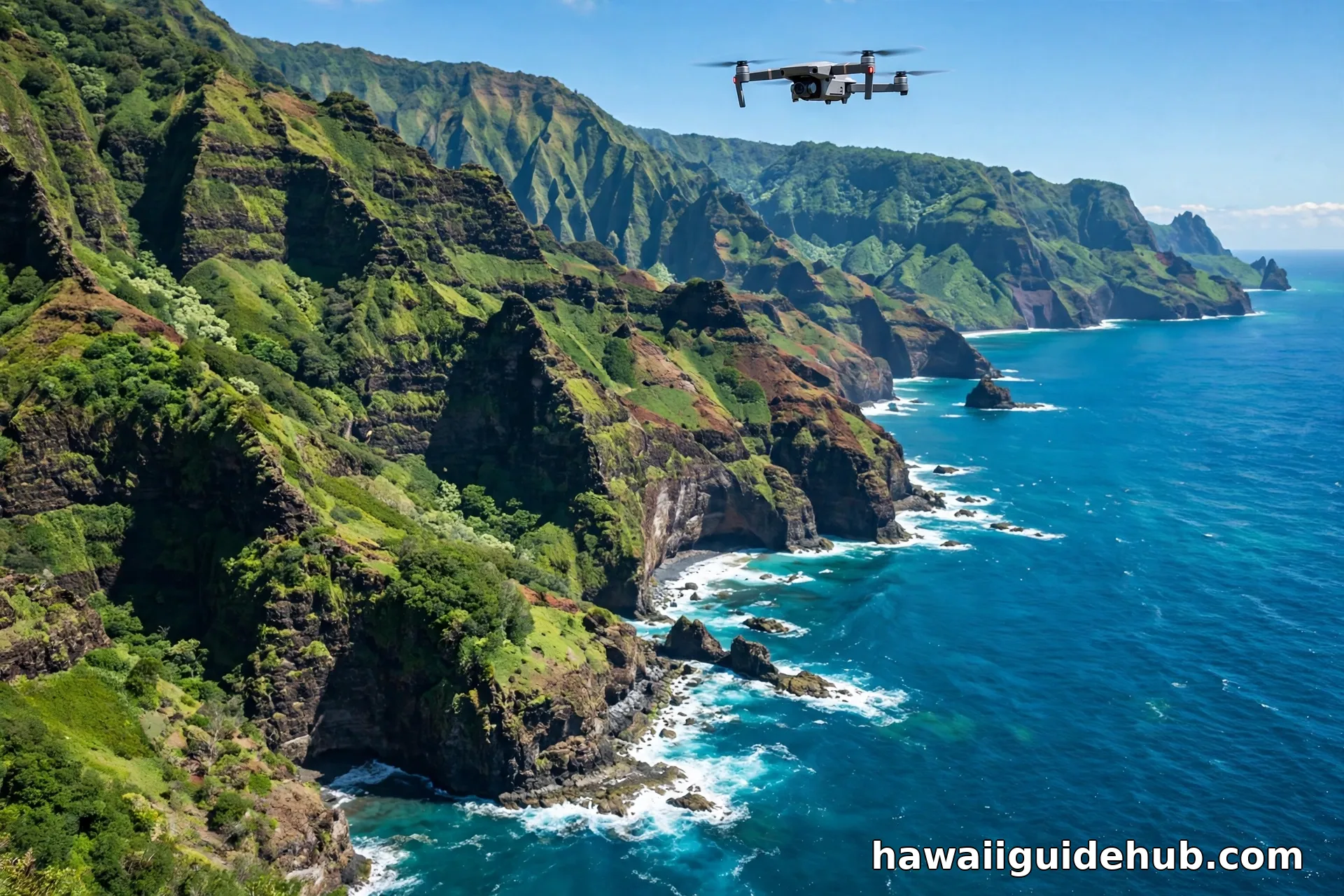
Hawaii from a drone looks unreal: green cliffs dropping into blue water, waterfalls threading through valleys, and lava fields stretching to the sea. It is no wonder so many visitors pack a drone. But Hawaii is also one of the trickiest places in the United States to fly one legally. Federal FAA rules, a state park ban, national park bans, airport airspace, and wildlife protections all stack on top of each other. This is the single complete guide to Hawaii drone rules for visitors. It covers what the FAA requires before you fly, where drones are banned outright, how to handle airports and wildlife, and what the penalties look like if you get it wrong.
The short version: take the free TRUST test before your trip, register your drone if it weighs 250 grams or more, keep it under 400 feet, and never launch from a state park, a national park, or near an airport without authorization. Read on for the full picture, because the details are where visitors get tripped up.
Hawaii Drone Rules at a Glance
| The rule | Set by | What you do |
|---|---|---|
| TRUST safety test | FAA | Pass the free online test before flying; carry proof |
| Registration for drones 250 g (0.55 lb) or heavier | FAA | Register at FAADroneZone ($5, 3 years) |
| Remote ID broadcast | FAA | Most new models comply automatically; check yours |
| Maximum 400 feet above ground level | FAA | Above ground level, not above sea level |
| Line of sight at all times | FAA | Keep the drone where you can see it |
| LAANC authorization in controlled airspace | FAA | Much of Honolulu needs approval; check before you launch |
| No drones in national parks | National Park Service | Banned at Hawaiʻi Volcanoes, Haleakalā, and all NPS sites |
| No drones in state parks | Hawaiʻi State Parks | Banned at Diamond Head, Waimea Canyon, ʻĪao Valley, and all others |
| Wildlife distances: 50 ft from monk seals, 100 yards from whales | NOAA | Never harass wildlife; the distances are the law, not a suggestion |
| No flying over crowds, stadiums, or emergency operations | FAA | If people are gathered below, land it |
Federal Rules Every Visitor Pilot Must Follow
Drone rules in the United States come from the FAA, and they apply the same in Hawaii as everywhere else. If you are flying purely for fun, you fly as a recreational pilot, and these are the requirements.
Take the TRUST test before you fly
TRUST, The Recreational UAS Safety Test, is a free online test that covers basic airspace and safety rules. It takes about 15 to 30 minutes through an FAA-approved provider, it never expires, and you must be able to show your completion certificate to the FAA or law enforcement if asked. Take it at home before your trip so you are legal from your first flight.
Register your drone if it weighs 250 grams or more
Any drone weighing more than 0.55 pounds (250 grams) must be registered with the FAA through the official FAADroneZone website. Registration costs $5, covers all of your recreational drones for three years, and the registration number must be marked on the outside of the aircraft. Register only through the official FAA site; third-party sites charge extra for the same thing. If your drone is under 250 grams and you fly strictly for fun, you skip registration entirely, which is why sub-250-gram models are so popular with travelers.
Remote ID: your drone’s digital license plate
Most drones that require registration must also broadcast Remote ID, which transmits the drone’s identity, location, altitude, and speed so the FAA and law enforcement can identify it. Compliance became mandatory in September 2023 and enforcement began in March 2024. Nearly all current-model drones broadcast it automatically, so check your manufacturer’s specifications before you pack.
The core flight rules
Fly at or below 400 feet above ground level, and keep the drone within your visual line of sight at all times. Always yield to manned aircraft: if you see or hear a helicopter or plane, descend and get out of the way. Do not fly over people or moving vehicles, do not fly from a moving vehicle, and do not operate your drone in a careless or reckless manner. Night flying is allowed for recreational pilots, but your drone must have anti-collision lighting visible for at least three miles. And if money changes hands for your footage in any way, including a monetized video, you are no longer recreational and you need a Part 107 remote pilot certificate instead.
Where Drones Are Banned in Hawaii
National parks: no drones, period
The National Park Service has prohibited launching, landing, and operating drones in all national parks since 2014. In Hawaii that includes Hawaiʻi Volcanoes National Park, Haleakalā National Park, and every national historic site and memorial. Rangers enforce this, and visitors have been fined and had equipment confiscated. The Big Island’s volcanic landscapes are exactly what drone pilots want to film, and they are exactly where you cannot. For what you can do there instead, see our Hawaiʻi Volcanoes National Park guide.
State parks: also off limits
Hawaii’s state park rules prohibit drones from taking off, landing, or operating within state parks. That covers Diamond Head State Monument, Waimea Canyon and Kōkeʻe on Kauaʻi, ʻĪao Valley on Maui, Waiʻānapanapa, Hāʻena, the Nāpali Coast wilderness park, Kaʻena Point, and every other state park, monument, wayside, and recreation area. Many of Hawaii’s most photographed viewpoints sit inside state parks, so check the park boundary before you launch.
Military areas and airports
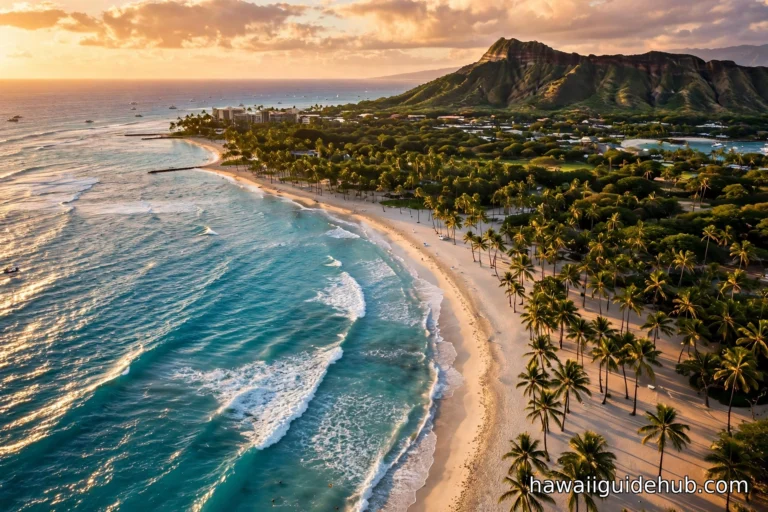
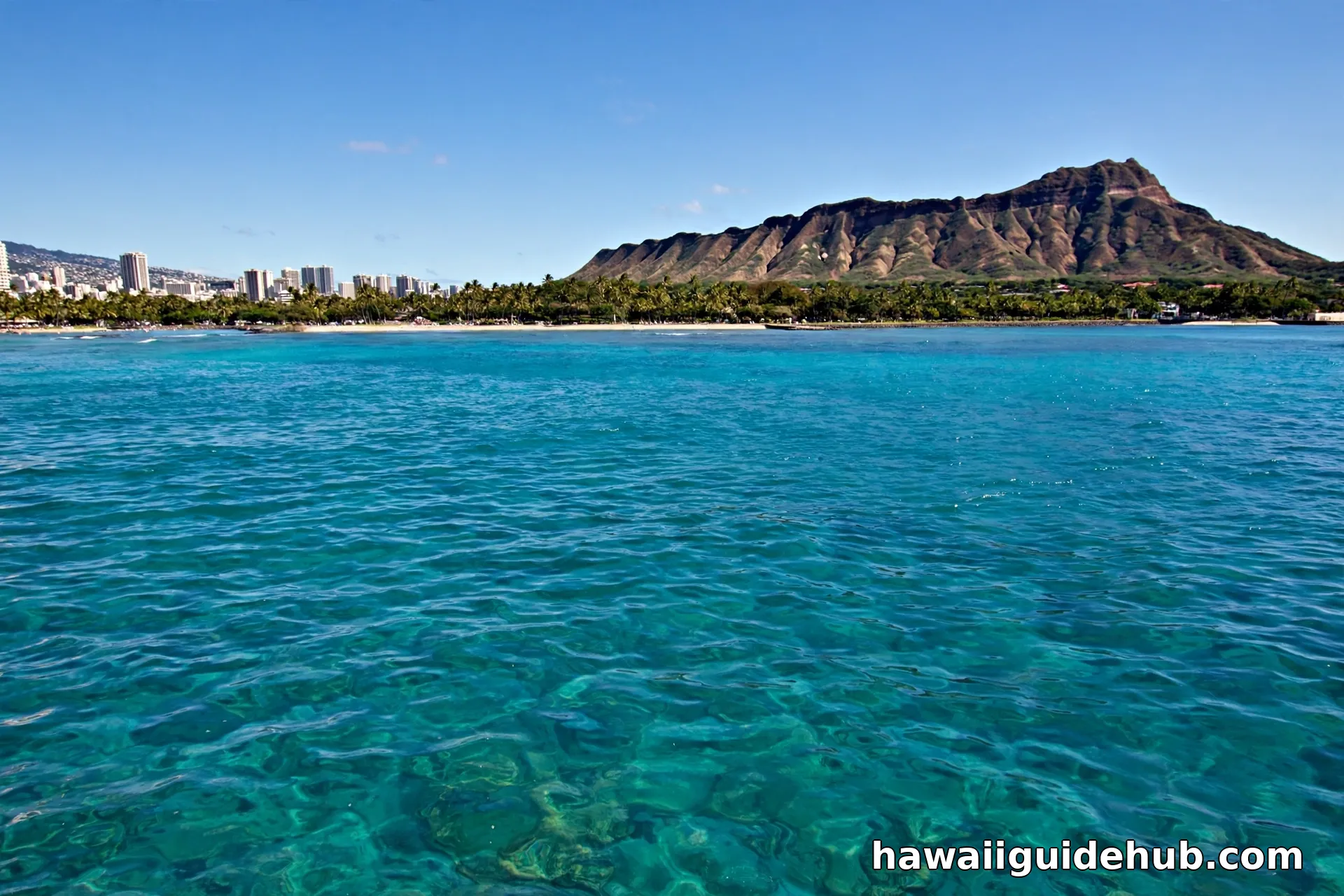
Hawaii hosts major military installations, and their airspace is restricted. Temporary flight restrictions can also appear with little notice around military operations, VIP movements, and emergencies. Around airports, you need airspace authorization through LAANC (Low Altitude Authorization and Notification Capability) before flying in controlled airspace. Much of urban Honolulu, including Waikīkī, sits in controlled airspace around Daniel K. Inouye International Airport, so the classic Waikīkī skyline shot requires an authorization, not just a takeoff. Check the airspace on the FAA’s B4UFLY app before every flight.
Getting LAANC authorization is simpler than it sounds. Apps such as Aloft and AutoPylot show the controlled airspace grid around each airport, and for low altitudes in many grid squares you can receive near-instant approval for flights up to the published ceiling. Submit the request before you leave your hotel, keep the approval on your phone, and respect the altitude it grants. If the grid shows zero feet, that area is off limits and no authorization will be issued. Note that an FAA airspace authorization does not override park bans or wildlife rules: you still cannot launch from a state park inside authorized airspace, and you still must keep your distance from protected animals.
Crowds, events, and emergency scenes
Do not fly over crowds, sporting events, or concerts, and never fly near wildfires, search and rescue operations, or other emergency scenes. Firefighting aircraft in Hawaii operate at low altitudes, and a drone in their path can ground an entire air operation.
Wildlife and Drones: Keep Your Distance
A drone buzzing a monk seal or a pod of dolphins can count as harassment under the Endangered Species Act and the Marine Mammal Protection Act, the same laws that protect these animals from boats and swimmers. Keep your drone at least 50 feet from monk seals, at least 10 feet from sea turtles, and at least 100 yards from humpback whales. During whale season, roughly December through May, be especially careful along the coasts where mothers and calves rest. Our eco-friendly whale watching guide explains the viewing rules that apply on the water too. Seabird nesting colonies on sea cliffs are also sensitive: a drone can flush nesting birds and destroy a season’s chicks in seconds.

Practical Tips for Visitor Pilots
Bring a sub-250-gram drone if you can. Skipping registration and Remote ID paperwork removes two chores, and lighter drones draw less attention on the beach. Hawaii’s trade winds are the real challenge: even a light breeze at the coast becomes a strong push at 200 feet, so fly in the calm early morning, keep flights short, and watch your battery margin. Scout your launch spot on foot first. County beach parks are generally fine unless posted otherwise, and open shoreline away from crowds is your best bet. Be courteous: most beachgoers did not come to hear your propellers, so fly out over the water, keep flights brief, and land if people are clearly bothered.
Do not assume your hotel or condo allows drones from lanais or rooftops; many prohibit them, and flying from a balcony over a crowded pool deck breaks the rule against flying over people. If you are staying on Oʻahu’s North Shore, the long open beaches are among the easiest legal flying on the island, as our North Shore guide shows. And always check for temporary flight restrictions on the day you fly, since conditions change.
If a ranger, officer, or lifeguard questions you, stay calm and cooperate. Have your TRUST completion certificate and your FAA registration (if your drone requires it) ready on your phone, along with any LAANC authorization for the airspace. Most encounters end quickly when you can show you did the paperwork. If you are told you cannot fly in a spot, land promptly and move on; arguing has turned minor warnings into confiscated drones and citations more than once. Keep a simple flight log with dates, locations, and altitudes too. It takes seconds per flight and it is useful if any question about your flying ever comes up later.
What Happens If You Break the Rules
The FAA can impose civil penalties of up to $27,500 per violation, and criminal penalties can reach $250,000 plus prison time for serious offenses such as interfering with aircraft. Park rangers write their own tickets for national and state park violations, and they can confiscate equipment. In practice, most visitors who get in trouble ignored one of the big three: flying in a park, flying near an airport without authorization, or harassing wildlife. All three are easy to avoid once you know the rules.
Drone FAQs for Hawaii Visitors
Can I fly my drone at the beach in Hawaii?
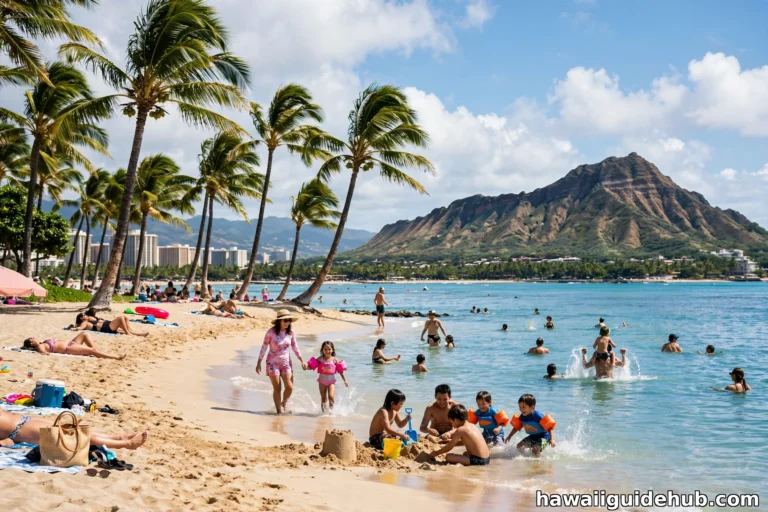
Usually yes, at county beach parks and open shoreline that is not in a state park, not in controlled airspace, and not crowded. Check B4UFLY for airspace, keep 400 feet or below, and stay clear of wildlife and people.
Can I fly a drone at Diamond Head?
No. Diamond Head is a state monument, and Hawaii’s state park rules prohibit drones from launching, landing, or operating there.
Do I need a license to fly a drone for fun in Hawaii?
You do not need a Part 107 license for purely recreational flying. You do need to pass the free TRUST test, register drones of 250 grams or more, and follow all recreational rules. If your footage earns money, you need Part 107.
Can I fly my drone at night in Hawaii?
Yes, recreational night flying is allowed if your drone has anti-collision lighting visible for at least three miles. All other rules still apply.
Can I bring my drone to Hawaii on the plane?
Yes. Pack the drone in your carry-on and carry spare lithium batteries in your carry-on as well, never in checked baggage, following your airline’s battery rules. There are no Hawaii-specific import restrictions on recreational drones.
Watch: Drone Rules for Recreational Pilots
This video walks through the key recreational rules, including TRUST, registration, airspace checks, and Remote ID, which is exactly the foundation Hawaii visitors need.
Hawaii rewards the prepared drone pilot. Take the TRUST test at home, register if you need to, check your airspace every time with B4UFLY, and respect the park boundaries and wildlife buffers that make the islands special. Do that, and you will bring home footage that is worth the effort, without the fine, the confiscated drone, or the stressed seal.