Hawaii Summer: Weather, Ocean, Crowds and What to Expect

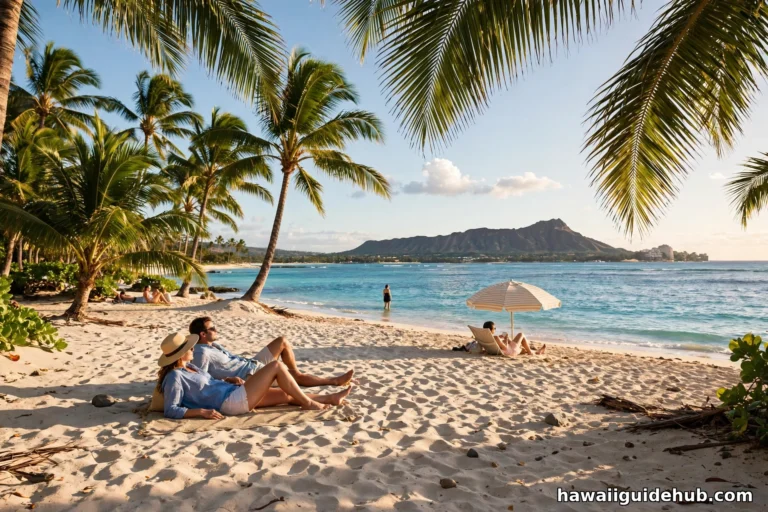
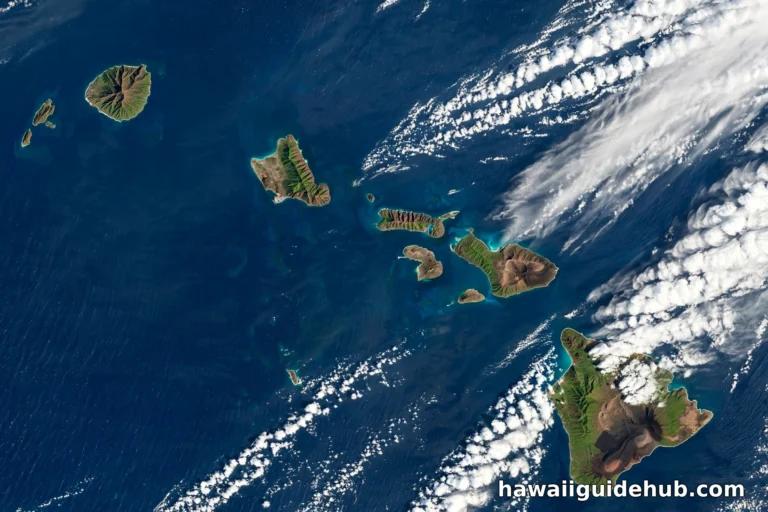
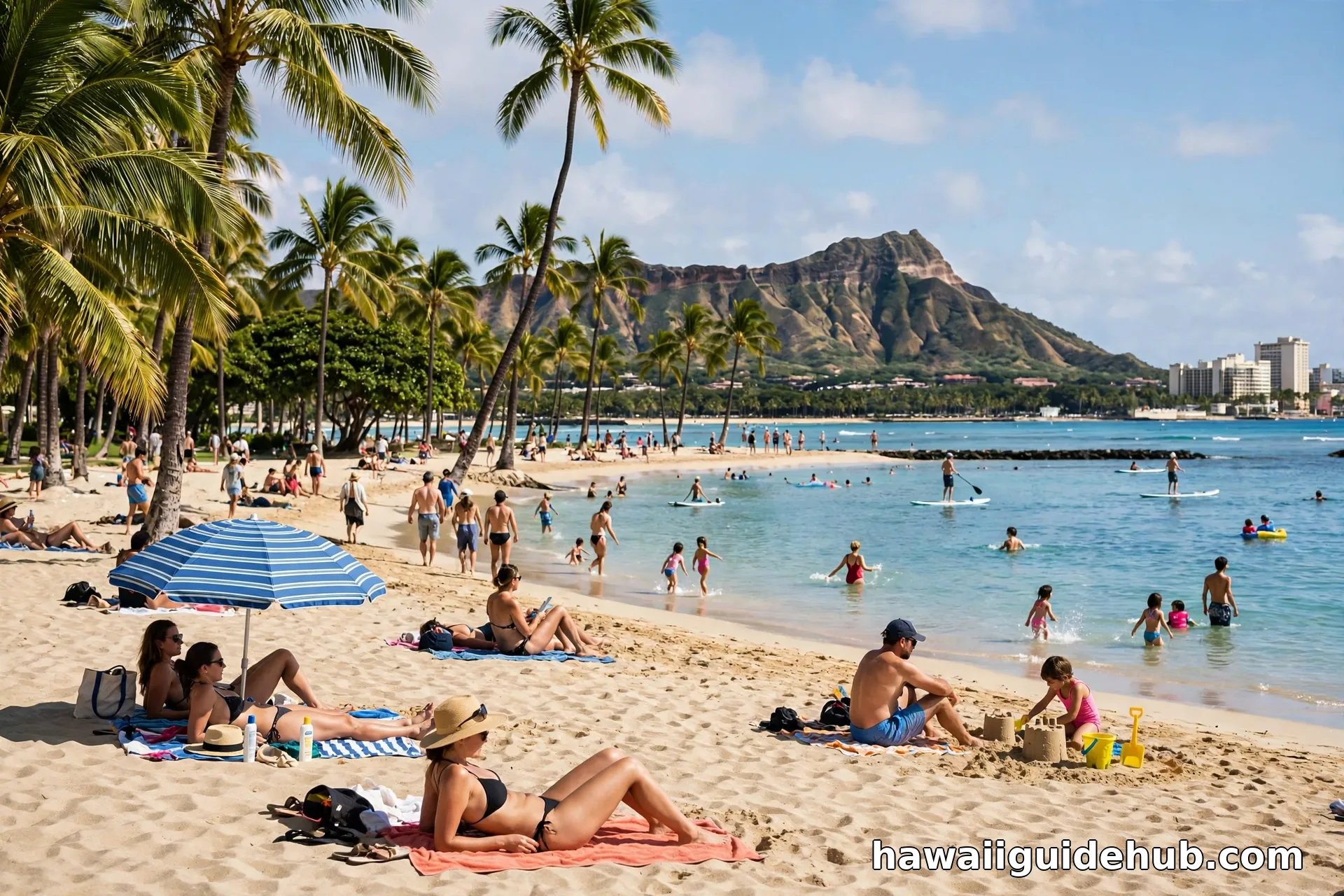
Hawaii in summer is the postcard come to life: warm trade winds, calm turquoise water, long bright evenings, and beaches at their most inviting. It is also the busiest and priciest time to visit, with peak crowds, peak rates, and the start of hurricane season. Summer in Hawaii rewards travelers who know what to expect and plan around it.
This is the single complete guide to Hawaii summer. It covers when summer falls in Hawaii, temperatures and rainfall, trade winds and ocean conditions, daylight hours, crowds and prices, wildlife and seasonal highlights, what to pack, how the islands differ in summer, the honest pros and cons, and answers to common questions. Everything about visiting Hawaii in summer is answered on this one page.
Hawaii Summer at a Glance
| Summer gives you | Summer costs you |
|---|---|
| Daytime highs in the mid to upper 80s, nights in the mid 70s, ocean in the upper 70s to low 80s | Peak crowds, especially June through August |
| The driest months of the year on leeward coasts (kau, the dry season, May through October) | Among the highest prices of the year |
| Up to about 13.5 hours of daylight in late June | Hurricane season, June 1 to November 30 |
| The classic Hawaiʻi weather everyone pictures | Crowds peak exactly when the weather peaks; book far ahead |
When Is Hawaii Summer?
Hawaiians traditionally recognize two seasons: kau, the warm dry season from May through October, and ho’oilo, the cooler wetter season from November through April. Summer, in the visitor’s sense, runs roughly June through August, with May and September-October acting as warm bookends. If you are asking about Hawaii summer time in the clock sense, note that Hawaii does not observe daylight saving time. The islands stay on Hawaii Standard Time (UTC-10) all year, so summer evenings stay light late without any clock change.
The practical difference between May and August is smaller than mainland travelers expect. Hawaii’s temperature range is famously narrow: Honolulu’s average high climbs from the low 80s in winter to the upper 80s in August, a shift of less than ten degrees. Summer feels different less because of the thermometer and more because of the humidity, the crowds, and the ocean, which reaches its warmest and calmest state of the year.
Temperatures, Rainfall, and Trade Winds
Expect daytime highs in the mid to upper 80s at sea level, with nights in the mid 70s. Higher elevations are cooler: Upcountry Maui and Hawaii Island’s high country can be 15 to 20 degrees cooler than the beach, and the summits of Haleakala and Mauna Kea can feel genuinely cold even in July. Pack a light layer if you plan any elevation.
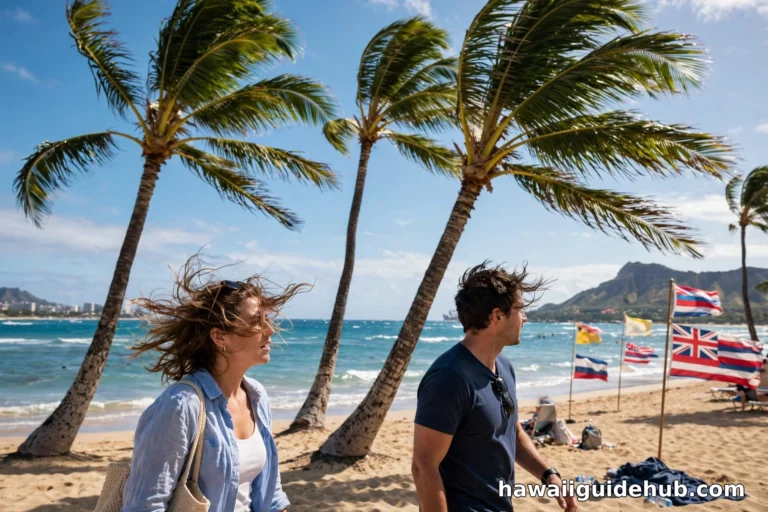
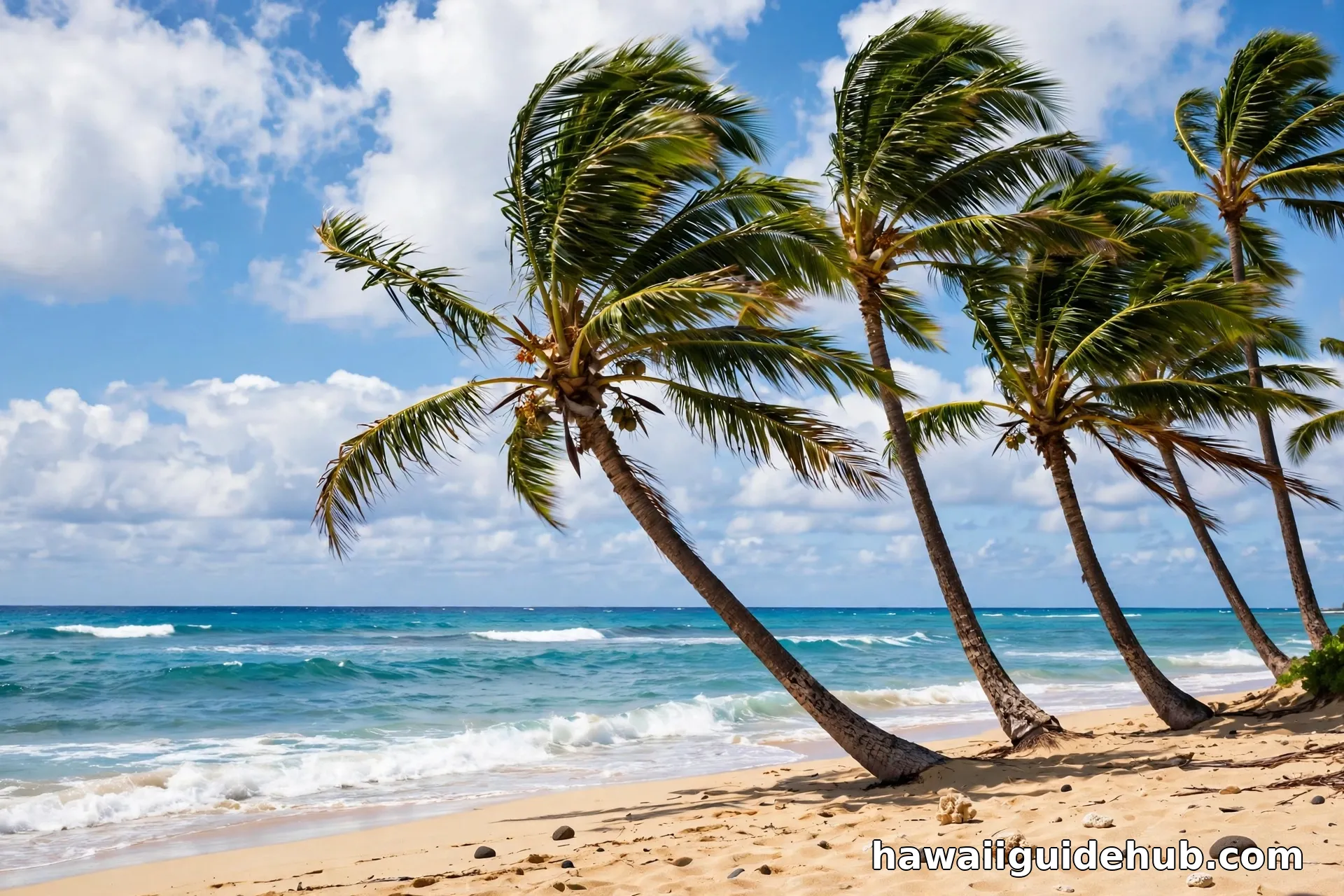
Summer is the driest season on the leeward (south and west) coasts, which is where most resorts sit. Waikiki, Kihei, and the Kona coast see very little rain from June through August. Windward (northeast-facing) coasts stay greener and wetter year round, with brief passing showers even in summer. The northeast trade winds blow most reliably in summer, keeping the heat comfortable and the humidity in check. When the trades die, as they occasionally do, the air turns still and muggy, and locals call those Kona wind days.
Ocean Conditions in Summer
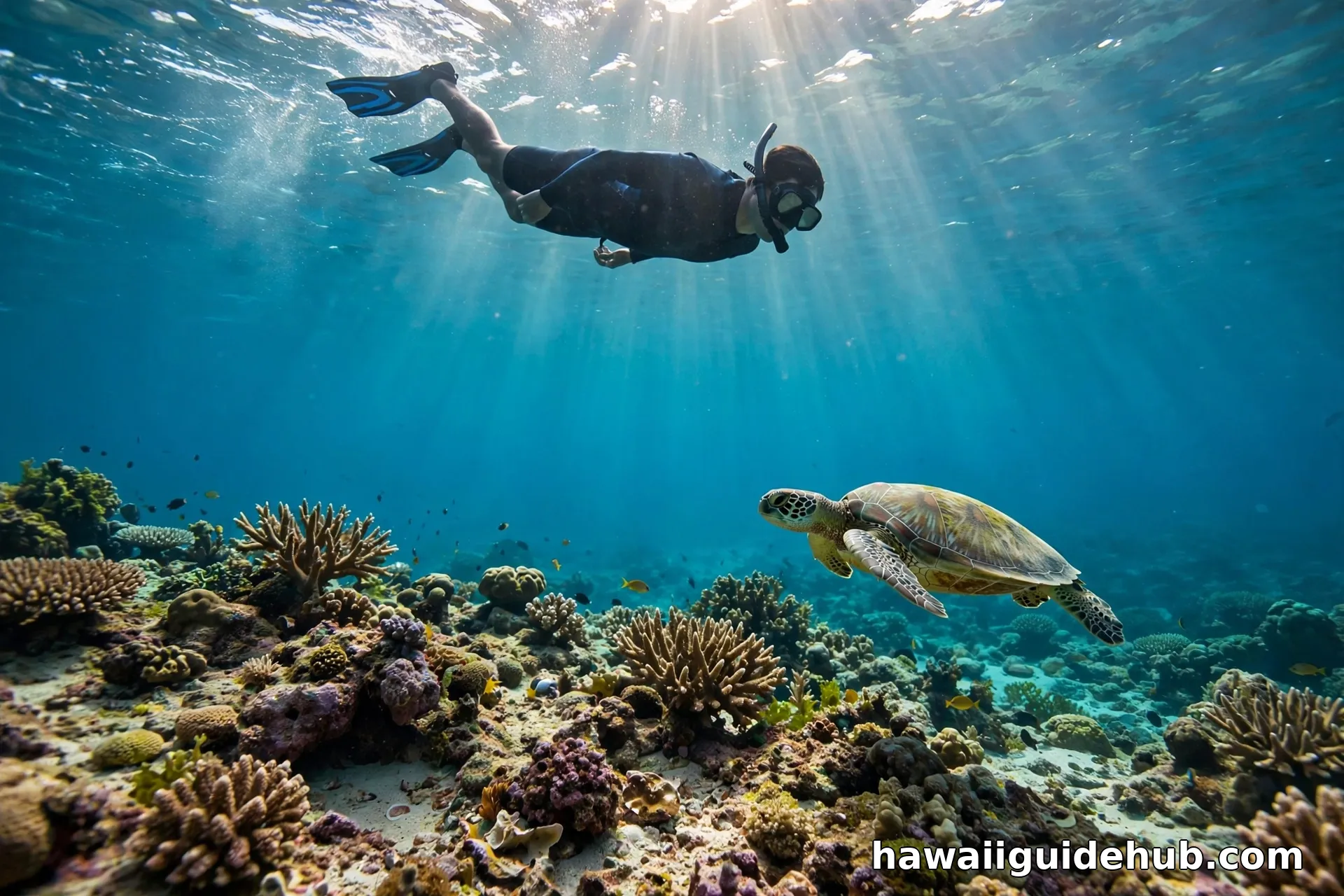
Summer flips the island’s surf calendar. The big winter swells that pound north shores fade, and south-facing shores pick up gentle, consistent swells instead. That makes summer the best season for swimming and snorkeling on the north shores of Oahu, Maui, and Kauai, where winter waves make the water dangerous. Water temperatures climb into the upper 70s and low 80s, warm enough to swim comfortably without a wetsuit.
Visibility for snorkeling peaks in the calm summer months, particularly from May through September. Sea turtles are active year round and easy to spot in the clear water. One seasonal absence: humpback whales. The whales migrate to Alaska for the summer feeding season, with most gone by late April or May. If whales are your priority, visit in winter instead. Our whale watching guide by island covers the season in detail.
Daylight: Long Summer Evenings
Around the summer solstice in late June, Hawaii gets about 13.5 hours of daylight, with sunrise near 5:50 a.m. and sunset near 7:20 p.m. in Honolulu. The long evenings are one of summer’s quiet pleasures: sunset sails, beach walks, and dinners outdoors without rushing. By September, daylight shrinks back toward 12.5 hours. The tropical latitude means twilight is short, so the sky goes from sunset to dark faster than mainland visitors expect.
Crowds and Prices
Summer is peak season. Families travel when school is out, and June through August brings the year’s biggest crowds to beaches, luaus, popular hikes, and restaurants. Hotel rates and airfares run among the highest of the year, and the most popular tours and activities sell out days or weeks ahead. If you are visiting in summer, book flights, lodging, rental cars, and must-do activities as early as you can.
The shoulder months on either side of summer offer relief. May and late September through October bring warm weather with thinner crowds and lower prices, which is why many experienced Hawaii travelers prefer them. For a month-by-month look at costs, see our guide to the cheapest time of year to visit Hawaii.
Hurricane Season Awareness
Hurricane season in the Central Pacific runs June 1 through November 30, overlapping most of summer. The good news is that direct hits on Hawaii are rare; most tropical systems pass well south or west of the islands. The bad news is that “rare” is not “never,” and even near misses can bring heavy rain, high surf, and flight disruptions. In August 2026, Tropical Storm Lala prompted airline disruption warnings for Hawaii, a reminder that the season deserves respect.
Traveling in summer does not require fear, but it does reward preparation. Buy travel insurance that covers weather disruptions, watch the NOAA Central Pacific Hurricane Center forecasts in the week before departure, and keep one flexible day in your itinerary. For month-by-month rain patterns that affect trip planning, see our guide on what time of year it rains in Hawaii.
What to Pack for Hawaii in Summer
Pack light, breathable clothing: shorts, dresses, swimwear, and a couple of nicer outfits for dinners. You will live in sandals or flip-flops, but bring real walking shoes for hikes, since Hawaiian trails are rocky and often muddy. Reef-safe sunscreen is essential and legally required for purchase in Hawaii; bring more than you think you need. A light rain jacket earns its place for windward excursions and sudden showers. Add a rash guard for snorkeling days, a hat, sunglasses, and a reusable water bottle. Leave the heavy layers home unless you are summiting Haleakala or Mauna Kea, where you will want a real jacket even in August.
Summer Events and Festivals
Summer brings some of Hawaii’s most beloved annual celebrations. King Kamehameha Day on June 11 is a state holiday honoring the monarch who united the islands, celebrated with floral parades and the ceremonial draping of lei on his statues. In August, Waikiki typically hosts Duke’s OceanFest, a week of ocean sports and beach events honoring Duke Kahanamoku, the father of modern surfing. The Fourth of July brings fireworks over the water at several island locations, with the Ala Moana show on Oahu among the largest. Check dates before your trip, since festival schedules can shift from year to year, and book lodging early around major event weekends.
Summer on a Budget: Saving Tips
Summer prices sting, but a few strategies soften the blow. Flying midweek instead of weekends can cut airfare noticeably. Staying in a condo with a kitchen and cooking some meals saves more than any other single move, since restaurant prices in resort areas are steep. Many of Hawaii’s best experiences are free: beaches, hikes, scenic drives, and sunset watching cost nothing. Book rental cars the moment you book flights, since summer inventory sells out and prices climb. Finally, consider the first two weeks of June or the last two of August, when prices ease slightly compared to the mid-summer peak.
Hiking in the Summer Heat
Summer is prime hiking season in Hawaii, with drier trails and reliable weather, but the tropical sun is no joke. Start hikes early, ideally before 8 a.m., to finish before the midday heat. Carry at least a liter of water per person for short hikes and more for anything over two hours; there are no water fountains on most trails. Wear a hat and reef-safe sunscreen, and watch for slippery mud on windward trails even in summer. Popular trails like Diamond Head and the Lanikai Pillbox fill up by mid-morning in summer, so early starts also beat the crowds. If clouds build over the mountains, take it seriously: flash floods can turn a dry streambed dangerous in minutes.
How the Islands Differ in Summer
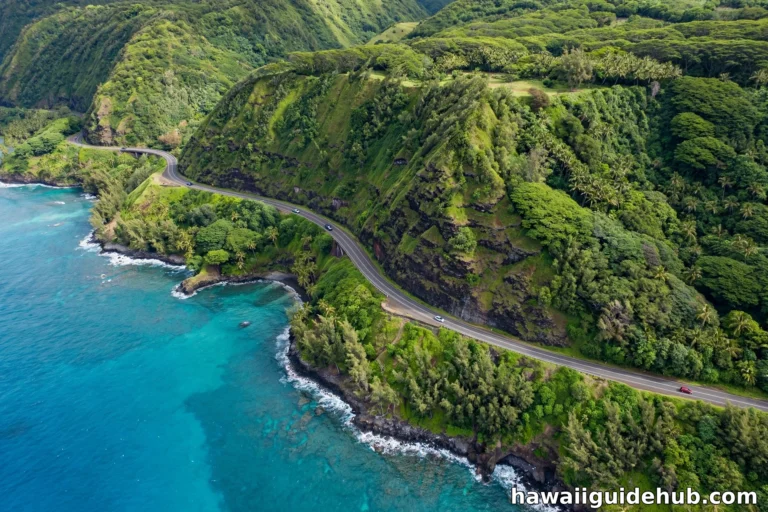
Summer’s character shifts by island. Oahu’s south shore, including Waikiki, gets small, gentle surf ideal for learning to surf, while the famous North Shore goes flat and swimmable. Maui’s leeward beaches in Kihei and Wailea are at their calmest, and the Road to Hana is drier and easier driving than in winter. Kauai’s north shore, off-limits for swimming much of winter, opens up for snorkeling at places like Tunnels Beach when conditions allow. The Big Island’s Kona coast is reliably sunny, while Hilo stays lush and rainy as always. Every island is drier on its leeward side and wetter on its windward side; in summer that contrast is at its strongest.
Summer Pros and Cons
Pros: the warmest ocean water of the year, the calmest conditions for swimming and snorkeling, the driest weather on resort coasts, the longest daylight hours, and swimmable north shores that are off-limits in winter. Cons: the year’s biggest crowds, the highest prices, occasional muggy spells when the trades fade, hurricane season, and no whales. Summer is Hawaii at its most beach-perfect and its least peaceful. Whether that tradeoff works for you depends on what you value most.
Watch: Hawaii Destinations and Best Times to Visit
Frequently Asked Questions
Is summer a good time to visit Hawaii?
Yes, if beach weather is your priority. Summer has the warmest water, calmest surf, and driest skies. It is also the most crowded and expensive season, so book early.
Is Hawaii too hot in summer?
Most visitors find Hawaii’s summer heat very manageable. Highs in the mid to upper 80s with steady trade winds feel milder than hotter mainland summers, and the ocean is always nearby. Drink water often, take midday shade breaks, and you will be comfortable.
How hot does Hawaii get in summer?
Daytime highs at sea level reach the mid to upper 80s Fahrenheit, with nights in the mid 70s. Trade winds keep it comfortable most days. Higher elevations are much cooler.
Does it rain in Hawaii in summer?
Very little on leeward coasts, where most resorts are. Windward coasts get brief passing showers year round. Summer is the driest season overall.
Can you snorkel in Hawaii in summer?
Summer is the best snorkeling season. Calm water and warm temperatures bring peak visibility, especially May through September, and north shores become swimmable.
Does Hawaii change clocks for summer?
No. Hawaii does not observe daylight saving time and stays on Hawaii Standard Time (UTC-10) all year. In summer, Hawaii is 3 hours behind the US West Coast and 6 hours behind the East Coast.
Are there hurricanes in Hawaii in summer?
Hurricane season runs June through November, but direct hits are rare. Buy travel insurance, watch NOAA forecasts before your trip, and keep plans flexible.
Hawaii summer is the islands at their most inviting and their most in-demand. The ocean is warm, the skies are dry, the days are long, and the beaches are at their best. Go in with open eyes about the crowds and the prices, book everything early, respect the hurricane season, and summer in Hawaii will give you exactly the trip the postcards promised.