Hawaii Sunscreen Rules: What the Law Actually Bans (and Where)

Hawaii’s sunscreen rules confuse almost every visitor. The state bans certain sunscreen chemicals, Maui County bans even more, the words “reef safe” on a bottle mean nothing legally, and what you can buy is not the same as what you can use. Get it wrong and you are either breaking a county ordinance or frying your skin with the wrong product. Get it right and it is simple: mineral sunscreen, applied properly, everywhere in the islands.
This is the single complete guide to Hawaii sunscreen rules. It explains the state law and the stricter Maui County ordinance, which chemicals are banned where, how to read labels honestly, what to buy before you fly, how to apply mineral sunscreen so it actually works, family considerations, and FAQs. Everything about sunscreen rules in Hawaii lives on this one page.
The Two Laws, Side by Side
Hawaii has not one sunscreen law but two, and they do different things. The state law controls what can be sold. Maui County’s ordinance goes further and controls what you can actually put on your skin. This distinction is the source of nearly all visitor confusion.
| The rule | Hawaii state law | Maui County (Maui, Molokai, Lanai) |
| Bans sale of oxybenzone and octinoxate sunscreens | Yes, since Jan 1, 2021, per Act 104 (SB 2571) | Yes, and goes further (see below) |
| Bans sale of all non-mineral sunscreens | No: avobenzone and octocrylene still sellable statewide | Yes, since Oct 1, 2022, per Ordinance 5306 |
| Bans actually using banned sunscreen on your skin | No: the state bans sale and distribution, not use | Yes: use of non-mineral sunscreen is prohibited |
| Prescription exception | Yes, with a licensed healthcare provider’s prescription | Yes, same prescription exception |
| Where it applies | All Hawaiian islands | Maui County only, per the county ordinance |
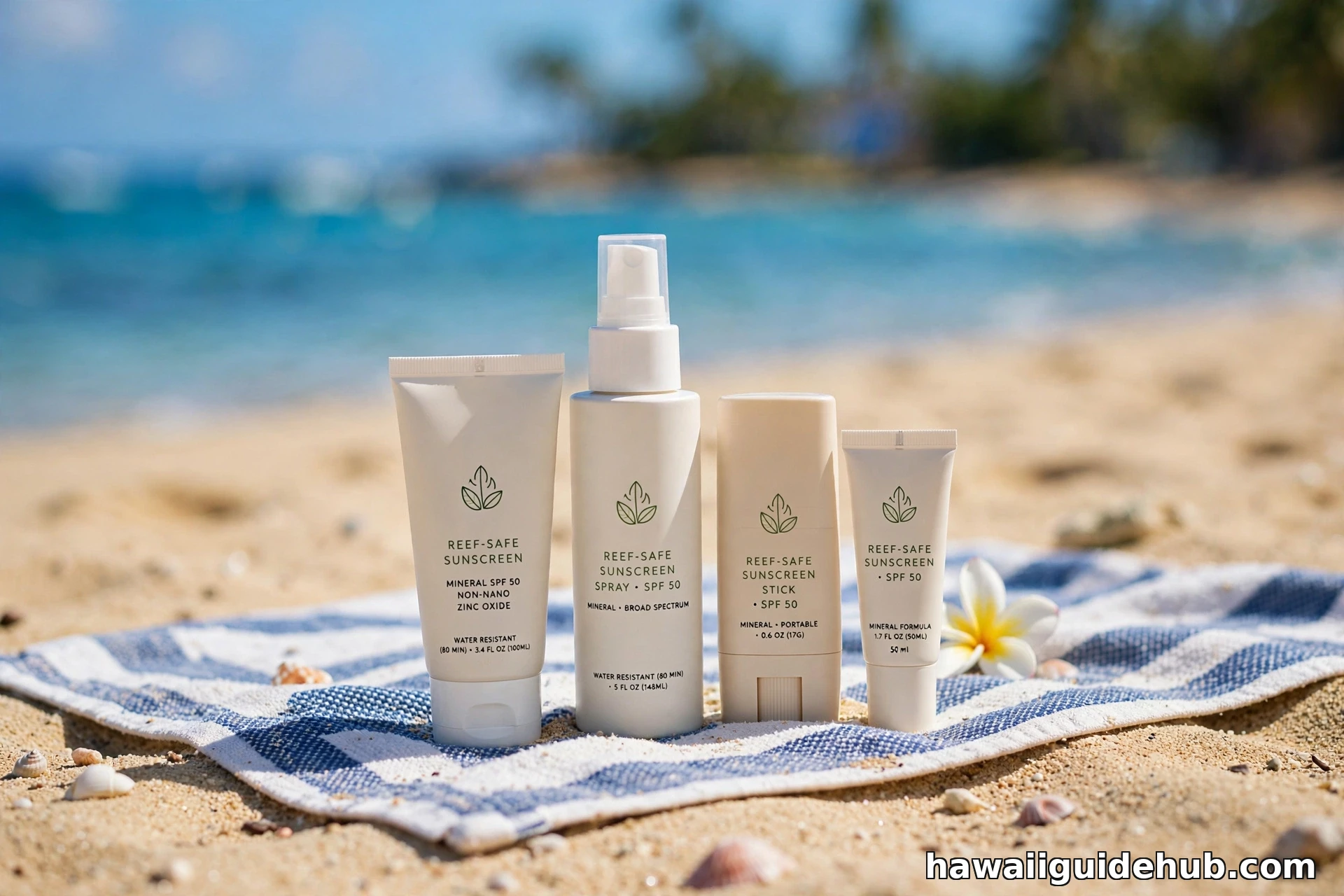
The practical takeaway: a sunscreen that is perfectly legal to buy on Oahu may be illegal to wear on Maui. The only product legal everywhere in Hawaii is a mineral sunscreen whose only active ingredients are zinc oxide, titanium dioxide, or both. Buy that, and both laws become irrelevant to your vacation.
Why These Laws Exist
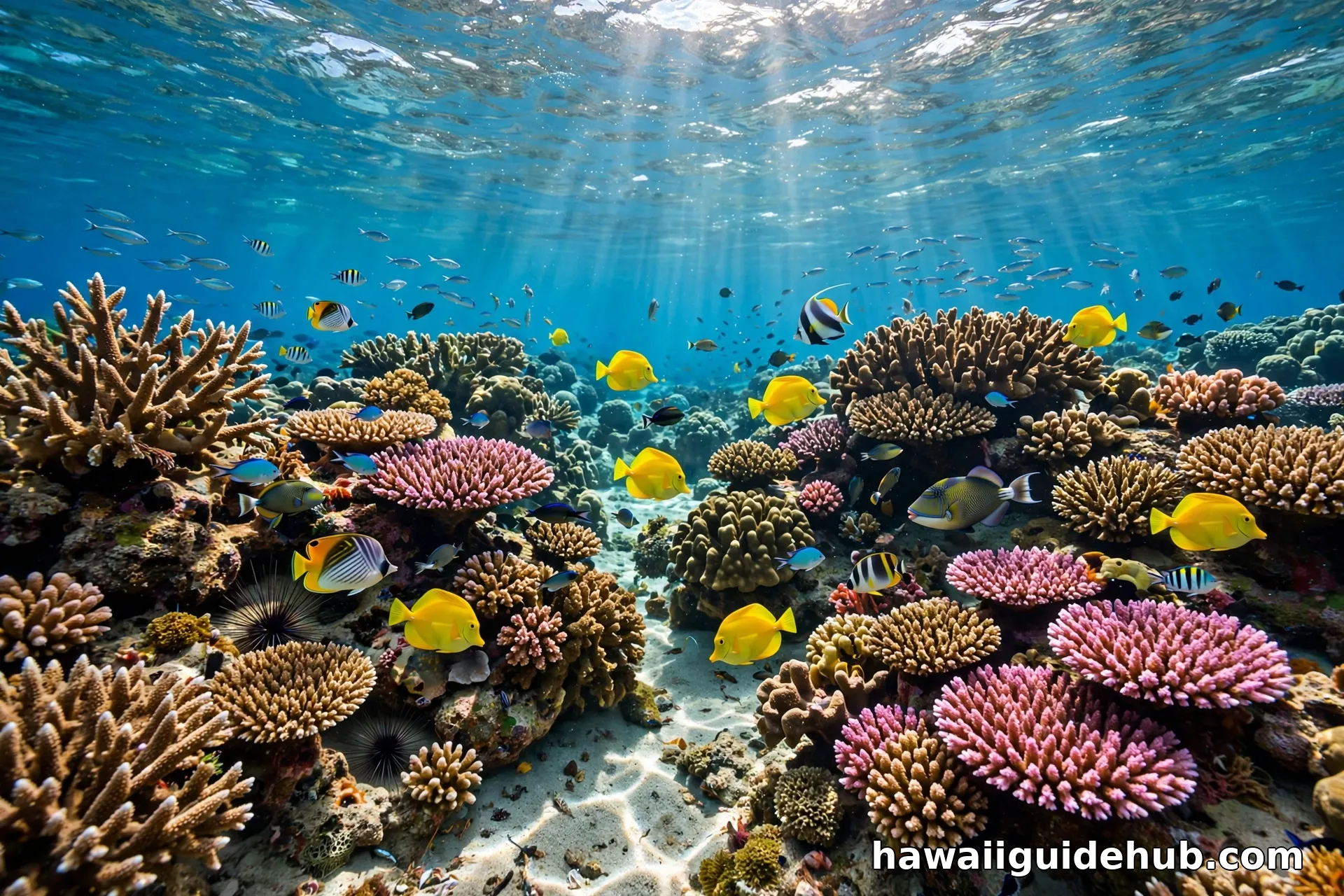
In 2018, Hawaii became the first U.S. state to ban sunscreen chemicals over coral reef harm, when Governor David Ige signed SB 2571, known as Act 104. Research had linked oxybenzone and octinoxate to coral bleaching, coral DNA damage, and harm to juvenile coral. The National Park Service has estimated that more than 6,000 tons of sunscreen enter Hawaii’s waters each year, much of it washing off swimmers at popular reefs like Hanauma Bay and Waimea Bay.
Maui County decided the state law did not go far enough. Its council passed Ordinance 5306 unanimously in late 2021, signed by the mayor that December, restricting sale and distribution in the county to mineral sunscreens only, effective October 1, 2022. The county’s reasoning: “reef safe” marketing had become meaningless, and only a bright-line mineral rule would reliably keep chemical UV filters off its reefs. State lawmakers have since debated expanding the statewide banned list to chemicals like octocrylene and homosalate, so check current law before assuming the state list is frozen.
Label Decoder: What Sunscreen Labels Really Mean
Sunscreen marketing is where visitors get fooled. These phrases sound official. Most of them are not.
| What the label says | What it actually means | OK for Maui County? |
| “Reef safe” / “Reef friendly” | No legal definition; some such products still contain avobenzone or octocrylene | Not necessarily: check the Drug Facts panel |
| “Hawaii Act 104 compliant” | Free of oxybenzone and octinoxate only; may contain other chemical filters | No, unless fully mineral |
| “Oxybenzone-free” | Missing one banned chemical; says nothing about the rest | Not by itself |
| “Mineral sunscreen” | Actives are zinc oxide and/or titanium dioxide | Yes: this is the county standard |
| “Non-nano zinc oxide” | Mineral formula marketed as lower impact; still the compliant choice | Yes |
The only reliable check is the Drug Facts panel on the back of the bottle. If the active ingredients list contains only zinc oxide, titanium dioxide, or both, the product is legal everywhere in Hawaii. Anything else with a chemical-sounding active ingredient needs scrutiny before a Maui County beach day.
What to Buy Before You Fly
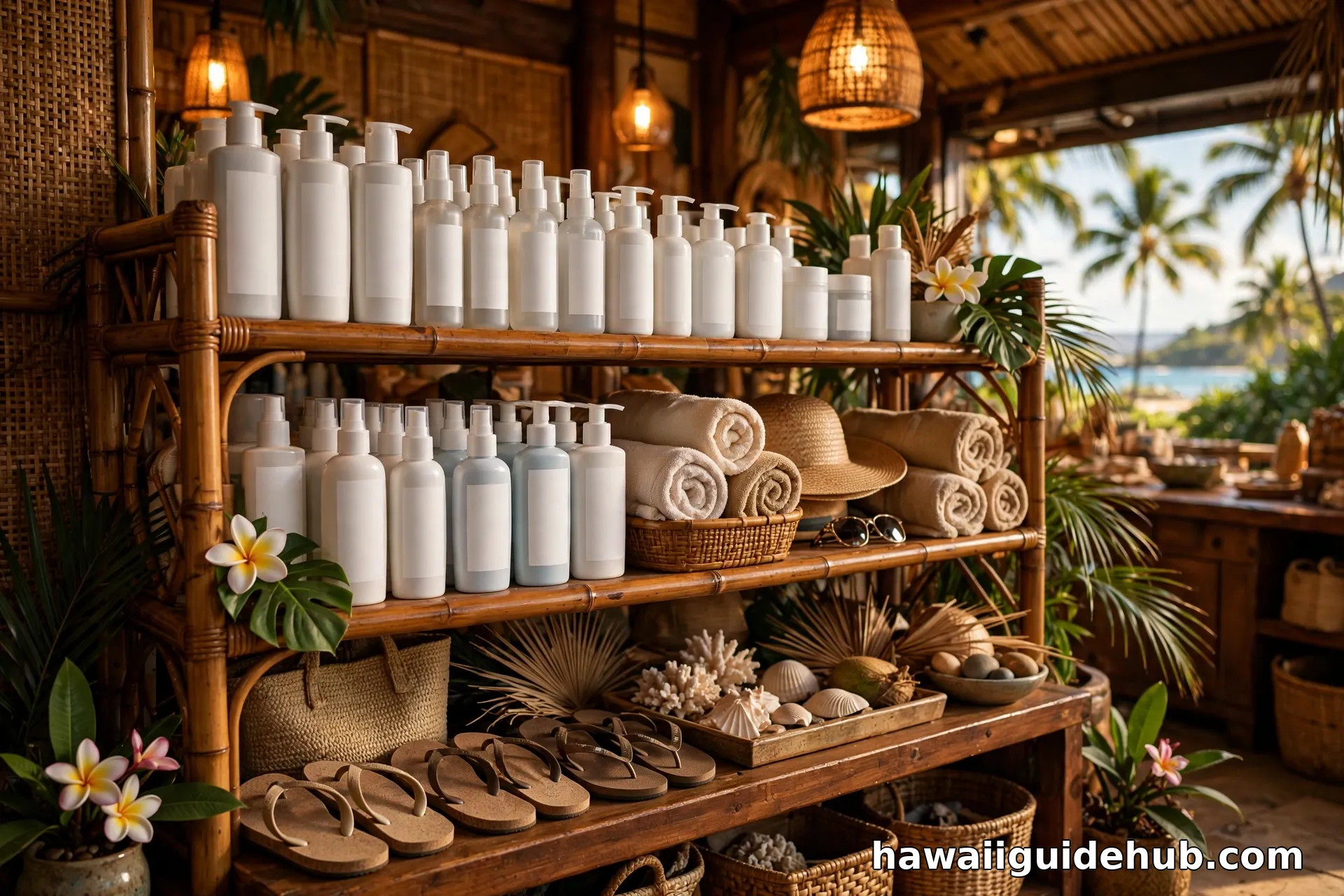
Buy mineral sunscreen at home, where selection is better and prices are lower. Look for SPF 30 or higher, broad spectrum, and water resistance of 80 minutes. Zinc oxide formulas can leave a white cast; tinted mineral sunscreens solve this for face application and photograph better. Buy enough: a family of four burns through a standard bottle in a few beach days, and mineral options in Hawaii’s beach shops cost more.
Do not rely on buying compliant sunscreen after landing and hoping for the best. While Hawaii stores cannot sell oxybenzone or octinoxate products under state law, “Act 104 compliant” chemical sunscreens are still on shelves statewide, and those are not legal to wear in Maui County. Arrive with the right bottle and the problem disappears.
How to Make Mineral Sunscreen Actually Work
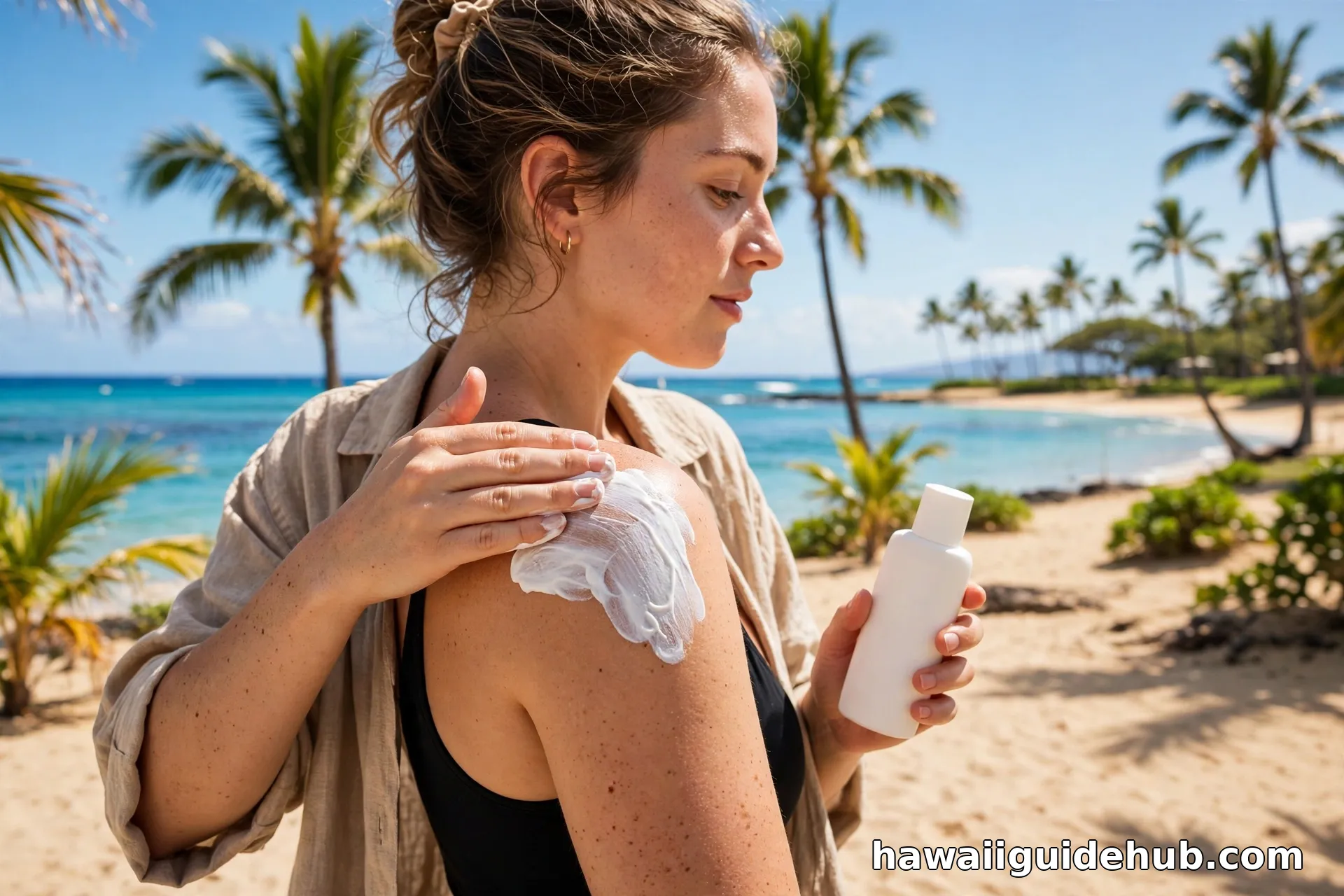
Mineral sunscreen fails when people apply it like chemical sunscreen. It works by sitting on top of the skin as a physical barrier, so it needs a visible, even layer. Apply 15 minutes before sun exposure, use more than you think (a full shot glass for the body), and reapply every two hours and after every swim or heavy sweating. Rub it in fully but do not skimp: the white cast fades as it sets.
Layer your defense. Hawaii’s equatorial sun is brutal from 10 a.m. to 4 p.m., and no sunscreen alone is enough for a full beach day. A UPF rash guard or swim shirt cuts your sunscreen needs dramatically, a wide-brim hat protects face and neck, and shade breaks at midday do more than any SPF number. Families should dress kids in rash guards first and treat sunscreen as the backup for exposed spots. See our family activities guide for sun-smart beach day planning.
Families and Kids: Special Considerations
Pediatricians generally recommend mineral sunscreens for young children anyway, so Hawaii’s rules align with best practice for families. Babies under six months should not rely on sunscreen at all: shade, hats, and protective clothing are the guidance. For kids, apply before leaving the rental, not at the beach where sand sticks to wet lotion and everyone is impatient. Reapply on a schedule, not when someone looks pink: by the time skin reddens, the damage is done.
One more family note: spray sunscreens, even mineral ones, are hard to apply evenly in ocean breeze and much of the product blows away. Lotions and sticks give better coverage for kids. If you use a spray, spray into your hands first, then apply.
What Happens If You Break the Rules
Enforcement reality is worth stating plainly. The state sale ban is enforced against retailers, not tourists: you will not be searched at the beach on Oahu for your sunscreen’s ingredient list. Maui County’s use ban is broader on paper, and while systematic tourist-by-tourist enforcement is impractical, the ordinance signals serious local intent, and some tour operators and beach parks in the county do check or require mineral sunscreen. The respectful move is compliance regardless of enforcement odds. Hawaii’s reefs are measurably stressed, and this is one harm visitors can simply choose not to cause. For the bigger picture of reef threats, see our piece on how ocean acidification affects marine life and the role of marine protected areas.
The Science Debate, Honestly
Honest coverage requires a caveat: not every marine scientist agrees on how much sunscreen chemicals matter relative to other reef threats. Laboratory studies have shown oxybenzone harming coral at certain concentrations, but some researchers argue that real-world ocean concentrations at most beaches are far lower than lab doses, and that climate change, runoff, and overfishing dwarf sunscreen as reef killers. Others counter that at crowded, enclosed bays like Hanauma Bay, chemical loads are genuinely high enough to matter.
Here is the practical way to read that debate as a visitor. The laws exist regardless of where the science lands, so compliance is not optional. The cost of switching to mineral sunscreen is trivial: a few dollars and a white cast. And mineral sunscreen works fine. When the downside of switching is near zero and the potential upside is healthier reefs, the rational move is to switch and let the scientists keep arguing. Uncertainty about magnitude is not a reason to keep using a product your host community has asked you not to use.
Reef-Safe Goes Beyond Sunscreen
Sunscreen is one input among many, and visitors who care about reefs should mind the others too. Never touch, stand on, or kick coral while snorkeling or diving: physical damage kills coral faster than any chemical. Do not feed fish; it disrupts their behavior and the reef’s balance. Rinse off thoroughly before entering the water to reduce whatever is on your skin, sunscreen included. Choose reef-conscious tour operators who brief guests on these rules rather than herding them onto fragile reef. And if you wear insect repellent, apply it after you are done with water activities, since repellent chemicals wash off into the same ecosystem.
The through line is simple: the reef you snorkel over is a living city, not scenery. Sunscreen choice is the easiest good decision on the list, which is exactly why Hawaii legislated it first. Make the easy choice, then make the harder ones too.
Watch: The Science of Reef-Safe Sunscreen
Hawaii Sunscreen Rules FAQs
Is sunscreen banned in Hawaii?
No. Sunscreen itself is not banned. Hawaii bans the sale of sunscreens containing oxybenzone and octinoxate statewide, and Maui County additionally bans the sale and use of all non-mineral sunscreens. Mineral sunscreens with zinc oxide or titanium dioxide are welcome everywhere.
Can I bring my own sunscreen from home?
Yes, and you should. Bring a mineral sunscreen and you are compliant on every island. Just make sure it is actually mineral: check the Drug Facts panel for zinc oxide and/or titanium dioxide as the only actives, rather than trusting “reef safe” on the front.
What does “reef safe” mean on a label?
Legally, nothing. There is no federal or Hawaii definition of “reef safe,” and products using the phrase can still contain chemical UV filters like avobenzone or octocrylene. Treat it as marketing and verify the active ingredients yourself.
Do the rules apply on every island?
The state sale ban applies everywhere in Hawaii. The stricter Maui County rules, sale and use limited to mineral sunscreens, apply in Maui County, which includes Maui, Molokai, and Lanai. Oahu, Kauai, and the Big Island follow the state standard.
Can I get fined for wearing the wrong sunscreen?
The state law targets sellers, not beachgoers. Maui County’s ordinance does prohibit use of non-mineral sunscreen, though individual enforcement against tourists is rare in practice. Some Maui County tour operators require mineral sunscreen regardless. Compliance is simple, so there is no reason to test it.
Is mineral sunscreen as effective?
Yes, when applied correctly. Zinc oxide and titanium dioxide are the two sunscreen actives the FDA has proposed as generally recognized as safe and effective. Mineral formulas need a generous, even layer and regular reapplication, and they pair best with rash guards, hats, and shade.
Simple Rule, Healthy Reefs
Hawaii’s sunscreen rules look complicated on paper and reduce to one sentence in practice: wear mineral sunscreen with zinc oxide or titanium dioxide, and you are legal on every island, in every county, on every beach. Buy it before you fly, apply it generously, back it up with a rash guard and a hat, and reapply like you mean it. Your skin gets the protection it needs, and the reefs that make Hawaii worth visiting get a little less poison in their water. That is a trade every visitor should be happy to make.