Hawaii for Non Swimmers: The Complete Guide to Enjoying the Islands

You do not need to know how to swim to have an incredible trip to Hawaii. It sounds strange for an island destination, but a huge share of what makes Hawaii special happens with your feet on dry land or your body safely inside a boat: waterfall lookouts, lava fields, botanical gardens, luaus, scenic drives, volcano craters, and beaches where the joy is the sand, the sunset, and the shave ice. Plenty of visitors who never go deeper than ankle deep leave saying it was the best trip of their lives.
This is the single complete guide to Hawaii for non swimmers. It covers the calmest lagoons and protected beaches where weak swimmers can wade safely, the boat and submarine tours that show you the underwater world without getting wet, tidepools, the best land based sights on every island, cultural experiences, and the water safety rules that matter most when you cannot swim. If you have been searching for anything about visiting Hawaii as a non swimmer, the answers are all here on this one page.
Hawaii for Non Swimmers at a Glance
| Approach | Your options | Good to know |
|---|---|---|
| See it without getting wet | Submarine tours on Oahu, Maui, and the Big Island; glass bottom boats | Reefs and wrecks, no swim skills needed |
| Wade, don’t swim | Ko Olina Lagoons (Oahu), Magic Island Lagoon, Poipu Beach Park (Kauai) | Stay in water you can stand in; never rely on inflatable floaties in the ocean |
| Skip the water entirely | Hawaii Volcanoes National Park, Waimea Canyon, Road to Hana, Nā Pali lookouts | Most top sights require no swimming at all |
| Water temperature | 76°F in winter to 81°F in summer, comfortable for wading year round | Comfortable for wading year round |
| Safety net | Free to borrow at many guarded beaches; ask the lifeguard | 911 on every island |
Can You Really Enjoy Hawaii If You Cannot Swim?
Yes, without hesitation. Swimming is only one of dozens of ways to experience the islands, and many of Hawaii’s most famous sights involve no water entry at all. Hawaii Volcanoes National Park, Waimea Canyon, the Nā Pali Coast lookouts, Pearl Harbor, ʻIolani Palace, and the Road to Hana are all land based. Luaus, farmers markets, botanical gardens, coffee farms, and stargazing on Mauna Kea never ask you to get wet. Even at the beach, the classic Hawaii pleasures, walking the sand at sunrise, watching surfers, picnicking under palms, photographing sunsets, require zero swimming ability.
The key is choosing the right beaches and the right activities, and being honest about your limits. Non swimmers get into trouble in Hawaii mainly in two ways: wading too far at beaches with shore break or currents, and trying snorkeling or ocean activities beyond their ability because everyone else is doing it. This guide steers you to the calm, protected, and land based options where you can relax instead of worry. Our island chooser for the best island in Hawaii for first time visitors is a good starting point, since some islands offer more calm water than others.
The Calmest Water in Hawaii: Lagoons and Protected Beaches
Not all Hawaiian beaches are equal, and for non swimmers the difference matters enormously. The best options are protected lagoons and reef sheltered coves where the water stays shallow and calm. On Oahu, the four man made lagoons at Ko Olina are the gold standard: rock barriers block the ocean swell, the water is shallow far from shore, and the sandy coves feel like giant swimming pools. They are open to the public with free pedestrian access, though parking fills early and there are no lifeguards on duty, so stay in the shallows and keep children within arm’s reach.
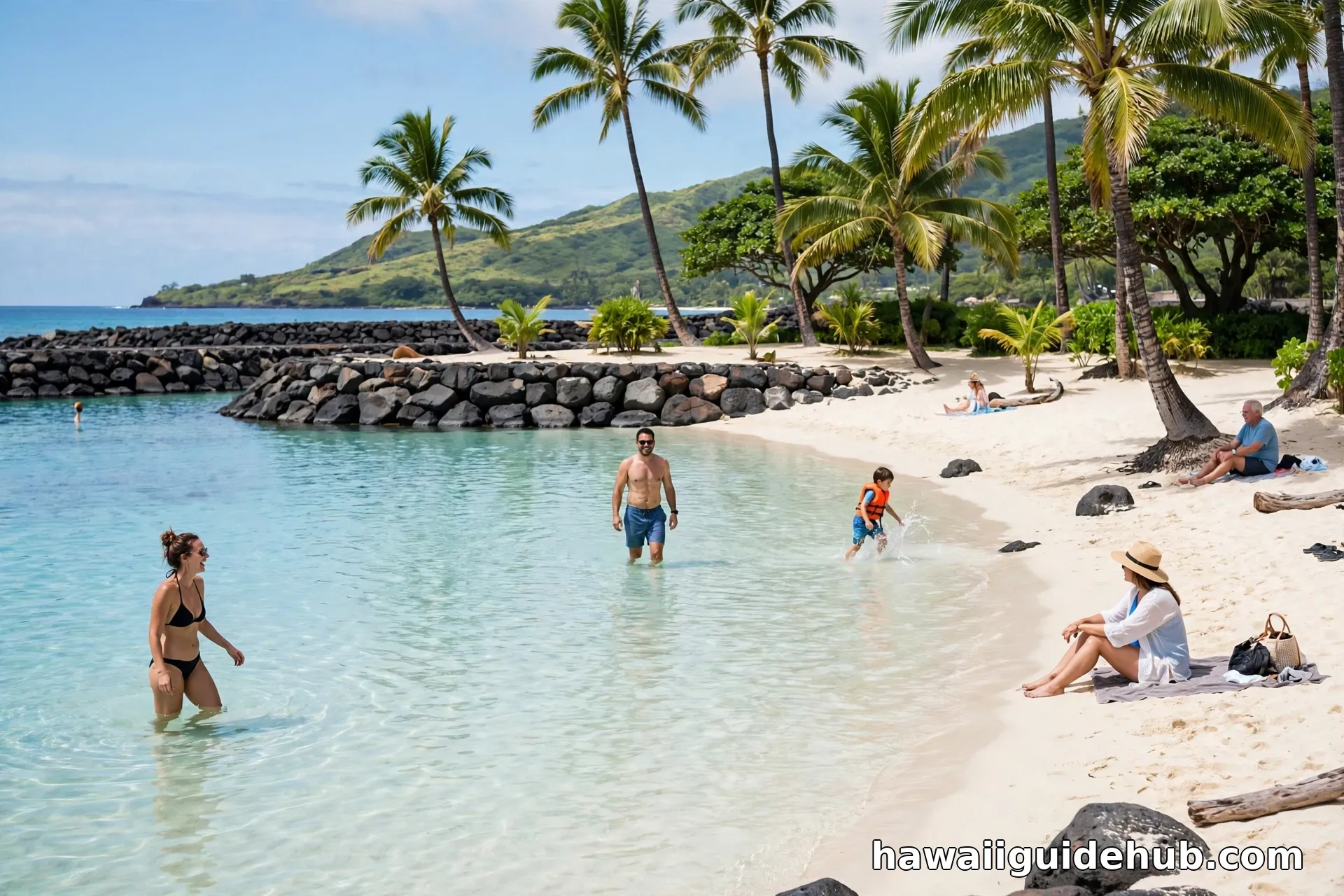
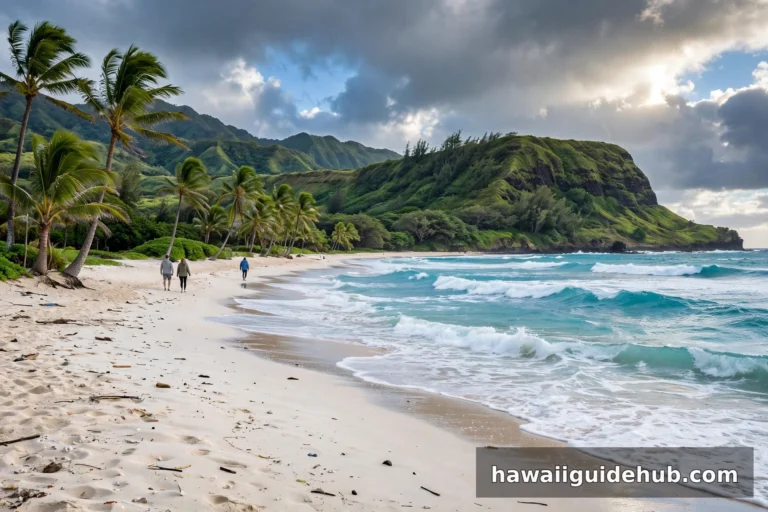
Other reliably calm choices include the Magic Island Lagoon at Ala Moana Beach Park near Waikiki, a man made peninsula with sheltered water that is popular with families; Poipu Beach Park on Kauai’s south shore, which has a protected wading area; Anini Beach on Kauai’s north shore, shielded by one of the longest fringing reefs in Hawaii; and Baby Beach on Maui near Lahaina, famous for its bathtub calm shallows. Hanalei Beach on Kauai is stunning for walking and views, but its surf and currents make it a look don’t swim spot for non swimmers in winter. Always check conditions with lifeguards where they are present, and treat any beach with visible waves breaking on shore as a wading only beach.
See the Underwater World Without Getting Wet
One of the best kept secrets for non swimmers is that you can experience Hawaii’s reefs, fish, and sea turtles without putting your face in the water. Passenger submarines operate off Oahu, Maui, and the Big Island, diving to around 100 feet while you sit in air conditioned comfort watching coral gardens and turtles through huge viewing windows. It is genuinely one of the most memorable things you can do in Hawaii, swimmer or not.
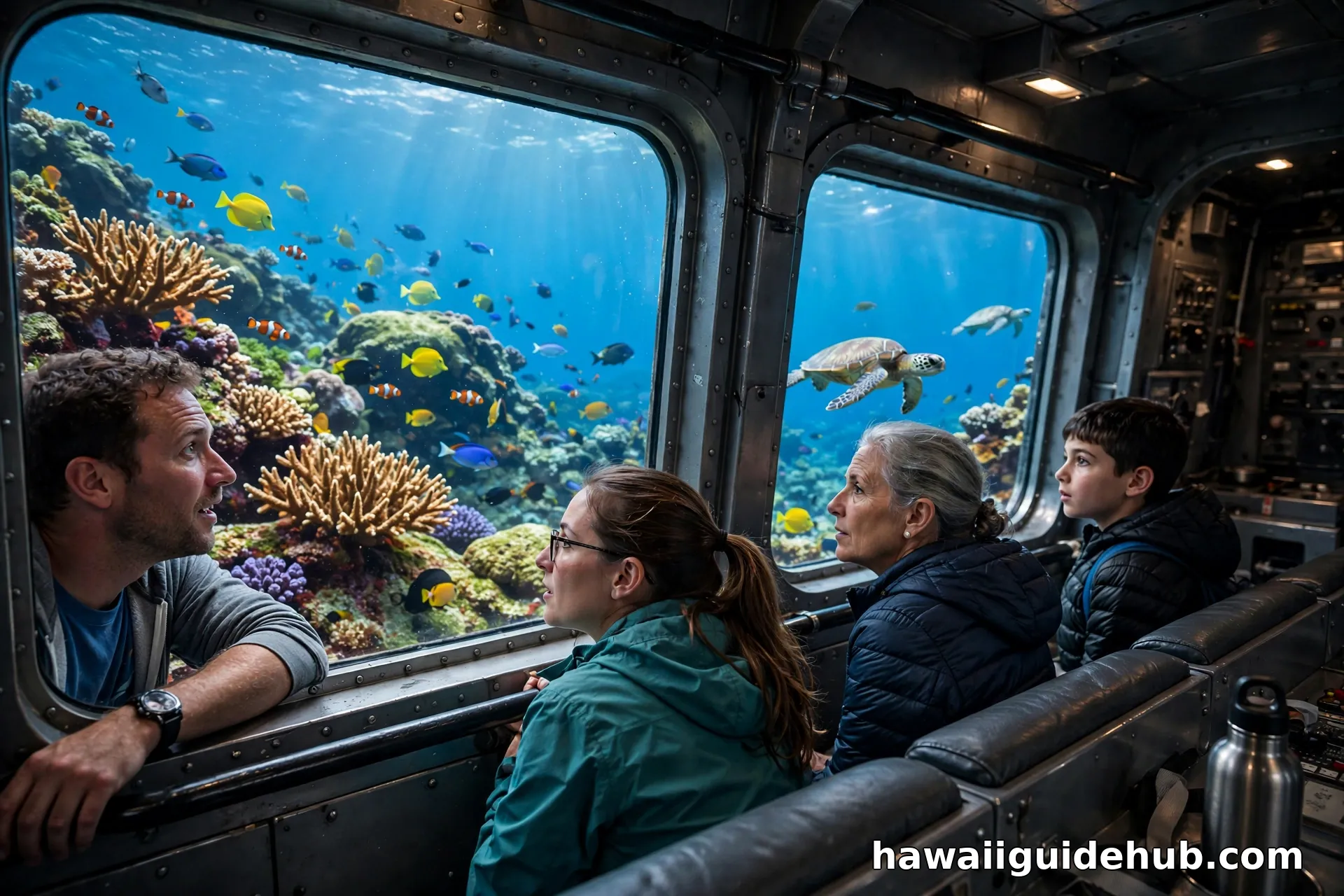
Glass bottom boat tours offer a similar window into the reef from the surface and run from several harbors. Whale watching tours from December through April let you see humpback whales breach from the deck, no swimming involved. Snorkel cruise boats are also an option even if you stay on board: many non swimmers book the cruise for the scenery, the narration, and the lunch, and simply enjoy the ride while others snorkel. Just confirm with the operator that riders are welcome, which they almost always are.
Tidepools: Hawaii’s Natural Aquariums
Tidepools are the perfect middle ground: real ocean life you can see while standing on rock in inches of water. At low tide, lava rock pools trap small fish, crabs, sea urchins, and anemones, and you can spend an hour crouched over them like a natural aquarium. Good spots include the tidepools at Shark’s Cove on Oahu’s North Shore in calm summer months, the Kapalua tidepools on Maui, and the pools along the Kona coast on the Big Island.
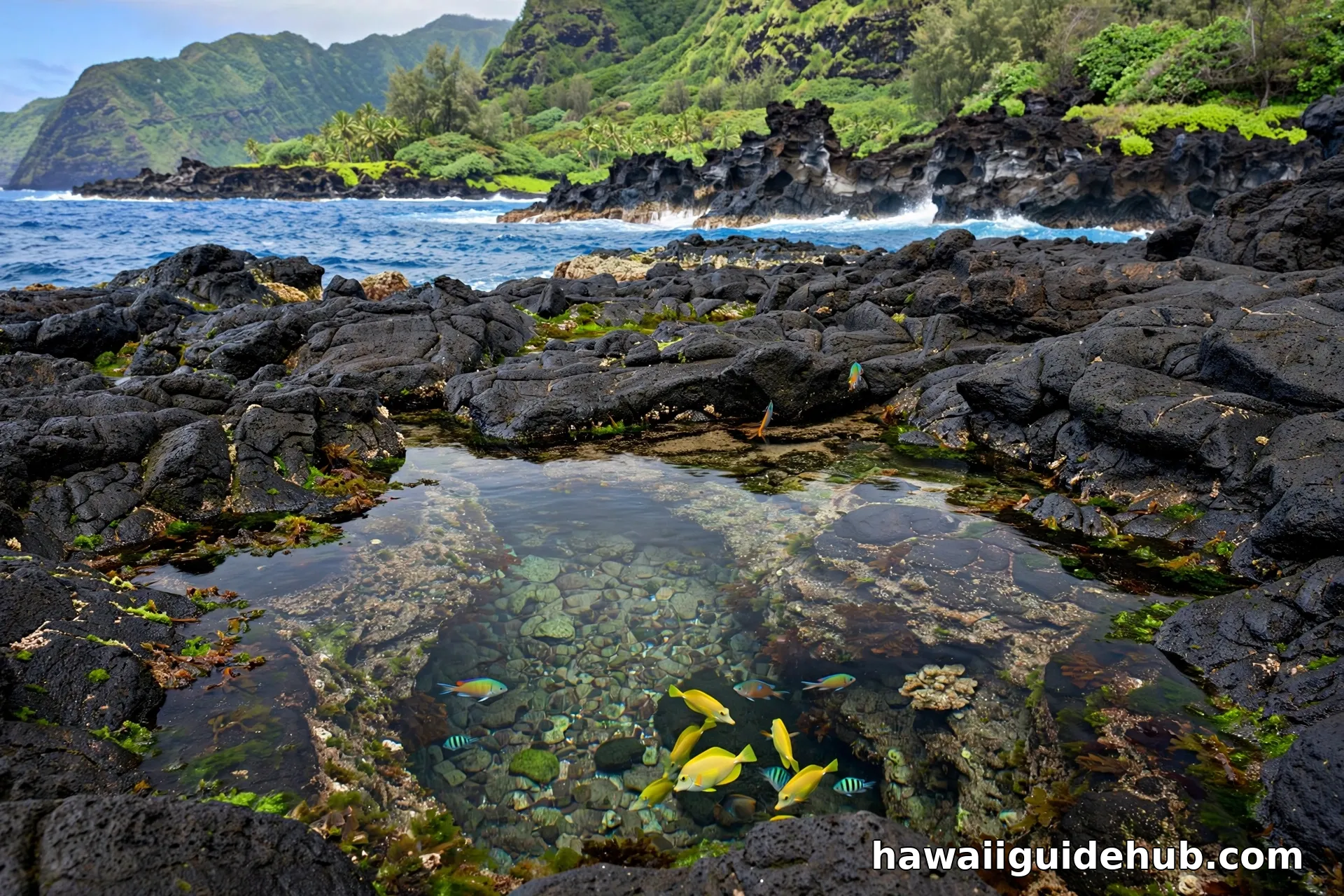
Tidepooling has its own safety rules. Go only at low tide on calm days, wear reef shoes or sturdy sandals because lava rock is sharp, watch the ocean behind you for waves, and never turn your back on the surf. Do not touch coral or sea life, and give any honu (green sea turtles) resting on rocks plenty of space. The things to do around Hanalei include several shoreline spots where careful tidepooling is possible in summer.
Waterfalls, Volcanoes, and Scenic Drives
Hawaii’s greatest hits for non swimmers are almost all on land. On the Big Island, Hawaii Volcanoes National Park lets you walk through a lava tube, peer into the Kilauea caldera, and drive the Chain of Craters Road to the sea, all without touching water. Akaka Falls plunges 442 feet and is viewed from a paved loop trail. On Kauai, Waimea Canyon’s lookouts deliver Grand Canyon scale views from the parking areas, and the Kalalau Lookout frames the Nā Pali Coast. On Maui, the Road to Hana is a full day of waterfalls seen from the roadside, black sand beaches walked not swum, and the Haleakala summit at 10,023 feet for sunrise above the clouds.
Oahu packs plenty into a small island: Diamond Head’s summit trail, the Nuuanu Pali Lookout, Hanauma Bay’s overlook (the view is free even if you skip the water), and the Byodo-In Temple. Botanical gardens like Hoʻomaluhia and Waimea Valley’s gardens are peaceful half day outings. Coffee and chocolate farm tours on the Big Island and Kauai add tasty low key afternoons. None of these require you to float, tread water, or even own a swimsuit.
Culture, History, and Luaus
Hawaii’s cultural experiences are entirely land based and rank among visitors’ favorite memories. A traditional luau, an evening of hula, music, and Hawaiian food, needs no swimming ability and works for every age. Our guide to traditional Hawaiian luaus and nighttime festivals helps you pick one that fits your island and budget.
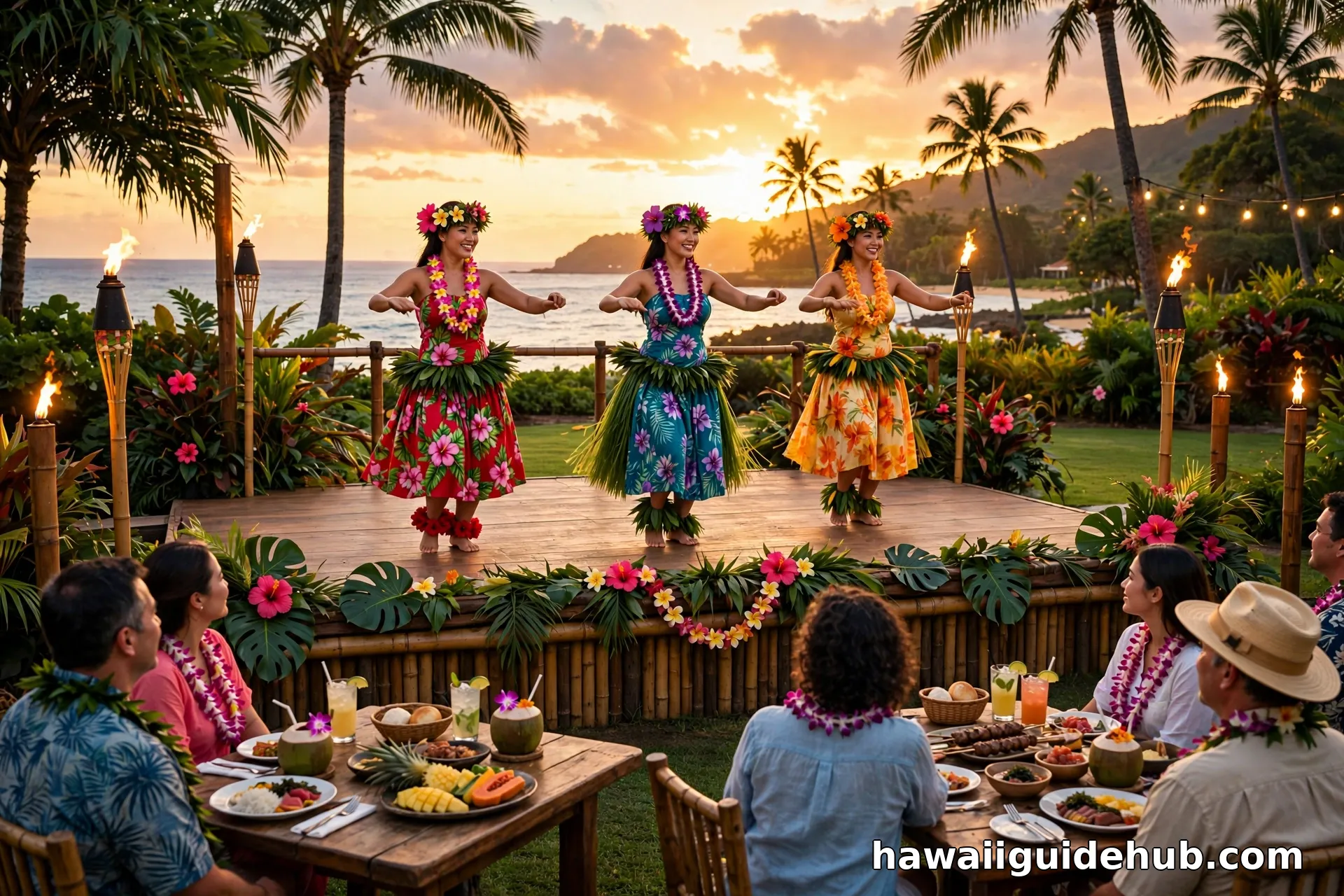
Pearl Harbor’s memorials and museums, ʻIolani Palace in Honolulu, the Bishop Museum, and the Polynesian Cultural Center all fill full days without a drop of ocean. Historic Lahaina town on Maui, Hilo’s farmers market and rainbow falls drive on the Big Island, and Hanalei town on Kauai are wonderful wandering destinations. Add a sunset sail, where you stay on deck the whole time, and your itinerary is full.
Getting Between Islands
Seeing more than one island is easy and requires no boats. Inter-island flights run like commuter shuttles, with Honolulu to Maui taking about 30 minutes gate to gate. Distances are short: roughly 98 miles to Maui, 103 to Kauai, and 168 to the Big Island from Honolulu, according to the Hawaii State Data Book. Non swimmers often enjoy splitting time between Oahu’s calm lagoons and a second island’s land sights, since every island has a different personality above the waterline.
Water Safety Rules for Non Swimmers
Non negotiable rules when you cannot swim:
- Stay in water you can stand in comfortably, and keep your feet on the bottom.
- Never rely on inflatable floaties, noodles, or air mattresses in the ocean; waves defeat them instantly.
- Wear a properly fitted life jacket for any boat based activity; ask the crew.
- Many guarded beaches lend life jackets free; ask the lifeguard on duty.
- Never turn your back on the ocean, even in ankle deep water.
- Do not enter the water at beaches with warning signs, red flags, or visible shore break.
- Learn what a rip current looks like and how to escape one: float, do not fight it, and signal for help.
- Take a swimming lesson before your trip if you can; even basic water comfort helps.
A note on snorkeling: many non swimmers wonder if they can snorkel with a vest. Snorkeling is actually the activity most associated with visitor drownings in Hawaii, because it looks easy and masks exertion. If you cannot swim confidently, skip snorkeling and choose the submarine, glass bottom boat, or tidepools instead. The reef will still be there, and you will enjoy it far more from a safe vantage point.
Video: The Best of Oahu Without Getting in the Water
A tour of Oahu highlights including many sights non swimmers can enjoy: cultural centers, ranch tours, waterfalls, and tide pools.
Frequently Asked Questions
Can I go to Hawaii if I cannot swim at all?
Yes. Most of Hawaii’s famous sights, including volcanoes, canyons, waterfalls, luaus, historic sites, and scenic drives, require no swimming. Choose calm lagoons for wading, take boat or submarine tours for ocean experiences, and follow the water safety rules in this guide.
What is the safest beach in Hawaii for non swimmers?
The man made lagoons at Ko Olina on Oahu are among the calmest, with rock barriers blocking ocean swell and shallow water far from shore. Magic Island Lagoon near Waikiki, Poipu Beach Park on Kauai, and Baby Beach on Maui are also reliably calm. Note that Ko Olina has no lifeguards, so stay in the shallows.
Can non swimmers snorkel in Hawaii?
It is not recommended. Snorkeling is the activity most associated with visitor drownings in Hawaii, and it demands more swimming ability than it appears. Non swimmers should choose submarine tours, glass bottom boats, or tidepools instead for a safe look at marine life.
Are there life jackets available at Hawaii beaches?
Many lifeguarded beaches lend life jackets free of charge; ask the lifeguard on duty. Snorkel and boat tour operators provide them as standard equipment. Bring your own properly fitted vest if you plan to wade at unguarded lagoons.
What can non swimmers do on a rainy day in Hawaii?
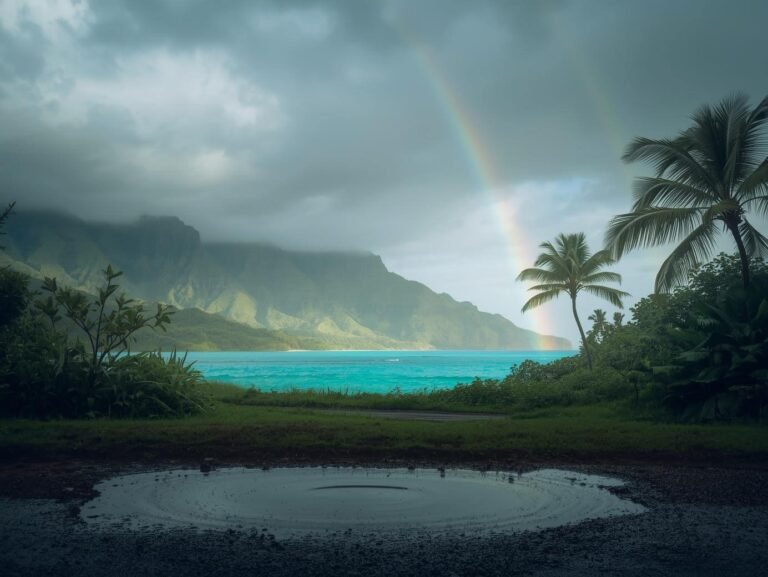
Rainy days favor land activities: museums like the Bishop Museum, ʻIolani Palace tours, the Polynesian Cultural Center, coffee and chocolate farm tours, shopping, and luaus in the evening. Our seasonal guide to what time of year it rains in Hawaii helps you plan around the wettest months.
Is it safe for non swimmers to wade at any beach?
No. Even ankle deep water can knock you over when shore break or surge is running. Wade only at calm, protected beaches on calm days, stay where you can stand firmly, never turn your back on the waves, and skip the water entirely when warning signs or red flags are posted.
Not knowing how to swim closes one door in Hawaii and leaves about fifty others wide open. The islands reward curiosity far more than aquatic skill: sunrise over Haleakala, steam rising from Kilauea, hula under tiki torches, sea turtles gliding past a submarine window, and tidepool fish darting around your ankles. Plan around calm water and land based wonders, respect the ocean’s power, and you will come home with the same sun warmed memories as everyone else.