Manapua: Hawaii’s Favorite Steamed Pork Bun

Break open a hot manapua and steam rushes out, carrying the sweet smell of char siu pork. The bun is soft and slightly sweet, big enough to fill your hand, and the filling inside is modest but rich: savory pork glazed in a red, tangy barbecue sauce. If you have never had one, think of a Chinese steamed pork bun, then imagine it supersized by Hawaii and given a name all its own.
This is the single complete guide to manapua in Hawaii. It covers what manapua is, where the name comes from, how this Chinese bun became a Hawaiian icon, the difference between steamed and baked styles, every filling worth knowing, and where visitors actually encounter manapua across the islands. If you have been searching for anything about manapua Hawaii, the answers are all here on this one page.
Manapua at a Glance
| Manapua 101 | Details | Order like a local |
|---|---|---|
| What it is | Hawai’i’s local steamed or baked bun, filled with savory fillings (char siu pork is the classic) | The local answer to hunger, any hour |
| Origin | Adapted from the Cantonese char siu bao, brought by Chinese plantation workers in the mid 1800s | Plantation history you can eat |
| Name meaning | Likely from mea ʻono puaʻa (pork pastry) or mauna puaʻa (mountain of pork) | Either way, pork is the point |
| Styles | Steamed (soft, pillowy) or baked (golden, breadlike) | Try one of each; pick your side |
| Classic filling | Char siu (Chinese barbecue pork) | Start here before you branch out |
| Other fillings | Curry chicken, kalua pig, shoyu chicken, lap cheong, sweet bean, ube, hot dog | Sweet and savory both work |
| Size | Much larger than a dim sum char siu bao, roughly the size of a fist | One is a snack; two is lunch |
| Where to find it | Bakeries, dim sum shops, convenience stores, and manapua trucks statewide | The trucks are the experience |
| Price | Usually a few dollars per bun, sold singly or by the dozen | By the dozen for the office |
| Best for | An affordable, filling local snack or quick lunch | The best dollars-to-fullness ratio in Hawaiʻi |
What Is Manapua?
Manapua is Hawaii’s version of the Chinese steamed pork bun. It starts with a soft, yeasted dough that is slightly sweet, wrapped around a savory filling, then steamed or baked until hot. The classic filling is char siu, the sweet red Chinese barbecue pork, but in Hawaii the bun grew larger and the fillings multiplied until manapua became something with its own identity.
Ask a local what manapua is and you will hear stories before you hear a definition. Childhood memories of the manapua man ringing through the neighborhood. After school stops at the corner store for a manapua and a pork hash. Boxes of manapua brought to potlucks, tailgates, and beach days. Manapua is not fine dining. It is everyday Hawaii food, portable, inexpensive, and deeply loved.
The most important thing to understand is that manapua and the dim sum char siu bao are cousins, not twins. A dim sum char siu bao is small and delicate, meant to be eaten in a few bites as part of a shared meal. A manapua is a meal in itself. It is larger, the dough is a little sweeter, and it belongs to Hawaii’s casual snack culture rather than to the dim sum cart.
How Manapua Came to Hawaii
Manapua arrived with the Chinese immigrants who came to Hawaii in the mid 1800s to work on sugar plantations. They brought their food traditions with them, including baozi, the filled steamed buns that were cheap, filling, and practical fuel for long days of hard physical labor in the cane fields. The char siu bao, a bun filled with barbecue pork, traveled especially well.
Some of those workers began selling the buns to earn extra income. They peddled char siu bao on foot through plantation camps and Honolulu neighborhoods, and over time the buns took on a local name and a local character. These traveling sellers became known as manapua men, and they are still remembered fondly in local stories and songs. Later generations sold from trucks and vans, driving slowly through neighborhoods with hot boxes of buns.
The buns kept growing. The modern oversized manapua is widely credited to Bat Moi Kam Mau, who opened the manapua shop Char Hung Sut in Honolulu in 1946 and began selling a much larger char siu bao than anyone had seen before. Her big buns became the template. A few decades later, in 1974, Honolulu’s Royal Kitchen became one of the first retailers of baked manapua, giving the steamed classic a golden, breadlike sibling.
Through all of this, manapua stayed stubbornly local. Unlike poke or Spam musubi, which traveled to the mainland and beyond, manapua never really exported. Outside Hawaii, if you order a manapua at a Chinese restaurant, you are likely to get a blank look. The dish belongs to the islands the way few foods do, and that is part of why visitors are so curious about it.
What Does “Manapua” Mean?
The exact origin of the word manapua is not fully settled, but two Hawaiian phrases are the leading candidates. The first is mea ʻono puaʻa, which translates roughly to pork pastry or tasty pork thing: mea ʻono covers cakes, pastries, and sweet foods, while puaʻa means pig or pork. The second is mauna puaʻa, meaning mountain of pork. Over time, whichever phrase came first got shortened in everyday speech into the single word everyone uses today.
What matters more than the precise etymology is what the name signals. Manapua is a Hawaiian word, not a Chinese one, and that tells you how completely the islands adopted this food. The dish has Chinese roots, but the name belongs to Hawaii, and no one in Hawaii calls it anything else.
What Is Inside Manapua
Char siu pork is the filling that defines manapua. The pork is roasted with a sweet, tangy red barbecue glaze, then chopped and folded into the bun with a little of its sauce. When you pull the bun apart, you find a modest pocket of meat in the center, not stuffed to bursting, just enough to flavor every bite. The contrast is the point: soft, mildly sweet bread against rich, savory pork.
Beyond the classic, Hawaii’s manapua makers have filled buns with just about everything. Curry chicken manapua is a local favorite, warm with spice. Kalua pig manapua wraps the smoky shredded pork of the imu into the bun. You will also find shoyu chicken, lap cheong (Chinese sausage), Portuguese sausage, and even hot dog manapua, a kid approved oddity that makes perfect sense once you try it.
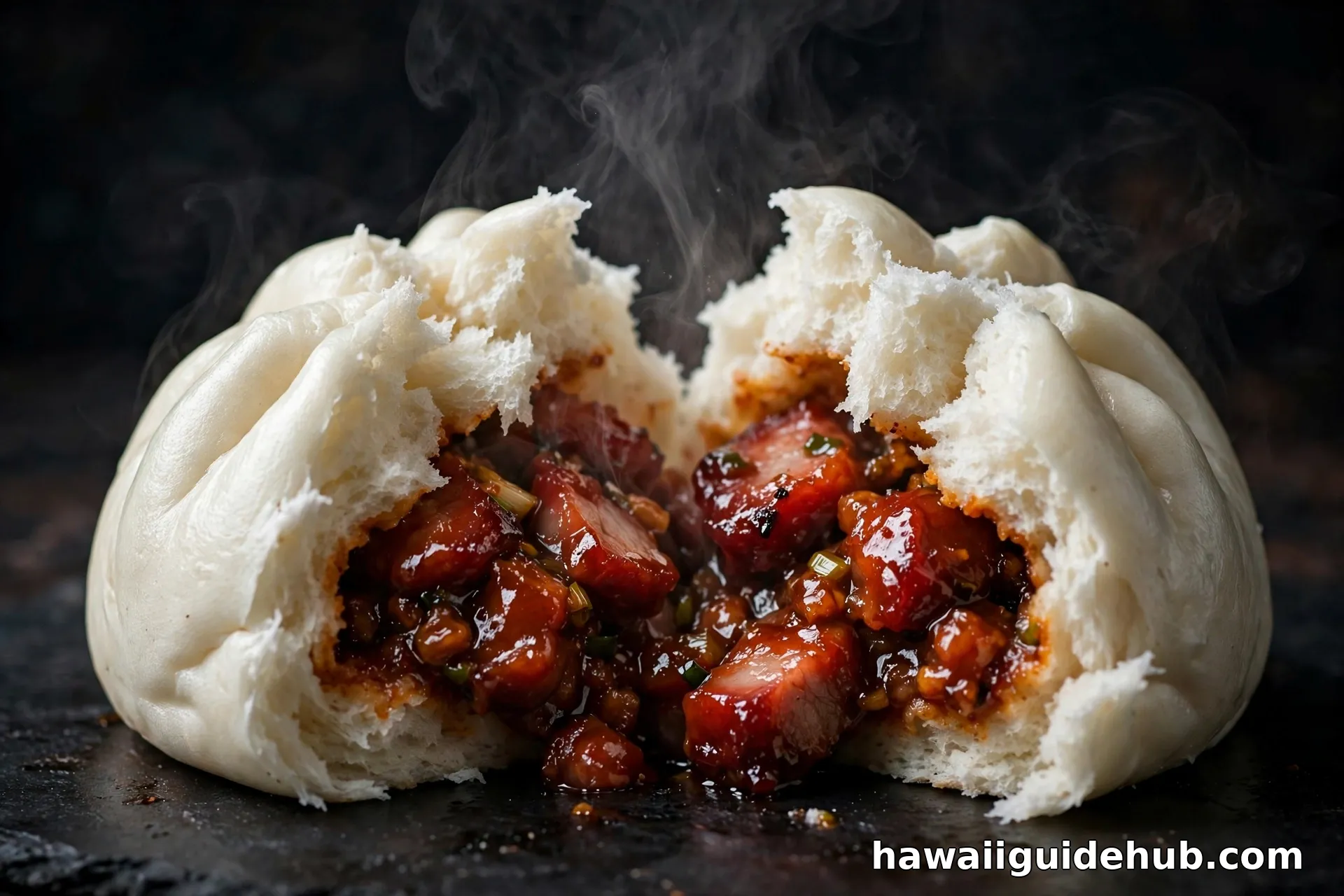
Sweet fillings exist too. Azuki bean and black bean manapua lean toward dessert, and purple sweet potato or ube manapua shows up in bakeries with a Hawaii style flair. If you eat meat free, look for tofu or vegetable manapua, which more shops now carry. The rule of thumb is simple: if it tastes good with soft sweet bread, someone in Hawaii has put it in a manapua.
Steamed vs Baked Manapua
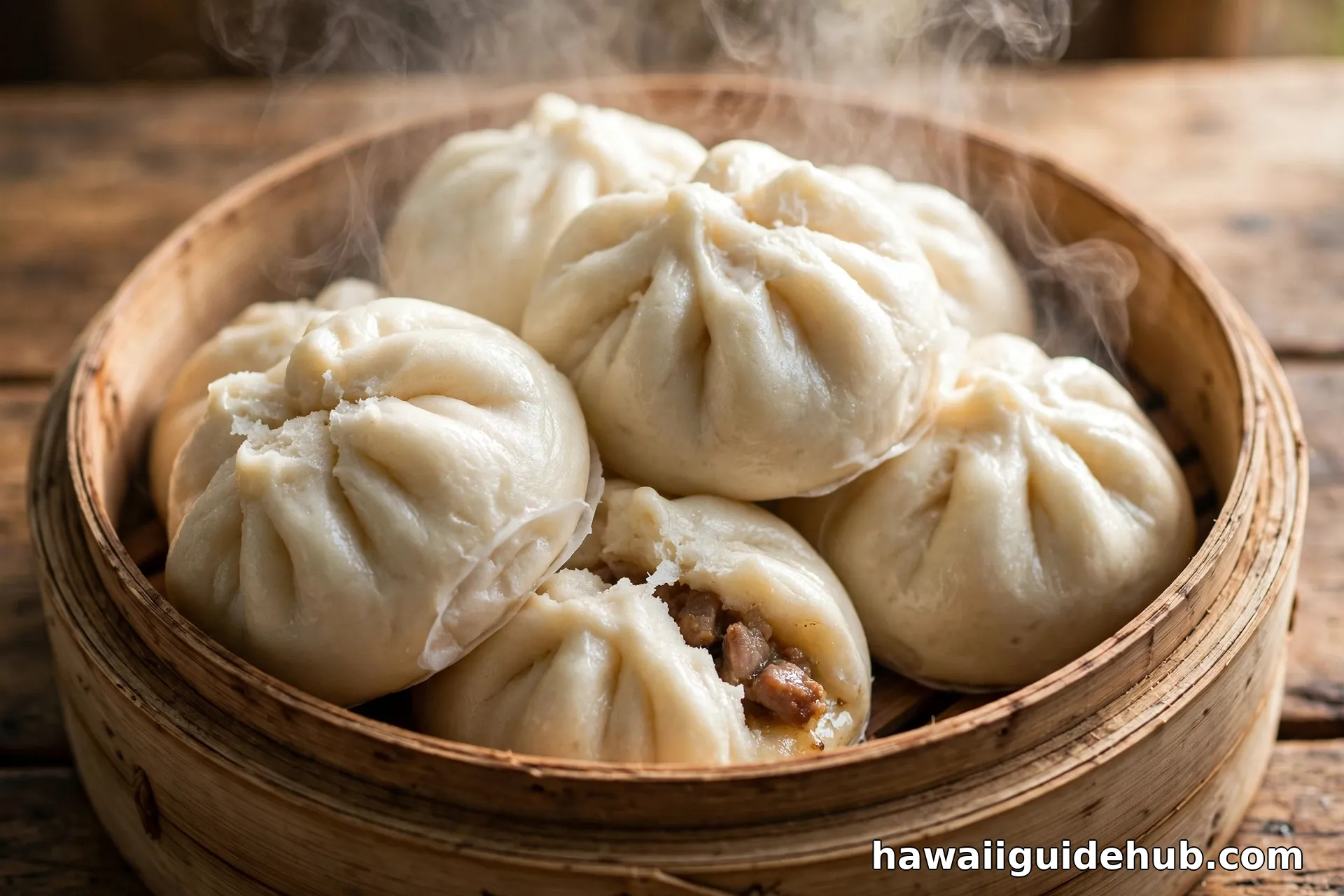
Steamed manapua is the original and still the most common. The dough comes out of the steamer soft, springy, and moist, with a smooth white surface. Eaten hot, a steamed manapua is pillowy comfort, the kind of thing that disappears in minutes. Most locals have a strong opinion about which shop steams the best bun, and those opinions are not to be argued with.
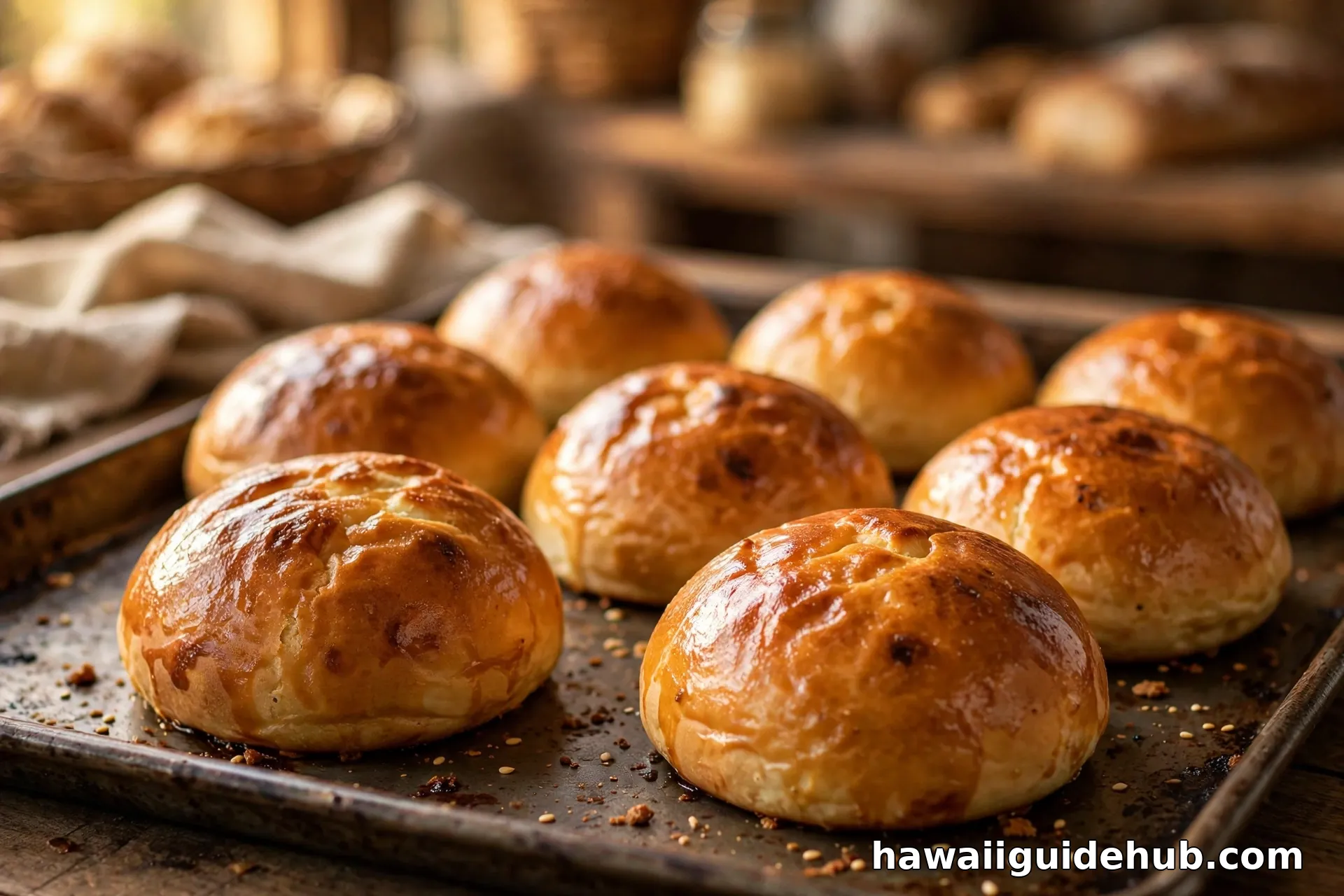
Baked manapua is the younger sibling, with a golden brown crust and a lighter, airier crumb, closer to a dinner roll than to a dumpling. Some people prefer it precisely because it feels less dense. It holds up better if you are carrying it around, and the toasty exterior adds its own flavor. Neither style is more authentic than the other at this point. They are simply two ways Hawaii eats the same idea.
You will occasionally see fried manapua too, though it is less common. And some shops decorate their buns with stamped logos or colored dots to mark the filling inside, which is handy when you buy a mixed dozen and need to tell the curry chicken from the char siu.
Manapua vs Char Siu Bao: What Is the Difference?
Visitors who know dim sum often ask whether manapua is just the Hawaiian name for char siu bao. The answer is no, and the differences are real enough to taste.
| Manapua (Hawaii) | Char Siu Bao (Dim Sum) | |
| Size | Large, fills your hand | Small, a few bites |
| Dough | Slightly sweeter, heartier | Delicate, fine crumb |
| Fillings | Char siu plus curry, kalua pig, hot dog, sweet options | Almost always char siu pork |
| Styles | Steamed or baked | Steamed (baked versions exist but are different) |
| Setting | Snack shops, stores, trucks, potlucks | Dim sum restaurants, shared meal |
| Role | A meal or hearty snack on its own | One small plate among many |
The short version: char siu bao is a dim sum dish, and manapua is Hawaii local food. Same ancestor, different life.
Where Visitors Find Manapua in Hawaii
You do not have to look hard. Manapua is everywhere in Hawaii, which is exactly why visitors love discovering it. Start with the bakeries and dim sum shops in Honolulu’s Chinatown, where trays of fresh buns sit behind glass and the good shops sell out by afternoon. Manapua shops with long local histories still operate around Oahu, and asking a local for their favorite is one of the best food conversations you can start on the islands.
Convenience stores are the great equalizer. Walk into almost any 7-Eleven in Hawaii and you will find manapua in the hot case next to the pork hash, which is how generations of local kids bought their after school snack. Supermarkets carry frozen manapua by the bag, and many plate lunch spots and okazuya counters sell them alongside everything else. On the neighbor islands, bakeries and grocery delis are your best bet, and the buns are just as good.
If you are lucky enough to hear a manapua truck rolling through a residential neighborhood, follow your ears. The old manapua men sold from bicycles and then trucks, and a few mobile sellers still work the islands. Buying a hot bun from a truck window is about as local as a Hawaii food experience gets. Hungry after hours? Manapua is also a star of our best late night eats in Hawaii roundup.
A few practical tips. Eat manapua hot if you can; a steamed bun that has gone cold is still fine, but it is a shadow of itself. Many shops sell them by the dozen at a better price, which makes them perfect for a group outing or a beach day. And do not skip the condiments: a little Chinese hot mustard or shoyu based dipping sauce on the side is how many locals eat them. For more of the foods that define the islands, our guide to must try local dishes in Hawaii puts manapua in its full delicious context.
How to Eat Manapua Like a Local
There is no ceremony to it, which is the charm. Pick up the bun, pull it open or bite straight in, and let the steam do its work. Locals often eat manapua as a hand held snack, no plate, no utensils, maybe a napkin. If you buy a mixed dozen, the colored dot or stamp on top usually marks the filling, so check before you bite if you are avoiding something.
Pairing matters more than people admit. A hot manapua with an ice cold drink on a warm afternoon is a small perfect thing. Pork hash, the open topped shrimp and pork dumpling, is manapua’s traditional sidekick in the convenience store hot case, and ordering the two together is a classic local move. At potlucks, manapua arrives in pink or white bakery boxes and disappears fast, so take yours early. It also shares the table happily with bigger local plates like huli huli chicken.
One more local habit worth copying: buy extra. Manapua reheats well with a quick steam, and a leftover bun makes an excellent breakfast. Visitors who try one bun on day one often find themselves hunting down a dozen before their flight home.
Video: The Story Behind the Name “Manapua”
Watch how the name manapua came from Chinese char siu bao during Hawaii’s plantation era.
Frequently Asked Questions
What is manapua made of?
A manapua is made from a soft, slightly sweet yeasted dough wrapped around a savory filling. The classic filling is char siu, Chinese barbecue pork, but fillings range widely: curry chicken, kalua pig, shoyu chicken, lap cheong, sweet bean paste, and more. The bun is steamed or baked.
Is manapua the same as bao?
Manapua is Hawaii’s adaptation of the Chinese char siu bao, but it is not the same thing. Manapua are larger, the dough is a little sweeter, and the fillings are far more varied. Char siu bao belongs to dim sum; manapua belongs to Hawaii’s everyday snack culture.
What does manapua mean in Hawaiian?
The word likely comes from mea ʻono puaʻa, meaning pork pastry or tasty pork thing, or from mauna puaʻa, meaning mountain of pork. The exact origin is debated, but the name is Hawaiian, which shows how fully the islands made this Chinese bun their own.
Are manapua steamed or baked?
Both. Steamed manapua is the original style, soft and pillowy. Baked manapua, popularized in the 1970s, has a golden crust and lighter crumb. Most shops sell both, and locals are loyal to their preference.
Where can I buy manapua in Hawaii?
Almost everywhere: bakeries, dim sum shops, manapua shops, convenience stores like 7-Eleven, supermarkets, and the occasional manapua truck. On Oahu, Honolulu’s Chinatown has the deepest selection. Neighbor island bakeries and grocery delis carry them too.
How much does manapua cost?
A single manapua usually costs just a few dollars, making it one of the cheapest satisfying snacks in Hawaii. Buying by the dozen brings the per bun price down, which is why they are a potluck staple.
Manapua is proof that a dish can travel across an ocean, change its name, double in size, and become something no one confuses with the original. It started as a plantation worker’s lunch and became the snack Hawaii reaches for at beaches, ball games, and family parties. Try one hot from a steamer and you will understand why this bun never left the islands. For another sweet piece of Hawaii’s immigrant food story, read our guide to malasadas and their Portuguese roots.