Hanalei Beach Guide: Bay Conditions, Wildlife and Access

Water-quality notice — checked October 6, 2026: Kauai County’s October 3 notice advised against swimming and other recreational ocean activities because of an island-wide brown-water advisory. Check current Kauai beach alerts and follow officials’ directions. This general planning guide is not a live conditions report.
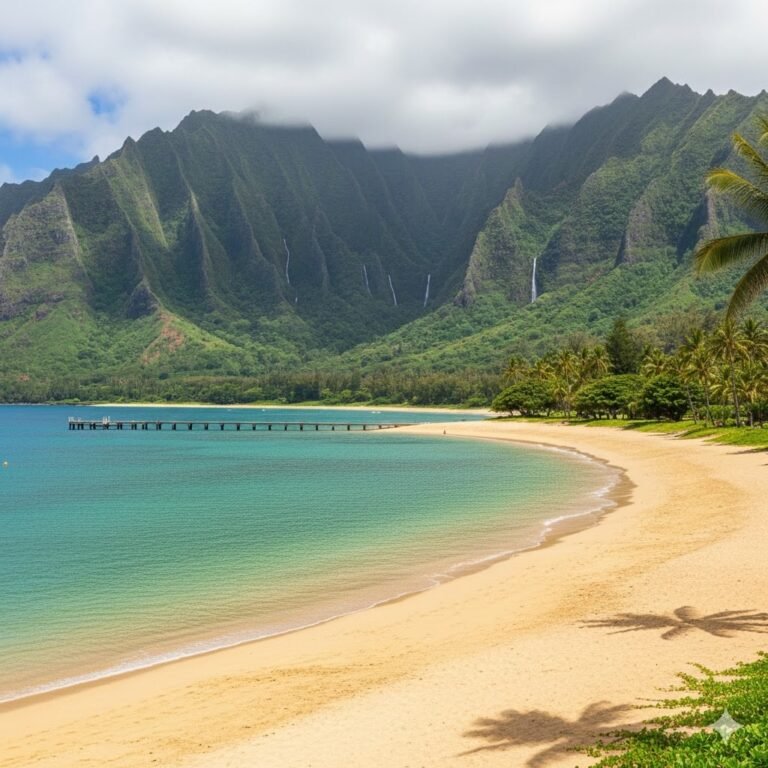
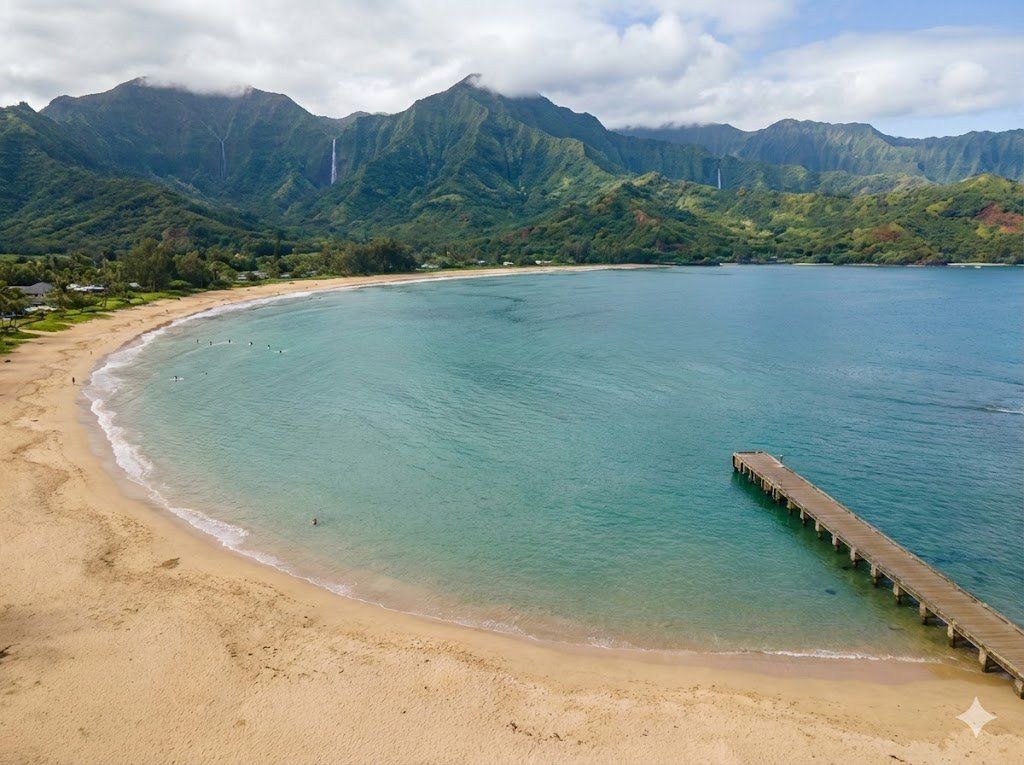
Hanalei Bay is a broad North Shore bay with a mountain backdrop, beach parks and the well-known Hanalei Pier. It can be rewarding to visit for scenery and time on shore. Swimming, surfing and paddling depend on conditions; the bay’s curved shape does not make its water consistently sheltered or beginner-friendly.
This guide focuses on the beach and bay. For galleries, food, history and nearby stops, see our Hanalei town and activities guide.
Understand the Different Parts of the Bay
Hanalei is not one uniform swimming area. Water depth, surf, currents and the distance from lifeguards vary along the beach. The pier is a landmark near the river end of the bay; it should not be used as a jumping platform or a reason to swim around pilings and boat traffic.
The Hawaii Ocean Safety directory lists Pavilion and Pinetrees towers at Hanalei Bay, with scheduled daily coverage from 8 a.m. to 6 p.m. Confirm that lifeguards are present and ask where conditions suit your ability. Their presence does not mean the entire bay is safe or continuously supervised.
For a shore visit, choose an open public beach-park area and remain beyond the reach of waves. During high surf, even walking close to the water or standing on wet sand can be hazardous. Follow posted warnings and leave if officials close an area.
Seasonal Conditions and Weather
North-facing shores commonly receive powerful winter swell. Summer often brings smaller surf, but this is a seasonal tendency, not a promise for a particular day. Wind, rain, currents and distant storms can change conditions throughout the year.
Use the National Weather Service marine forecast, current beach alerts and on-site lifeguard advice together. A sunny morning, clear water or other people entering the ocean cannot establish that it is suitable for your group.
Heavy rain can affect the river, roads and coastal water quality. Do not enter brown or murky water, and do not drive through flooding. Our Kauai winter guide explains how to keep activities flexible.

Swimming, Surfing and Paddling
Swimming: Choose a lifeguarded area and ask about the day’s hazards before entering. Stay within your ability, use a buddy and supervise children closely. Do not assume the water near the pier or an apparently shallow section is suitable for a child or weak swimmer.
Surfing: The bay has established surf areas, but their suitability changes with swell and ability. Beginners should seek qualified instruction and follow local safety advice. An experienced surfer riding a wave is not evidence that the same location is appropriate for a first lesson.
Stand-up paddleboarding: Wind, currents and surf can make the return journey harder than the outward paddle. Do not plan to cross the bay or head for the river mouth simply because the water appears calm. Check conditions, use suitable equipment and avoid boat routes and breaking surf.
Snorkeling: Hanalei should not be advertised as a guaranteed clear-water reef destination. Visibility and water movement vary. Do not swim around the pier’s pilings or travel farther from shore to find clearer water. If snorkeling is a priority, compare the practical differences in our Kauai beach guide, then make the decision from current conditions.
Wildlife: Observe Without Approaching
Sea turtles and Hawaiian monk seals may be seen in the area, but sightings are not guaranteed and have no reliable daily schedule for visitors. Resting animals need undisturbed space. Never touch, feed, chase, surround or block an animal’s route to the water.
NOAA’s Hawaii viewing guidance recommends at least 10 feet from sea turtles on land and in the water, at least 50 feet from monk seals, and at least 150 feet from a mother seal with a pup. These recommended distances do not replace the legal prohibition on harassment. Stay outside any protective signs or barriers and give more space if an animal reacts.
Report injured, stranded or entangled marine wildlife to NOAA’s statewide hotline at 888-256-9840. Do not try to move an animal or remove fishing gear yourself. For a person in immediate danger, call 911.
Humpback whales may be visible offshore during the Hawaii season. Use binoculars from a suitable shore position and do not enter the water to approach them. Our whale-season guide provides context for timing and shore observation.
Respect Hanalei Valley and Its Working Landscape
The valley behind Hanalei is a living agricultural landscape, not an open park for visitors to wander through. Taro fields and wildlife habitat deserve particular care. The Hanalei National Wildlife Refuge visitor page identifies designated public viewing opportunities and explains access restrictions.
Use the authorized viewpoint to learn about the valley. Do not enter taro fields, wetlands or private roads for a photograph, and do not stop on narrow refuge roads. A wildlife refuge in the valley is a different designation from a marine protected area in the bay; it should not be used to imply that all bay waters have the same restrictions.
For marine rules, consult the Division of Aquatic Resources information for the specific place and activity. Conservation rules differ between managed areas and do not guarantee clean water or safe recreation.
Access, Parking and a Practical Beach Day
Allow extra time for North Shore traffic and the one-lane bridge near Hanalei. Travel time from Līhuʻe varies with road conditions and traffic, so do not rely on a fixed 45-minute estimate. Check road notices before departure, especially after heavy rain.
Use designated public parking and obey restrictions. Do not assume every roadside space on Weke Road is legal, block driveways or stop on a bridge. If parking is full, change plans rather than creating access problems for residents and emergency vehicles.
Bring water, sun protection and the supplies your group needs. Confirm current restroom and access arrangements, particularly after storm damage. Keep valuables secure and pack out all rubbish, including food scraps.
Keep a land-based alternative ready. A town visit, an authorized viewpoint or a meal can be a better choice than forcing a water activity. The aim is to enjoy Hanalei while respecting the conditions, the community and the wildlife—not to complete a particular activity regardless of the day’s hazards.
For more land-based ideas, see our guide to things to do on Kauai.