Earthquake Safety in Hawaii: What to Do When the Ground Shakes

Hawaii experiences thousands of earthquakes every year. Most are too small to feel, but the islands have produced some of the largest quakes in American history, and unlike hurricanes, a big earthquake strikes with no warning at all. If you are looking for one complete guide to earthquake safety in Hawaii, covering what to do during the shaking, what to do after, and how the quake-tsunami connection works, this is it.
This guide is built on the guidance of the U.S. Geological Survey’s Hawaiian Volcano Observatory and the Great Hawaii ShakeOut earthquake drill program. The single most important thing to know fits in three words: drop, cover, hold on.
Earthquake Safety at a Glance
| Earthquake playbook | Do this | Why it matters |
|---|---|---|
| During shaking | Drop to hands and knees, cover head and neck, hold on under sturdy furniture | Falling objects cause most injuries, not collapse |
| Do NOT | Run outside or stand in a doorway during the shaking | Doorways are not safer; moving is the danger |
| After shaking | Check for injuries, expect aftershocks, check for gas leaks | The quake is over; the hazards are not |
| Near the coast | Move inland to high ground immediately after strong shaking (tsunami risk) | In Hawai’i, shaking can mean a wave is coming |
| Hawai’i’s big ones | 1868 M7.9, 1975 M7.7, 2006 M6.7, 2018 M6.9, 2026 M6.0 | It happens here; this is not theoretical |
| Annual drill | Great Hawaii ShakeOut, third Thursday of October | Practice before you need it |
| Visitor prep | Know your exits, secure heavy items in your rental, keep shoes by the bed | Thirty seconds of prep beats panic |
Why Hawaii Shakes
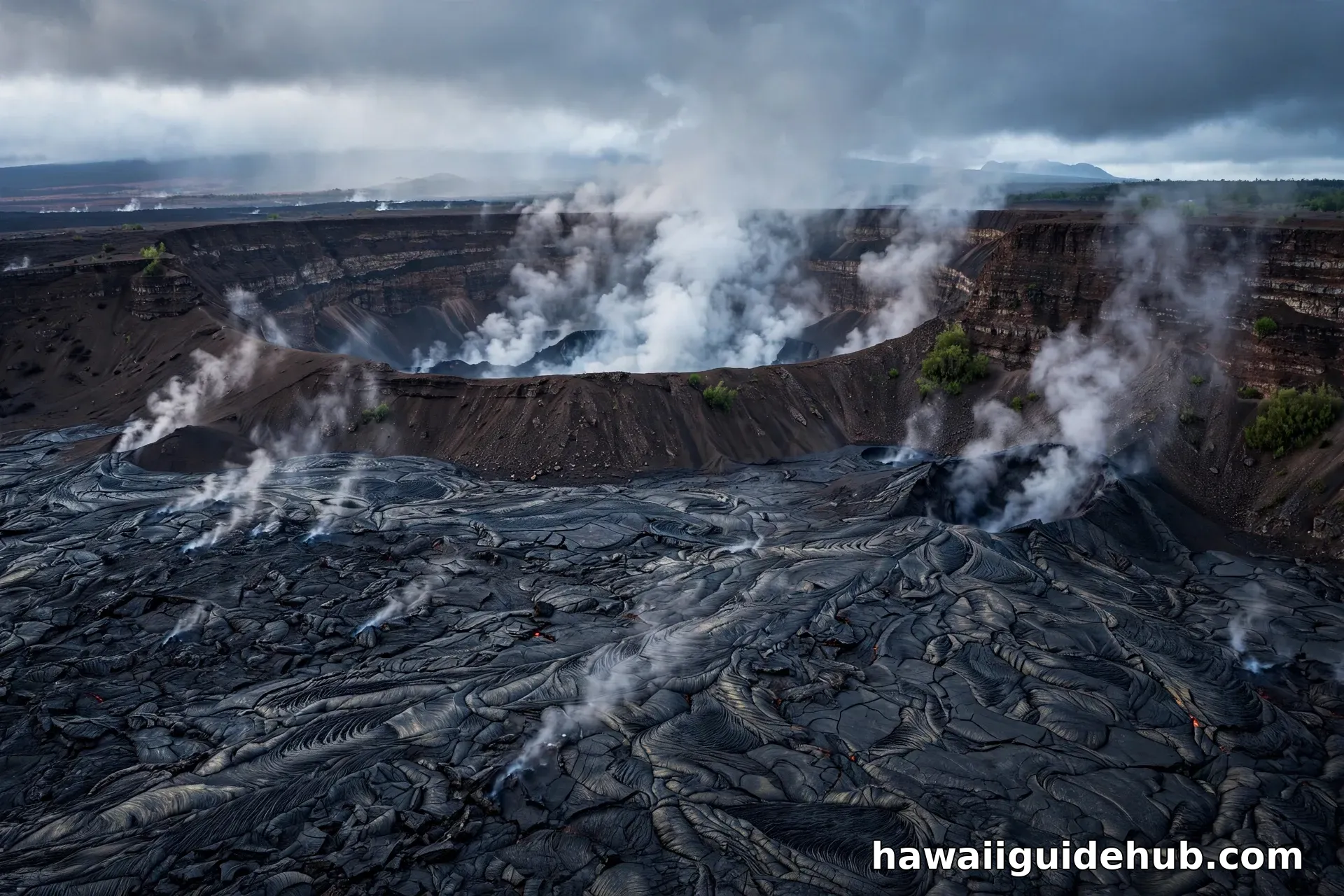
Hawaii’s earthquakes come from two main sources: the immense weight of the volcanic islands bending the oceanic crust beneath them, and the movement of magma within the active volcanoes. The result is constant seismic activity, especially on the Island of Hawaii, where the USGS Hawaiian Volcano Observatory monitors thousands of quakes each year. The vast majority are tiny and unfelt, but the islands have generated 12 earthquakes of magnitude 6 or greater since 1950.
The big ones are worth knowing about, because they show what is possible. The largest recorded earthquake in Hawaii’s history struck in 1868 at an estimated magnitude 7.9. A magnitude 7.7 quake hit in 1975. In 2006, the magnitude 6.7 Kiholo Bay earthquake damaged buildings across several islands, proving that seismic hazard reaches every island, not just the Big Island. In 2018, a magnitude 6.9 quake accompanied the Kilauea eruption. Most recently, a magnitude 6.0 earthquake struck on May 22, 2026. It is a matter of when, not if, the next damaging quake arrives.
It helps to know there are two flavors of Hawaiian quake. Volcanic earthquakes cluster around the active volcanoes and come in swarms: hundreds or thousands of small tremors over days or weeks as magma moves underground. The 2018 Kilauea eruption produced exactly this kind of swarm, culminating in the magnitude 6.9 quake. Tectonic earthquakes, by contrast, come from the flexing of the Earth’s crust under the islands’ enormous weight, and they can strike anywhere, including islands with no active volcanoes. Both types demand the same response: drop, cover, hold on.
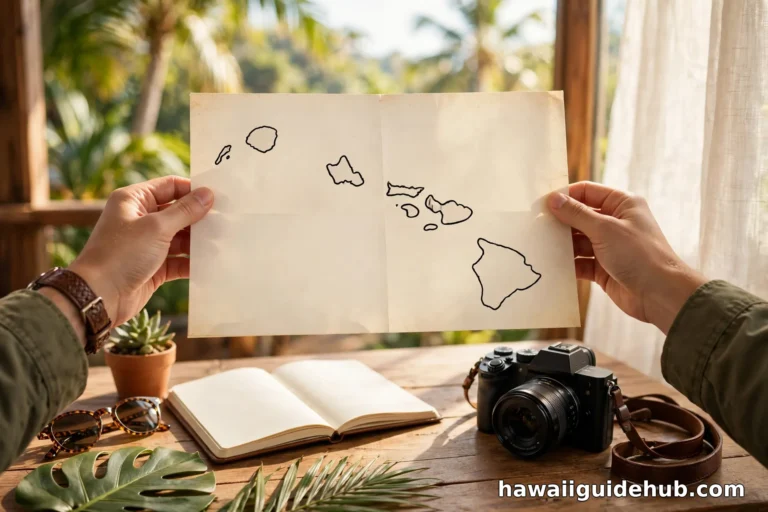
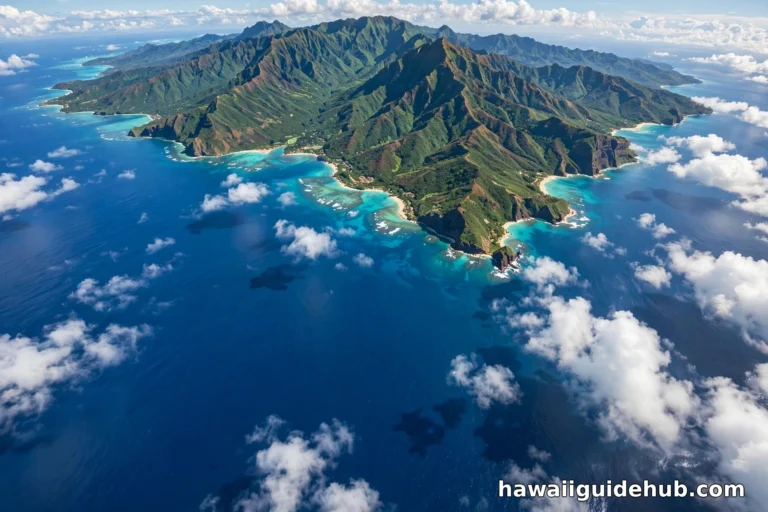
These are the volcanic giants whose restless flanks generate most of Hawaii’s earthquake swarms:
Earthquake Myths Visitors Should Forget
Movies and old advice have filled people’s heads with ideas that get them hurt. The triangle of life theory, which claims you should curl up next to furniture rather than under it, has been thoroughly debunked by rescue professionals: most injuries come from falling objects, and sturdy cover is what stops them. Doorways are not safe zones in modern buildings. Running outside is not safer than staying in. And small quakes do not reliably relieve pressure and prevent big ones; a swarm near a volcano bears watching, but no one can say what it means for certain. When the ground shakes, ignore everything except drop, cover, hold on.
Drop, Cover, Hold On: What to Do During an Earthquake
Earthquake safety experts, rescue teams, and researchers all agree: the best protection during shaking is drop, cover, and hold on. Here is exactly what each step means.
Drop
Drop to the ground on your hands and knees before the shaking knocks you down. This position keeps you from falling and lets you crawl if you need to move. Do it immediately, wherever you are.
Cover
Cover your head and neck with one arm and hand. If a sturdy table or desk is nearby, crawl underneath it for shelter. If no shelter is nearby, crawl next to an interior wall, away from windows, and stay there. Most earthquake injuries come from falling and flying objects, not collapsing buildings, so protecting your head and neck is the priority.
Hold on
Hold on to your shelter until the shaking stops. If the table or desk shifts, move with it. If you are not under cover, keep holding your head and neck. Stay down until the shaking fully stops; aftershocks can follow within seconds.
What NOT to Do During an Earthquake
Two common instincts are wrong, and the USGS is explicit about both. Do not run outside while the ground is shaking. With the ground moving under you, you can easily lose your balance and fall, and exterior walls and facades are among the first things to collapse, so running outside moves you toward danger, not away from it.
Do not stand in a doorway either. The old advice came from a photo of an adobe house where only the door frame survived, but in modern buildings doorways are no stronger than any other part of the structure, and they offer no protection from the flying debris that causes most injuries. Get under a table instead.
Wherever You Are When It Hits
In bed: stay there, and cover your head and neck with a pillow. In a high-rise: drop, cover, and hold on; do not use elevators during or immediately after the shaking. In a car: pull over somewhere clear, away from overpasses, power lines, and buildings, set the parking brake, and stay inside until the shaking stops. Outdoors: move away from buildings, streetlights, and power lines, then drop and cover. At the beach: protect yourself during the shaking, then move inland immediately afterward, because a strong local quake can generate a tsunami.
On a hiking trail, move away from cliff edges, rock walls, and slopes that could slide. Volcanic rock can crumble, and shaking loosens what gravity was already working on. Crouch and cover your head until the shaking stops, then assess the trail before continuing. For trail planning, see our guides to things to do on the Big Island and Hawaii Volcanoes National Park.
In a hotel room, the drill is the same but the hazards are specific: heavy televisions, mirrors, and artwork above the bed. When you arrive, take thirty seconds to look around with fresh eyes. Move the ice bucket and any glassware away from the bed, note which piece of furniture is sturdiest, and make sure the path to the door is clear. If shaking starts while you are in the shower, stay put, crouch, and cover your head; wet tile and running water make moving more dangerous than staying.

After the Shaking Stops
When the shaking stops, check yourself and the people around you for injuries before moving. Expect aftershocks: they can strike within minutes and sometimes nearly match the main quake, so stay ready to drop, cover, and hold on again. Put on sturdy shoes; broken glass is one of the most common post-quake injuries, and hotel rooms are full of it after strong shaking.
Check your surroundings for hazards. If you smell gas or hear a hissing leak, leave the building and report it; do not light matches or flip electrical switches. Avoid damaged buildings, and stay away from downed power lines. Use text messages rather than voice calls to check in with family, since texts get through when networks are congested and leave bandwidth for emergency responders.
If you are near the coast and the shaking was strong enough that you could barely stand, treat it as a natural tsunami warning. Move inland and uphill on foot immediately; do not wait for an official alert. A local tsunami can arrive within minutes of the earthquake. This is the single most important after-quake action for beachgoers in Hawaii.

Earthquake Prep for Visitors
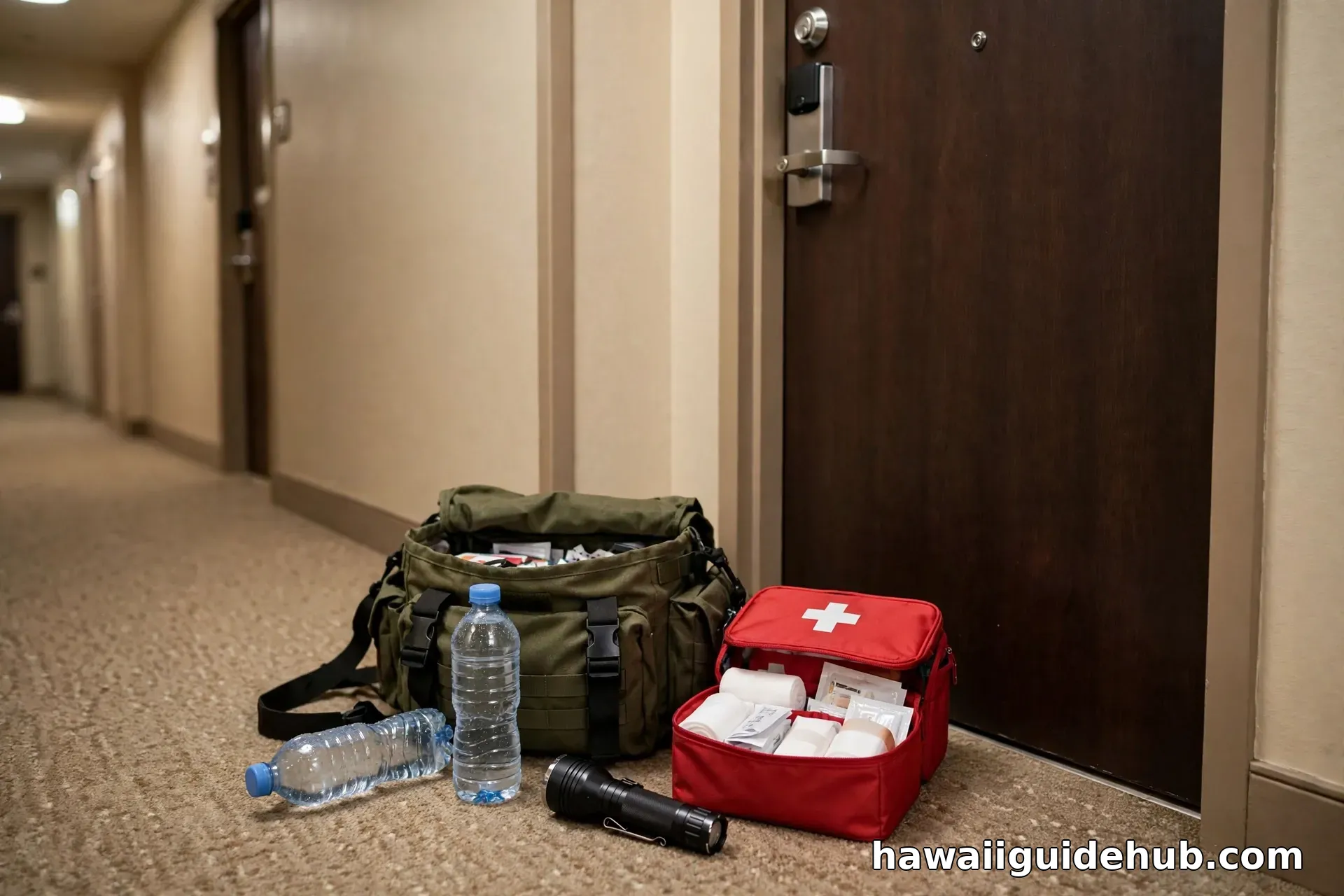
You cannot predict an earthquake, but you can arrive prepared. When you check into your hotel or rental, note the exits and stairwells; do not rely on elevators after a quake. Identify the sturdiest table or desk in your room now, while everything is calm. Keep your shoes, phone, and a flashlight by the bed, since quakes do not respect sleep schedules and dark rooms full of fallen objects are dangerous.
Secure your space lightly: move heavy objects off high shelves, keep the bathroom door closed so toiletries do not become projectiles, and know where the room’s fire extinguisher is. Save the county emergency alert app for your island before you fly, and keep a small Go Bag with water, snacks, medications, chargers, and documents by the door. If you are visiting during the third Thursday of October, you may catch the Great Hawaii ShakeOut drill; joining in for one minute is the best rehearsal you will ever get.
Video: Prepare for Earthquakes and Tsunamis in Hawaii
Hawaii’s ShakeOut program explains how to prepare for earthquakes and the tsunamis they can generate.
Frequently Asked Questions
What should you do during an earthquake in Hawaii?
Drop to your hands and knees, cover your head and neck, and hold on under a sturdy table or desk until the shaking stops. Do not run outside or stand in a doorway.
How common are earthquakes in Hawaii?
Very common. Hawaii experiences thousands of earthquakes every year, though most are too small to feel. The islands have had 12 quakes of magnitude 6 or greater since 1950, with the largest an estimated magnitude 7.9 in 1868.
Should you go outside during an earthquake?
No. Running outside during shaking is more dangerous than staying inside: you can lose your balance and fall, and exterior walls and facades often collapse outward. Stay inside, drop, cover, and hold on.
What should you do after an earthquake near the coast in Hawaii?
If the shaking was strong, move inland to high ground on foot immediately. A local earthquake can generate a tsunami that arrives within minutes. Do not wait for sirens or official alerts.
When is the Great Hawaii ShakeOut?
The Great Hawaii ShakeOut earthquake drill takes place on the third Thursday of October each year. Millions of people practice drop, cover, and hold on at the same time.
Is it safe to visit Hawaii Volcanoes National Park after an earthquake?
Check the park’s current conditions before going. Earthquakes can trigger rockfalls, damage trails, and crack roads, and the National Park Service may close affected areas until they are inspected. The park sits in one of the most seismically active spots in the state, so closures after significant quakes are routine and temporary.
What if an earthquake happens while I am snorkeling or on a boat?
In the water, you will likely not feel the shaking itself. The risk comes after: if the quake was strong and you are near shore, a tsunami is possible, so get out of the water and move inland to high ground. On a boat in deep water, stay aboard; tsunami waves pass harmlessly beneath vessels in the open ocean. Follow your captain’s instructions, since crews monitor emergency channels continuously.
Can earthquakes in Hawaii cause tsunamis?
Yes. Undersea or coastal earthquakes can displace massive amounts of water and generate tsunamis. That is why strong shaking near the shore is itself a tsunami warning sign: move to high ground as soon as the shaking stops.
Earthquake safety in Hawaii is simple to learn and worth the five minutes it takes. Memorize drop, cover, hold on, and practice it once in your hotel room so your body knows the drill. Know the two things not to do: do not run outside, do not stand in a doorway. And remember the coastal rule that matters most for visitors: strong shaking near the shore means move inland immediately. With that knowledge in place, you can explore the islands, from Oahu’s North Shore to choosing your first island, confident that you know exactly what to do if the ground moves.