Where to Watch the Best Sunrise in Hawaii

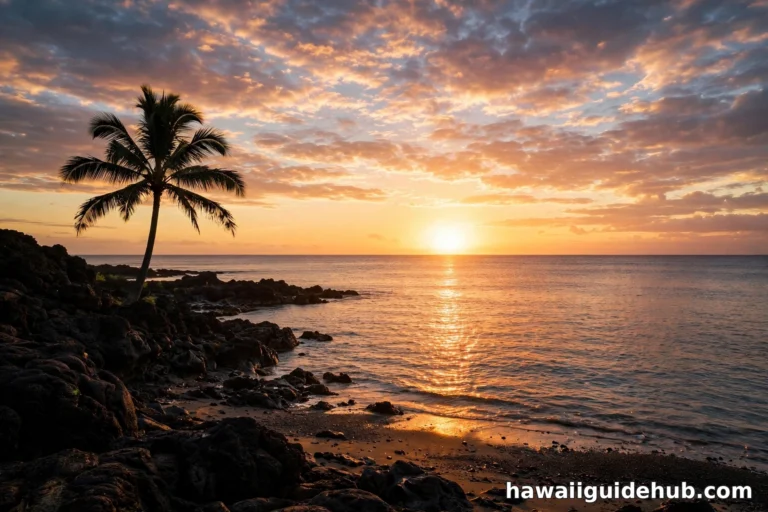
There is a moment, just before sunrise in Hawaii, when the whole ocean goes silver and the islands hold their breath. Then the sun clears the horizon and everything changes color at once: the water, the clouds, the volcanic peaks. Hawaiians named the great volcano of Maui Haleakalā, the house of the sun, for exactly this daily spectacle, and visitors have been waking before dawn to witness it for generations.
This guide is the single complete resource for the best sunrise in Hawaii. It answers where the sun rises in Hawaii, names the best sunrise spots on every major island, explains the one reservation you must book in advance, covers the best sunsets in Hawaii too, and finishes with practical tips and FAQs. If you are deciding between sunrise and sunset, or between islands, the answer is here.
Best Sunrise in Hawaii at a Glance
| The pick | The spot | What it takes |
|---|---|---|
| Top sunrise overall | Haleakalā summit, Maui (10,023 ft, above the clouds) | Book the 3:00 to 7:00 AM entry ahead |
| Best easy sunrise | Makapuʻu Point, Oʻahu (paved trail, free) | The low-effort pick: paved and free |
| Best beach sunrise | Lanikai Beach, Oʻahu (Mokulua Islands offshore) | Just show up; the islands do the work |
| Highest sunrise | Mauna Kea summit, Big Island (13,803 ft) | Serious altitude; dress warm |
| Sunrise times | About 5:38 AM in summer, 6:55 AM in winter | Check the exact time for your date |
| The reservation | Yes for Haleakalā sunrise (3:00-7:00 AM entry) | Haleakalā only; book it early |
| Best sunset | Haleakalā summit or any west-facing beach | The summit pulls double duty |
Where Does the Sun Rise in Hawaii?
The sun rises in the east in Hawaii, just as it does everywhere in the Northern Hemisphere. What makes Hawaiian sunrises special is not the direction but the setting: on the islands, east-facing shores look out over thousands of miles of empty Pacific, so the sun climbs straight out of the ocean with nothing between you and the horizon.
Two details surprise first-time visitors. First, Hawaii does not observe daylight saving time, so sunrise times stay honest all year: the sun comes up as early as about 5:38 AM in midsummer and as late as about 6:55 AM in midwinter. Second, the exact compass point of sunrise shifts with the seasons, rising a little north of east in summer and a little south of east in winter. An east-facing beach works year round, but the precise spot where the sun clears the horizon moves along the coastline through the year.
The sunrise also carries deep cultural meaning in Hawaii. Haleakalā means the house of the sun, and Hawaiian legend tells how the demigod Māui climbed the great volcano and lassoed the sun to slow its journey across the sky, giving his mother more daylight to dry her kapa cloth. Whether or not you know the story, standing at the summit as the light returns gives you a sense of why this daily event earned a mountain named in its honor.
The Best Sunrise Spots in Hawaii
Haleakalā Summit, Maui: The Classic
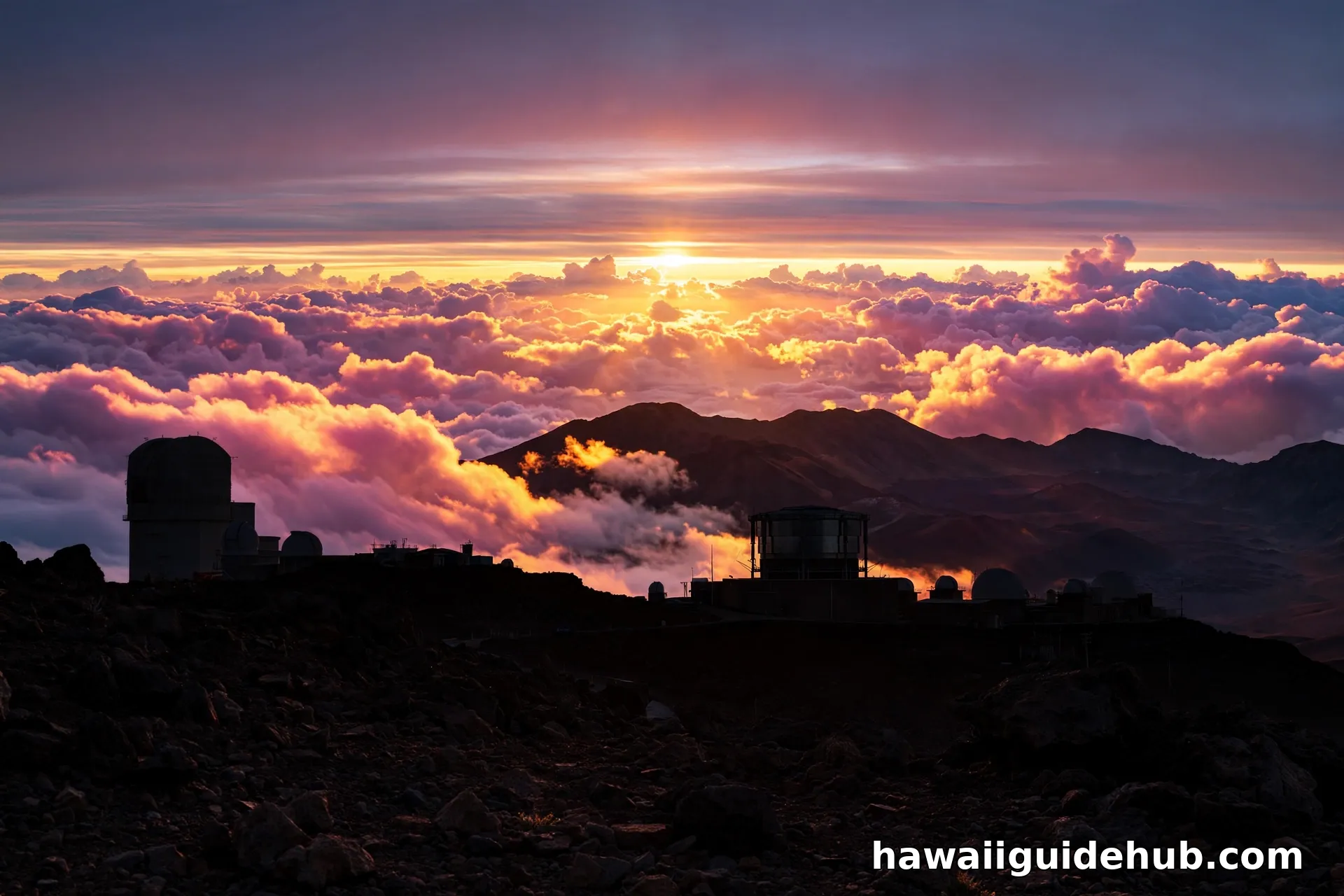
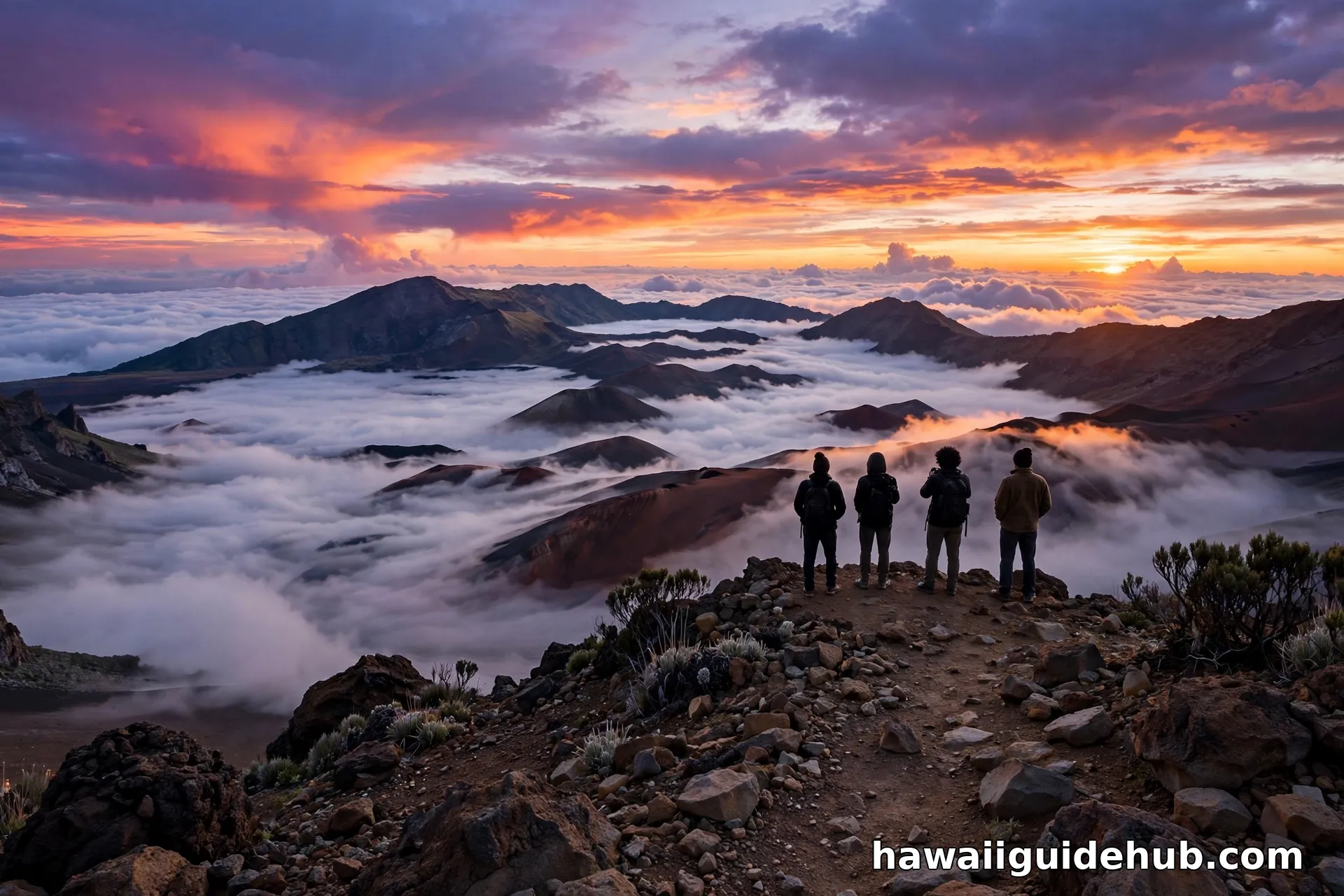
If there is one sunrise in Hawaii everyone should see once, it is Haleakalā. At 10,023 feet above sea level, the summit of Maui’s great shield volcano rises above a sea of clouds, and the sun ignites the cloud tops in pink and gold while the volcanic crater glows below you. Mark Twain called the view from this summit the most sublime spectacle he had ever witnessed, and it has lost none of its power.
This sunrise takes planning. The National Park Service requires a vehicle reservation for anyone entering the Summit District between 3:00 AM and 7:00 AM to view the sunrise. Reservations are booked on Recreation.gov, released 60 days in advance with a second release 2 days ahead, both at 7:00 AM Hawaii time, and they sell out fast. The reservation costs a small fee (about $1) plus the standard park entrance fee paid at the gate. No reservation is needed for sunset or for daytime visits.
Dress for winter, not for the tropics. At 10,000 feet, temperatures regularly drop into the 30s Fahrenheit with wind chill, even when it is 80 degrees at the beach. Bring a warm jacket, long pants and a hat. The drive takes about an hour from Kahului, 90 minutes from Kīhei and two hours from Kāʻanapali, so set the alarm brutally early and aim to arrive at least 30 minutes before sunrise for a good spot. For the full picture of what the park offers after dawn, see the Haleakalā sunset guide, since sunset here needs no reservation at all.
Makapuʻu Point, Oʻahu: The Easy One
For the best sunrise with the least effort, head to Makapuʻu Point on Oʻahu’s southeastern tip. The paved Makapuʻu Point Lighthouse Trail climbs 500 feet over a 2-mile round trip to clifftop lookouts that face straight into the sunrise, with the 1909 lighthouse below and Rabbit Island offshore. It is free, needs no reservation, and the trail is wide and stroller friendly. Arrive 45 to 60 minutes before sunrise to get a parking spot and walk up in the blue half-light.
Lanikai Beach, Oʻahu: The Postcard
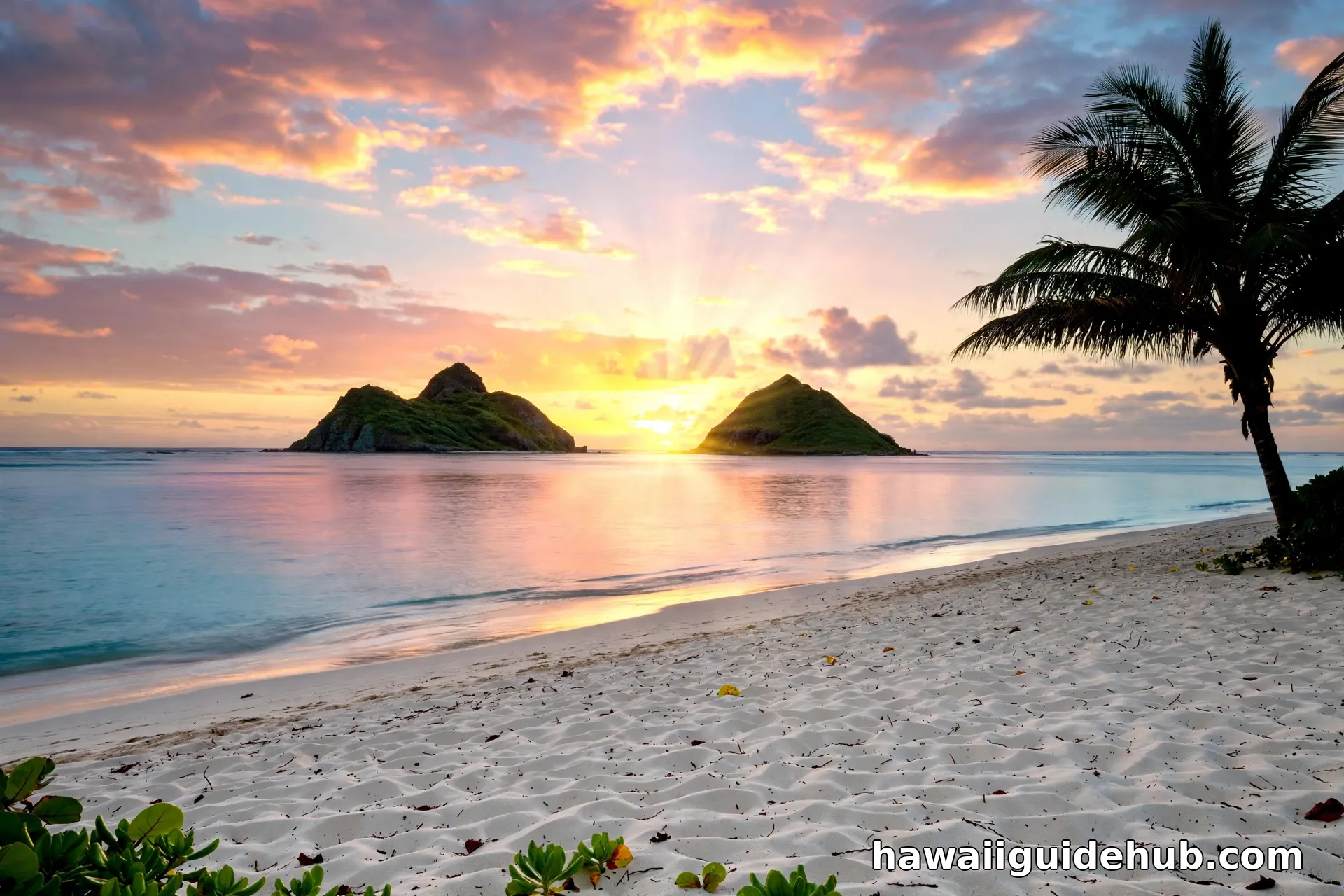
Lanikai Beach on Oʻahu’s windward coast is the sunrise people put on postcards. The sun rises directly behind the twin Mokulua Islands, two emerald islets a half mile offshore, and the shallow turquoise water turns to glass in the early light. Get there before dawn, because the small beach access paths fill with photographers. There are no facilities at Lanikai, so bring everything you need.
Mauna Kea, Big Island: The Highest
At 13,803 feet, the summit of Mauna Kea is the highest point in Hawaii and one of the highest sunrise viewpoints on Earth. Sunrise here means watching the sun clear the horizon while the shadow of the mountain stretches across the clouds below, with the lights of the observatories still twinkling. It is bitterly cold and the air is thin, so most visitors watch from the visitor station area and acclimate before driving higher. Check current access conditions before you go, as the summit road sometimes closes for weather.
East Kauaʻi: Keālia and Lydgate
Kauaʻi’s entire east shore faces the sunrise. Keālia Beach in Kapaʻa offers a long sandy stretch with the sun rising over the water and the mountains of the interior behind you, while Lydgate Beach Park adds protected lagoons and facilities for families. Both are free, uncrowded at dawn, and an easy drive from the island’s east-side resorts.
The Best Sunsets in Hawaii
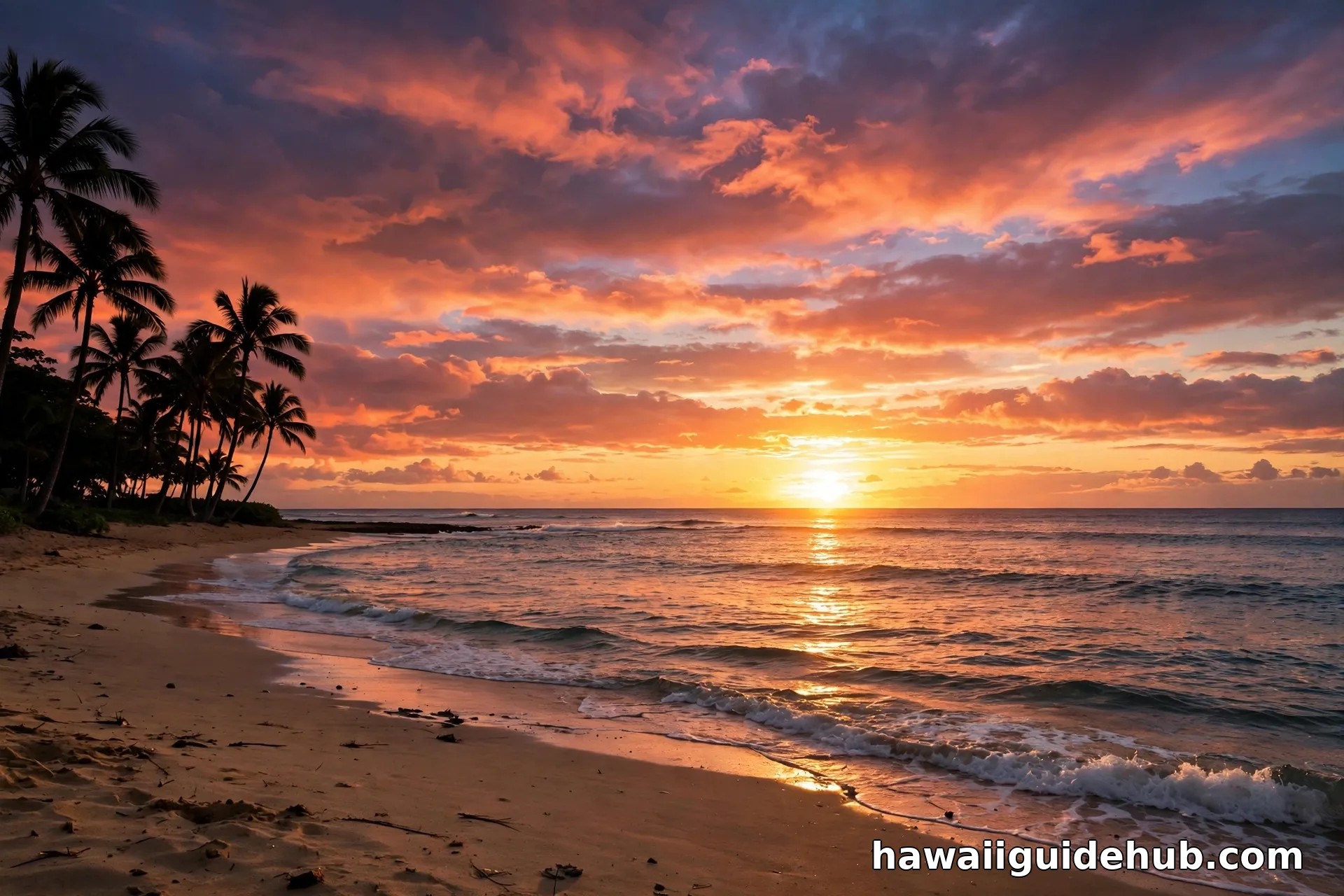
Sunrise gets the glory in Hawaii, but sunset deserves equal billing, and it is far easier to enjoy. The rule is simple: face west. On Oʻahu, the great sunset beaches run along the west and southwest shores, from Waikīkī’s famous golden-hour glow to the quieter sands of Ko Olina. On Kauaʻi, Poʻipū on the south shore and the beaches of the west side catch the sun dropping into the Pacific. On the Big Island, the entire Kona coast faces the evening sun, and Hapuna Beach and the Kailua-Kona waterfront are local favorites.
Haleakalā works for sunset too, and it may be the smarter choice: the summit views are just as spectacular, temperatures are milder than at dawn, and no reservation is required. Many Maui visitors do both, sunrise once for the spectacle and sunset for the relaxed version. Winter sunsets on the south and west shores tend to be the most colorful, when the sun sets over open ocean rather than behind the island’s mountains. Checking December weather patterns helps you pick the clearest evenings.
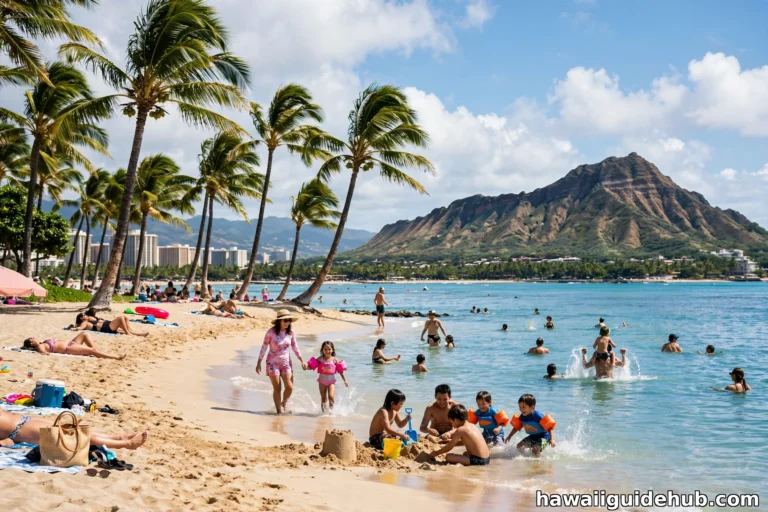
For beach sunsets, a few standouts earn their reputations. On Oʻahu, Waikīkī faces southwest and delivers the classic sunset-over-the-water view with Diamond Head in the frame, while Ko Olina’s lagoons on the west side are quieter and just as golden. On Kauaʻi, Poʻipū Beach on the south shore and Salt Pond on the west side both face the evening sun. On the Big Island, the Kona coast runs north to south along the water, so nearly every beach from Kailua-Kona to Hapuna faces sunset directly. Pick a west-facing beach, arrive 30 minutes before sunset, and stay 15 minutes after: the best color often comes once the sun is below the horizon.
Sunrise vs Sunset: Which Should You Choose?
Choose sunrise if you want the spectacle. The Haleakalā sunrise above the clouds is a once-in-a-lifetime sight, and east-facing beaches at dawn are empty in a way they never are at sunset. Photographers get cleaner light and fewer people, and you have the whole day ahead of you afterward.
Choose sunset if you want ease. No reservation, no 3:00 AM alarm, warmer air, and a natural end to the day with dinner afterward. Sunset is also more social: beaches fill with people unwinding, while sunrise spots attract only the committed. If your trip is short, do one great sunrise (Haleakalā if you can get the reservation) and as many sunsets as you like.
Island picker: on Maui, Haleakalā does both sunrise and sunset better than anywhere else. On Oʻahu, split them: sunrise at Makapuʻu or Lanikai, sunset at Waikīkī or Ko Olina. On the Big Island, Mauna Kea for sunrise and the Kona coast for sunset. On Kauaʻi, the east shore at dawn and Poʻipū at dusk. If you are still deciding which island fits your trip, the best island for first-time visitors guide breaks down the tradeoffs.
Sunrise Photography Tips
You do not need professional gear to photograph a Hawaiian sunrise, but a few habits help. Use a tripod or brace your phone on a rock: the pre-dawn light is dim and handheld shots blur. Arrive early enough to shoot the blue hour, the 20 minutes before sunrise when the sky goes deep indigo and the horizon glows. Include foreground interest, a palm silhouette, the Mokulua Islands, a fellow traveler, so the image has depth. Protect your lens from sea spray at beach locations, and at Haleakalā keep batteries warm in an inside pocket, because cold drains them fast at 10,000 feet.
A great sunrise is 90 percent preparation. Check the exact sunrise time the night before (it shifts daily), and for Haleakalā book your reservation the moment your date opens. Lay out warm layers even if the forecast says 80 degrees: summits are a different climate. Arrive 30 to 60 minutes before sunrise, because the pre-dawn colors often outshine the main event. Bring a headlamp or phone light for dark trailheads and parking lots, and carry water and a snack since nothing is open at 4:00 AM. Finally, have a backup plan: trade-wind clouds can hide the sun on windward shores, so know a second east-facing spot in case your first choice is socked in.
Frequently Asked Questions
Do I need a reservation for the Haleakalā sunrise?
Yes. Every vehicle entering the Summit District between 3:00 AM and 7:00 AM needs a sunrise reservation booked on Recreation.gov, released 60 days and 2 days in advance at 7:00 AM Hawaii time. The reservation costs about $1 plus the park entrance fee. No reservation is needed for sunset.
What time is sunrise in Hawaii?
Sunrise ranges from about 5:38 AM in midsummer to about 6:55 AM in midwinter. Hawaii does not observe daylight saving time, so the times shift gradually and honestly through the year.
Which Hawaiian island has the best sunrise?
Maui, for the Haleakalā summit above the clouds, which is the single most spectacular sunrise in the state. Oʻahu is the best runner-up for easy beach sunrises at Lanikai and Makapuʻu Point, and the Big Island’s Mauna Kea is the highest and most otherworldly.
Can I watch sunrise and sunset on the same day in Hawaii?
Yes, and Haleakalā is the best place to do it: sunrise above the clouds at dawn, then return for sunset with no reservation needed. On Oʻahu, pair a Lanikai or Makapuʻu sunrise with a Waikīkī sunset.
Can you see the sunrise from Waikīkī?
Yes, but it is not the best seat in the house. Waikīkī faces south and southwest, so the sun rises behind Diamond Head to the east rather than over open water. For a proper ocean sunrise, head to the east or windward side: Makapuʻu Point and Lanikai Beach are both under 30 minutes from Waikīkī by car.
Is it cold at the Haleakalā sunrise?
Yes, often in the 30s Fahrenheit with wind chill at 10,023 feet. Bring a real jacket, long pants and a warm hat, even in summer. This is the most common mistake first-timers make.
The best sunrise in Hawaii is worth setting an alarm for. Whether it is the sun igniting a sea of clouds from the summit of Haleakalā, rising behind the Mokulua Islands at Lanikai, or climbing out of the Pacific at Makapuʻu Point, dawn in the islands is a daily ceremony that costs nothing and rewards everyone who shows up. Pick your spot, prepare properly, arrive early, and let the house of the sun do the rest.