Flash Flood Safety in Hawaii: Watches, Warnings & What to Do

Flash flooding is one of the most underestimated dangers in Hawaii. The islands’ steep volcanic slopes turn heavy mauka rain into raging streams within minutes, and visitors driving unfamiliar roads are among the most vulnerable. If you want one complete guide to flash flood safety in Hawaii, this is it: how the watch and warning system works, why you must never drive through floodwater, and what to do if water starts rising around you.
This guide follows the official guidance of the National Weather Service in Honolulu, which issues the state’s flood watches and warnings, and the Hawaii Emergency Management Agency. The core rule is four words long: turn around, don’t drown.
Flash Flood Safety at a Glance
| The threat | The reality |
|---|---|
| Watch vs warning | |
| Flood watch | Flooding is possible; stay alert and avoid flood-prone areas |
| Flood warning | Flooding is occurring or imminent; act now and move to high ground |
| What the water does | |
| 6 inches, fast-moving | Can knock an adult off their feet |
| 12 inches | Can float a small car |
| 24 inches | Can carry away most vehicles, including SUVs |
| The core rule | Turn around, don’t drown: never drive or walk through floodwater |
| Vehicle deaths | More than half of all flood fatalities are vehicle-related |
| The Hawaiʻi pattern | Streams rise from trickle to torrent in minutes, then recede within hours |
Why Flash Floods Hit Hawaii So Hard
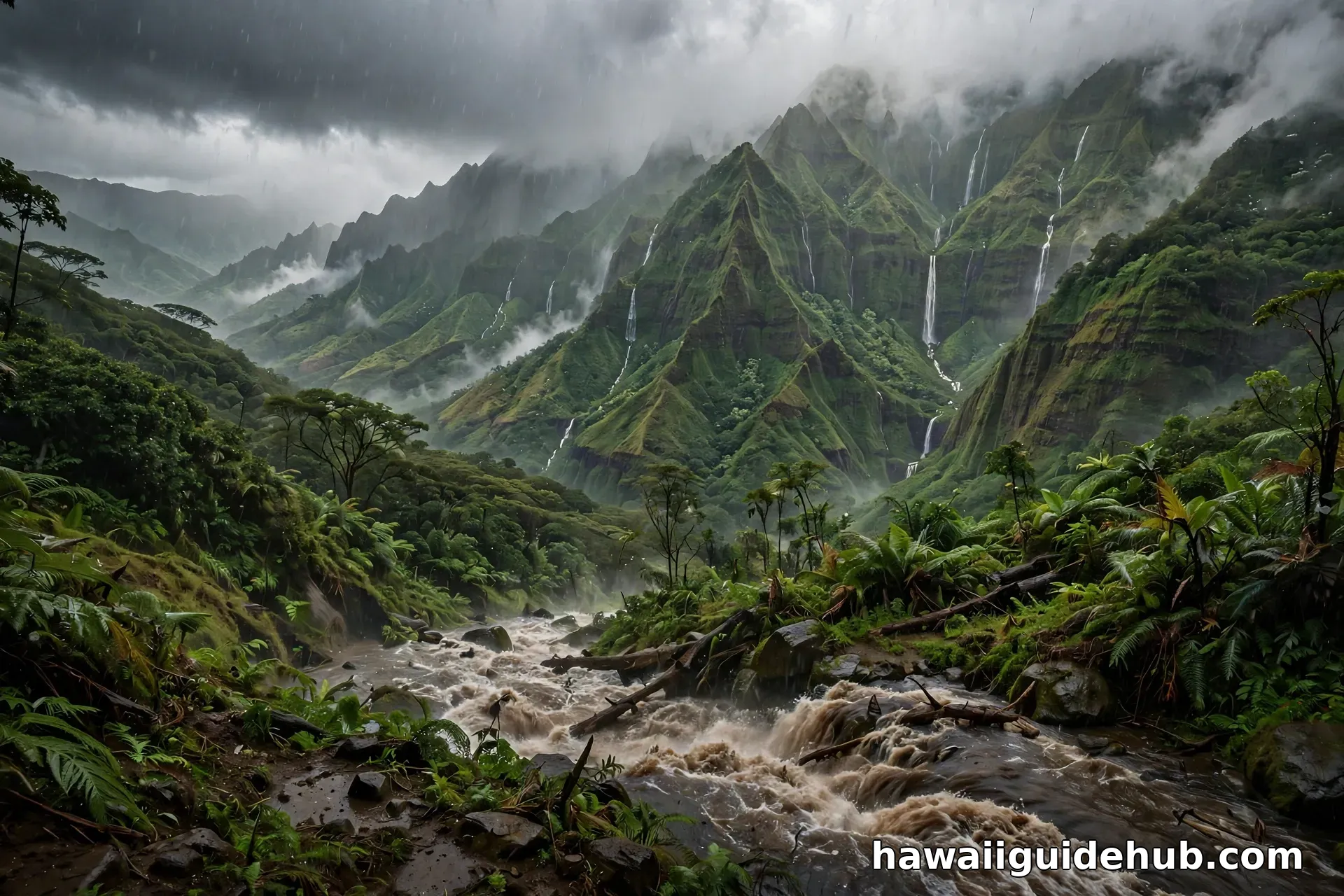
Hawaii’s geography is a flash flood machine. The islands rise thousands of feet within just a few miles of the coast, so rain that falls in the mountains funnels into steep, narrow stream valleys and reaches the lowlands with shocking speed. A sunny beach morning can turn dangerous by afternoon if heavy rain is falling in the mountains above, even when not a drop has fallen where you are standing. The National Weather Service notes that Hawaiian streams are notorious for sudden rises, going from a trickle to a raging torrent within a short period of time.
The good news in that same pattern is that Hawaiian streams also recede quickly, often within a few hours of the rain stopping. Flash floods here are intense but usually brief. The danger window is the rising water itself, and the people caught in it are overwhelmingly those who tried to cross it. Nationally, floods and flash floods kill more people each year than any other weather hazard, claiming nearly 90 lives annually in the United States, and more than half of those deaths happen in vehicles.
The October 2026 Kauai event shows the pattern in action. On the night of October 1, the National Weather Service warned that Doppler radar and rain gauges were showing one to two inches of rain per hour over the northern half of the island, with flash flooding ongoing or expected within the hour across Kapaa, Princeville, Hanalei, and the state parks of the north shore. No one on the beach that evening saw it coming from the sky above them; the rain was falling in the mountains. This is why flood safety in Hawaii means watching the mauka forecast, not just the clouds over your head.
Flood Watch vs. Flood Warning: Know the Difference
The National Weather Service in Honolulu uses two alert levels, and confusing them can cost you. A flash flood watch means conditions are favorable for flash flooding: heavy rain is falling or expected, and flooding is possible. When a watch is issued, change your plans away from flood-prone areas. Do not start a hike up a stream valley, do not park in a low dip, and keep your phone’s emergency alerts on.
A flash flood warning means flash flooding is occurring or is imminent: Doppler radar, rain gauges, or trained spotters have detected dangerous flooding. This is an act-now alert. Move to high ground immediately, stay out of streams and drainage channels, and never attempt to cross flooded roads. Warnings are geographically specific, so check exactly which areas are named; on October 1, 2026, for example, the Weather Service issued a flash flood warning for the northern half of Kauai, naming Kapaa, Princeville, Hanalei, and the Na Pali and Kokee state parks, with rain falling at one to two inches per hour.
Turn Around, Don’t Drown: The Rule That Saves Lives
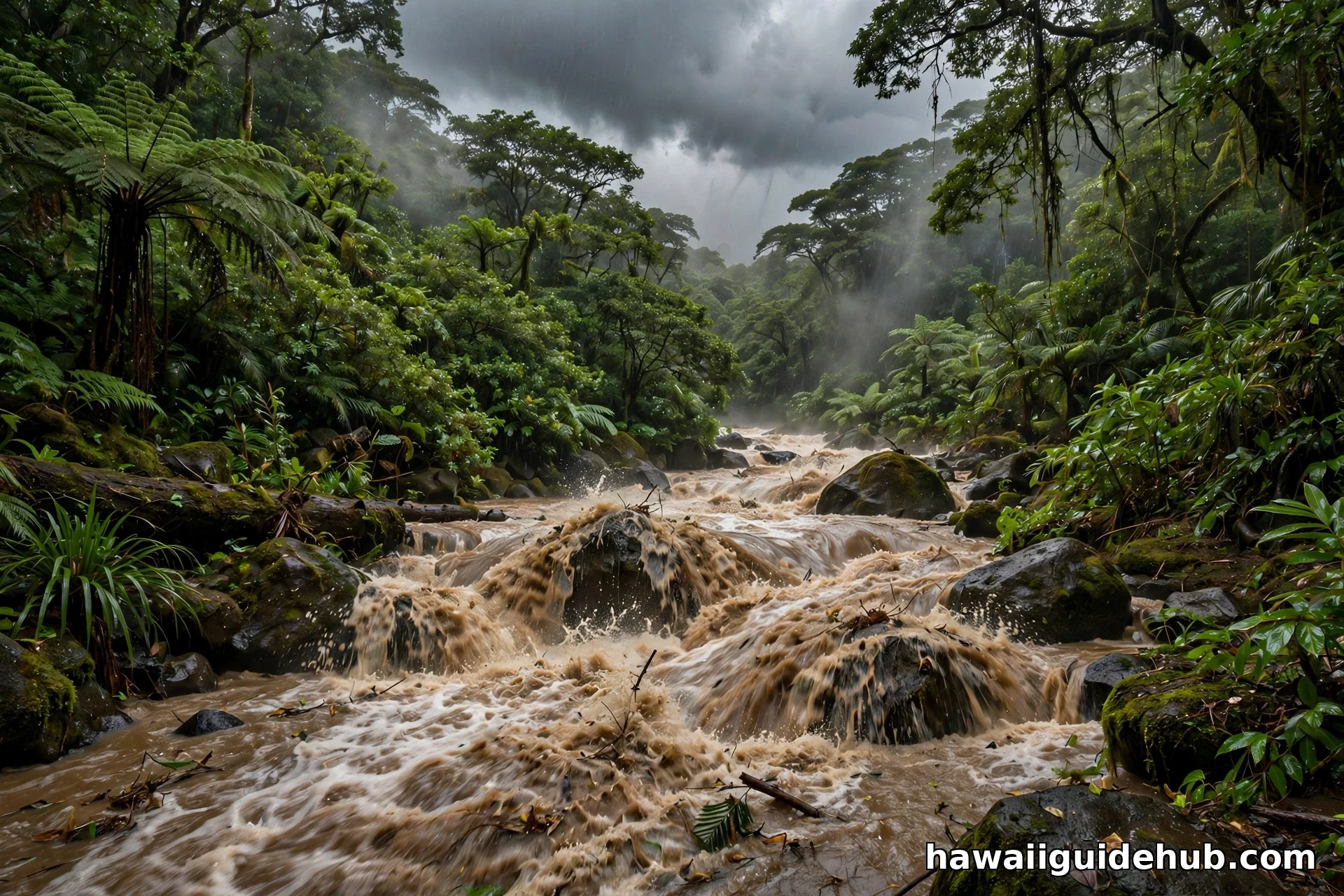
Most flood deaths occur in vehicles, because drivers fatally underestimate moving water. It takes just six inches of fast-moving water to knock an adult off their feet and carry them away. Twelve inches of water can float a small car. Eighteen to twenty-four inches of flowing water can carry away most vehicles, including large SUVs. You cannot tell how deep water is by looking at it, you cannot tell whether the road beneath has been washed away, and at night your ability to judge either is far worse.
So the rule is absolute: any time you come to a flooded road, walkway, or path, turn around and find another route. Do not try to estimate whether your rental car can make it. Do not follow another vehicle through. Do not assume the water is shallow because the last car got across; conditions change by the minute, and the roadbed under the water may already be gone. If your car stalls in rising water, abandon it immediately and move to high ground; vehicles can be replaced, and most flood deaths in cars happen to people who stayed inside too long.
Driving in Hawaii Rain: Practical Rules for Visitors
Rental cars and unfamiliar roads are a risky combination in heavy rain. Slow down well before you think you need to; Hawaiian roads are slick when rain first hits after dry spells, and ponding water hides potholes and debris. Use headlights, not just daytime running lights, so others can see you in downpours. Keep a generous following distance, and if rain is so heavy you cannot see the road markings, pull completely off the road into a parking lot or driveway, turn on your hazards, and wait it out.
Night driving in heavy rain deserves extra caution. The Weather Service specifically warns that flood dangers are harder to recognize after dark, when you cannot see how deep water is or whether the road continues beneath it. If you must drive at night during a watch, stick to well-traveled main roads, avoid shortcuts through low-lying areas, and treat any water across the road as a hard stop. A delayed arrival is always better than a rescue.
Never park in dry stream beds, dips, or low spots, even when the sky is clear. That picturesque pull-off at the bottom of a valley is exactly where water goes. When planning drives, check the forecast for the mountains, not just the beach; the guide to when it rains in Hawaii explains the island weather patterns that catch visitors off guard. On Kauai’s north shore, where roads thread through flood-prone valleys near Hanalei and Poipu, a rainy forecast deserves real respect.

Hiking and Waterfalls: Where Visitors Get Caught
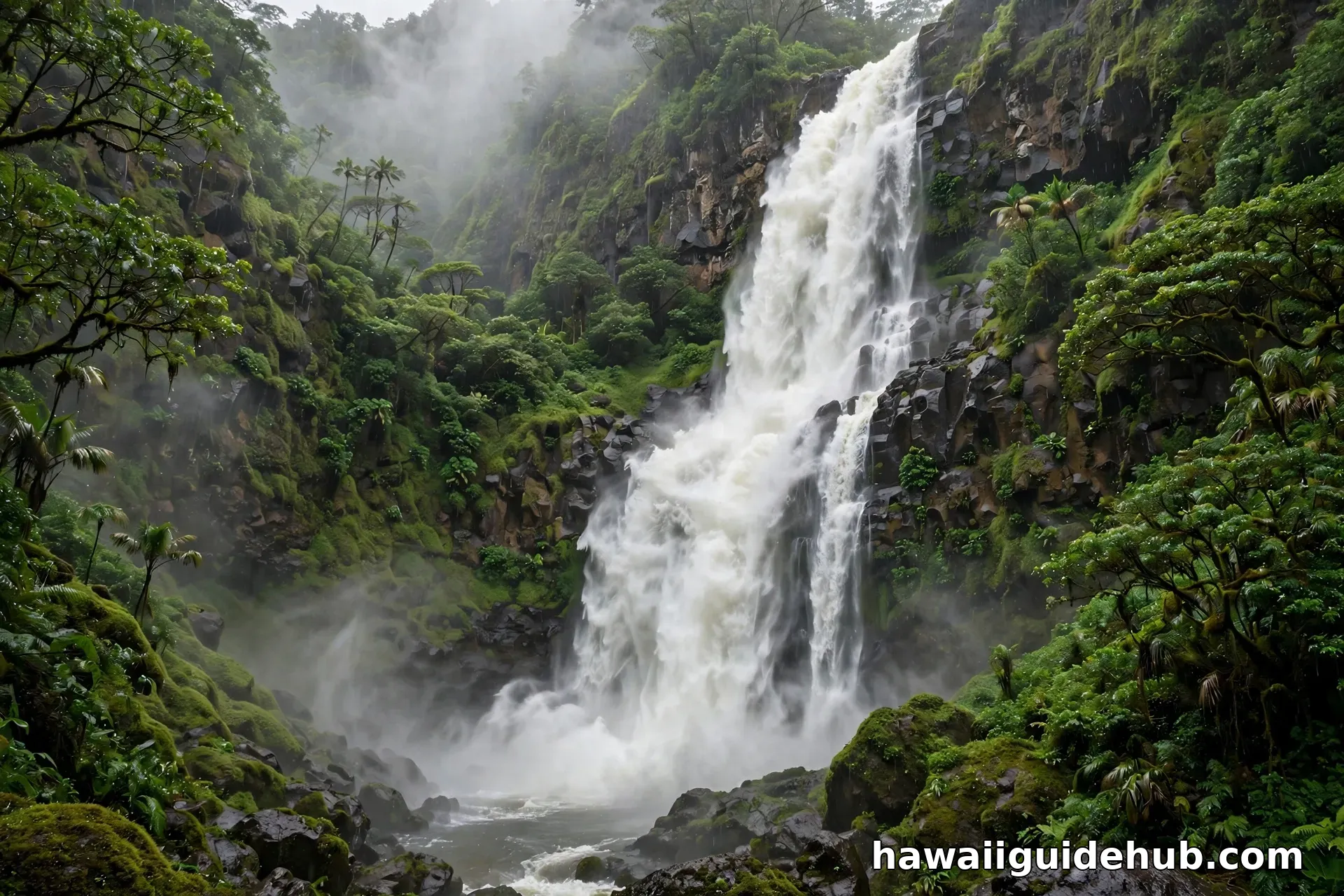
Flash floods kill hikers, too, and Hawaii’s waterfall trails are the classic trap. Never hike up a stream valley when rain is forecast, and never cross a stream that is rising, discolored, or carrying debris. If you are already on the trail and the water starts rising, or you hear a sudden roar from upstream, get to high ground immediately and do not try to cross back. Waterfalls are most dangerous during and just after heavy rain; that dramatic full-flow photo is not worth your life.
Before any hike, check the weather forecast and tell someone your plan and expected return time. If the sky looks threatening over the mountains, choose a ridge trail instead of a valley trail, or save the hike for another day. Rangers and trailhead signs mean what they say: when a trail is closed for flooding, it is closed because people have died ignoring the same sign.
What to Do If Water Starts Rising Around You
If you are on foot and water starts rising, move to the highest ground you can reach immediately. Do not walk through moving water; six inches is enough to knock you down, and you cannot see holes, debris, or missing pavement under the surface. If you are caught by fast water, try to move diagonally downstream toward the bank rather than fighting the current head-on.
If you are in a building and water is entering, move to a higher floor, but never into an attic without a way out. Turn off electricity at the breaker if you can do so safely and water is approaching outlets. If you are in a car and water is rising around it, get out and move to high ground on foot; unbuckle, and if the doors will not open, climb out through a window. Call 911 once you are safe, not while you are still in the water.
After the Water Recedes
Stay out of floodwater even after the rain stops. It can hide sharp debris, sewage, and downed power lines, and roads may be undermined even where they look intact. Do not drive around barricades; they mark roads that crews have not yet inspected. If your rental car was flooded, do not try to start it; report it to the rental company and document everything with photos for your travel insurance.
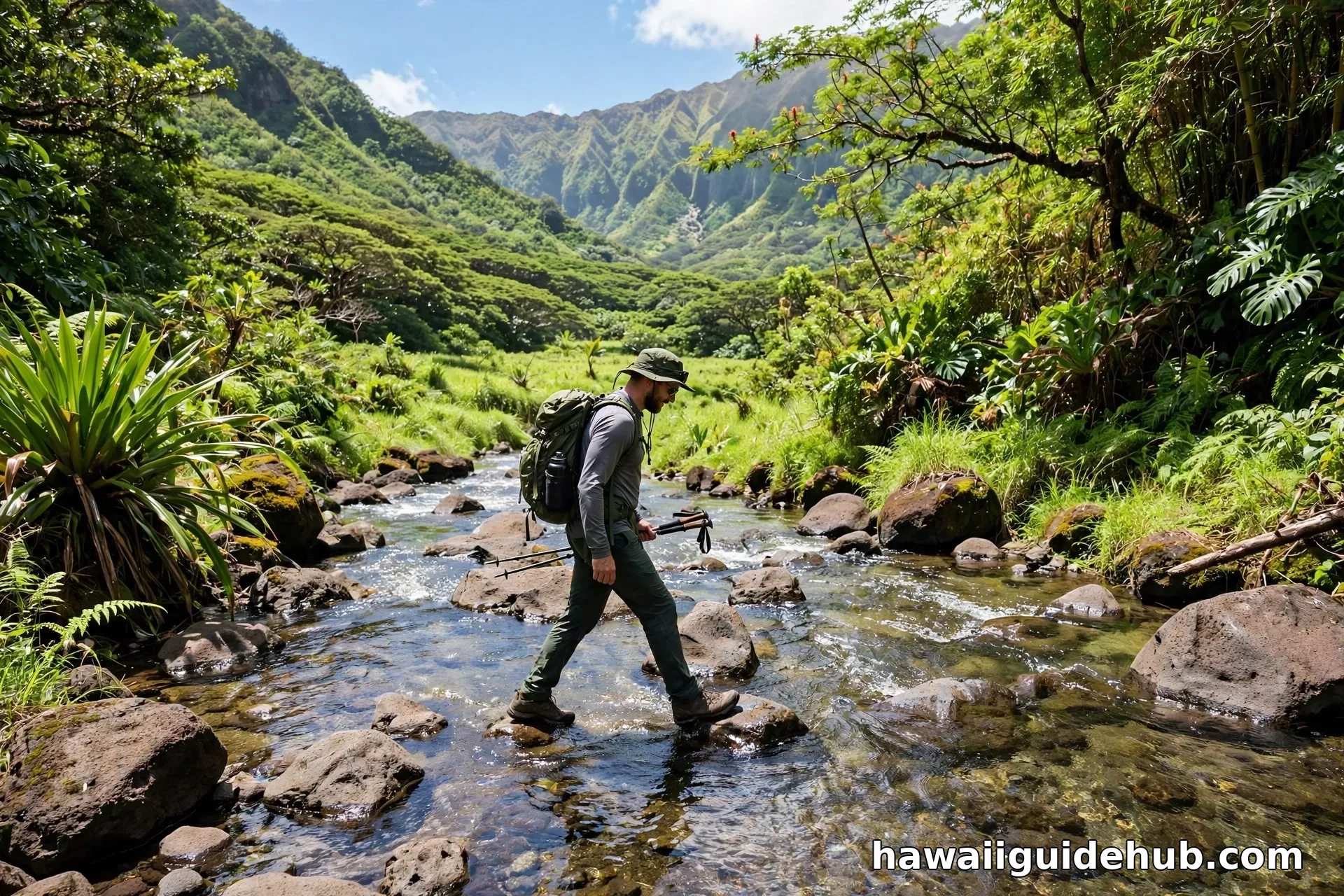
Check on your lodging for water damage before settling back in, and report any issues to your host or front desk. If you hiked, tell your emergency contact you are out safe. And remember the pattern: Hawaiian streams usually drop back within a few hours, so the most dangerous thing you can do after a flood is assume the next stream crossing is fine. Give the water time.
Video: Turn Around Don’t Drown
The National Weather Service explains why you should never drive or walk into floodwaters.
Frequently Asked Questions
What is the difference between a flash flood watch and a warning in Hawaii?
A watch means flash flooding is possible; stay alert and avoid flood-prone areas. A warning means flooding is occurring or imminent; move to high ground immediately and never cross flooded roads.
Can I drive through a flooded road in Hawaii if the water looks shallow?
No. You cannot judge depth or road condition by looking, and just 12 inches of water can float a small car. More than half of flood deaths happen in vehicles. Turn around, don’t drown.
How fast can flash floods develop in Hawaii?
In minutes. Steep terrain funnels mountain rain to the coast fast, and Hawaiian streams can go from a trickle to a raging torrent within a short period. They also recede quickly, often within a few hours.
Is it safe to hike to waterfalls in Hawaii when rain is forecast?
No. Never hike up a stream valley or cross streams when rain is forecast or water is rising. Choose a ridge trail or save the hike for another day, and heed trail closure signs.
What should I do if my car stalls in floodwater?
Abandon it immediately and move to high ground on foot. Do not stay inside a stalling car in rising water. Call 911 once you are safe.
What does “mauka” mean in Hawaii flood warnings?
Mauka means toward the mountains, and makai means toward the sea. Flood warnings often describe heavy rain falling in mauka areas, which is your signal that streams below will rise soon even if your beach is still sunny. Learning these two words helps you read local forecasts and understand exactly where the danger is building.
When is flash flood season in Hawaii?
Flash floods can happen any time of year, but the risk is highest during the wetter months from late fall through early spring, when Kona storms and cold fronts bring heavy rain. Summer flash floods happen too, especially with tropical systems.
Flash flood safety in Hawaii comes down to respect for water and one non-negotiable rule. Check the mountain forecast before hikes and drives, never cross flooded roads or rising streams, and remember that the water almost always drops within hours. The islands will still be there when the streams settle, from Kona’s sunny coast to the valleys of Kauai, and the smartest travelers are the ones who wait out the water.