Hurricane Safety for Hawaii Visitors: Season, Warnings & What to Do

Hurricane season is part of the calendar in Hawaii, running every year from June 1 through November 30. Most visitors never see a storm, but every traveler should know what hurricane season means for a Hawaii trip: how warnings work, what to do if a watch or warning is issued while you are here, and how to prepare before you fly. If you are looking for one complete, trustworthy guide to hurricane safety for Hawaii visitors, this is it.
This guide follows the official guidance of the Central Pacific Hurricane Center, the National Weather Service in Honolulu, and the Hawaii Emergency Management Agency. It covers the season, the warning system, what to pack and plan, and exactly what to do if a storm threatens during your stay.
Hurricane Safety for Visitors at a Glance
| Term | What it means | What you do |
|---|---|---|
| Storm categories | ||
| Tropical storm | Sustained winds 39 to 73 mph | |
| Hurricane | Sustained winds 74 mph and above | |
| The alert ladder: watch vs warning | ||
| Watch | Storm possible within 48 hours | Review your plan and supplies |
| Warning | Storm expected within 36 hours | Finish preparations and shelter |
| Your playbook | ||
| The season | June 1 to November 30 every year | Know the dates before you book |
| Average activity | About 4 to 5 tropical cyclones per year in the Central Pacific | Prepare anyway |
| Visitor prep | Travel insurance, 2-week mindset on supplies, know your shelter options | |
| During the storm | Stay indoors away from windows; never drive through floodwater |
When Is Hurricane Season in Hawaii?
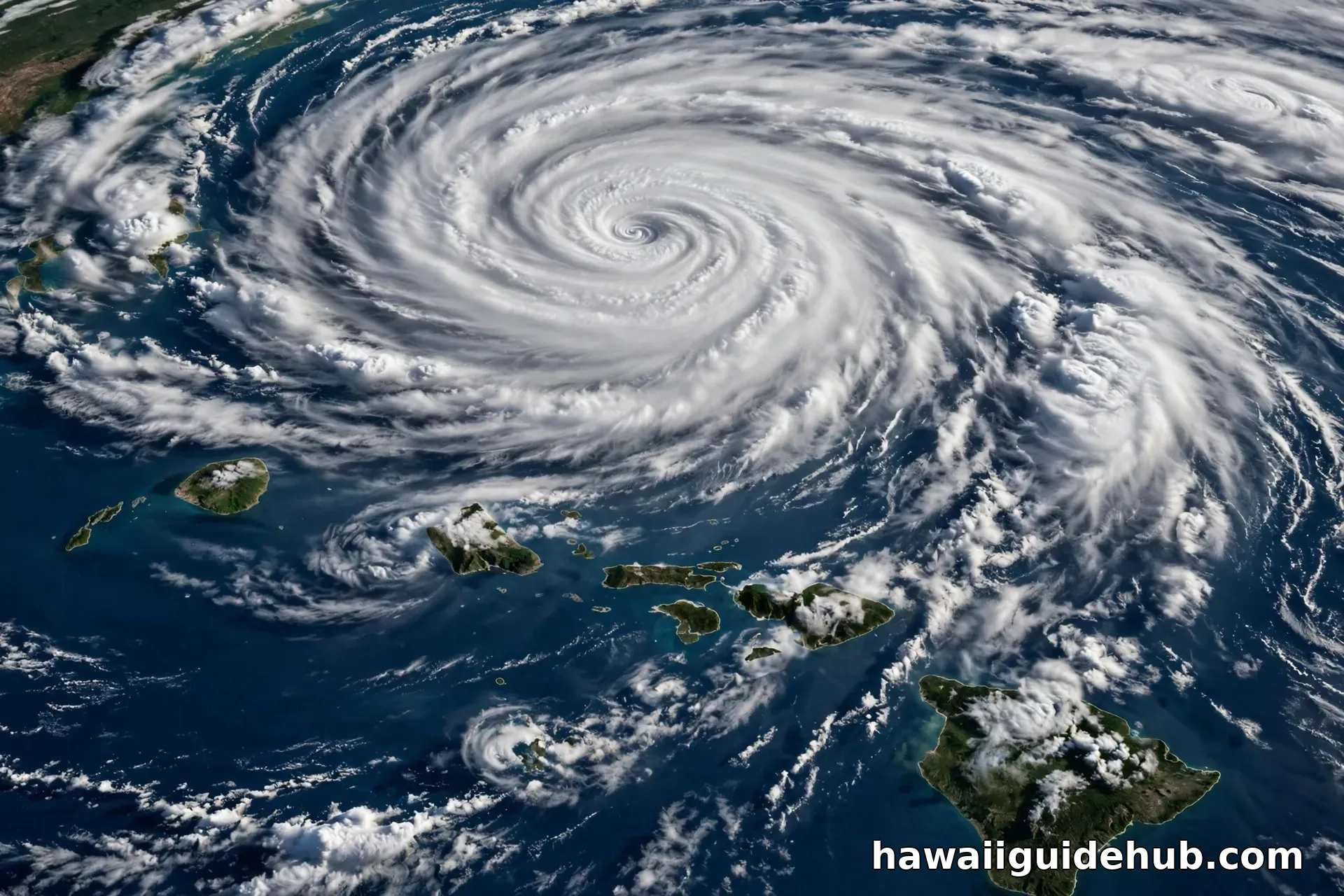
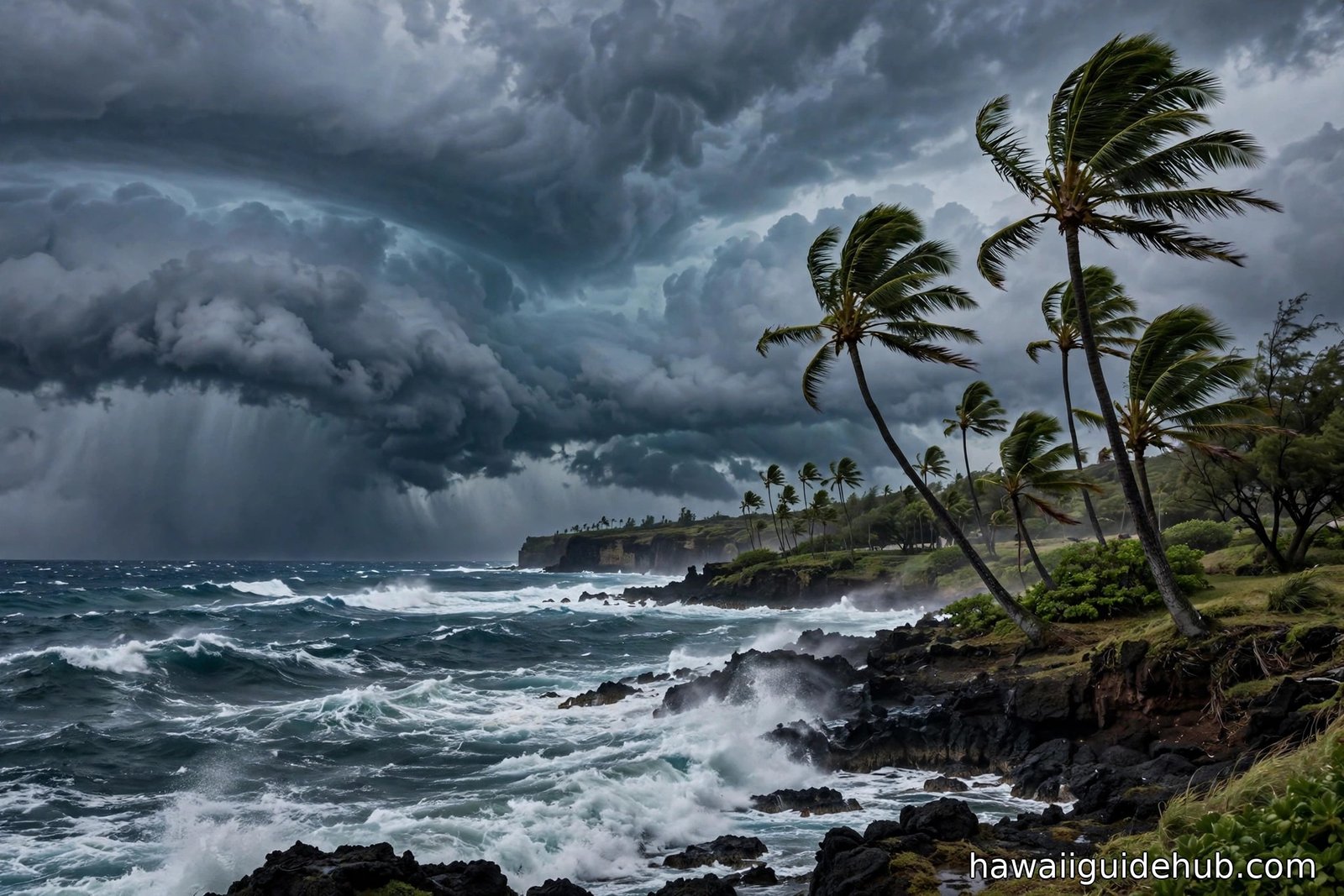
The Central Pacific hurricane season runs from June 1 to November 30. That window overlaps the most popular travel months, which is exactly why visitors should understand it. An average year sees about four to five tropical cyclones form or move through the Central Pacific basin. Most stay far from the islands or weaken before arriving, but every season carries some chance of a close call.
Hawaii’s last direct hit from a major hurricane was Hurricane Iniki in 1992, which struck Kauai as a Category 4 storm and remains the benchmark for damage in the islands. More often, the threat comes from near misses: a storm passing south or east can still send heavy rain, flash flooding, high surf, and gusty winds across the islands. Hurricane Dora in 2023 never came close to landfall, yet its winds contributed to the devastating Lahaina fire conditions on Maui. A storm does not need to make landfall to be dangerous.
How the Hurricane Warning System Works
The Central Pacific Hurricane Center in Honolulu issues the official forecasts, watches, and warnings for Hawaii. The National Weather Service and county emergency agencies spread the word through TV and radio, wireless emergency alerts to cell phones, and the statewide outdoor siren system. Learn the terms before you travel, because the difference between a watch and a warning is the difference between preparing and sheltering.
Hurricane watch
A watch means hurricane conditions are possible within 48 hours. This is your preparation window: review your plan, gather supplies, secure loose items on your lanai, fill the car with fuel, and decide where you will shelter. Do not wait for a warning to start preparing.
Hurricane warning
A warning means hurricane conditions are expected within 36 hours. Finish all preparations quickly and get to your shelter location. Stay off the roads once winds pick up; emergency vehicles need them clear. A tropical storm watch or warning works the same way for weaker systems, which can still flood roads and knock out power.
Before Your Trip: Smart Hurricane-Season Planning
Traveling during hurricane season does not mean expecting a storm; it means being ready in case forecasts change. Book travel insurance that covers weather disruptions, and read the policy so you know what triggers a claim. Choose lodging with a sturdy structure and ask, when you book, about the property’s storm plan and whether it has a generator. Save the county emergency alert app for the island you are visiting before you fly.
The Hawaii Department of Health advises residents to keep a two-week emergency supply kit, because the islands cannot be resupplied by road and shipments can be delayed after a storm. Visitors cannot pack two weeks of supplies, but adopt the mindset: keep extra water, snacks, medications, phone chargers, and cash on hand during your stay. Fill prescriptions before you travel, and carry essential documents in a waterproof pouch. If you are weighing when to visit Hawaii, remember that the edges of the season often bring calmer forecasts.
Visitor Hurricane Supply Checklist
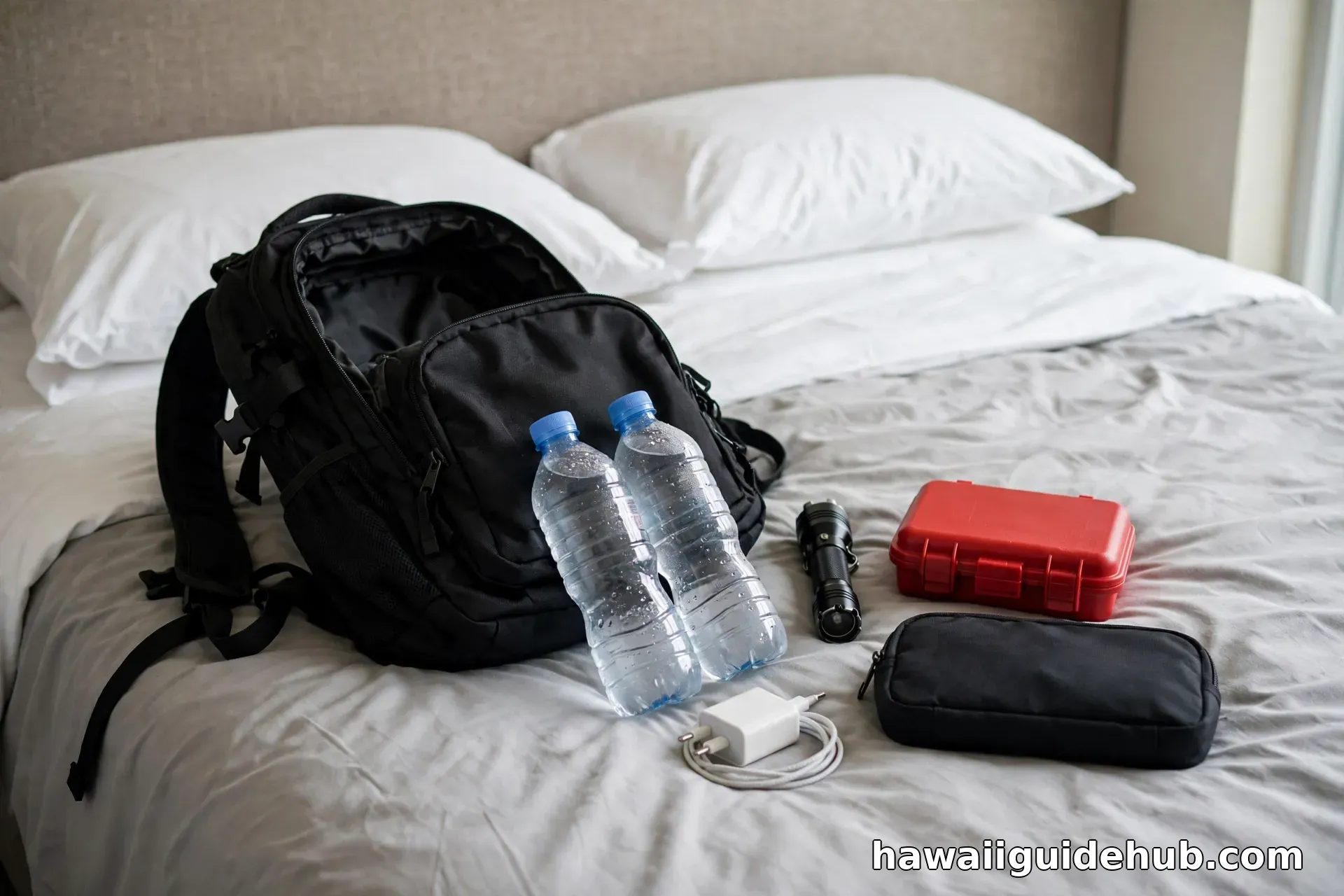
You do not need a bunker, but you do need to be self-sufficient for a few days if stores close and power fails. On arrival day, pick up these basics at any supermarket or big-box store: a case of bottled water, nonperishable snacks and ready-to-eat food, a flashlight or headlamp with extra batteries, a portable phone charger kept fully charged, any prescription medications plus a few days extra, and cash in small bills since card readers fail during outages. Add sunscreen, a hat, and insect repellent, because post-storm cleanup happens in the sun.
Keep copies of your ID, passport, travel insurance policy, and flight confirmations in a waterproof zip pouch, and photograph them with your phone as backup. If you rent a car, keep the tank at least half full during the season; gas stations cannot pump without power. None of this takes more than one shopping trip, and every item is useful on a normal vacation too.
In the week before departure, check the Central Pacific Hurricane Center outlook a couple of times. Tropical systems are tracked for days before they become a threat, so you will almost never be surprised. If an invest or named storm is anywhere near the islands, review your insurance, confirm your lodging’s storm plan by email, and pack the Go Bag items at the top of your suitcase.
What to Do If a Storm Threatens During Your Stay
If a watch is issued while you are in Hawaii, start with information. Check the Central Pacific Hurricane Center forecast, follow your county emergency management agency, and listen to local TV and radio. Contact your hotel front desk or rental host and ask about their storm plan; hotels have established procedures and designated shelter areas. If you are in a vacation rental, ask the host where to shelter and whether shutters or plywood are available.
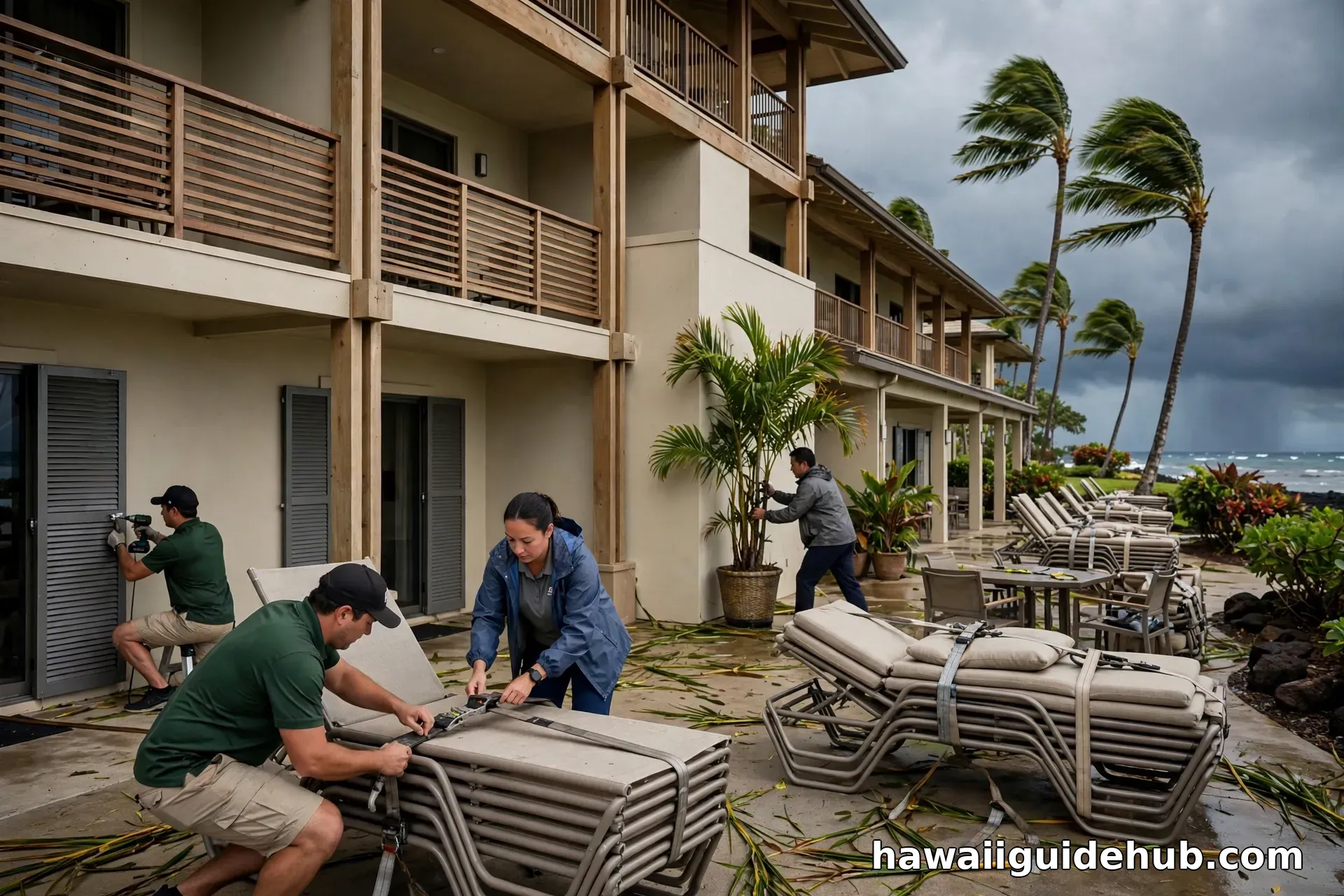
When a warning is issued, finish preparations and shelter in place. Bring in anything from lanais and yards that wind could turn into projectiles. Stay indoors, away from windows and glass doors, in an interior room on the lowest floor that is not prone to flooding. Do not go outside during the calm eye of the storm; violent winds return quickly from the opposite direction. Keep your phone charged and a battery radio handy in case cell service drops.
Never try to drive out of the storm’s path. Unlike the mainland, there is no driving out of a hurricane zone from an island. Roads flood, and the Hawaii Emergency Management Agency warns that floodwater is the leading storm killer: never drive through flooded roads, and never walk through moving water. Six inches of fast water can knock an adult down, and two feet can float a car. Turn around, don’t drown.
Shelters and Evacuation
If officials open emergency shelters, go early; they fill up, and traveling in high winds is dangerous. Bring your Go Bag with water, food, medications, chargers, documents, and bedding, since shelters provide space rather than supplies. Pets are generally accepted at pet-friendly shelters, so bring carriers, food, and vaccination records. Listen for shelter announcements on local media and the county alert apps.
If you are told to evacuate a coastal or flood-prone area, do it promptly and follow the marked routes. Do not evacuate to a beach park or shoreline shelter; storm surge and high surf make the coast the most dangerous place during a hurricane. Inland, higher ground is always the safer choice.
After the Storm
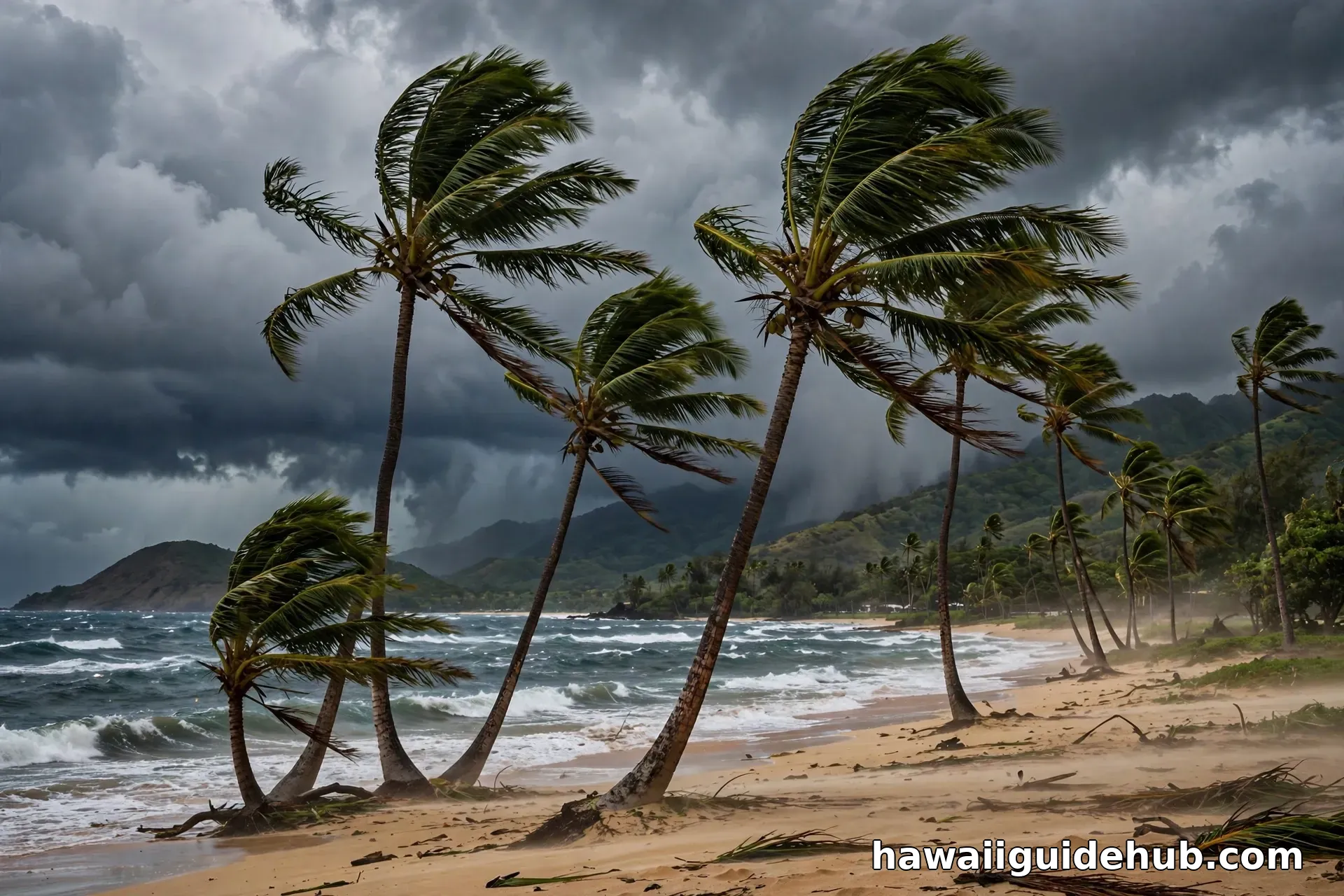
Stay sheltered until officials say it is safe to go out. Downed power lines, flooded roads, and weakened structures kill people after storms pass. Do not touch anything touching a power line, and assume all lines are live. Avoid floodwater, which can hide debris and contamination. Check on neighbors, especially elderly travelers nearby, and conserve phone battery for essential communication.
In the first day after a storm, information is patchy and conditions change fast. Check in with your hotel or host before making any plans, since they will have the latest on road closures, water advisories, and power restoration. Boil-water notices are common after heavy storms, so use bottled or boiled water for drinking and brushing teeth until officials lift them. If your rental car was parked outside, inspect it for damage and debris before driving, and report damage to the rental company immediately with photos.
Expect disruptions: flights may be delayed or canceled, roads may close, and power and water can take time to restore. Contact your airline before heading to the airport, and keep receipts for any storm-related expenses for your travel insurance claim. If your lodging is damaged, your hotel or host will have relocation procedures; the county emergency agencies can direct you to assistance if needed.
Video: Hurricane Preparedness in Hawaii
The National Weather Service in Honolulu and the Hawaii Emergency Management Agency explain how to prepare for hurricane season.
Frequently Asked Questions
When is hurricane season in Hawaii?
June 1 through November 30 every year. An average season sees about four to five tropical cyclones in the Central Pacific, though most never threaten the islands directly.
What is the difference between a hurricane watch and a warning?
A watch means hurricane conditions are possible within 48 hours: prepare. A warning means hurricane conditions are expected within 36 hours: finish preparations and shelter. Act on a watch; do not wait for a warning.
Should I cancel my Hawaii trip if a hurricane is forecast?
Follow official forecasts and your airline’s guidance. If a warning is in effect for your island, airlines typically offer waivers or rebooking. If you travel during the season, buy travel insurance that covers weather disruptions and have a shelter plan at your lodging.
What should visitors pack for hurricane season in Hawaii?
A light Go Bag: water and snacks, phone chargers and a battery pack, essential medications, copies of ID and travel documents in a waterproof pouch, a flashlight, and cash. The state advises a two-week supply mindset because islands cannot be resupplied by road.
What happens to flights during a hurricane warning in Hawaii?
Airlines typically issue travel waivers ahead of a warning, allowing free rebooking, and may cancel flights as conditions deteriorate. Interisland flights are usually the first affected. Do not head to the airport during a warning; check your flight status online and rebook through the airline app. Keep your boarding passes and receipts, since travel insurance claims need documentation.
Is travel insurance worth it for hurricane season travel to Hawaii?
For June through November trips, it is strongly worth considering. Look for a policy that covers trip interruption and cancellation for weather events, plus baggage delay and medical coverage. Read the fine print: most policies only cover storms that were not yet named or warned when you bought the policy, so buy it when you book, not when a storm appears on the forecast map.
Where do I shelter during a hurricane in Hawaii?
Shelter in place at sturdy lodging, in an interior room away from windows, unless officials order evacuation. If shelters open, go early with your Go Bag. Ask your hotel or rental host about their storm plan when you arrive.
Can I drive to escape a hurricane in Hawaii?
No. There is no driving out of a hurricane zone from an island. Shelter in place or go to a designated shelter. Never drive through flooded roads; floodwater is the leading cause of storm deaths.
Hurricane season in Hawaii rewards the prepared and rarely punishes the aware. Learn the watch-versus-warning difference, pack a light Go Bag, save your county’s alert app, and ask about your lodging’s storm plan on arrival day. Then enjoy the islands, from understanding Hawaii’s rain patterns to choosing your island, knowing you are ready for whatever the Pacific sends.