Mongooses in Hawaii

You will probably see one before you ever see a sign warning about it. A slim brown animal darts across a Hawaiian trail or parking lot, pauses to stare at you with bright eyes, then vanishes into the grass in a low, flowing gallop. That is the mongoose, one of the most consequential animals ever introduced to Hawaii, and the centerpiece of one of conservation’s most famous cautionary tales.
This is the single complete guide to mongooses in Hawaii. It covers how to identify one, why sugarcane planters brought them here in 1883, which islands have them and which do not, why the great rat-control plan failed, the damage they do to native wildlife, and what to do if you encounter one. If you have been searching for anything about mongooses in Hawaii, the answers are all here on this one page.
Mongooses in Hawaii at a Glance
| The file | The facts |
|---|---|
| Species | Small Indian mongoose (Herpestes auropunctatus) |
| Native home | India and South Asia |
| Description | About 1 to 2 pounds; slender body roughly a foot long plus a long tail |
| Introduced | 1883, to Hawaii Island by the sugarcane industry, to control rats damaging sugarcane crops |
| Territory today | Hawaii Island, Maui, Molokai, Oahu |
| Not yet invaded | Kauai and Lanai have no established populations |
| Active hours | Daytime (diurnal) |
| Diet | Omnivorous: birds, eggs, reptiles, insects, fruit, small mammals |
| Danger to people | Can bite if cornered; otherwise avoids humans |
What a Mongoose Looks Like and How to Identify One
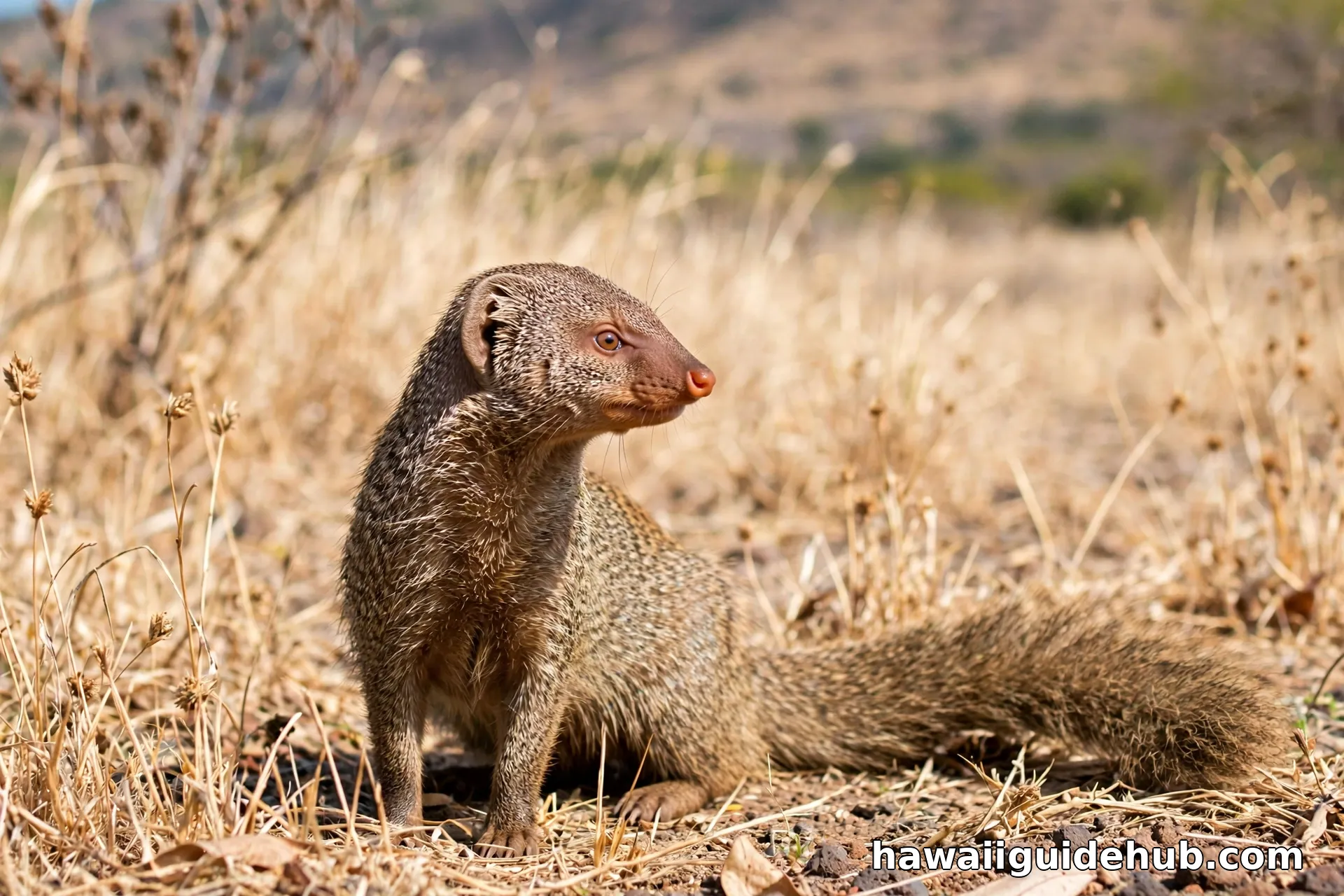
The small Indian mongoose is a sleek, weasel-like predator with grizzled brown fur, a pointed face, small rounded ears, and a long bushy tail that tapers to a point. Adults weigh just one to two pounds, with a body about a foot long and a tail nearly as long again. They move in a distinctive brisk gallop or a low slink through grass, and they are surprisingly bold, often freezing to stare at people before deciding to bolt.
Visitors sometimes confuse mongooses with large rats or with feral cats, but the differences are clear once you know them. Rats have naked tails, blunt faces, and move mostly at night. Cats are stockier with round heads and retractable claws. The mongoose’s pointed snout, grizzled coat, and daytime dash across open ground are unmistakable. Hawaii has no native land mammals except the Hawaiian hoary bat, so any small furry predator you see on the ground in daylight is an introduced species, and it is almost certainly a mongoose.
Why Mongooses Were Brought to Hawaii
In the late 1800s, Hawaii’s sugarcane industry had a rat problem. Rats were chewing through cane fields and cutting into plantation profits, and planters wanted a cheap, permanent fix. They had heard that the small Indian mongoose, a fast and fearless hunter of rats and snakes in its native range, had been released in Jamaica a decade earlier for the same purpose. In 1883, plantation owners imported 72 mongooses and released them along the Hilo and Hamakua coast of Hawaii Island. From there, the animals were later carried to Maui, Molokai, and Oahu. The plantation era shaped the islands in countless ways, and our guide to Hawaii’s history before the 50th star tells the broader story of that time.
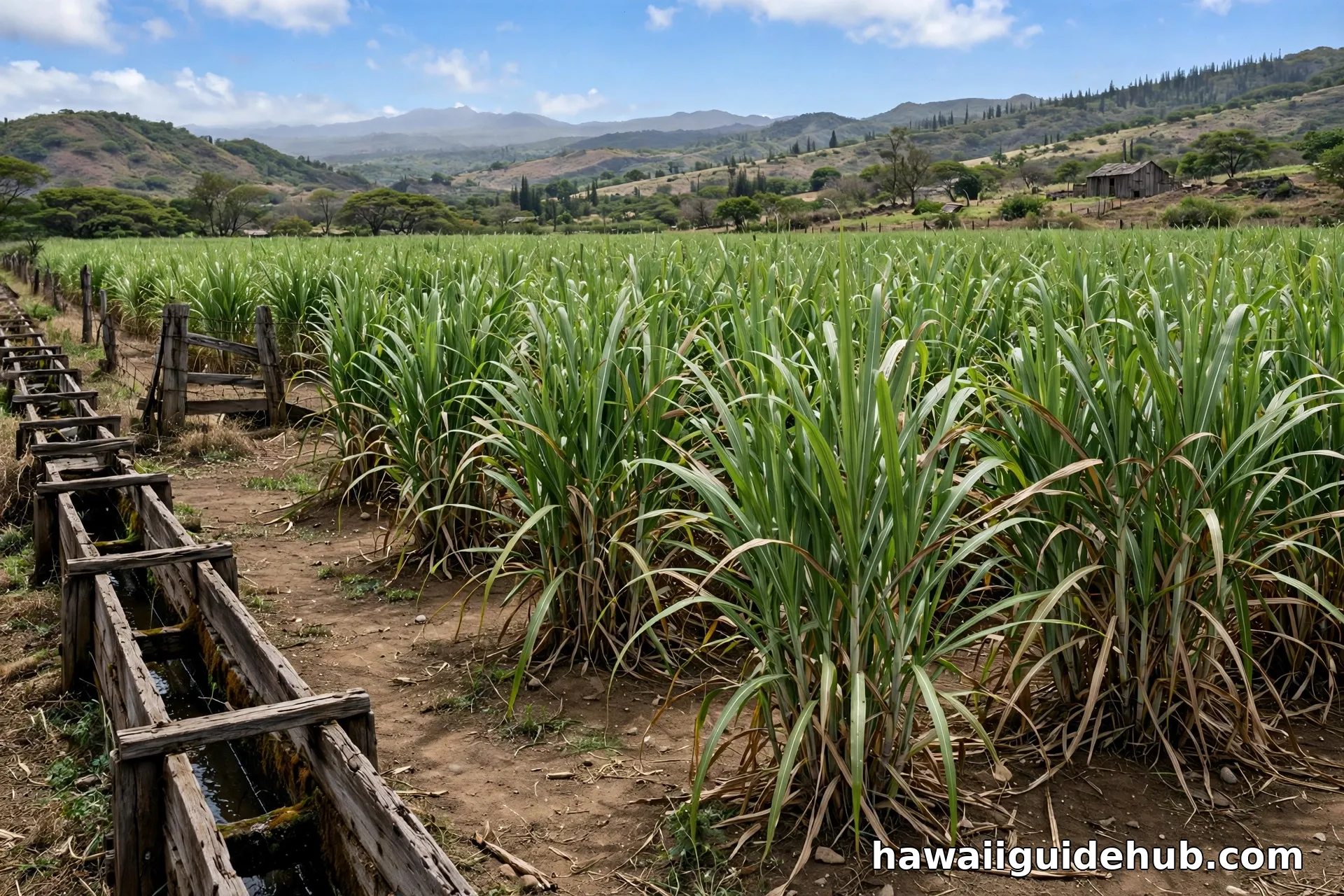
It is often told as a story of science gone wrong, but there was no real science in it. The introduction was a private industry’s hunch, carried out with no study of what the mongoose would eat besides rats and no testing of whether the plan could work. The planters simply assumed a famous rat-hunter would hunt rats. Within a few years the mongooses were thriving across the islands, and the rats were doing just fine.
Why the Rat Control Plan Failed
The failure came down to a scheduling conflict nobody bothered to check. The rats damaging Hawaii’s sugarcane are mostly active at night. Mongooses are strictly diurnal: they hunt during the day and sleep in burrows at night. Predator and pest were simply awake at different times, so they rarely met. The mongoose barely dented rat numbers.
What the mongooses did find, in abundance, were animals that had never faced a land predator before. Before humans arrived, Hawaii had no snakes, no wild cats, no dogs, and no mammalian predators of any kind. Native birds nested on or near the ground without fear. Sea turtles had buried their eggs on beaches for millions of years with nothing digging them up. The mongoose, an efficient and aggressive hunter, walked into this defenseless world and feasted. The rat problem continued, and Hawaii gained a far worse problem in exchange.
Which Hawaiian Islands Have Mongooses
Mongooses are well established on four islands: Hawaii Island, Maui, Molokai, and Oahu. If you are visiting the largest island, our guide to the best things to do on the Big Island of Hawaii will help you plan around prime mongoose-spotting country. Two islands remain free of established populations: Kauai and Lanai.
Keeping Kauai and Lanai mongoose-free takes constant vigilance. Mongooses occasionally arrive as stowaways on boats and in cargo. Since 2012, at least five live mongooses have been captured on Kauai, including animals trapped near Nawiliwili Harbor and Lihue Airport, each one triggering a rapid trapping response. If you see a mongoose on Kauai or Lanai, report it immediately to the state’s 643-PEST hotline. Early reports are the only reason those islands are still free of them.
What Mongooses Eat and the Damage They Do
The mongoose is an opportunistic omnivore, and its menu in Hawaii is long. It eats birds and their eggs, reptiles, amphibians, insects, crustaceans, fruits, and plants, shifting with whatever is easiest to catch. Researchers have watched mongooses work in pairs on Oahu, with one flipping rocks while the other snatches the crabs hiding underneath. They have exceptional vision for a small mammal, including color vision, which makes them efficient daytime hunters. It is the eggs, though, that matter most for conservation. Ground-nesting native birds, including the endangered nene (Hawaiian goose) and native seabirds, lose eggs and chicks to mongooses every breeding season. On beaches, mongooses dig up the nests of endangered green sea turtles and eat the hatchlings as they emerge. If you want to see these turtles safely, read our guide to the best time of year for turtle snorkeling in Oahu.
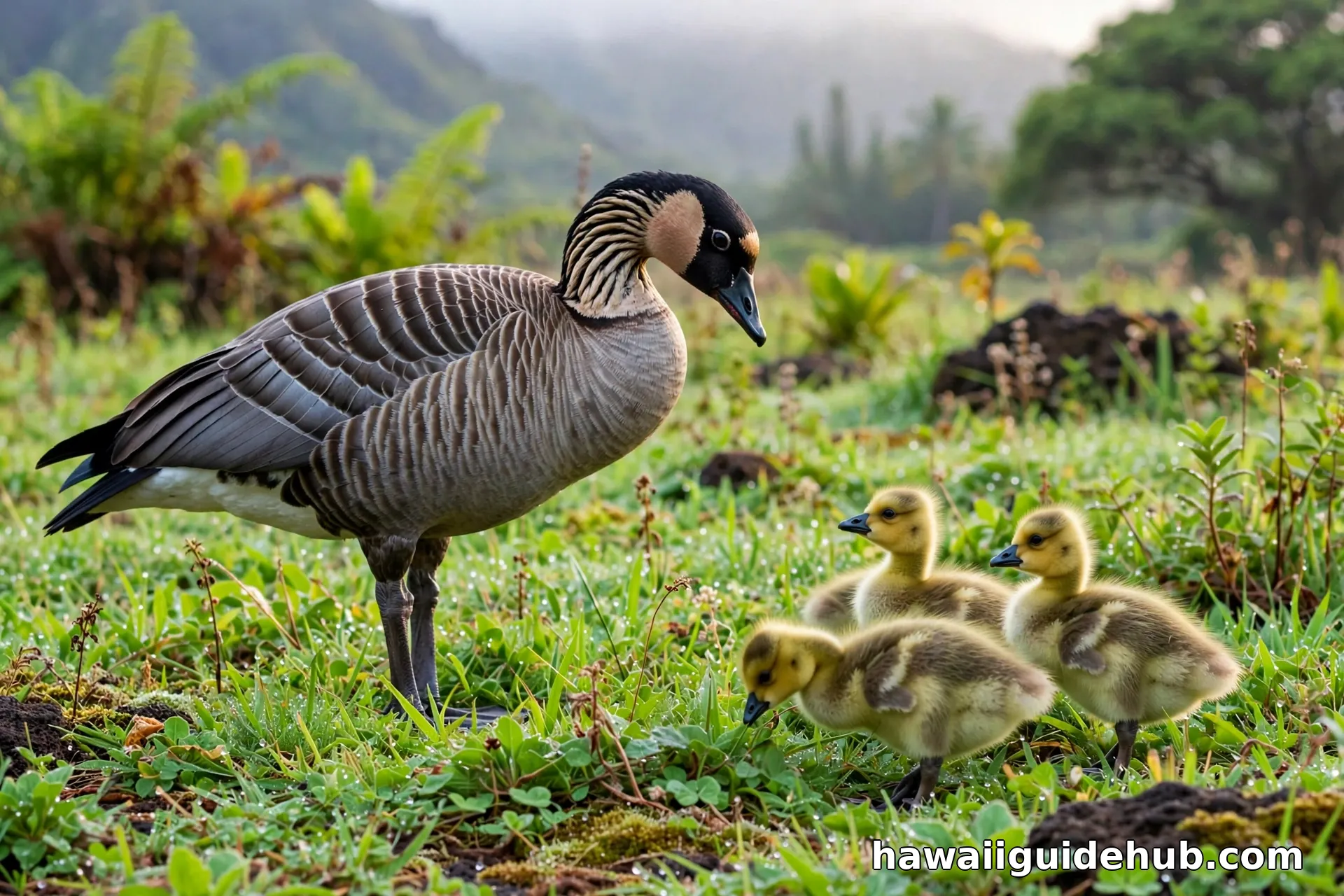
The pattern is not unique to Hawaii. Wherever the small Indian mongoose has been introduced, from Jamaica to Fiji to Mauritius, native ground-nesting birds have declined or vanished. It is listed among the world’s worst invasive species for exactly this reason. In Hawaii, where so many native birds are already endangered, the mongoose is a constant, grinding pressure on species that cannot afford to lose a single nesting season.
Mongooses also carry costs beyond wildlife. They raid chicken coops, damage crops, and can carry diseases including leptospirosis. In the United States, the economic toll of the mongoose has been estimated at around 50 million dollars a year. They are clever, adaptable, and nearly impossible to eradicate once established, which is why prevention on Kauai and Lanai matters so much.
Mongoose Behavior: What to Expect
Mongooses are daytime animals. You are most likely to see one in the morning or late afternoon, trotting along a trail edge, roadside, or the margin of a field. They are curious and will often stop to look at you, standing upright for a better view. They live in loose social groups and den in burrows, rock piles, or dense vegetation.
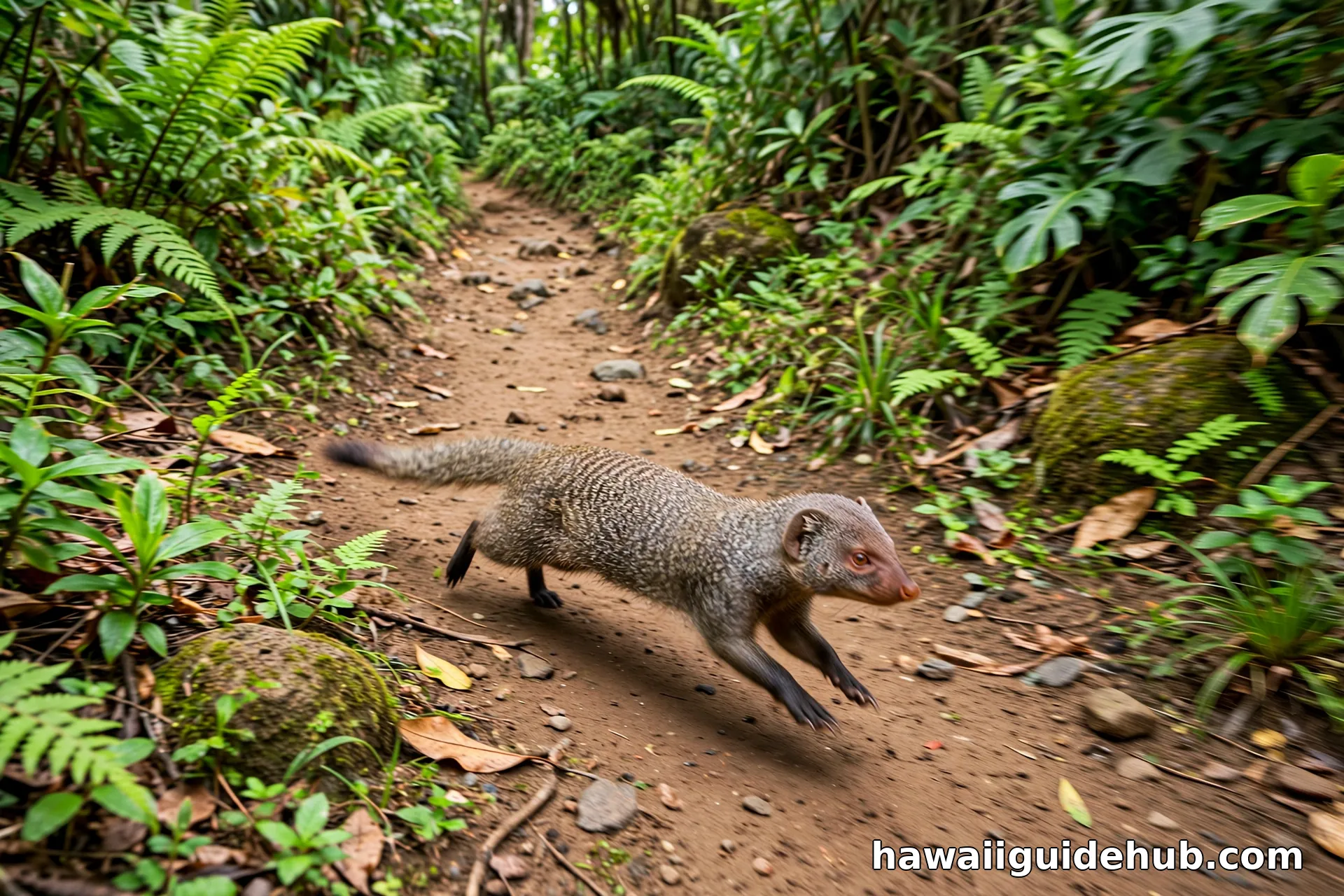
Their hunting style is quick and decisive: they pin small prey and kill with a bite to the back of the head.
They have excellent vision, including color vision, which is unusual for a small mammal and makes them formidable daytime hunters. Pairs sometimes cooperate, with one animal flipping rocks while the other snatches the crabs or insects underneath. For visitors, the key behavioral fact is simple: mongooses are wild animals that defend themselves. They usually flee from people, but a cornered or threatened mongoose will bite, and the bite can be serious.
How Mongooses Affect Your Visit to Hawaii
For most travelers, mongooses are a minor footnote to the trip: a quick flash of brown fur on a morning walk, a curious face peeking from roadside grass. They do not approach people for food the way some park animals do, and they will not bother you at the beach. The practical advice is the same as for any wild animal. Watch from a distance, do not feed it, and keep children from chasing it. A mongoose that feels trapped can bite hard enough to need medical attention.
Where mongooses do touch your trip is in the background. The Hawaii you came to see, with its extraordinary native birds and nesting sea turtles, is quieter and poorer because of them. Birdwatchers notice it most. The forests that should ring with the songs of honeycreepers are diminished in places where mongooses and other predators raid nests. Understanding the mongoose adds a layer to your visit: you start to see Hawaii not just as a paradise, but as an ecosystem under pressure, where every trail sign about native wildlife carries extra weight.
What to Do If You See a Mongoose
On Hawaii Island, Maui, Molokai, or Oahu, a mongoose sighting needs no action. Enjoy watching it, keep your distance, and do not try to feed or touch it. Never corner one, and keep dogs leashed in areas where mongooses are active, since a fight can injure both animals. Secure your food at campsites and beach parks: mongooses are bold scavengers and will raid an unattended cooler or trash bag.
On Kauai or Lanai, treat a sighting as urgent. Note the exact location and time, take a photo if you can do so safely, and call 643-PEST (808-643-7378) right away. Do not try to catch it yourself. Rapid response teams set traps based on sighting reports, and every day of delay gives an arriving mongoose more time to breed. The islands’ mongoose-free status exists because visitors and residents report what they see.
Video: How the Mongoose Became Hawaii’s Problem
Watch the full story of the 1883 mongoose introduction and its consequences for Hawaii’s native wildlife.
Mongooses and Hawaiian Culture
Unlike the coqui frog, which is beloved in its native Puerto Rico, the mongoose has no celebrated homeland story in Hawaii. It arrived as a plantation tool, not a cultural treasure, and it is regarded today almost entirely as a pest. In India, where it is native, the mongoose appears in folklore and literature, most famously in Rudyard Kipling’s story of Rikki-Tikki-Tavi, the brave mongoose who protects a family from cobras. That heroic image did not survive the Pacific crossing. In Hawaii, the mongoose is a reminder that good intentions and no research can reshape an ecosystem for centuries.
Frequently Asked Questions
Are mongooses native to Hawaii?
No. The small Indian mongoose is native to India and South Asia. It was introduced to Hawaii Island in 1883 by the sugarcane industry to control rats, and later spread to Maui, Molokai, and Oahu. It has no native range in Hawaii.
Why did mongooses fail to control rats in Hawaii?
Rats in Hawaii are mostly active at night, while mongooses hunt during the day. Because the two are awake at different times, mongooses rarely encounter rats. Instead, they preyed on native birds, eggs, and other wildlife that had no defenses against a land predator.
Which Hawaiian islands have mongooses?
Mongooses are established on Hawaii Island, Maui, Molokai, and Oahu. Kauai and Lanai have no established populations, though individual mongooses are occasionally captured on Kauai after arriving as stowaways. Report any mongoose seen on Kauai or Lanai to 643-PEST.
Are mongooses dangerous to humans?
Mongooses usually avoid people, but they are wild predators that will bite if cornered or threatened. Do not try to feed, pet, or catch one. Keep your distance, keep dogs leashed, and secure food at campsites.
Do mongooses eat sea turtle eggs?
Yes. Mongooses dig up the nests of endangered Hawaiian green sea turtles and eat eggs and emerging hatchlings. Ground-nesting native birds, including the nene, suffer similar losses. This predation is one of the main reasons the mongoose is considered such a destructive invasive species.
Can mongooses be eradicated from Hawaii?
Eradication from the four islands where mongooses are established is not considered feasible with current methods. Management focuses on protecting the most vulnerable wildlife, controlling populations around sensitive nesting areas, and above all keeping Kauai and Lanai mongoose-free through early detection and rapid response.
The mongoose’s story is Hawaii’s most quoted lesson in unintended consequences. A quick fix for a rat problem, launched without a single study, created a predator that has harassed native wildlife for more than 140 years and counting. When you spot that slim brown shape darting across a Hawaiian road, you are looking at living proof that on islands, every introduction is forever. Watch it, respect it, keep your distance, and if you are on Kauai or Lanai, pick up the phone.