Coqui Frogs in Hawaii: The Loud Invasive Frog Explained

On a quiet night in east Hawaii, the darkness starts to sing. A single sharp two-note call rings out from the bushes, then another answers, then a hundred more join in until the whole neighborhood hums with sound. That is the coqui frog, a tiny amphibian barely two inches long that has become one of the most controversial animals in Hawaii. Its call can reach 95 decibels, about as loud as a motorcycle engine, and it sings from dusk until dawn.
This is the single complete guide to coqui frogs in Hawaii. It covers how to identify one, where the frogs came from, which islands have them now, why they are such a serious problem for native forests and local communities, how Hawaii fights them, and exactly what to do if you hear or see one. If you have been searching for anything about coqui frogs in Hawaii, the answers are all here on this one page.
Coqui Frogs in Hawaii at a Glance
| The coqui frog file | Details | Why it matters |
|---|---|---|
| Scientific name | Eleutherodactylus coqui | Named for its own call |
| Native home | Puerto Rico | Far from home, thriving anyway |
| Size | About 1 to 2 inches long as adults | Tiny frog, enormous noise |
| Call | Loud two-note “ko-KEE”, dusk to dawn, up to 95 decibels | Loud enough to ruin sleep; that is the whole problem |
| Arrived in Hawaii | Late 1980s, likely in nursery plant shipments | Hitchhiked in on plants meant for gardens |
| Status | Invasive; well established on Hawaii Island, controlled on other islands | The Big Island lost this fight; the others are still fighting |
| Main islands affected | Hawaii Island (widespread); Oahu, Maui, Kauai, Molokai (targeted control) | Report them wherever you hear them outside the Big Island |
| Control method | Citric acid spray, hand capture, habitat cleanup | Low-tech tools for a high-volume pest |
| Report sightings | Call 643-PEST (808-643-7378) | One call can stop a new infestation |
| Danger to people | Not venomous; the problem is noise, not bites | Annoying, not dangerous |
What a Coqui Frog Is and How to Identify One
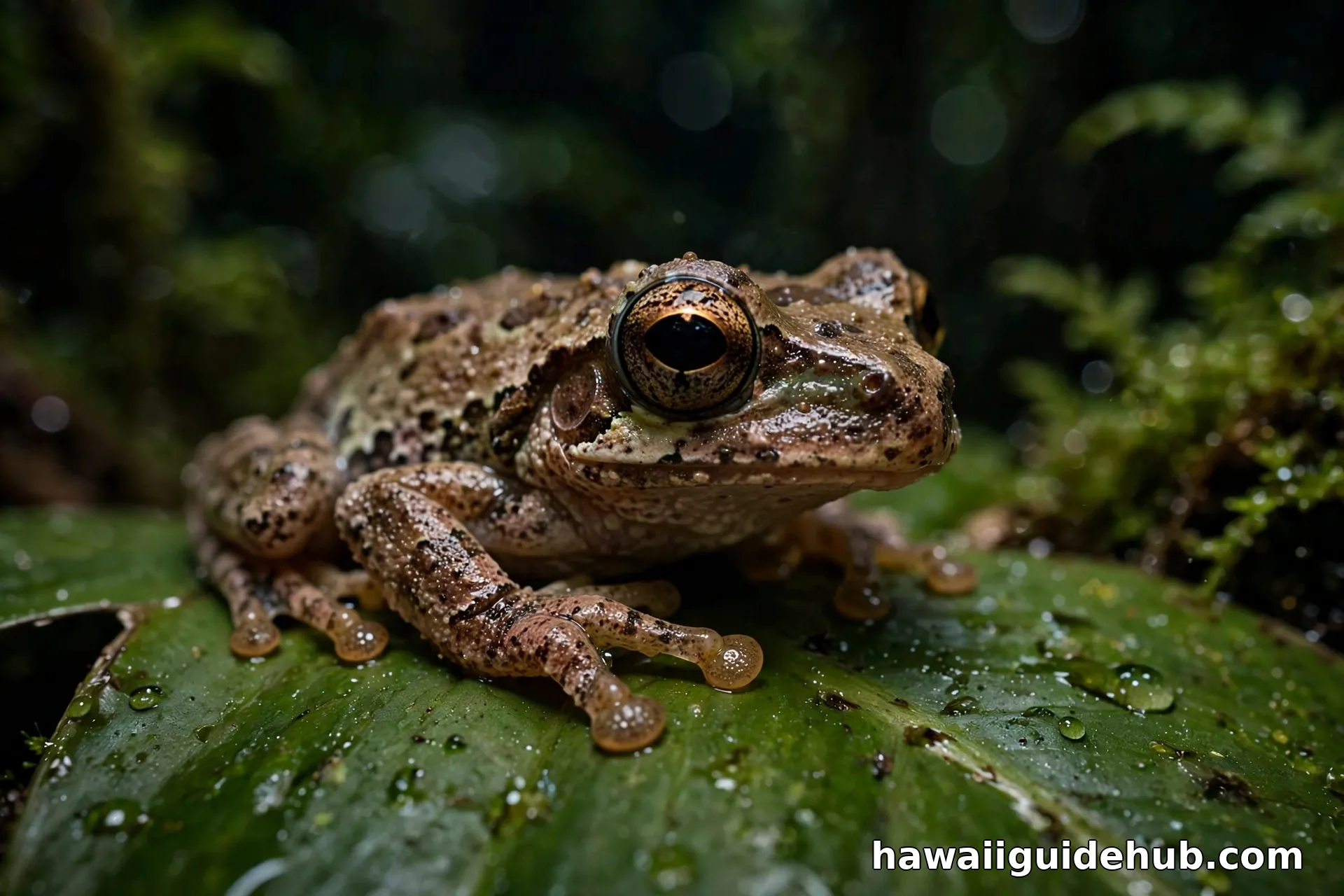
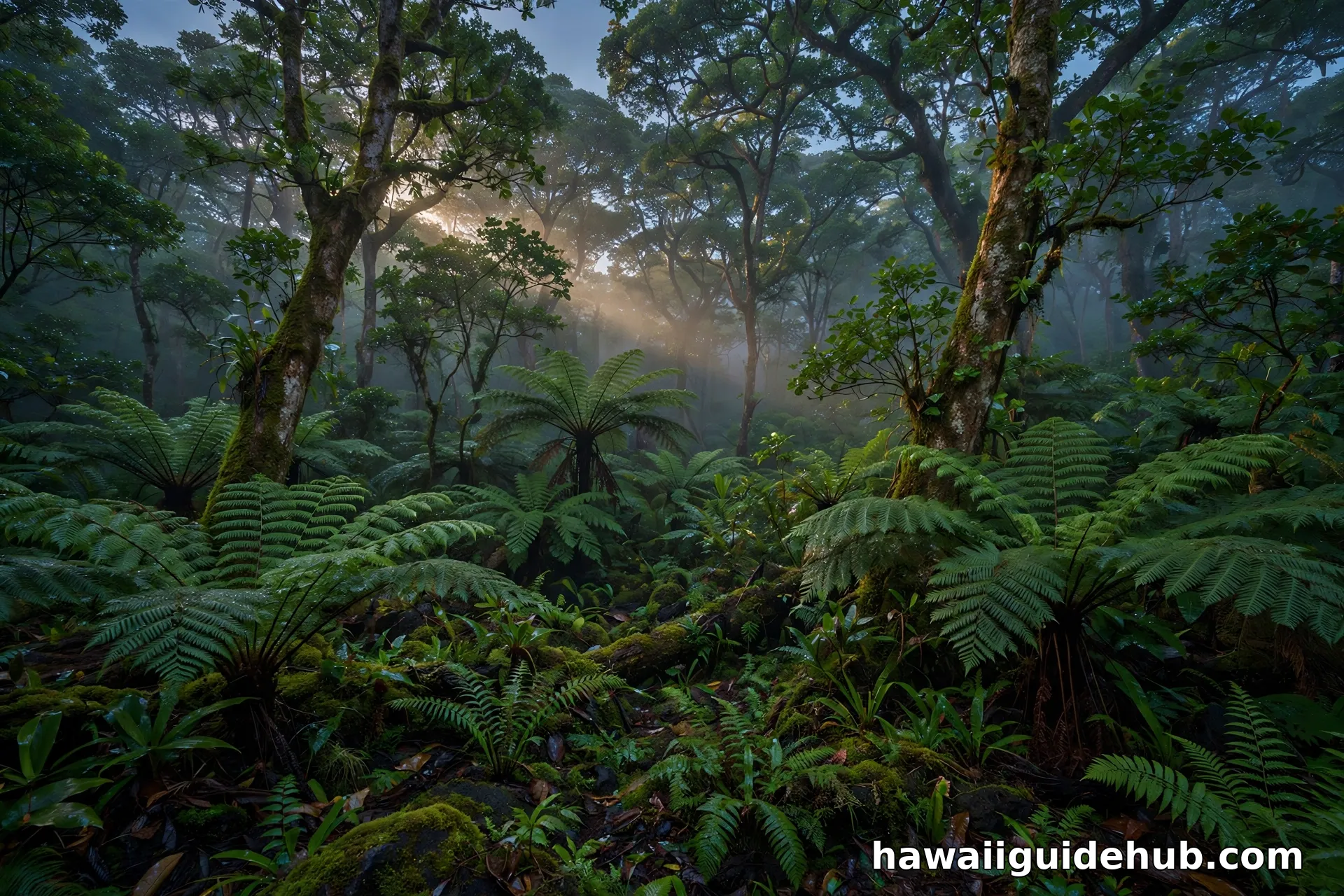
The coqui (pronounced koh-KEE) is a small tree frog with big round toe pads, mottled brown or gray skin, and often a pale stripe down its back. Adults are only one to two inches long, about the size of a quarter; females are larger than males. By day they hide in leaf litter, under bark, in bromeliads, or in ti and banana leaves, the kind of dense, damp understory you can walk through on the Mānoa Falls trail. You will rarely see one in daylight, which is why most people meet the coqui with their ears first.
The call is the giveaway. Only the males sing, and the song is a piercing two-note “ko-KEE” repeated over and over. A single frog is noticeable. A chorus of them is overwhelming. Hawaii’s Invasive Species Council notes that the call can reach 95 decibels, comparable to a motorcycle engine or a subway train, and it continues all night from dusk until dawn. If you hear an impossibly loud frog chorus outside your vacation rental at 2 AM, you are almost certainly listening to coqui.
Coqui frogs are easy to confuse with Hawaii’s other introduced frogs if you only get a glimpse. The coqui’s loud, clear, two-syllable whistle is distinctive once you have heard it.
Where the Coqui Came From
The coqui is native to Puerto Rico, where it is a beloved cultural symbol and the island’s unofficial mascot. In Puerto Rico, the frog lives in balance with predators, competitors, and diseases that keep its numbers in check. Its scientific name, Eleutherodactylus coqui, even echoes its song. Puerto Ricans grow up with the nighttime chorus as a comforting sound of home.
Hawaii has no such balance. The frogs arrived in the late 1980s, almost certainly as stowaways in nursery plant shipments from Puerto Rico. They found an island chain with a warm, wet climate, abundant insects to eat, dense vegetation to hide in, and zero natural predators. Under those conditions the population exploded to densities far higher than anything seen in Puerto Rico.
Where Coqui Frogs Live in Hawaii Now
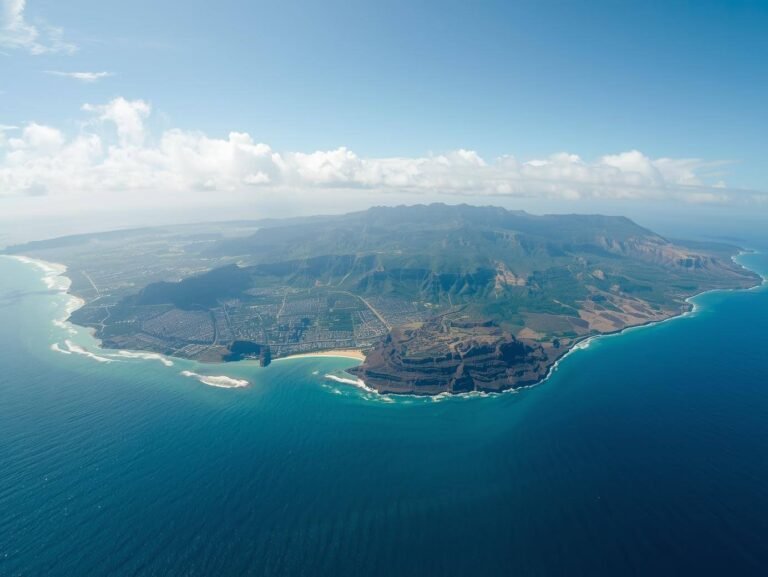
The coqui’s stronghold is Hawaii Island, the Big Island, particularly the wet east side around Hilo, Puna, and Volcano. Tens of thousands of acres of the island’s east side host established populations. In the worst-hit residential areas, the nighttime chorus affects sleep, property values, and quality of life. Hawaii law even requires sellers to disclose coqui frog presence in real estate transactions in infested areas. If you are planning a trip to the island, our guide to the best things to do on the Big Island of Hawaii covers the region’s highlights beyond the frog chorus.
On the other islands, the story is early detection and aggressive response. On Oahu, state crews have battled an infestation in Palolo Valley since 2017, catching frogs by hand and spraying citric acid at least three times a month. On Maui, control teams target small populations, including one at Maliko Gulch. On Kauai, individual frogs have been caught in areas like Kapahi. On Molokai, frogs found in 2018 drew a rapid response; Lanai has no known established population. If you hear or see a coqui on any island besides Hawaii Island, report it immediately to the 643-PEST hotline so crews can respond before it spreads.
The Call: Why Coqui Frogs Are So Loud
The male coqui sings for two reasons: to defend his territory and to attract a mate. The first note, “ko”, warns rival males to stay away. The second note, “KEE”, calls to females. Each male has a favorite perch, a leaf or branch he returns to night after night, and he will sing for hours. Because there are no predators to punish a loud frog in Hawaii, males sing with abandon, and in dense infestations the overlapping calls merge into a wall of sound.
The volume is genuinely extreme for an animal this small. At close range a single male can hit 90 to 95 decibels. For comparison, normal conversation is about 60 decibels and a lawnmower is about 90. A chorus outside a bedroom window makes uninterrupted sleep very difficult, which is why coqui frogs are treated as a public nuisance and an economic problem, not just an ecological one.
Why Coqui Frogs Are a Serious Problem
The noise is the most obvious impact, but ecologists worry more about what the frogs eat. A single coqui can consume vast numbers of insects in a night, and at Hawaii’s extreme densities the total is staggering. Many of those insects are native species found nowhere else on earth, including pollinators and the prey base that native insect-eating birds depend on. By vacuuming up insects, coqui frogs compete directly with Hawaii’s endangered native forest birds for food.
The frogs also change the forest itself. Their droppings alter the chemistry of the forest floor, shifting nutrient cycles in ways that can favor invasive plants over native ones. And there is a troubling food-web risk: if snakes ever establish in Hawaii, coqui frogs would provide them with an abundant, easy food source, potentially helping a far worse invader gain a foothold. The Hawaii Invasive Species Council lists the coqui among the state’s highest-priority pests for exactly this combination of reasons.
The economic damage is real too. Nurseries in infested areas face restrictions on shipping plants, because buyers on other islands and the mainland do not want frog eggs hitchhiking in pots. Tourism businesses in loud areas field complaints from guests. Property values in the hardest-hit neighborhoods have suffered, which is why the disclosure law exists. Controlling coqui on a large scale is expensive: estimates for treating tens of thousands of acres run into the tens of millions of dollars, far beyond what agencies can fund.
Coqui Frog Life Cycle and Behavior
Coqui frogs have an unusual life cycle: unlike most frogs, they have no tadpole stage. The female lays eggs in a damp, sheltered spot on land, under leaves or bark, and the male guards them. The eggs hatch directly into tiny fully formed froglets, each just a fraction of an inch long. This direct development means coqui do not need ponds or streams to breed. Any damp garden, nursery, or forest floor will do, which is a major reason they colonize so easily.
They are strictly nocturnal. By day they shelter in cool, moist hiding places. At dusk the males climb to their singing perches and the chorus begins, running until dawn. In Hawaii’s warm climate they can breed year round, with females capable of producing several clutches per year.
How Hawaii Fights the Coqui Frog
With no single silver bullet, Hawaii uses a combination of methods. The only product labeled for coqui control in Hawaii is citric acid, the food-grade acid found in lemons. Frogs breathe partly through their skin, which makes them highly sensitive to chemical contact. Crews spray citric acid solution directly onto infested vegetation, and it kills eggs, juveniles, and adults on contact. Treatments must be repeated every couple of weeks to catch newly hatched frogs, and the work is labor intensive, but it is the backbone of organized control efforts.
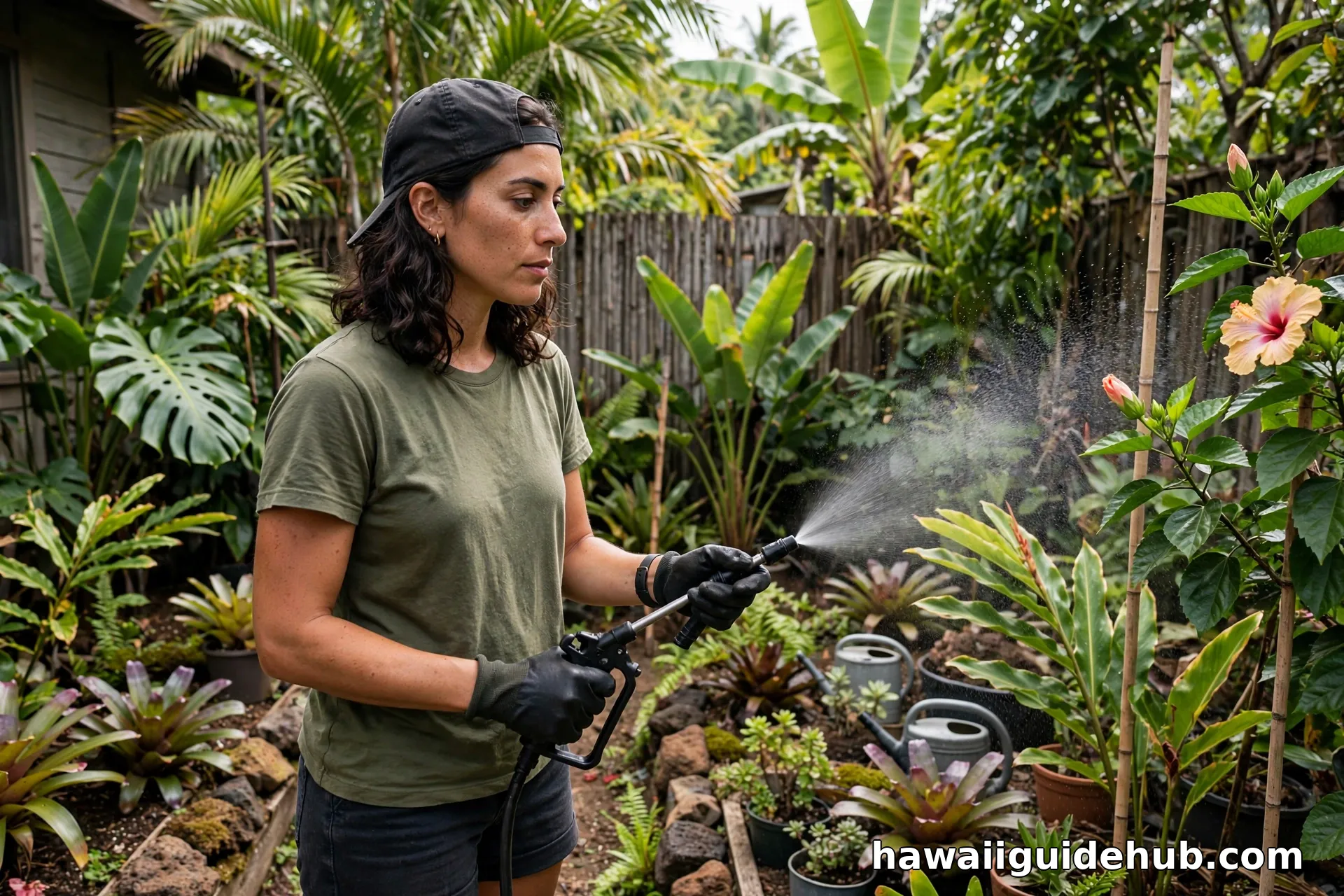
Hand capture is the other frontline tool, especially for new infestations on islands where the frog is not yet established. Trained catchers work at night with headlamps, homing in on calling males and grabbing them by hand. Captured frogs are killed humanely, typically in hot soapy water or by freezing, following guidance from the University of Hawaii’s agricultural extension. Residents can also set simple PVC pipe traps that exploit the frogs’ habit of sheltering in narrow tubes during the day.
Habitat cleanup makes properties less inviting to frogs. The Big Island Invasive Species Committee advises cutting tall grass, avoiding bromeliads and other plants with water-holding leaf axils, chipping or removing green waste, clearing dead leaves from banana, ti, and other large-leafed plants, and thinning dense understory vegetation. A tidy yard holds fewer frogs. On the prevention side, nurseries follow quarantine practices, and all rooted plants shipped off Hawaii Island are supposed to be inspected and tested so frogs do not ride along to new islands.
What to Do If You Hear or See a Coqui Frog
Your response depends on which island you are on. On Hawaii Island, where coqui are widespread, the expectation is that property owners manage frogs on their own land using the methods above. You can still report new outlier populations, but the established east-side infestations are beyond eradication with current resources.
On Oahu, Maui, Kauai, Molokai, or Lanai, treat every coqui as an emergency: Call the state pest hotline at 643-PEST (808-643-7378) or report at 643pest.org. Note the exact location and, if you can do so safely, record the call on your phone. Rapid response teams can eliminate small new populations, and they have done it before, but only if they hear about the frogs quickly. Do not try to collect live frogs and transport them anywhere. Do not release a captured frog. If you catch one, dispatch it humanely and report it.
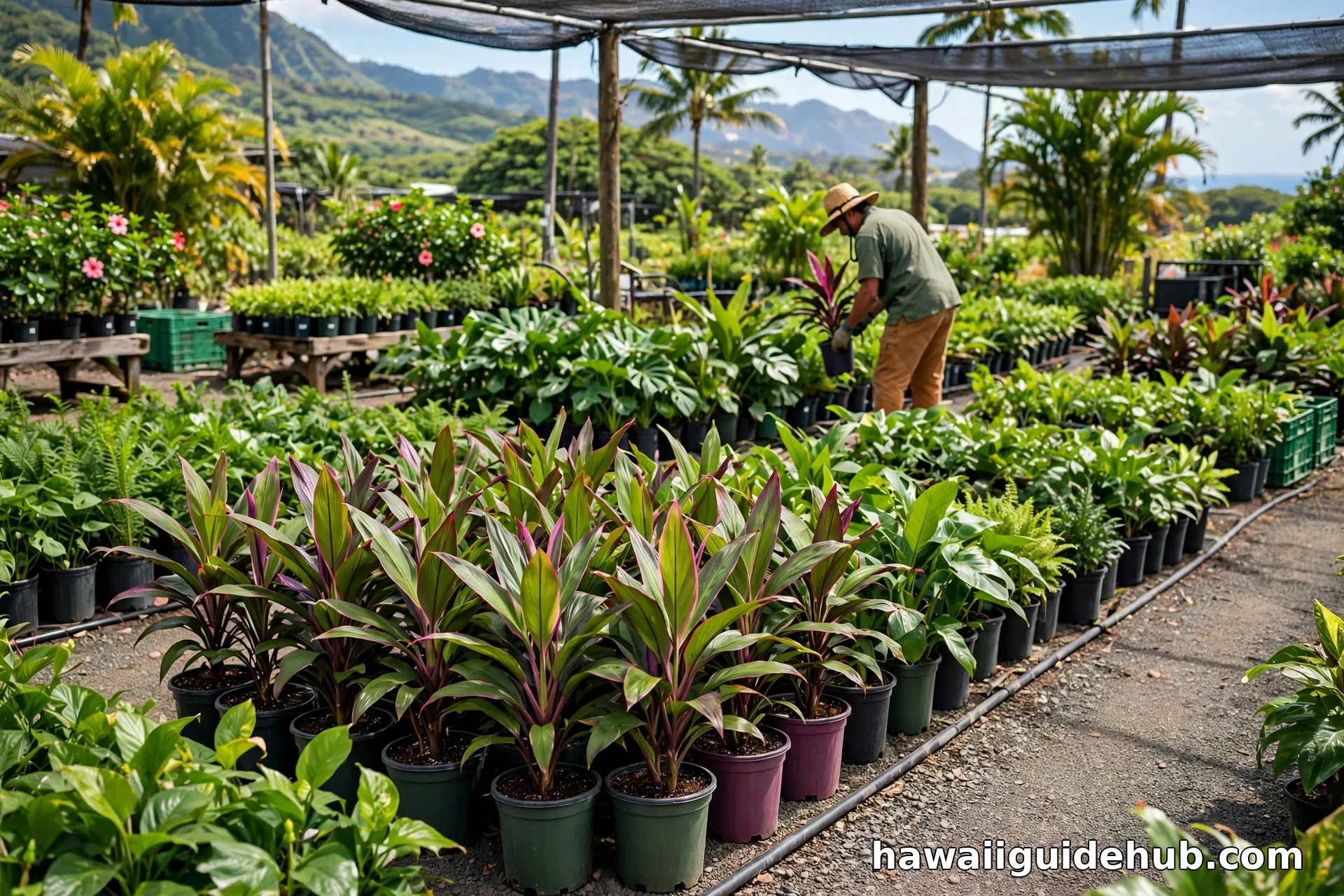
If you are buying plants at a nursery, inspect pots and foliage for tiny frogs, eggs, or froglets before you bring them home. If you are moving between islands with plants or landscaping material, check with the nursery about inspection. These simple habits are how ordinary people slow the spread.
Coqui Frogs and Visitors: What Travelers Should Know
For most visitors, the coqui is a curiosity, not a crisis. If you are staying on the east side of the Big Island, in Hilo, Puna, or Volcano, expect the nighttime chorus. Some travelers find it charming at first; others find it maddening by night three. Light sleepers should pack earplugs or stay on the drier west side around Kona and Waikoloa, where coqui are far less common. For ideas on that side of the island, see the best things to do in Kona. Checking recent guest reviews for mentions of frog noise is smart before booking in east Hawaii.
Video: The Sound of the Coqui Chorus
Listen to the coqui chorus recorded on the Big Island at night, the sound visitors either love or lose sleep over.
Coqui frogs are not dangerous. They are not venomous, they do not bite people, and they do not spread disease to humans. You do not need to fear them on a hike or in a garden. The one thing visitors should not do is transport plants, soil, or green waste between islands without proper inspection, since that is how new infestations start. Enjoy the surreal experience of the loudest tiny frog on earth, and leave it where you found it.
Frequently Asked Questions
Are coqui frogs native to Hawaii?
No. Coqui frogs are native to Puerto Rico and were introduced to Hawaii accidentally in the late 1980s, most likely in nursery plant shipments. They have no natural predators in Hawaii, which is why their populations have grown so large.
Why are coqui frogs so loud?
Only males call, and they sing to defend territory and attract mates. A single male can reach 90 to 95 decibels at close range, and in dense infestations hundreds of males sing together from dusk to dawn, creating a chorus as loud as a motorcycle engine.
Do coqui frogs bite or are they poisonous?
Neither. Coqui frogs are not venomous and do not bite people. They pose no direct danger to humans. The harm they cause is ecological and economic: they eat native insects, disrupt forests, damage nursery trade, and create extreme noise.
Which Hawaiian islands have coqui frogs?
Hawaii Island has large established populations, especially on the wet east side. Oahu, Maui, Kauai, and Molokai have smaller populations that are under active control. Lanai has no known established population. Report any coqui heard or seen outside Hawaii Island to 643-PEST immediately.
How do you get rid of coqui frogs?
Citric acid spray is the only product labeled for coqui control in Hawaii and kills frogs on contact. Hand capture at night, PVC pipe traps, and habitat cleanup (cutting grass, removing bromeliads and green waste) all help. Treatments must be repeated regularly because eggs keep hatching.
The coqui frog shows how fragile island ecosystems are: a two-inch frog with a beautiful song became, in the wrong place, one of Hawaii’s most expensive invasive species battles. Whether you hear it as a charming nighttime serenade on your first night in Hilo or as the reason you pack earplugs, understanding the coqui helps you understand Hawaii itself: a place where every introduced species tells a story, and where residents and visitors alike play a part in protecting what makes the islands unique.