Bringing Pets to Hawaii Guide

Can you bring your dog or cat to Hawaii? Yes, but Hawaii has the strictest pet import rules of any US state, and the process starts months before your flight. Hawaii is the only state that is completely free of rabies, and the entire quarantine system exists to keep it that way. Every dog, cat, and carnivore entering the islands must go through it, with no exceptions for age, size, or how healthy your pet looks.
This guide walks you through the complete process: the 5-Day-or-Less program that lets most prepared pets go home with you the same day, the full 120-day quarantine for pets that do not qualify, the exact timeline and paperwork, what happens at the airport, and what it costs. Start early, follow the steps in order, and your pet can skip the long quarantine entirely.
Bringing Pets to Hawaii at a Glance
| Path | What it takes | Quarantine | Choose this if |
|---|---|---|---|
| 5-Day-or-Less | Microchip, 2 rabies vaccines, FAVN blood test, 120-day wait, paperwork | Up to 5 days, often same-day release | You start 4+ months before travel and hit every deadline |
| Direct Airport Release | All 5-Day-or-Less requirements, plus arrival during inspection hours | Released at the airport | Your flight lands when inspectors are on duty |
| Standard quarantine | For pets not meeting all requirements | Up to 120 days | The fallback nobody wants; avoid it with paperwork |
| Programs and requirements per the Hawaiʻi Department of Agriculture, Animal Quarantine Branch. | |||
Why Hawaii Quarantines Every Pet
Hawaii has never had an indigenous case of rabies. That is an extraordinary public health achievement, and it exists because the islands are thousands of miles from any mainland, and because every imported carnivore has been screened since the quarantine law began. Rabies kills nearly everyone who develops symptoms, and once it establishes in a wild animal population, it essentially never leaves. One infected pet could undo a century of protection.
The rules are governed by Hawaii Administrative Rules Chapter 4-29, and they apply to all dogs and cats regardless of age, including puppies and kittens, and regardless of purpose. There are no exceptions for service animals at the state quarantine level, though federal access rules still apply once the animal is legally in the state. Non-domestic dogs and cats and hybrids such as wolves, wolf crosses, dingoes, Bengals, and Savannahs are prohibited entirely under Plant Quarantine law.
The 5-Day-or-Less Program: Requirements
The 5-Day-or-Less program is how the vast majority of pets enter Hawaii. Meet every requirement before you fly, and your pet qualifies for release after five days or fewer, often going home with you directly from the airport. Miss any requirement, and your pet falls into the standard quarantine of up to 120 days. Here is exactly what the program demands.
First, your pet needs a working microchip implanted for identification, and the chip must be implanted before the qualifying rabies vaccinations, or the vaccination process has to start over. Have your vet scan the chip and confirm the number matches your paperwork exactly. Second, your pet needs two rabies vaccinations in its lifetime, given at least 30 days apart. The most recent vaccination must be valid and unexpired when you arrive in Hawaii.
Third, your pet must pass a FAVN rabies antibody blood test with a result of 0.5 IU/ml or greater. An authorized USDA veterinarian draws the blood and sends it to a Hawaii-approved laboratory, and the lab submits the results directly to the state. Fourth, and this is the step that ruins the most travel plans, you must wait 120 days after the laboratory receives the blood sample before your pet enters Hawaii. The clock starts when the lab receives the sample, not when it was drawn.
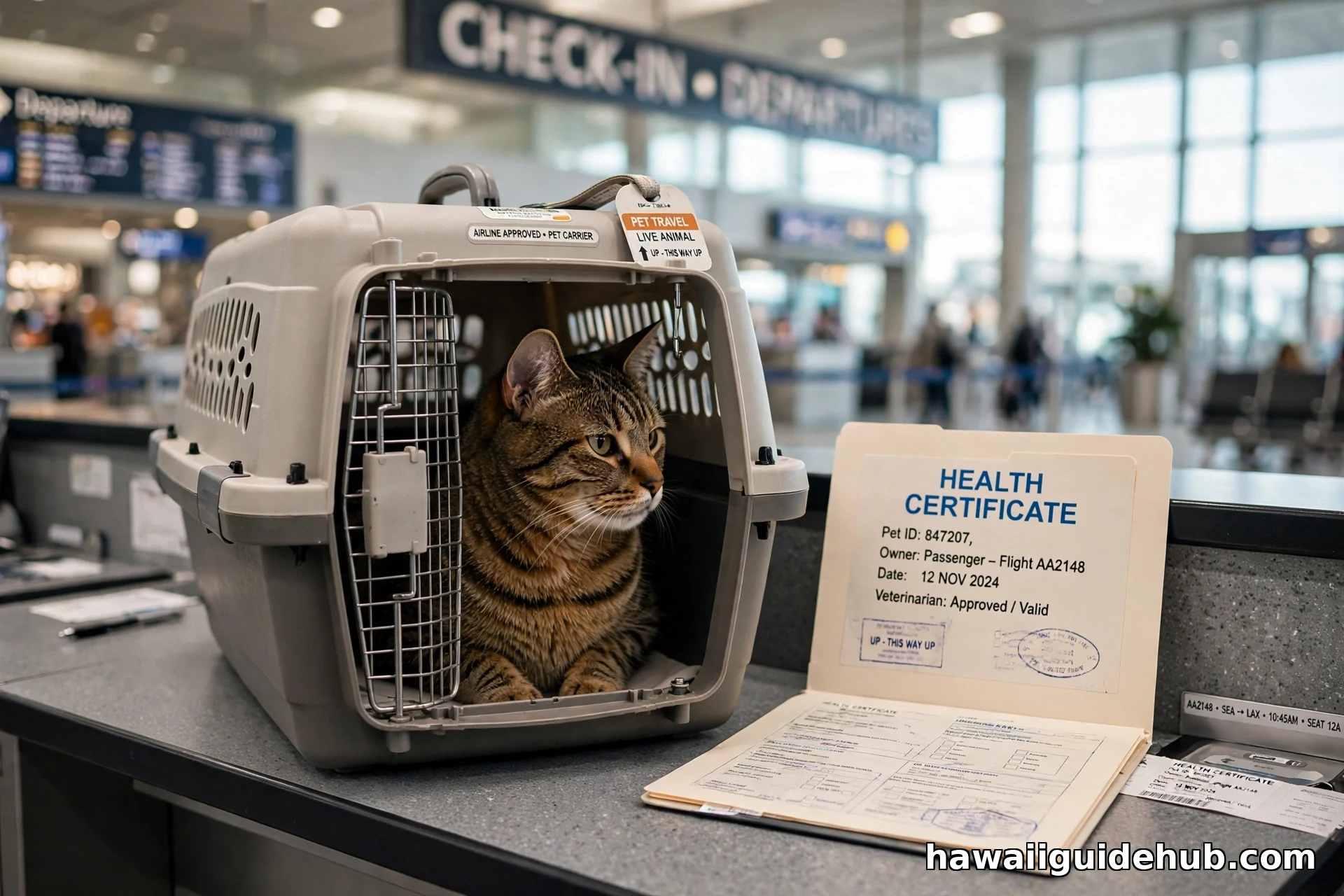
Fifth, complete the Dog and Cat Import Form AQS-279 and submit all documents to the Animal Quarantine Station at least 10 days before arrival. The travel health certificate is the one document you bring with you rather than submitting in advance. Get every document right, and your pet walks out of the airport with you.
The Timeline: Start Four Months Early
For an adult pet that has already had at least one rabies vaccination, qualifying for the 5-Day-or-Less program takes at least four months from start to finish. The 120-day waiting period after the blood test is the long pole, and it cannot be shortened, waived, or worked around. If your pet arrives even one day before the 120 days are complete, it will be held in quarantine until the waiting period finishes, at your expense.
For a newborn puppy or kitten, the timeline stretches to about ten months, because the animal must be old enough for the full vaccination series plus the blood test plus the 120-day wait. This is why breeders and buyers need to plan together: you cannot buy a puppy and fly it to Hawaii the next week under the 5-Day-or-Less program. Puppies and kittens that cannot meet the requirements face the full 120-day quarantine.
Work backward from your travel date. Draw blood no later than 120 days before your flight, which means starting the vaccination and microchip steps several weeks before that. Submit your paperwork at least 10 days before arrival, though earlier is better. And confirm your FAVN result is on file with the state before you board, because the state recommends checking your pet’s blood test results on the Department of Agriculture website.
What Happens When You Land
Honolulu is the main port of entry for animals, and pets qualifying for Direct Airport Release are processed at the Airport Animal Quarantine Holding Facility at Daniel K. Inouye International Airport during normal inspection hours, generally 8:00 AM to 4:30 PM. It can take an hour or more for the airline to transport your pet to the facility, so book a flight that arrives with plenty of margin. Pets arriving outside inspection hours will not be released until the next inspection period.
At the facility, inspectors verify your paperwork and examine your pet. If everything qualifies, you take your pet home that day. If your documents were not received at least 10 days before arrival, a higher release fee applies. If your pet does not qualify for direct release, it goes to the Animal Quarantine Station in Halawa Valley and enters the 5-Day-or-Less program there, or the standard quarantine if requirements were not met.
Flying directly to a neighbor island is possible but requires extra arrangements. State inspectors are not stationed at every airport, so for airports like Kona you must privately hire an approved local veterinarian to meet you for the inspection, and you need a Neighbor Island Inspection Permit applied for in advance. Confirm that your airline participates in the direct release program for your island before you book.
What It Costs
Budget for the quarantine fees on top of your airline’s pet transport charges. The 5-Day-or-Less program runs around $244 per pet, while the full 120-day quarantine costs around $1,080 per pet. Pets held in quarantine also accrue daily boarding fees. These fees change over time, so verify the current amounts on the Hawaii Department of Agriculture’s animal quarantine pages before you finalize your budget.
The real cost of poor planning is not the fee difference. It is the 120 days. A pet that misses one requirement by a paperwork technicality can spend four months in the quarantine station while you pay boarding fees and visit on the facility’s schedule. Owners can visit their pets during quarantine, and most animals handle it fine, but nobody plans a move to Hawaii imagining their dog in a kennel for a third of a year. The four months of preparation are always cheaper than the four months of quarantine.
Cats, Service Animals, and Special Cases
Cats follow exactly the same rules as dogs: microchip, two rabies vaccines, FAVN test, 120-day wait, and paperwork. There is no separate or easier cat program. Start a kitten’s timeline with the same ten-month expectation as a puppy.
Service animals must meet Hawaii’s import requirements like any other dog, because the quarantine law is about rabies, not about the animal’s job. Plan the same veterinary timeline for a service dog. Once legally in the state, federal access protections apply normally. If you are traveling with a service animal, contact the Animal Quarantine Branch early to make sure the timeline works with your travel dates.
Pets arriving from places with special status, such as Guam, Australia, New Zealand, and Great Britain, may qualify for exemptions based on those locations’ rabies-free status and import requirements. Pets arriving on international flights must clear US Customs before the quarantine facility can release them, so check customs hours against your arrival time.

Flying With Your Pet: Airline Tips
Book your pet’s spot with the airline as early as you book your own seat, because airlines limit the number of animals per flight. Confirm the airline’s pet policies for Hawaii specifically, since some carriers restrict pet travel on certain routes or during hot months. Only a few airlines allow pets in the cabin on flights to Hawaii, so check before you assume your small dog can ride under the seat.
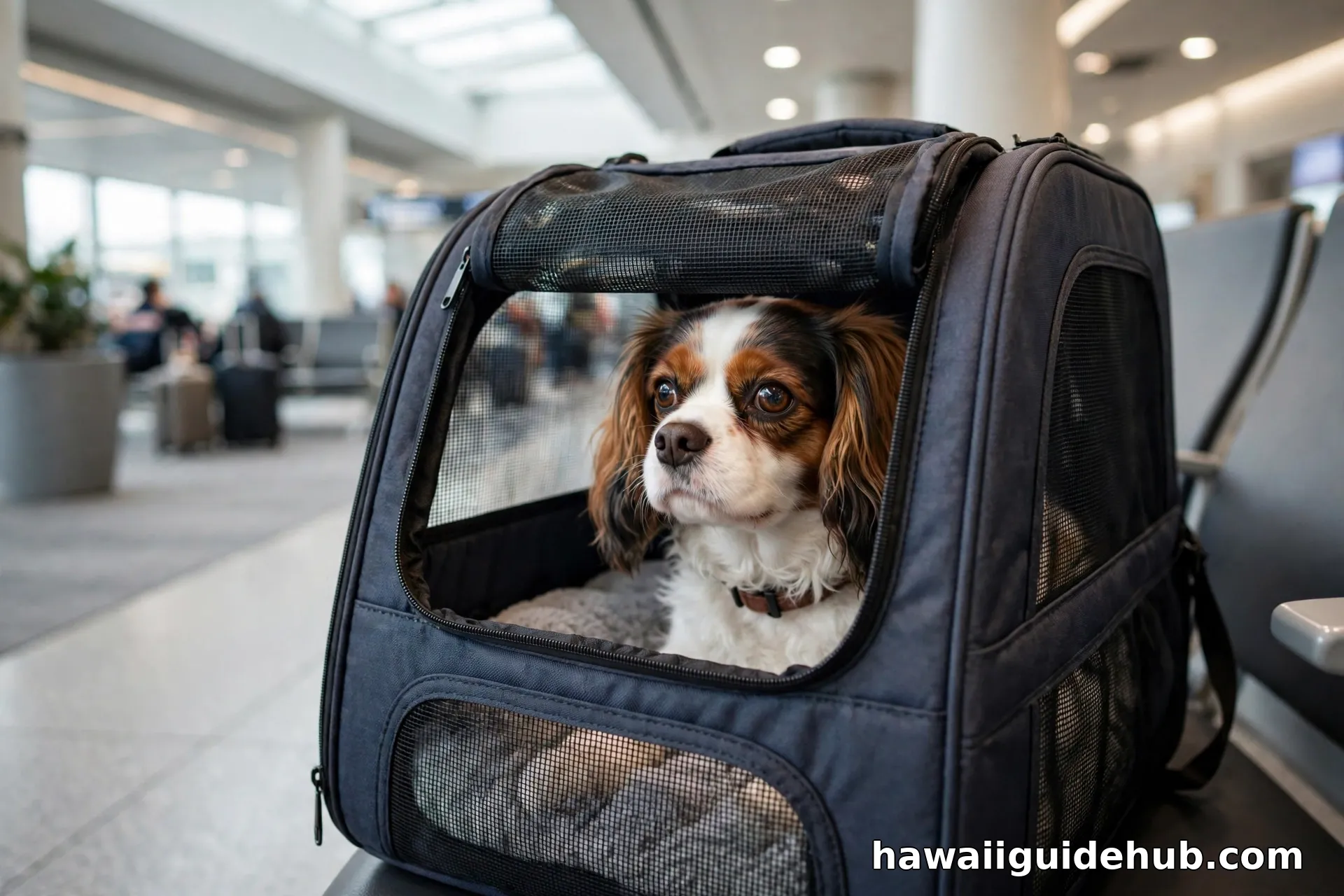
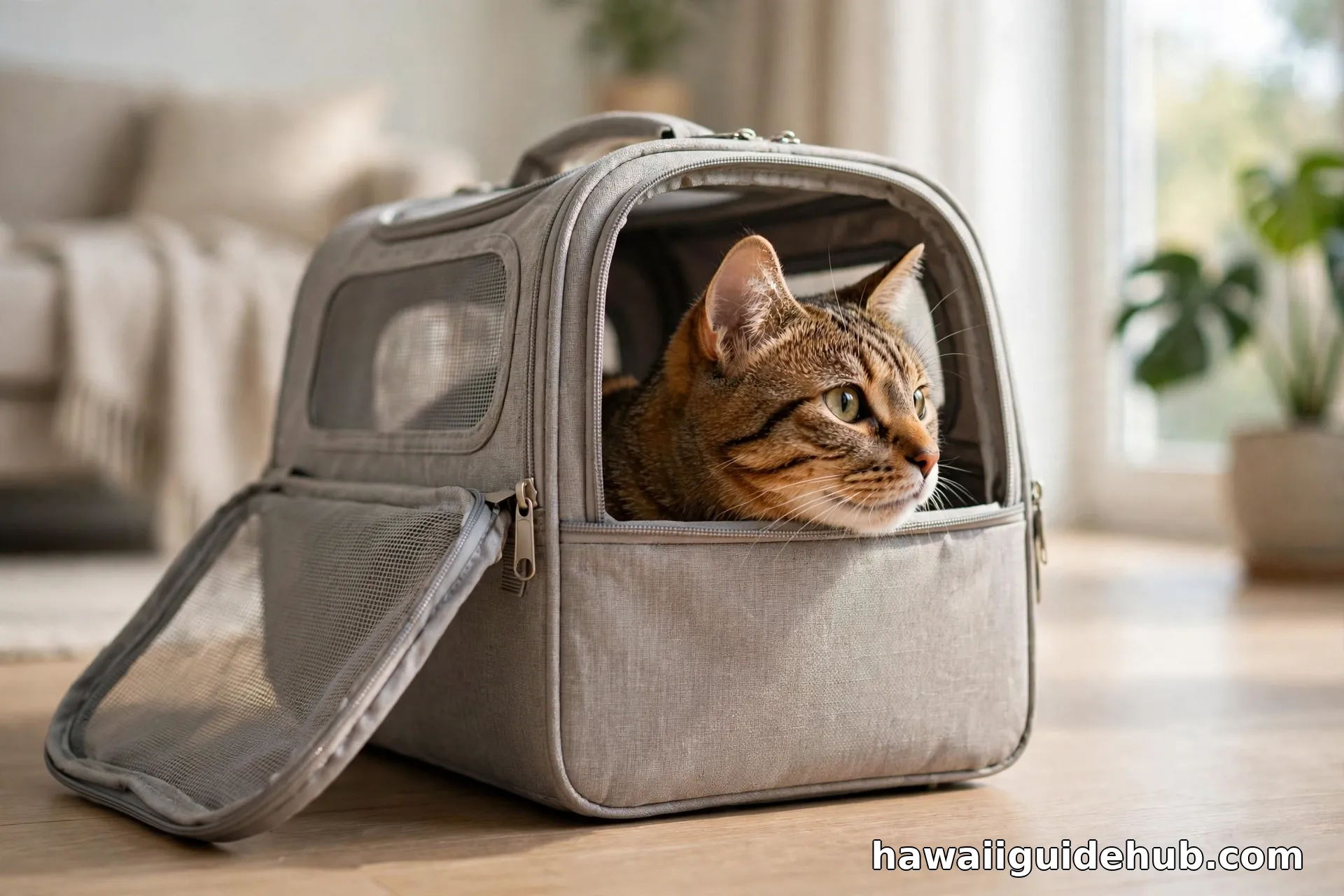
Use an airline-approved carrier that your pet has practiced sitting in, not a brand-new box introduced on travel day. Exercise your dog well before the flight, skip sedatives unless your vet specifically recommends them, and attach your contact information and the quarantine station’s paperwork to the carrier. For general flight preparation, see our guide to flying to Hawaii linked below.
While the 120-day clock runs, use the waiting time to plan the rest of your move. Check our guide to flying to Hawaii for ID and flight tips, browse Hawaii’s best eats for your first week on the islands, and get to know the flowers of Hawaii you will soon see everywhere. Your pet’s paperwork and your own travel plans can move forward together.
Video: Moving Pets to Hawaii Step by Step
A step-by-step walkthrough of moving pets to Hawaii: the microchip and rabies protocol, the FAVN blood test, the waiting period, and what to expect on arrival day.
Frequently Asked Questions
How long is the pet quarantine in Hawaii?
Pets that do not meet the 5-Day-or-Less requirements face quarantine of up to 120 days. Pets that complete all requirements in advance qualify for release in five days or fewer, often directly at the airport on arrival day.
How far in advance should I start the Hawaii pet process?
At least four months for an adult pet that has already had a rabies vaccination, and about ten months for a newborn puppy or kitten. The 120-day waiting period after the blood test cannot be shortened.
Can I bring my cat to Hawaii?
Yes. Cats follow the same requirements as dogs: microchip, two rabies vaccines, FAVN blood test, 120-day wait, and import paperwork. There is no separate cat program.
What is the FAVN test for Hawaii?
The FAVN test measures your pet’s rabies antibody level after vaccination. Hawaii requires a result of 0.5 IU/ml or greater. The blood must be drawn by an authorized USDA veterinarian and sent to a Hawaii-approved laboratory.
Can my pet fly directly to Maui or Kona?
Yes, with advance arrangements. You need a Neighbor Island Inspection Permit and must hire an approved local veterinarian to meet you at the airport for inspection, since state inspectors are not stationed at every airport. Confirm your airline participates in direct release for that island.
What happens if my pet arrives before the 120 days are up?
Your pet will be held in quarantine until the 120-day waiting period from the blood test is complete, at your expense. Even arriving one day early triggers this, so do not cut the timeline close.
Bringing a pet to Hawaii is a project, not an errand. Start four months early, get the microchip before the vaccines, pass the blood test, wait the 120 days, and file the paperwork ten days out. Do it in that order and your dog or cat walks out of the Honolulu airport with you on day one, ready for the beach. Skip a step and the islands will still be there, but your pet will be watching them from quarantine.