Bringing Plants to Hawaii Rules

Can you bring plants to Hawaii? The short answer is maybe, and the real answer depends entirely on what plant, in what form, and whether you declared it. Hawaii has some of the strictest plant import rules in the United States, because a single pest hiding in a houseplant’s soil can devastate farms and native forests that evolved without defenses. Every arriving traveler must declare all plants, plant parts, seeds, and soil, and some plants cannot enter the islands at all.
This guide covers the complete rules for bringing plants to Hawaii: the declaration form, which plants are restricted or prohibited, how inspection works, what happens to soil, and the penalties for getting it wrong. If you are flying with a plant, a cutting, seeds, or even a lei, read this first.
Bringing Plants to Hawaii at a Glance
| What you’re carrying | The verdict | At the airport |
|---|---|---|
| Common houseplants (declared) | Often yes, after inspection | Declare it; the inspector decides |
| Cut flowers and leis | Usually yes, after inspection | Keep them accessible for inspection |
| Seeds and bulbs | Declare; many need inspection or permits | When in doubt, declare |
| Cuttings and bare-root plants | Declare; inspected for pests and soil | Shake off every speck of soil first |
| Restricted plants | Only with permits, quarantine, or treatment | Check the restricted list before you pack |
| Soil, sand, or earth | No | Leave it home, full stop |
The Declaration Form: Your First Step
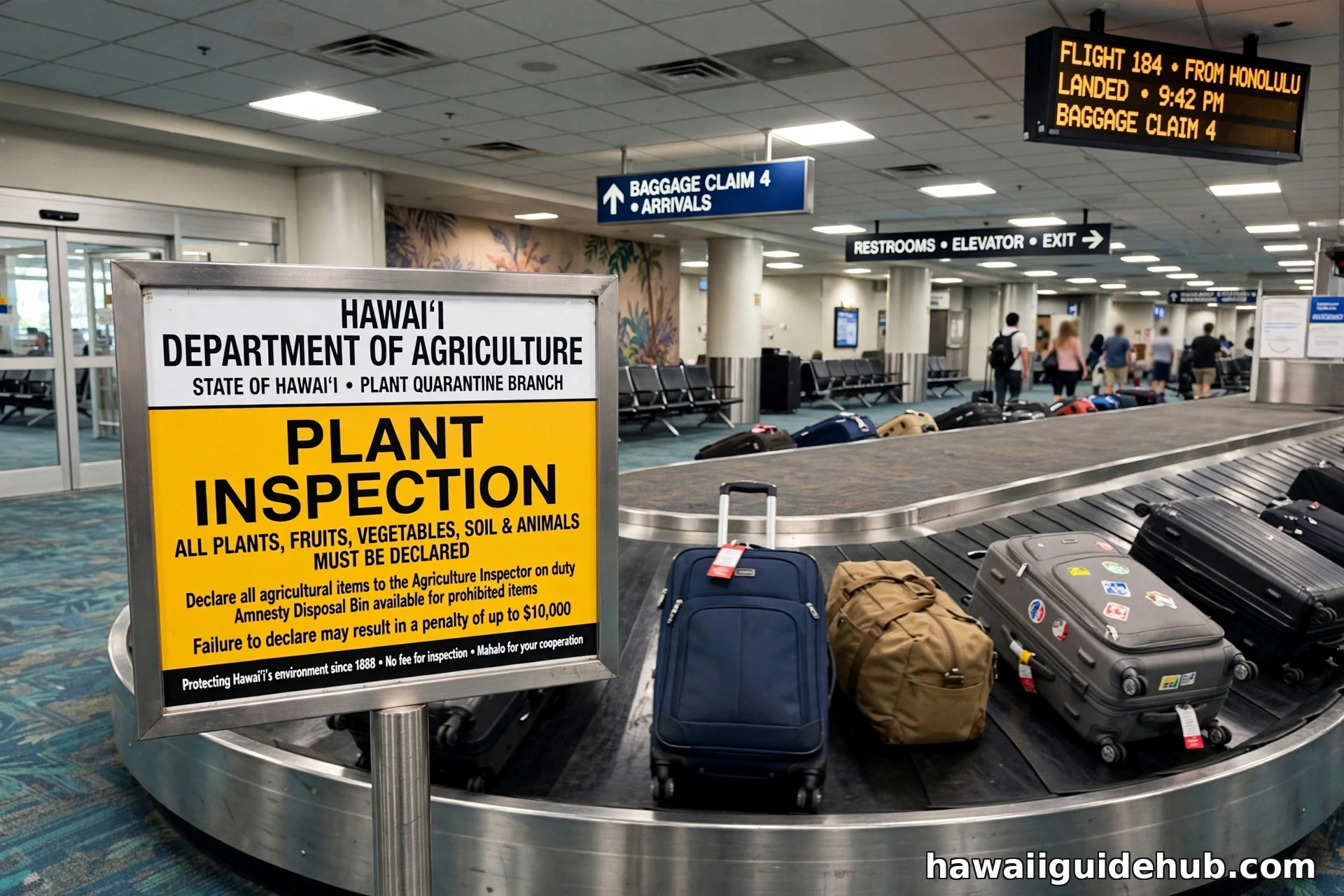
Every person arriving in Hawaii completes the Hawaii Department of Agriculture’s Plants and Animals Declaration Form, now fully digital through Akamai Arrival on all domestic flights. The form asks one question that matters for plant lovers: are you bringing any plants, plant parts, seeds, microorganisms, or soil? A potted plant, a cutting in a plastic bag, a packet of seeds, and a lei all count. Answer yes and list what you have.
The penalties for lying are severe. False information or failure to declare restricted articles can be punished as a misdemeanor with fines up to $25,000 and up to one year of imprisonment. Intentionally smuggling prohibited articles, such as snakes hidden in plant shipments, can be charged as a Class C felony with penalties up to $200,000 and five years in prison. Declare everything, and the worst that happens is an inspector takes an item you cannot keep.
Plants That Are Restricted or Prohibited
Some plants are restricted from entering Hawaii without advance permission, quarantine, or treatment, because they carry pests and diseases that have damaged Hawaiian agriculture before. The restricted list includes sugarcane and grass plants, pineapple and bromeliad plants, coffee plants and seeds, banana plants, passion fruit plants and seeds, pine plants, coconut plants and parts, corn plants, palm plants, orchid and bulb plants, and cruciferous root vegetables like raw daikon and turnip.
Notice the pattern: these are plants tied to Hawaii’s own agricultural industries or its most vulnerable ecosystems. Coffee plants are restricted because the coffee berry borer, once introduced, spread through Kona’s coffee farms and cost growers millions. Pineapple and banana plants carry diseases that threaten commercial production. If your plant is on this list, do not simply pack it. Contact the Hawaii Department of Agriculture well before your flight to learn whether a permit, quarantine arrangement, or treatment is possible, or leave the plant at home.
Seeds, Cuttings, Bulbs, and Soil
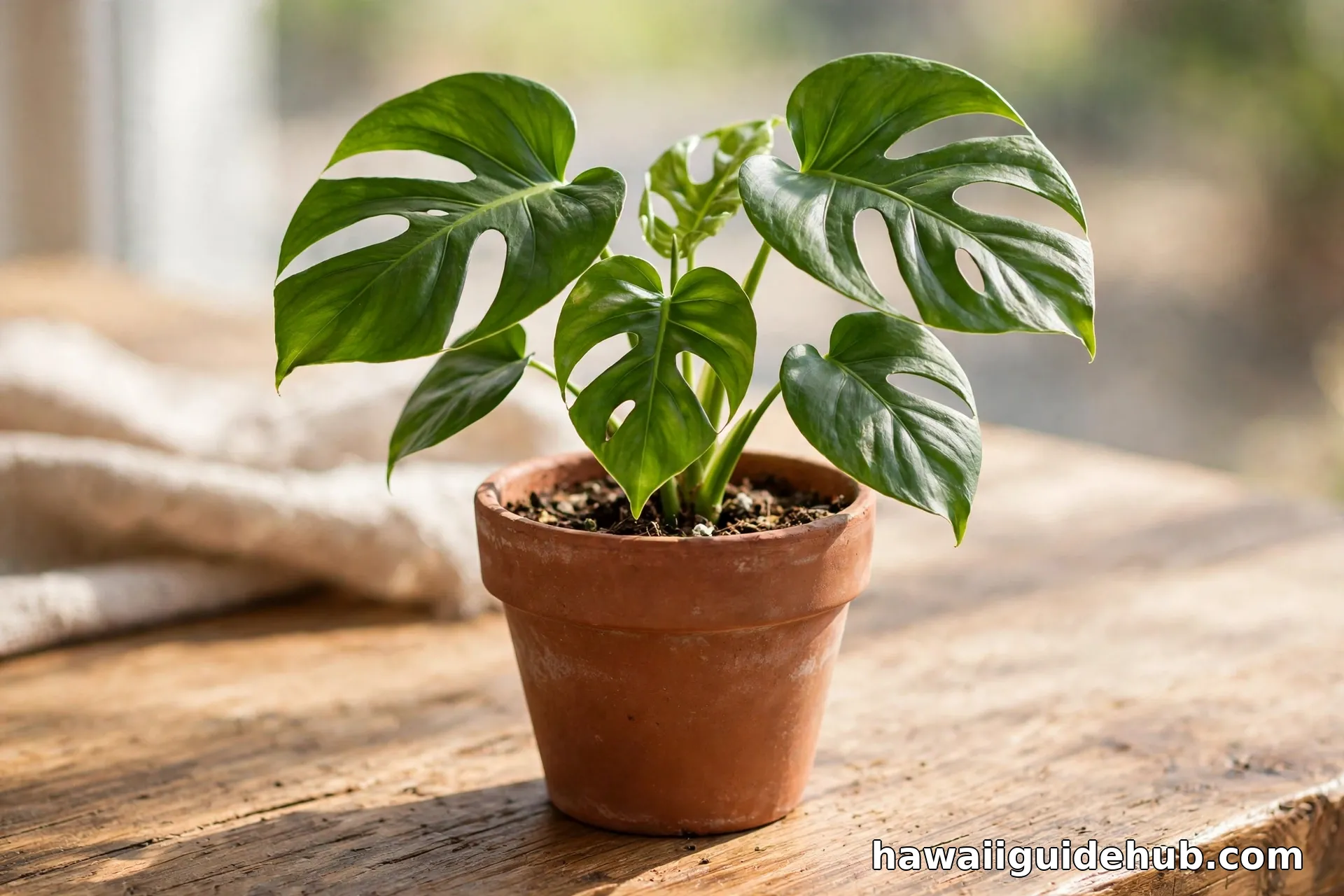
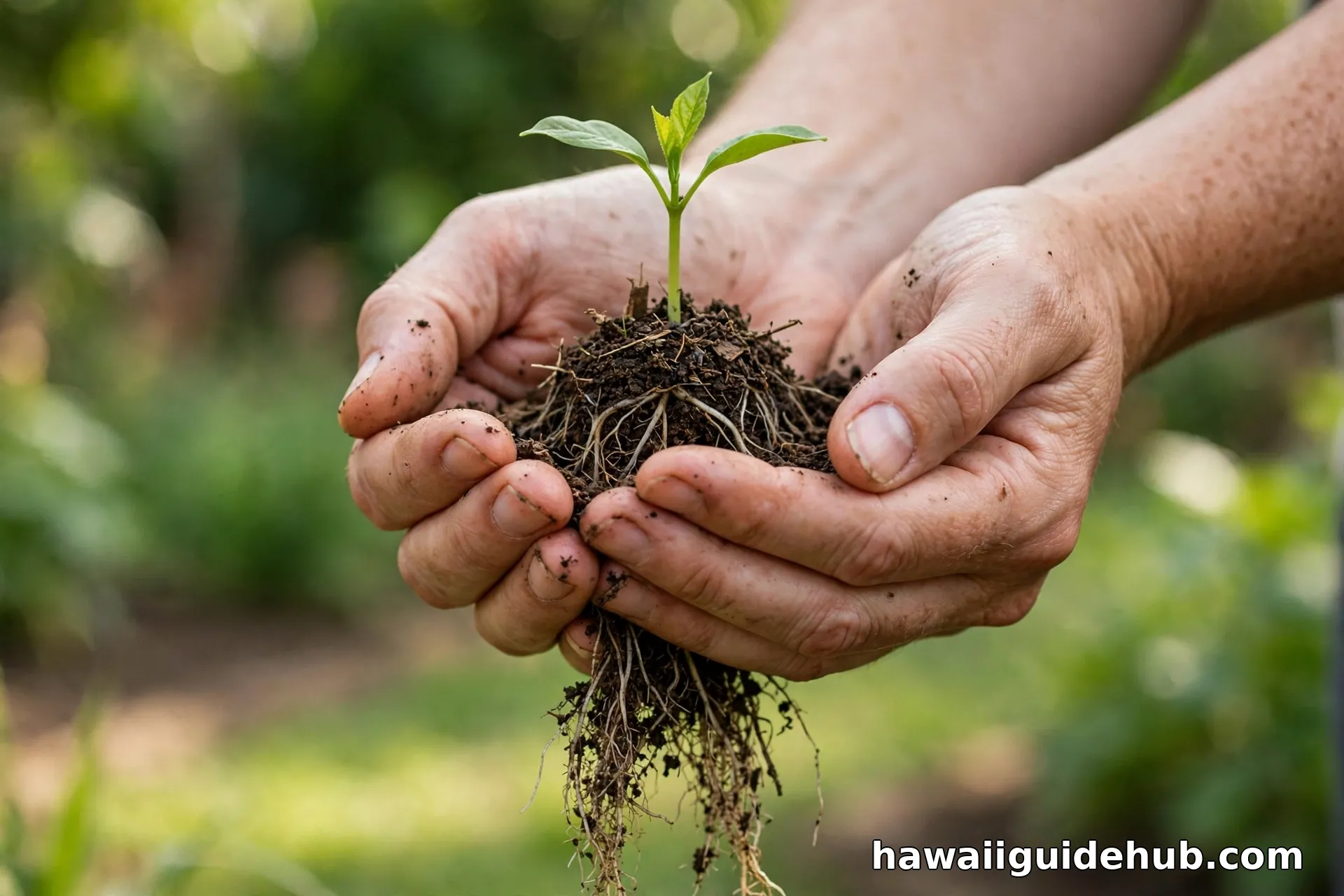
Seeds, cuttings, bulbs, and bare-root plants must all be declared and presented for inspection. Many are allowed in after an inspector confirms they are pest-free, but some categories need advance permits. Cuttings should be clean, with no soil on the roots, because soil is where the most dangerous pests hide. Wash roots thoroughly and wrap them in damp paper towels inside a sealed bag rather than packing them in potting mix.
Soil itself is the one absolute. Soil, sand, and earth in any form cannot be brought into Hawaii, no exceptions for travelers. This includes the potting soil your houseplant is sitting in. If you want to bring a potted plant, the practical approach is to ship or carry it bare-root: remove all soil, rinse the roots, wrap them for the flight, and repot in fresh sterile potting mix after you arrive. Inspectors see this regularly and will clear clean bare-root plants quickly.
Why Hawaii Fears Plant Pests So Much
Hawaii’s plant rules are not bureaucracy for its own sake. They are a response to a long list of disasters. The coqui frog arrived in plant shipments and now deafens neighborhoods on the Big Island with its nighttime chorus. Little fire ants, also hitchhikers on plants, inflict painful stings and blind pets. Miconia, an ornamental tree introduced for its pretty leaves, escaped into watersheds and now costs millions to control. Albizia trees, planted as ornamentals, grow hundreds of feet tall and drop massive limbs on roads and power lines.
The most urgent current threat is Rapid ʻŌhiʻa Death, a fungal disease killing ʻōhiʻa lehua, the most abundant native tree in Hawaii and the backbone of native forests. The fungus spreads when people move infected wood and cuttings, which is why moving ʻōhiʻa wood, cuttings, and even firewood between islands is restricted. When an inspector confiscates your cutting, they are not being difficult. They are holding a line that protects entire forests.
This history is also why the rules treat soil as the ultimate enemy. Soil carries nematodes, fungi, insect eggs, and weed seeds that no visual inspection can fully clear. A plant that looks perfectly healthy can be carrying the next miconia in its root ball. Bare-root shipping exists precisely because it removes the hiding places.
Moving to Hawaii With a Plant Collection
Visitors ask about one plant. New residents ask about fifty. If you are moving to Hawaii with a plant collection, the same rules apply at a larger scale, and advance planning becomes essential. Start months before your move: identify every species, check each against the restricted list, and contact the Hawaii Department of Agriculture’s Plant Quarantine branch about anything questionable. Some plants will need permits arranged before they ship.
For the plants that can come, bare-root everything. Professional plant shippers who handle Hawaii moves know this routine: unpot, wash roots completely, wrap in damp sphagnum or paper towels, seal in plastic, and box with ventilation. Plants ship best as carry-on or air cargo rather than in moving containers, where heat and darkness kill them. And budget for losses. Even with perfect packing, some plants do not survive the journey, and Hawaii’s nurseries sell spectacular tropical plants that will thrive in your new home from day one.
Many new residents find the simplest answer is to start fresh. Hawaii’s garden centers and nurseries carry varieties you cannot grow on the mainland, often for a few dollars. Photograph your collection, gift the plants to friends, and spend your first month in Hawaii discovering what grows there. Your windowsill will be full again before you know it, with plants that never needed an inspection station.
Lei Flowers and Cut Flowers
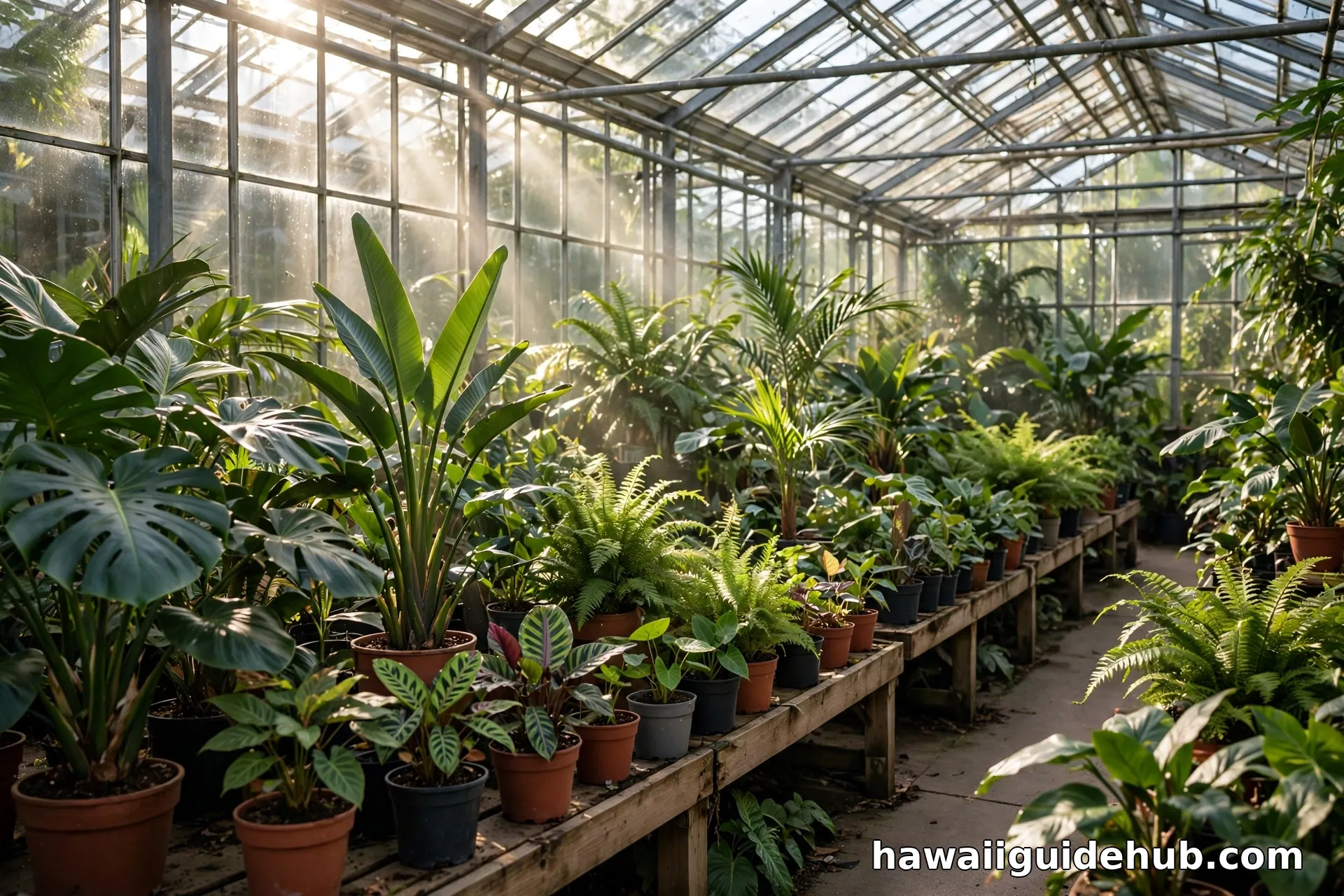
Cut flowers and leis are the friendliest category. Most cut flowers are allowed into Hawaii after a routine inspection, which is why visitors can bring leis with them. Declare them on the form like any other plant material and present them at the agriculture station. The inspector checks for insects and disease, and clean flowers pass in minutes.
There are exceptions even here. Flowers and plant parts of restricted species, such as certain orchids and bulbs on the restricted list, get extra scrutiny. And the same logic applies in reverse when you leave: leis made of ginger, tuberose, maile, and orchid can go home with you after inspection, while leis containing citrus parts, gardenia, jade vine, or Mauna Loa cannot. For more on Hawaii’s iconic blooms, see our guide to Hawaii flowers.
What Happens at the Plant Inspection
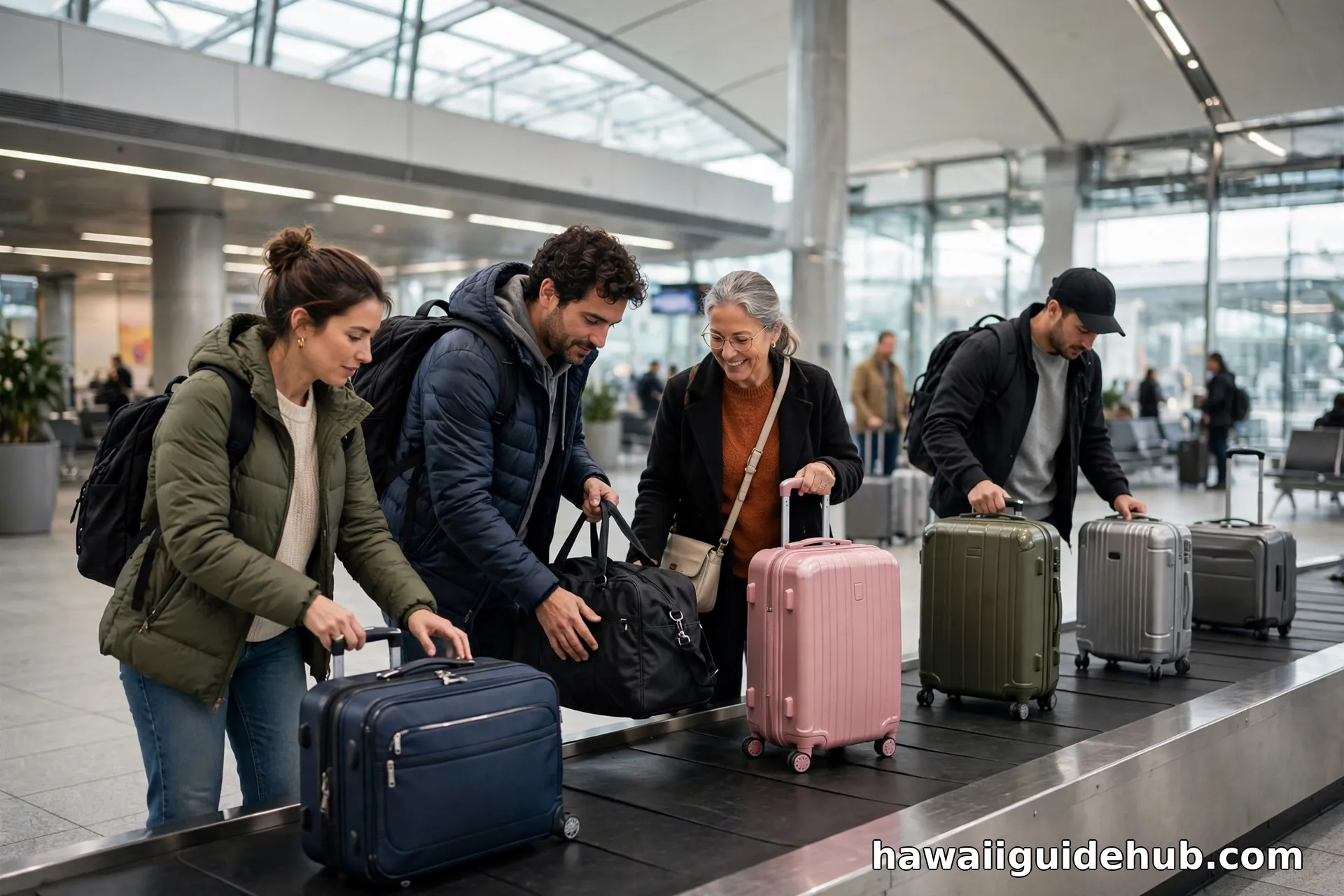
If you declared plants, an inspector will examine them in the baggage claim area after you collect your luggage. Keep your plants accessible, not buried at the bottom of a packed suitcase. The inspector looks for insects, mites, snails, signs of disease, and any soil. Clean, healthy, soil-free plants usually pass in minutes.
If a plant is prohibited or shows signs of pests, it will be confiscated and destroyed. Again, this is routine and not a punishment when you declared the item. Plants with soil still on the roots are the most common confiscation. The second most common is travelers who did not realize their plant was on the restricted list. A five-minute check of the restricted list before you pack prevents both outcomes.
Practical Tips for Flying With Plants
First, check the restricted list against your specific plant before you do anything else. If it is restricted, contact the Hawaii Department of Agriculture for guidance or leave it home. Second, go bare-root: remove all soil, rinse roots, and wrap in damp paper towels inside a sealed bag. Third, pack the plant in your carry-on if the airline allows it, so it is not crushed or frozen in the cargo hold, and so it is instantly accessible for inspection.
Fourth, bring a printed label or photo identifying the plant species. Inspectors process dozens of plants a day, and a clear identification speeds everything up. Fifth, complete your Akamai Arrival declaration before landing so you are not filling it out at the inspection station. And if you are moving to Hawaii rather than visiting, the same rules apply, just at a larger scale: commercial plant shipments go through the same Plant Quarantine branch, with permits arranged in advance.
Video: Hawaii Agriculture Inspection
The USDA’s official video on the agriculture inspection process at Hawaii airports: what inspectors check and why the rules exist.
Frequently Asked Questions
Can I bring a houseplant to Hawaii?
Often yes, if you declare it and it passes inspection. Remove all soil and bring it bare-root with washed roots. Check that your plant species is not on the restricted list first.
Can I bring seeds to Hawaii?
Seeds must be declared and inspected, and some require permits. Seeds of restricted plants, such as coffee or passion fruit, face additional restrictions. Declare them and let the inspector decide.
Can I bring a lei to Hawaii?
Yes. Cut flowers and leis are generally allowed after declaration and a routine inspection for pests and disease. Declare them on the agriculture form like any other plant material.
Can I bring potting soil to Hawaii?
No. Soil, sand, and earth cannot be brought into Hawaii in any form. Bring plants bare-root and repot them in fresh sterile potting mix after arrival.
What plants are prohibited in Hawaii?
Restricted plants include sugarcane and grasses, pineapple and bromeliads, coffee plants and seeds, banana plants, passion fruit plants and seeds, pine and palm plants, coconut plants and parts, corn plants, and orchid and bulb plants. Many need permits, quarantine, or treatment to enter legally.
Can I ship plants to Hawaii instead of flying with them?
Yes, mailed and shipped plants go through the same Plant Quarantine inspection on arrival in Hawaii. All plant material entering by mail must be declared and is subject to inspection, permits, and the same restricted list. Bare-root, soil-free shipments clear fastest. Many travelers find that buying from a Hawaii nursery after arrival is simpler than shipping a collection.
What happens if I do not declare a plant in Hawaii?
Failing to declare restricted plant material can be punished as a misdemeanor with fines up to $25,000 and up to one year of imprisonment. Intentional smuggling of prohibited articles can be a felony. Always declare.
Bringing plants to Hawaii rewards preparation and punishes assumptions. Check the restricted list, go bare-root, declare everything on the Akamai Arrival form, and keep your plants accessible for inspection. Do that, and your plant will be growing in Hawaiian sunshine within hours of landing. Skip those steps, and it will be growing nowhere at all. The islands will still be covered in green when you arrive, and with a little honesty at the inspection station, your own plant can join it.