What Is the State Song of Hawaii? Hawaiʻi Ponoʻī Explained

The state song of Hawaii is “Hawaiʻi Ponoʻī,” which means “Hawaiʻi’s Own.” The words were written in 1874 by King David Kalākaua, the music composed by Captain Henri Berger, bandmaster of the Royal Hawaiian Band. It was the national anthem of the Hawaiian Kingdom before it became the state song in 1967. It is one of the only state songs written by a king, and its story runs through the entire history of modern Hawaii: kingdom, overthrow, territory, and statehood.
This page covers the song’s meaning, its history from kingdom to state, the lyrics and their translation, the melody’s surprising origin, where to hear it today, and FAQs. Everything about the state song of Hawaii is on this one page.
The Short Answer
“Hawaiʻi Ponoʻī” (“Hawaiʻi’s Own”) is the state song of Hawaii, designated by the state legislature in 1967. King Kalākaua wrote the Hawaiian lyrics in 1874; Henri Berger composed the music. It served as the Kingdom of Hawaiʻi’s national anthem from 1876 until the overthrow in 1893, then as the territorial anthem, then the state song. Hawaiʻi’s schoolchildren still sing it after the Star-Spangled Banner at assemblies.
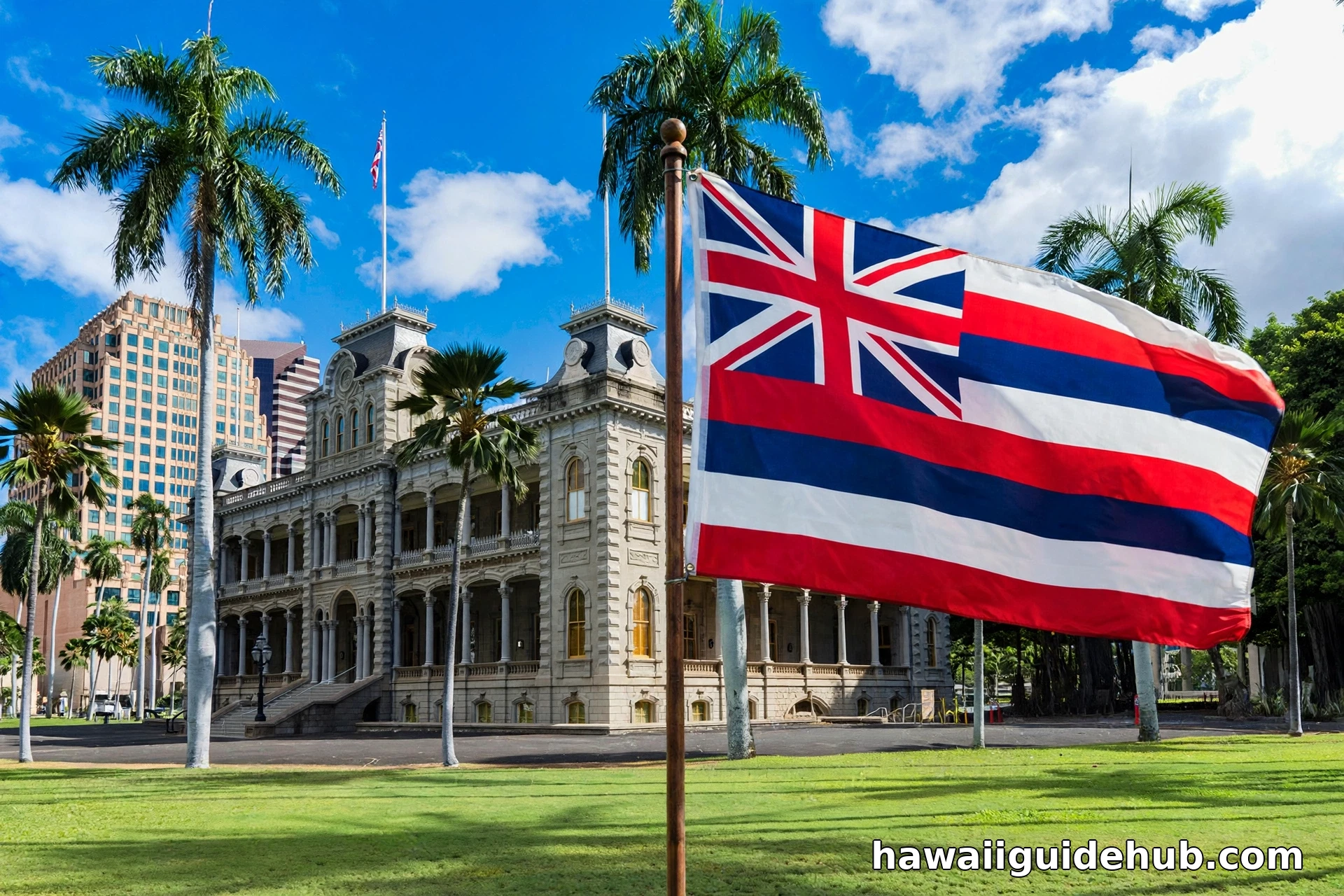
Hawaii’s Anthems Through History
| Anthem | Era | What happened |
| “God Save the King” | Kingdom, early 1800s | Borrowed British anthem; no Hawaiian anthem yet |
| “He Mele Lāhui Hawaiʻi” | 1866-1876 | Composed by Liliʻuokalani; replaced within a decade |
| “Hawaiʻi Ponoʻī” | 1876 to today | Kingdom anthem, territorial anthem, state song since 1967 |
What the Lyrics Mean
“Hawaiʻi ponoʻī” means “Hawaiʻi’s own” or “Hawaiʻi’s own true sons.” The song is a call to loyalty: look to your king, honor your chiefs, defend the land. The chorus invokes Kamehameha, the unifier of the islands: “Makua lani ē, Kamehameha ē, na kāua e pale me ka ihe” (“Royal father, Kamehameha, we shall defend with the spear”). The verses move from the king to the chiefs to the people: the whole nation bound in duty. It is a royalist anthem that survived the republic that overthrew the royals: a remarkable afterlife.
The Melody’s Surprising Origin
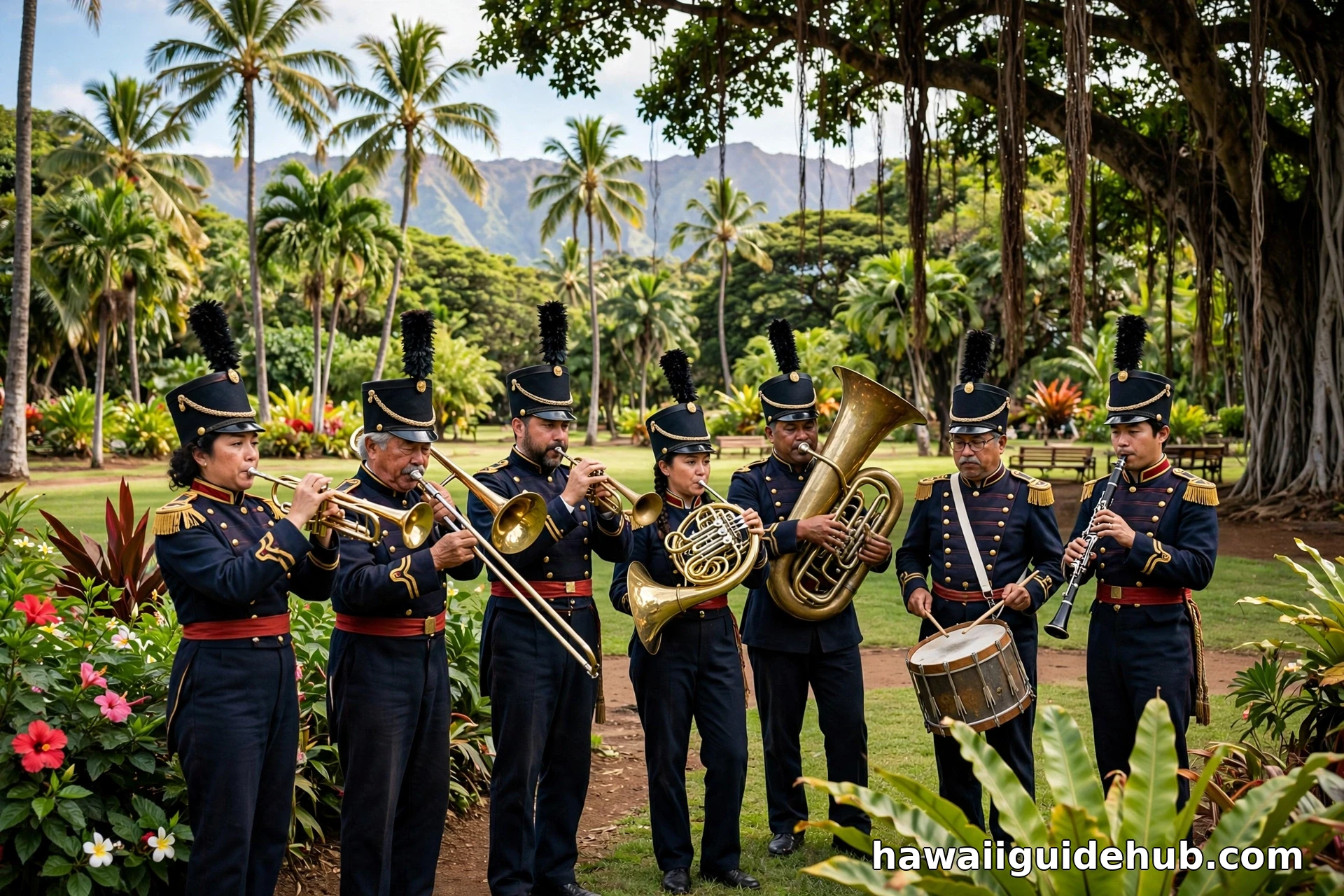
Listen closely and the tune sounds familiar: Berger based it on “Heil Dir im Siegerkranz,” the Prussian royal hymn, which itself shares its melody with “God Save the Queen.” A Hawaiian kingdom anthem, written by a Hawaiian king, set to a Prussian tune via a German bandmaster: that is 19th-century Hawaii in a nutshell, a Pacific kingdom plugged into the world’s musical circuits. The Royal Hawaiian Band, founded in 1836 and still performing today, has played it at every era of the islands’ history.
From Kingdom to Statehood
The song’s journey mirrors Hawaii’s. Adopted by the Kingdom in 1876, it survived the 1893 overthrow, served the Republic and then the Territory, and was formally designated the state song in 1967, eight years after statehood. Few anthems have served three forms of government. For many Native Hawaiians, it remains the kingdom’s anthem first and the state’s second: a song of a nation that existed before America arrived. That layered meaning is why it still moves people.
Where to Hear It Today
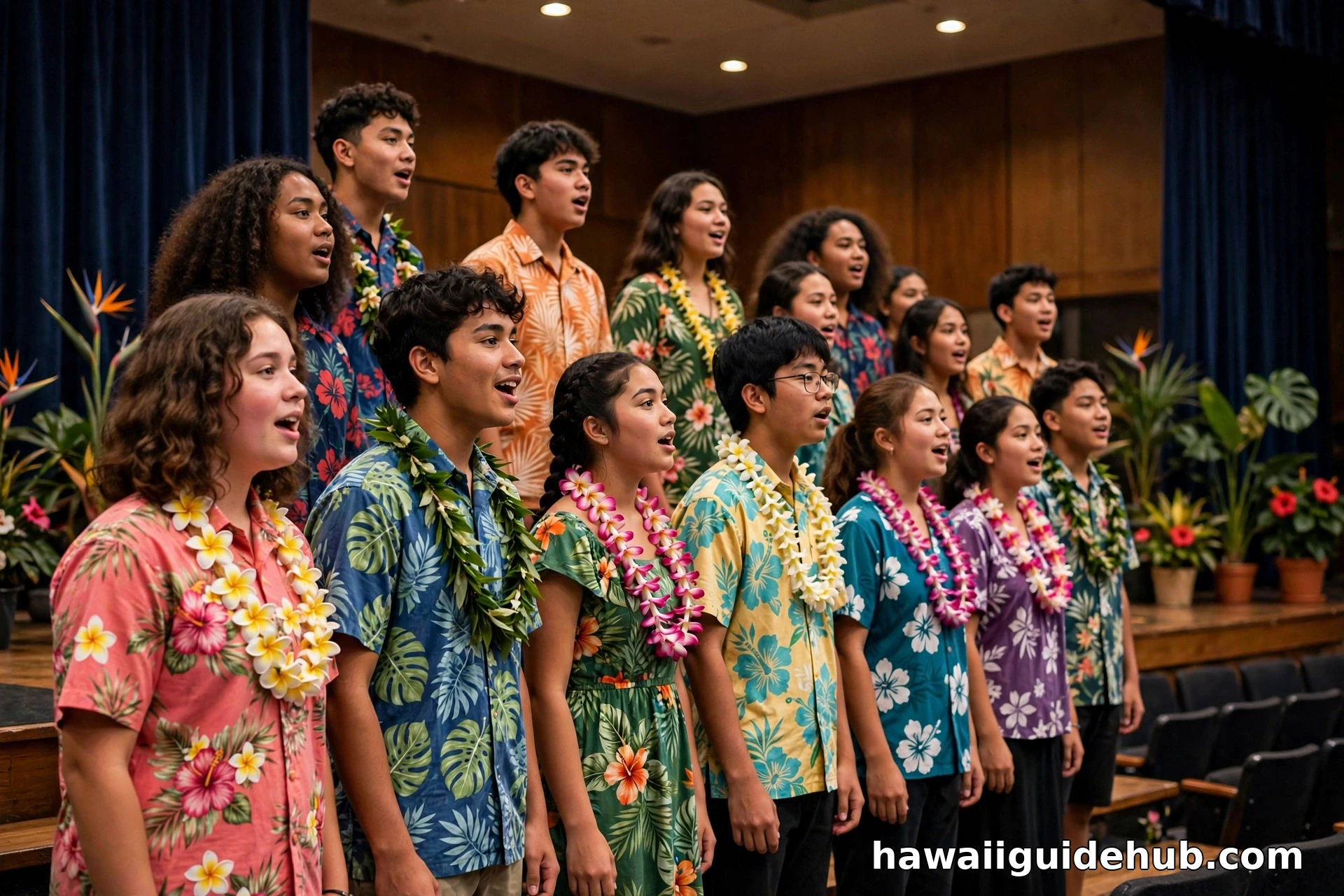
The Royal Hawaiian Band performs it at free concerts in Honolulu parks: check their schedule. School assemblies across the state sing it. It plays at University of Hawaii sporting events and state ceremonies. And ʻIolani Palace, the only royal palace on American soil, is its spiritual home: stand in the throne room where Kalākaua reigned and the song stops being history and starts being presence. The palace tour is the single best pairing with this story.
For Hawaiian culture, see Hawaii’s history before the 50th star, the significance of ohana, and Hawaiian traditions: hula, chanting, and storytelling.
King Kalākaua: The Merrie Monarch
David Kalākaua, who reigned from 1874 to 1891, was called the Merrie Monarch for his love of music, dance, and celebration. He revived the hula, which missionaries had suppressed, and made ʻIolani Palace a center of arts. Writing the national anthem was part of his nation-building: a kingdom needed its symbols. Kalākaua understood that music is politics by other means. The anthem he wrote was not just a song; it was a declaration that Hawaii was a nation with a king, a history, and a future. He died in San Francisco in 1891; his song outlived him by more than a century and counting.
Henri Berger: The German Who Gave Hawaii Its Music
Captain Henri Berger arrived in Hawaii in 1872 at Kamehameha V’s invitation to lead the Royal Hawaiian Band, and he stayed for 43 years. A Prussian-trained musician, he shaped Hawaiian musical life: the band, the anthems, the public concerts that continue today. Berger composed or arranged hundreds of pieces, but “Hawaiʻi Ponoʻī” is his immortality. The German bandmaster and the Hawaiian king, collaborating on a national anthem: it sounds like a fable, but the Royal Hawaiian Band’s archives hold the proof. He died in Honolulu in 1929, a Hawaiian institution.
The Royal Hawaiian Band: Still Playing
The Royal Hawaiian Band is one of the oldest municipal bands in America, founded in 1836, and it still performs free public concerts. It played for kings, then for the republic that deposed them, then for the territory, then the state: the band is the continuous thread through every regime change. Hearing “Hawaiʻi Ponoʻī” from the band that premiered it is a direct line to 1876. Check the City and County of Honolulu’s schedule for concert times; the Kapiʻolani Park performances are the classic setting.
He Mele Lāhui Hawaiʻi: The Anthem It Replaced
Before “Hawaiʻi Ponoʻī,” the kingdom’s anthem was “He Mele Lāhui Hawaiʻi” (“Song of the Hawaiian Nation”), composed by Princess Liliʻuokalani in 1866. It served for a decade before Kalākaua replaced it with his own composition. The Liliʻuokalani anthem is not forgotten: it remains a beloved song, and the queen who wrote it would later write “Aloha ʻOe.” Two monarchs, two anthems, one kingdom: the rivalry of songs is a small window into the politics of the palace.
The Lyrics, Verse by Verse
Verse one addresses the king: “Hawaiʻi’s own true sons, be loyal to your chief, your country’s liege and lord.” Verse two honors the chiefs: “Look to your chiefs, those chiefs of younger birth.” Verse three speaks to the people: “People of this our land, duty calls.” Each verse ends with the hui, the chorus: “Royal father, Kamehameha, we shall defend with the spear.” The structure climbs from the individual to the nation, and every verse returns to Kamehameha: the founder is the anchor of the whole song. It is a political theory in three verses.
Hawaiʻi Aloha: The Other Song
Ask Hawaiians about their most beloved song and many will name “Hawaiʻi Aloha,” not the state song. Written by Rev. Lorenzo Lyons in the 19th century, “E Hawaiʻi, e kuʻu one hānau e” (“O Hawaiʻi, o sands of my birth”) is the emotional anthem: sung with hands joined at gatherings, graduations, and protests. The state song is official; “Hawaiʻi Aloha” is beloved. Know both. One is the law; the other is the heart.
Protocol: How the Song Is Performed
At official events, “Hawaiʻi Ponoʻī” follows the Star-Spangled Banner: nation first, state second. Audiences stand. In schools, children sing it in Hawaiian, often without fully understanding the words, which is its own kind of cultural transmission: the language lives in the singing. At sovereignty gatherings, the song carries extra weight: sung as the kingdom’s anthem, not the state’s. Context changes the meaning; the notes stay the same.
The Song in Modern Hawaii
Today the song lives in layers. For the state, it is ceremony. For Hawaiian cultural practitioners, it is heritage. For the sovereignty movement, it is a reminder of the nation that was. For visitors, it is a window: hearing it at a Royal Hawaiian Band concert or an ʻIolani Palace event connects the vacation to the history. A state song written by a king, surviving the overthrow of kingship, sung by the descendants of everyone involved: there is no American parallel. That is why it matters.
The 1967 Designation
Hawaii became a state in 1959, but “Hawaiʻi Ponoʻī” was not formally designated the state song until 1967, under Hawaii Revised Statutes section 5-10. The delay is telling: the song needed no law to be the anthem; it had been the anthem, in practice, for ninety years. The legislature was recognizing reality, not creating it. The statute sits among the other state symbols: the flag, the seal, the motto (“Ua mau ke ea o ka ʻāina i ka pono”: the life of the land is perpetuated in righteousness). The symbols form a set; the song is its voice.
Aloha ʻOe: The Queen’s Farewell
No account of Hawaiian song is complete without “Aloha ʻOe,” written by Queen Liliʻuokalani. Composed in 1878, it became the world’s image of Hawaii: the farewell song, played on every departing ship. The queen wrote it as a love song; history made it an elegy for the kingdom. Where “Hawaiʻi Ponoʻī” is the anthem of loyalty, “Aloha ʻOe” is the anthem of loss. Together they are the two poles of Hawaiian music: the king’s defiance and the queen’s farewell.
Learning to Sing It
Visitors can learn the chorus in minutes: “Hawaiʻi ponoʻī, nānā i kou mōʻī, ka lani aliʻi, ke aliʻi. Makua lani ē, Kamehameha ē, na kāua e pale, me ka ihe.” The pronunciation guide: every vowel is pronounced, the ʻokina is a glottal stop (a catch in the throat), and the rhythm is stately, not rushed. Sing it at the palace, at a band concert, or just on the beach at sunset. A song written by a king, sung by a visitor, on the king’s islands: the tradition continues.
Why It Still Matters
Most state songs are forgettable: pleasant tunes nobody sings. “Hawaiʻi Ponoʻī” is the exception that proves how much a state song can matter. It carries the monarchy in a republic, the Hawaiian language in an English-dominant state, and the memory of a nation in the machinery of a state. Every performance is a small act of historical memory. That is why schoolchildren learn it, why the band still plays it, and why visitors who hear it feel something they did not expect from a “state song.” It is not a formality. It is a survival.
One practical note for visitors: if you attend a Royal Hawaiian Band concert, a state ceremony, or a school event where the song is performed, stand respectfully and listen. You do not need to sing along, but you should not talk through it either. The people around you are hearing their history. Give the song the same attention you would give any nation’s anthem, because that is exactly what it is.
Video: The State Song of Hawaii
“Hawaiʻi Ponoʻī”: the state song with Hawaiian and English lyrics.
Frequently Asked Questions
What is the state song of Hawaii?
“Hawaiʻi Ponoʻī” (“Hawaiʻi’s Own”), designated the state song in 1967.
Who wrote Hawaiʻi Ponoʻī?
King David Kalākaua wrote the words in 1874; Captain Henri Berger composed the music.
What does Hawaiʻi Ponoʻī mean?
“Hawaiʻi’s Own” or “Hawaiʻi’s own true sons”: a call to loyalty to the land and its chiefs.
Was it the kingdom’s anthem too?
Yes. It was the national anthem of the Hawaiian Kingdom from 1876 to the 1893 overthrow.
Do schools still sing it?
Yes. Hawaii’s schoolchildren sing it at assemblies, usually after the Star-Spangled Banner.
Where does the melody come from?
It is based on the Prussian hymn “Heil Dir im Siegerkranz,” which shares its tune with “God Save the Queen.”
“Hawaiʻi Ponoʻī” is more than a state song: it is a kingdom’s voice that outlived the kingdom, a king’s words sung by schoolchildren 150 years later, a Prussian tune carrying Hawaiian loyalty. When you hear it, you are hearing the whole complicated, beautiful history of Hawaii in three verses. Listen for the spear in the chorus: the song remembers what it was written to defend, and it asks everyone who sings it to remember too.